Infi­nite Bridge

The Infi­nite Bridge in Aarhus

Circle of Life


Gjøde & Part­nere Arki­tekter

Usually, a bridge connects two points that are sepa­rated by water or height. This one is diffe­rent.

Gjøde & Part­nere Arki­tekter

60 meters

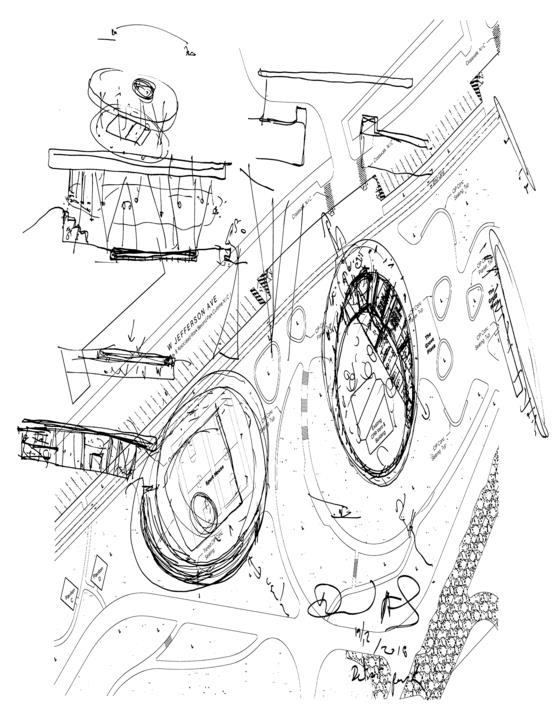
The “Infi­nite Bridge” in Denmark’s second largest city, Aarhus, was desi­gned and built by Gjøde & Part­nere Arki­tekter for the “Sculp­ture by the Sea” festival.

The circular “bridge” does not take people anywhere, but it offers them the oppor­tu­nity to expe­ri­ence the chan­ging land­scape as an endless pano­r­amic compo­si­tion. At the same time, the Infi­nite Bridge is a space for social inter­ac­tion with other people who – of course – expe­ri­ence the same panorama.

The Infi­nite Bridge has a diameter of 60 meters. Half of it is on the beach and the other half is in the water. Depen­ding on the tides, it lies about two meters above the seabed.

Cons­truc­tion

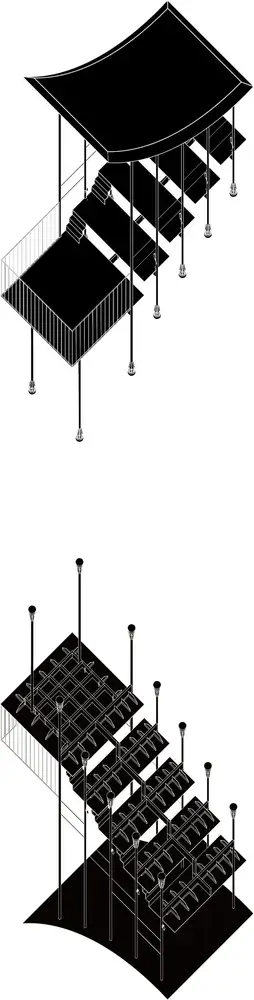
The cons­truc­tion consists of 60 iden­tical wooden elements supported by steel columns. The curvature of the bridge follows the contours of the land­scape. It is located at the mouth of a small river valley that extends from the beach into the forest.

With the Infi­nite Bridge, Gjøde & Part­nere Arki­tekter created more sculp­ture than bridge. Their aim is to bring the surroun­dings to life and cele­brate the rela­ti­onship between the city and the magni­fi­cent land­scape of this bay.

History

A bridge usually connects two points that are sepa­rated by water or height. The Infi­nite Bridge connects the present of this place with its history by recon­nec­ting the beach with a long-forgotten view­point.

The bridge was built on the site of an earlier pier where people arrived in steam­boats from the city to relax and enjoy them­selves.

The historic Varna Pavi­lion with its terraces, restau­rant and dance hall on the hillside above the beach was a popular desti­na­tion in the picturesque land­scape at the time.

The cycle of life

Situated on the edge of the forest facing the sea, very close to the Aarhus Stadium, the Infi­nite Bridge makes the pavi­lion tangible again from the landing stage. The traffic circle re-estab­lishes the histo­rical connec­tion and, accor­ding to the archi­tects, offers a new perspec­tive on the rela­ti­onship between city and land­scape – and on the cycle of life.

The Infi­nite Bridge is open every year from May to October.

Project data

Archi­tect

Gjøde & Part­nere Arki­tekter
Høegh-Guld­bergs Gade 65
DK – 8000 Aarhus C

Buil­ding owner

Aarhus Muni­ci­pa­lity

Opening

2015

Address

The Infi­nite Bridge
Ørne­re­devej 3
DK – 8000 Aarhus

Text

Johannes Bühl­be­cker
More Sports Media

Plan

Videos

More projects like this?

Your project here.

DO YOU WANT TO PUBLISH YOUR PROJECT OR PRODUCT?

Your stage

Chicken Hero Pavi­lion

The Chicken Hero Pavi­lion

Gloca­liza­tion


RAD+AR

The Chicken Hero Pavi­lion is neither a sports nor a leisure faci­lity, but a beau­tiful and important contri­bu­tion to sustaina­bi­lity and toge­ther­ness.

Urban Forest Jakarta

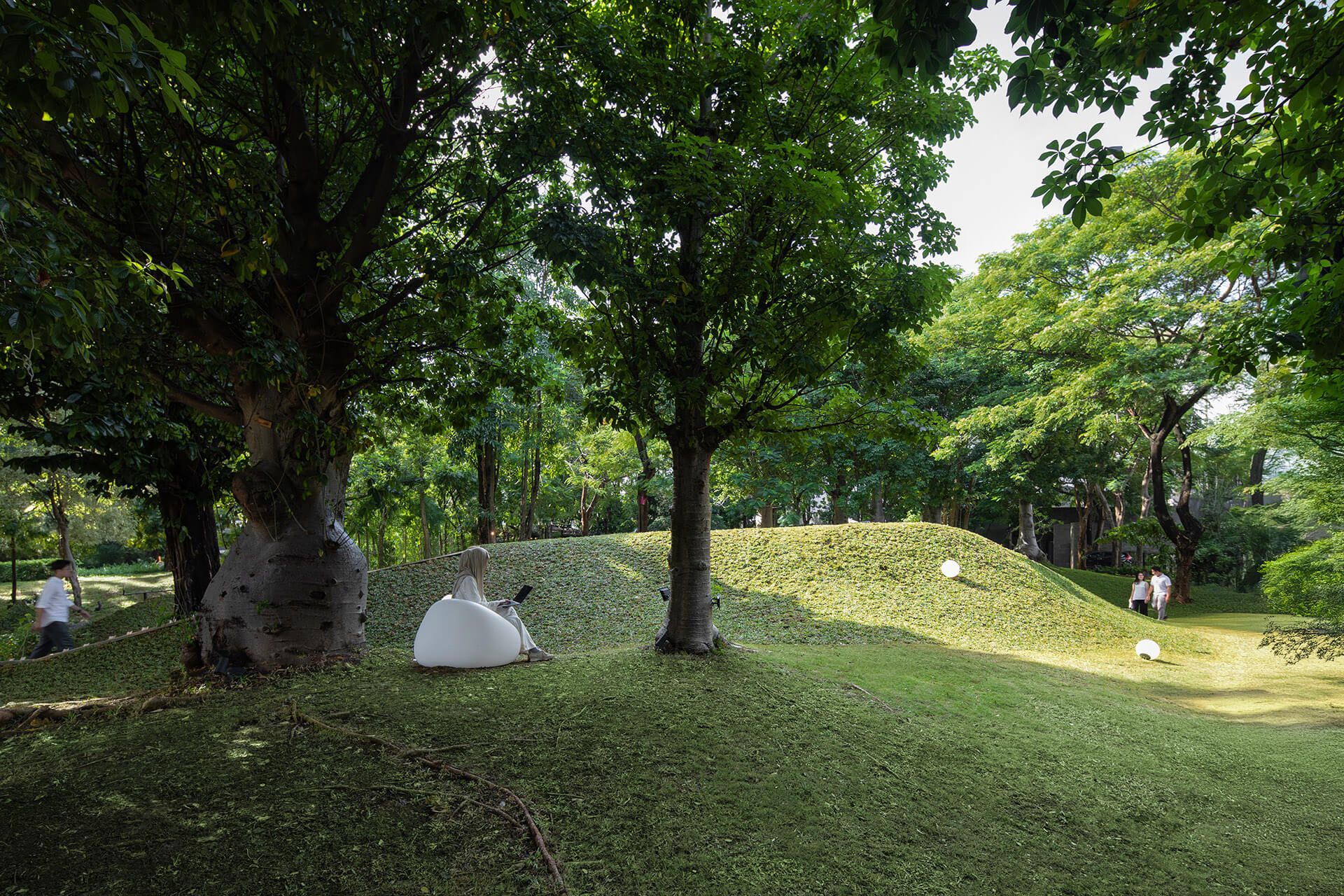
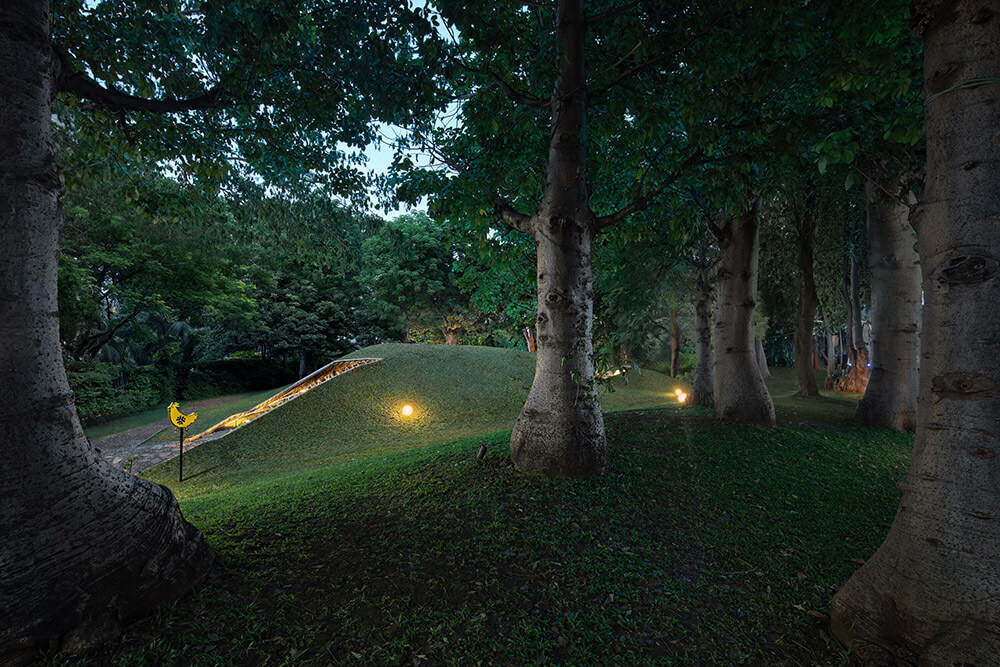
Urban Forest Jakarta is a green, hip leisure desti­na­tion in the heart of Jakarta. In addi­tion to many other attrac­tions, there are always tempo­rary instal­la­tions to be seen here, such as the Chicken Hero Pavi­lion.

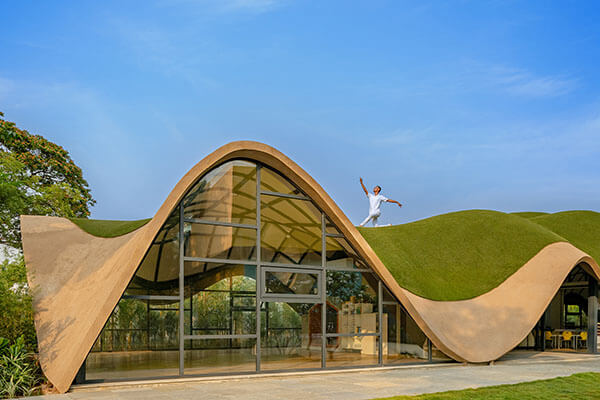
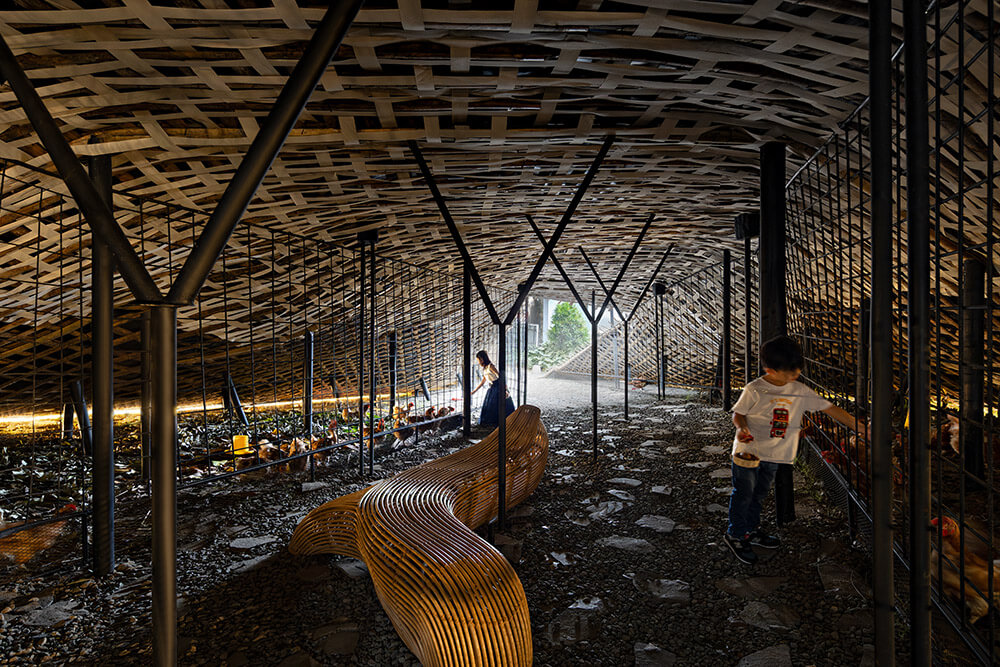
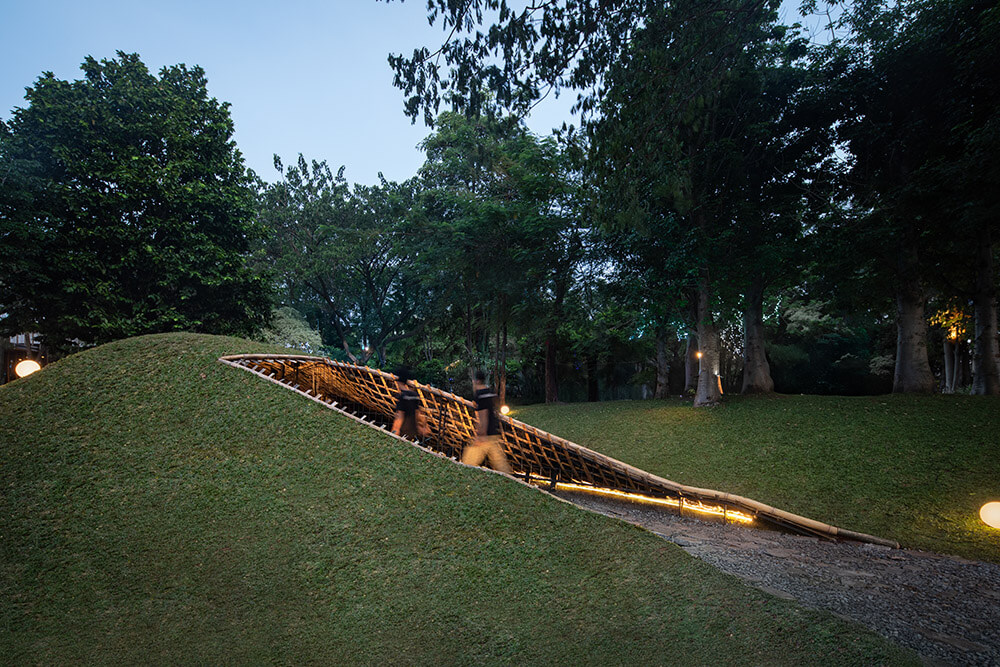
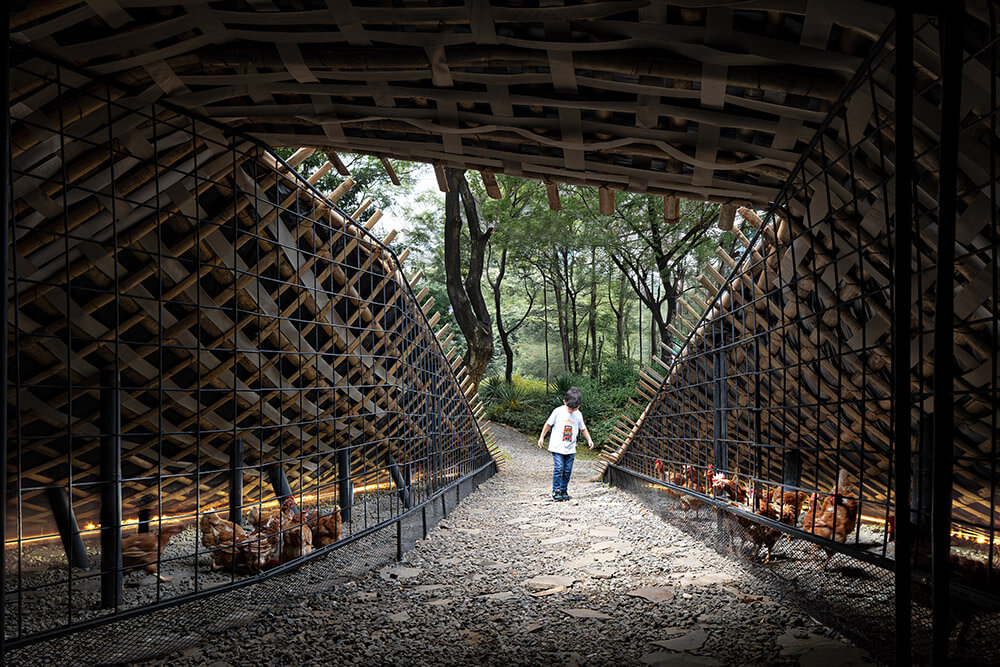
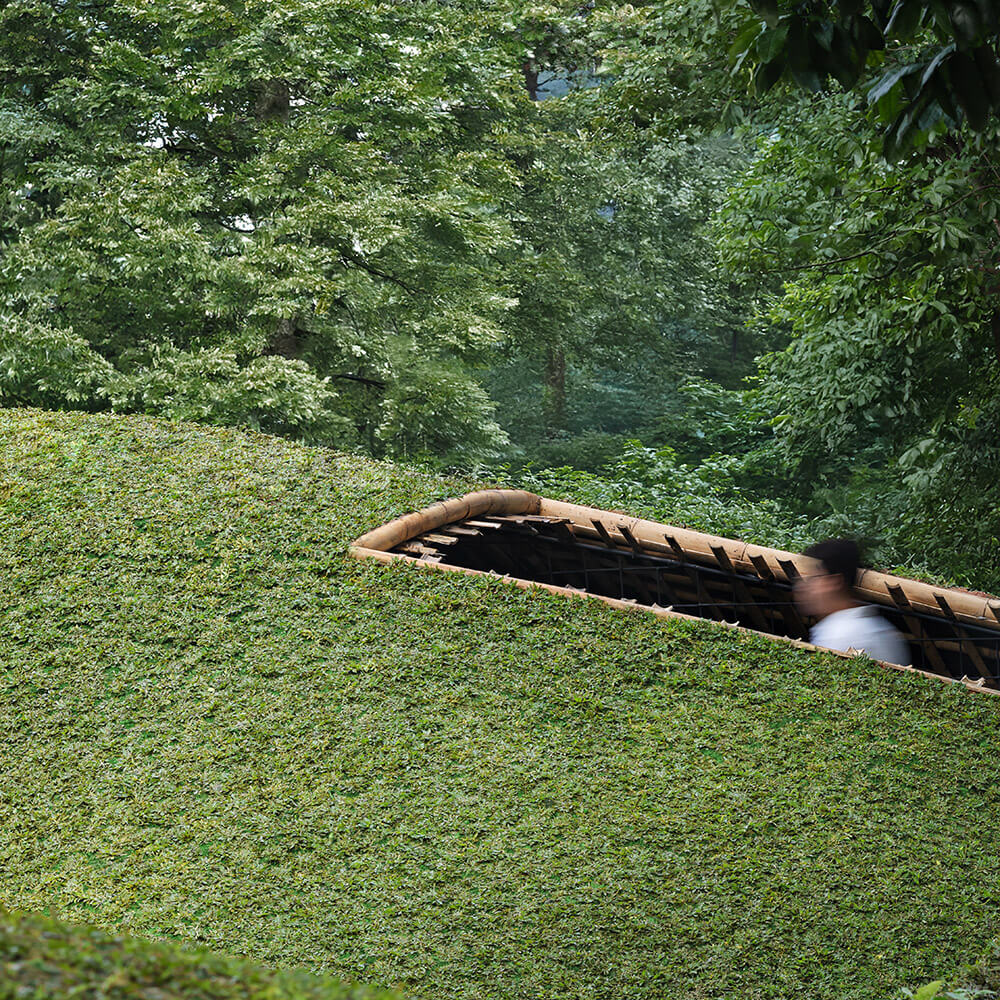
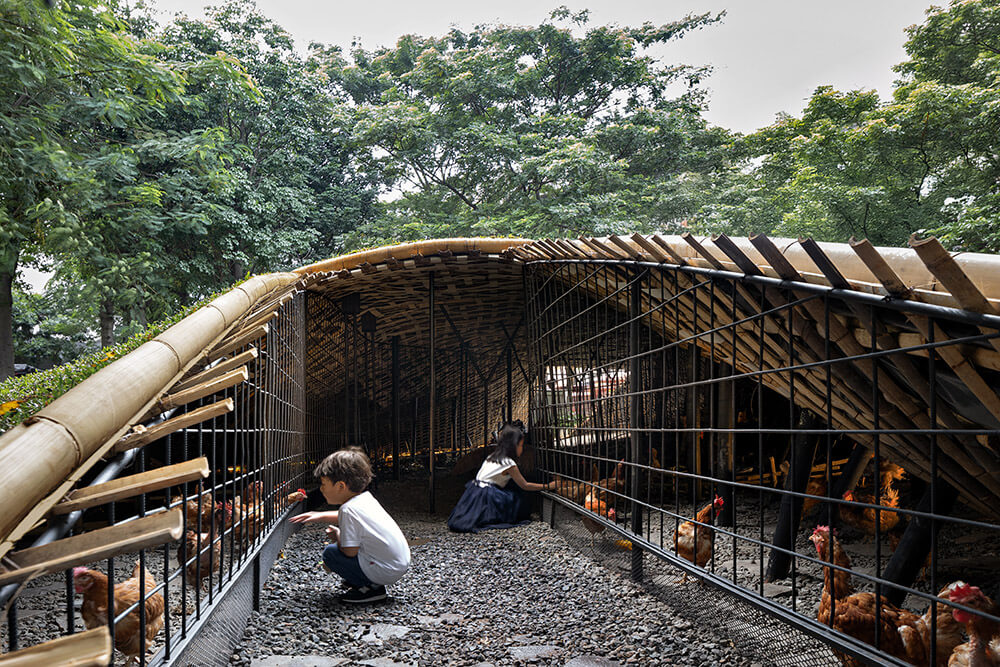
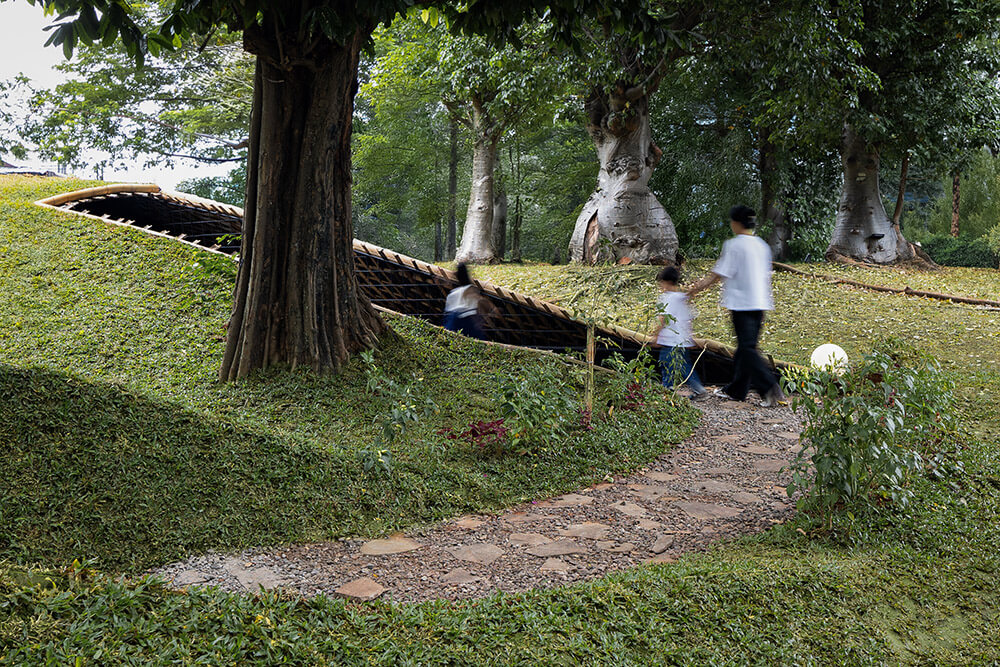
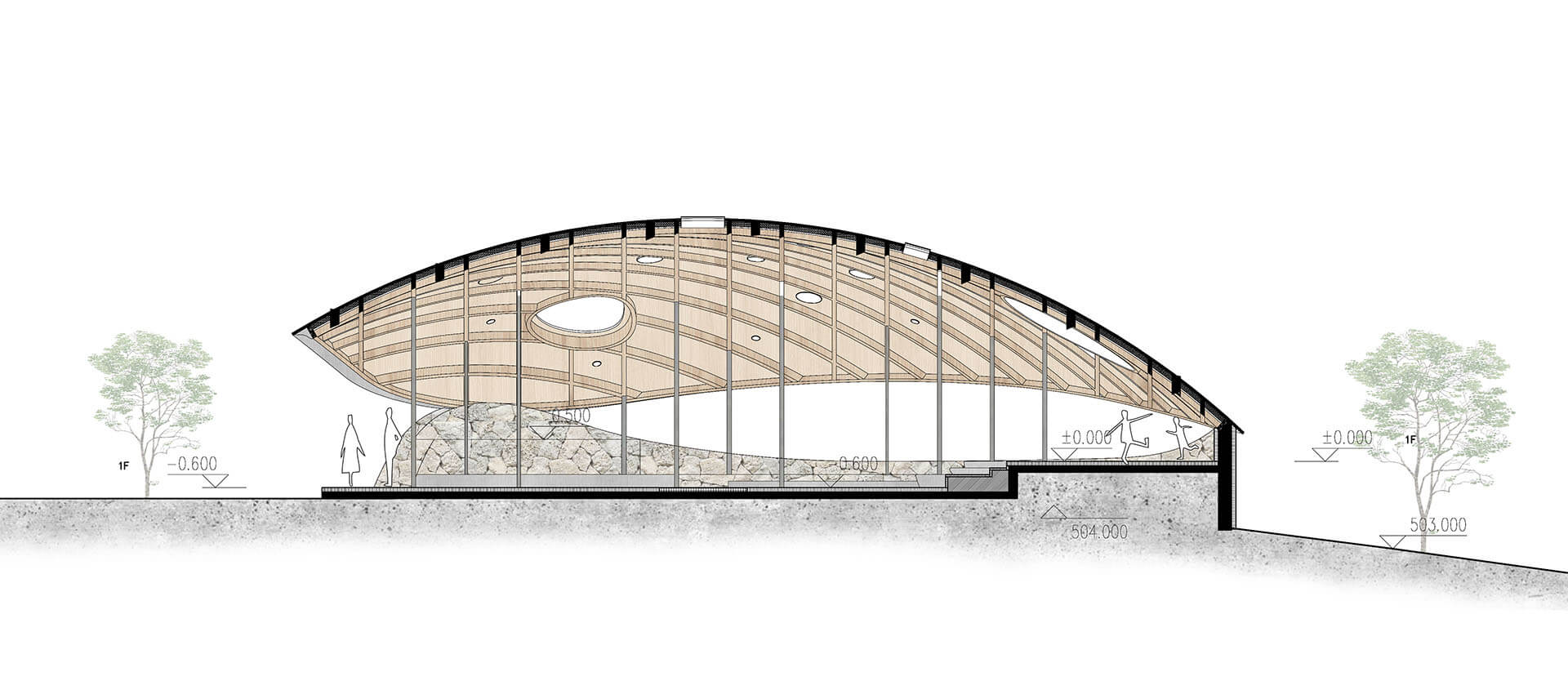
Chicken Hero blends very mode­stly into the land­scape and looks like just another hill in the park. It has a cave-like tunnel that offers free, inclu­sive educa­tion and enter­tain­ment under the name Chicken­coop.

The project comes from the Indo­ne­sian archi­tec­ture firm RAD+AR, which is committed to provo­ca­tion as a means of enga­ging with space, archi­tec­ture, the envi­ron­ment and “tropical archi­tec­ture”.

Chicken coop

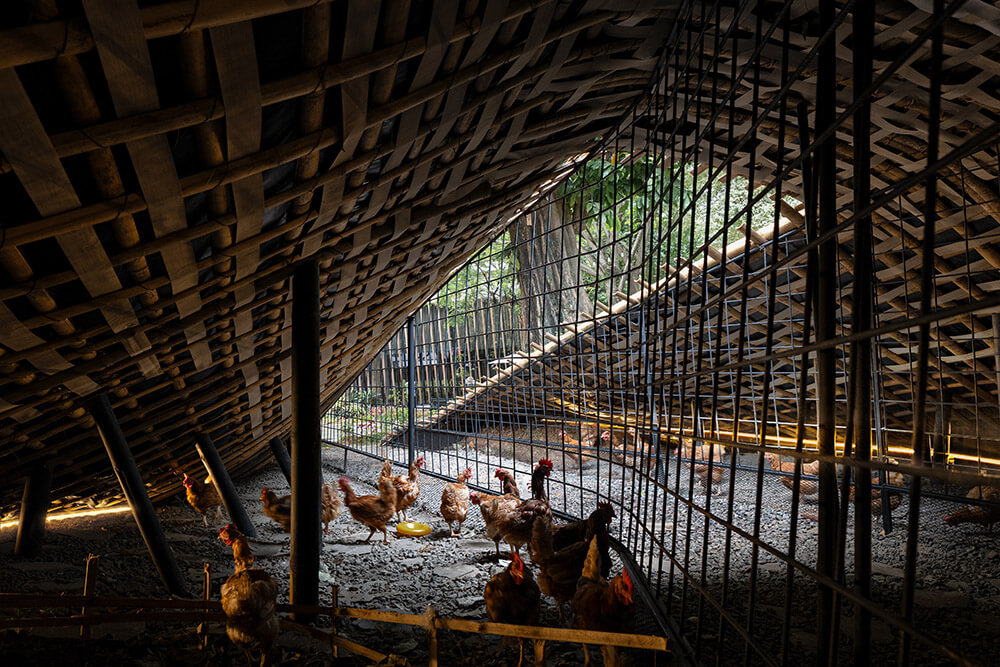
The Chicken Hero Pavi­lion pres­ents the proto­type of an envi­ron­men­tally friendly chicken coop, which was desi­gned accor­ding to the prin­ciple of upcy­cling. The aim is to combine respectful live­stock farming and sustaina­bi­lity.

The cross-venti­lated inte­rior provides indi­rect daylight and is covered with recy­cled bamboo as the main struc­ture of the hori­zontal-diagonal green roof. These coops meet the needs of the chickens while ensu­ring waste disposal and the preser­va­tion of green areas, such as rain­water catch­ment areas – all while main­tai­ning a stable and comfor­table thermal envi­ron­ment for the chickens.

Tempo­rary struc­ture

This tempo­rary struc­ture demons­trates an uncom­pli­cated and ecolo­gical circular economy in the middle of a metro­po­litan green space. During the four-week exhi­bi­tion period, the pavi­lion actively served as a food waste recy­cling plant for six restau­rants in the neigh­bor­hood.

All dried leaves and organic tree waste were used as bedding for the chickens, while also helping to reduce mois­ture. The composted food waste and dried leaves were then turned into garden and commer­cial compost, which was harve­sted every three days. Appro­xi­m­ately 40 eggs were returned to the restau­rants each day and served as living harvest souve­nirs for visi­tors.

Recipro­city

A central element of the Chicken Hero Pavi­lion is the recipro­city between visi­tors and chickens. This is intended to break the stigma of back­yard poultry farming and encou­rage visi­tors to become agents of change for sustaina­bi­lity in their own house­holds, neigh­bor­hoods and commu­ni­ties.

The Chicken Hero Pavi­lion aims to achieve the (curr­ently) utopian goal of decen­tra­liza­tion, sustaina­bi­lity and the promo­tion of a micro-circular economy within neigh­bour­hood commu­ni­ties – and thus to over­come factory farming. This approach is in line with the current trend of “gloca­liza­tion” (globa­liza­tion + loca­liza­tion) in the vast archi­pe­lagos of Indo­nesia.

And not only there. A great project.

Project data

Desi­gner

RAD+AR
Jalur 20 Block 30/19
West Jakarta
Indo­nesia 11620

Photos

RAD+AR

Opening

2024

Address

Urban Forest Cipete
Kota Jakarta Selatan
Daerah Khusus Ibukota
Jakarta 12430
Indo­nesia

Text

Johannes Bühl­be­cker
More Sports Media

Drawings

[dica_divi_carousel item_width_tablet=“100%” item_width_phone=“100%” item_width_last_edited=“on|phone” show_items_desktop=“1” show_items_tablet=“1” multislide=“on” transition_duration=“1000” loop=“on” autoplay=“on” hoverpause=“on” autoplay_speed=“3500” arrow_nav=“on” item_spacing=“10” item_vertical_align=“flex-start” advanced_effect=“1” arrow_nav_color=”#5E5C4D” arrow_bg_color=”#FFFFFF” dots_color=“#FAF4E4” dots_active_color=”#5E5C4D” overlay_color_field_bgcolor=“rgba(255,255,255,0.85)” carousel_container_margin=”||50px||false|false” _builder_version=“4.27.4” _module_preset=“default” title_font=“Roboto Condensed||||||||” body_font=“Roboto Condensed||||||||” custom_margin=”|50px||30px|false|false” custom_margin_tablet=”|50px||30px|false|false” custom_margin_phone=”|0px|0px|0px|false|false” custom_margin_last_edited=“on|phone” custom_padding_tablet=”” custom_padding_phone=”||0px||false|false” custom_padding_last_edited=“on|phone” global_colors_info=”{}”][dica_divi_carouselitem button_url_new_window=“1” image=“https://moresports.network/wp-content/uploads/2025/04/1200px_002-blockplan.jpg” image_lightbox=“on” _builder_version=“4.27.4” _module_preset=“default” global_colors_info=”{}”][/dica_divi_carouselitem][dica_divi_carouselitem button_url_new_window=“1” image=“https://moresports.network/wp-content/uploads/2025/04/1200px_003-Siteplan.jpg” image_lightbox=“on” _builder_version=“4.27.4” _module_preset=“default” global_colors_info=”{}”][/dica_divi_carouselitem][dica_divi_carouselitem button_url_new_window=“1” image=“https://moresports.network/wp-content/uploads/2025/04/1200px_006-axonometric.png” image_lightbox=“on” _builder_version=“4.27.4” _module_preset=“default” global_colors_info=”{}”][/dica_divi_carouselitem][dica_divi_carouselitem button_url_new_window=“1” image=“https://moresports.network/wp-content/uploads/2025/04/1200px_005-section‑2.jpg” image_lightbox=“on” _builder_version=“4.27.4” _module_preset=“default” global_colors_info=”{}”][/dica_divi_carouselitem][dica_divi_carouselitem button_url_new_window=“1” image=“https://moresports.network/wp-content/uploads/2025/04/1200px_004-section‑1.jpg” image_lightbox=“on” _builder_version=“4.27.4” _module_preset=“default” global_colors_info=”{}”][/dica_divi_carouselitem][dica_divi_carouselitem button_url_new_window=“1” image=“https://moresports.network/wp-content/uploads/2025/04/1200px_000-process.png” image_lightbox=“on” _builder_version=“4.27.4” _module_preset=“default” global_colors_info=”{}”][/dica_divi_carouselitem][dica_divi_carouselitem button_url_new_window=“1” image=“https://moresports.network/wp-content/uploads/2025/04/1200px_000-BACKGROUND.png” image_lightbox=“on” _builder_version=“4.27.4” _module_preset=“default” global_colors_info=”{}”][/dica_divi_carouselitem][/dica_divi_carousel]

Video

Our news­letter

Your stage

Publish your project or product here!

Heilongtan Dome

Heilongtan Dome Music Hall

Home is where the Dome is


Studio Dali Archi­tects

The Heilongtan Dome Music Hall by Studio Dali Archi­tects doesn’t scream for atten­tion, but it sings: quietly, openly and with the certainty that it belongs in this very place.

Put down roots

The Heilongtan Dome (Music Hall) rises gently from the gently sloping land­scape at the entrance to an agro-cultural commu­nity in Chengdu, China.

The open-air hall by Studio Dali Archi­tects doesn’t scream for atten­tion, but it sings: quietly, openly and with the calm certainty that it belongs in this very place. Enve­loped by trees, light and land­scape, this hall with its curved roofs is remi­nis­cent of the village meeting room – where stories, music and memo­ries take root natu­rally under a banyan tree.

Its loca­tion on a gentle slope, by the lake and surrounded by young trees combines the dome­stic with the rural, the crea­tive with the natural.

Spiri­tual Center

Heilongtan is the name of a new deve­lo­p­ment area in Renshou County in Meishan, and the Heilongtan Dome is the new entrance and land­mark here.

The design is based on the tradi­tional symbo­lism of banyan trees. In this area, they are usually found at the entrance to the village and serve as places of encounter and tran­quil­lity. The semi-open hall is remi­nis­cent of the space under the root network of such trees and serves (accor­ding to the archi­tects) as a “spiri­tual center” for the commu­nity.

It is mainly used for concerts, theater rehear­sals and perfor­mances, courses, rest and informal meetings.

Olive trees

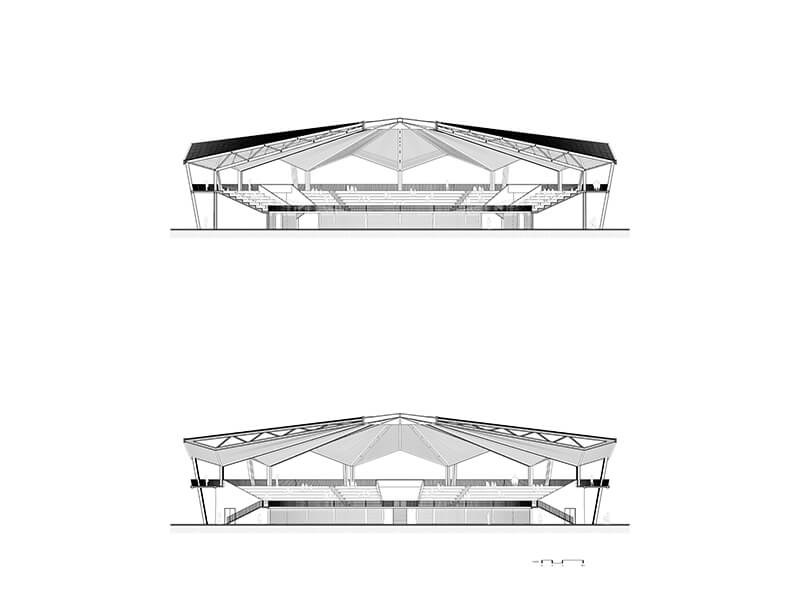
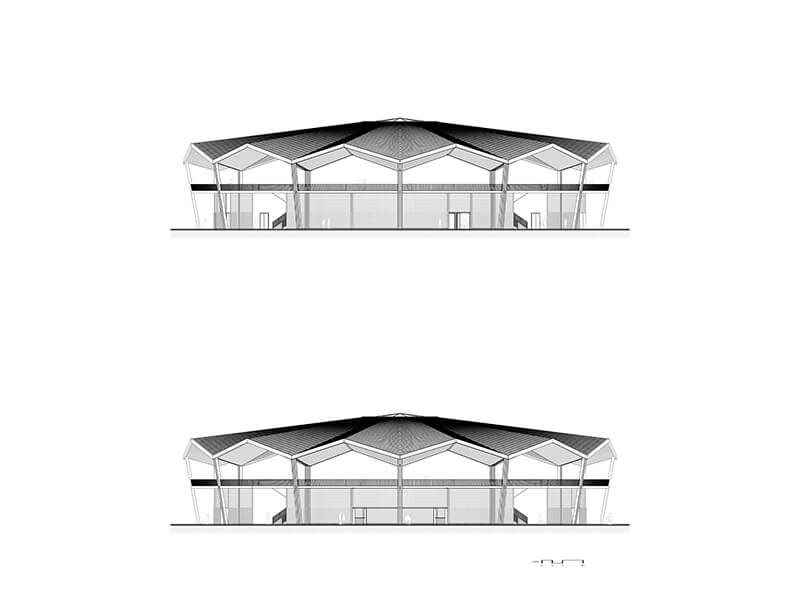
The open-air hall is cons­tructed as a wooden dome, its roof resembling a protec­tive network of leaves. Large skylights allow three Chinese olive trees to grow through the roof, while more than a dozen other openings bring daylight into the inte­rior. The visible wooden cons­truc­tion creates an impres­sive atmo­sphere and good acou­stics.

A few seating steps rise slightly towards the lake, ideal for spec­ta­tors and open for informal uses such as theater. The arran­ge­ment of the chrome-plated steel supports is remi­nis­cent of air-rooted banyan trees and streng­thens the connec­tion between archi­tec­ture and nature.

Archi­tec­ture

The supporting struc­ture consists of a light­weight wood-steel hybrid cons­truc­tion. 24 slender, chrome-plated steel supports with a diameter of 60–100 mm allow the dome to float, while roof sections reach down to the ground and support water drai­nage.

The close inte­gra­tion of the hall with nature is of central importance: the buil­ding nestles against the slope, opens up to the forest and allows a play of light and shadow between the pillars and through the trees. Daylight floods the inte­rior spaces, while the struc­ture itself creates a harmo­nious connec­tion between buil­ding, nature and commu­nity using mini­mally harmful tech­no­logy.

Just good archi­tec­ture.

Project data

Desi­gner

Studio Dali Archi­tects
Li Ye, Zeng Xian­ming, Lan Lan

Buil­ding owner

China Railway Sichuan Ecolo­gical City Invest­ment Co., Ltd.

Opening

2024

Address

Heilongtan
Renshou County
Meishan City
ichuan Province
China

Photos

Arch-Exist      

Text

Johannes Bühl­be­cker
More Sports Media

Drawings

[dica_divi_carousel item_width_tablet=“100%” item_width_phone=“100%” item_width_last_edited=“on|phone” show_items_desktop=“1” show_items_tablet=“1” multislide=“on” transition_duration=“1000” loop=“on” autoplay=“on” hoverpause=“on” autoplay_speed=“3500” arrow_nav=“on” item_spacing=“10” item_vertical_align=“flex-start” advanced_effect=“1” arrow_nav_color=”#5E5C4D” arrow_bg_color=”#FFFFFF” dots_color=“#FAF4E4” dots_active_color=”#5E5C4D” overlay_color_field_bgcolor=“rgba(255,255,255,0.85)” carousel_container_margin=”||50px||false|false” _builder_version=“4.27.4” _module_preset=“default” title_font=“Roboto Condensed||||||||” body_font=“Roboto Condensed||||||||” width=“65%” width_tablet=“50%” width_phone=“50%” width_last_edited=“on|desktop” custom_margin=”|50px||30px|false|false” custom_margin_tablet=”|50px||30px|false|false” custom_margin_phone=”|0px|0px|0px|false|false” custom_margin_last_edited=“on|phone” custom_padding_tablet=”” custom_padding_phone=”||0px||false|false” custom_padding_last_edited=“on|phone” global_colors_info=”{}”][dica_divi_carouselitem button_url_new_window=“1” image=“https://moresports.network/wp-content/uploads/2025/06/1200px_site-plan.jpg” image_lightbox=“on” _builder_version=“4.27.4” _module_preset=“default” global_colors_info=”{}”][/dica_divi_carouselitem][dica_divi_carouselitem button_url_new_window=“1” image=“https://moresports.network/wp-content/uploads/2025/06/1200px_plan.jpg” image_lightbox=“on” _builder_version=“4.27.4” _module_preset=“default” global_colors_info=”{}”][/dica_divi_carouselitem][dica_divi_carouselitem button_url_new_window=“1” image=“https://moresports.network/wp-content/uploads/2025/06/1200px_section.jpg” image_lightbox=“on” _builder_version=“4.27.4” _module_preset=“default” global_colors_info=”{}”][/dica_divi_carouselitem][dica_divi_carouselitem button_url_new_window=“1” image=“https://moresports.network/wp-content/uploads/2025/06/1200px_diagram.jpg” image_lightbox=“on” _builder_version=“4.27.4” _module_preset=“default” global_colors_info=”{}”][/dica_divi_carouselitem][/dica_divi_carousel]

Our news­letter

Your stage

Publish your project or product here!

Volta­platz skate park

The reno­va­tion of the Volta­platz skate park in Krefeld

It couldn’t be faster


Triflex (Adver­to­rial)

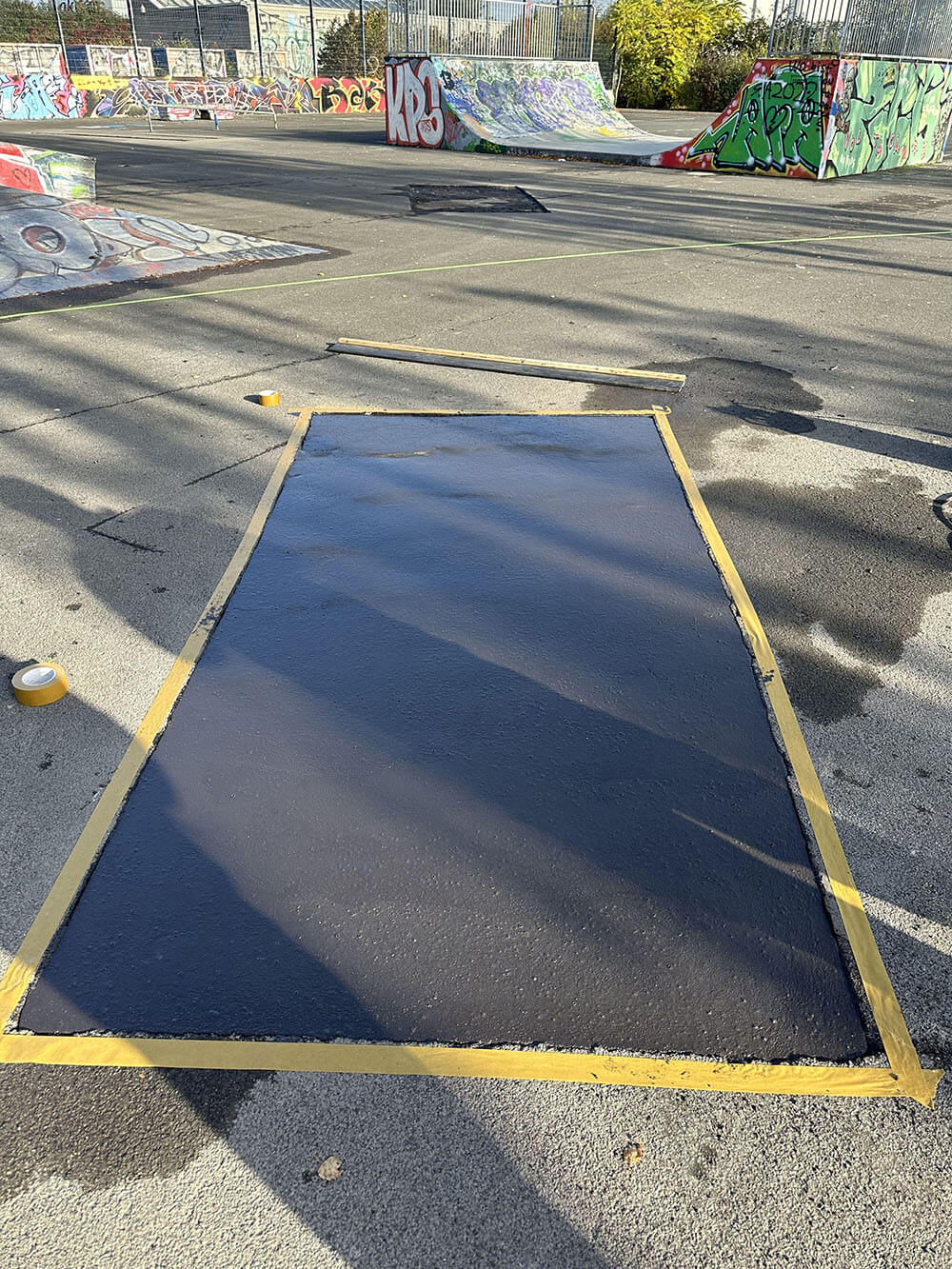
What is parti­cu­larly impres­sive is that the damaged areas were repaired in less than three days during the fall vaca­tions. The Volta­platz skate park did not even have to be closed.

Meeting point Skate­park Volta­platz

The Volta­platz skate park in Krefeld has been a central meeting point for skate­boar­ders, BMX riders and inline skaters since it opened in the 1990s. Two quar­ters, two kickers, a spine, two curbs, an Ollibox and a rail are available for the athletes. The park also has a soccer pitch and a street hockey pitch.

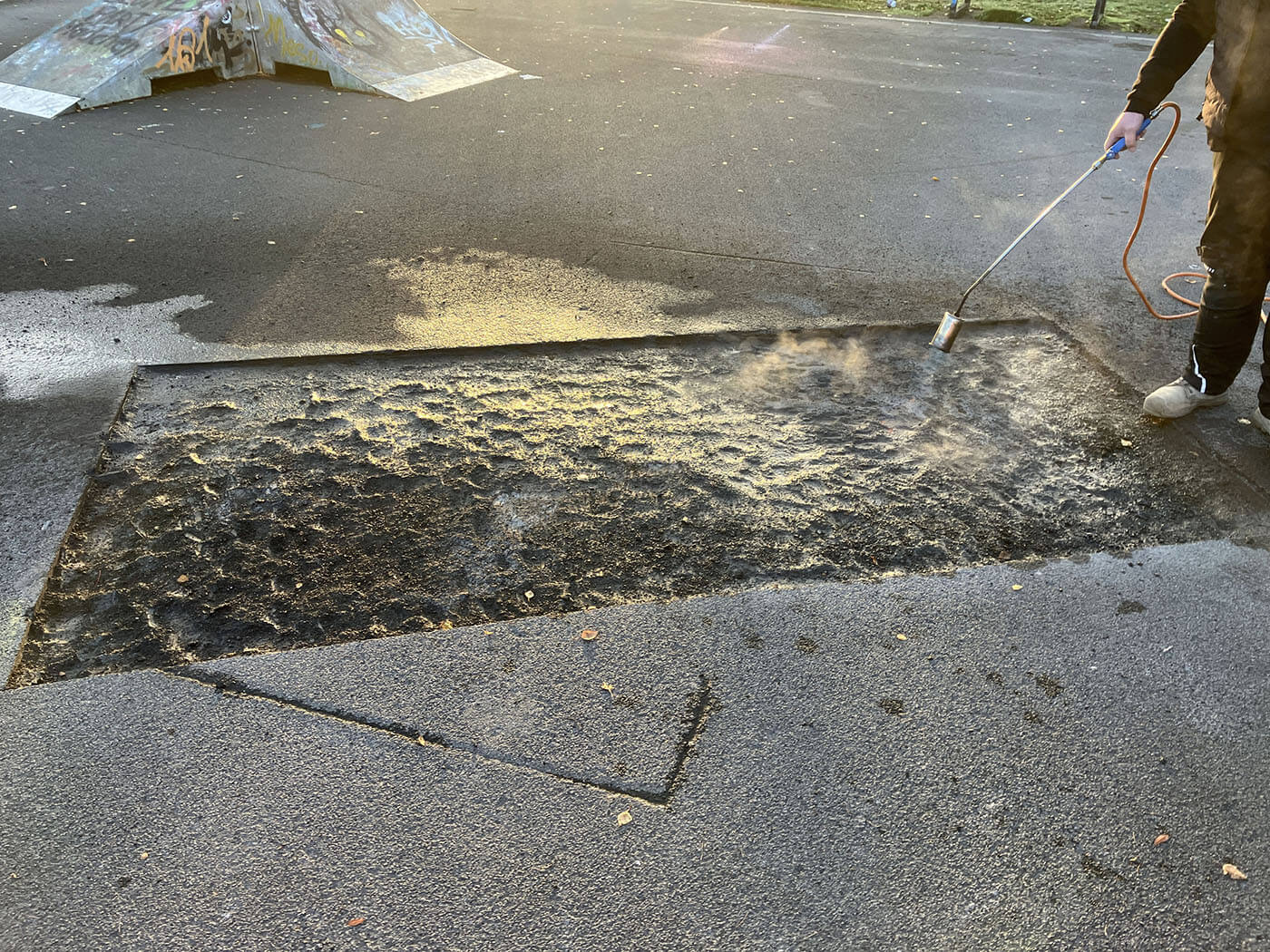
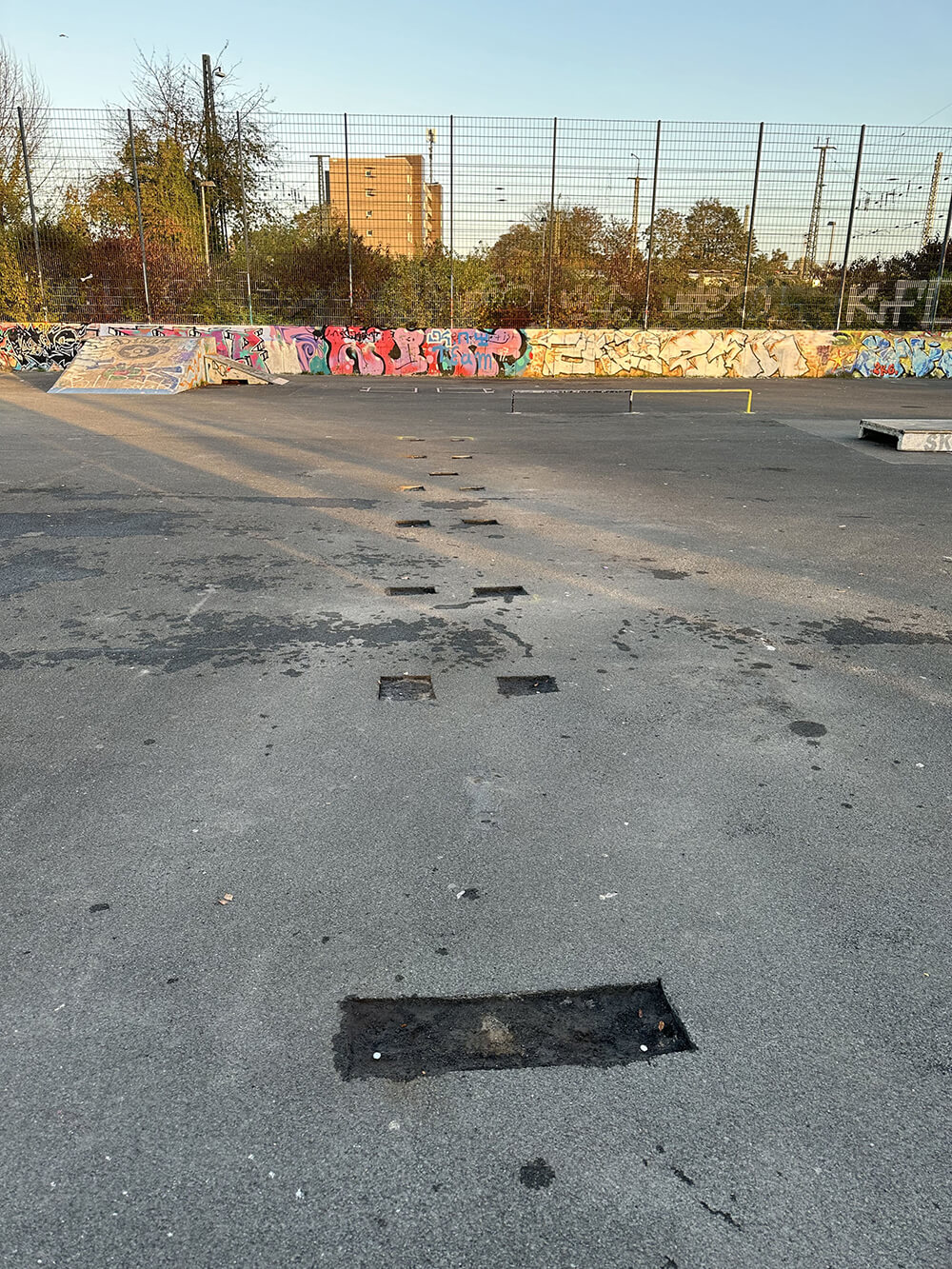
However, the inten­sive use of the faci­lity over the years had led to considerable damage to the asphalt surface, which extended into the binding layer and endan­gered safety. In order to ensure the long-term usabi­lity of the park, Kommu­nal­be­trieb Krefeld ther­e­fore decided to repair the damaged areas.

The fixed requi­re­ments were that the disrup­tion to use should be as low as possible and that the track should be usable again as quickly as possible.

In order to meet these strict speci­fi­ca­tions, the repairs were carried out using products from the Minden-based liquid plastic specia­list Triflex.

Three days in the fall

The work at the Volta­platz skate park took place during the 2024 autumn vaca­tions while the park was in opera­tion in order to mini­mize disrup­tion to users.

The surface first had to be thoroughly prepared for the repair. The damaged areas in the asphalt were carefully chiseled out and then cleaned. After clea­ning, the areas were primed (with Triflex Cryl Primer 222) to ensure an optimum bond between the substrate and the repair mortar.

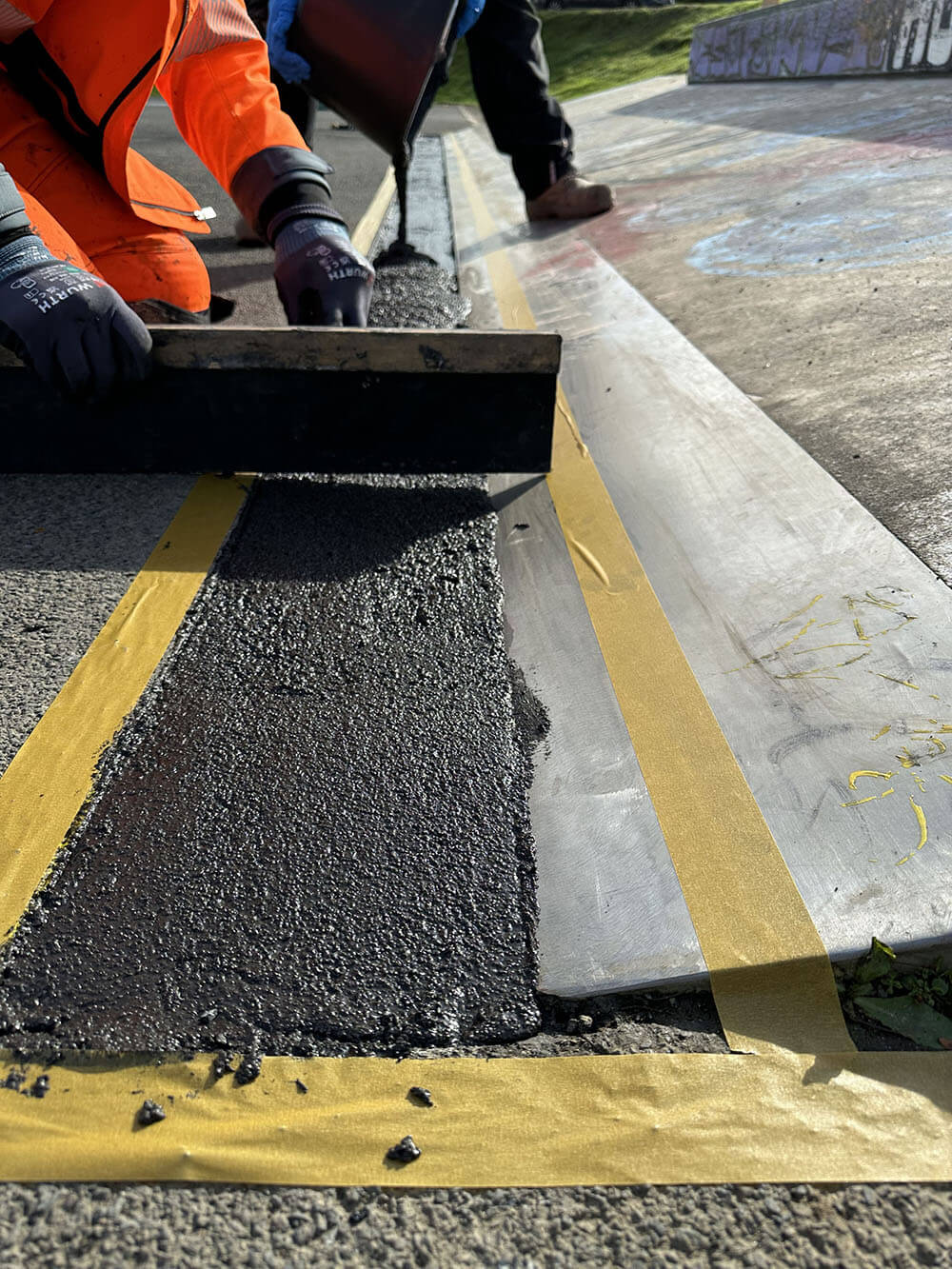
Once the primer had hardened, the repair mortar Triflex Asphalt Repro 3K was applied. This three-compo­nent, bitumen-free repair mortar enables fast and durable repairs. The product is ideally suited for the long-term repair of damaged areas on roads, paths and in parks with little effort.

Less time, less odor

Triflex Asphalt Repro 3K is applied in just a few steps: Applied cold directly from the bucket and spread with a trowel, no special equip­ment is required. The product forms a full-surface adhe­sive bond with the exis­ting asphalt substrate.

The PMMA resin contained in the repair mortar hardens very quickly, in 45 minutes.

The blocking times can ther­e­fore be reduced to a minimum. Compared to conven­tional mastic asphalt, the repair with a PMMA-based product was faster, more econo­mical and was accom­pa­nied by signi­fi­cantly less odor nuisance.

Mate­rial & tech­no­logy

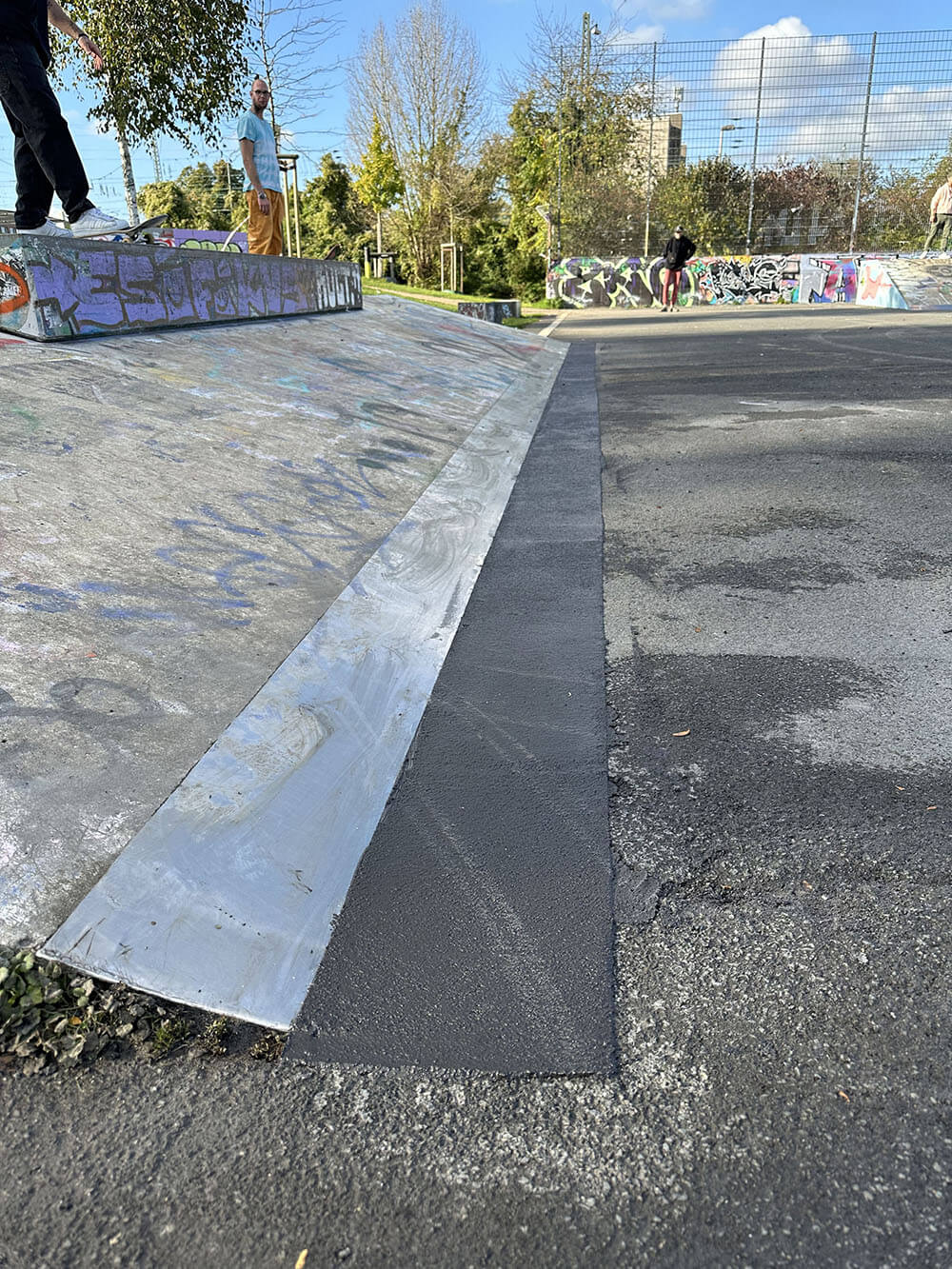
The special struc­ture of the park, with its ramps and tran­si­tions between diffe­rent mate­rials such as asphalt and metal, posed a considerable addi­tional chall­enge for both the processor and the product.

Toge­ther with the Krefeld-based company Kox Abdich­tungs­technik, the some­times chal­len­ging repairs to tran­si­tion areas between asphalt and metal were also carried out with precision. The repair mortar used enables flexible and precise work without the need for heavy equip­ment. The rapid curing of the mate­rial also ensured that the freshly repaired areas could be used again quickly.

The reno­va­tion of the skate park at Volta­platz shows how the use of modern mate­rials and tech­ni­ques can extend the service life of such faci­li­ties and ensure the safety of users.

Parti­cu­larly impres­sive: the repair of the damaged areas was carried out in less than three days during the fall vaca­tions in order to reduce the disrup­tion to users to a minimum. The Volta­platz skate park did not even have to be closed.

Project data

Execu­ting company

Kox Abdich­tungs­technik
Hoch­staden Str. 5
D- 47829 Krefeld

Buil­ding owner

City of Krefeld

Refur­bish­ment

23.–25.10.2024

Manu­fac­turer

Triflex GmbH & Co. KG
Karl­straße 59
D – 32423 Minden

Product: Triflex Asphalt Repro 3K

Address

Skate­park Volta­platz
D – 47805 Krefeld

Photos

Triflex

Text

Johannes Bühl­be­cker
More Sports Media
(Adver­to­rial)

Video

Our news­letter

Your stage

Publish your project or product here!

Armored hall Tübingen

The armored hall in Tübingen

The public living room


City of Tübingen

As one of the first open-air halls in Germany, the Panzer­halle in Tübingen stands for urban reden­si­fi­ca­tion, urban vibrancy and a successful inter­play of living, culture and leisure. A lively place where history, commu­nity and modern city life come toge­ther – with plenty of scope for the future.

History

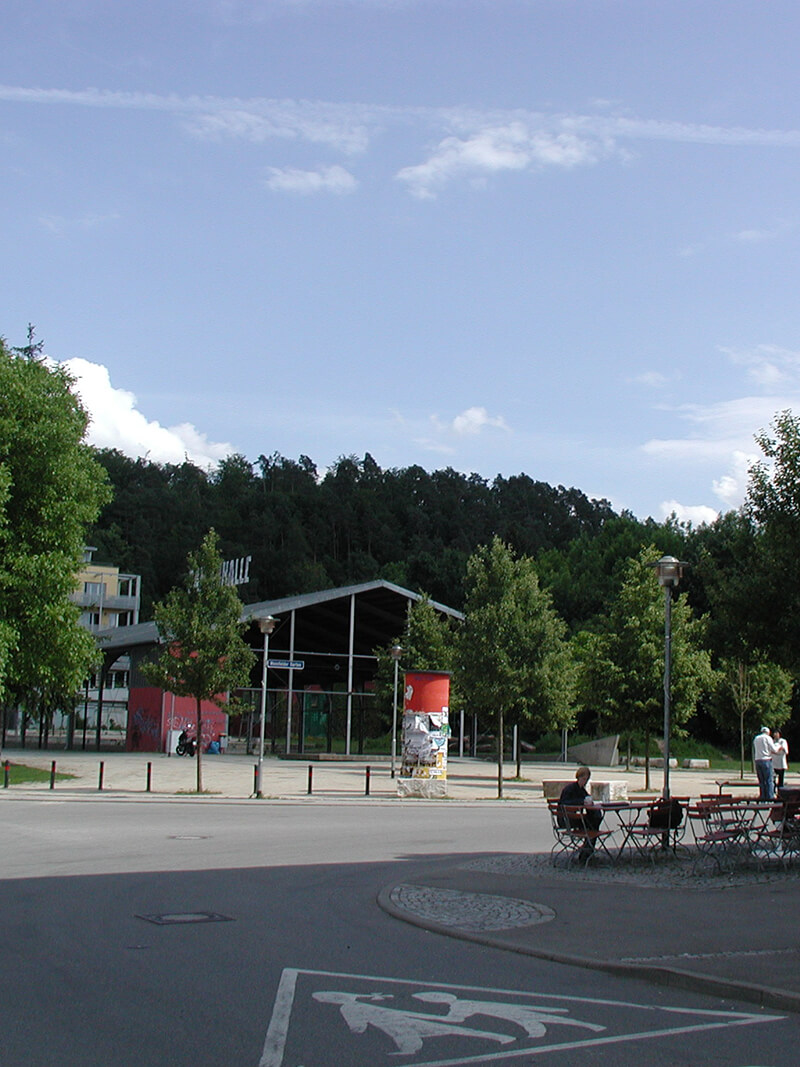
The Panzer­halle was built in 1934/35 as a riding hall for the Hinden­burg barracks. After the Second World War, it served as infra­struc­ture for the French army, which was stationed in the so-called French Quarter until 1991. After the with­drawal of the French troops, the large barracks, inclu­ding the Panzer­halle, were acquired by the city of Tübingen and trans­formed into a lively, mixed-use quarter as part of an urban deve­lo­p­ment concept with a great deal of public parti­ci­pa­tion.

The Hinden­burg barracks became the French Quarter, the buil­ding became the Panzer­halle, initi­ally a venue for spon­ta­neous concerts and parties.

Conver­sion

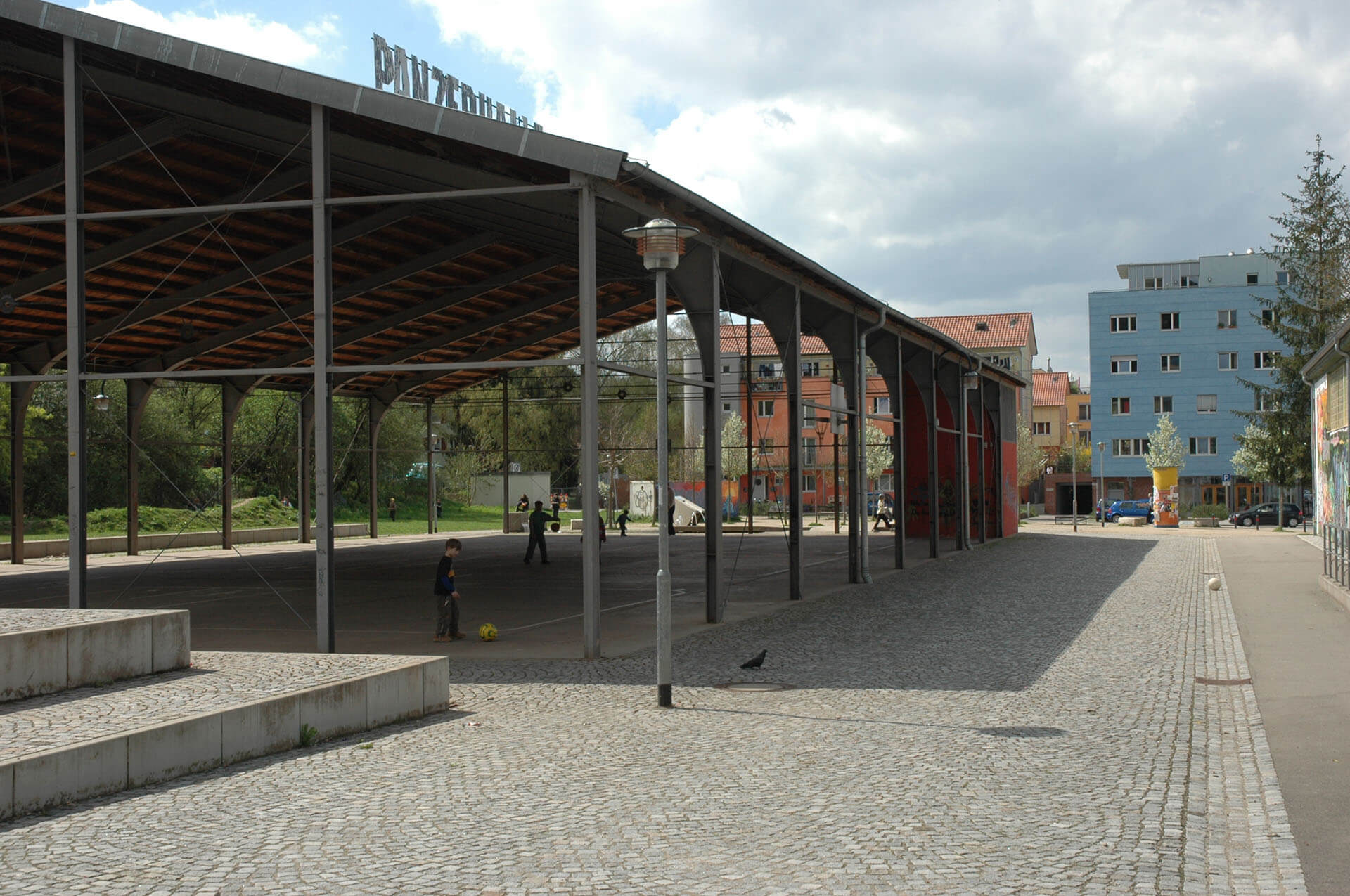
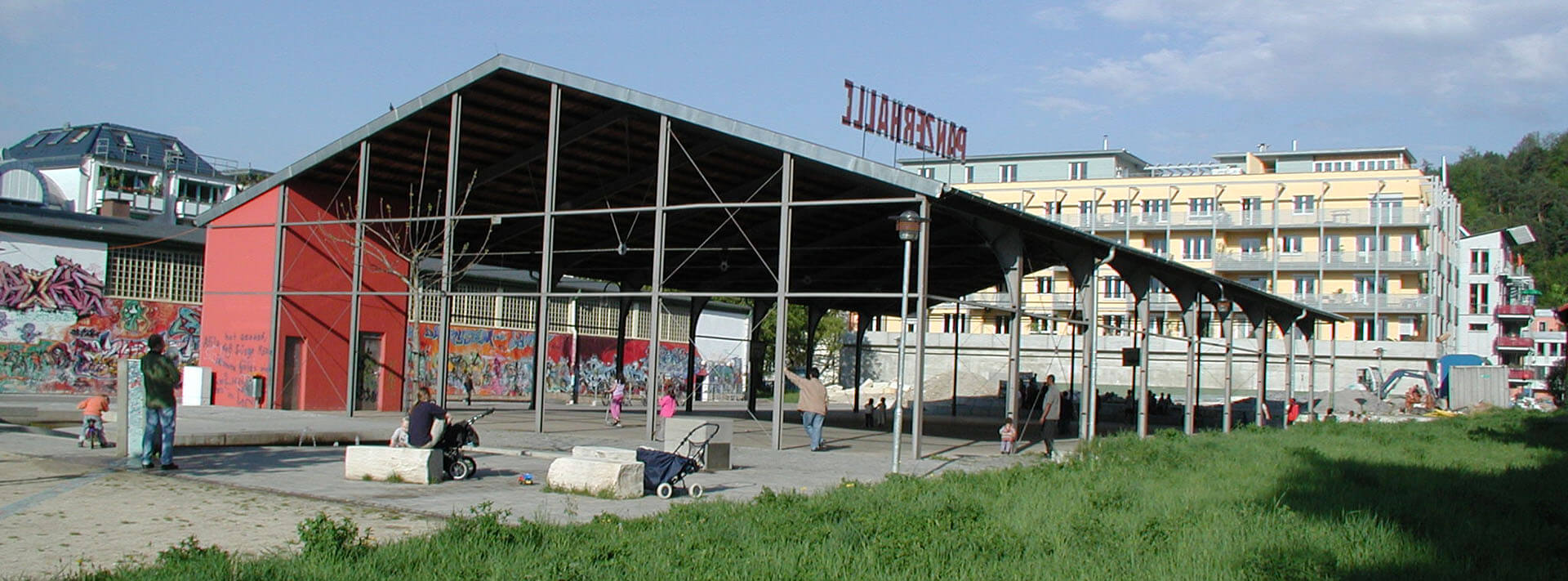
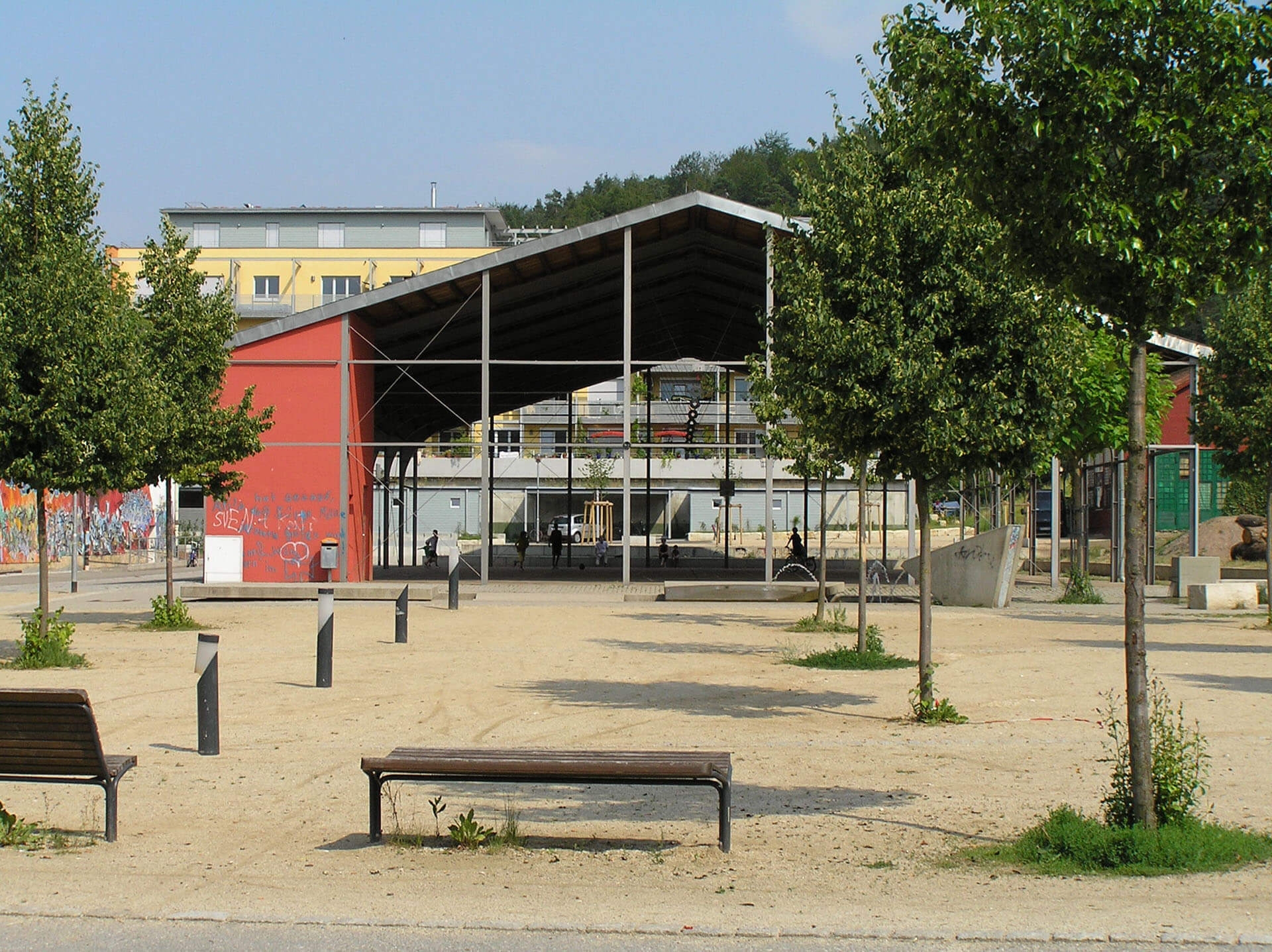
The conver­sion of the Panzer­halle into an open-air hall took place around the turn of the mill­en­nium. The initial plan was to convert it into a public event space, a theater or cinema. However, as part of the subse­quent open-space plan­ning, the project then changed into one of the first German open-air halls: The walls were removed, the supporting struc­ture reno­vated and a small toilet tower installed.

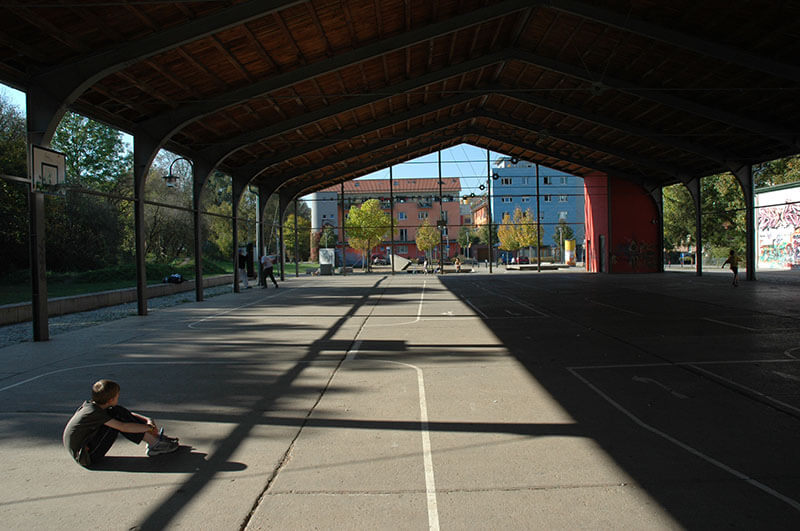
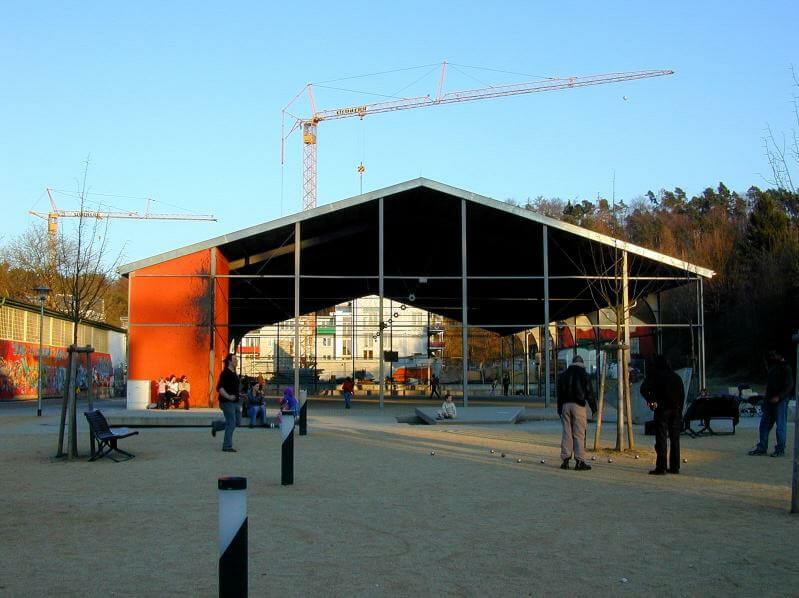
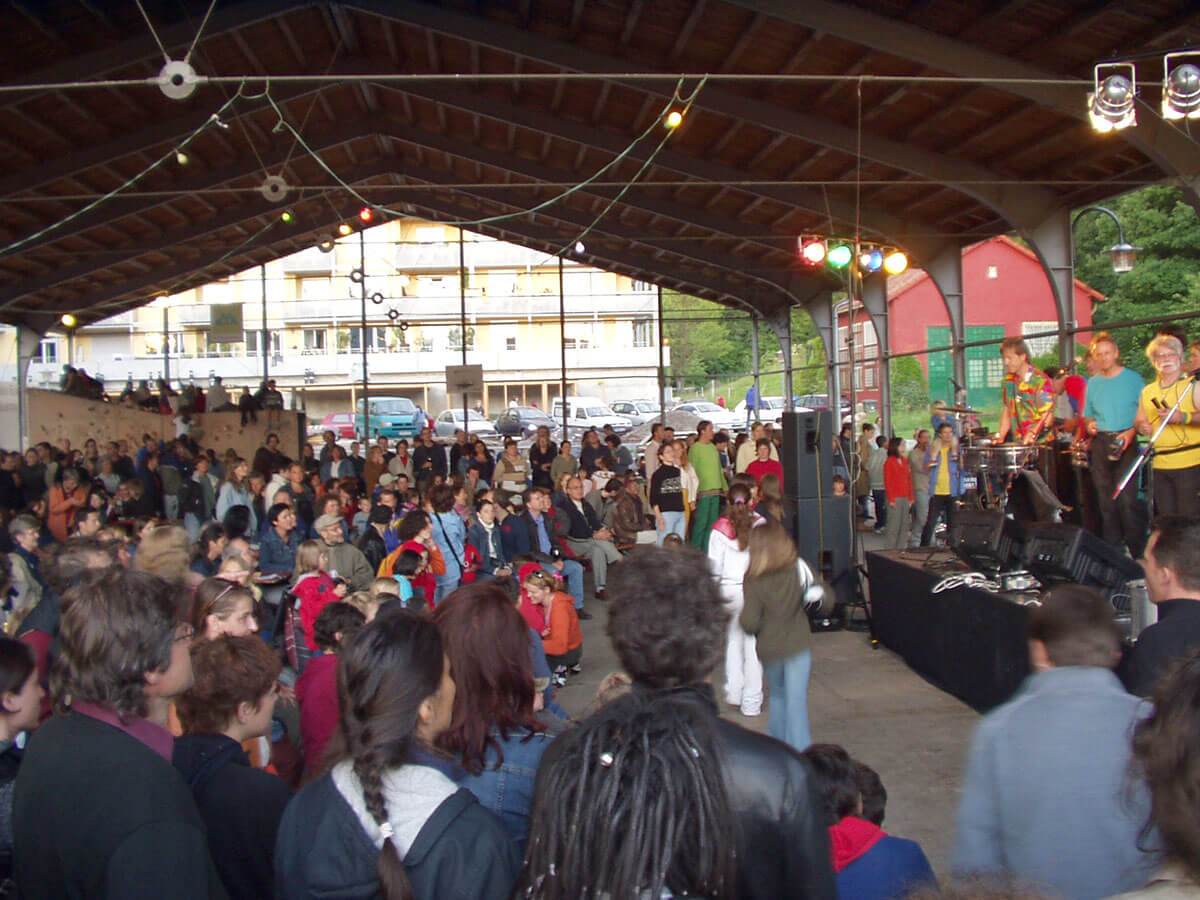
The hall was given a flat roof but no walls and, as an open pavi­lion, became an urban meeting place with seating for up to 500 people for events.

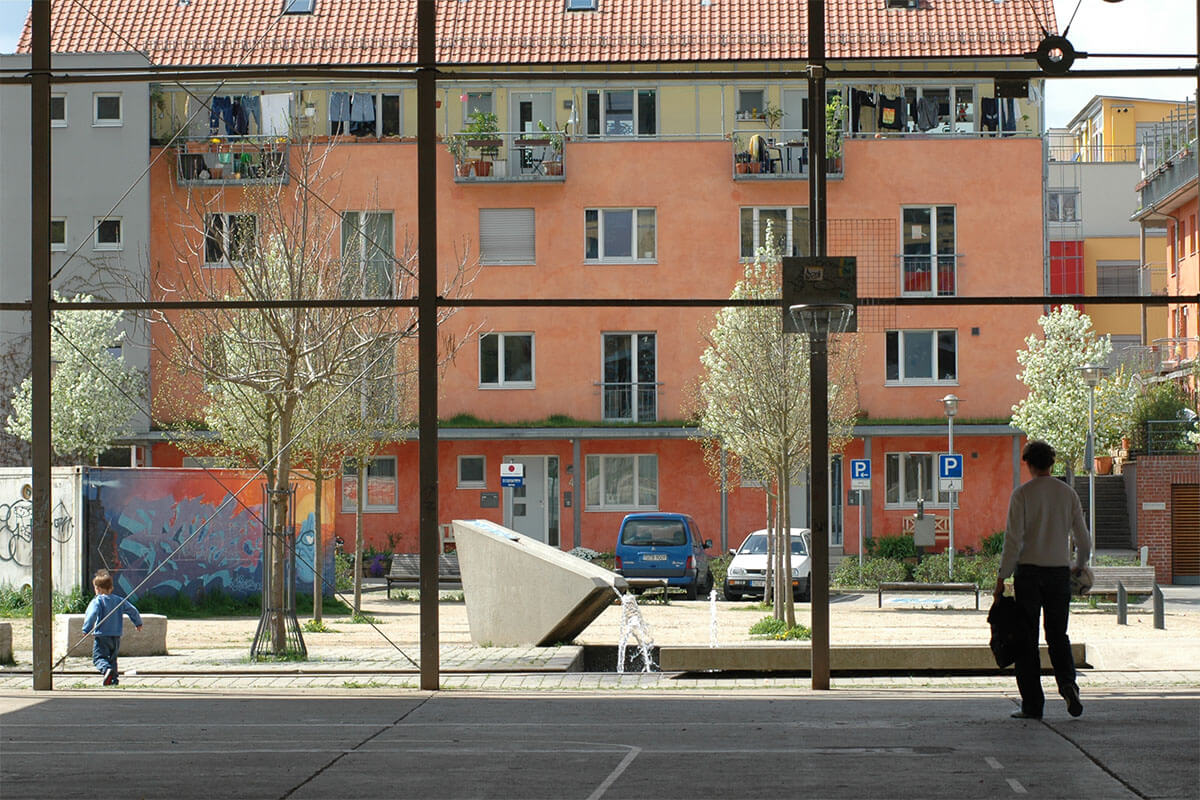
The exposed load-bearing struc­ture is archi­tec­tu­rally distinc­tive: covered but open, the hall conveys the feeling of being outside while at the same time offe­ring protec­tion from the weather. This urban plan­ning approach was high­lighted at the 2006 Archi­tec­ture Bien­nale as a “symbol of a lively urban ensemble”.

The armored hall was now a multi­func­tional and covered public square.

Iden­tity

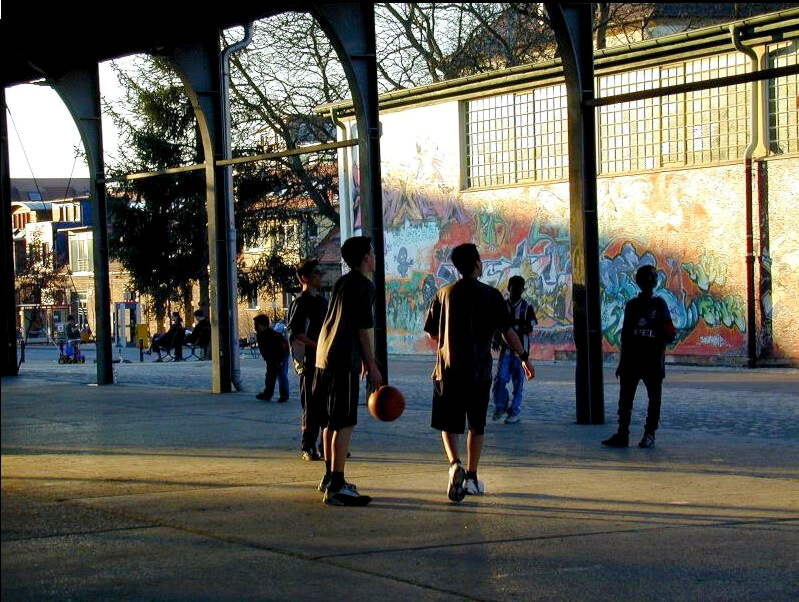
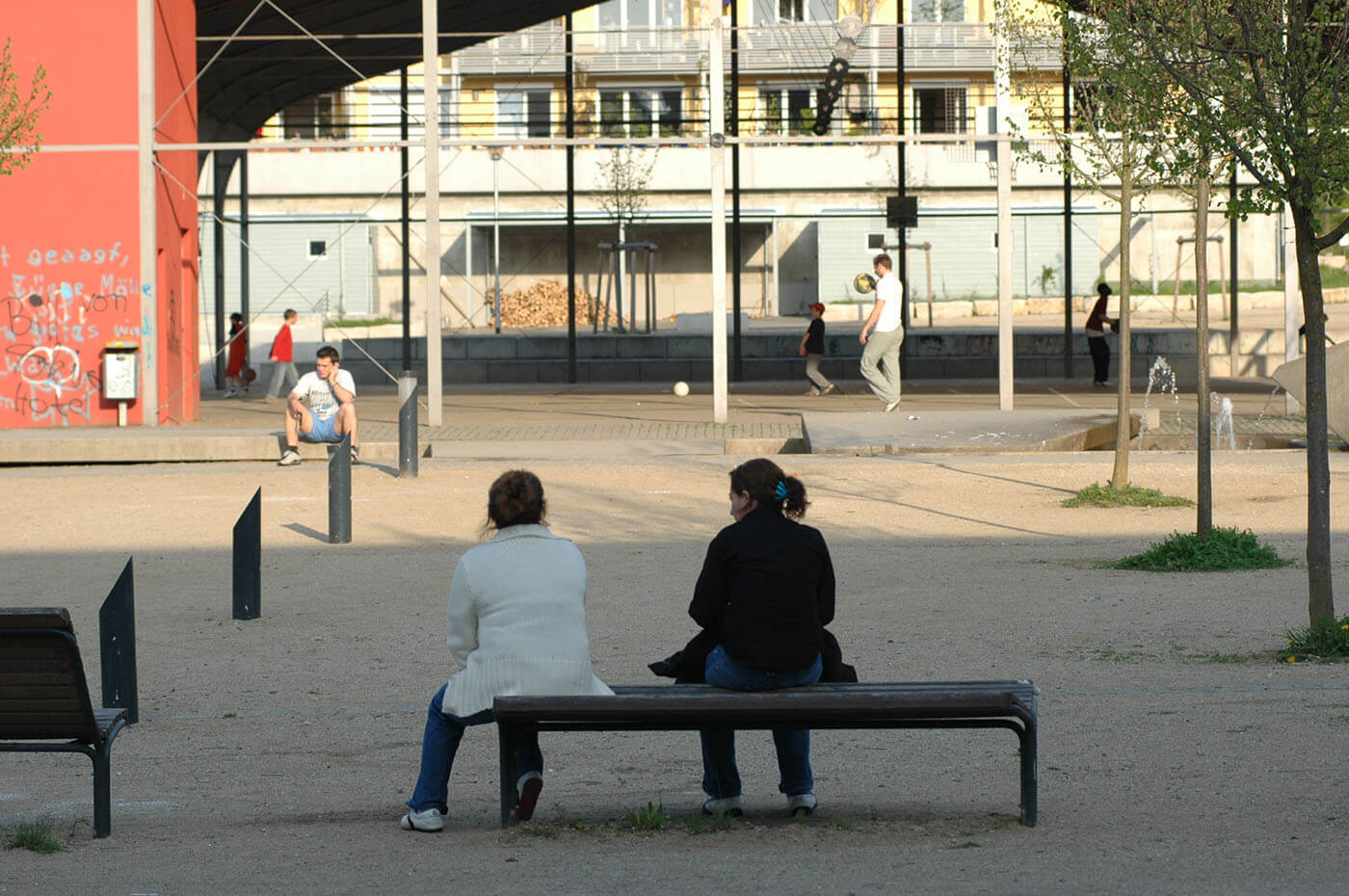
Today, the Panzer­halle, in combi­na­tion with the public open spaces around it, is a place for a wide variety of uses: In the mornings, the traffic police use it to train school classes in correct road beha­vior, while in the after­noons, children and young people play basket­ball and soccer. In the evenings and at night, there are barbe­cues and get-toge­thers in the rain – and flea markets, festi­vals, concerts and exhi­bi­tions take place at weekends.

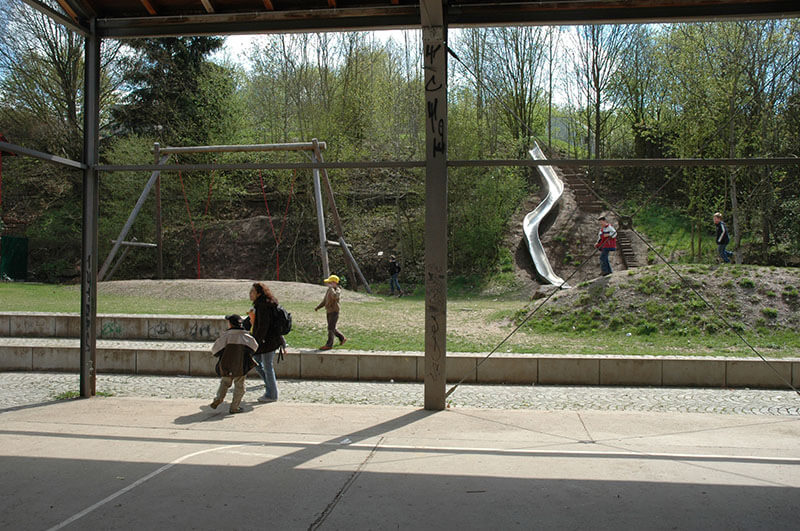
The Panzer­halle, the adja­cent Fran­zö­si­scher Platz and the child­ren’s play­ground built in 2005 are the central loca­tions in the district, not only for the 2,400 resi­dents of the Fran­zö­si­sches Viertel, but also for the neigh­boring districts. Nume­rous awards confirm their importance.

As an iden­tity-forming, open space, the Panzer­halle still stands for civic enga­ge­ment, neigh­bor­hood projects and urban expe­ri­ments.

The future

The Panzer­halle will continue to be used as a sports venue, cultural stage, meeting place and public living room. Its flexible, weather-protected cons­truc­tion allows for ever new formats, be it work­shops, pop-up markets or tempo­rary art exhi­bi­tions.

The project impres­si­vely demons­trates how indus­trial buil­dings can continue to make sense as public open spaces, multi­func­tional meeting places and cultural stages. The hall retains its histo­rical charm, combines public use with urban quality and remains sustainable thanks to its open, weather-protected archi­tec­ture.

But it also shows the huge poten­tial of open-air halls, which offer so many possible uses thanks to their mana­geable costs and high flexi­bi­lity, even in an urban context.

Project data

Planner & client

Univer­sity City of Tübingen
City Rede­ve­lo­p­ment Office
Loret­to­platz 30
D – 72072 Tübingen

Struc­tural Engi­neers

Hans-Ulrich Ströbel
Lilli-Zapf-Str. 6
D – 72072 Tübingen

Land­scape plan­ning

werk­büro für frei­raum und land­schaft
Aixer Str 19
D – 72072 Tübingen

Opening

1999

Address

Panzer­halle Fran­zö­si­sches Viertel
Aixer Straße 60
D – 72072 Tübingen

Photos

City of Tübingen
Manfred Grohe (aerial photos)

Text

Johannes Bühl­be­cker
More Sports Media

History

[dica_divi_carousel item_width_tablet=“100%” item_width_phone=“100%” item_width_last_edited=“on|phone” show_items_desktop=“1” show_items_tablet=“1” multislide=“on” transition_duration=“1000” loop=“on” autoplay=“on” hoverpause=“on” autoplay_speed=“3500” arrow_nav=“on” item_spacing=“10” item_vertical_align=“flex-start” advanced_effect=“1” arrow_nav_color=”#5E5C4D” arrow_bg_color=”#FFFFFF” dots_color=“#FAF4E4” dots_active_color=”#5E5C4D” overlay_color_field_bgcolor=“rgba(255,255,255,0.85)” carousel_container_margin=”||50px||false|false” _builder_version=“4.27.4” _module_preset=“default” title_font=“Roboto Condensed||||||||” body_font=“Roboto Condensed||||||||” width=“75%” width_tablet=“50%” width_phone=“50%” width_last_edited=“on|desktop” custom_margin=”|50px||30px|false|false” custom_margin_tablet=”|50px||30px|false|false” custom_margin_phone=”|0px|0px|0px|false|false” custom_margin_last_edited=“on|phone” custom_padding_tablet=”” custom_padding_phone=”||0px||false|false” custom_padding_last_edited=“on|phone” global_colors_info=”{}”][dica_divi_carouselitem button_url_new_window=“1” image=“https://moresports.network/wp-content/uploads/2025/06/1200px_F1000004.jpg” image_lightbox=“on” _builder_version=“4.27.4” _module_preset=“default” global_colors_info=”{}”][/dica_divi_carouselitem][dica_divi_carouselitem button_url_new_window=“1” image=“https://moresports.network/wp-content/uploads/2025/06/1200px_HBK_Kaserne_alt_bw.jpg” image_lightbox=“on” _builder_version=“4.27.4” _module_preset=“default” global_colors_info=”{}”][/dica_divi_carouselitem][dica_divi_carouselitem button_url_new_window=“1” image=“https://moresports.network/wp-content/uploads/2025/06/1200px_F1000007.jpg” image_lightbox=“on” _builder_version=“4.27.4” _module_preset=“default” global_colors_info=”{}”][/dica_divi_carouselitem][dica_divi_carouselitem button_url_new_window=“1” image=“https://moresports.network/wp-content/uploads/2025/06/1200px_panzerh4.jpg” image_lightbox=“on” _builder_version=“4.27.4” _module_preset=“default” global_colors_info=”{}”][/dica_divi_carouselitem][dica_divi_carouselitem button_url_new_window=“1” image=“https://moresports.network/wp-content/uploads/2025/06/1200px_Kopie-von-Franzoesisches-Viertel-06.jpg” image_lightbox=“on” _builder_version=“4.27.4” _module_preset=“default” global_colors_info=”{}”][/dica_divi_carouselitem][dica_divi_carouselitem button_url_new_window=“1” image=“https://moresports.network/wp-content/uploads/2025/06/1200px_corel016.jpg” image_lightbox=“on” _builder_version=“4.27.4” _module_preset=“default” global_colors_info=”{}”][/dica_divi_carouselitem][/dica_divi_carousel]

Video

Our news­letter

Your stage

Publish your project or product here!

Parque Quin­tana Roo

Parque Quin­tana Roo

Pure beauty


AIDIA Studio

From garbage dump to exhi­bi­tion grounds: the Parque Quin­tana Roo in Chetumal is the venue for a large agri­cul­tural fair and also a city park. With open-air halls.

Trans­for­ma­tion

The Parque Quin­tana Roo in Chetumal, the capital of the Mexican state of the same name, is the wonderful result of the trans­for­ma­tion of a land­fill site into an exten­sive ecolo­gical urban park.

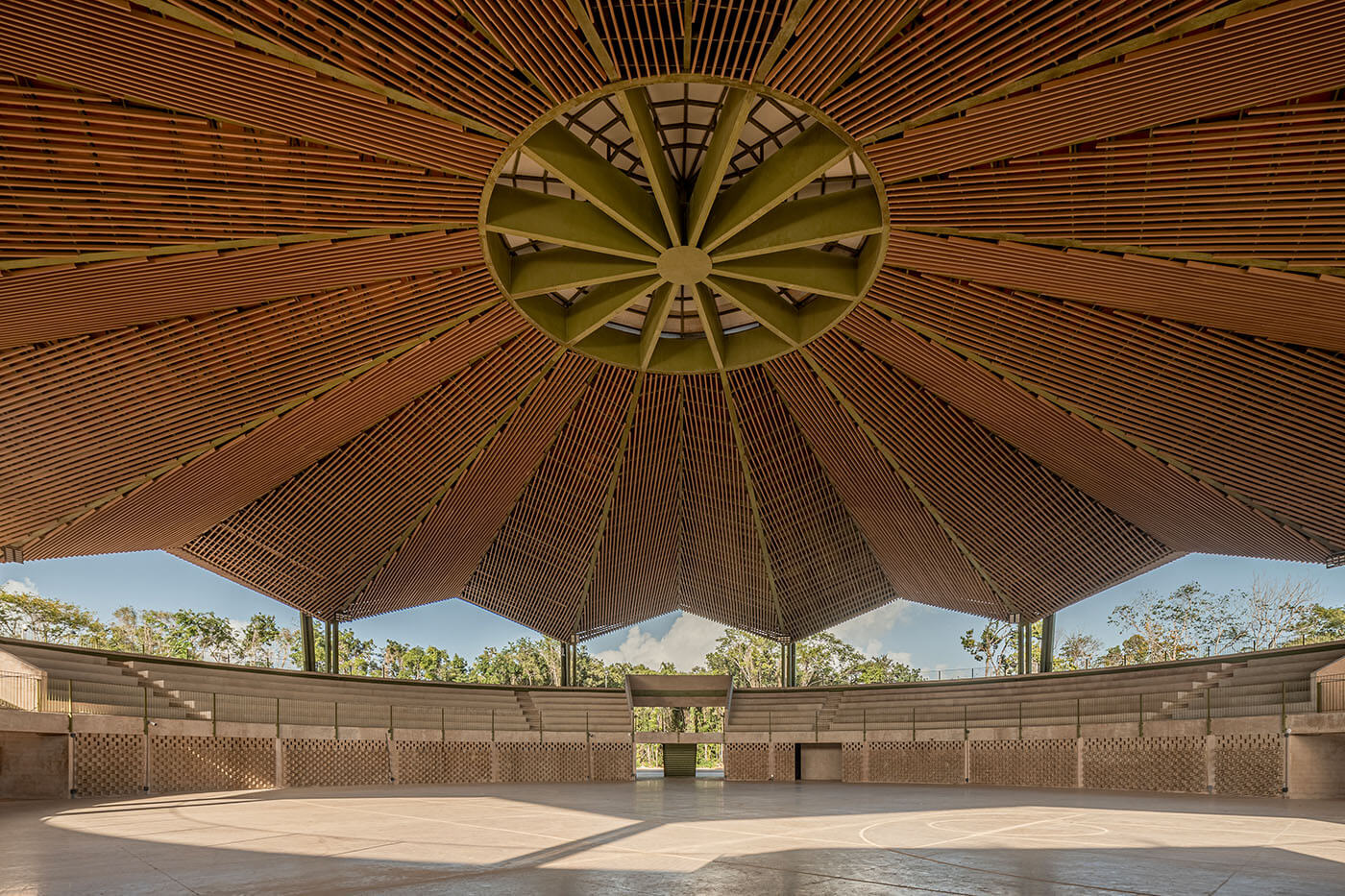
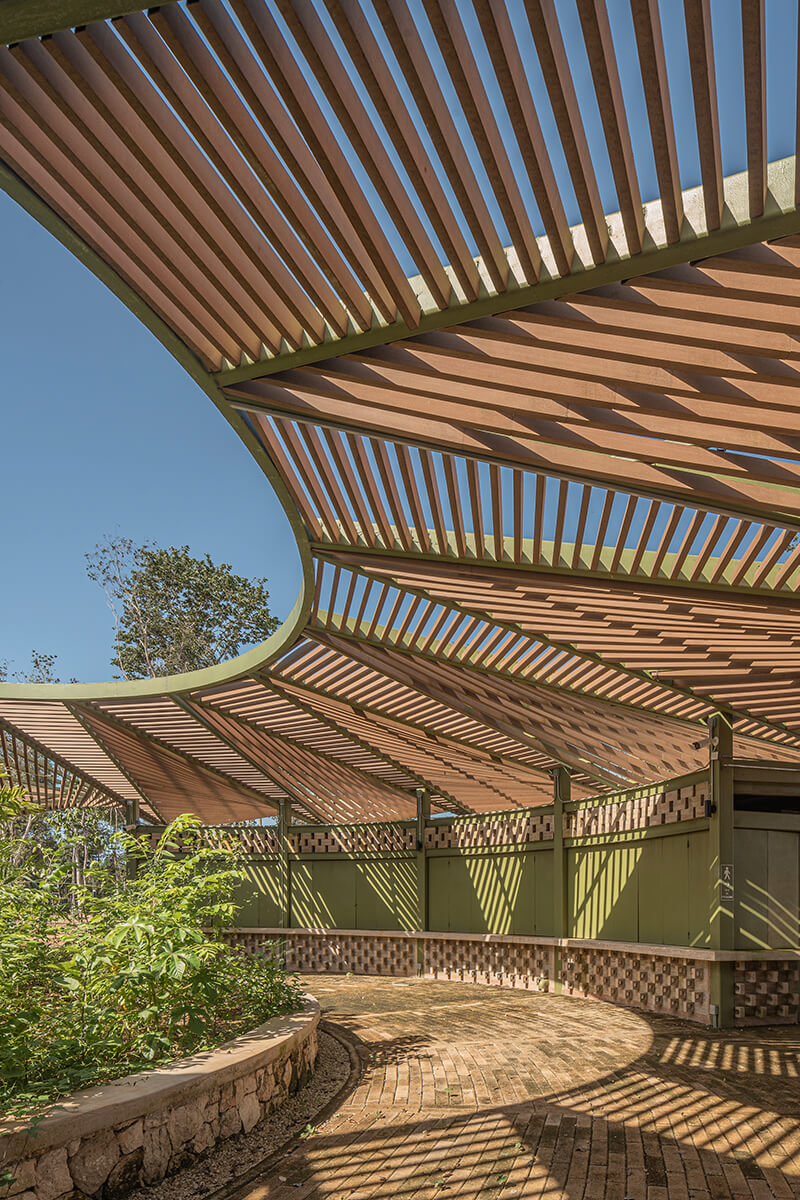
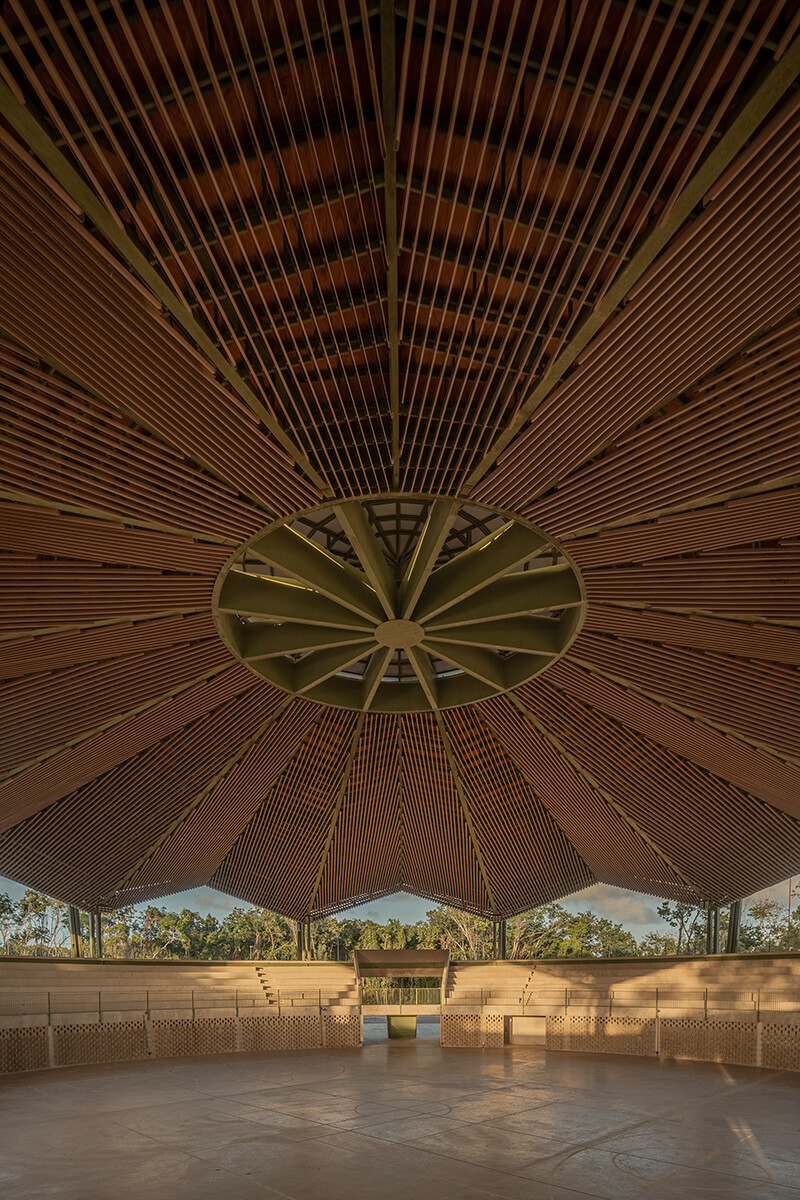
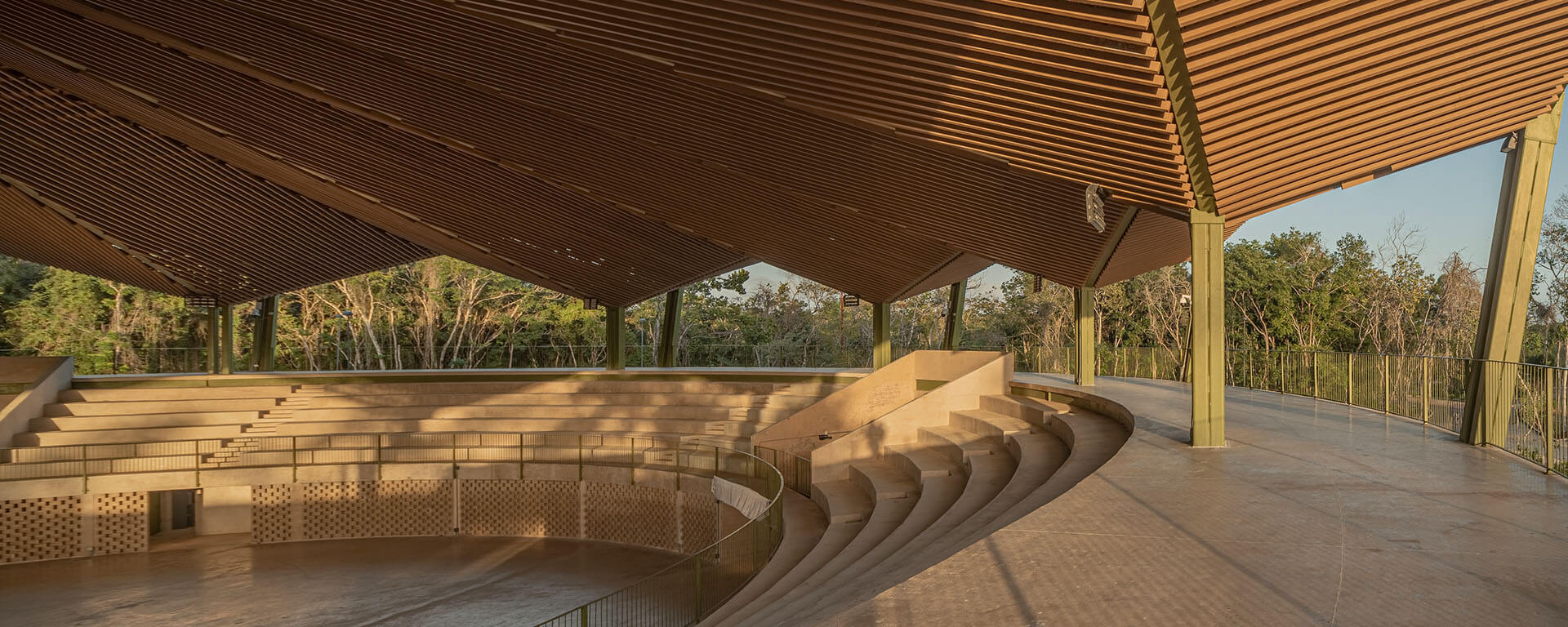
The park offers a wide range of leisure faci­li­ties, inclu­ding a skate park, a spacious parkour garden, outdoor fitness areas as well as multi-sports and child­ren’s play areas – housed in three indi­vi­du­ally desi­gned open-air halls.

The project was prompted by the need for a new venue for the annual live­stock and agri­cul­tural fair. Over the years, this fair has deve­loped into a major annual folk festival that includes concerts, fair­ground rides and craft markets.

The plan­ning comes from AIDIA Studio.

Jungle

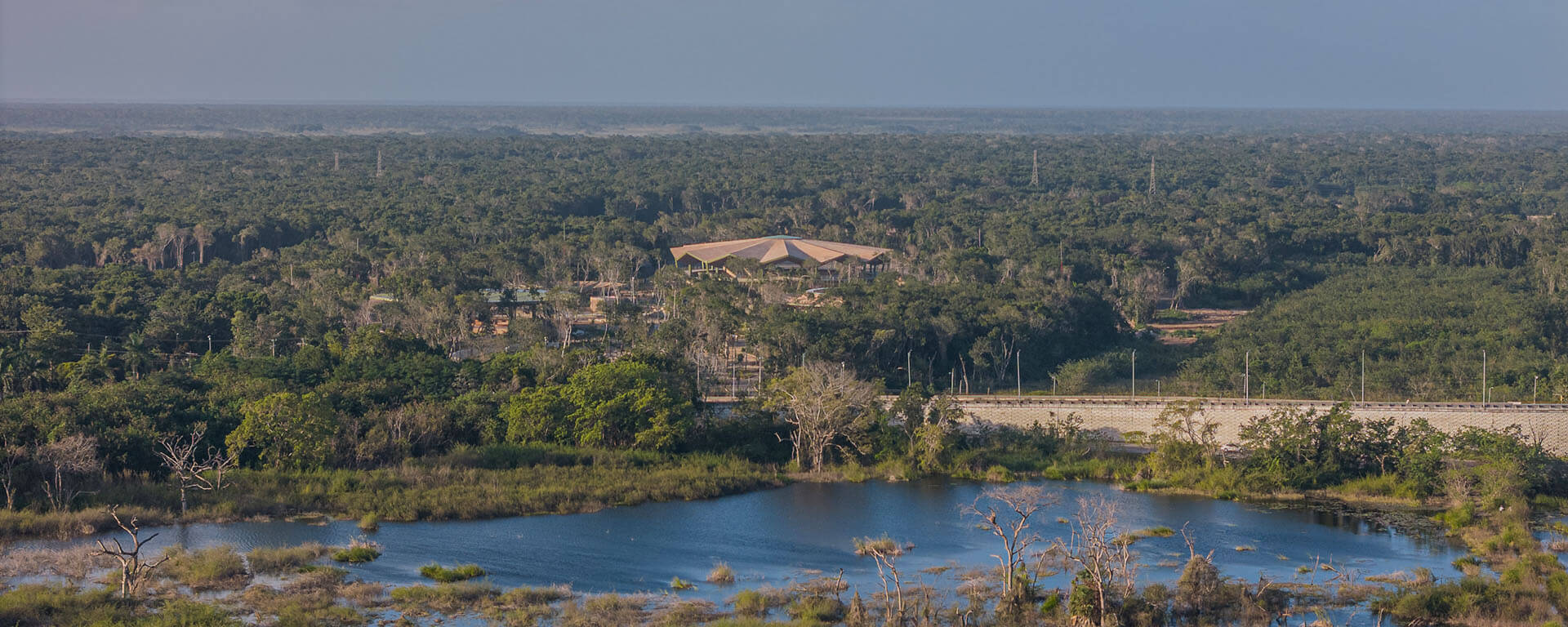
The newly deve­loped exhi­bi­tion grounds cover an area of ten hectares. The site is located in a subtro­pical jungle, which offered a special oppor­tu­nity to trans­form the area into an urban park with a variety of leisure faci­li­ties that can be used all year round.

Chetumal is the capital of the state of Quin­tana Roo, which also includes the tourist desti­na­tions of Cancún, Tulum and Bacalar in the Mexican Carib­bean. While the beach resorts in the north grew in popu­la­rity, Chetumal deve­loped into an important supply center. The city, which for a long time suffered from a lack of high-quality public spaces, is incre­asingly gaining in quality of life thanks to the recla­ma­tion of areas.

Orga­niza­tion

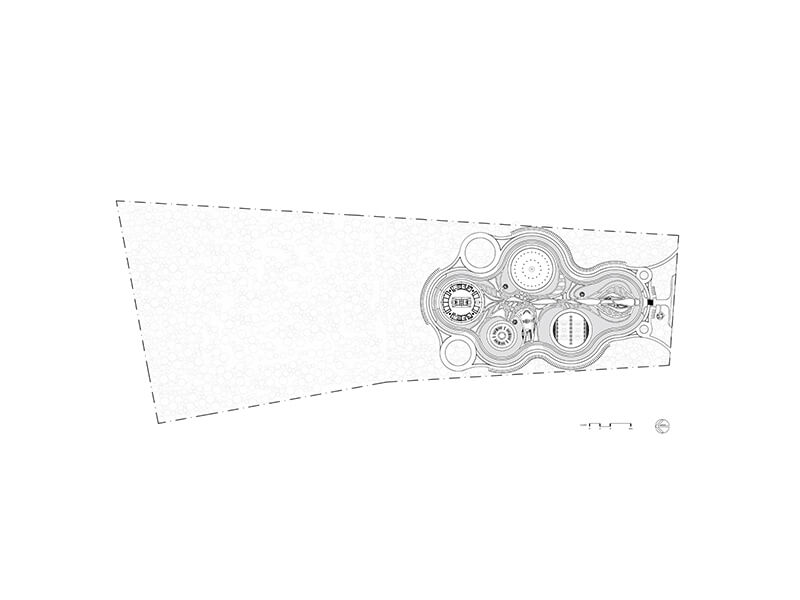
The trape­zo­idal plot measures 200 by 400 meters and is accessed via a ring-shaped road with parking spaces. An 800-meter-long walking and cycling path was also created along this ring.

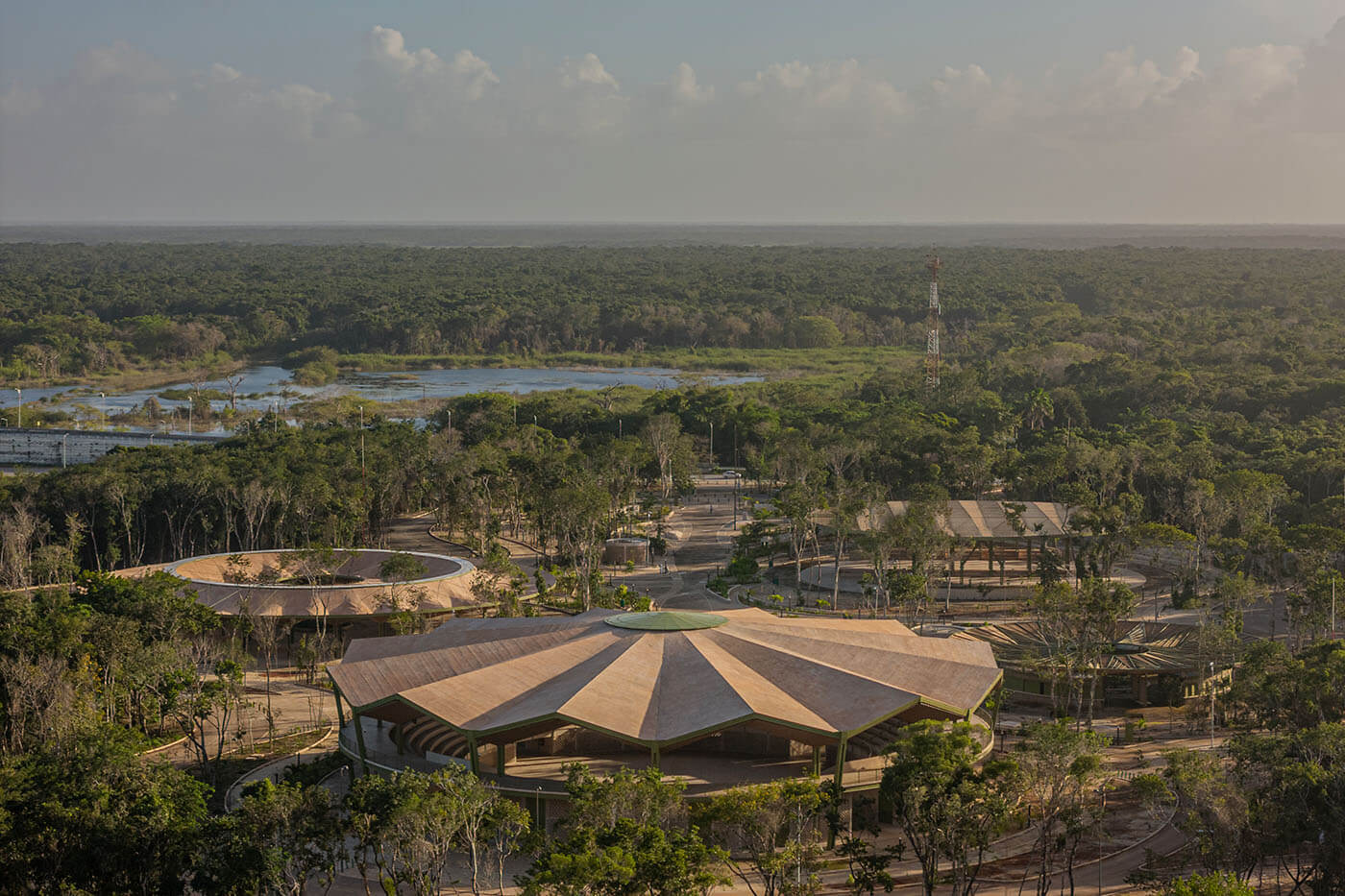
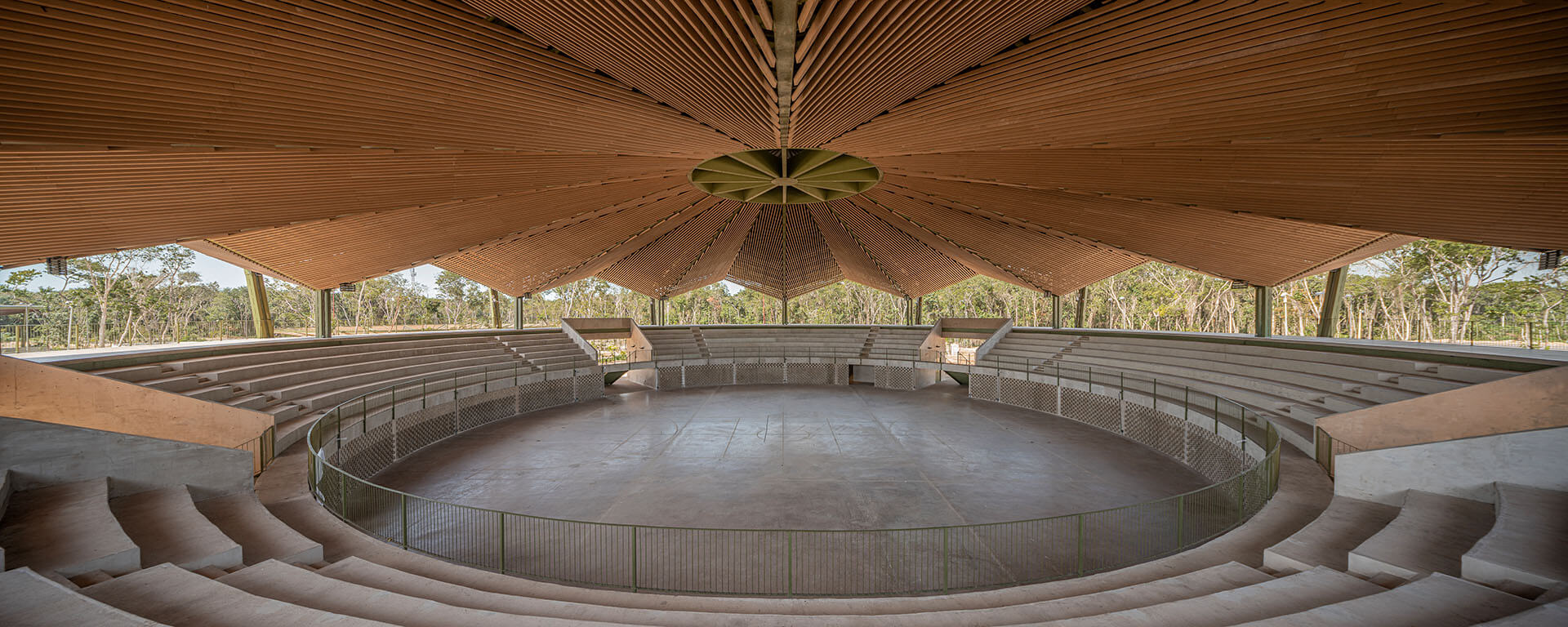
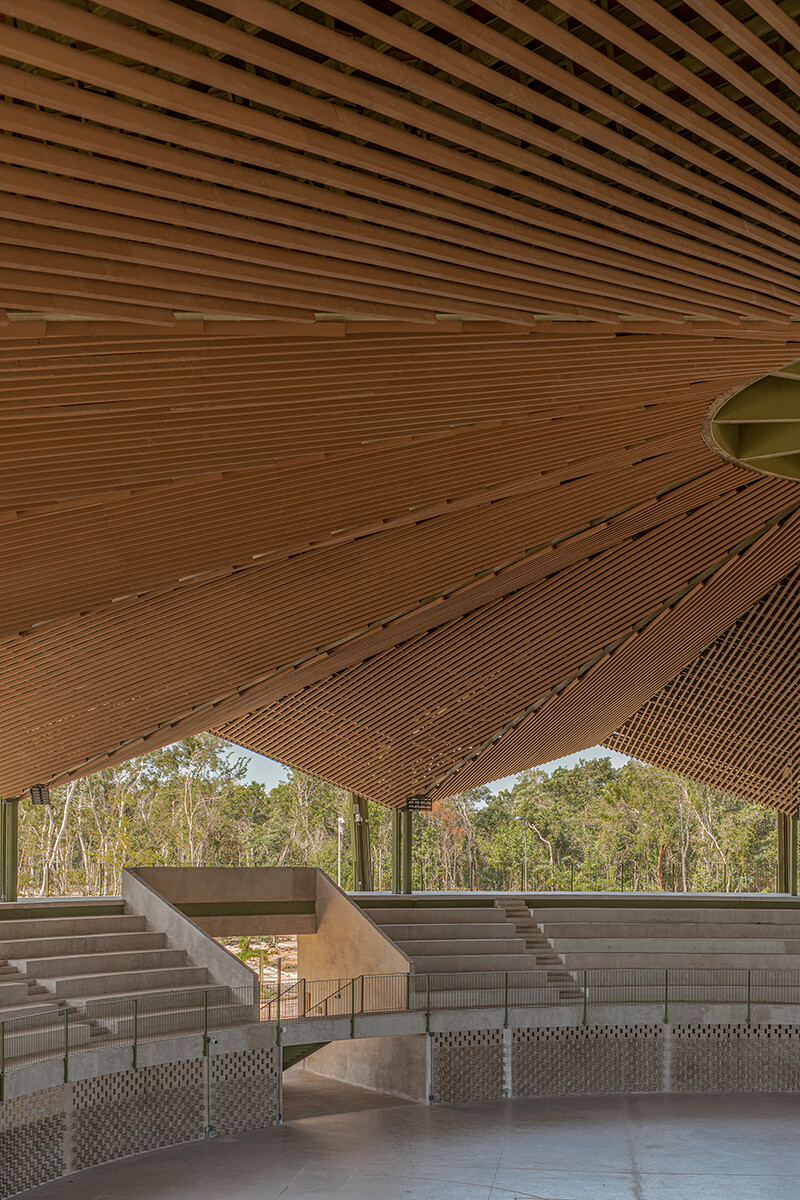
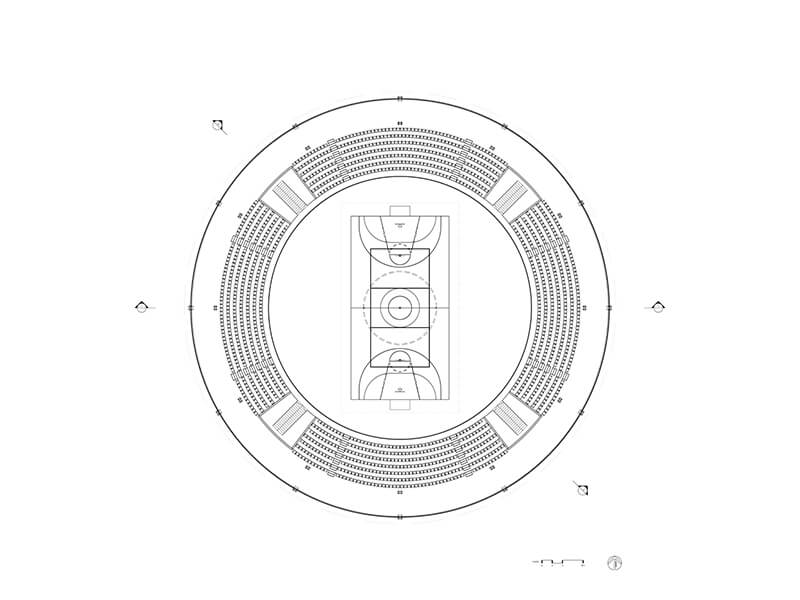
The faci­li­ties include three open-air halls, inclu­ding an arena for up to 1,000 spec­ta­tors, which can be used for both sporting events and concerts, covered basket­ball courts, outdoor fitness areas. Retail areas and also a skate park, a child­ren’s play­ground and a “citi­zens’ square” at the entrance to the site.

This civic square is surrounded by eleven Ceiba trees, which are considered sacred trees in Mexico. Each tree symbo­lizes one of the eleven coun­ties of Quin­tana Roo. From here, water­courses run through the area, guiding visi­tors to the various faci­li­ties and crea­ting a flowing, non-hier­ar­chical spatial expe­ri­ence that ulti­m­ately ends at the arena, the park’s largest struc­ture.

Circles

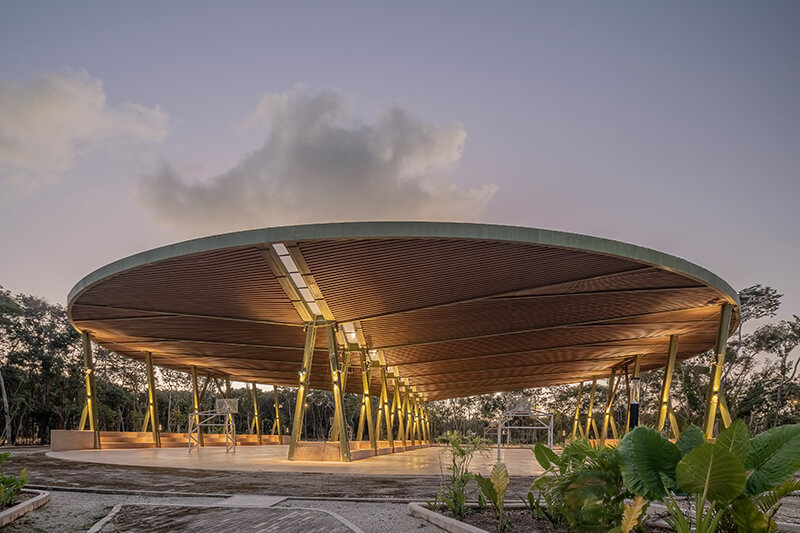
The paths between the circular struc­tures run along tangen­tial arches, which break up the other­wise rigid site boun­da­ries and at the same time inte­grate the variety of buil­ding types into the overall concept.

This concept enabled the plan­ning team to consis­t­ently develop the theme of “biophilic design” – both from a bird’s eye view in the form of the over­ar­ching master plan and from the user’s perspec­tive, through the direct expe­ri­ence of nature within the park. Para­me­tric design tools were also used, which enabled an aesthe­ti­cally sophisti­cated and effi­cient form-finding process.

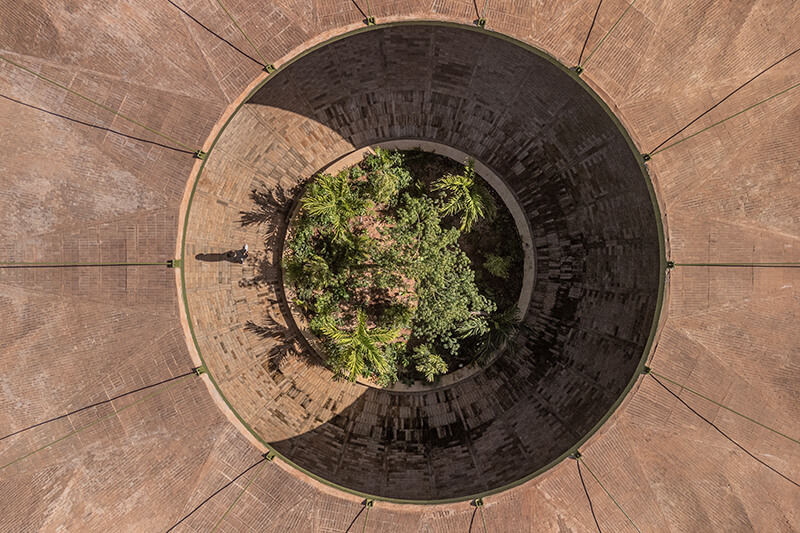
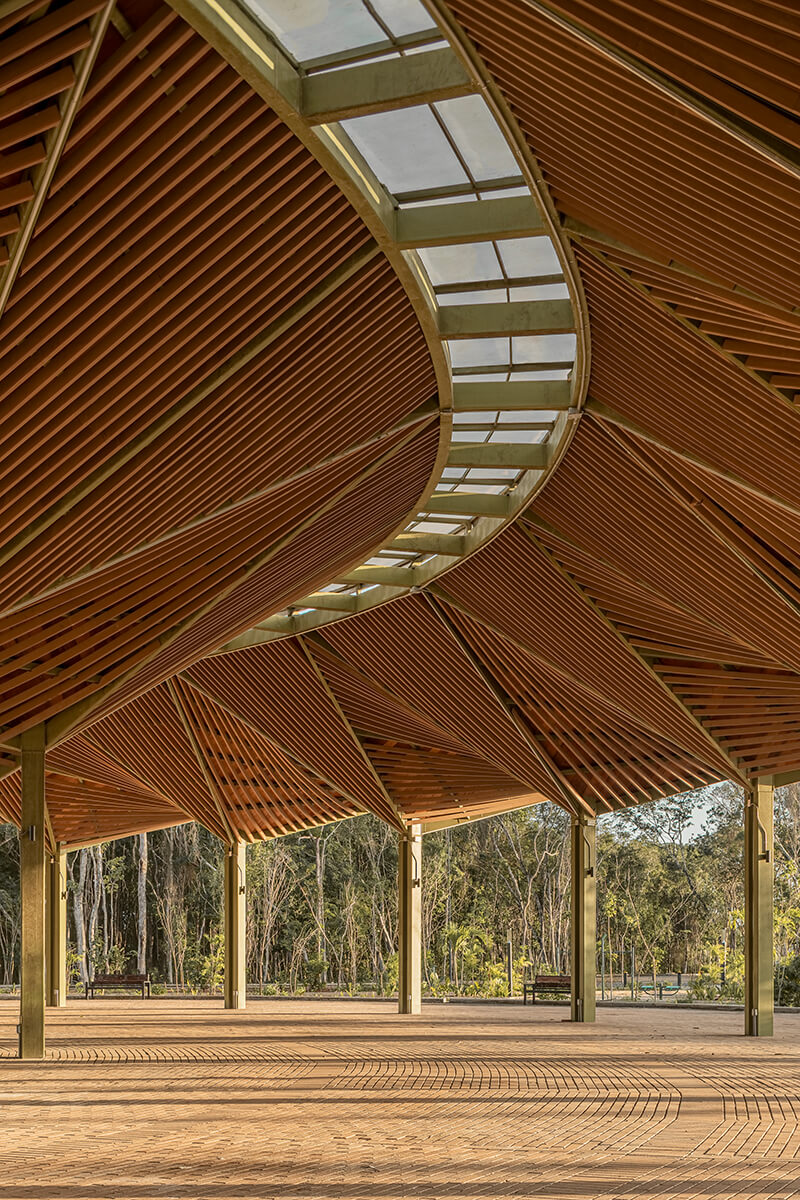
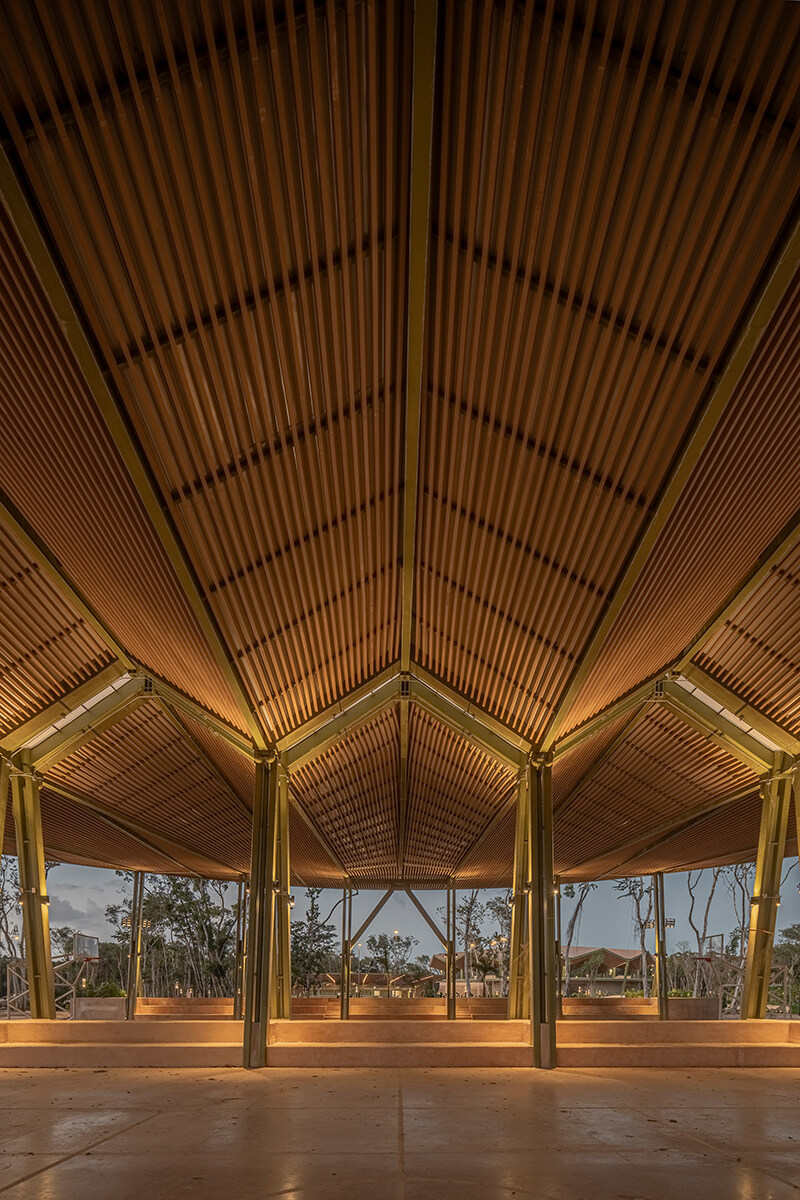
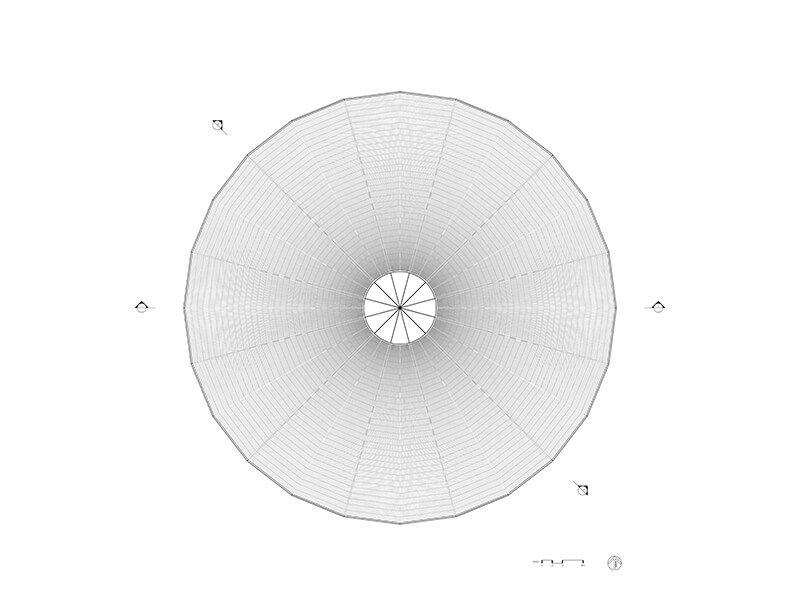
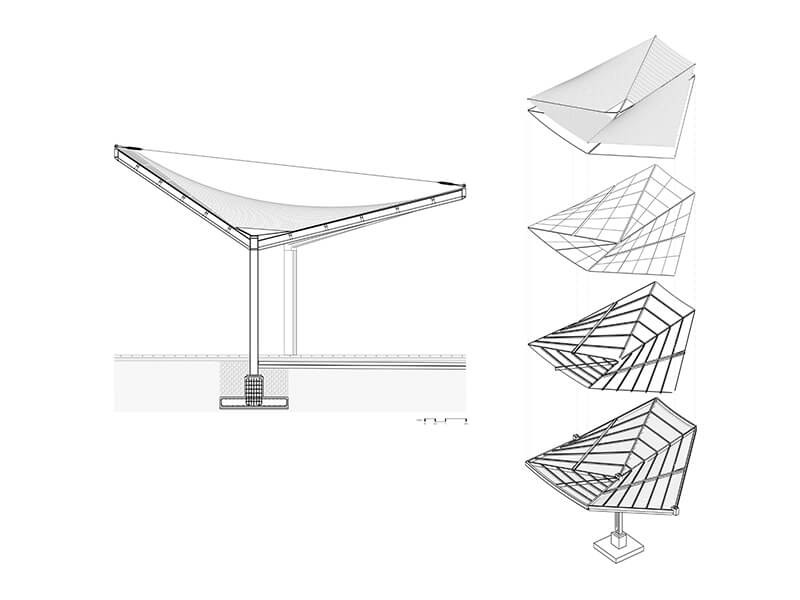
The result was a variety of diffe­rent buil­ding types, in which hyper­bolic para­bo­loids, for example, were adapted to the respec­tive use. All buil­dings have a circular floor plan in common, but each has its own unique design solu­tion.

Beauty

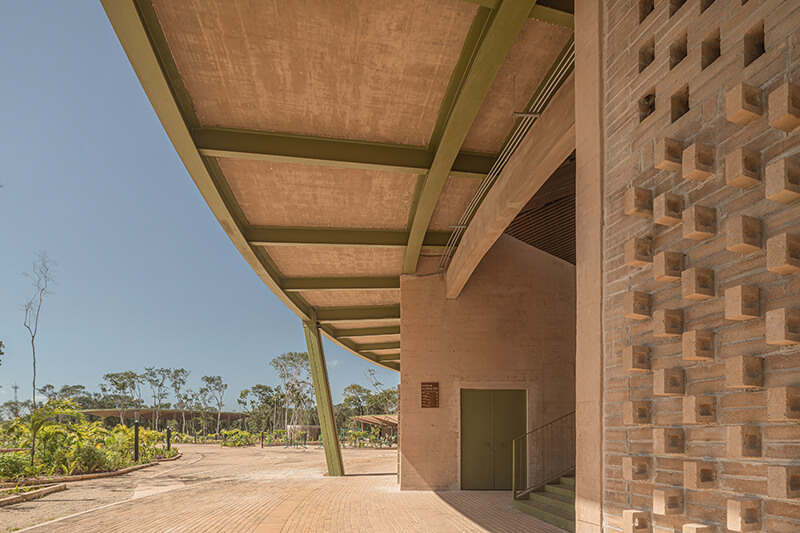
The low buil­ding density of the park serves to maxi­mize the preser­va­tion of natural green spaces – an essen­tial aspect given the hot and humid climate in the region. All the mate­rials used for the squares and buil­dings are in light beige tones. Toge­ther with the light metal struc­tures of the buil­dings, the slender, olive-green supports and the curved wooden elements, they blend in perfectly with the lime­s­tone and wood­land surroun­dings, while the tiled roofs provide reliable protec­tion against the possi­bi­lity of heavy rain­fall.

The façades of the radial buil­dings use a brick pattern that enli­vens the surface struc­ture on the one hand and ensures air circu­la­tion and natural venti­la­tion through openings on the other. All of the buil­dings are planned on a modular basis to ensure cost-effec­tive cons­truc­tion and to make the cons­truc­tion process effi­cient.

Pure beauty.

Project data

Desi­gner

AIDIA Studio

Rolando Rodri­guez Leal, Natalia Wrzask; José Luis Mulás, Mariano González, Nitze Magaña, Aran­zazú Sánchez, Mauricio Santi­bañez, Cecilia Simón, Emilio Vásquez, Rodrigo Wulf

Buil­ding owner

Secre­tary of Agra­rian, Terri­to­rial, and Urban Deve­lo­p­ment

Opening

2024

Address

Parque Quin­tana Roo
Chetumal
Quin­tana Roo
Mexico

Photos

Andrés Cedillo

Text

Johannes Bühl­be­cker
More Sports Media

Drawings

Video

Our news­letter

Your stage

Publish your project or product here!

Sports garden at Ernst-Kuzorra-Platz

Sports garden at Ernst-Kuzorra-Platz in Gelsen­kir­chen

Schalker Kreisel, reloaded


Scheidt­mann

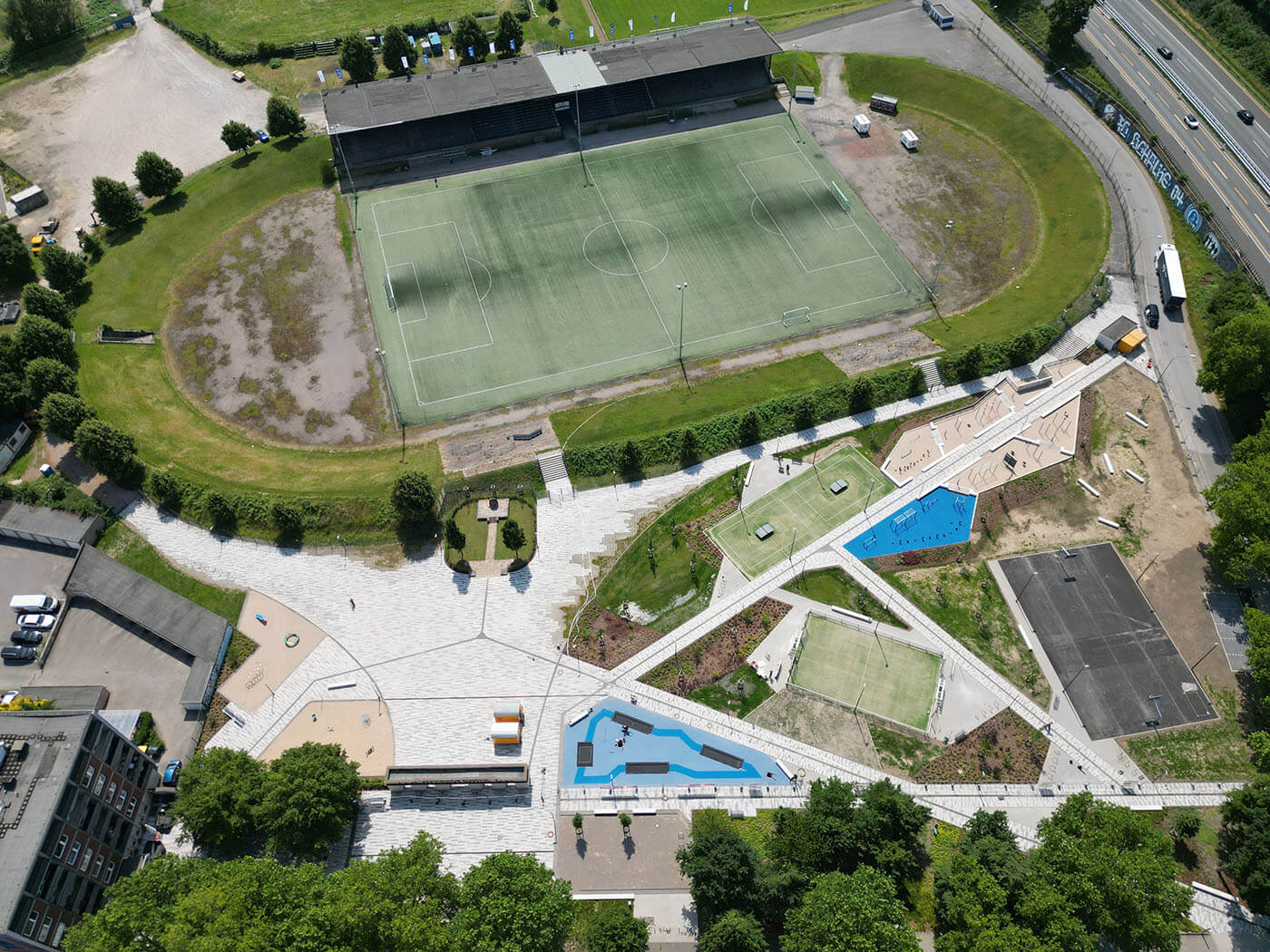
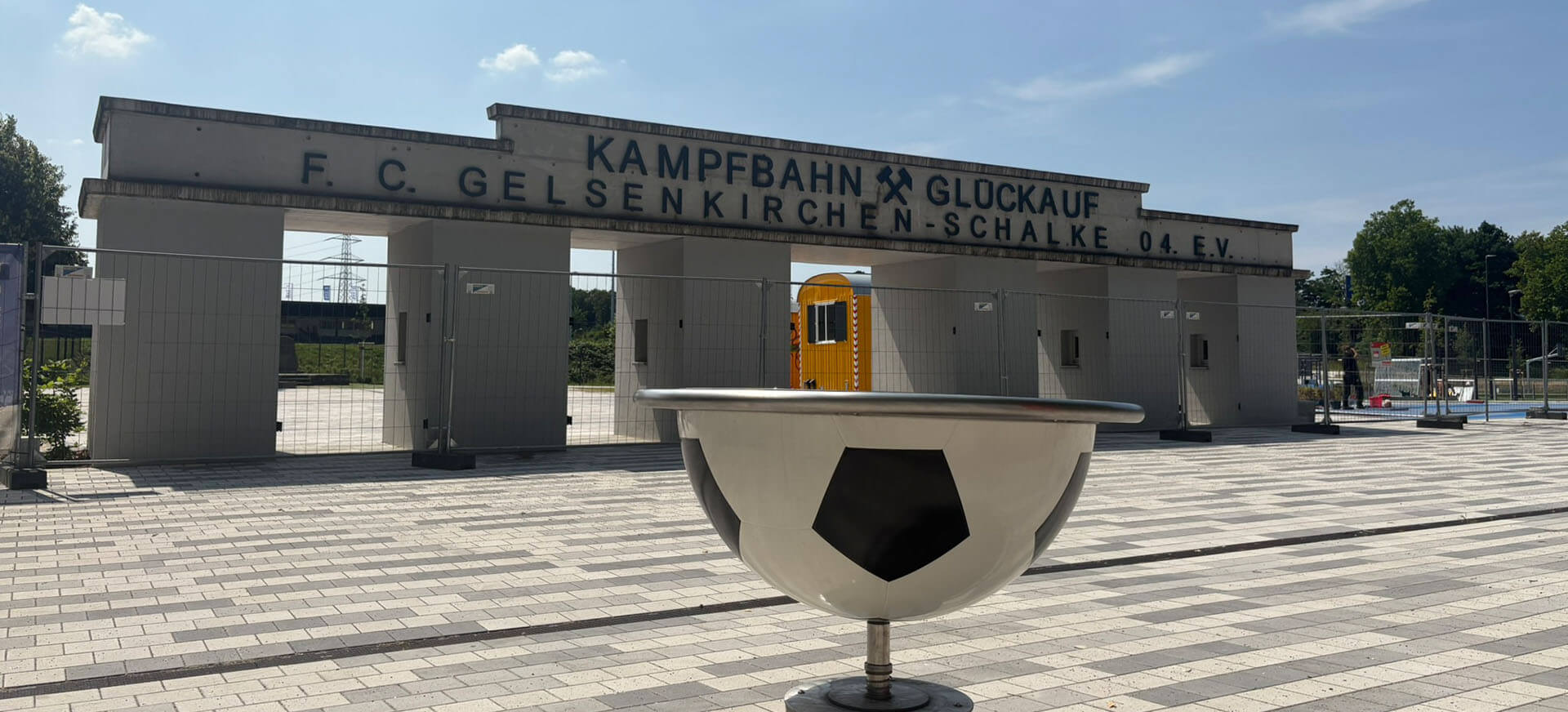
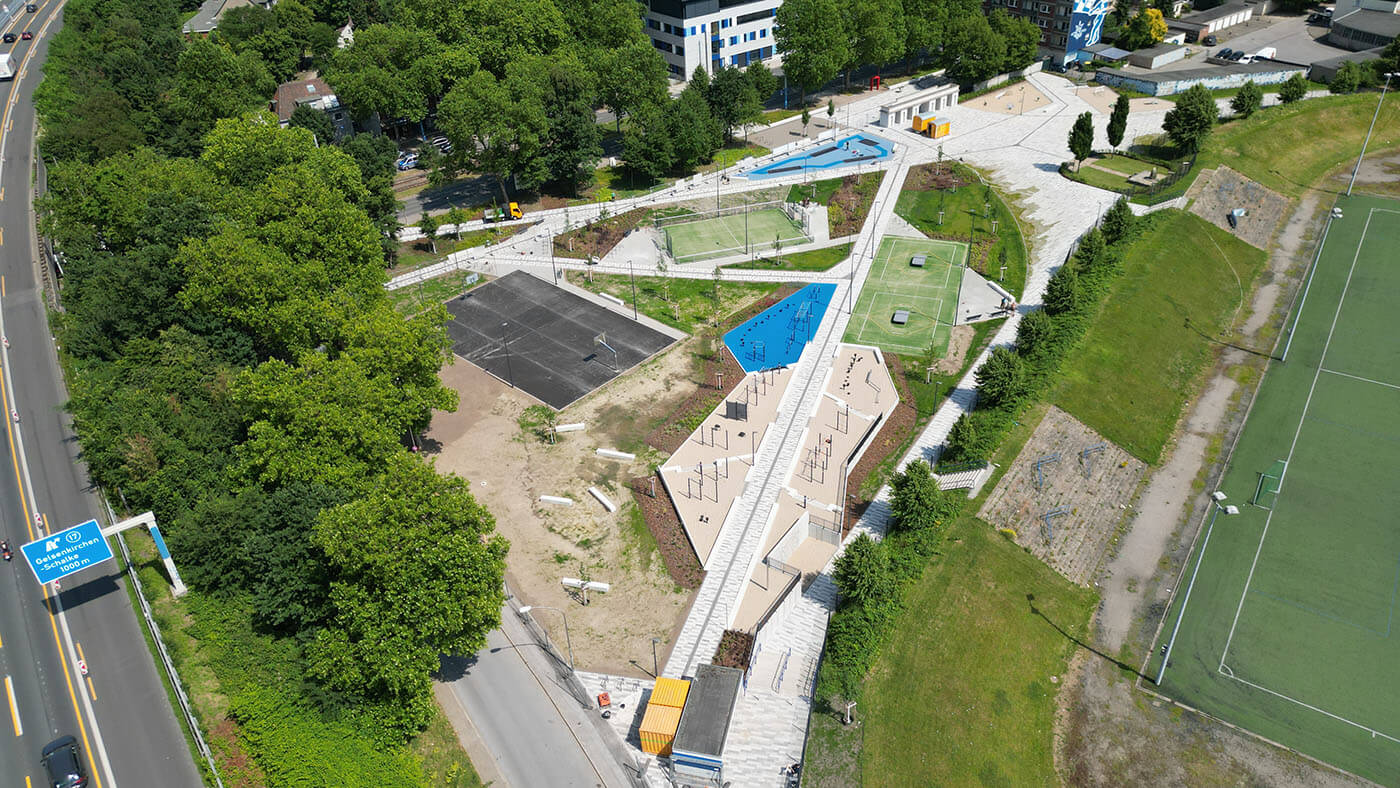
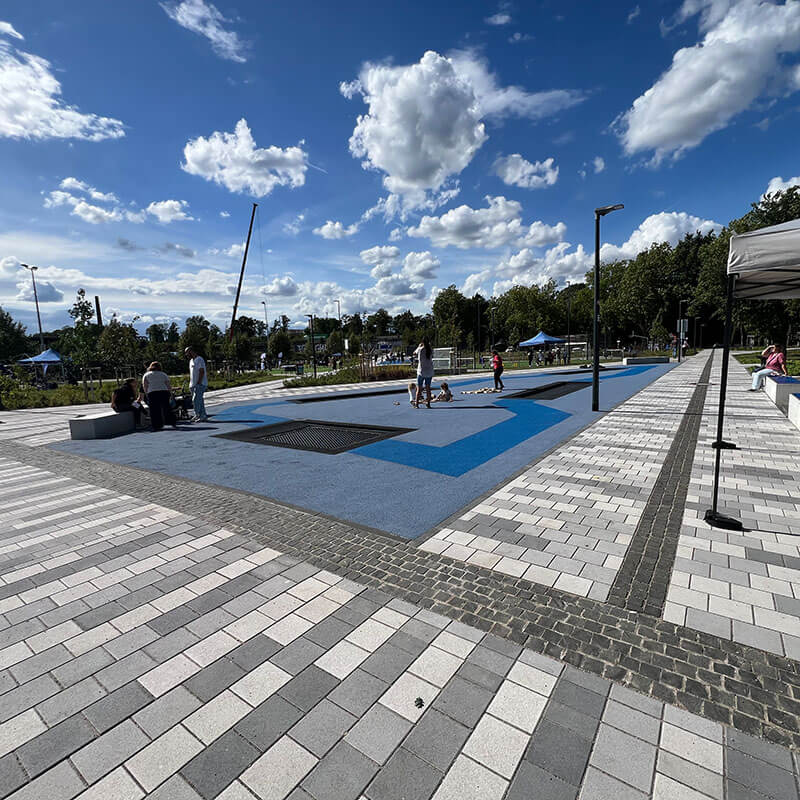
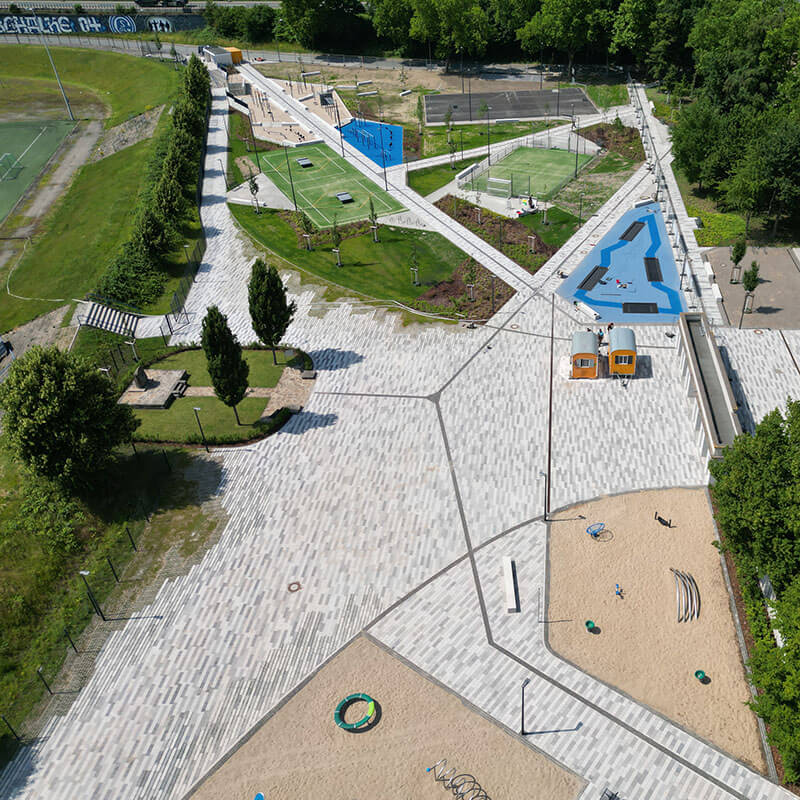
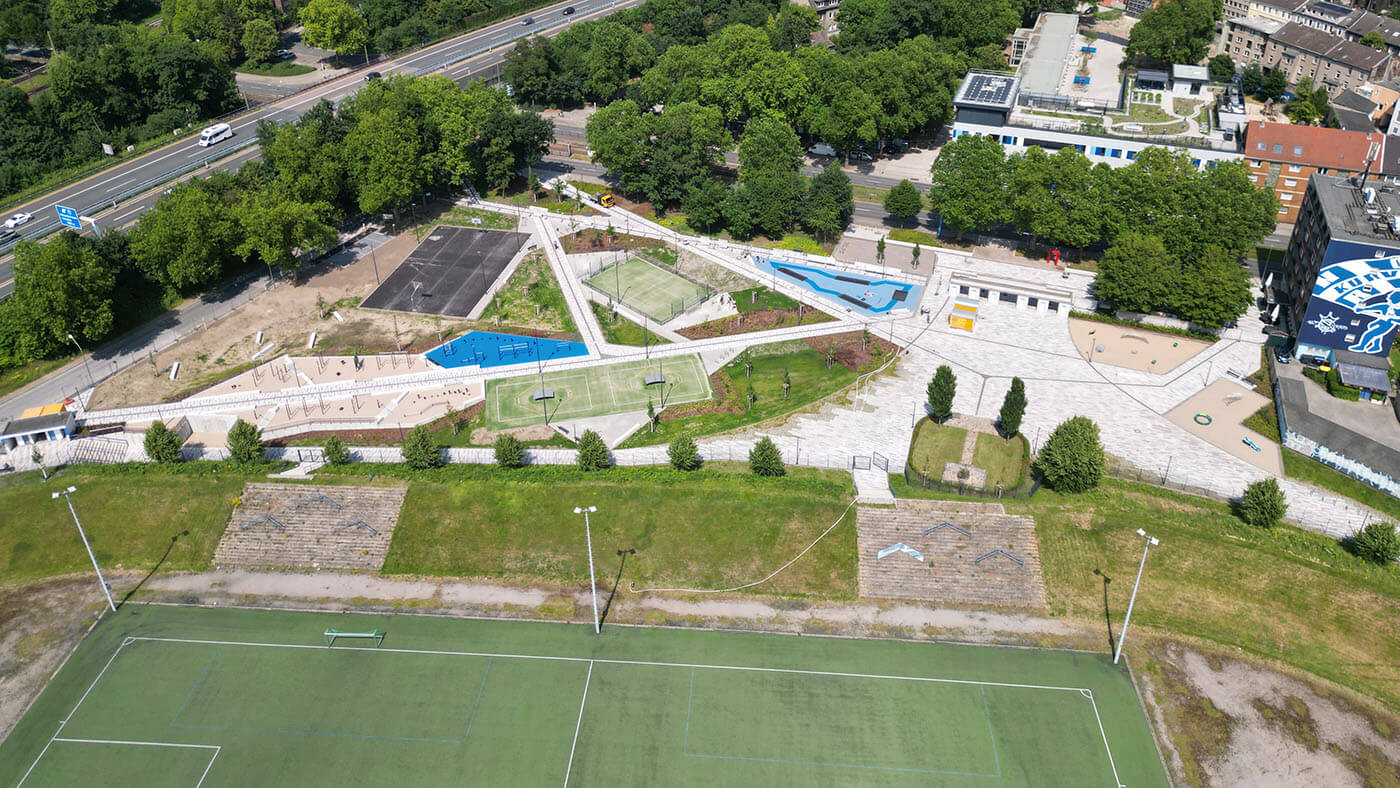
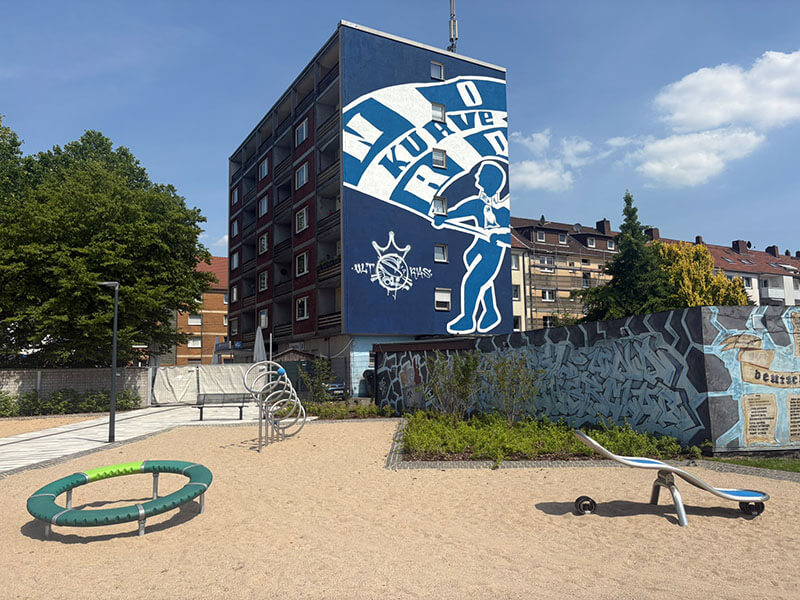
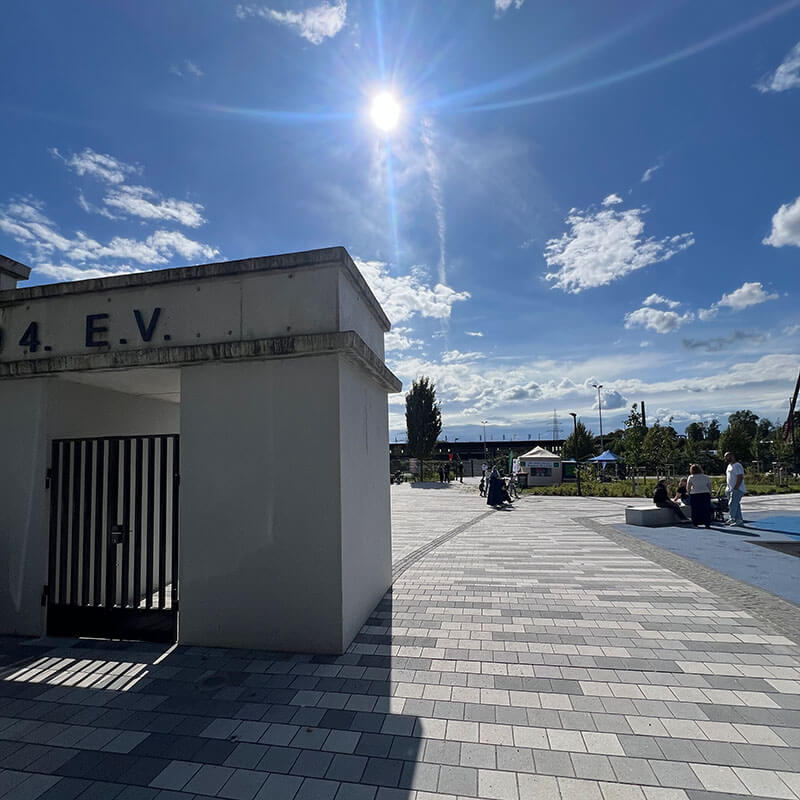
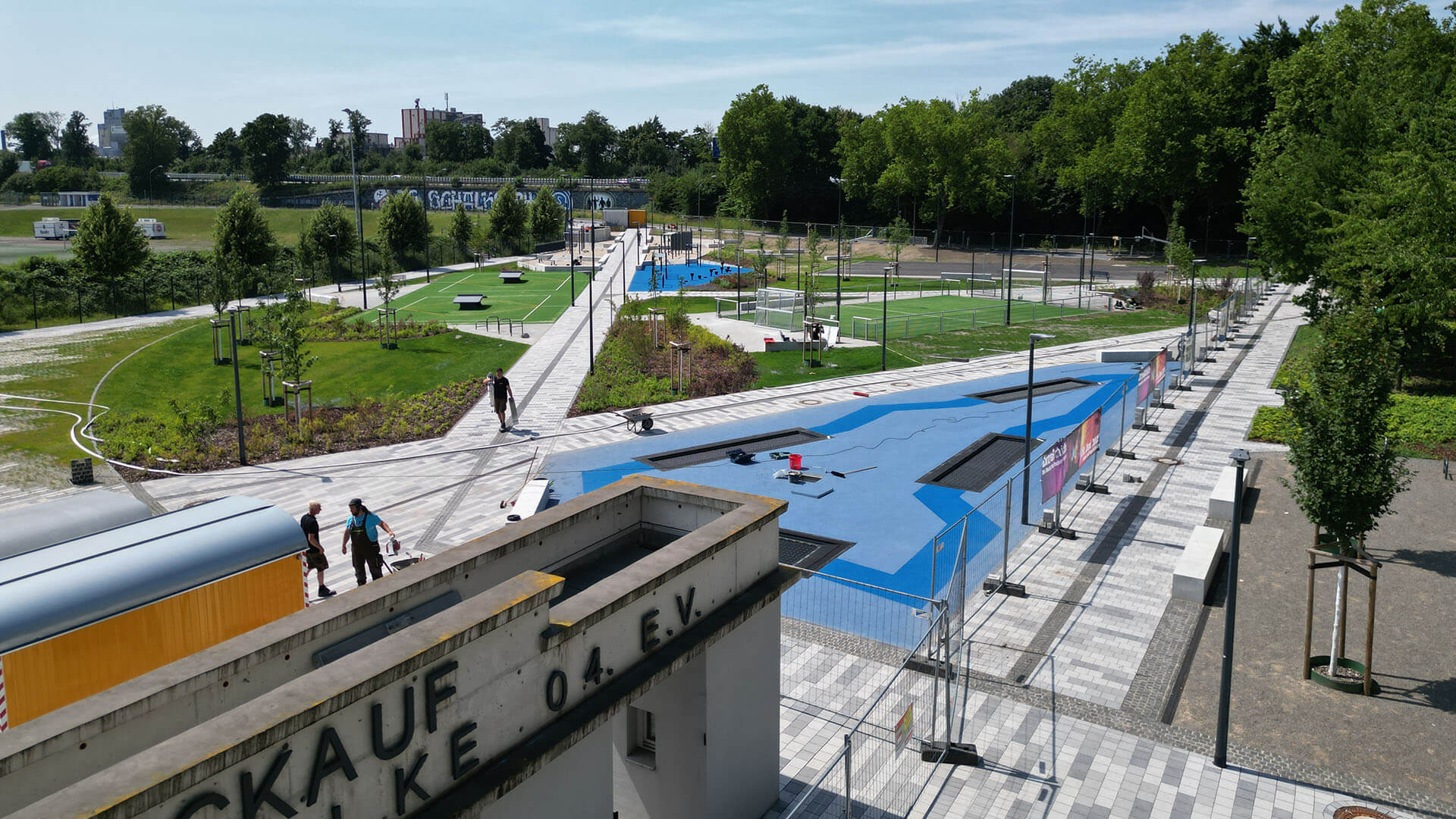
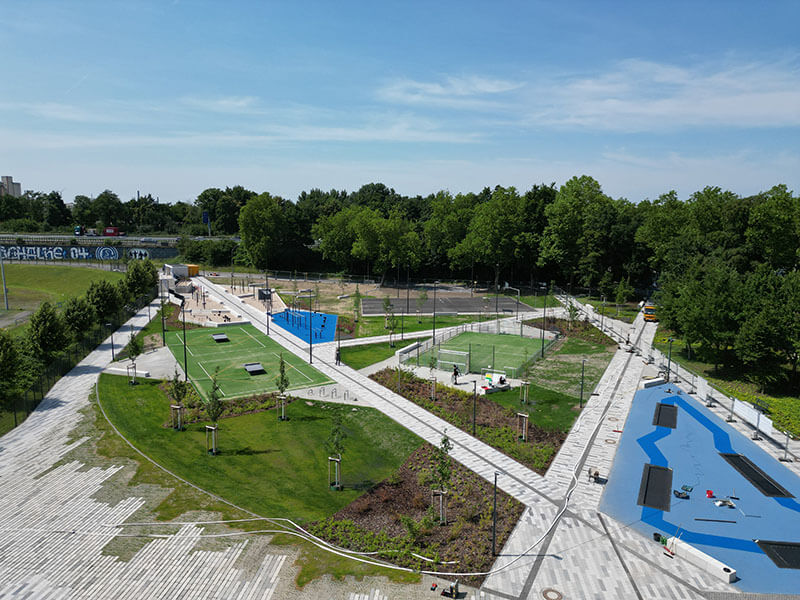
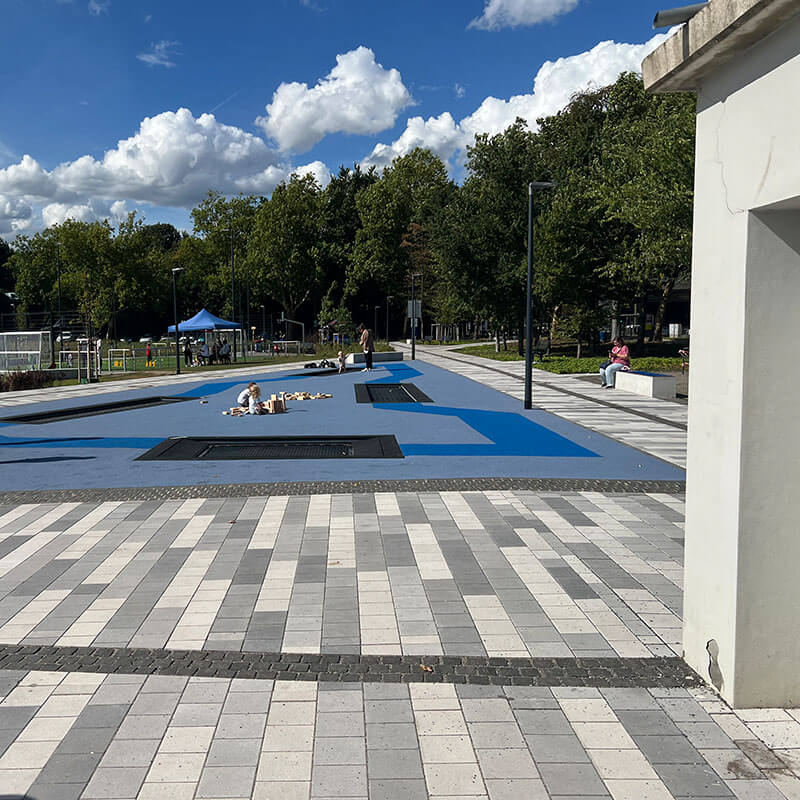
Schalke-Nord is strugg­ling with struc­tural chal­lenges such as unem­ploy­ment and urban deve­lo­p­ment defi­cits. The sports garden on Ernst-Kuzorra-Platz is ther­e­fore much more than a leisure faci­lity, it is a central compo­nent of urban rege­ne­ra­tion. What was until recently a waste­land now offers 13,000 m² of tram­po­lines, basket­ball, teqball and more for free sports – right next to the legen­dary Glückauf-Kampf­bahn.

Sport can do that too.

Good luck

After 16 months of cons­truc­tion, the new sports garden at Ernst-Kuzorra-Platz in Gelsen­kir­chen-Schalke was opened in July 2025. With a project volume of 4.5 million euros and an area of 13,000 m², this faci­lity is a signi­fi­cant mile­stone for the truly unpri­vi­leged Gelsen­kir­chen district of Schalke-Nord.

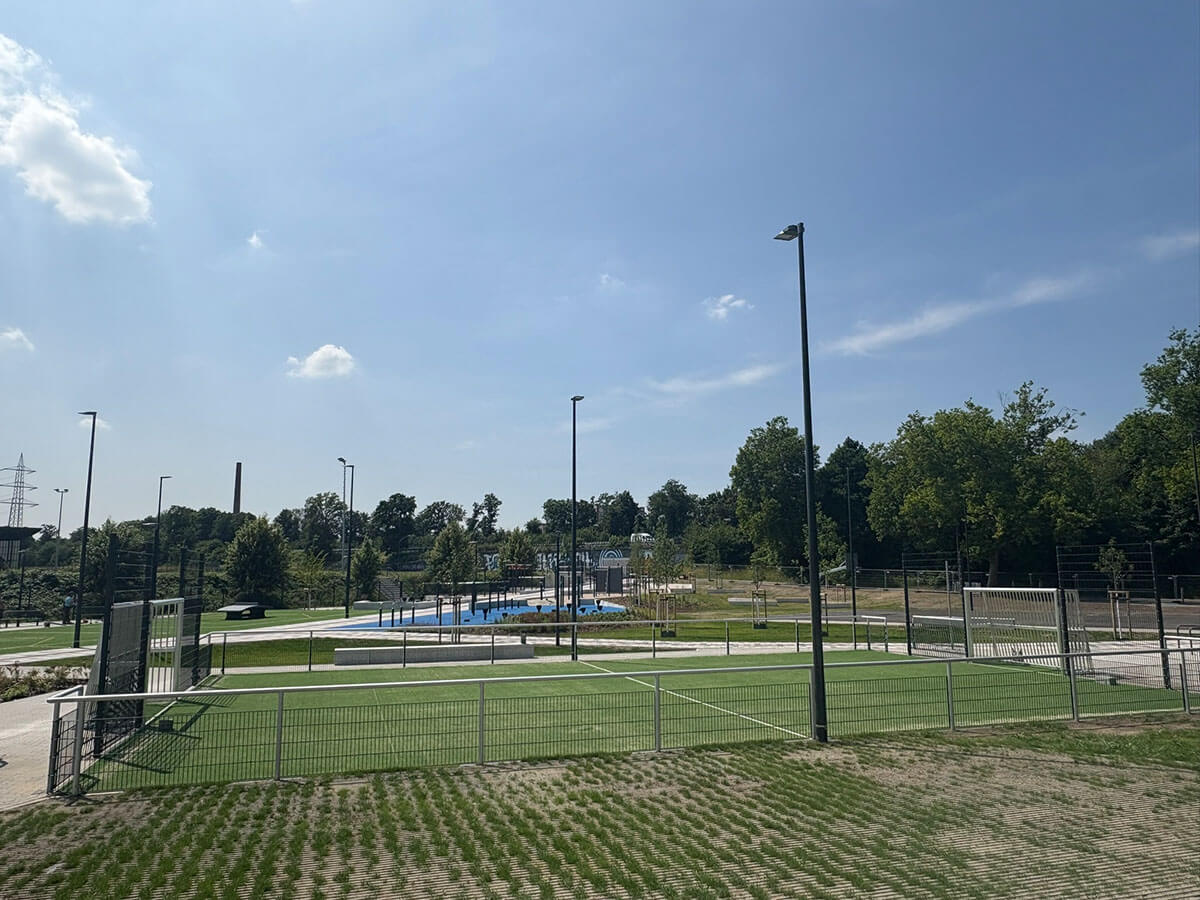
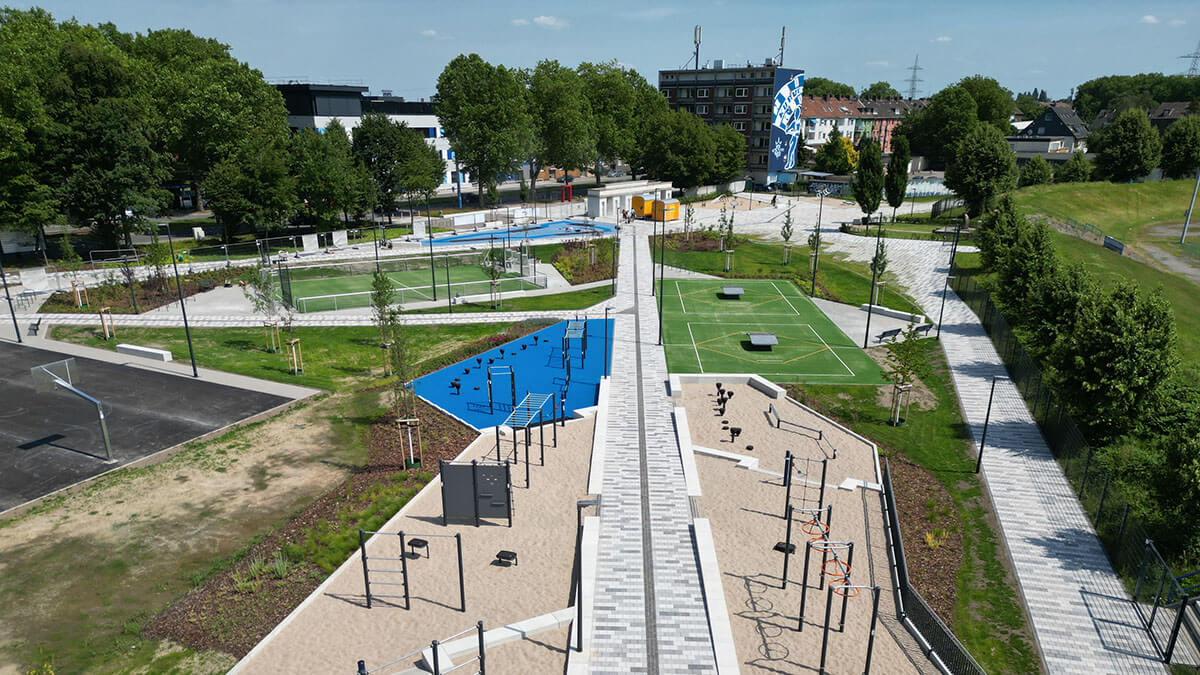
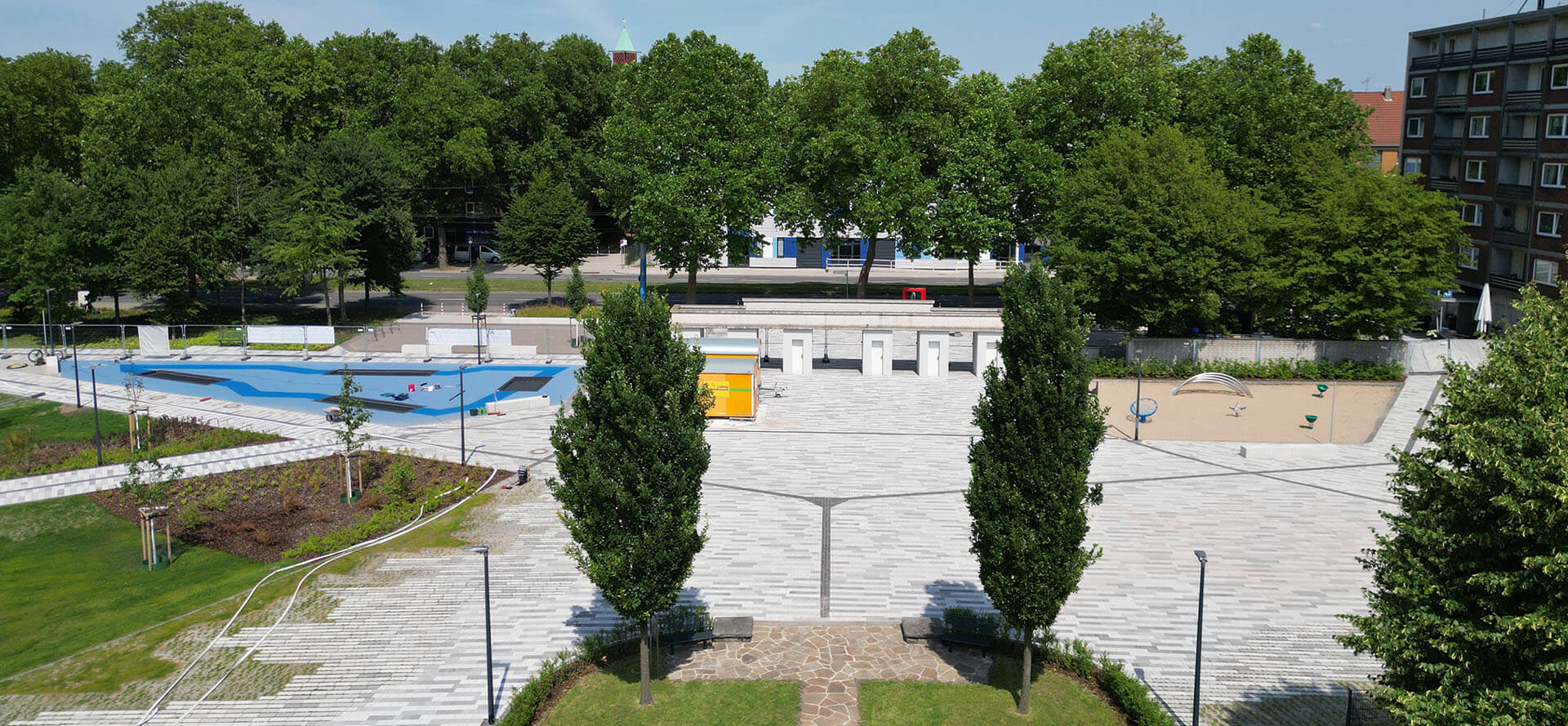
A fenced-in waste­land with unstruc­tured green areas and parking spaces was trans­formed into a modern neigh­bor­hood park with a variety of sports and leisure faci­li­ties. As part of the cons­truc­tion work, old steps, fences, paths and trees were removed. This was followed by exten­sive earthworks, the instal­la­tion of new top layers of gravel and recy­cled mate­rial and the laying of various surfaces – from water-bound surfaces to arti­fi­cial turf and paved areas with grass joints.

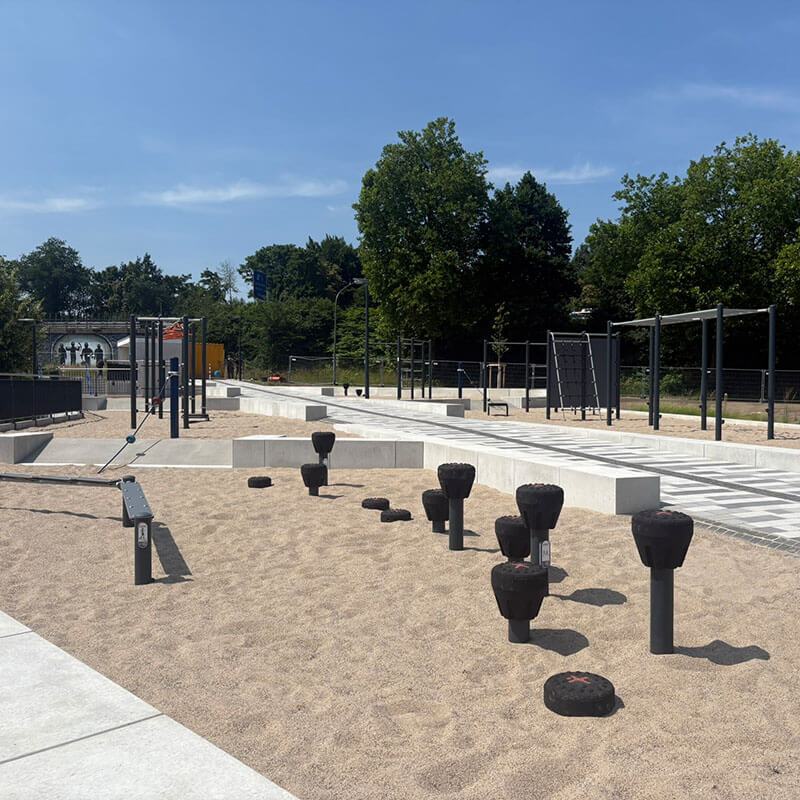
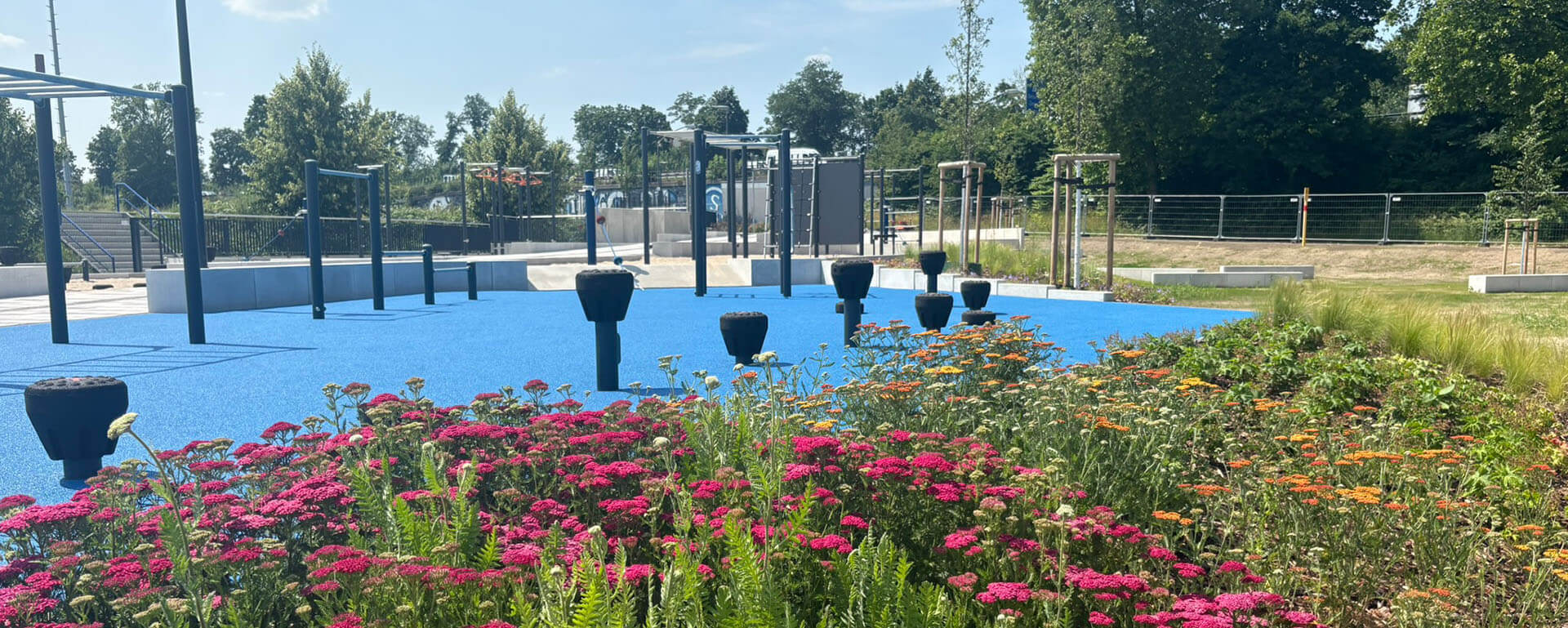
The sports garden on Ernst-Kuzorra-Platz now offers a wide range of freely acces­sible and free exer­cise and recrea­tion oppor­tu­ni­ties:

  • Tram­po­line faci­lity and motor skills course
  • Soccer, basket­ball and teqball pitch (combi­na­tion of table tennis and soccer)
  • Bould­e­ring wall and child­ren’s play­ground
  • Multi­func­tional areas with drin­king water foun­tain for events

The concrete blocks in four shades of gray over an area of 800 m², which were laid accor­ding to a computer-gene­rated “planned random” pattern, are striking.

The city of Gelsen­kir­chen deve­loped the project with local stake­hol­ders. Of the total costs of 4.5 million euros, 3.6 million euros are being financed by federal and state urban deve­lo­p­ment funding, while the city itself is contri­bu­ting 900,000 euros.

History

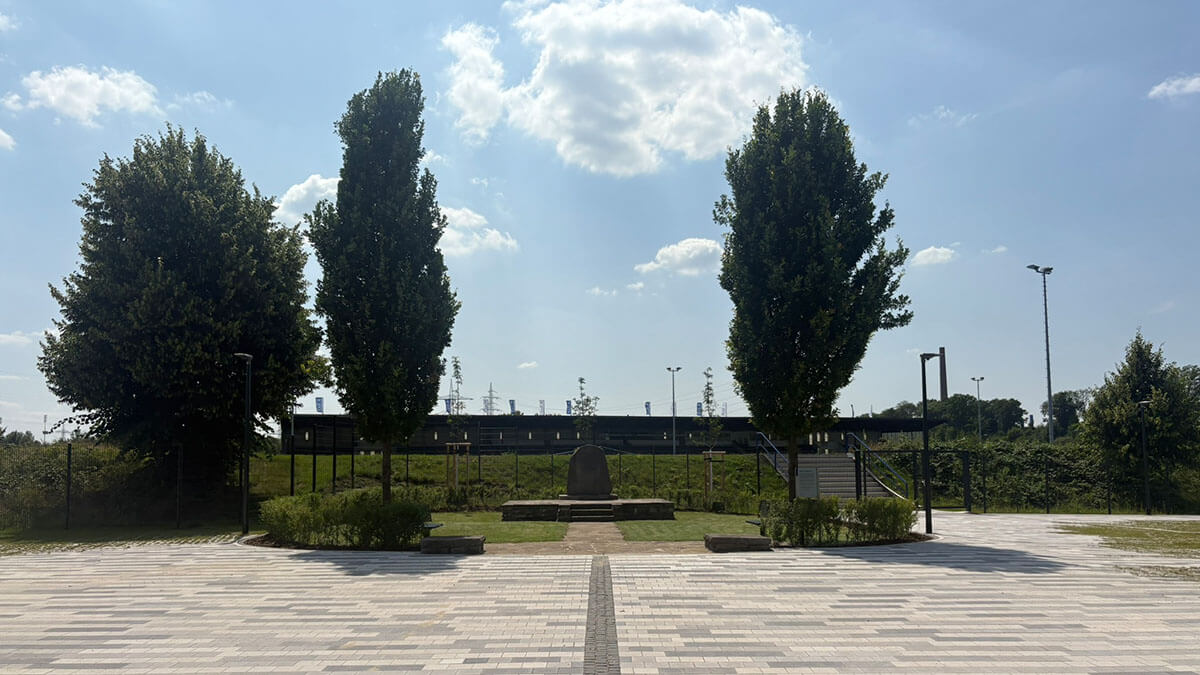
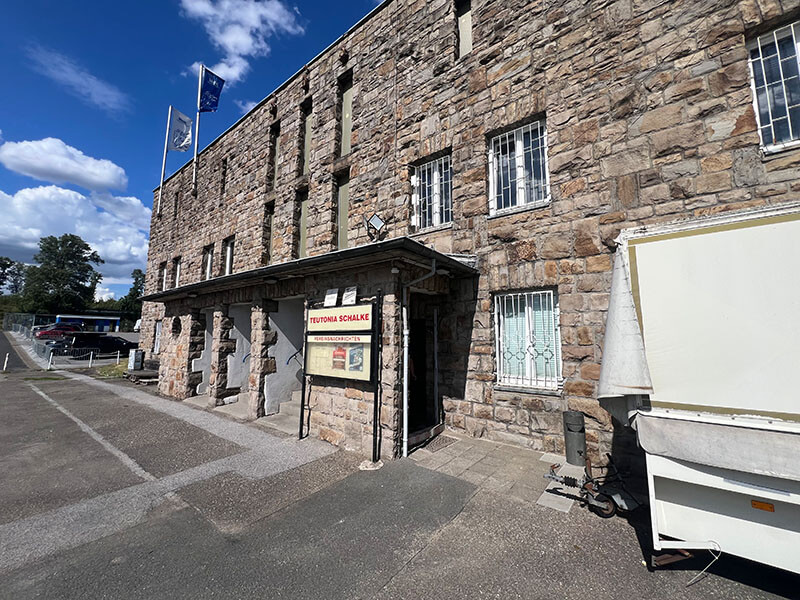
The neigh­boring Glückauf-Kampf­bahn is charac­te­ristic of the site’s special atmo­sphere. Built on a colliery site in the 1920s and opened in 1928, the stadium was the home ground of FC Schalke 04 until 1973, where the club won its German cham­pi­on­ship titles.

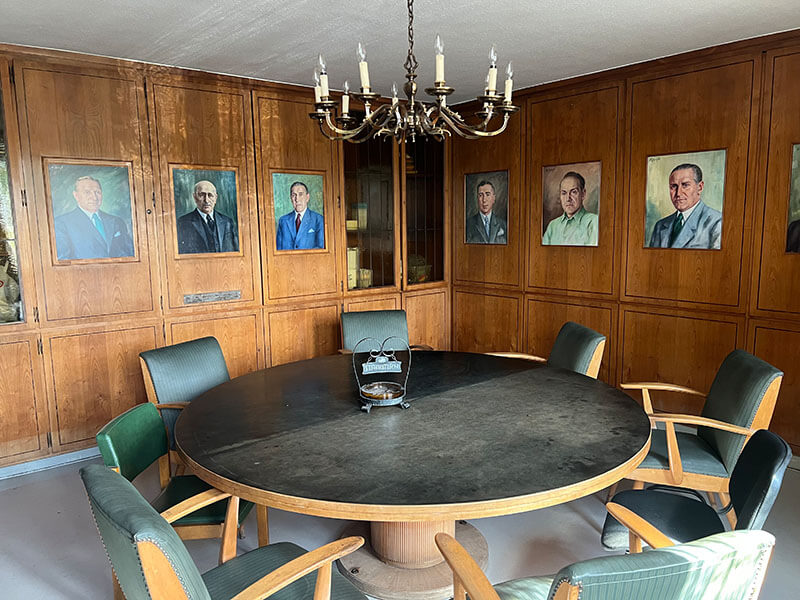
After the club moved to the then new Park­sta­dion in 1973, the faci­lity fell into disre­pair. It was reno­vated for the 2006 World Cup for public viewing and other events, and today the venerable cata­combs and the arti­fi­cial pitch are mainly used by the friendly district league team DJK Teutonia Schalke-Nord.

In conjunc­tion with the Glückauf-Kampf­bahn, the sports garden on Ernst-Kuzorra-Platz now func­tions as a very special venue for district festi­vals and supra-regional events. Its loca­tion on the “Schalker Meile” with its high density of club history makes it an important cultural buil­ding block.

The project and loca­tion combine sport, encoun­ters, exer­cise and tradi­tion and streng­then the Schalke-Nord district in the long term.

Renewal

The project follows an inte­grated urban deve­lo­p­ment approach: sports and leisure faci­li­ties are used speci­fi­cally as a cata­lyst for social inte­gra­tion. Free access breaks down social barriers and creates meeting spaces and offers for people from a wide range of back­grounds. The connec­tion to the Glcü­kauf-Kampf­bahn streng­thens the iden­tity of the district.

Schalke-Nord is strugg­ling with struc­tural chal­lenges such as unem­ploy­ment, social problems and urban deve­lo­p­ment defi­cits. The sports garden on Ernst-Kuzorra-Platz is ther­e­fore much more than a leisure faci­lity, it is a central compo­nent of the urban renewal process.

Sport can do that too.

Project data

Desi­gner

Ahner Land­scape Archi­tec­ture

Cons­truc­tion

Scheidt­mann GmbH

Buil­ding owner

City of Gelsen­kir­chen
Urban Plan­ning Depart­ment

Supporter

Schalker Markt Foun­da­tion
Gril­los­trasse 62
D – 45881 Gelsen­kir­chen

Address
Ernst-Kuzorra-Platz
D – 45881 Gelsen­kir­chen
Opening

2025

Photos

Scheidt­mann GmbH
More Sports Media

Text

Johannes Bühl­be­cker
More Sports Media

Video

Our news­letter

Your stage

Publish your project or product here!

Ostpark Bochum

The Ostpark Bochm

All gray with work?


Your name

“You’re no beauty, all gray with work.”

So begins “Bochum”, Herbert Gröne­mey­er’s decla­ra­tion of love for his home­town. The emer­ging Ostpark Bochum shows (once again) how much the city has changed since the release of this anthem in 1984.

And how a disused tennis court was trans­formed into an attrac­tive water land­scape.

The Ostpark Bochum

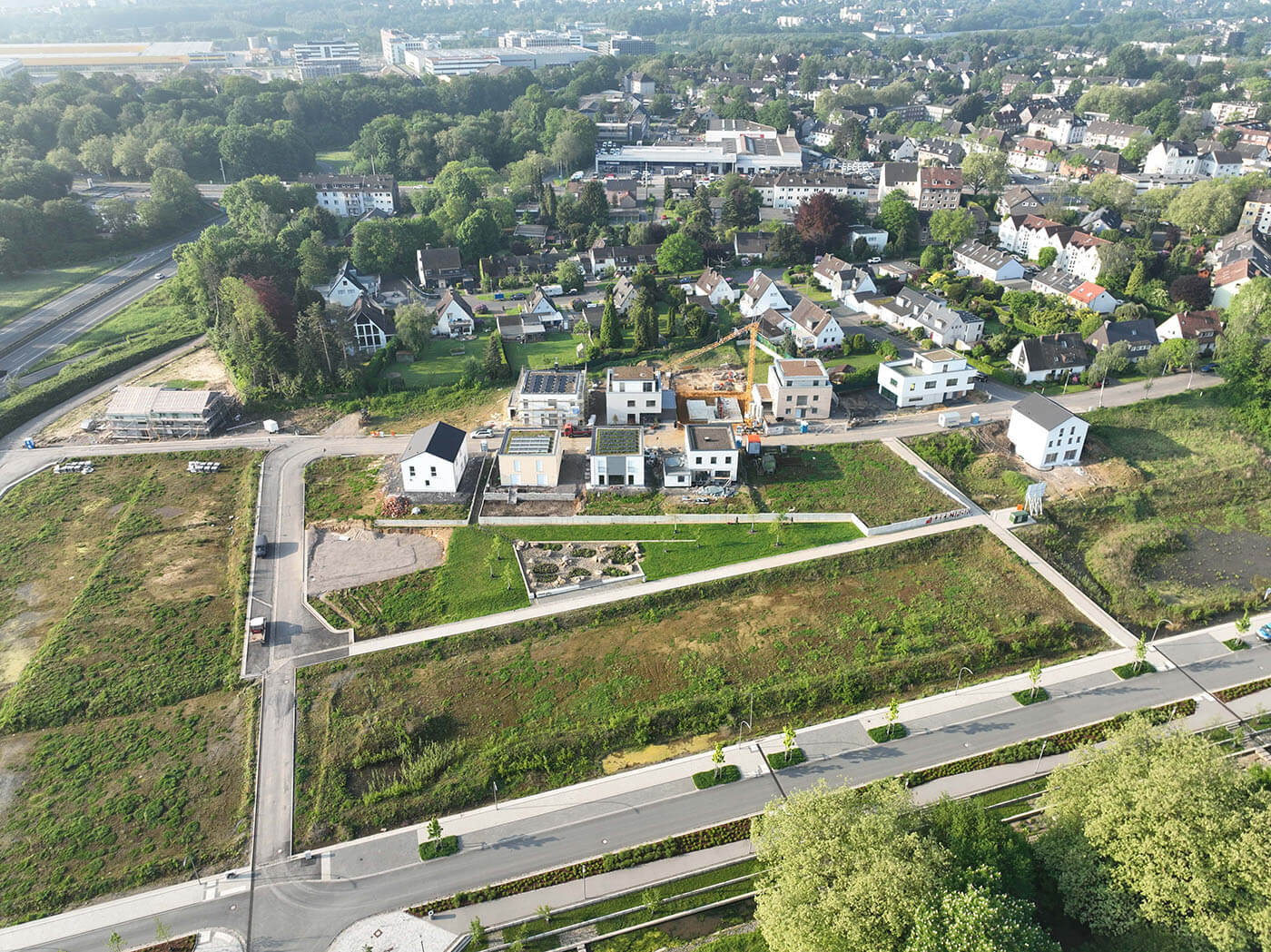
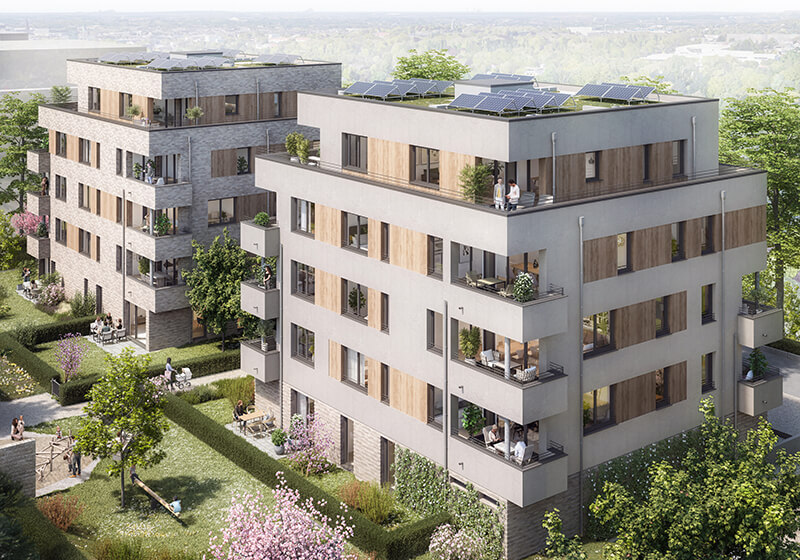
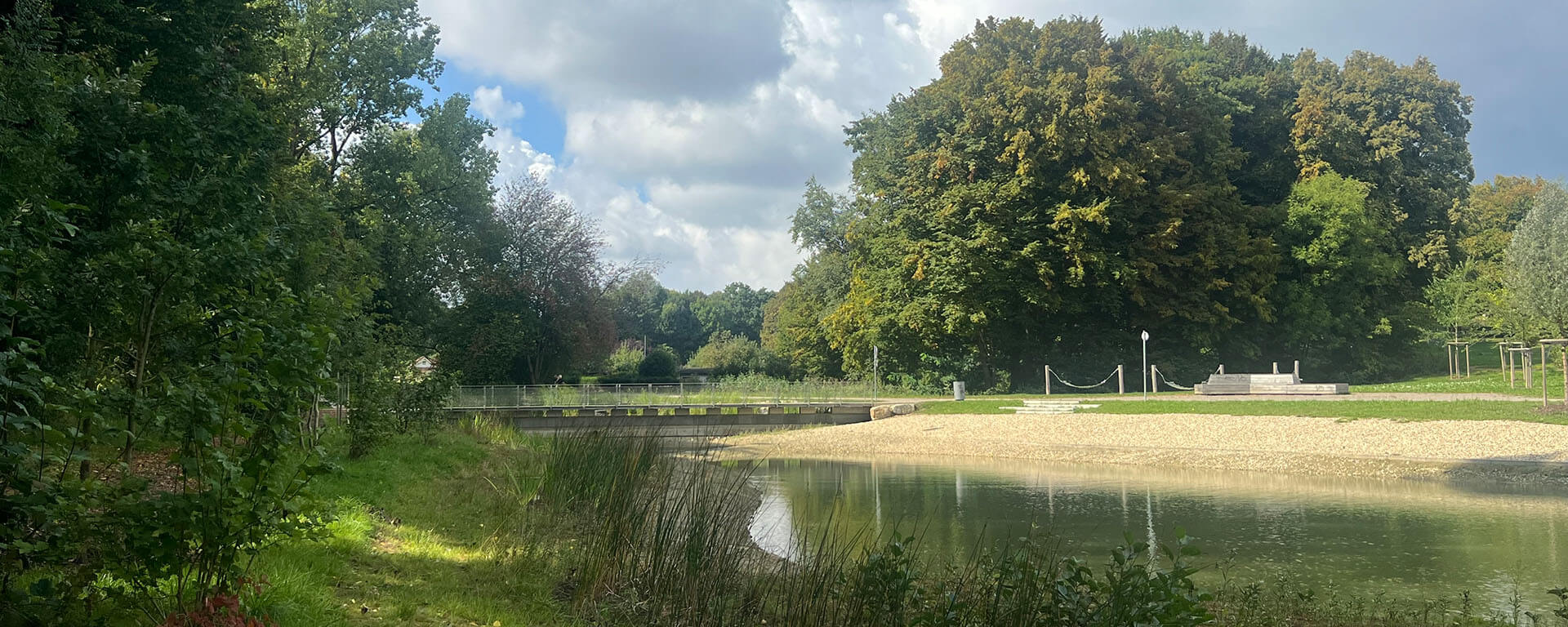
A remar­kable urban trans­for­ma­tion is taking place in the Alten­bo­chum and Laer districts of Bochum: Ostpark Bochum is a pionee­ring resi­den­tial quarter with around 1,300 new resi­den­tial units being built on 43 hectares. What is special about this is that the two areas – the Feld­mark district in Alten­bo­chum and the Havken­scheider Höhe district in Laer – are being connected by a sophisti­cated system of urban gree­nery, water features and sustainable drai­nage concepts.

The back­bone of this connec­tion is formed by water­courses and water areas with adja­cent recrea­tional areas. These green corri­dors not only create attrac­tive leisure faci­li­ties for resi­dents, but also fulfill important ecolo­gical and climatic func­tions. Both districts benefit from the gene­rous propor­tion of open spaces: Of the total area of 43 hectares, only 14 hectares are purely net buil­ding area, while an impres­sive 29 hectares are earmarked for open spaces and green infra­struc­ture.

A central part of this is a converted grass pitch in Laer.

The sponge city prin­ciple

A central compo­nent of the project is the sponge city prin­ciple. Like a sponge, “the city” absorbs rain­water, stores it and releases it again when required. Speci­fi­cally, this is achieved through a sophisti­cated system of green spaces for reten­tion, drai­nage systems and reten­tion basins.

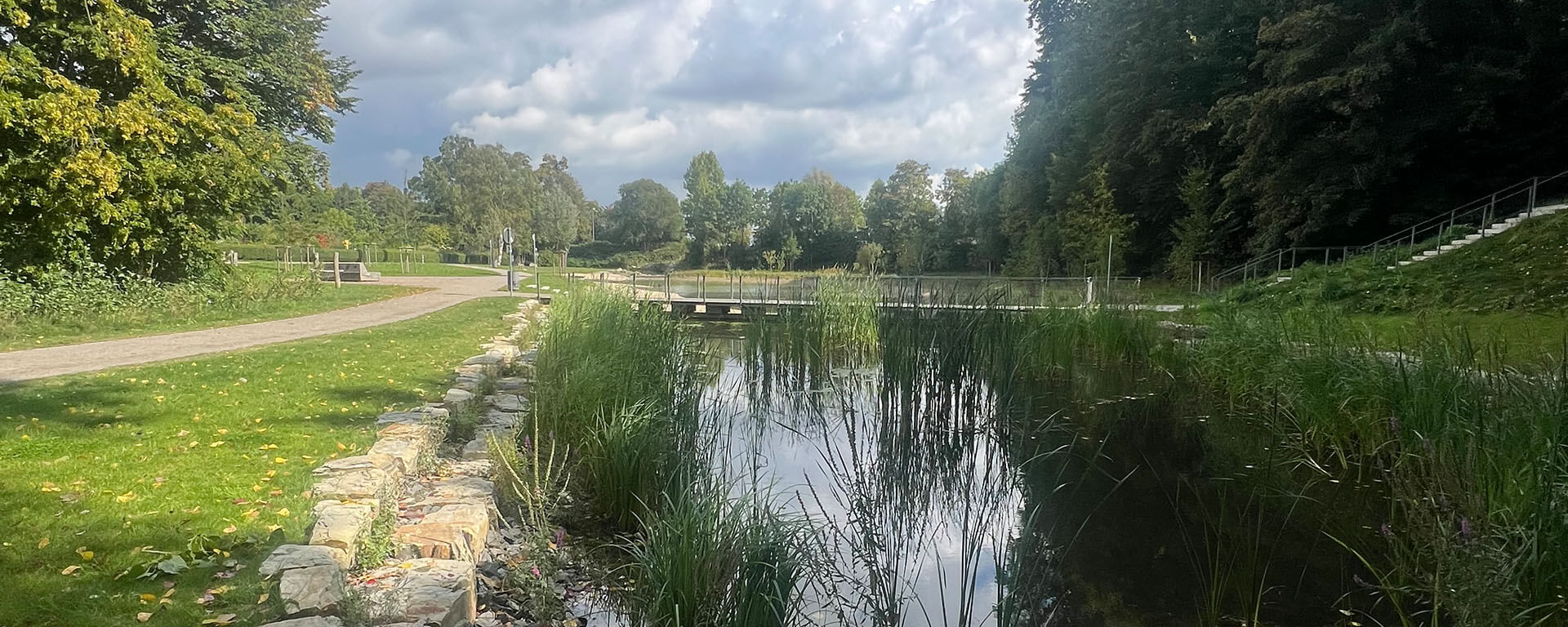
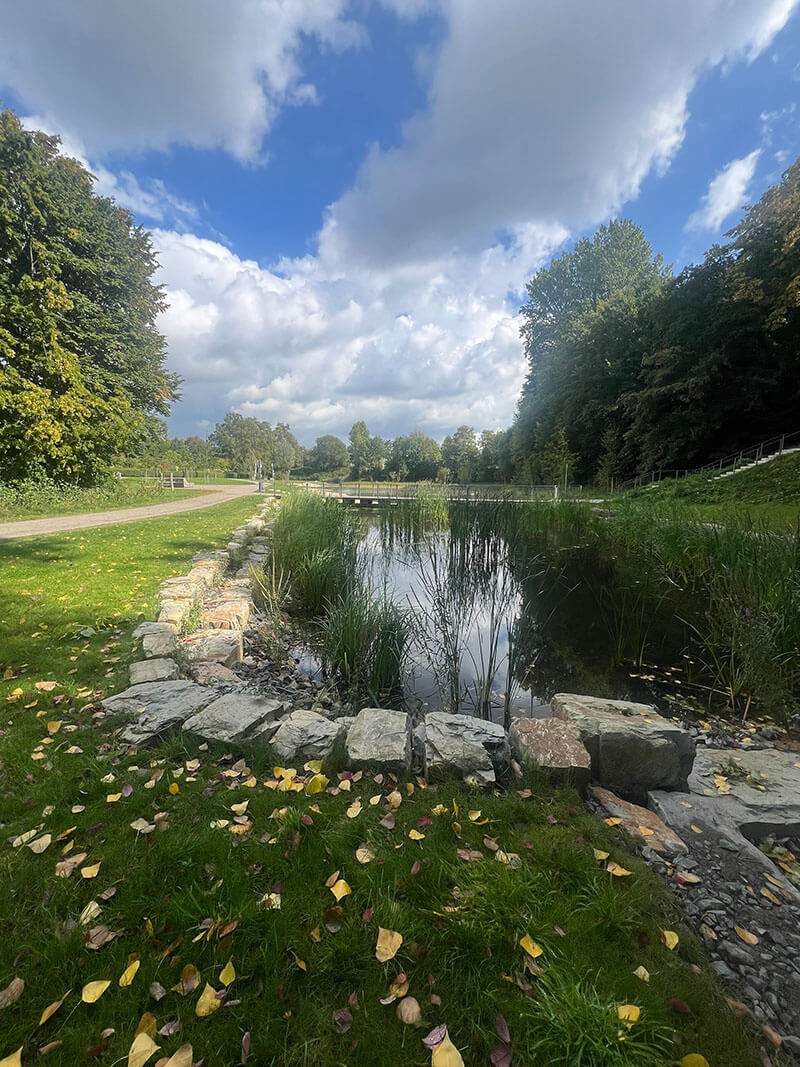
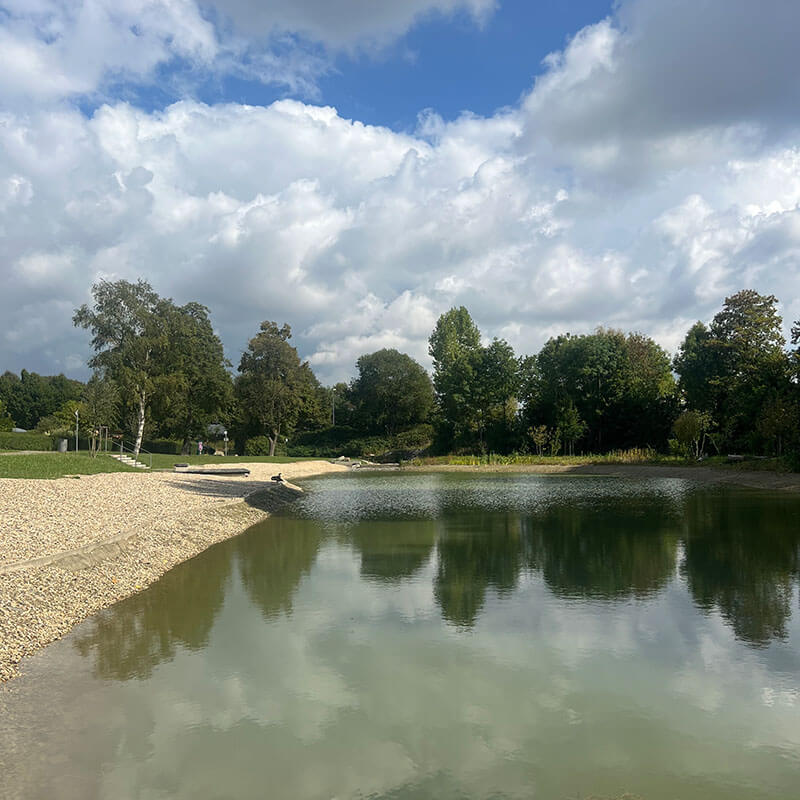
The new land­scaped lake in Havken­scheider Park, on the former LFC Laer pitch, has imme­dia­tely become a popular desti­na­tion. The lake with an adjoi­ning park between the two resi­den­tial areas being built not only offers a high recrea­tional value, it is also a central element of the inno­va­tive rain­water manage­ment in Ostpark Bochum.

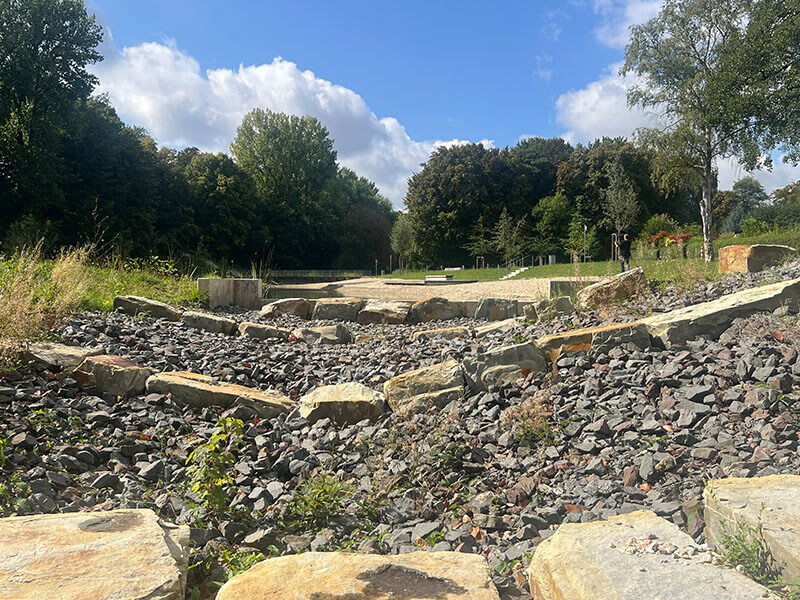
Instead of quickly drai­ning rain­water into the sewer system, it is coll­ected on site, slowly seeps away or evapo­rates. This has several advan­tages: The system helps to prevent floo­ding during heavy rain­fall, the stored water can supply the vege­ta­tion during dry spells and the evapo­ra­tion ensures a plea­sant micro­cli­mate.

The trans­for­ma­tion of the barn

A parti­cu­larly impres­sive part of this green trans­for­ma­tion has already been imple­mented in the Havken­scheider Höhe district in Laer. For decades, this area was home to a tradi­tional 7,000 m² clay pitch, which was mainly used for club soccer and was only available to a limited number of users. The neigh­boring club BFC Laer was given an arti­fi­cial turf pitch a few years ago, so that the area of the unpo­pular and outdated clay pitch was now “over”.

The plan­ners reco­gnized the poten­tial of the area for a multi­func­tional water land­scape. After remo­ving the old pond layer and re-profiling the subsoil, an orga­ni­cally shaped water area was created that blends harmo­niously into the surroun­ding land­scape and forms the scenic high­light of the district.

The water is fed by an inge­nious system that coll­ects and puri­fies rain­water from the entire district. Diffe­rent water depths create diffe­rent ecolo­gical niches for amphi­bians, water birds and aquatic plants.

Space for all

The trans­for­ma­tion of the Tennen­platz in Laer as part of Ostpark Bochum is exem­plary of the inno­va­tive linking of the two new resi­den­tial districts through green infra­struc­ture, incor­po­ra­ting exis­ting areas that are no longer in use.

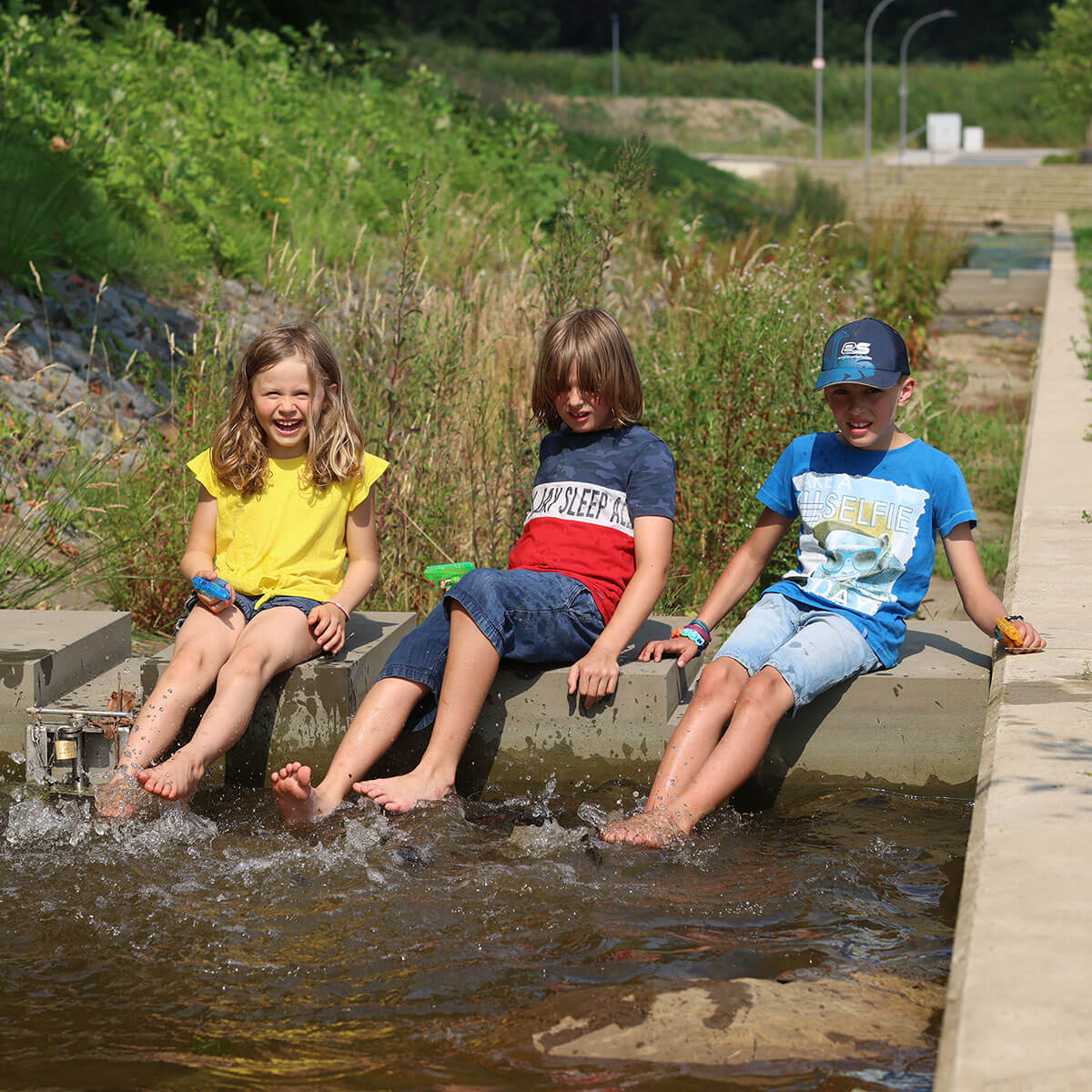
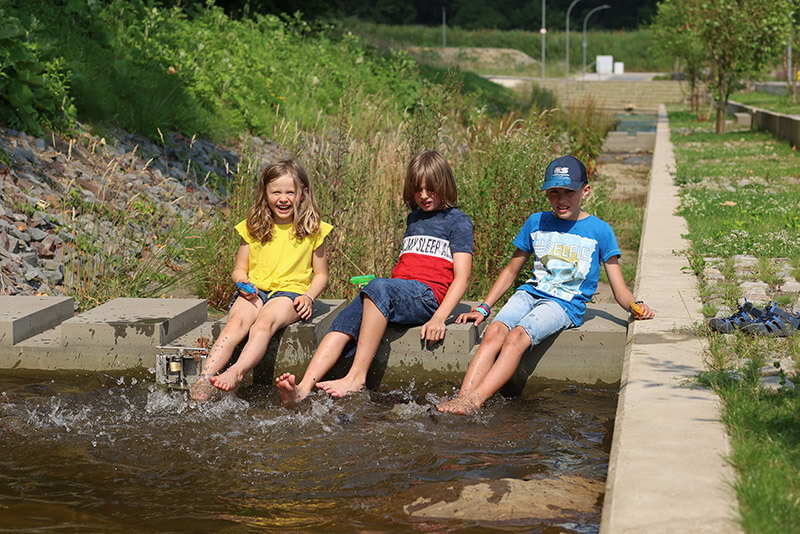
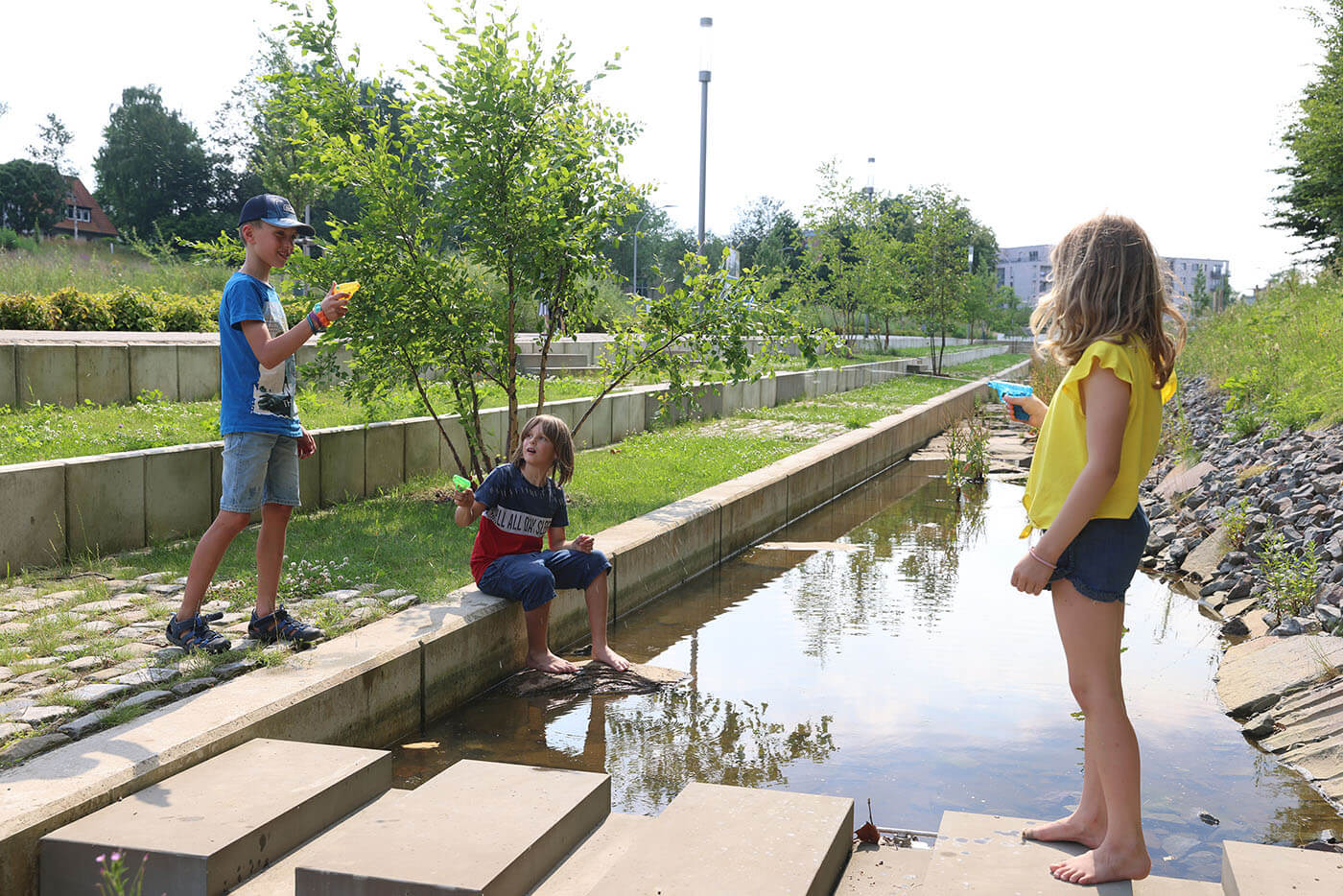
The conver­sion brings many ecolo­gical bene­fits. A much broader section of the popu­la­tion bene­fits soci­ally: while the grass pitch was reserved for soccer, the water land­scape is now open to ever­yone. Fami­lies relax on the banks, children play and joggers appre­ciate the highly attrac­tive route.

The 29 hectares of open space make Ostpark Bochum a show­case project for sustainable urban plan­ning in Germany: sustainable, climate-resi­lient and soci­ally inclu­sive.

Project data

Desi­gner

BPR Inge­nieure GmbH & Co. KG
Müller-Breslau-Straße 28
D – 45130 Essen

Buil­ding owner

City of Bochum
Tech­nical City Hall
Hans-Böckler-Straße 19
D – 44777 Bochum

Project manage­ment

NRW.URBAN GmbH
Revier­straße 3
D – 44379 Dort­mund

Outdoor faci­li­ties

Depen­b­rock Bau GmbH & Co. KG
Merca­tor­straße 131–133
D – 47051 Duis­burg

Address

Havken­scheid
Havken­scheider Straße
D – 44803 Bochum

Feld­mark
Feld­mark 1
D – 44803 Bochum

Photos

Marco Stepniak/RDN
NRW.URBAN
More Sports Media

Text

Johannes Bühl­be­cker
More Sports Media

Opening

2025–2029

Video

Our news­letter

Your stage

Publish your project or product here!

Play­ground in Rüstringer city park

Play­ground in Rüstringer Stadt­park, Wilhelms­haven

Children to power!


THE PLAYPLACE MAKERS

70 children were allowed to decide on the design, cons­truc­tion took 22 weeks and “Der Lange Hein­rich” is 12 meters high: the inclu­sive play­ground in Rüstringer Stadt­park in Wilhelms­haven. Since its opening in October 2024, it has been a magnet for fami­lies from Wilhelms­haven – and for North Sea holi­day­makers.

Parti­ci­pa­tion

The play­ground in Rüstringer Stadt­park is idyl­li­cally nestled in Rüstringer Stadt­park and is surrounded by a forest-like back­drop, which creates a parti­cu­larly family-friendly atmo­sphere. Its central loca­tion makes it a popular desti­na­tion for both locals and North Sea vaca­tio­ners.

This area was intended for physical exer­cise back in 1915 – today it fulfills this purpose in a modern and inclu­sive way. The spacious meadow areas offer addi­tional space for ball games, picnics and free play.

The city of Wilhelms­haven took an unusual approach to the plan­ning and asked 70 children from the city area to decide on the design of their new play­ground. The result became the basis for today’s play para­dise. Not only educa­tional conside­ra­tions, but above all the child­ren’s wishes were incor­po­rated into the plan­ning.

Toge­ther

The play­ground in Rüstringer Stadt­park has been desi­gned to be acces­sible and inclu­sive so that children with and without disa­bi­li­ties can play toge­ther. In the toddler area, there is special equip­ment for the youn­gest children as well as a water mud faci­lity for sensory expe­ri­ences in protected play areas. Older children will find a slide tower as the main attrac­tion, a variety of clim­bing equip­ment and chal­len­ging exer­cise options in a sepa­rate area.

Other attrac­tions include a spacious sand play area for crea­tive play, a double swing, a tram­po­line, a turn­table and an impres­sive 30-meter-long zip line.

All play equip­ment complies with the DIN EN 1176 safety stan­dard, and nume­rous benches and tables have been installed for the comfort of accom­panying persons, provi­ding perfect places to watch and relax.

The heart of the play­ground is the impo­sing, 12-metre high play tower “Der Lange Hein­rich”. Its name is remi­nis­cent of a historic unloa­ding crane that used to unload ships at the Wilhelms­haven quay – today it “unloads” the child­ren’s thirst for adven­ture.

Team­work

The success of the play­ground in Rüstringer Stadt­park is the result of excel­lent coope­ra­tion between various part­ners. As the client, Tech­ni­sche Betriebe Wilhelms­haven was respon­sible for project coor­di­na­tion and imple­men­ta­tion. The southern German company Spiel­platz­ge­räte Maier, winner of the design compe­ti­tion, deve­loped and supplied the inno­va­tive play equip­ment and contri­buted its exper­tise in inclu­sive play­ground concepts.

The Neumann Gusen­burger office was respon­sible for the land­scape plan­ning concept and ensured the harmo­nious inte­gra­tion of the play­ground into the exis­ting park land­scape. DIE SPIELPLATZ-MACHER were respon­sible for the profes­sional instal­la­tion of the play­ground equip­ment in close coope­ra­tion with the garden and land­sca­ping contractor Frie­de­mann Richter. From the crane work to the instal­la­tion of the equip­ment and the finis­hing touches, the coope­ra­tion between all those involved ran smoothly – a decisive factor in the success of the project.

Conclu­sion

Since its grand opening in October 2024, the play­ground in Rüstringer Stadt­park has become a real attrac­tion. The play­ground not only attracts fami­lies from Wilhelms­haven, but has also become a popular stop for North Sea vaca­tio­ners. The successful mix of natural surroun­dings, modern play equip­ment and inclu­sive design makes it a special expe­ri­ence for the whole family.

This project is a great example of how public parti­ci­pa­tion, tech­nical exper­tise and craft­sman­ship can lead to a result that inspires ever­yone involved.

Project data

Land­scape planner

Neuman Gusen­berger
Heerstr. 90
D – 14055 Berlin

Buil­ding owner

Tech­nical opera­tions Wilhelms­haven

Play­ground equip­ment

Ernst Maier Spiel­platz­ge­räte GmbH
Wasser­burger Str. 70
83352 Alten­markt a. d. Alz

Cons­truc­tion

Die Spiel­platz-Macher GmbH
Pinne­berger Str. 66
D – 22457 Hamburg

Address
Rüstringer Stadt­park
D- 26386 Wilhelms­haven
Opening

2024

Photos

THE PLAYGROUND MAKERS

Text

Johannes Bühl­be­cker
More Sports Media
(Adver­to­rial)

Our news­letter

Your stage

Publish your project or product here!

The Blue Square

The Blue Court in Balzers

The blue wonder


Wegmüller Design Studio

When you enter the Blue Square at the Balzers school buil­ding, you imme­dia­tely sense that this is not about norms, but about possi­bi­li­ties. Around 1,000 m² of space invite you to exer­cise and socia­lise – and enjoy plenty of playful freedom. Instead of a classic rectan­gular sports field, an orga­ni­cally shaped adven­ture land­scape opens up, bordered by concrete elements, inters­persed with green islands and desi­gned to be barrier-free.
A space that welcomes ever­yone.

What’s up?

In the muni­ci­pa­lity of Balzers in the Prin­ci­pa­lity of Liech­ten­stein, a versa­tile all-weather pitch was created in the imme­diate vici­nity of a primary and secon­dary school to replace a rather mono­func­tional red plastic pitch: the Blue Pitch.
Whether ball games, clim­bing adven­tures, balan­cing acts, sports lessons or deep breathing: the Blue Pitch focuses on maximum versa­ti­lity. Three differ­ently equipped playing fields offer space for foot­ball, basket­ball and nume­rous other games. In between, open spaces have been created for spon­ta­neous forms of exer­cise. Athle­tics faci­li­ties, bould­e­ring elements, a slack­line, ground tram­po­lines and the dynamic balance game Super Nova make exer­cise an expe­ri­ence for all abili­ties.

The faci­li­ties in detail:

  • Two multi­func­tional pitches measu­ring 11m x 6.5m with small goals, one of which has a net system
  • One multi­func­tional pitch (20m x 13m) with fixed basket­ball hoops
  • 50m running track and long jump faci­lity
  • Clim­bing course, 3‑bar hori­zontal bar, hanging course and bould­e­ring faci­lity
  • Super Nova
  • Tram­po­line track and slack­line
  • Circular running track
  • Running school, balance, jumping and coor­di­na­tion games

The design was created by the Swiss plan­ning office Wegmüller.

Whatever you want

The Blue Square is both a meeting place and a trai­ning ground.

  • School­children use it during lessons, at break time and after school.
  • Sports clubs benefit from the varied outdoor trai­ning oppor­tu­ni­ties.
  • Fami­lies enjoy a range of acti­vi­ties toge­ther that even small children can intui­tively use.
  • Indi­vi­dual athletes find plenty of space for working out, jogging or chil­ling out under the newly planted trees.

The design consis­t­ently follows the prin­ciple of inclu­sion. All paths, access points and play areas are desi­gned so that they can also be used by people with disa­bi­li­ties. The over­lap­ping markings, free-form design and varying shades of blue of the PU-bound sports surface create an invi­ting, intui­tive envi­ron­ment that does not dictate how you have to move, but inspires you to move however you want.

The low-emis­sion LED lighting can be acti­vated at the touch of a button until 10 p.m., allo­wing the space to be used in the evening as well.

How it works

Although the actual sports area is now smaller than before the reno­va­tion, the range of acti­vi­ties on offer to the diverse user groups, from primary school children to senior citi­zens, has multi­plied.

The Blue Square is not a sports field in the tradi­tional sense, but a lively exer­cise area for the entire commu­nity: a place to burn off energy, try things out, play, train, meet and linger. It is an example of what open space design can look like today: diverse, inclu­sive and full of joy in move­ment.

Thanks to courage in plan­ning and quality in execu­tion.

Floor areas: The top layer

Coloured GEZOFLEX EPDM granu­late from GEZOLAN AG was used for the top layer of the elastic floo­ring in the new, multi­func­tional exer­cise room in Balzers, as well as for the hemi­sphe­rical 3D elements. The rubber granu­late from the Swiss manu­fac­turer is charac­te­rised by consis­t­ently high mate­rial quality, good UV and weather resis­tance, and reliable colour fast­ness. These proper­ties help to ensure that the surfaces can with­stand the various usage requi­re­ments of the open exer­cise area on a long-term basis.

For the Blue Square, the colours 054 dark blue and 084 bright blue were used both as indi­vi­dual colours and in coor­di­nated mixtures. The mate­rial thus makes a signi­fi­cant contri­bu­tion to the overall appearance of the project, not only in terms of func­tion­a­lity but also in terms of design. In combi­na­tion with the freely formed square design and the wide range of exer­cise options, the floo­ring supports the idea of an inclu­sive and flexible outdoor space.

Floor surfaces: Binding agents

A CONICA binding agent system, speci­ally deve­loped for elastic and durable outdoor surfaces, was used to cons­truct the sports floo­ring on the Blue Square. The high-quality poly­ure­thane binders ensure a reliable bond between the EPDM granules and contri­bute signi­fi­cantly to the longe­vity and func­tion­a­lity of the entire surface. They are desi­gned for stable perfor­mance under chan­ging weather condi­tions and support the elas­ti­city, shock absorp­tion and struc­tural stabi­lity of the surface.

In Balzers, a binder was used that reliably retains its proper­ties both during inten­sive sporting use and in ever­yday opera­tion. It thus makes an important tech­nical contri­bu­tion to the imple­men­ta­tion of the project: the freely desi­gned exer­cise land­scape should not only be visually appe­aling, but also remain safe, robust and easy to main­tain in the long term.

The CONICA binder system used helps to ensure that the Blue Square meets the diverse requi­re­ments of an open, inclu­sive and heavily frequented exer­cise area.

Project data

Planer

Planungs­büro Wegmüller
7250 Klos­ters
Schweiz

Client

Gemeinde Balzers
FL 9496 Balzers
Liech­ten­stein

User

Gemein­de­schulen Balzers

Granu­late

GEZOLAN AG
Werk­strasse 30
6252 Dagmer­sellen
Schweiz

Binder

CONICA AG
Indus­trie­strasse 26
8207 Schaff­hausen
schweiz

Opening

2022

Address

Schul­haus Balzers
Schul­strasse 2
9496 Balzers
Liech­ten­stein

Photos

Hitsch Photo­graphy
Planungs­büro Wegmüller

Text

Johannes Bühl­be­cker
More Sports Media

Videos

Subscribe to our news­letter.

Every three weeks, we provide infor­ma­tion about new and exem­plary projects and products. With heart, enthu­siasm and exper­tise.
Frei­burger Turner­schaft

Frei­burger Turner­schaft Skill Park and Stadium Area

Open to Ever­y­thing


Spor­tA­trium

In recent years, the Frei­burger Turner­schaft has realized two remar­kable outdoor sports projects on its club grounds. Both faci­li­ties greatly enhance the variety, user-friend­li­ness, and spatial effi­ci­ency of the site, while provi­ding trai­ning oppor­tu­ni­ties that appeal to all ages and skill levels.

Ever­y­thing for Ever­yone

The Frei­burger Turner­schaft of 1844 e. V. is one of the largest and most tradi­tional sports clubs in southern Baden. With its exten­sive club grounds located directly on the Dreisam River and in close proxi­mity to the Dreisam Stadium, the club provides ideal condi­tions to inte­grate sports faci­li­ties like the Skill Park and the Stadium Area seam­lessly into the exis­ting infra­struc­ture. Both projects share several key features:

Inclu­sion & Acces­si­bi­lity: All faci­li­ties are desi­gned to be usable with wheel­chairs or strol­lers.
Versa­ti­lity: Both areas cater to a wide range of athletic abili­ties, from endu­rance, strength, and speed to coor­di­na­tion and mobi­lity.
Compact Spatial Plan­ning: Clever place­ment of equip­ment maxi­mizes usabi­lity even on rela­tively small plots.
Custom Fabri­ca­tion: Where stan­dard solu­tions were insuf­fi­cient, plan­ners deve­loped tailor-made equip­ment in-house.

Both projects also benefit from their central loca­tion directly on Schwarzwaldstraße—between the Dreisam Stadium, the youth hostel, and the river­side swim­ming area—making them attrac­tive not only for club members but also for stadium visi­tors, walkers, and joggers.

Plan­ning and imple­men­ta­tion of both projects were carried out by Spor­tA­trium.

Skill Park

Measure, Compare, Improve: Completed in 2024, the Skill Park offers a compact 165 m² trai­ning area focused on digital tracking and athletic chal­lenges. Here, users can test and enhance their perfor­mance across a variety of disci­plines.

High­lights of the equip­ment include elec­tronic sprint measu­re­ment, thro­wing and shoo­ting measu­re­ment stations, inter­ac­tive touch cardio walls, calis­the­nics equip­ment with timing func­tions, slack­line, tram­po­line, long jump, and high jump measu­re­ment.

The concept targets ambi­tious athletes as well as anyone who enjoys measurable progress, from members of the Frei­burger Turner­schaft to school sports groups and even sports kinder­gar­tens. A special feature is its inte­gra­tion into the club’s internal pathways, ensu­ring the Skill Park is seam­lessly embedded in ever­yday club life.

Stadium Areal

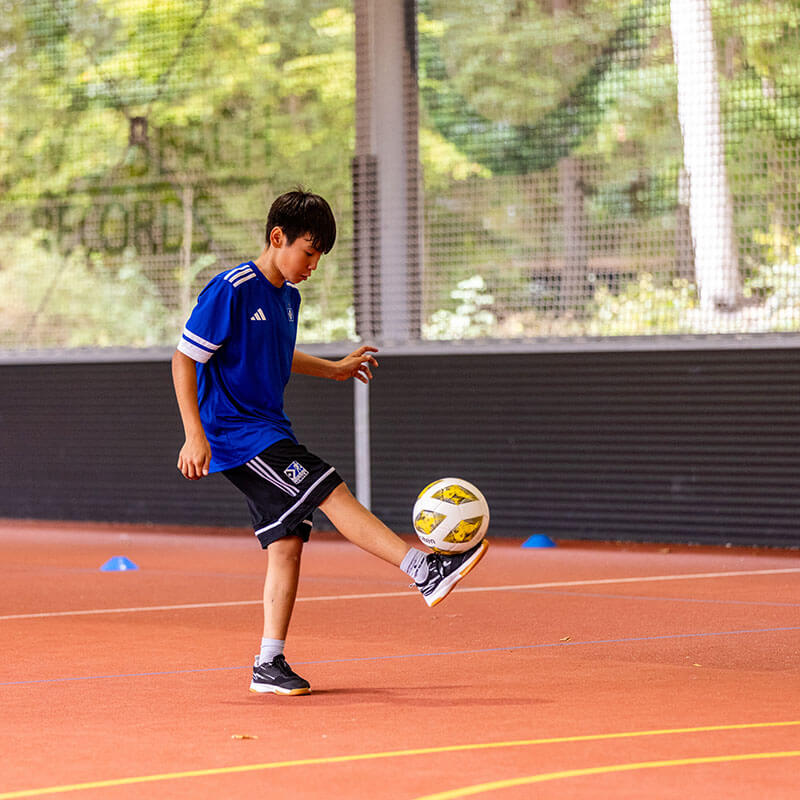
With the Stadium Area, the second major outdoor project followed in 2025. Along the former running track, a 280 m² multi­func­tional fitness park was created, combi­ning strength trai­ning, coor­di­na­tion, and playful move­ment.

Its special features include a calis­the­nics and crossfit area, a senso­ri­motor parcours with step­ping stones, slack­line, and tram­po­lines, a container solu­tion for trai­ning equip­ment such as dumb­bells, balls, or mats, and a joint-friendly EPDM surface for warm-up and cool-down.

The park is not only for members of the Frei­burger Turner­schaft. Joggers along the Dreisam and stadium visi­tors also find a sporty addi­tion to their outing. The faci­li­ties are desi­gned for all gene­ra­tions, from children and teen­agers to fami­lies and seniors.

Two Concepts, One Goal

Whether it’s perfor­mance-oriented, measurable trai­ning in the Skill Park or general outdoor fitness in the Stadium Area, both faci­li­ties demons­trate what modern club deve­lo­p­ment can look like—thoughtfully planned, usable across all target groups, and seam­lessly inte­grated into the surroun­dings.

With the Skill Park and the Stadium Area, the Frei­burger Turner­schaft sets a strong example of what sports faci­li­ties in the 21st century can be: compact, versa­tile, and open to ever­yone.

Project data

Planer

Spor­tA­trium GmbH
Zeller­straße 17/1
D – 73235 Weilheim/Teck

Client

Frei­burger Turner­schaft von 1844 e.V.
Schwarz­wald­strasse 181
D – 79117 Frei­burg

Opening

2024 (Skill­park)
2025 (Stadion Areal)
Address

Frei­burger Turner­schaft Skill­park
Frei­burger Turner­schaft Stadion Areal
Schwarz­wald­strasse 181
D – 79117 Frei­burg im Breisgau

Photos

Spor­tA­trium

Text

Johannes Bühl­be­cker
More Sports Media
(Adver­to­rial)

Skak­ke­ringen

Skak­ke­ringen in Etne

Cooler than inside


PIR2 & LOCAL

Skak­ke­ringen shows how a once dull schoo­lyard can be trans­formed into a lively, multi­func­tional acti­vity park through the active parti­ci­pa­tion of young people, local clubs, and the commu­nity. Simple, flexible struc­tures create dynamic spaces where sports, culture, and social inter­ac­tion come toge­ther, welco­ming a wide range of users.

Parti­ci­pa­tion as the Key

Skak­ke­ringen is simul­ta­neously a schoo­lyard, an acti­vity park, and a meeting place—right next to the Skakke Cultural Center in Etne (Vest­land, Norway). Desi­gned by PIR2 and LOCAL toge­ther with young people, local clubs, and the muni­ci­pa­lity, it became a pilot project addres­sing loneli­ness, lack of physical acti­vity, and the need for quality outdoor spaces.

The original schoo­lyard was a gray asphalt area with a basket­ball hoop, two ping-pong tables, and a few benches. It was rarely used—young people had no place where they felt welcome. The muni­ci­pa­lity ther­e­fore set a clear goal:
“It should be cooler outside than inside.”

Through work­shops, on-site tours, and inter­ac­tive design processes, students and local initia­tives shared their wishes:

  • More gree­nery and invi­ting spaces

  • Bold colors and lighting

  • Clim­bing and gymnastic elements

  • Ball game areas

  • Covered meeting points

The result is a space directly shaped by the needs of young people, while remai­ning open and welco­ming to all citi­zens.

The Red Loop

At the heart of Skak­ke­ringen lies the Red Loop, which defines the space and guides move­ment throug­hout the park.

Its flexible center can host sports, concerts, theater perfor­mances, markets, or open-air cinema. The pavi­lion doubles as a stage and shelter for events, while the green edges offer small gardens, seating decks, and meeting points.

The concept blends active and quiet zones, making it perfect for use across gene­ra­tions. Skak­ke­ringen is not just the schoo­lyard of Enge Secon­dary School—it also serves as a stage for concerts, sports tour­na­ments, and markets. Supported by local part­ners such as the Skakke Cultural Center, the Etne Cup, and the Etne­mark­naden Festival, the space has become a true social hub for the commu­nity.

What We Can Learn Here

The Norwe­gian example offers valuable lessons that can be applied directly to our cities, muni­ci­pa­li­ties, and sports clubs.

  1. A single space doesn’t have to serve a single purpose. Skak­ke­ringen shows how a schoo­lyard can also be a sports field, a park, and an event area—maximizing use and making invest­ments wort­hwhile, even on a tight budget.
  2. Parti­ci­pa­tion is key. Invol­ving young people, clubs, and citi­zens from the start creates a sense of owner­ship and ensures that the space is used sustain­ably.
  3. Simpli­city, dura­bi­lity, and flexi­bi­lity make a diffe­rence. Well-struc­tured elements like the Red Loop, a flexible central area, and green gathe­ring spots require little tech­no­logy, are cost-effec­tive, and easy to main­tain.
  4. Open­ness and acces­si­bi­lity matter. Free access lowers barriers and encou­rages ever­yday acti­vity, promo­ting both health and social cohe­sion.
  5. Finally, Skak­ke­ringen sparks ideas for urban deve­lo­p­ment. As part of a planned acti­vity axis linking the town center, marina, and sports faci­li­ties, it illus­trates how public spaces can connect infra­struc­ture and communities—an approach that holds inspi­ra­tion far beyond Norway.

Project data

Land­scape Archi­tect

PIR2
Vulkan 11
0178 Oslo
Norway

Archi­tect

Local
Øvre korskir­ke­all­men­ningen 7
5017 Bergen
Norway

Opening

2024

Address

Skak­ke­ringen
Stron­da­vegen 3
Etne muni­ci­pa­lity in Vest­land county
Norwegen

Photos

Artishot

Text

Johannes Bühl­be­cker
More Sports Media

Plans

[dica_divi_carousel item_width_tablet=“100%” item_width_phone=“100%” item_width_last_edited=“on|phone” show_items_desktop=“1” show_items_tablet=“1” multislide=“on” transition_duration=“1000” loop=“on” autoplay=“on” hoverpause=“on” autoplay_speed=“3500” arrow_nav=“on” item_spacing=“10” item_vertical_align=“flex-start” advanced_effect=“1” arrow_nav_color=”#5E5C4D” arrow_bg_color=”#FFFFFF” dots_color=“#FAF4E4” dots_active_color=”#5E5C4D” overlay_color_field_bgcolor=“rgba(255,255,255,0.85)” carousel_container_margin=”||50px||false|false” _builder_version=“4.27.4” _module_preset=“default” title_font=“Roboto Condensed||||||||” body_font=“Roboto Condensed||||||||” width=“75%” width_tablet=“100%” width_phone=“100%” width_last_edited=“on|tablet” custom_margin=”|50px||30px|false|false” custom_margin_tablet=”|50px||30px|false|false” custom_margin_phone=”|0px|0px|0px|false|false” custom_margin_last_edited=“on|phone” custom_padding_tablet=”” custom_padding_phone=”||0px||false|false” custom_padding_last_edited=“on|phone” global_colors_info=”{}”][dica_divi_carouselitem button_url_new_window=“1” image=“https://moresports.network/wp-content/uploads/2025/08/800px_Plan-diagrams-01.jpg” image_lightbox=“on” _builder_version=“4.27.4” _module_preset=“default” global_colors_info=”{}”][/dica_divi_carouselitem][dica_divi_carouselitem button_url_new_window=“1” image=“https://moresports.network/wp-content/uploads/2025/08/800px_Plan-diagrams-03.jpg” image_lightbox=“on” _builder_version=“4.27.4” _module_preset=“default” global_colors_info=”{}”][/dica_divi_carouselitem][dica_divi_carouselitem button_url_new_window=“1” image=“https://moresports.network/wp-content/uploads/2025/08/800px_Plan-diagrams-06.jpg” image_lightbox=“on” _builder_version=“4.27.4” _module_preset=“default” global_colors_info=”{}”][/dica_divi_carouselitem][dica_divi_carouselitem button_url_new_window=“1” image=“https://moresports.network/wp-content/uploads/2025/08/1000px_Elevation-diagrams_2-01.jpg” image_lightbox=“on” _builder_version=“4.27.4” _module_preset=“default” global_colors_info=”{}”][/dica_divi_carouselitem][dica_divi_carouselitem button_url_new_window=“1” image=“https://moresports.network/wp-content/uploads/2025/08/1000px_Elevation-diagrams_2-03.jpg” image_lightbox=“on” _builder_version=“4.27.4” _module_preset=“default” global_colors_info=”{}”][/dica_divi_carouselitem][dica_divi_carouselitem button_url_new_window=“1” image=“https://moresports.network/wp-content/uploads/2025/08/1000px_Elevation-diagrams_2-05.jpg” image_lightbox=“on” _builder_version=“4.27.4” _module_preset=“default” global_colors_info=”{}”][/dica_divi_carouselitem][/dica_divi_carousel]

Video

GDPR Cookie Consent with Real Cookie Banner