
That’s amore
Estádio Municipal de Braga
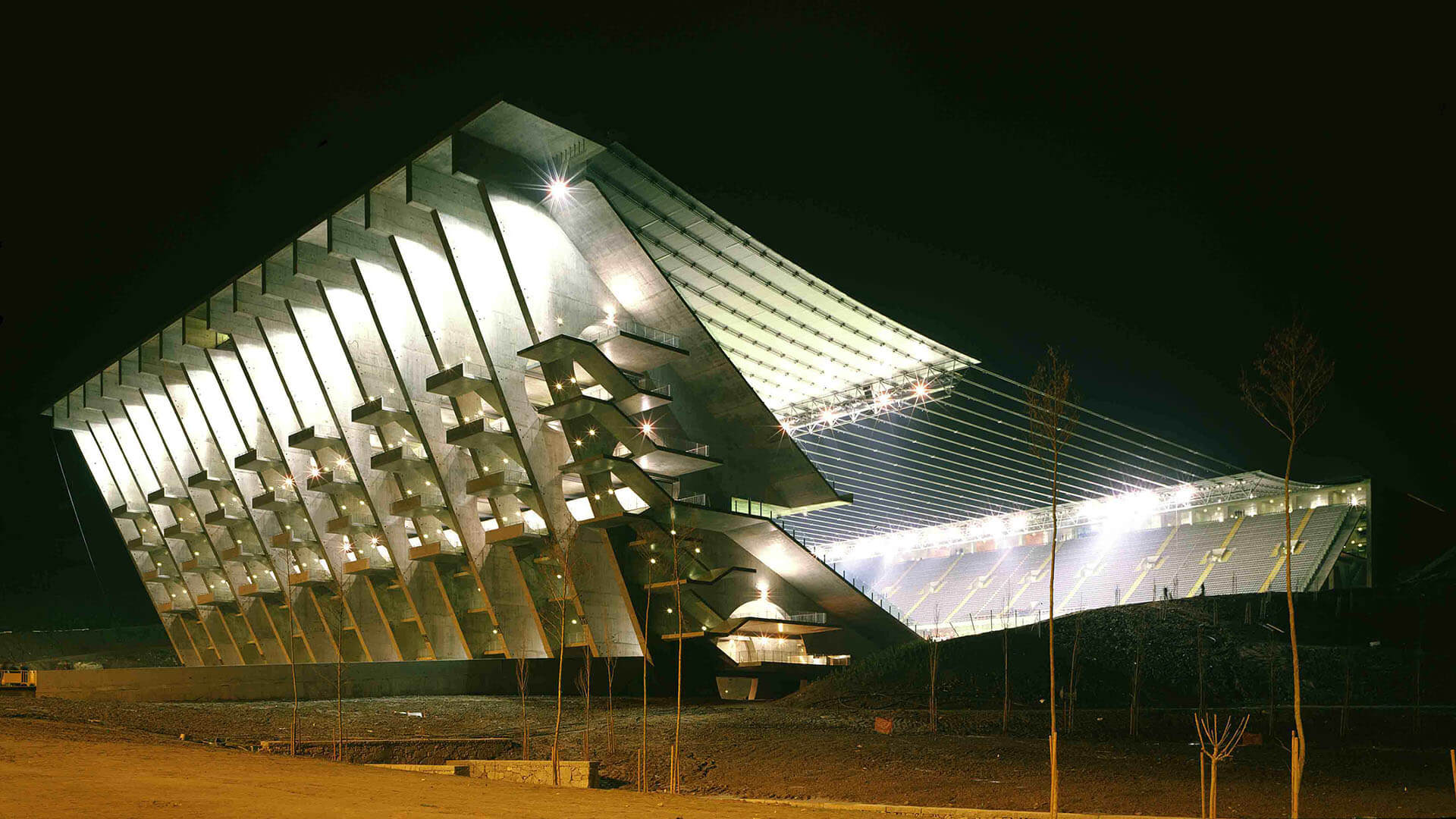
There are stadiums that blend into their surroundings – and there are stadiums that redefine them. The Estadio Municipal de Braga belongs to the second category. Built for the 2004 European Football Championships, it is still one of the most radical and influential examples of how stadium architecture can go beyond pure function.
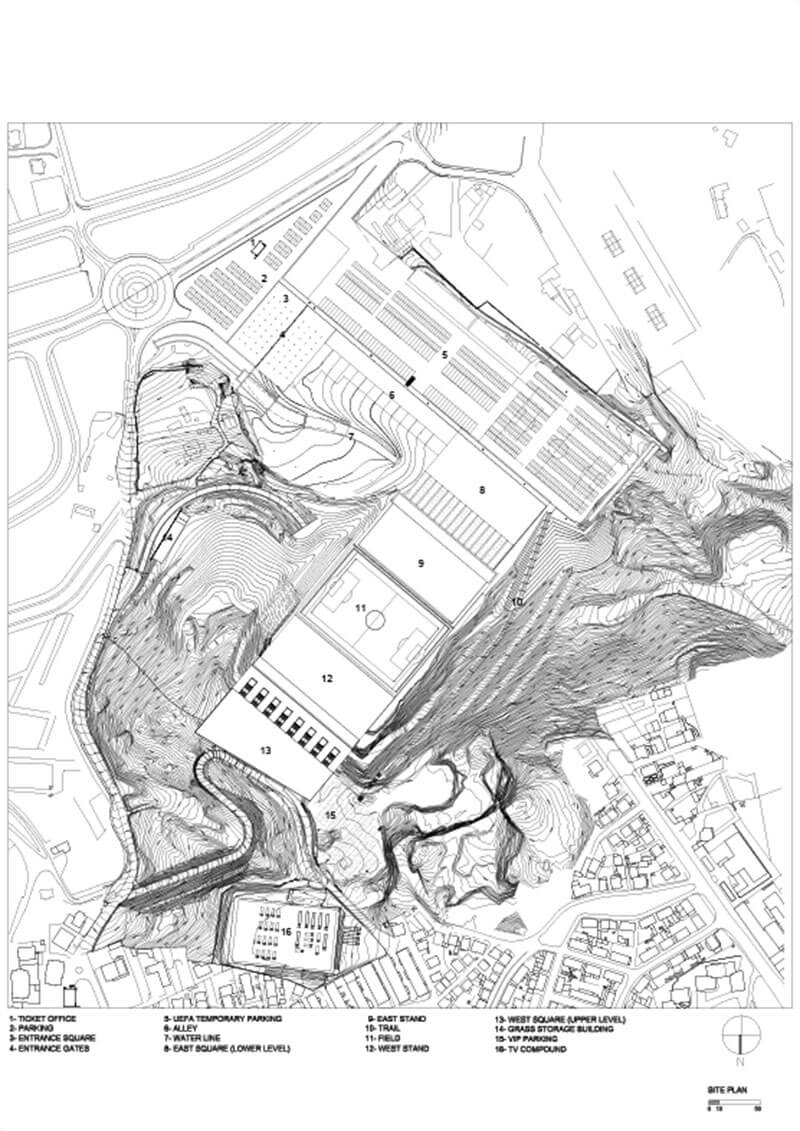
Design:
Souto Moura Arquitectos

Above all: consistent
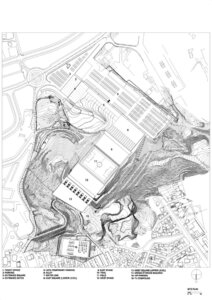
The Estadio Municipal de Braga is one of those stadiums where the quality is not explained by size or staging alone, but by the consistency with which functional requirements were thought out of the location. Built for the 2004 European Football Championships, the facility uses a former quarry and makes its geometry the basis for every planning decision.
The design was created by Pritzker Prize winner Souto de Moura.

Carved in stone
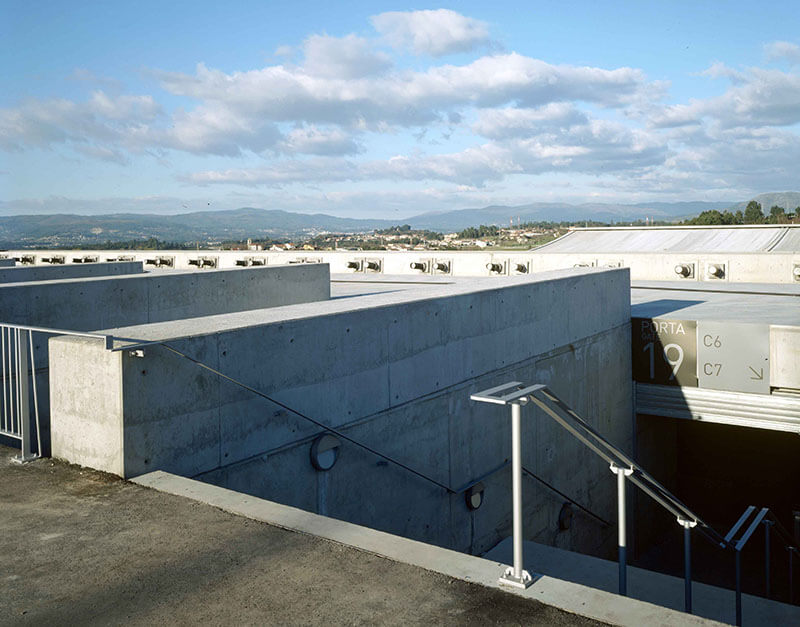
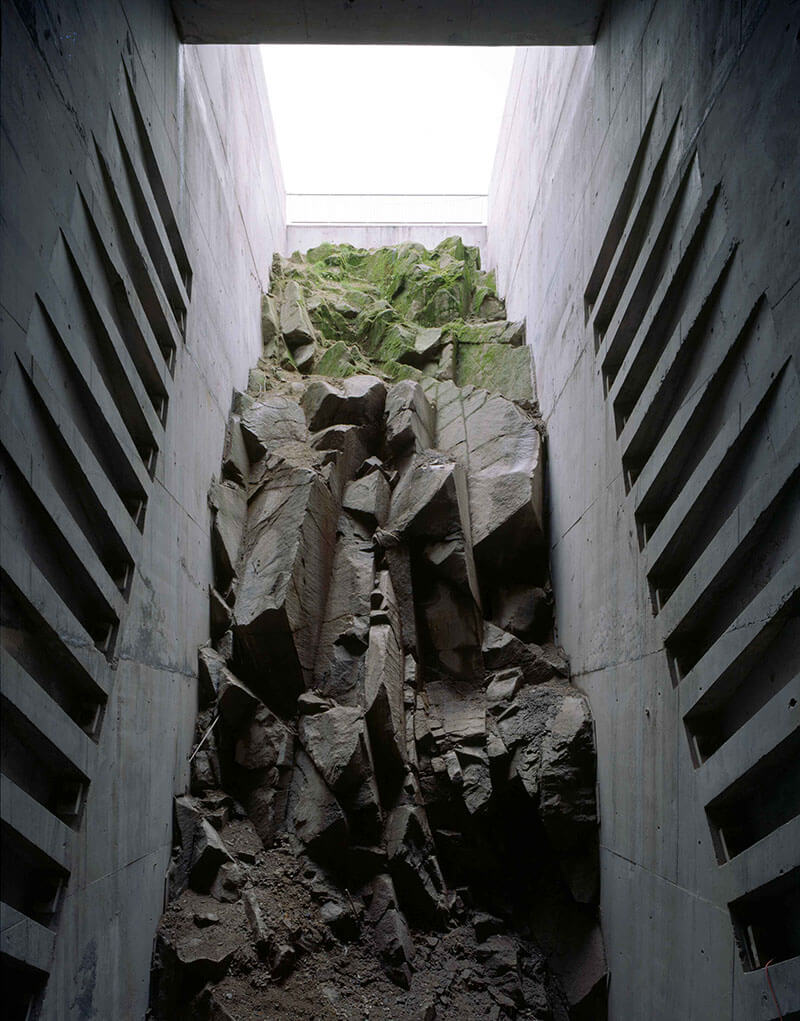
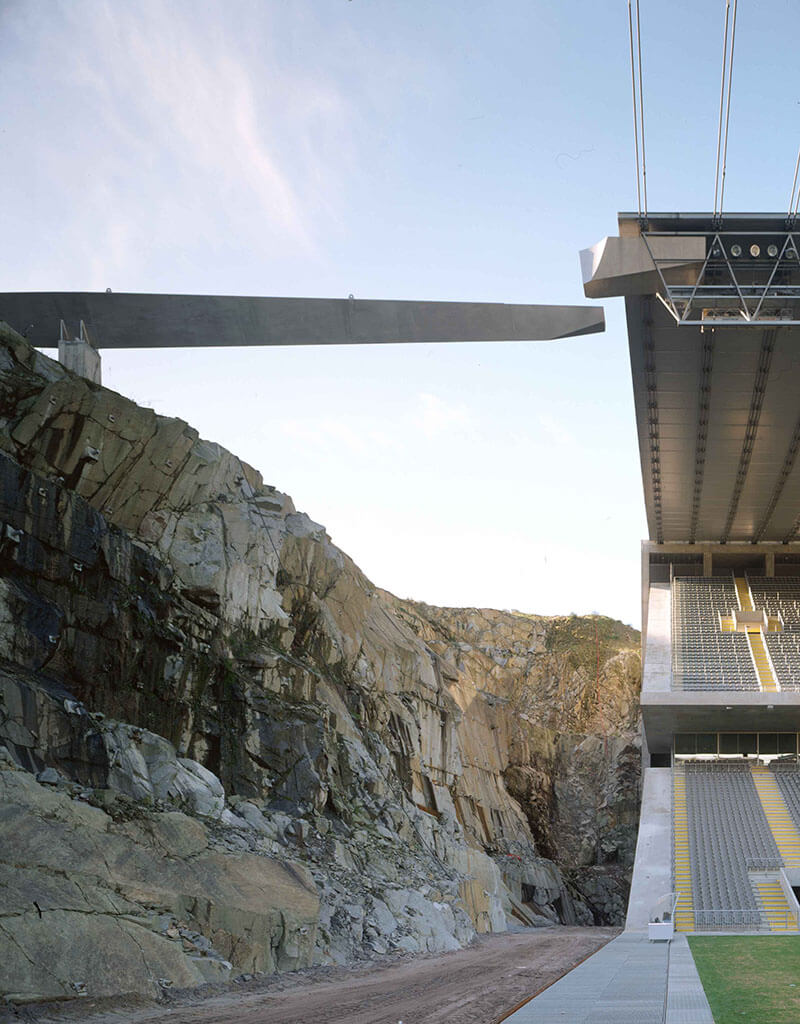
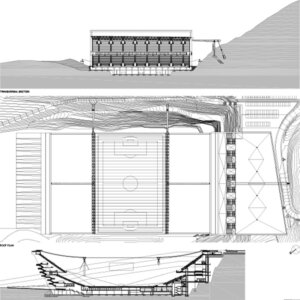
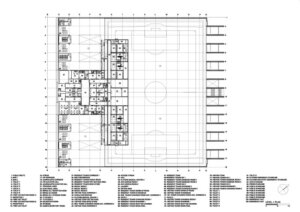
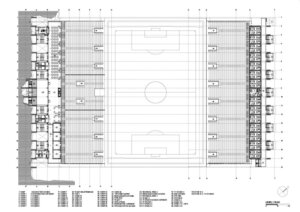
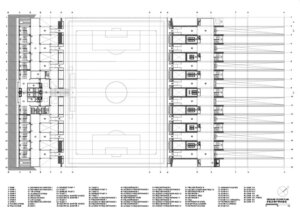
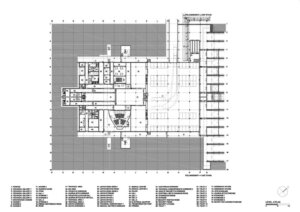
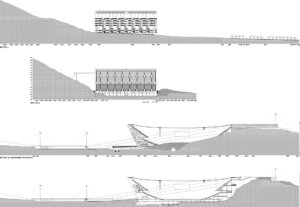
There are only two stands in the Estadio Municipal de Braga. Instead of a closed stadium ring, there are two mighty tiers facing each other along the long sides. Behind the gates, the space opens up: on one side to the dramatic rock face of the quarry, on the other to the vast landscape. This deliberate reduction follows a clear stance: soccer as a great spectacle does not necessarily need maximum density, but can also gain intensity by staging the location.
The two grandstands follow different design logics: One is cut into the rock and uses its mass as a spatial and static resource. The other is organized as an independent concrete structure, with clearly legible access routes, integrated infrastructure and flexible usable areas. This duality allows a clean separation of functions and visitor flows without complex circulation systems.


Suspension bridges
The Estadio Municipal de Braga was also a pioneer in terms of design. The roof spans seemingly weightlessly between the stands – supported by more than 80 steel cables, inspired by traditional Inca suspension bridges. This principle is reminiscent of the Portuguese Pavilion at Expo 98 by Álvaro Siza Vieira, in whose design Souto de Moura was involved, but here it is transferred to a new dimension.
The delicate roof construction contrasts with the solid concrete structure and the rough granite backdrop – a field of tension that gives the stadium its special monumentality.

Development from below
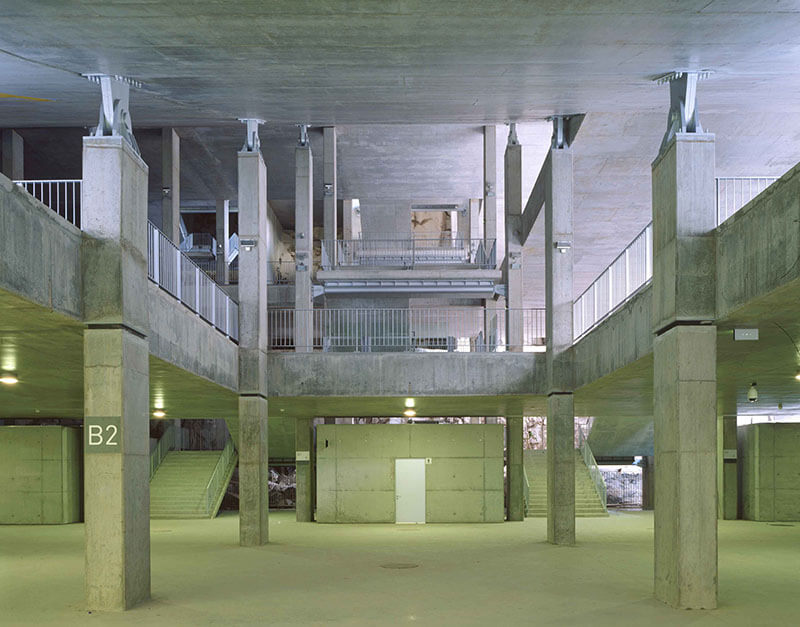
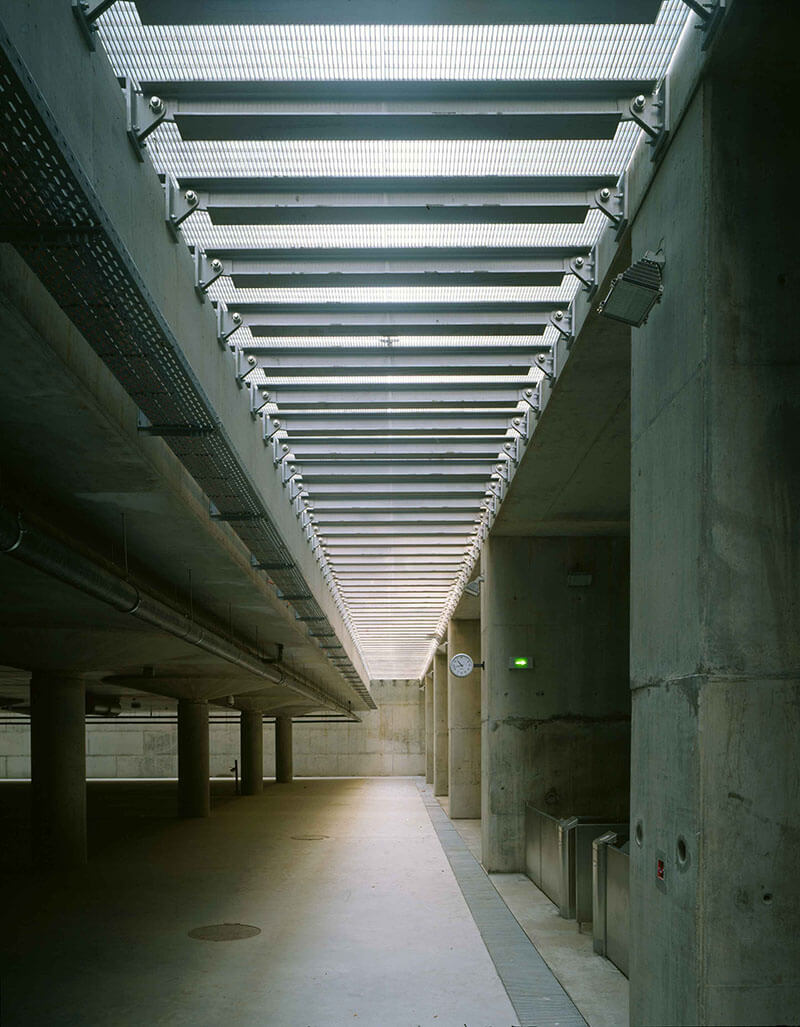
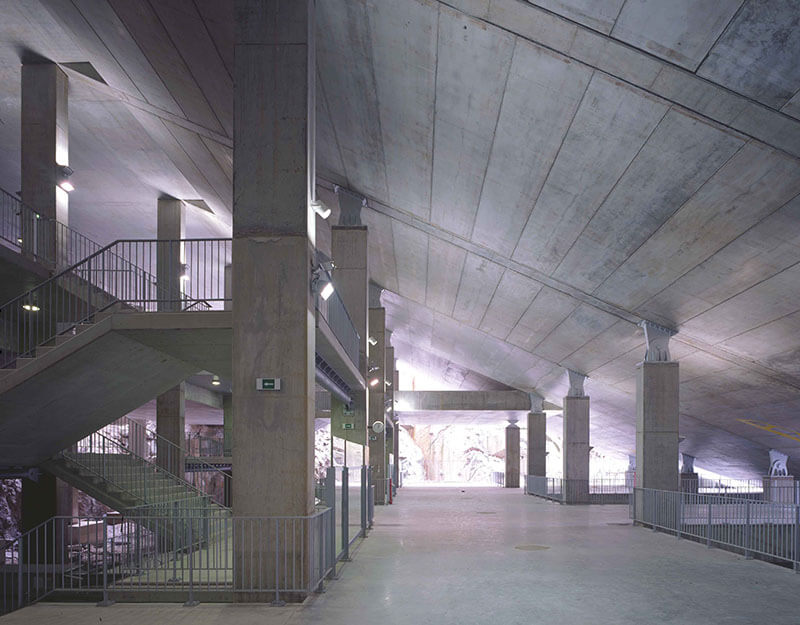
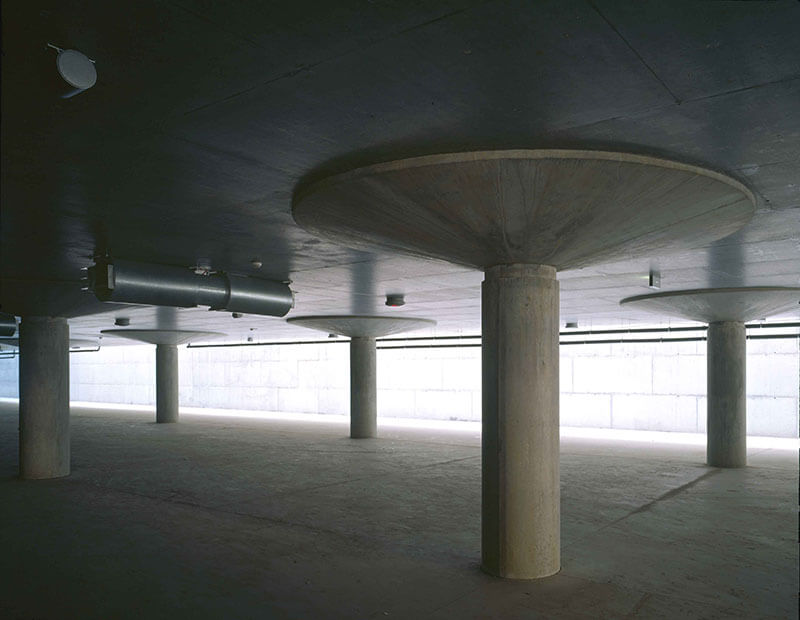
The architectural dramaturgy continues in the development: spectators cross a column-like, almost sacred spatial structure under the pitch before reaching the grandstand cut into the rock.
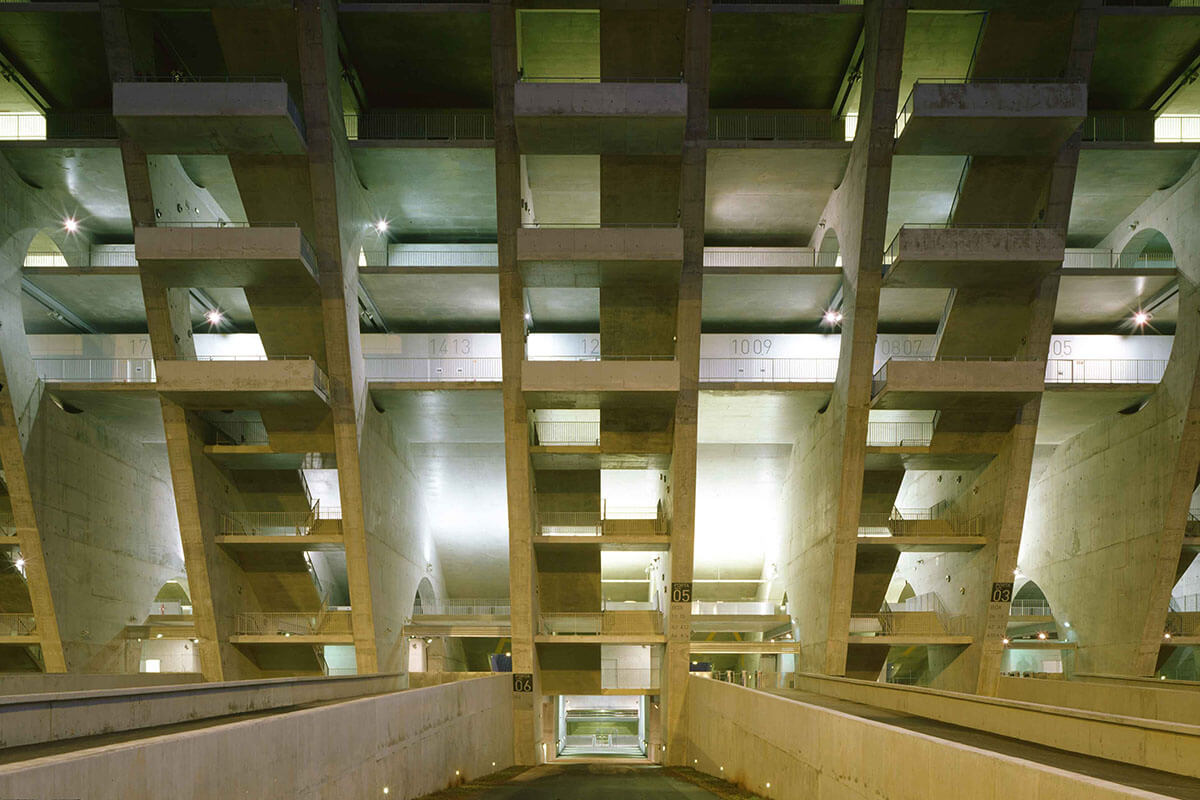
On the opposite side, large openings give rhythm to the concrete structure and create flowing spaces for movement.


Legend
Today, the stadium is successfully used not only for soccer, but also for concerts, congresses and events. Nevertheless, its greatest achievement remains another: It has expanded our understanding of stadium architecture. Away from the standardized type, towards a site-specific, bold and narrative design.
The Estadio Municipal de Braga is therefore much more than a sports venue – it is a manifesto. Proof that extraordinary places are created not despite, but precisely because of their challenges.
A real legend that you simply have to love.

Project data
(Links are underlined)
Planner
Souto Moura Arquitectos
Building owner
Câmara Municipal de Braga
Opening
2003
Address
Estadio Municipal de Braga
Parque Norte
R. Monte de Castro 12
4700–087 Braga
Portugal
Photos
Christian Richters
Text
Johannes Bühlbecker
More Sports Media
Plans



Videos
More exemplary buildings for sport and leisure
Subscribe to our newsletter.
Every three weeks, we inform you about new and exemplary projects and products. With heart, drive and expertise.