
KLABU Clubhouse
Gimme shelter
MVRDV
A small project with a big impact: the KLABU clubhouses made from converted shipping containers give refugees around the world the chance to enjoy sport and togetherness.
MVRDV
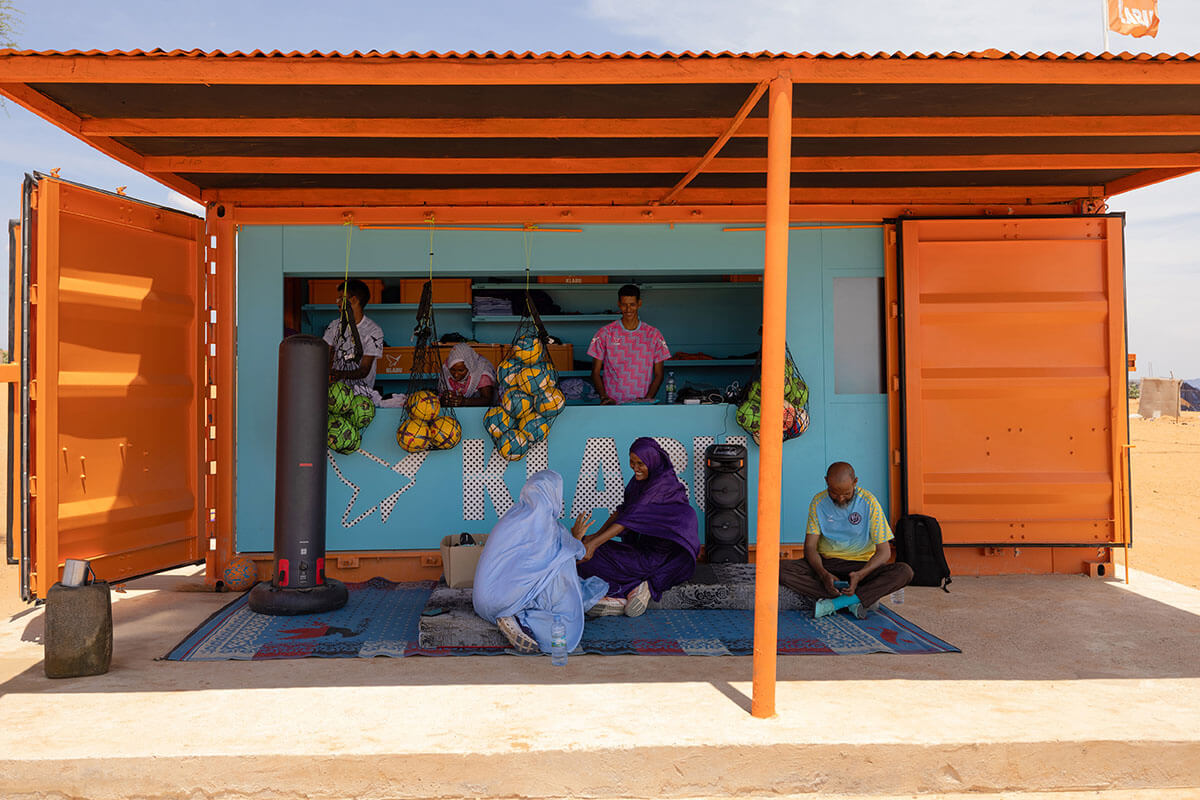
KLABU Clubhouse
MVRDV has designed an innovative and flexible “Clubhouse” that fits into a converted shipping container and can therefore be used anywhere in the world. The project was developed in collaboration with KLABU, a globally active aid organization based in Amsterdam. KLABU is committed to bringing joy, hope and pride to refugees through sport.
KLABU’s clubhouses provide access to sports equipment, activities, TV broadcasts and the internet in refugee camps and settlements around the world, creating welcoming and inclusive community spaces.
Design
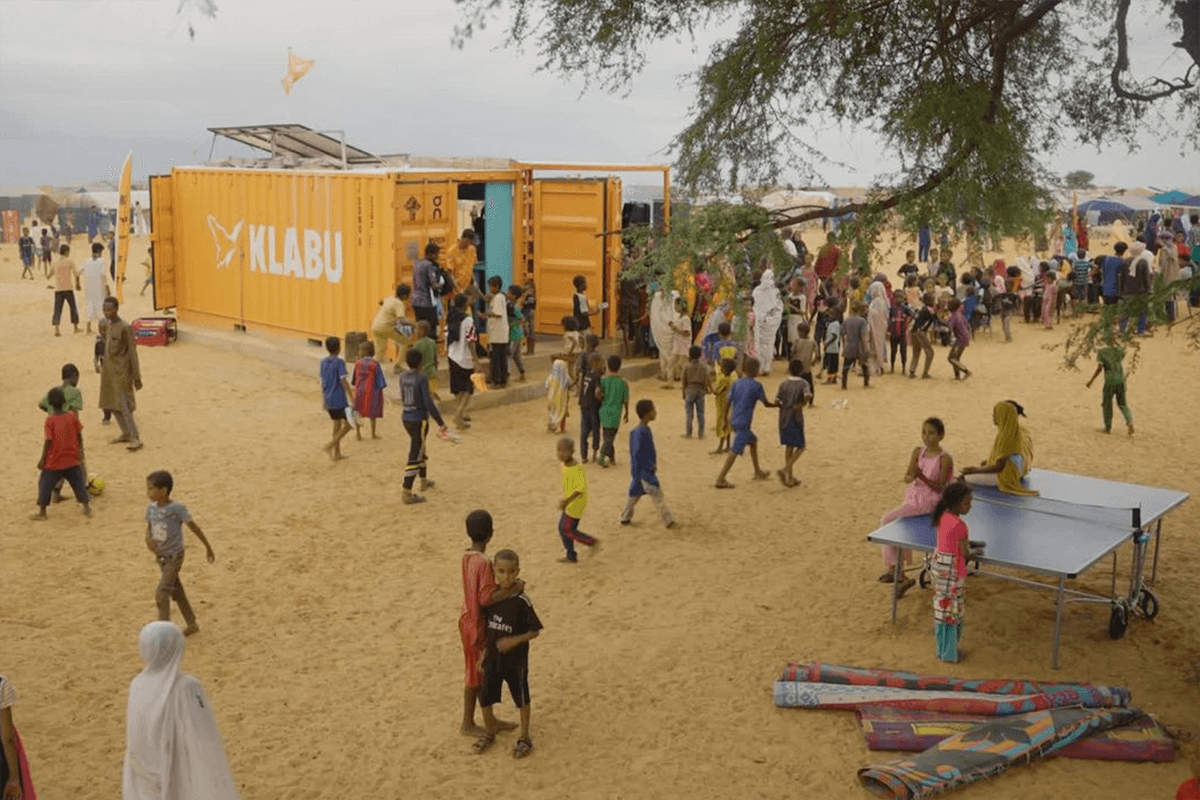
The design of the KLABU clubhouse is based on a modified ISO shipping container, which was chosen for its robustness, safety and ease of transportation. The container approach means that both the physical structure of the clubhouse and the necessary sports materials can be delivered in a single transportation operation. This makes the Clubhouse a flexible and scalable model that can be easily replicated in different locations to support the needs for sport, exercise and community of more than 120 million displaced people worldwide.
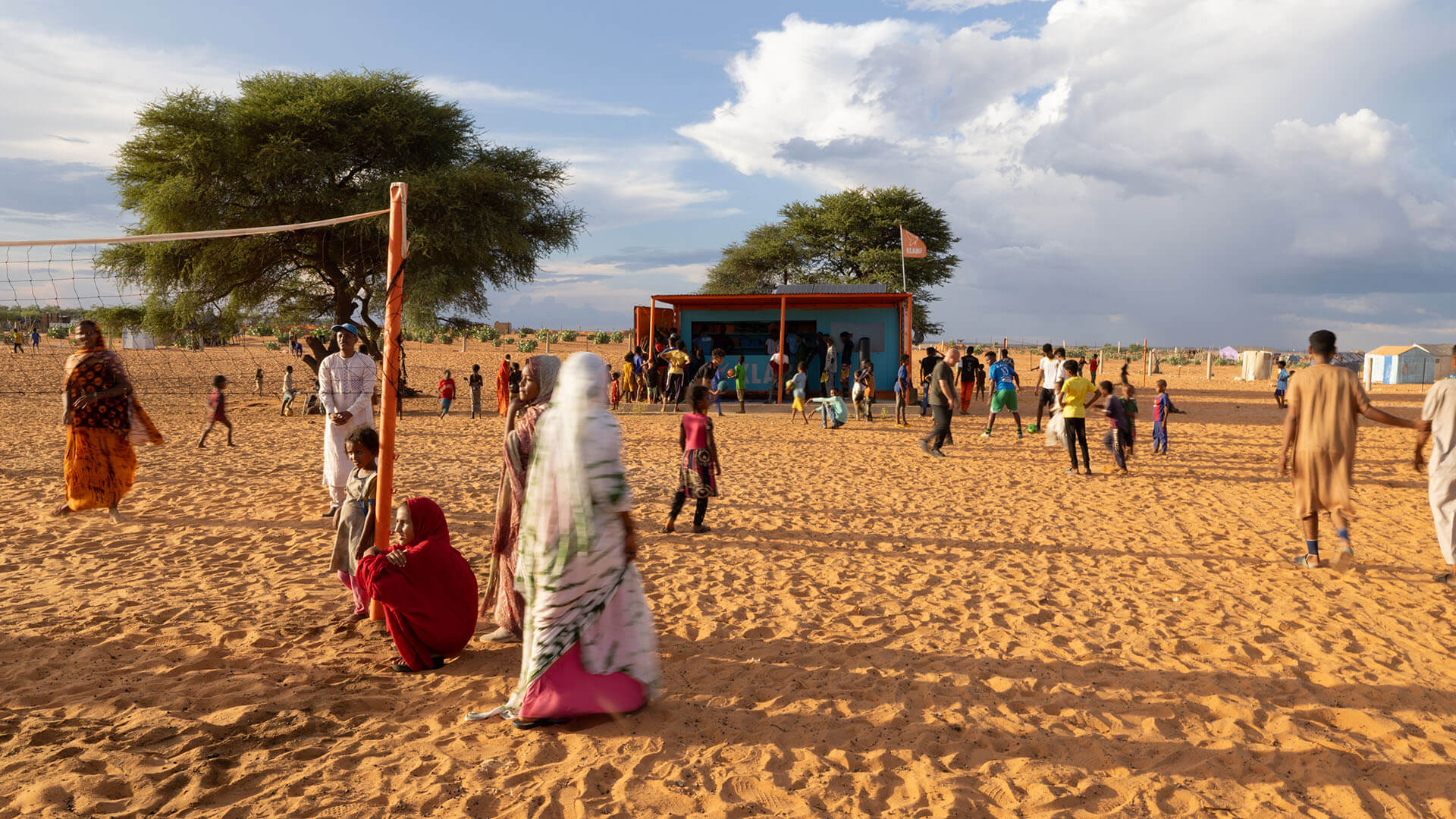
The exterior of the container is an eye-catching orange and features a die-cut KLABU logo, making it easily recognizable. The interior contrasts with a striking sky blue. The interior consists of compact and modular installations that provide both storage space and facilitate transportation.
These design elements ensure that all the necessary materials are stowed in the container before delivery and are easily accessible on arrival on site.
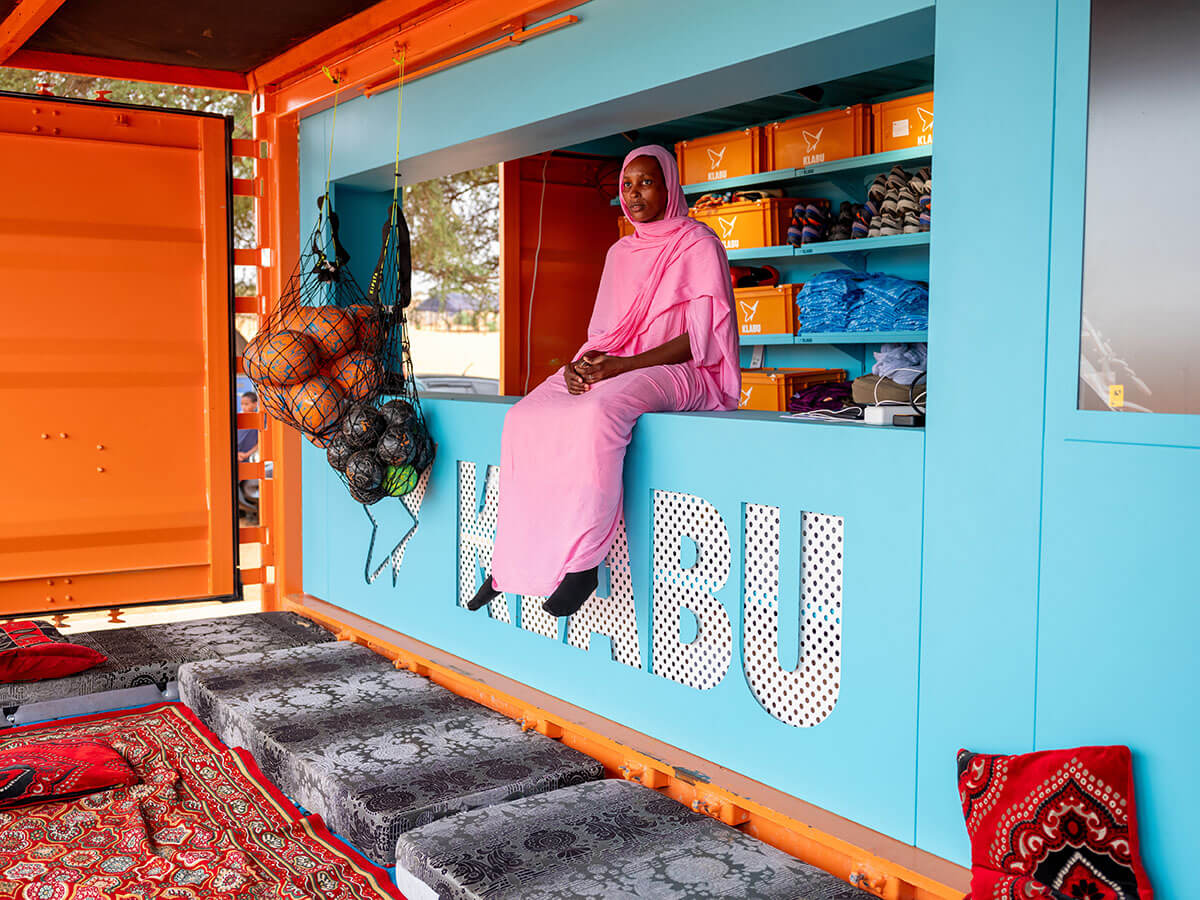
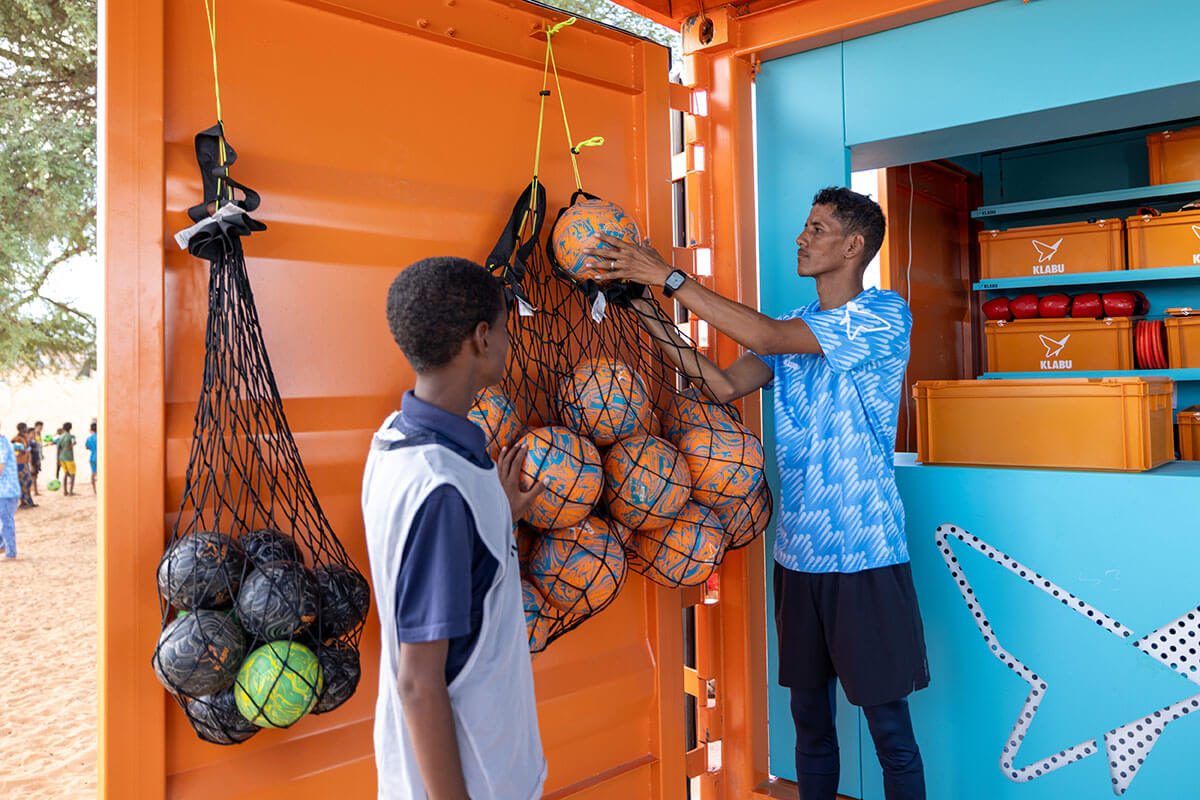
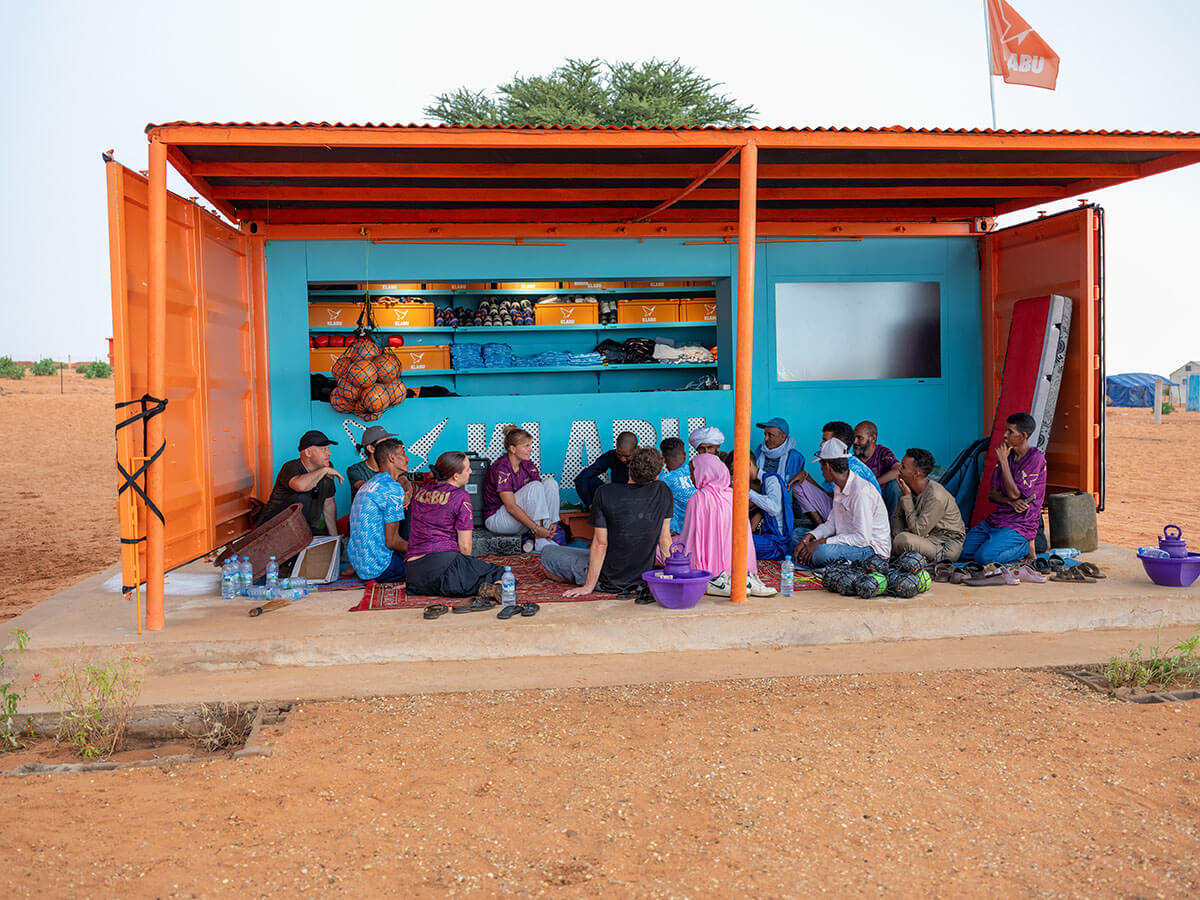
Further development
The latest, third version of the KLABU clubhouse, which is being installed in the Azraq refugee camp in Jordan, features a number of further developments. In addition to the doors at the ends, the container has a long side that can be fully opened and is equipped with a large window, a canopy to provide shade and an outdoor TV screen.
These functions increase the visibility, flexibility and usability of the clubhouse, for example for social and sporting activities.
Sustainability
The architecture of the clubhouse places great emphasis on sustainability and versatility. For example, the roof is equipped with solar cells that provide renewable energy to power electrical connections, charging stations and Wi-Fi. These features also allow the clubhouse to be used for educational activities and other purposes.
The structure of the container is robust and can withstand the climatic challenges that can occur in refugee camps around the world.
The future
Even simple concepts can have a big impact, as the KLABU clubhouse shows. The transformation of an everyday object into a vibrant, multifunctional space is an impressive example of creative and purpose-driven design. The clubhouses are designed for easy assembly, disassembly and transportation, making them particularly adaptable to different locations and contexts.
So far, clubhouses have been set up in seven locations, including the Waraotuma-a-Tuaranoko refugee camp in Brazil and the M’bera refugee camp in Mauritania. KLABU plans to replicate this model in over 50 other locations over the next ten years to create a network of safe and vibrant spaces for refugees.
Project data
Architect
MVRDV
Stefan de Koning, Gideon Maasland, Valentina Chiappa Nunez, Jose Manuel , Garcia Garcia, Herman Gaarman, Sruti Thakrar
Building owner
KALBU
Amsterdam
Opening
since 2022
Address
Ter Apel, Netherlands
Boa Vista, Brazil
M’bera, Mauritania
Azraq, Jordan
Text
Johannes Bühlbecker
More Sports Media
Videos
More projects like this?
Your project here.
DO YOU WANT TO PUBLISH YOUR PROJECT OR PRODUCT?