
The armored hall in Tübingen
The public living room
City of Tübingen
As one of the first open-air halls in Germany, the Panzerhalle in Tübingen stands for urban redensification, urban vibrancy and a successful interplay of living, culture and leisure. A lively place where history, community and modern city life come together – with plenty of scope for the future.

History
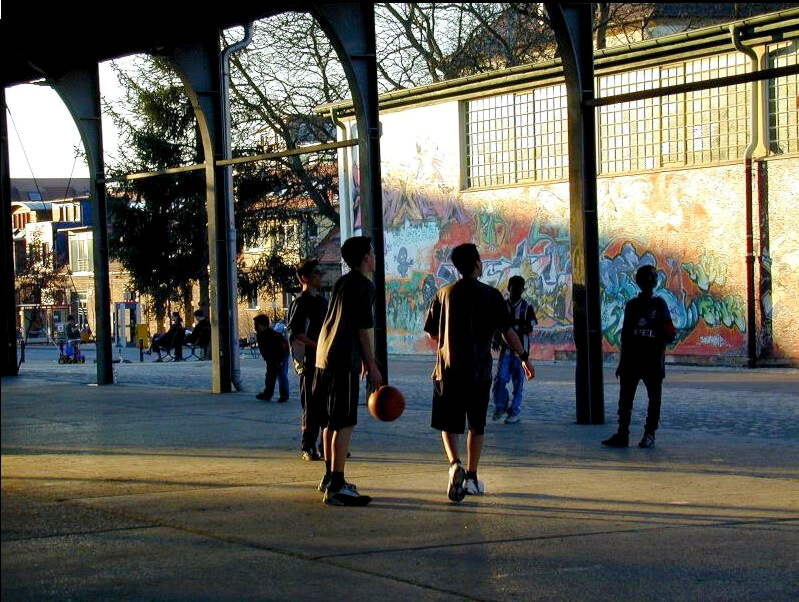
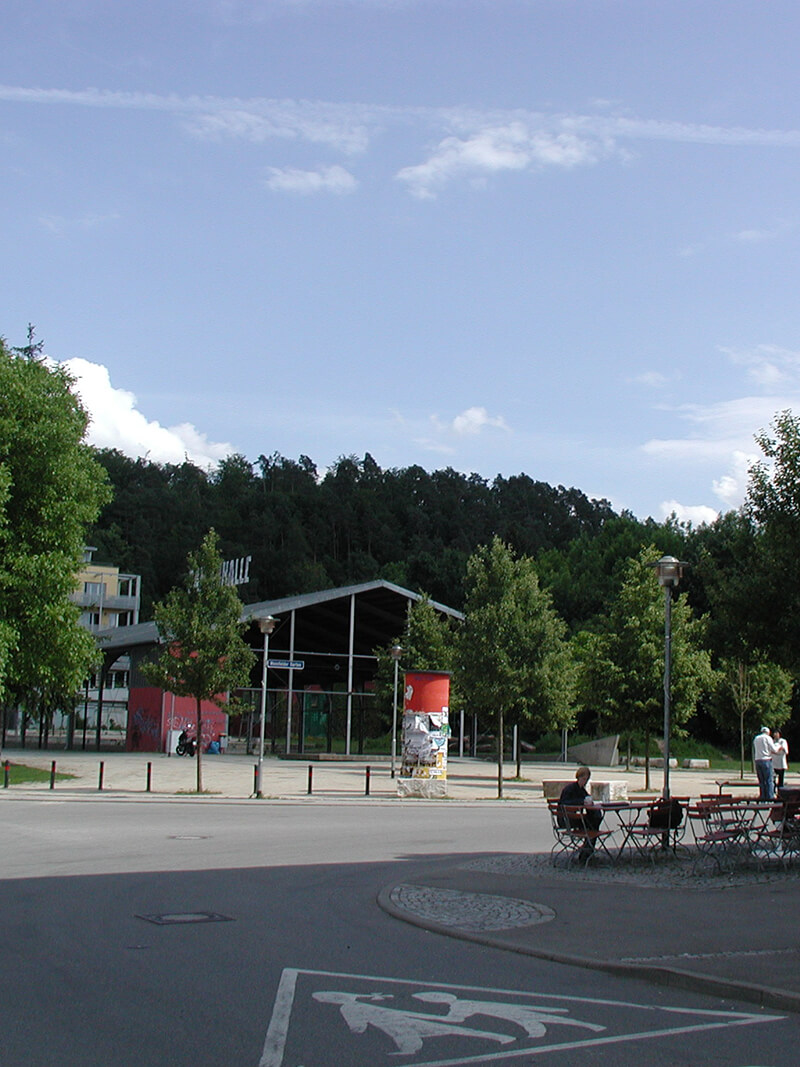
The Panzerhalle was built in 1934/35 as a riding hall for the Hindenburg barracks. After the Second World War, it served as infrastructure for the French army, which was stationed in the so-called French Quarter until 1991. After the withdrawal of the French troops, the large barracks, including the Panzerhalle, were acquired by the city of Tübingen and transformed into a lively, mixed-use quarter as part of an urban development concept with a great deal of public participation.
The Hindenburg barracks became the French Quarter, the building became the Panzerhalle, initially a venue for spontaneous concerts and parties.
Conversion
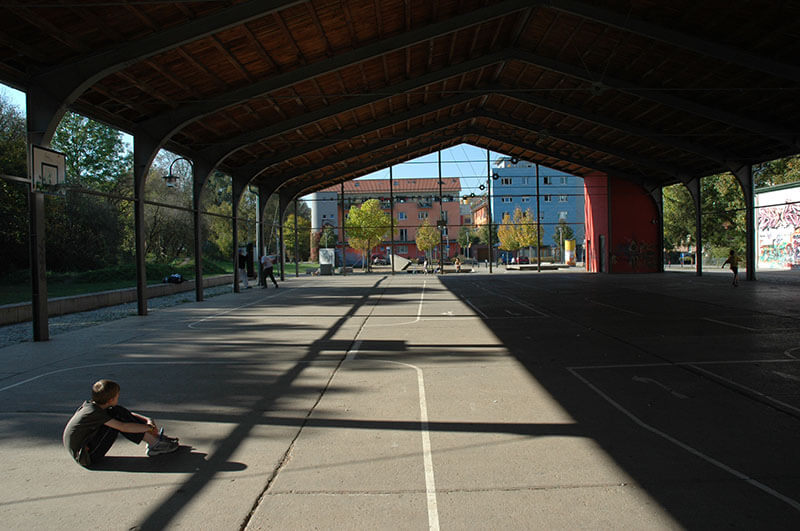
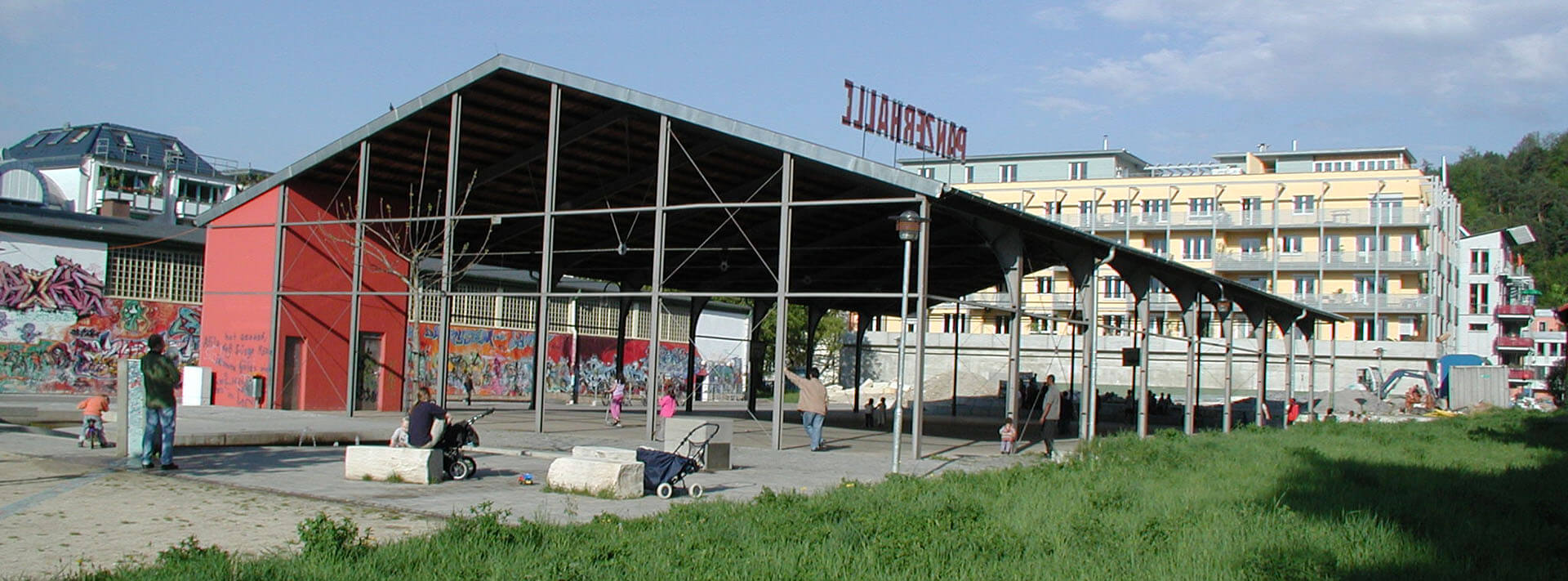
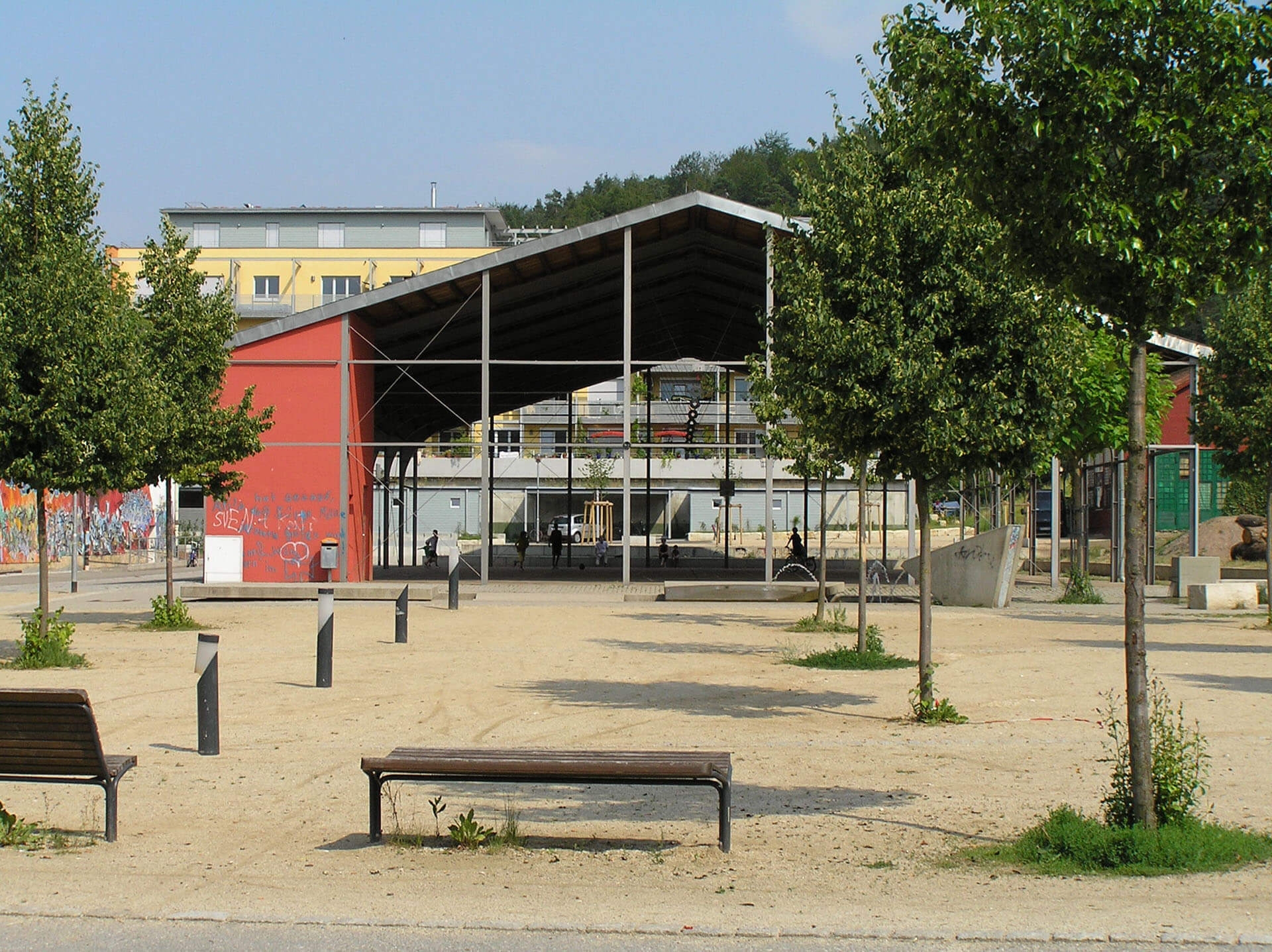
The conversion of the Panzerhalle into an open-air hall took place around the turn of the millennium. The initial plan was to convert it into a public event space, a theater or cinema. However, as part of the subsequent open-space planning, the project then changed into one of the first German open-air halls: The walls were removed, the supporting structure renovated and a small toilet tower installed.
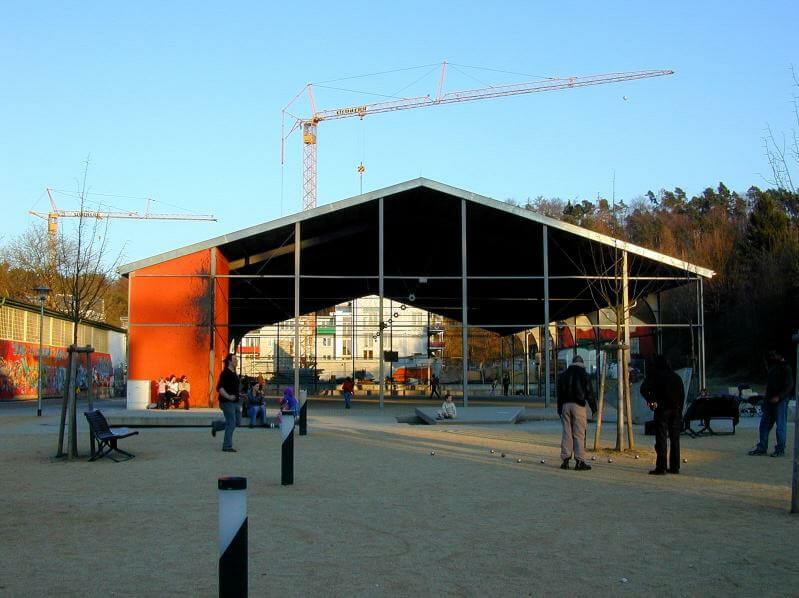
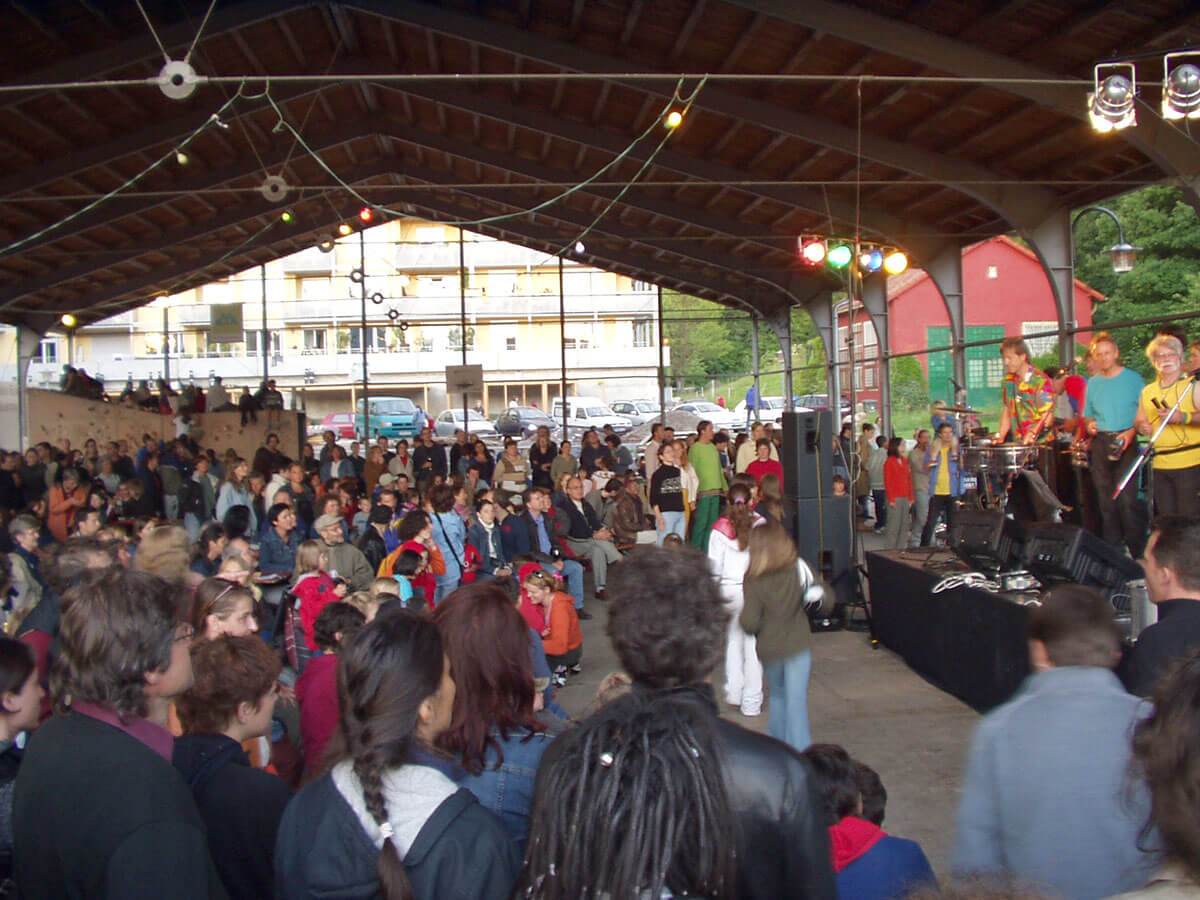
The hall was given a flat roof but no walls and, as an open pavilion, became an urban meeting place with seating for up to 500 people for events.
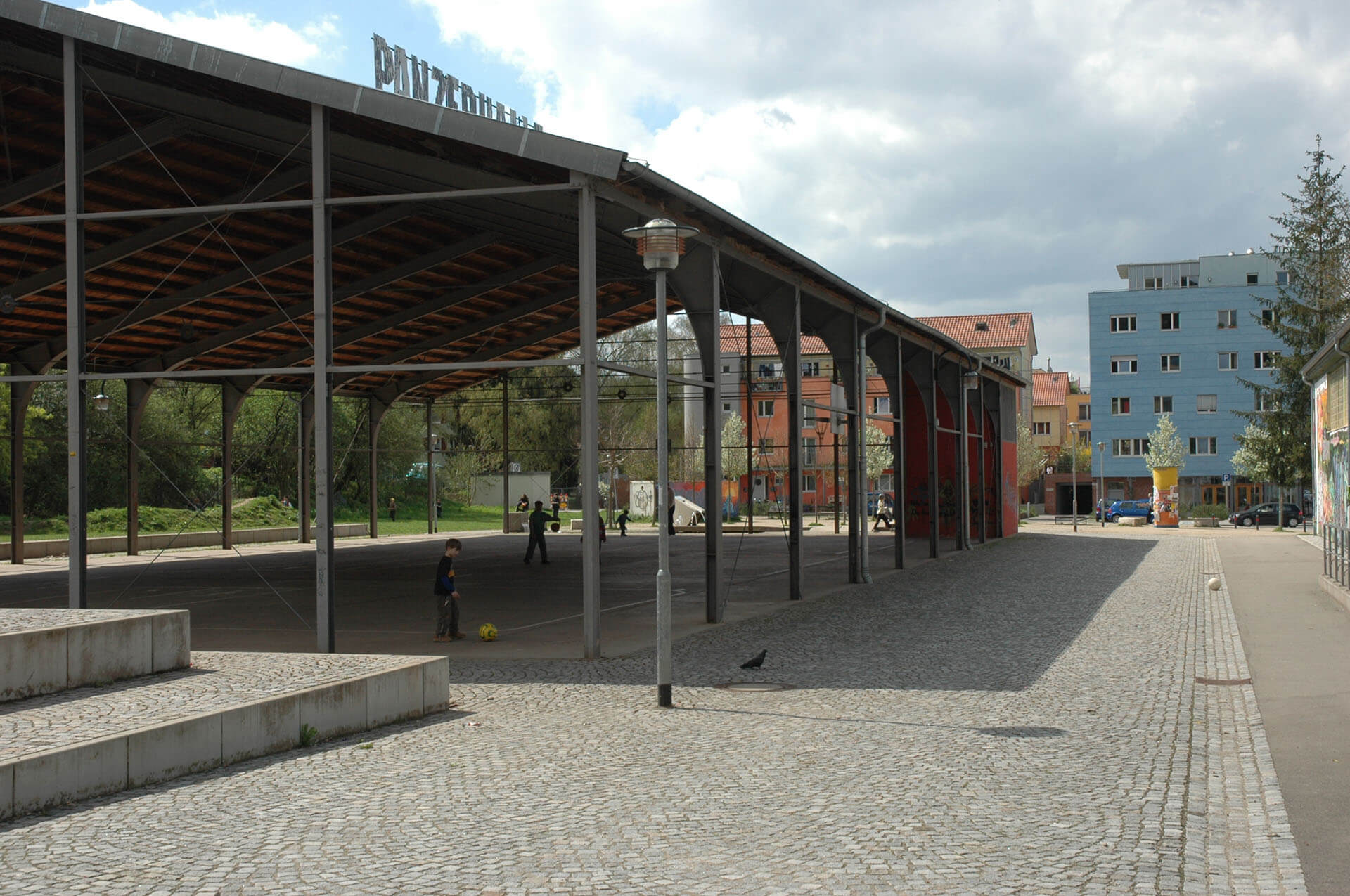
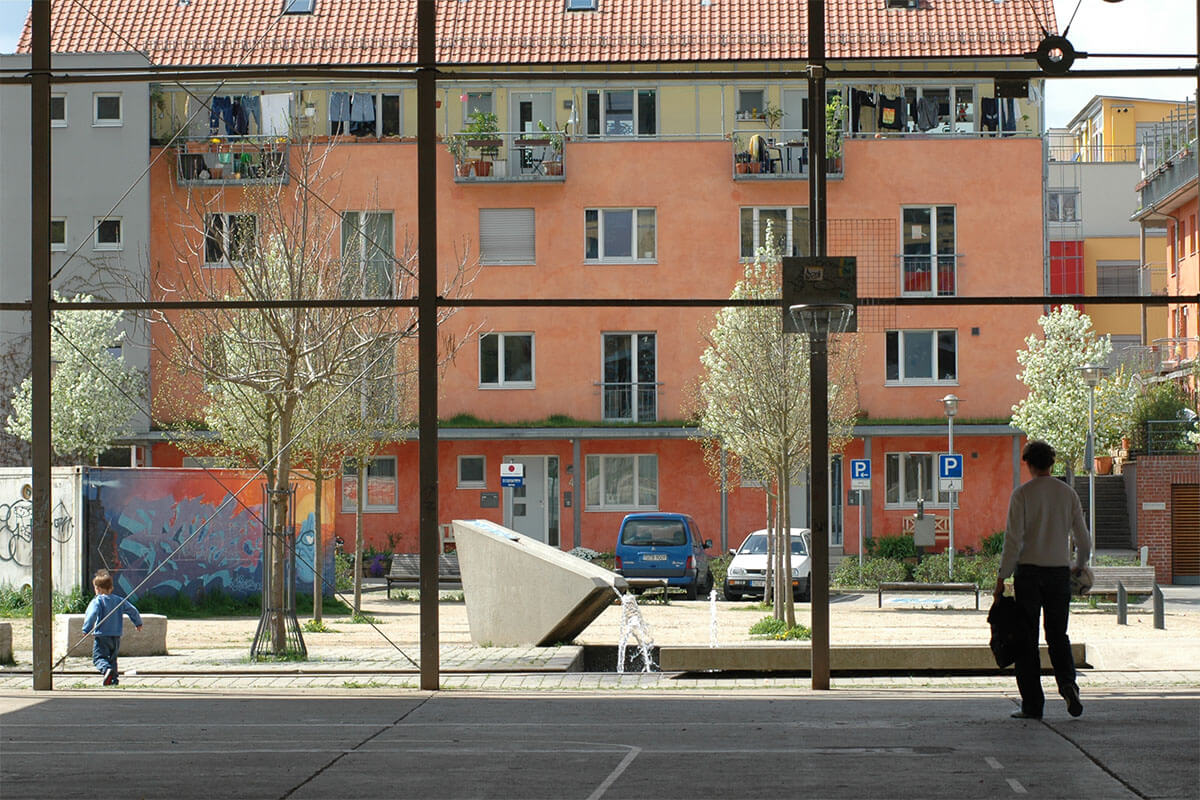
The exposed load-bearing structure is architecturally distinctive: covered but open, the hall conveys the feeling of being outside while at the same time offering protection from the weather. This urban planning approach was highlighted at the 2006 Architecture Biennale as a “symbol of a lively urban ensemble”.
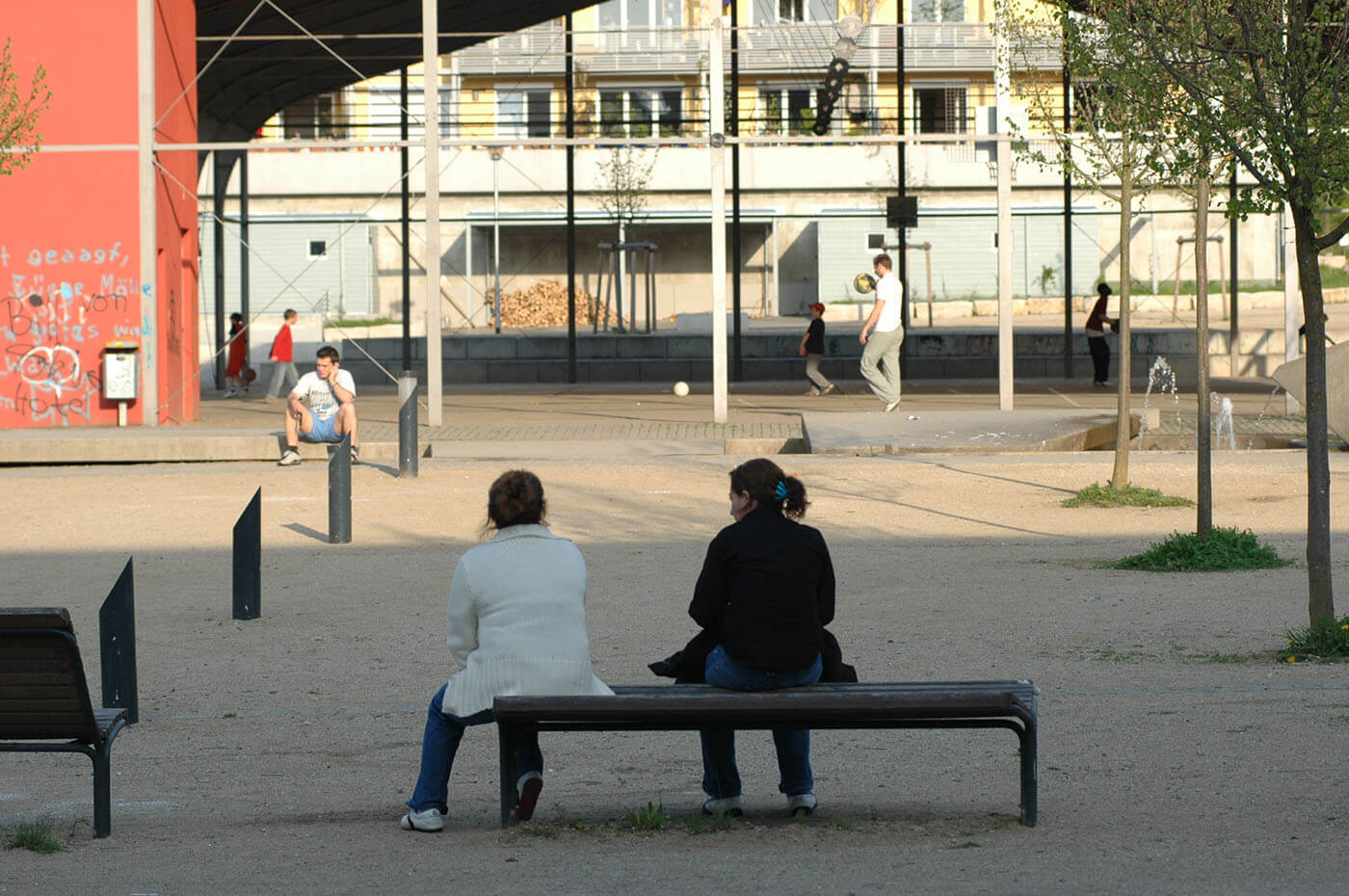
The armored hall was now a multifunctional and covered public square.
Identity
Today, the Panzerhalle, in combination with the public open spaces around it, is a place for a wide variety of uses: In the mornings, the traffic police use it to train school classes in correct road behavior, while in the afternoons, children and young people play basketball and soccer. In the evenings and at night, there are barbecues and get-togethers in the rain – and flea markets, festivals, concerts and exhibitions take place at weekends.
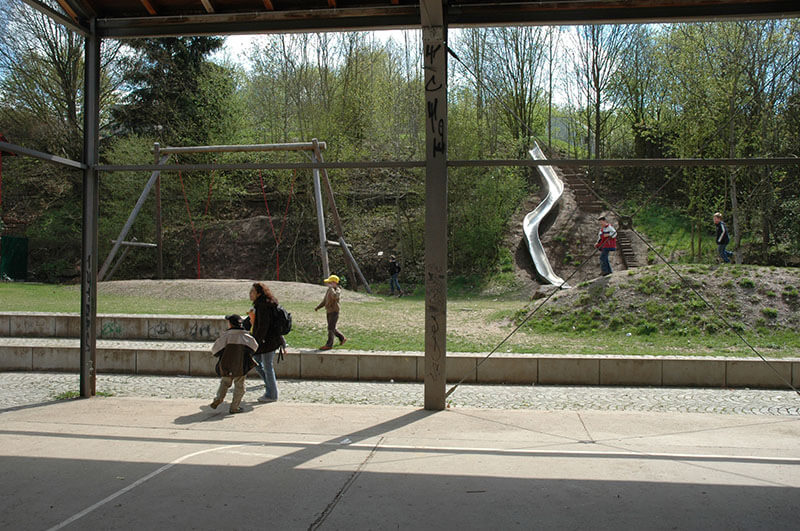
The Panzerhalle, the adjacent Französischer Platz and the children’s playground built in 2005 are the central locations in the district, not only for the 2,400 residents of the Französisches Viertel, but also for the neighboring districts. Numerous awards confirm their importance.
As an identity-forming, open space, the Panzerhalle still stands for civic engagement, neighborhood projects and urban experiments.
The future
The Panzerhalle will continue to be used as a sports venue, cultural stage, meeting place and public living room. Its flexible, weather-protected construction allows for ever new formats, be it workshops, pop-up markets or temporary art exhibitions.
The project impressively demonstrates how industrial buildings can continue to make sense as public open spaces, multifunctional meeting places and cultural stages. The hall retains its historical charm, combines public use with urban quality and remains sustainable thanks to its open, weather-protected architecture.
But it also shows the huge potential of open-air halls, which offer so many possible uses thanks to their manageable costs and high flexibility, even in an urban context.
Project data
Planner & client
University City of Tübingen
City Redevelopment Office
Lorettoplatz 30
D – 72072 Tübingen
Structural Engineers
Hans-Ulrich Ströbel
Lilli-Zapf-Str. 6
D – 72072 Tübingen
Landscape planning
werkbüro für freiraum und landschaft
Aixer Str 19
D – 72072 Tübingen
Opening
1999
Address
Panzerhalle Französisches Viertel
Aixer Straße 60
D – 72072 Tübingen
Photos
City of Tübingen
Manfred Grohe (aerial photos)
Text
Johannes Bühlbecker
More Sports Media
History
Video
Our categories
Our newsletter
Your stage
Publish your project or product here!