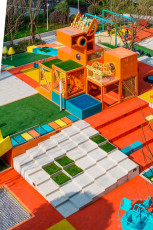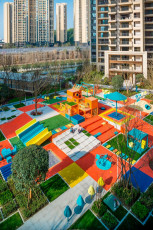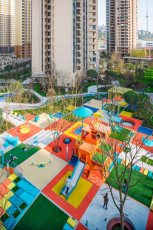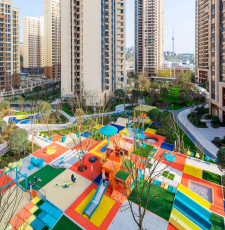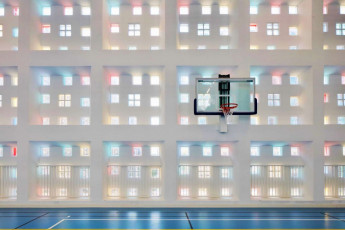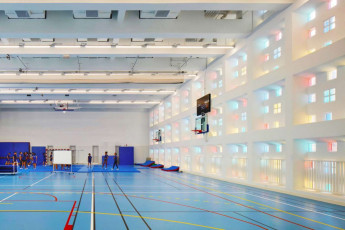
Vosges Stadium

Vosges Stadium in Basel

Get out!

A great example for acti­vating public spaces and rooftop areas in an incre­asingly dense urban context.

The design of the schoo­lyard no longer met the needs of today’s schools and pupils.

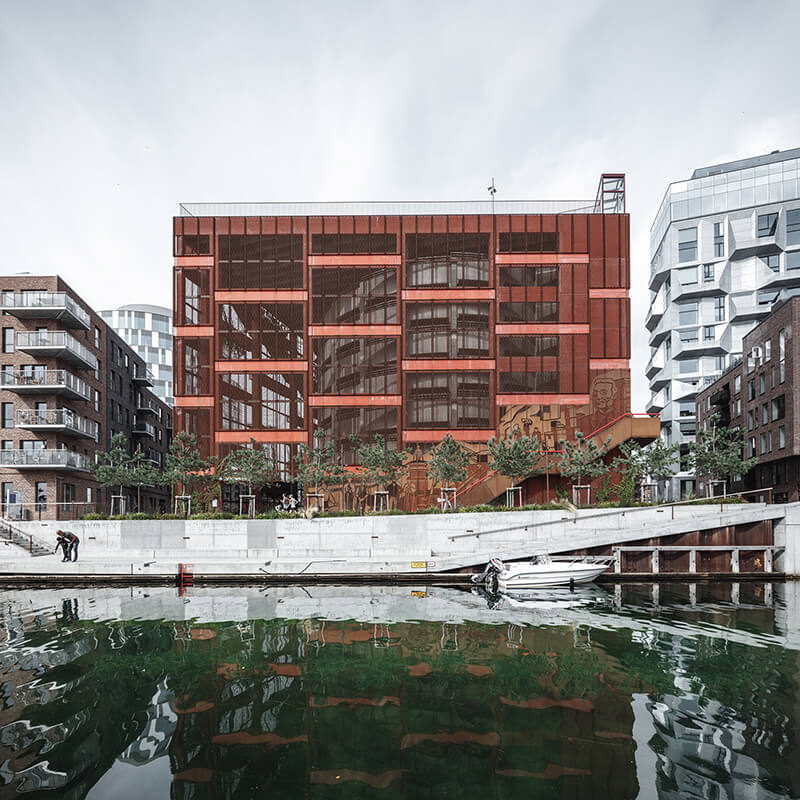
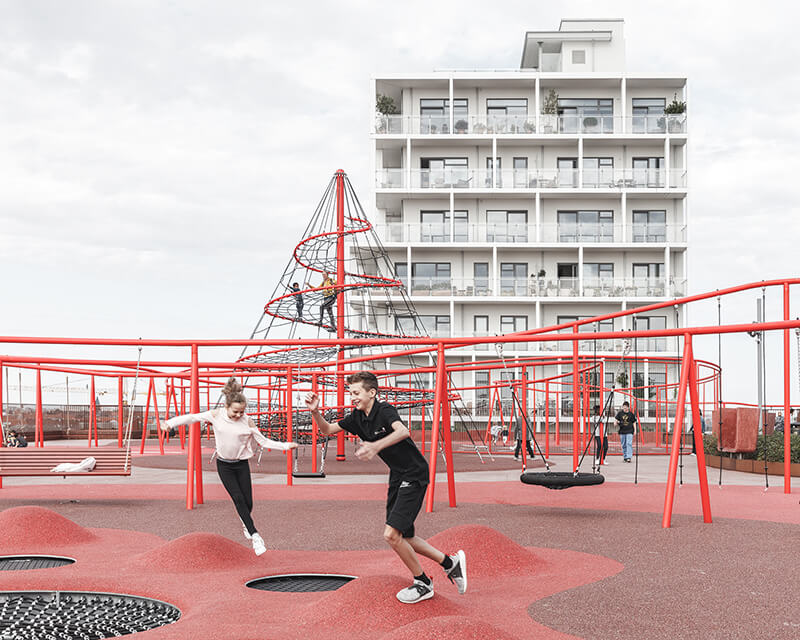
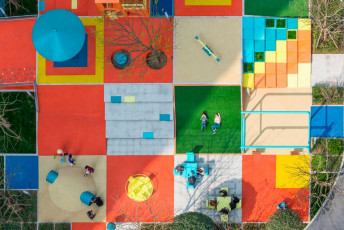
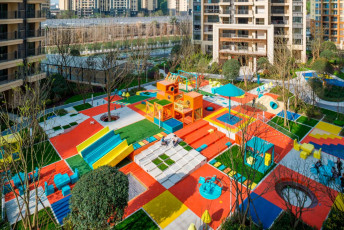
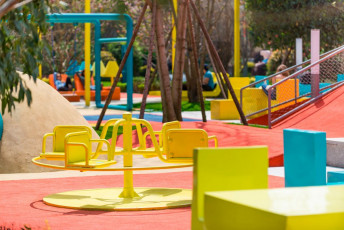
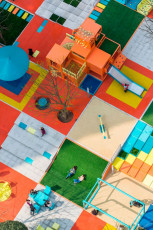
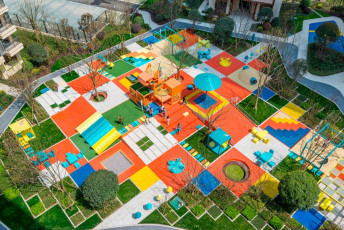
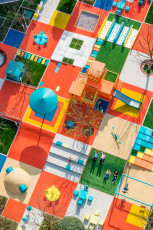
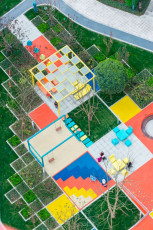
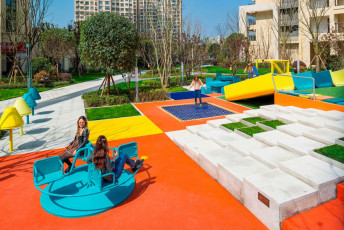
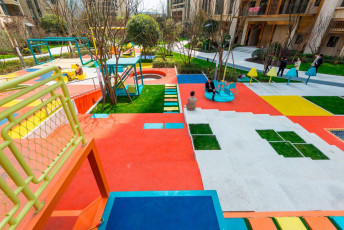
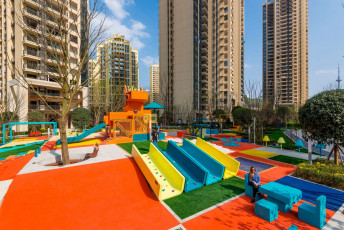
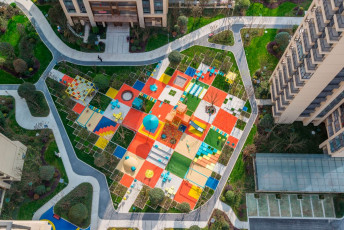
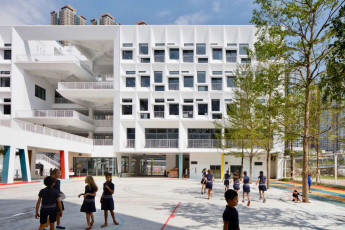
The Vosges Stadium is the result of the rede­sign of a schoo­lyard used by three schools in the north of Basel.  Instead of reno­vating old plant troughs and foun­tains, MET Archi­tects installed a bold playing field, acti­vating three schools and a roof area.

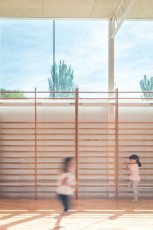
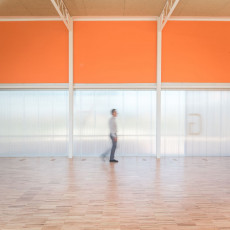
The Vogesen, Pesta­lozzi and St. Johann schools in the north of Basel form an open block peri­meter around a schoo­lyard with an under­ground gymna­sium and swim­ming hall. The hall, built in 1980 by the archi­tects Gass and Hafner, is spanned by six concrete girders.

Due to recur­ring problems with the water­tight­ness of the ceiling and the layout of the cour­tyard no longer meeting the needs of the surroun­ding schools, the reno­va­tion of the struc­ture and rede­sign of the space was commis­sioned in 2017.

With just a few inter­ven­tions, MET Archi­tects cleared the schoo­lyard of struc­tures that had fallen out of time. 

The schoo­lyard was cleared of above-ground struc­tures such as skylights, a foun­tain and plant troughs, as well as the old insu­la­tion and pave­ment. The new floor was insu­lated and sealed to prevent water from seeping in again. On top, a 12 cm thick concrete distri­bu­tion slab was installed for the traf­fi­ca­bi­lity of the surface. The areas adja­cent to the surroun­ding buil­dings were sealed with rolled asphalt.

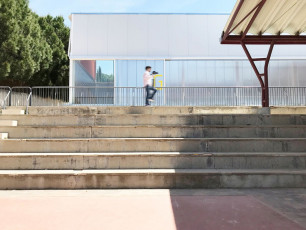
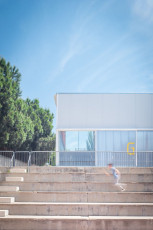
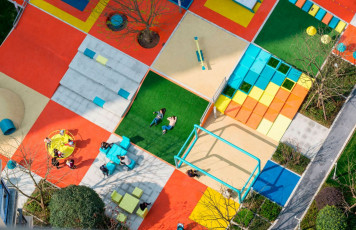
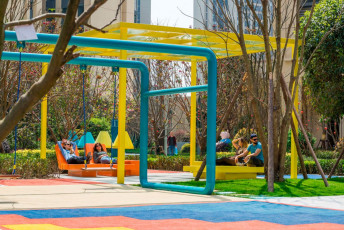
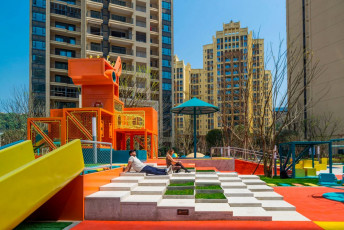
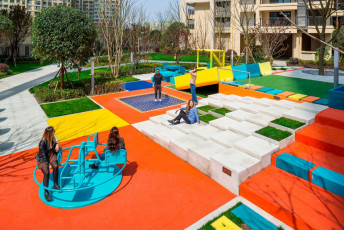
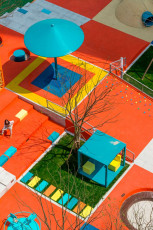
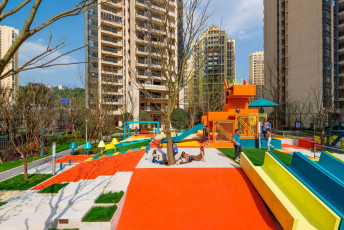
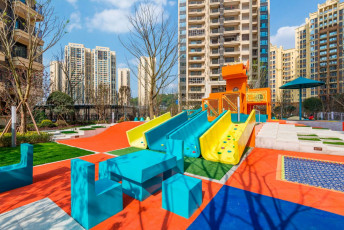
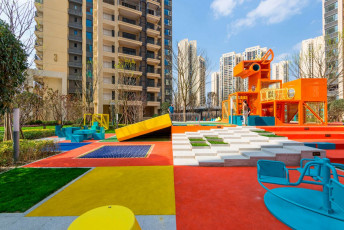
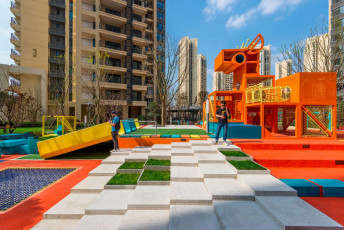
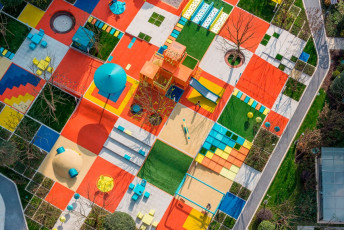
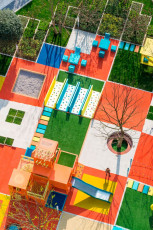
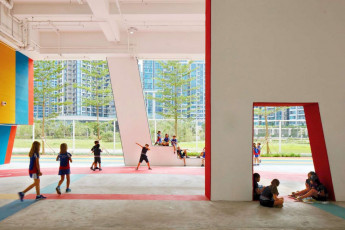
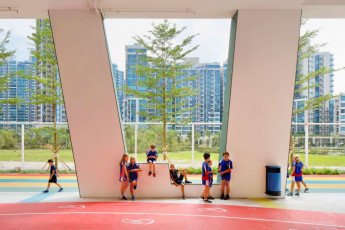
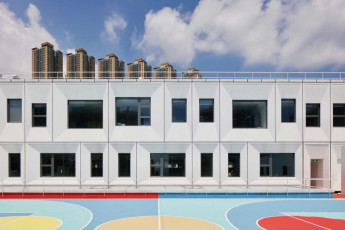
Laid out with synthetic sports floo­ring, the cour­tyard now offers two basket­ball courts. The blea­chers were dismantled down to their supporting struc­ture, revised and supple­mented with two covered grand­stands for spec­ta­tors, which extend across the entire width of the court and form a stadium-like space that can be used by the schools and the neigh­bour­hood for recess, sports and leisure acti­vi­ties.

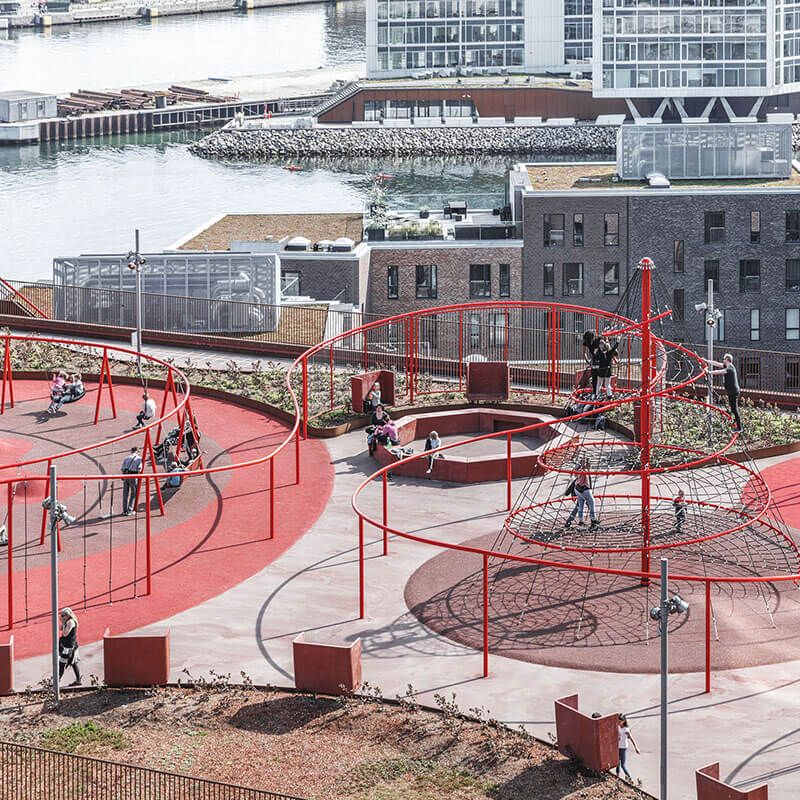
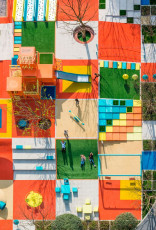
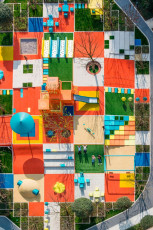
The pitch has been visually extended beyond its edge and forms the new schoo­lyard as a unity, even when viewed from above.

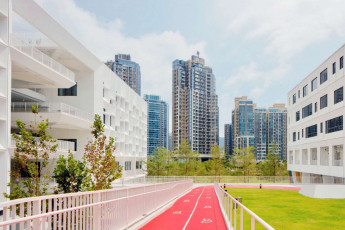
The two roofs, each projec­ting about six meters, feature very promin­ently from the schools. In order to protect the concrete from perme­a­ting mois­ture and do justice to the high visi­bi­lity, the roofs were covered with the same red synthetic surface used for the basket­ball courts.

The playing field is opti­cally extended over the upper floors of the surroun­ding buil­dings.

The Vosges Stadium is a great example for acti­vating public spaces and rooftop areas in an incre­asingly dense urban context.

We did this.

Project data

Archi­tects

MET Archi­tects GmbH SIA
Klybeck­strasse 141 / K 102
CH – 4002 Basel

Client

Hoch­bauamt Kanton Basel-Stadt

Pitch surface

CONICA AG
Indus­trie­strasse 26
CH – 8207 Schaff­hausen

Address

Stadion Vogesen
St. Johanns-Ring 17
CH – 4056 Basel

Opening

2019

Photo­graph

Ruedi Walti, Basel

Author

MET Archi­tects

You may have more of this.

How can we be of service to you?

Contact


Address
More Sports Media
Am Weit­kamp 17
D‑44795 Bochum

Phone
+49 234 5466 0374
+49 172 4736 332
Email
contact@moresports.network

Wettingen Cantonal School

Wettingen Cantonal School Sports Hall

Carved in stone

The Cister­cian monas­tery in Wettingen is a special place. A sports hall has to be subor­di­nate here.

With respect for the historic monas­tery view, the Wettingen cantonal school sports halls were built under­ground.

The Cister­cian monas­tery in Wettingen is a cultural monu­ment of national importance. When the cantonal school moved into the monas­tery premises in 1979, the school’s sports hall with a swim­ming pool was cons­tructed on the common land outside the monas­tery area.

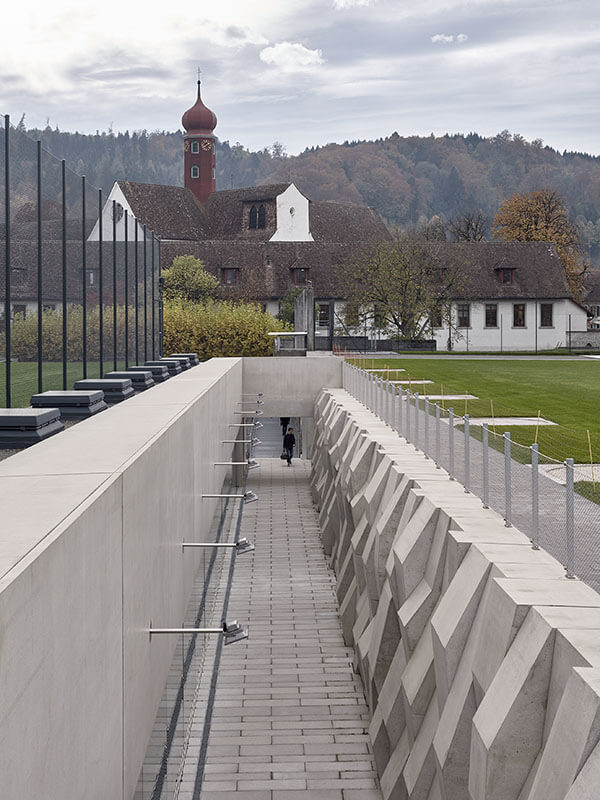
To main­tain the histo­rical view of the monas­tery, the sports hall and swim­ming pool were built under­ground, around a deep cour­tyard with longi­tu­dinal sides that provided the adjoi­ning gymna­siums with daylight.

The planned exten­sion of the sports halls built in 1979 was also realised in accordance with the monastic mission state­ment.

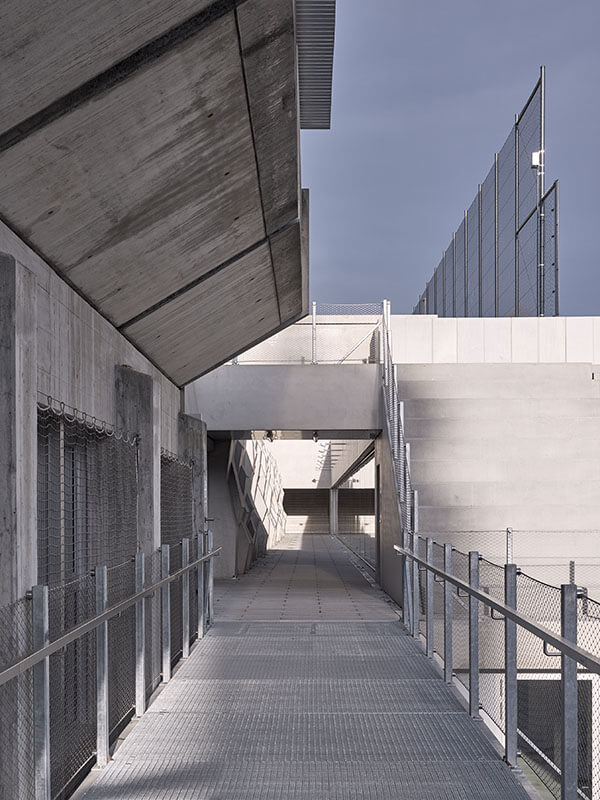
The planned exten­sion of the Wettingen cantonal school sports halls is also required to adhere to this prin­ciple and is thus being deve­loped under­ground. Since the orien­ta­tion and provi­sion of daylight play a decisive role, a linear prome­nade was planned as the starting point for the design, forming a clear and orderly link between the old and the new buil­dings.

All the main uses are either directly adja­cent to this access route, or the prome­nade affords a gene­rous view of them.

The chosen form of orga­ni­sa­tion with linear elements creates a calm and clear impres­sion of Wettingen cantonal school sports halls from the outside. A window strip facing north accom­pa­nies the prome­nade in the vici­nity of the triple sports hall.

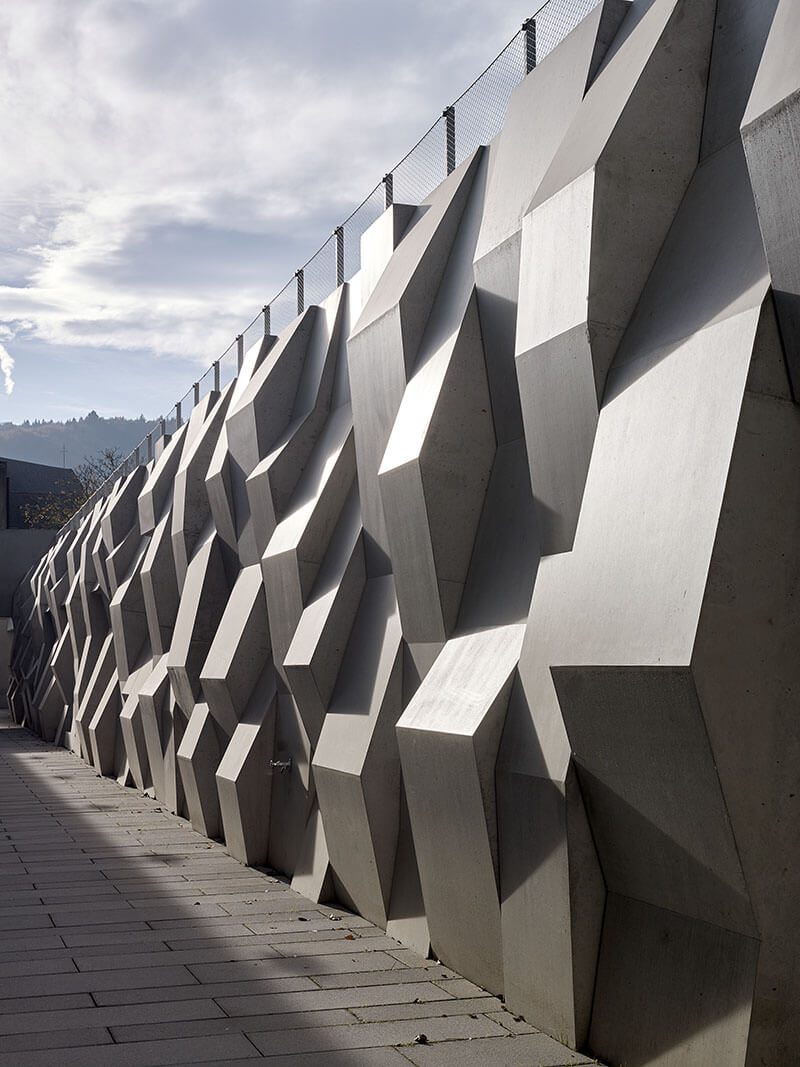
The art on the buil­ding plays with the meta­phor of the rough rock on which the Cister­cian monas­tery is enthroned high above the Limmat and into which the new sports hall was chiselled.

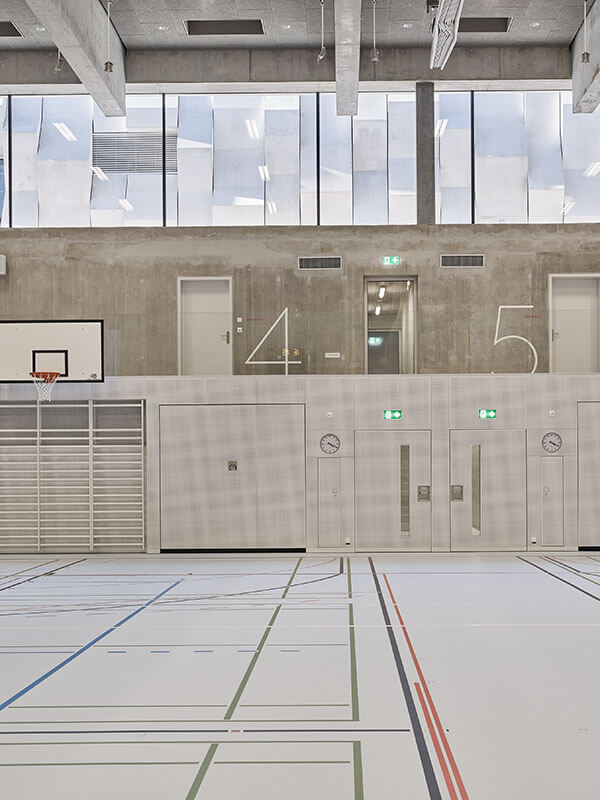
Brin­ging toge­ther the illu­mi­na­ting zone and the spec­ta­tors’ gallery avoids any irri­ta­ting back­light effects when people are watching the sports being played. And, in the other direc­tion, when looking out from the hall, the observer sees a wide relief wall.

The art on the buil­ding is by the Lang/Baumann duo and plays on the meta­phor of the rough rock on which the Cister­cian monas­tery towers above the Limmat river and into which, in the true sense of the word, the new sports hall has been chiselled.

The shadows cast by the concrete blocks change over the course of the day and the year, giving the under­ground observer a feel for the time of day or year.

We did this.

Project data

Archi­tects

:mlzd
Allee­strasse 25
CH – 2503 Biel/Bienn

Client

Immo­bi­lien Kanton Aargau
Depar­te­ment Finanzen und Ressourcen
CH-Aarau

Team

Pat Tanner, Alex­ander Unsin, Andreas Frank, Daniele Di Giac­into, Claude Marbach, David Locher, Julia Wurst, Mari­anne Rüger, Jona­than Anders, Ronja Engel­hardt, Mart Maurer, Belén Jatuff Mathis

Address

Kantons­schule Wettingen
Klos­ter­strasse 11
CH – 5430 Wettingen

Opening

2018

Photo­graph

Ariel Huber / EDIT images
Brau­er­strasse 45
CH – 8004 Zürich

Author

:mlzd


Plans


Photos

Video

https://youtu.be/NLFZZPoguM4?t=62

YOU MAY HAVE MORE OF THIS.

HOW CAN WE BE OF SERVICE TO YOU?

Contact


Addess
More Sports Media
Am Weit­kamp 17
D‑44795 Bochum

Phone
+49 234 5466 0374
+49 172 4736 332
Email
contact@moresports.network

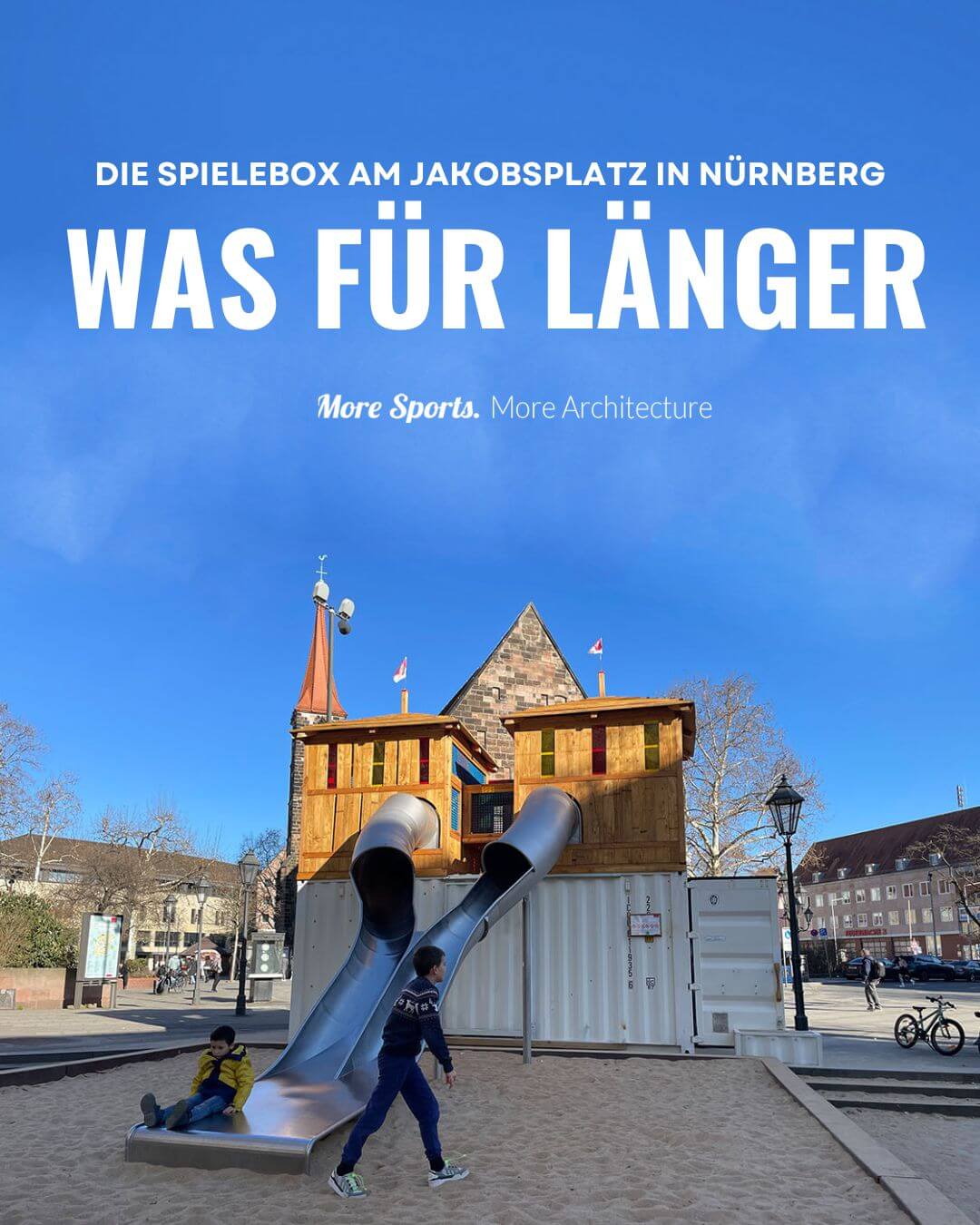
Play contai­ners

Diver­sity through stan­dard

Play contai­ners on the rise

Adver­to­rial


About

Contai­ners are stan­dar­dised. Play contai­ners have many advan­tages because of this.

Due to their stan­dar­dised form, contai­ners can be shipped to any place in the world for little money. Due to their stable frame cons­truc­tion and their flexi­bi­lity, they can also be used very well as a frame­work and outer shell for a variety of play and leisure faci­li­ties.

Play contai­ners like the KuKuk Box can be used both tempo­r­a­rily and perma­nently – and they are beco­ming more and more common.

Tempo­rary use

When cities and muni­ci­pa­li­ties build or reno­vate (for example schools or kinder­gar­tens), they often need tempo­rary faci­li­ties.  These are usually located on dere­lict sites without child-friendly infra­struc­ture. A play container can quickly provide a solu­tion.

Just as well, the KuKuk Box can be dismantled and reas­sem­bled at a new loca­tion without much effort in case of a move or an upco­ming change of use of a site.

These play contai­ners are even used for events or for shorter periods of time.

KuKuk Box play contai­ners do not require a buil­ding permit and can also be rented on a tempo­rary basis.

Perma­nent use

The KuKuk Box can also be used as a perma­nent, attrac­tive public play struc­ture. This is parti­cu­larly useful if a versa­tile play faci­lity is to be created in a short time and for little money.

Play contai­ners can be placed on all planned surfaces, inclu­ding roofs and car parks. They are extre­mely low-main­ten­ance. Time-consuming and costly expenses for plan­ning, appli­ca­tions, excava­tions and foun­da­tions are comple­tely elimi­nated.

Not bad either: the KuKuk Box can be set up in about two hours.

Equip­ment

The play contai­ners offer exci­ting areas for all age groups: There are clim­bing struc­tures up to the roof, roof houses, craw­ling tunnels, balan­cing courses, slides, play houses, seating plat­forms, sand­boxes, reading corners and much more. There is also seating for parents and nursery school teachers.

The KuKuk Box lives through its users. It is equipped with mate­rials such as round, square and sawn timber, fasteners, ropes and paints that allow it to be expanded as desired. This means that schools, kinder­gar­tens and social insti­tu­tions are free to design the play container them­selves.

The fully-fledged play­ground encou­rages a lot of move­ment and also offers retreat areas that allow inten­sive play – no matter what the weather.

Design

ISO 668 applies to sea freight contai­ners, which have a frame struc­ture that can be used very well as a support element for the cons­truc­tion of foun­da­tion-free play­grounds. No excavated earth or concrete foun­da­tions cast for eter­nity are needed for cons­truc­tion. This saves money and time. It is also sustainable, of course.

The contai­ners are made of resistant COR-TEN steel. The walls are made of trape­zo­idal sheet steel, the floors are made of plywood.

The finish is high-quality and robust. The hardest woods and weather­proof, rust­proof stain­less steel connec­tions are used. For the fixtures, sapwood-free, weather-resistant robinia wood is used because of its natural robust­ness.

Equip­ment

The slides are made of durable, UV-resistant stain­less steel (V2A).

The nets and ropes are custom-made from extre­mely strong Hercules rope (shea­thed steel ropes). This is a craft still prac­tised by only very few manu­fac­tu­rers in Germany. The mate­rial is charac­te­rised by high colour fast­ness and abra­sion resis­tance.

Coloured Plexi­glas gives the children an inten­sive colour expe­ri­ence. It looks very good, the mate­rial is weather and age resistant as well as enorm­ously UV resistant.

Safety and sustaina­bi­lity

The KuKuk Box play contai­ners are built accor­ding to the safety stan­dard DIN EN 1176 and are indi­vi­du­ally approved by inde­pen­dent, certi­fied experts (e.g. TüV) for public play areas.

When the play contai­ners are no longer to be used, the manu­fac­turer will take them back and create some­thing new from the mate­rials. Some call it a manu­fac­turer take-back guarantee, others call it sustaina­bi­lity.

Many cities, muni­ci­pa­li­ties and commu­ni­ties that started with the purchase of a KuKuk Box are now owners of several play contai­ners. Such a ” store ” also makes the plan­ning of recon­s­truc­tions or refur­bish­ments much easier.

About KuKuk

The KuKuk Box was deve­loped by an expe­ri­enced team of artists, archi­tects, carpen­ters, metal­wor­kers and educa­tors.

The aim and result of this deve­lo­p­ment were and are inex­pen­sive and sustainable play faci­li­ties of ecolo­gical value, which at the same time meet the highest func­tional and aesthetic demands. Of course, they should also be fun.

This has worked out well. Very well, in fact.

We did this.

Project data

Play contai­ners

KuKuk Box GmbH
Rosen­wies­straße 17
D – 70567 Stutt­gart

Photo­graph

KuKuk Box GmbH

Author

Johannes Bühl­be­cker
More Sports Media

Video

Contact

How can we be helpful?

Address
More Sports Media
Am Weit­kamp 17
D‑44795 Bochum

Phone
+49 234 5466 0374
+49 172 4736 332
Augmented Grounds

Digital goes analog

Augmented Grounds in Quebec

Soomeen­Hahm Design

About

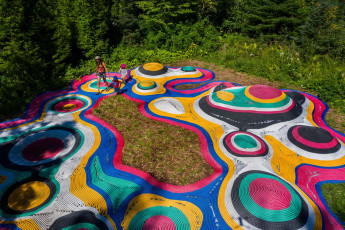
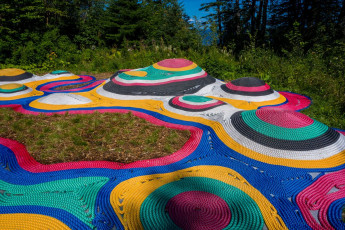
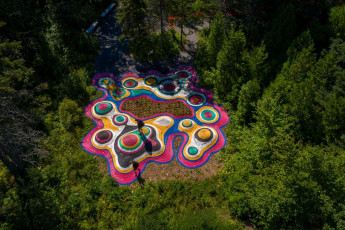
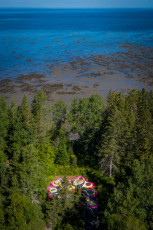
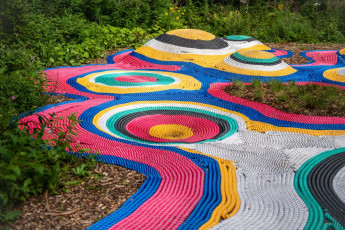
Augmented Grounds is a winning compe­ti­tion entry of the Inter­na­tional Garden Festival 2020. It is a land­scape design instal­la­tion, located in the Métis garden, Prince, Quebec, Canada, completed its cons­truc­tion in July 2020.

The design is inspired by tradi­tional Métis sash and the proposal uniquely combines tech­no­lo­gies in its making process which was highly evaluated by the compe­ti­tion juries.

Cloud

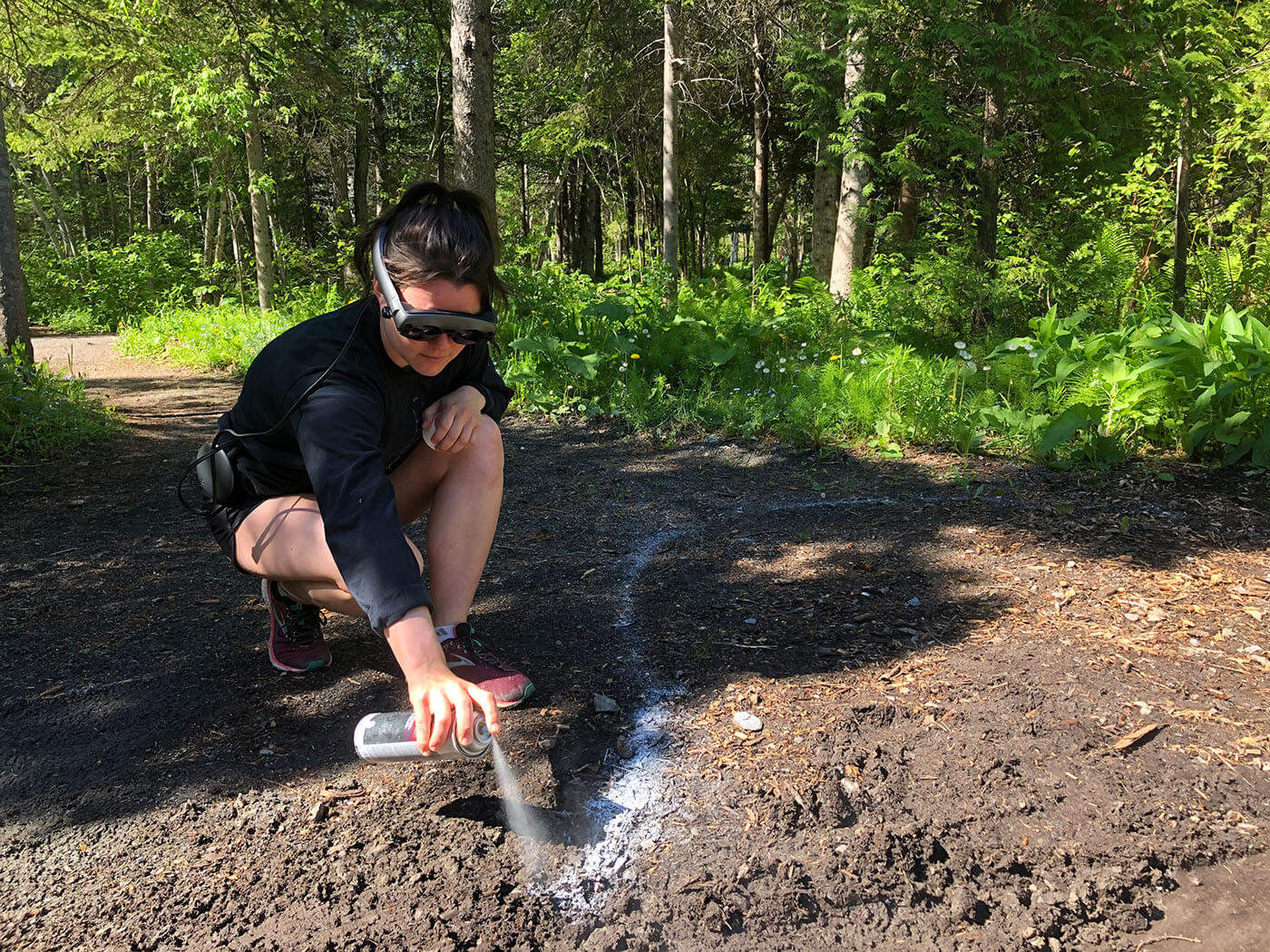
The project utilized Augmented Reality and cloud based digital twin commu­ni­ca­tion plat­forms in order to realize the cons­truc­tion during the pandemic. The project cele­brates the fast and intui­tive commu­ni­ca­tion between desi­gner and maker, utili­zing the digi­tally augmented human labours craf­ting the deli­cate mate­rial on site by wearing AR Lenses.

At the same time, a globally assem­bled team of desi­gners were able to review the cons­truc­tion process through a cloud based digital twin of the cons­truc­tion site, being able to intui­tively super­vise the cons­truc­tion process from far distance and pass on know­ledge and guidance to local crews effi­ci­ently. This enabled the global team of desi­gners and makers to be able to work toge­ther simul­ta­neously in distance during the design and cons­truc­tion process.

Craft­man­ship

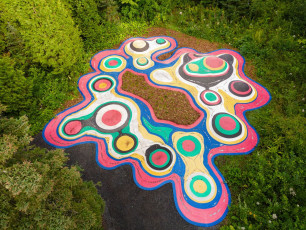
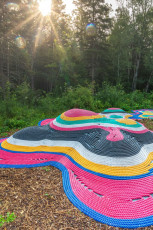
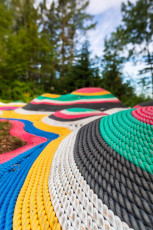
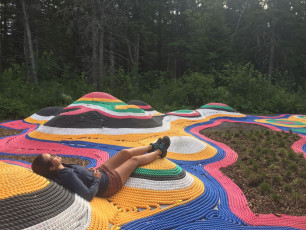
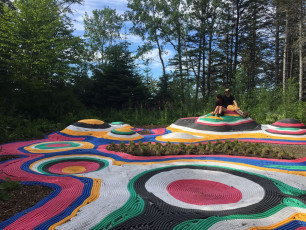
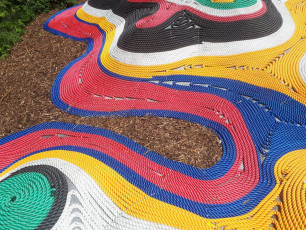
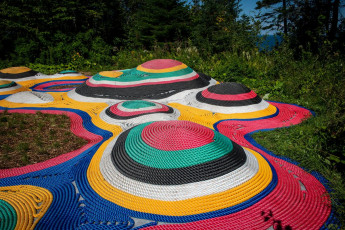
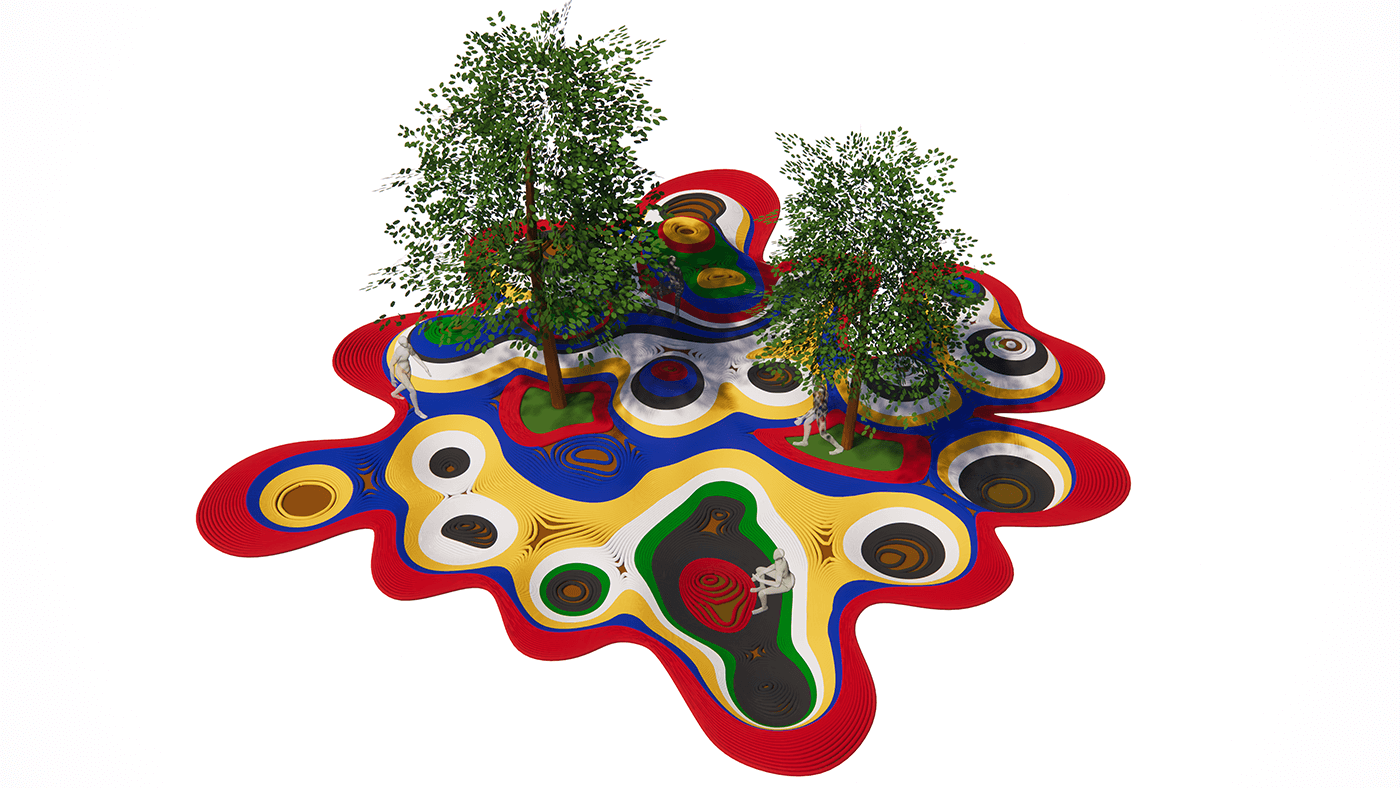
The instal­la­tion also cele­brates human craft­sman­ship. We chose to use colourful rope inspired by the colours and history of the tradi­tional Métis sash, the Augmented Grounds garden takes visi­tors through a playful and colourful rope display of topo­graphy that reflects the pride of Métis culture and iden­tity.

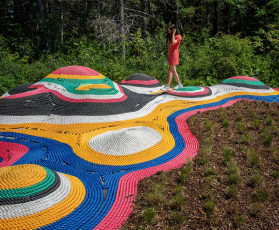
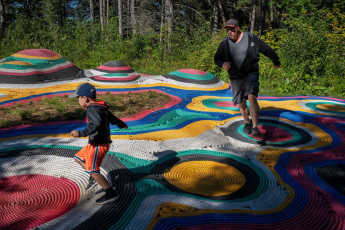
In the garden, visi­tors can walk along the colourful contours of ropes, sit and lie down on the coiled seating, or run up and down on the mounds and the pools.

Métis

This garden is the Métis­sage of cultural pride and inno­va­tion. The Métis sash is tradi­tio­nally made with the art of finger weaving and draped across one’s shoulder or tied around the waist.

The Augmented Grounds garden repres­ents the Sash through colourful ropes made of twisted fibres that are tightly laid on top of the terrain to create a land­scape of contours that reflects the diffe­rent depths of Métis history repre­sented on the sash.

Analogue and algo­rithm

While the expe­ri­ence of the instal­la­tion being highly analogue, the cons­truc­tion process of this topo­gra­phic terrain contri­butes to a new inno­va­tive prac­tice of garden design by intro­du­cing smart cons­truc­tion tech­no­logy using augmented reality.

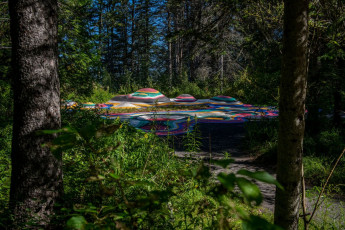
As the geometry is gene­rated based on a mathe­ma­tical algo­rithm, the combi­na­tion of tradi­tional mate­ria­lity and mathe­ma­tical form surrounded by the beau­tiful forest of Reford Garden provides a unique expe­ri­ence for visi­tors to truly expe­ri­ence the product of colla­bo­ra­tion between human, computer & nature.

We did this.

Project data

Design

Project team

Hanjun Kim, Marie-Eve Brais, Justine Valois, Marion Sellier, Fran­çois Leblanc

Physical address

Opening

2020

Video

Hanjun Kim, Marie Eve Brais

Author

Johannes Bühl­be­cker
More Sports Media

More Photos

Cons­truc­tion site

Design

Our Blog

Our News­letter

Coni­play

Pretty safe

Surfaces in water land­scapes

Coni­play

About

Safety plays a major role in the design of the surfa­cing around water surfaces in both outdoor and indoor areas. It must be desi­gned so that bathers always have a safe footing.

Slips and falls must be avoided at all costs as even a small, care­less move­ment can lead to a fall with serious conse­quences, espe­ci­ally since bathers, whether children, adults or senior citi­zens only wear swim­wear and are ther­e­fore also unpro­tected by any clot­hing if they fall. Floors borde­ring on water surfaces are ther­e­fore prima­rily desi­gned for safety reasons.

Conica offers a safe solu­tion for floo­rings adja­cent to water surfaces.

Joint­less

The surface system Coni­play was deve­loped by the Swiss company Conica AG. Its safe stan­ding ensures that bathing fun in adven­ture and leisure pools, spas and private swim­ming pools is not spoilt by acci­dents.

The product is available in two versions: as the water-permeable version Coni­play AP and as the water-imper­meable Coni­play AI. Both solu­tions are colourful, comfor­table and offer a long service life. They can easily be installed without joints using diffe­rent binding agents.

Bacte­rial inhi­bi­ting

CONIPLAY AP is a water-permeable surface that can be cons­tructed in one or two layers. CONIPLAY AI has a multi-layer struc­ture and is water­proof.

The black granu­late layer is optional for both vari­ants, it serves to achieve any desired fall protec­tion. This is what makes them recom­men­dable.

Sealing

The sealant is also the same for both: CONIPUR 2210, as an anti-slip, silk-gloss 2‑component PUR sealant. Alter­na­tively, CONIPUR 2210 AB can also be used. This sealant is addi­tio­nally equipped with a bacteria-inhi­bi­ting addi­tive.

CONIPLAY AP and CONIPLAY AI are resistant to both chlo­rine and salt water.

Conclu­sion

Today’s bathing land­scapes are subject to tough compe­ti­tion. Safety and attrac­ti­ve­ness must no longer be compe­ti­tors, they have to be part­ners.

The Coni­play solu­tion combines the neces­sary, the fall protec­tion, with the aesthetic. The mate­rial used allows a colourful design, so that bathing fun can be expe­ri­enced in full all around the water with maximum safety.

We did this.

Project data

Surfaces

Conica AG
Indus­trie­straße 26
CH – 8207 Schaff­hausen

Author

Uwe Schmidt
Indus­trie-Contact AG
Bahren­felder Markt­platz 7
D – 22761 Hamburg

Photo­graph

Conica AG

Our Blog

Our News­letter

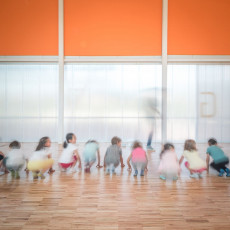
Colegio Nuestra Señora de Lourdes

Let there be light

Colegio Nuestra Señora de Lourdes 

Picado De Blas Arqui­tectos

Situa­tion

This project has been carried out thanks to the Torre­l­odones muni­ci­pa­lity initia­tive which seeks to improve the current condi­tions of the most degraded public schools in the area by intro­du­cing a small archi­tec­tural inter­ven­tion network of new cons­truc­tions.

This gives the oppor­tu­nity to intro­duce ecolo­gical concepts in schools with very low cost.

Let the suns­hine in

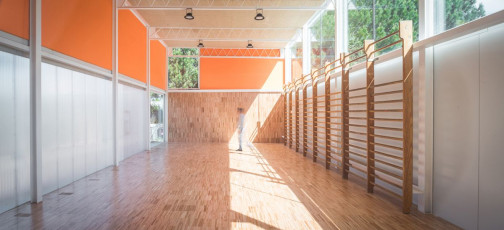
In this case, a small pavi­lion was required for a sports acti­vity next to the exis­ting school.

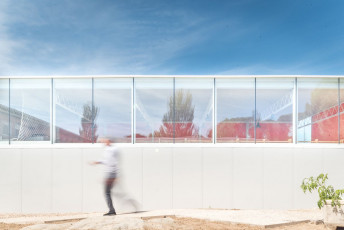
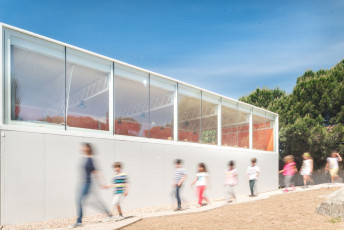
Brea­king up with the tradi­tional concept of this type of spaces, which are usually very closed to the outside, a large window opened to east appears, offe­ring a view of the sky.

Design

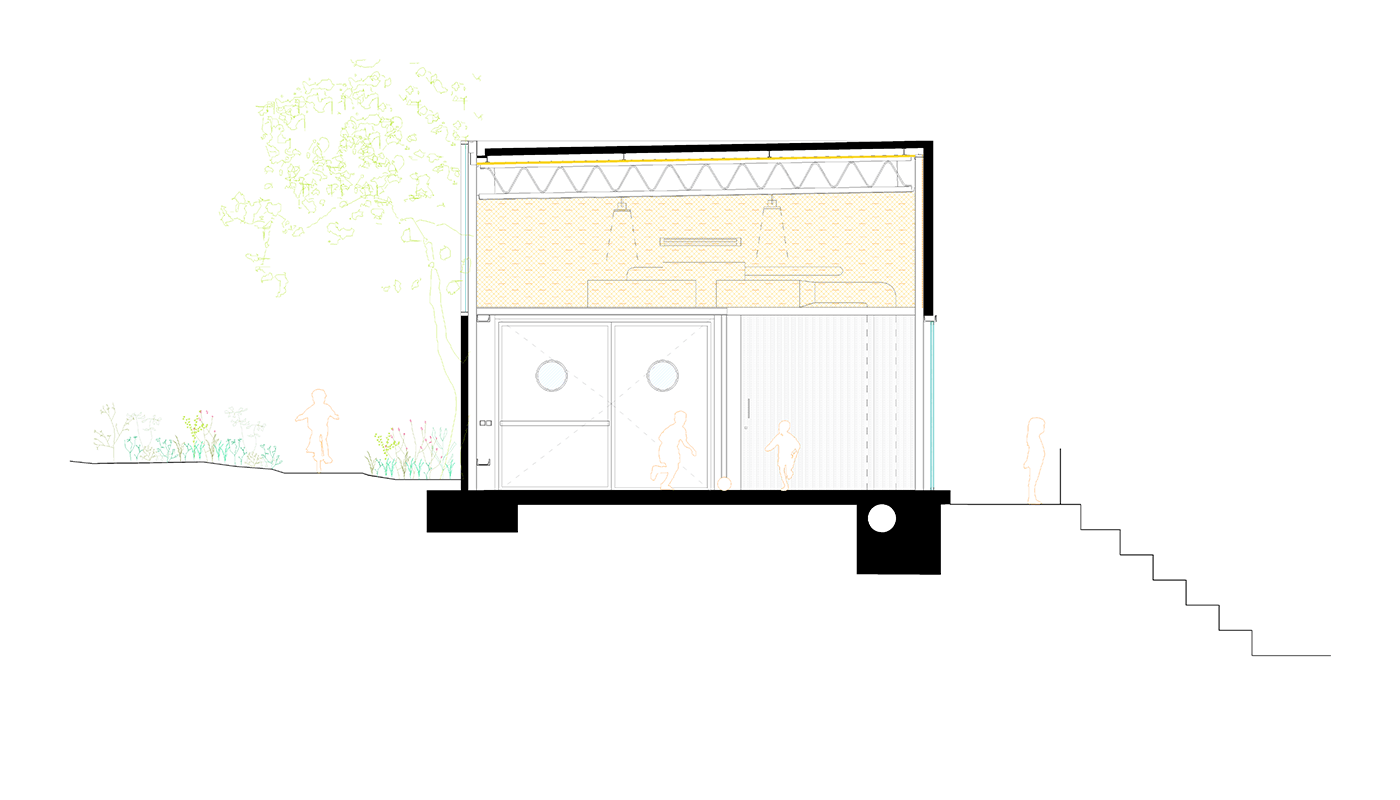
The project approach is to set up the pavi­lion as a remo­vable archi­tec­tural piece, quickly erected, sustainable and inno­va­tive. We thought at this point in remo­vable refri­ge­ra­tion panel self-supporting struc­ture, a typical mate­rial used in the industry, which is light­ness and has a high energy effi­ci­ency that faci­li­tates its quick assembly and keeps safely the possi­bi­lity of reuse in the future.

These panels have a 10 cm thic­k­ness, weig­hing the whole buil­ding less than a quarter of what would weight a tradi­tional cons­truc­tion.

Reali­sa­tion

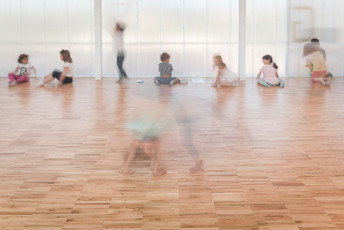
We under­stand as inno­va­tive this proposal, not only for the intro­duc­tion of indus­trial panel systems, but also because of the acou­stic absorp­tion achieved in the inte­rior space. The impact absorp­tion on the ground was ensured by super­im­po­sing several special absor­bent sheets under the pave­ment, while echoes and rever­be­ra­tions on the walls were coun­ter­acted by a 3D textile mate­rial speci­ally desi­gned for this project.

The wood used as the final floor finis­hing is an indus­trial oak recy­cled wood, which is made with the remains of other woods. This mate­rial will provide warmth and faci­li­tates the indoor sports perfor­mance.

We did this.

Project data

Archi­tect

PICADO-DE BLAS ARQUITECTOS
Calle González Amigó nº23
E – 28033 Madrid

Client

Commu­nity of Torre­l­odones

Team

Rubén Picado Fernández, María José de Blas
Carlos Diaz-Monis, Jorge Li, Teresa Casbas, Sofía Fernández, Will Tooze

Address

Calle Ntra. Sra. del Carmen, 10
28250 Torre­l­odones
E – Madrid

Opening

2019

Photos

Alberto Amores
Estudio Picado-de Blas

Author

PICADO-DE BLAS ARQUITECTOS

Photos

Plans

Videos

Our Blog

Our News­letter

Colourful play floors

Simply magical

Colourful play floors

Melos

About

Children want adven­tures. And that is why they love to create their own imagi­nary worlds, in which they can be or do anything: become an astro­naut or a racing drivers, set off on a big safari across Africa, or ride atop a unicorn.

Colourful play floors inspire the imagi­na­tion even more. Also, they are soft, easy on the joints, and slip-resistant – parti­cu­larly important proper­ties for astro­nauts and racing drivers, no matter how old they are.

These play floors are supplied by Melos.

Floor images

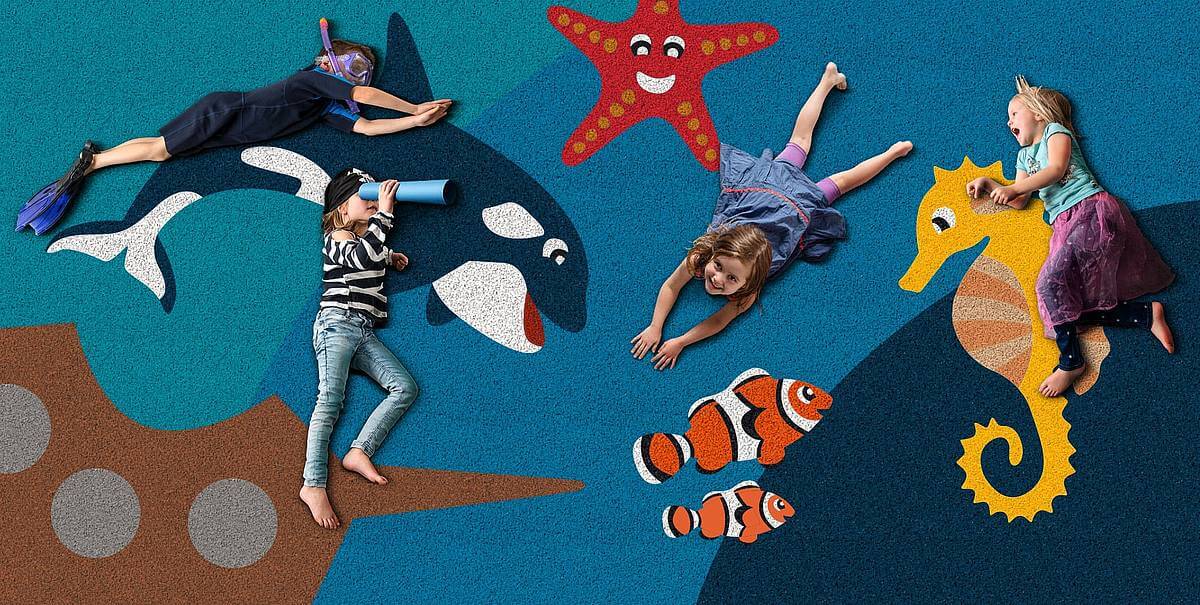
Colourful play floors are a good alter­na­tive to other attrac­tions such as floor images made of granules. They are both ideally suited for use in play areas, in kinder­gar­tens, or on school play­grounds.

Floor images are indi­vi­dual floor designs for nearly any type of public space, among them play­grounds, sports fields, and sports halls. Melos have speci­ally deve­loped the Style­maker® app showing the many diffe­rent motifs and designs that are available for the theme worlds mentioned.

Play floors

Play floors are full-surface floor cove­rings that can be very well combined with the chosen floor images. They are made of EPDM, the stan­dard product used world­wide for a variety of diffe­rent outdoor floors.

Play floors are made of coloured granules that must be able to with­stand deman­ding condi­tions. Regular inspec­tions ensure a high-perfor­mance product of consis­t­ently high quality.

Amazing Africa and Fairy Flowers

The new colourful blend “Amazing Africa” has been deve­loped using a special colour that is exclu­sive to this blend. It has been speci­ally desi­gned to match the safari motifs from the Style­maker® range. The unique colour mix consists of 100% virgin mate­rial and is supplied as a pre-mixed coloured mate­rial blend.

This is also the case for “Fairy Flowers”, another new and colourful blend with a special colour that is unique to Melos. “Fairy Flowers” has been speci­ally adapted to the Style­maker® motifs and is made to inspire little magi­cians and fairies.

Both blends create enchan­ting envi­ron­ments on safety surfaces, and both allow children to let their imagi­na­tion run wild. Simply magical!

We did this.

Photos

Melos

Play floors

Melos GmbH
Bismarck­strasse 4–10
D‑49324 Melle

Author

Johannes Bühl­be­cker
More Sports Media

Visit our Blog

Our News­letter

Ibtasem

“When I go back home, I can build one myself.”

IBTASEM play­ground in Lebanon

Cata­ly­ti­cAc­tion


Situa­tion

The Syrian crisis is the world’s largest refugee crisis for almost a quarter of a century under UNCHR’s mandate. It has devas­tated lives; uproo­ting fami­lies from their homes and forcing them to leave the country to find safety else­where. The conflict has seen the move­ment of over 1.2 million refu­gees to Lebanon, half of which are children. The UN, diffe­rent nation states and inter­na­tional NGO’s have deli­vered some support but refugee Informal Tented Sett­le­ments (ITS) do not provide a vibrant and safe atmo­sphere for children to grow up in.

IBTASEM

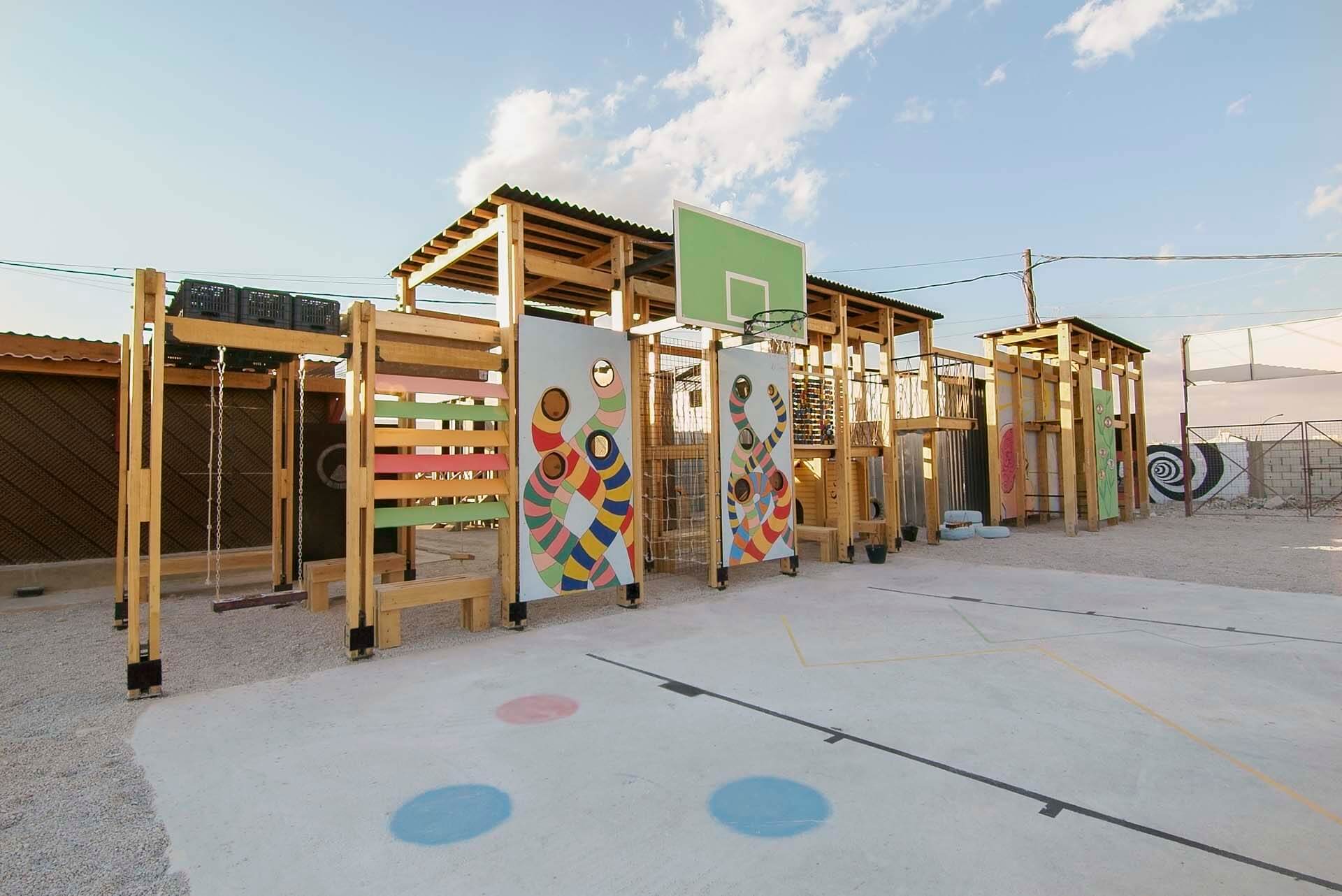
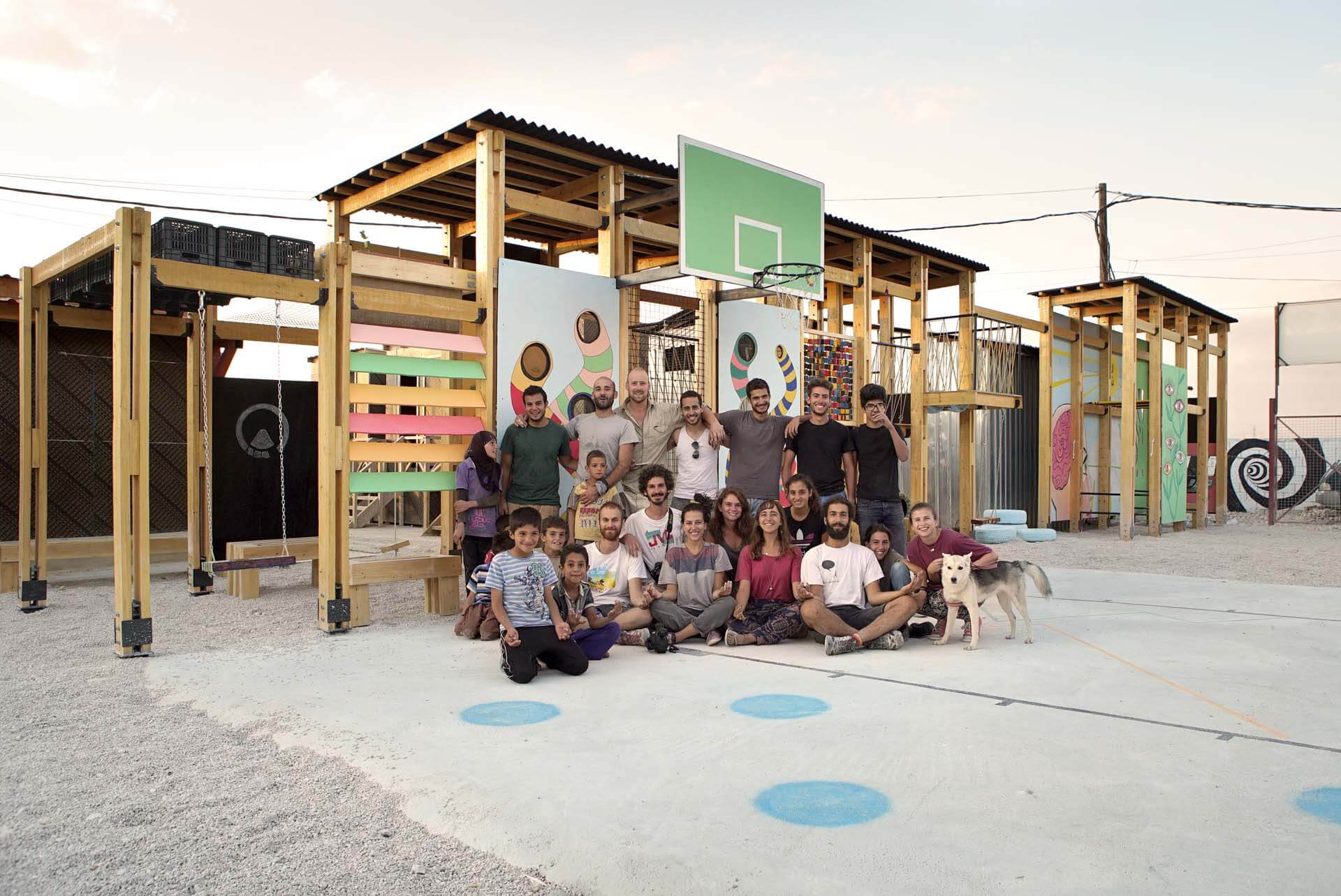
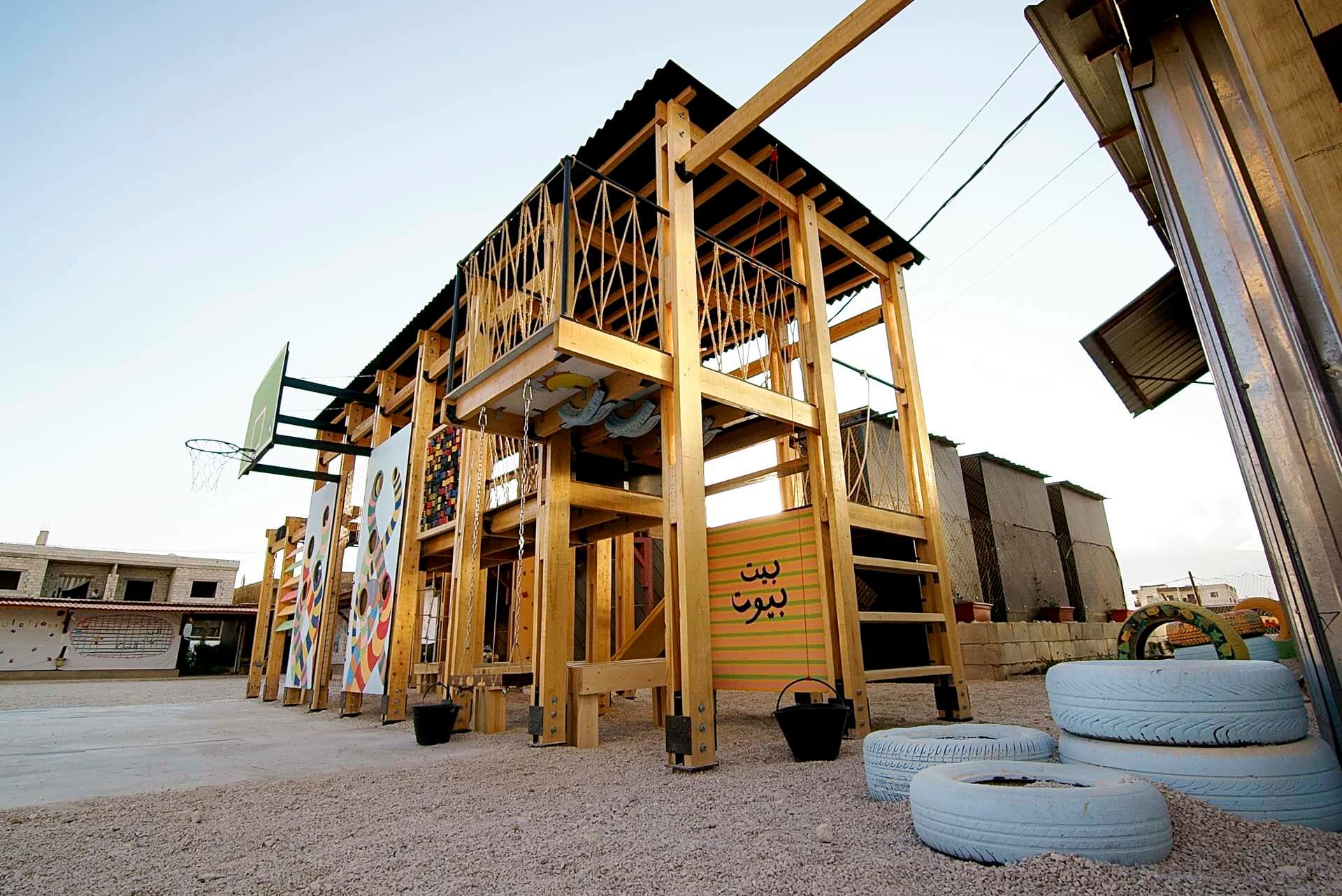
In August 2015, Cata­ly­ti­cAc­tion completed the cons­truc­tion of the pilot project ‘IBTASEM’. This project consists of a play­ground design for situa­tions of emer­gency response.

Children have the right to a safe child­hood, an educa­tion and to play. IBTASEM play­ground has been desi­gned in response to the large number of Syrian children now living as refu­gees in Lebanon. Visi­ting the informal tented sett­le­ments in the town of Bar Elias, Lebanon, as well as the schools that have been built to provide educa­tion, a main realiza­tion was that there was a lack of space solely dedi­cated to children. A space that would simply allow them to be children, such as a play­ground, such as IBTASEM!

Oppor­tu­ni­ties

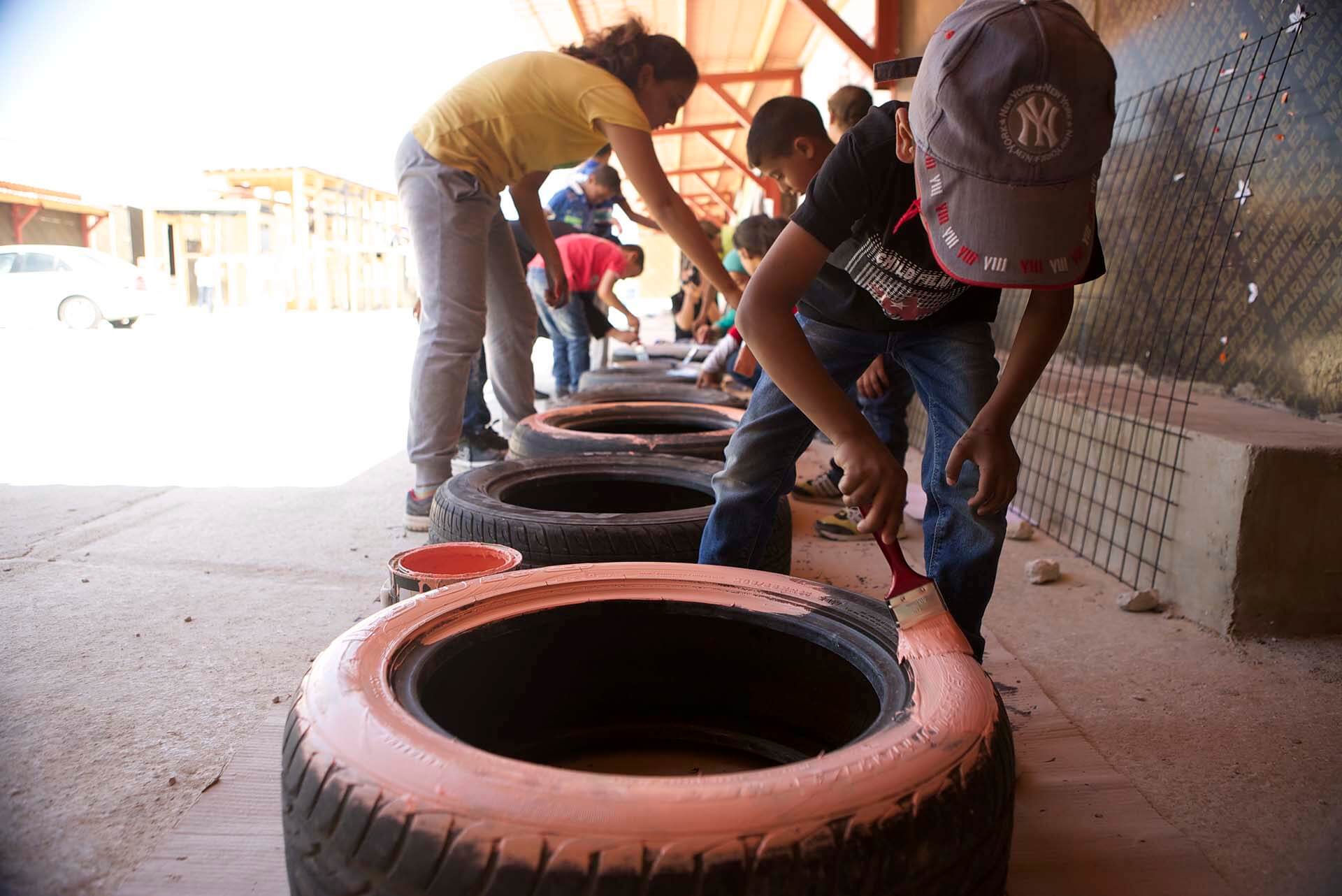
The inno­va­tive process behind this project is not merely in its supply of playing faci­li­ties, like swings and slides, but rather in its explo­ra­tion of oppor­tu­ni­ties that enable the children to design the play­ground them­selves. IBTASEM play­ground has been desi­gned and built with the input of the children since the incep­tion of its idea. Adop­ting parti­ci­pa­tory art and archi­tec­ture in the process prio­ri­tizes the children.

Playing is what children do best, so imagine using the act of play in design prac­tices as an empowe­ring tool for commu­ni­ties.

Reali­sa­tion

The play­ground has been built with the help of volun­teers who parti­ci­pated in the inter­na­tional Design-Build Work­shop Lebanon 2015. The work­shop was divided into two phases, with the first one focu­sing on buil­ding the modular struc­ture of the play­ground, and the second one being more concerned with the play­ground compon­ents and its comple­tion. This allowed for a multi­cul­tural and inter­di­sci­pli­nary process.

The children deve­loped a sense of owner­ship towards the play­ground. They knew that their role was very important;

“I am here to build the play­ground with you, so when I go back to Syria, I can build one myself.”

Shahd, 5 year old.

Tempo­rary struc­ture

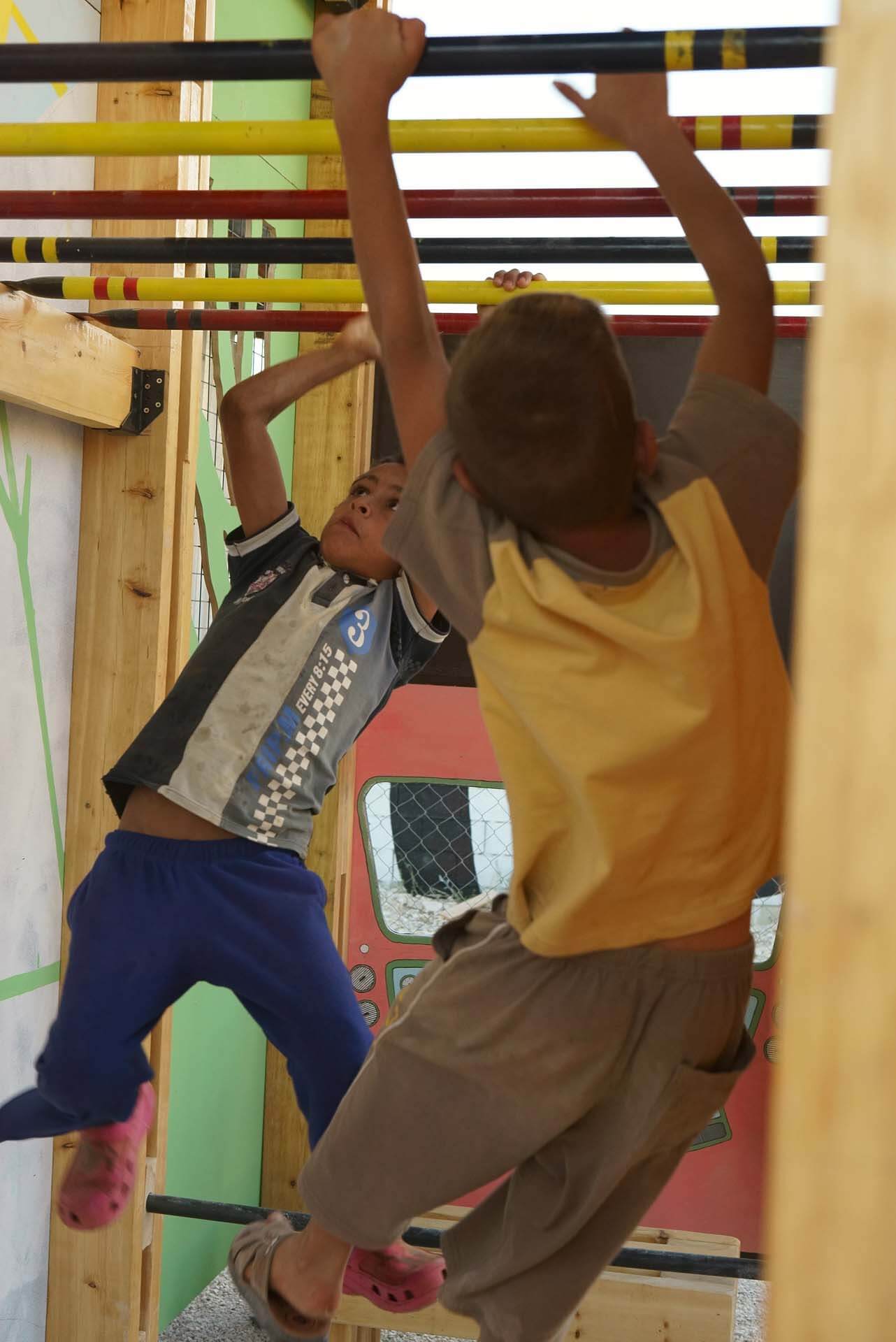
The play­ground is desi­gned so that is easy to assemble, disas­semble, trans­port and then either re-assemble or re-purpose. It was important for the local partner that the play­ground be a tempo­rary struc­ture. The design consists of a wooden struc­ture that is modular and assem­bled on site. Inspired by the locals’ reuse of mate­rial; the design sees the use of vege­table crates, tyres, ropes, etc.

Partner

The play­ground space is not limited to its pillars, it is rather an expo­nen­tia­tion of what the children make out of it. Cata­ly­ti­cAc­tion part­nered with the basket­ball free­style group Da Move (www.damove.com), who provided a two days trai­ning to the children. This presented a great oppor­tu­nity for the children to use the play­ground in a fun and educa­tional way. The inau­gu­ra­tion day was a cele­bra­tion of the day all the children were able to play freely in the play­ground, as well as enjoy a basket­ball perfor­mance by Da Move and the talents and skills of some of the children.

Right To Play Lebanon (www.righttoplay.com) supported the project by dona­ting basket­balls, as well as provi­ding trai­ning for three of the school­te­a­chers on how to use play for educa­tion, ther­e­fore effi­ci­ently using the play­ground space.

Cata­lyst

The pilot project acted as a cata­lyst by trig­ge­ring the aware­ness for a much-needed space for these children in a time of crisis. Curr­ently, the team of Cata­ly­ti­cAc­tion is in the ongoing process of deve­lo­ping future play­grounds with local part­ners in Lebanon.

We did this.

Project data and compa­nies involved

Photos

Lorenzo Conti
Ronan Glynn
Odys­seas Mourtzou­chos
Joana Dabaj

Opening

2015

Text

 Cata­ly­ti­cAc­tion

More photos & drawings

Videos

Our blog

Our news­letter

Pixe­land

Public space beau­ti­fi­ca­tion

Pixe­land in Mian­yang

100architects

About

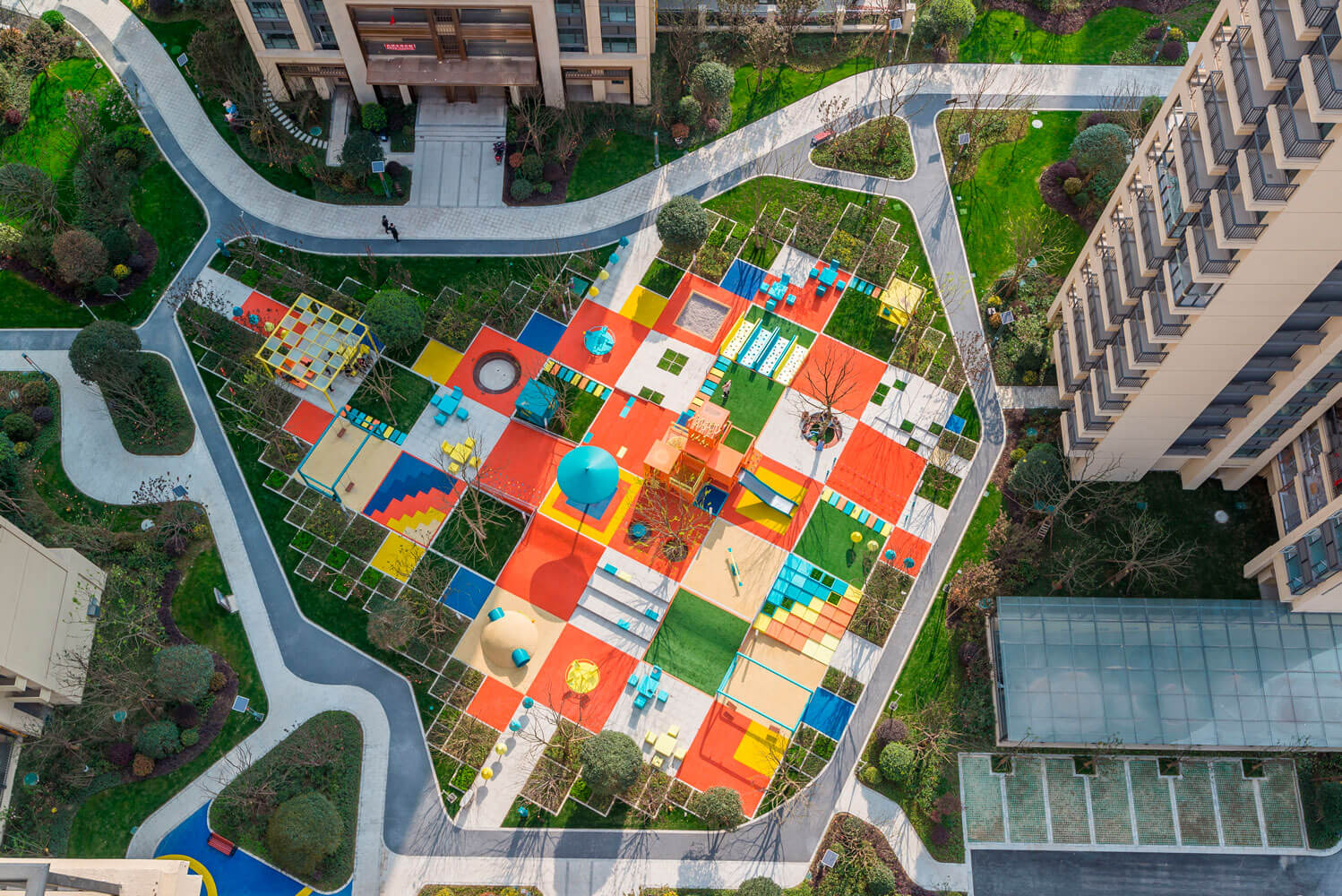
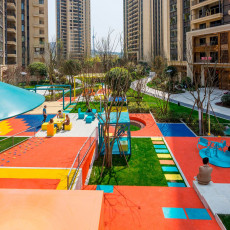
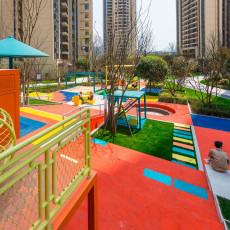
Pixe­land by 100architects brings toge­ther a number of diffe­rent outdoor faci­li­ties, inclu­ding play­ground spaces for kids as well as land­sca­ping and enter­tain­ment for adults and fami­lies. Installed in Mian­yang (5.45 million inha­bi­tants), China, the space features a series of multi-purpose ‘pixel’ spaces which create a unique multi-use public plaza. Mian­yang (5.45 million inha­bi­tants) is a key centre for the elec­tro­nics industry located in the northwest of Sichuan Province.

Pixe­land is a public space beau­ti­fi­ca­tion compri­sing a combi­na­tion of diffe­rent outdoor faci­li­ties in a single space, such as land­scape features, play­scape features for kids and leisure features for adults.

The project is inspired by the digital concept of pixels. While a pixel is the smal­lest inde­pen­dent sample of an image with its own RGB or CMYK color infor­ma­tion, it is the combi­na­tion of nume­rous pixels what results in any given digital image.

Archi­tects

100architects
Shanghai

Team: Marcial Jesús, Javier González, Stefanie Schramel, Marta Pinheiro, Lara Broglio, Mónica Páez, Keith Gong

Client

Dongyuan Dichan

Photo­graphs

Text

100architects

Pixels

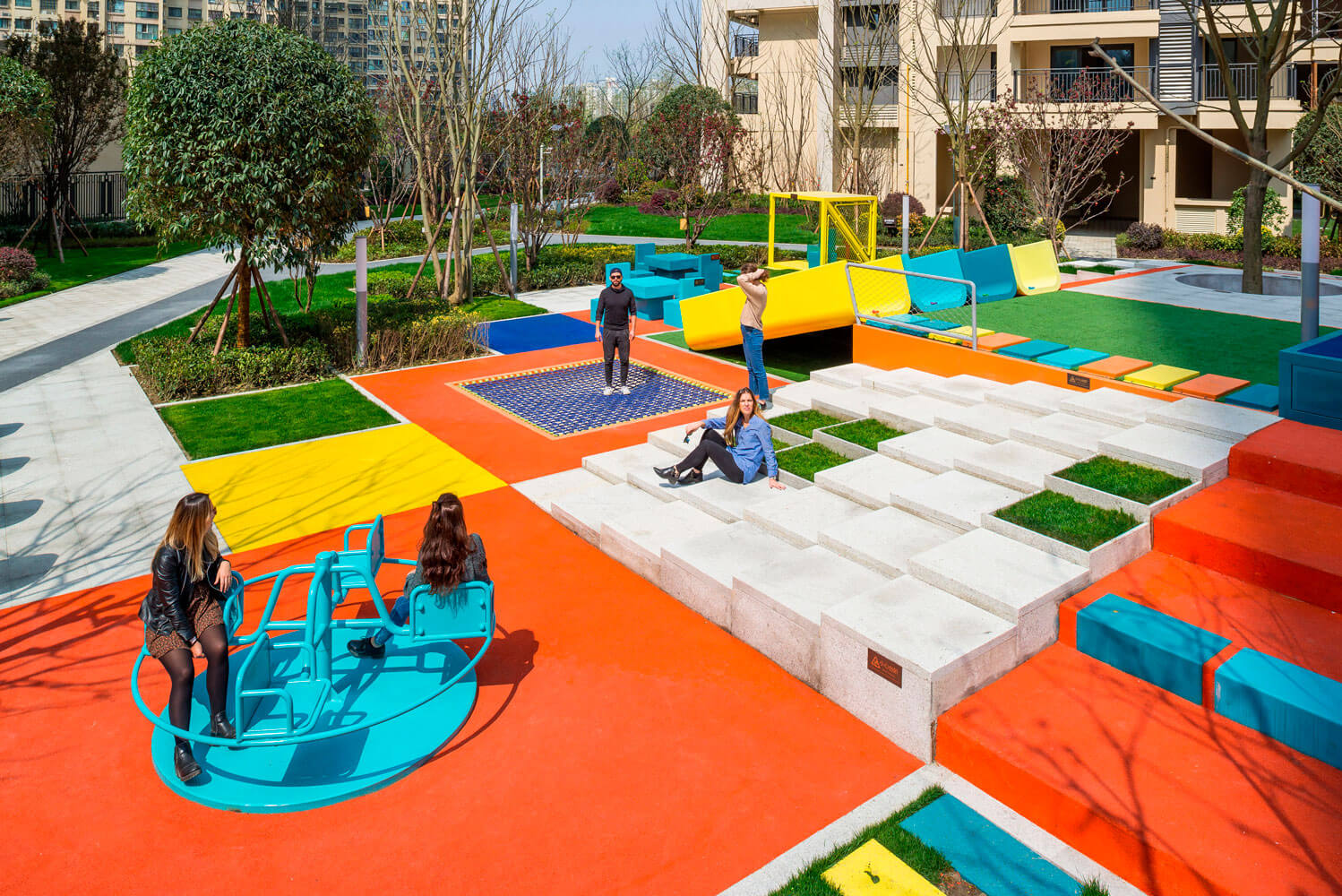
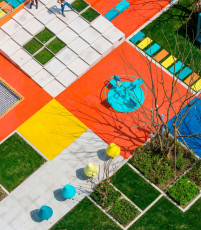
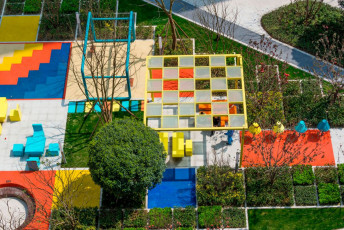
Trans­fer­ring this idea to the spatial orga­niza­tion stra­tegy of the project, 100architects thought of crea­ting a multi­func­tional public space by the addi­tion and combi­na­tion of smaller inde­pen­dent func­tional pixels. While each of the pixels has its own func­tion and charac­te­ristics and could be read as an inde­pen­dent entity, the combi­na­tion of all of them results in a very eye-catching and playful general multi­func­tional public space.

The result is a 1500-square metre public city plaza in a resi­den­tial district of Mian­yang which aims at crea­ting a multi­pur­pose public space.

The main pixel used in the core of the project is a perfect square of 5 x 5 m, as the minimum space to host func­tions suitable for a group of people, while as we get closer to the borders, smaller pixels of 2,5 x 2,5 m and 1,25 x 1,25 m are intro­duced as a modular approach to solve the accesses, the pede­strian circu­la­tion and the land­scape in the border.

Address

Binjiang East Road
Youxian District
Mian­yang City
CN-Sichuan Province

Aerial view

Equip­ment

Surrounded by small pixels of gree­nery as a border solu­tion to provide privacy and safety confi­ning the play­scape, the plaza is also equipped with lounge resting areas, picnic areas with seats & tables, seating box struc­tures to provide shadow, sunken communal benches, sloped lawns to lay down and small amphi­thea­ters for gathe­rings.

Besides the leisure features, Pixe­land also counts with a wide range of playful features scat­tered around, culmi­nated with a voxel­ated Horse-themed play­ground in the middle of the plaza, for the joy and enter­tain­ment of the younger visi­tors.

The checkered plaza has been deve­loped in a multi­level way, provi­ding an inte­res­ting arti­fi­cial topo­graphy growing in height towards the center, where the voxel­ated horse is stra­te­gi­cally placed on the top.

Opening

2019

Video

Your project

Are you in need of support when publi­shing your projects?

projects@moresports.network

Or give us a call:

0049 234 5466 0374

PHOTOGRAPHS

That’s what our part­ners say

About us

More Sports Media

Johannes Bühl­be­cker, founder

Johannes Bühl­be­cker is an archi­tect and has worked, among others, for Inter­na­tional Asso­cia­tion for Sports and Leisure Faci­li­ties (IAKS) for 15 years – as edito­rial director of the renowned trade maga­zine “sb”, in the orga­ni­sa­tion and reali­sa­tion of inter­na­tional archi­tec­tural compe­ti­tions with IOC and IPC, in trade fairs and conven­tions, as head of the “NRW Bera­tungs­stelle Sport­stätten“ (“NRW Advice Centre for Sports Faci­li­ties”) and as a lecturer at the German Sport Univer­sity Cologne.

  • Dipl.-Ing. (engi­nee­ring degree) Archi­tect, TU Berlin
  • Long­time edito­rial head with “sb”, an inter­na­tional journal for the archi­tec­ture of sports
  • Trai­ning in web design, online marke­ting, etc.
  • Inter­na­tional archi­tec­tural compe­ti­tions with IOC and IPC
  • Trade fair and congress orga­ni­sa­tion
  • Head of the “NRW Bera­tungs­stelle Sport­stätten“ (“NRW Advice Centre for Sports Venues”)
  • Lecturer at the German Sport Univer­sity Cologne
  • Plan­ning of the Prus­sian Stadium in Münster (for groß­mann engi­neers, Göttingen)
  • Replan­ning a foot­ball stadium in Berlin-Köpe­nick
  • Nume­rous publi­ca­tions, i.a. “From Round Leather to Soap Bubbles – The Deve­lo­p­ment of Foot­ball and its Archi­tec­ture”
  • Board member and youth coach at SV BW Weitmar 09

Contact

Phone

+(49) 234 5466 0374

Mail

contact@moresports.network

Address

More Sports Media
Am Weit­kamp 17
D‑44795 Bochum

Visit our Insta­gram account

Style­maker

Dreams are my reality

Floor images made of granules

Melos GmbH

The Wester­hausen Grand Prix

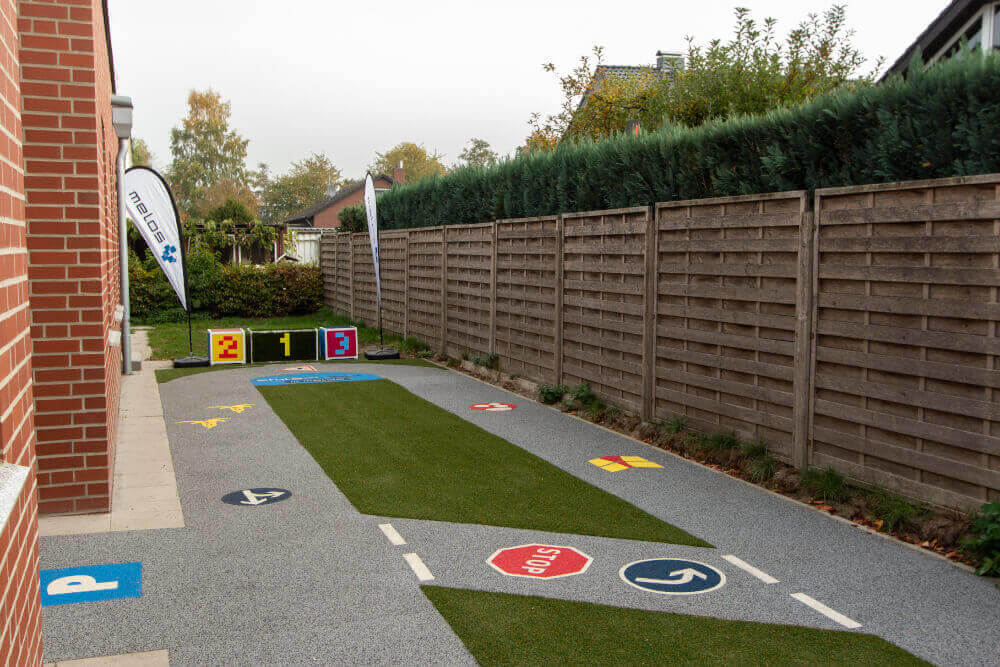
Melle in March 2019: Exci­te­ment is in the air, because the Wester­hausen Grand Prix is just around the corner. The young drivers are ready to go, the engines are roaring, and the wild race begins. Young push car drivers streak like light­ning through the straights and at the same time learn the meaning of traffic lights and signs.

The setting for this spec­tacle is the Melos Kart Raceway – that’s the previously unused back yard at the KiTa Wester­hausen nursery. Wester­hausen is a district of the town Melle (46,000 resi­dents) not far from Osna­brück. The push car raceway opened in March 2019 with Mario Kart-like designs. Road markings

Outfit and equip­ment

Melos GmbH
Bismarck­strasse 4–10
D‑49324 Melle

Style­maker®

Style­maker®

The very popular project was deve­loped very quickly with the Style­maker®. This app deve­loped by Melos enables indi­vi­dua­lised floo­ring designs. Simply and intui­tively, you can choose patterns and designs for your floo­ring layout and place an order. This makes the Style­maker® a huge help when plan­ning play areas, nurse­ries or other eye-catchers such as the entrances of sports grounds, sport halls or offices.

Using diffe­rent themes such as “Galaxy“, “Sea Life“ or even “Race Track“ and dozens of designs from animals, floor games and numbers to traffic symbols, ever­yone can develop their very own design. The chosen designs can be produced up to a maximum sixe of 150 x 150 cm. 24 colours are available.

Video

Style­maker® Indi­vi­dual

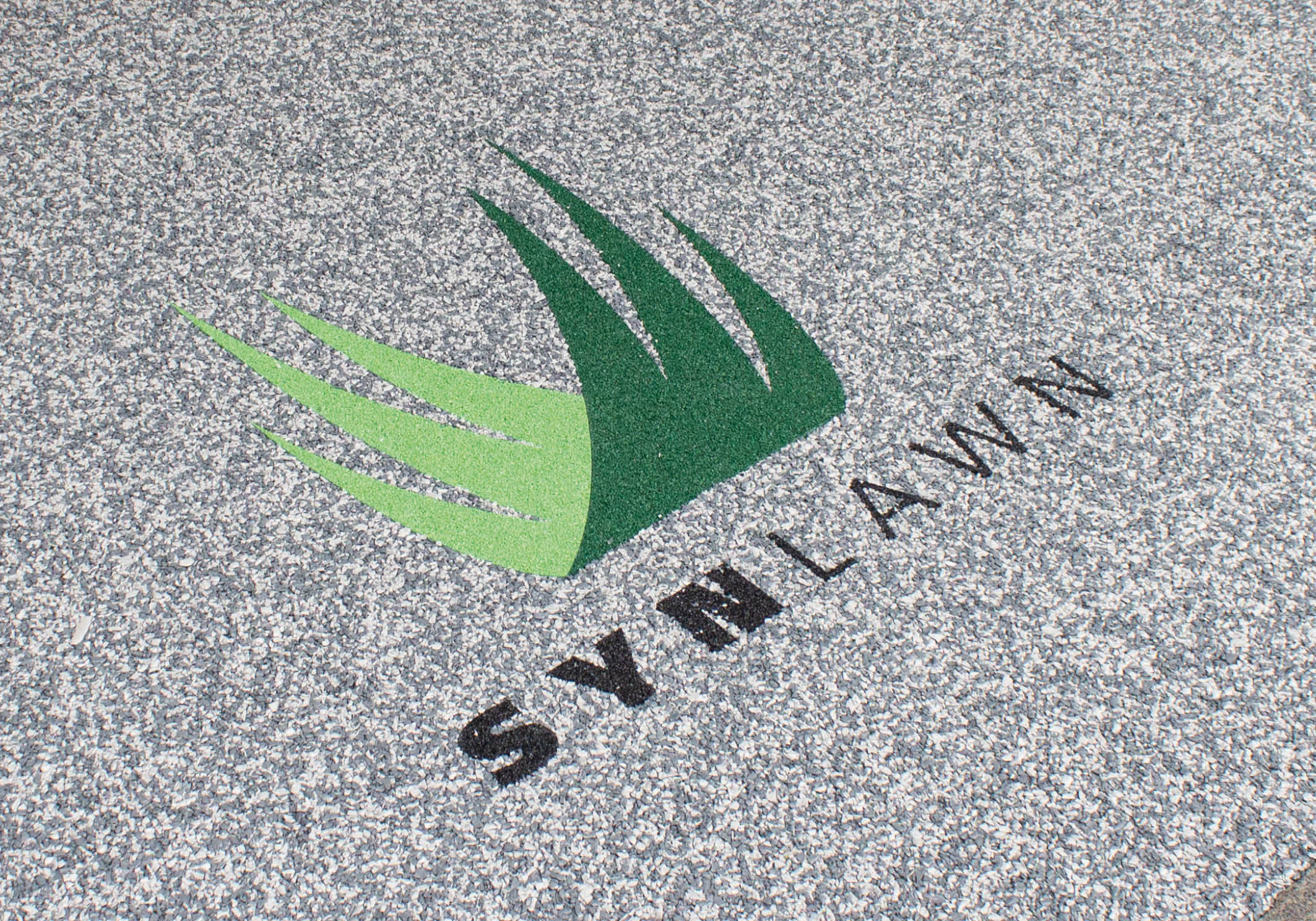
Melos also offers the possi­bi­lity of inclu­ding club or company logos, family crests, lette­ring or other custom objects in your design.

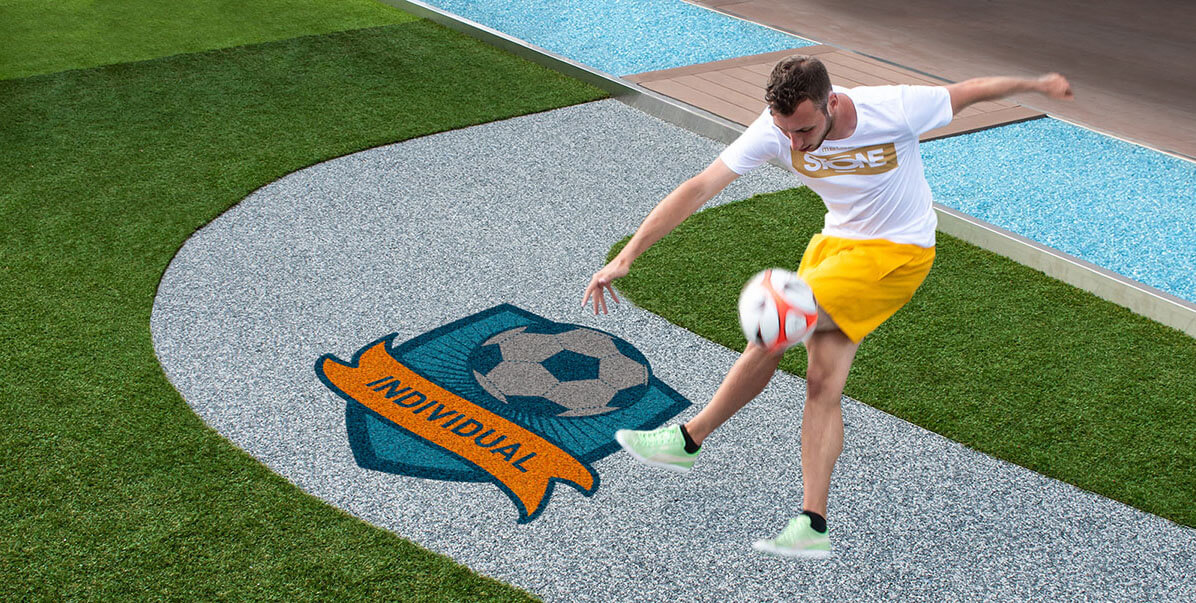
It’s enough to send in your own sket­ches, photos and ideas in photos or scans to the specia­lists at Melos. The arran­ge­ment, outlines, colour choice and the fine details are then agreed in close coor­di­na­tion with one another.

Even­tually, the final draft becomes floor art made from high quality granu­late; an indi­vi­dual, original und expres­sive solu­tion for sports clubs, schools, nurse­ries and busi­nesses.

Opening

2018/19

Photo­graphs

Melos

Text

Melos

30 square metres of the cosmos

A new safety mat under the clim­bing wall of the Harse­winkel secon­dary school has been protec­ting even the most daring clim­bers since the end of 2018. This safety mat is the result of a special colla­bo­ra­tion and offers a very unique design.

The course project “Digital Design” with the year 11s as desi­gners, toge­ther with Melos from Melle and its subsi­diary Teu2tec from Gütersloh were the project leaders. The concept and design came from the students. Melos produced the coloured plastic granu­late, and Teu2tec created high quality images for the safety mat coating from the granu­late, with the help of 3D prin­ting and 3D design.

The 30 square metre dark blue area is embel­lished with colourful motifs along the theme of space travel and the universe: an astro­naut, a UFO, a rocket, an atom, and stars.

Another colla­bo­ra­tion by this winning team is already on the cards.

Video

Your project

Are you in need of support when publi­shing your projects?

projects@moresports.network

Or give us a call:

0049 234 5466 0374

That’s what our part­ners say

About us

More Sports Media

Johannes Bühl­be­cker, founder

Johannes Bühl­be­cker is an archi­tect and has worked, among others, for Inter­na­tional Asso­cia­tion for Sports and Leisure Faci­li­ties (IAKS) for 15 years – as edito­rial director of the renowned trade maga­zine “sb”, in the orga­ni­sa­tion and reali­sa­tion of inter­na­tional archi­tec­tural compe­ti­tions with IOC and IPC, in trade fairs and conven­tions, as head of the “NRW Bera­tungs­stelle Sport­stätten“ (“NRW Advice Centre for Sports Faci­li­ties”) and as a lecturer at the German Sport Univer­sity Cologne.

  • Dipl.-Ing. (engi­nee­ring degree) Archi­tect, TU Berlin
  • Long­time edito­rial head with “sb”, an inter­na­tional journal for the archi­tec­ture of sports
  • Trai­ning in web design, online marke­ting, etc.
  • Inter­na­tional archi­tec­tural compe­ti­tions with IOC and IPC
  • Trade fair and congress orga­ni­sa­tion
  • Head of the “NRW Bera­tungs­stelle Sport­stätten“ (“NRW Advice Centre for Sports Venues”)
  • Lecturer at the German Sport Univer­sity Cologne
  • Plan­ning of the Prus­sian Stadium in Münster (for groß­mann engi­neers, Göttingen)
  • Replan­ning a foot­ball stadium in Berlin-Köpe­nick
  • Nume­rous publi­ca­tions, i.a. “From Round Leather to Soap Bubbles – The Deve­lo­p­ment of Foot­ball and its Archi­tec­ture”
  • Board member and youth coach at SV BW Weitmar 09

Contact

Phone

+(49) 234 5466 0374

Mail

contact@moresports.network

Address

More Sports Media
Am Weit­kamp 17
D‑44795 Bochum

Visit us on Insta­gram

French Inter­na­tional School

In the jungle, the concrete jungle…

French Inter­na­tional School of Hong Kong

by Henning Larsen Archi­tects

Just above street level

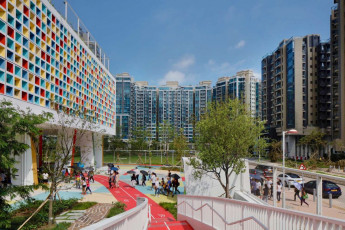
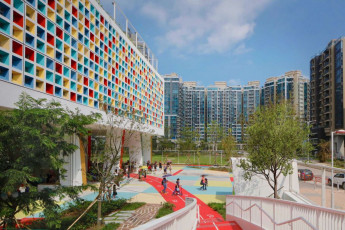
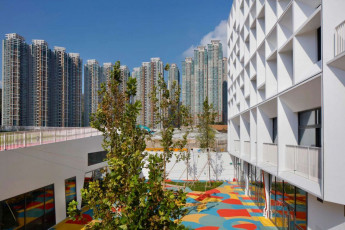
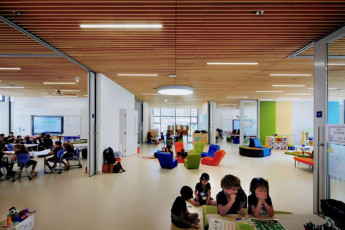
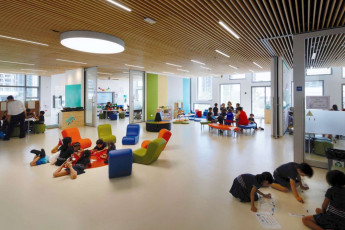
In the concrete jungle of Hong Kong, the new campus of the French Inter­na­tional School stands as a vibrant green oasis in the dense city. 1,100 pupils now enjoy a colorful, colla­bo­ra­tive multi­cul­tural lear­ning space, setting the scene for the working envi­ron­ment of tomorrow.

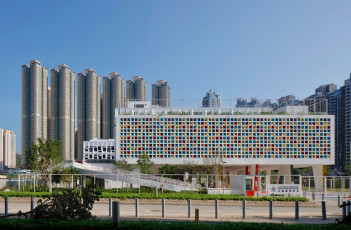
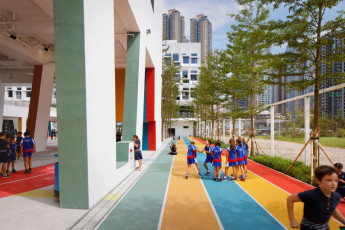
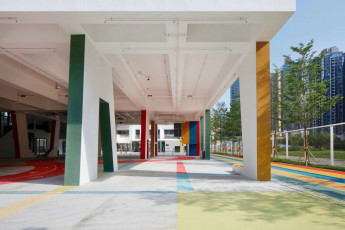
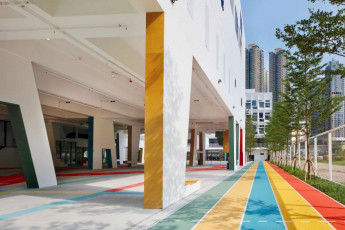
Just above street level in Hong Kong’s Tseung Kwan O district, sunlight meets the kalei­do­scopic façade of the new French Inter­na­tional School campus, spil­ling into the buil­ding through windows laid across a grid of 627 multi­co­lored tiles. From the street, this colorful façade draws the eye to the institution’s new primary and secon­dary school – A vibrant, sustainable envi­ron­ment supporting a world-class multi­cul­tural educa­tion.

Archi­tects

Henning Larsen Archi­tects
Room A, 10/F, Yardley Buil­ding
3 Conn­aught Road West
Hong Kong

Client & User

Dissol­ving class­rooms

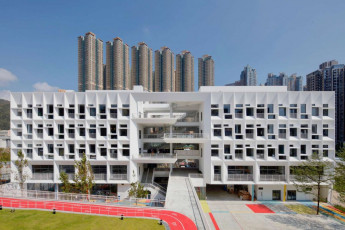
Completed in September 2018, the 19,600 m² new French Inter­na­tional School creates an open and active lear­ning envi­ron­ment that place the school at the fore­front of pedago­gical inno­va­tion in Hong Kong.

Archi­tects Henning Larsen dissolved the tradi­tional class­rooms and pushed boun­da­ries on how lear­ning spaces can allow teachers and classes to work toge­ther in a more colla­bo­ra­tive open space.

Address

French Inter­na­tional School of Hong Kong
28 Tong Yin St
Tseung Kwan O
Hong­kong

Aerial view

Villa and Agora

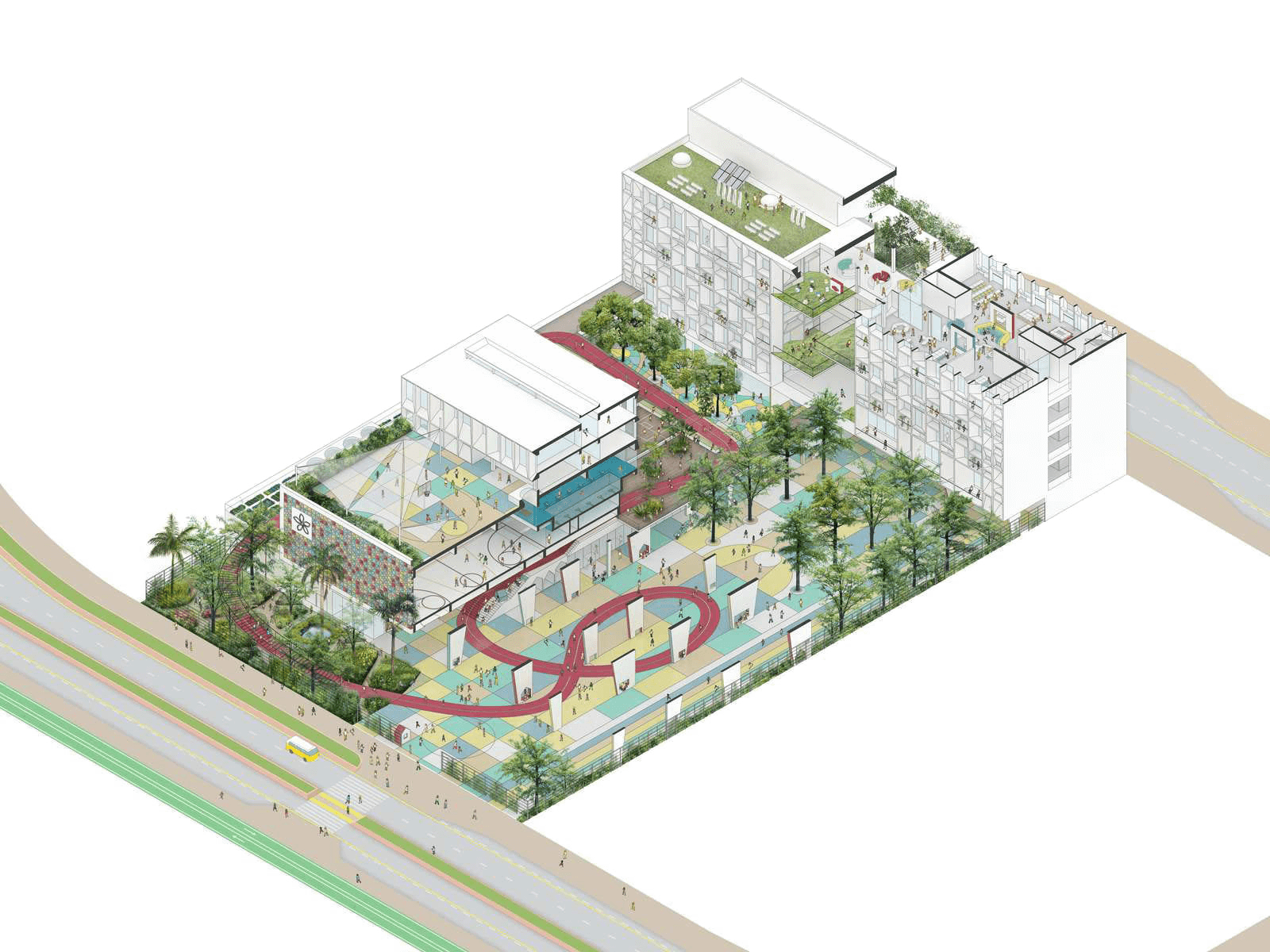
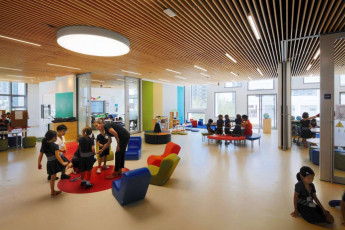
In the Primary School section, the tradi­tio­nally enclosed class­rooms with corri­dors merge toge­ther in a series of large open plan spaces called Villas, each with 125 pupils in the same age group.

Teachers can open their classes up to each other and share a central space called the Agora, where group acti­vi­ties unfold. Here, classes from both streams of the school (French and Inter­na­tional) can colla­bo­rate and develop group projects toge­ther; prepa­ring for the work envi­ron­ments of tomorrow.

Feed­back

11 + 6 =

Sustainable agenda

Green in form and func­tion, the campus sets an example in sustaina­bi­lity. The buil­ding form and the façade designs are opti­mized to respond to the local climate and to decrease energy consump­tion and increase comfort by passive means.

Stra­tegic use of daylight also supports the sustainable vision. The campus offers ample daylight in all of its spaces. In the sunny tropics, this means careful orien­ta­tion of windows and robust sun shading.

All the class­rooms face North or South to avoid the puni­tive low sun from East and West, and the deep brise-soleil shade the façade to avoid any direct sunlight into the spaces. The light is gene­rous and homo­ge­nous throug­hout the day. The brise-soleils enti­rely removes the need for blinds or curtains and enables a clearer glass to be used, thus provi­ding a more natural color of daylight in inte­rior spaces.

Opening

2018

Photo­graphs

Text

Henning Larsen Archi­tects

Vege­ta­tion

Natural vege­ta­tion is crucial to the campus’ green func­tion. Forty-two trees, a plant covered peri­meter fence, multi-story hanging gardens and a 550 square meter bota­nical garden planted with native South Chinese vege­ta­tion are among the green spaces that estab­lish the school as a lush garden within urban Hong Kong.

As the vege­ta­tion improves air quality within the urban setting, venti­la­tion systems utilize natural breezes to circu­late fresh air through the buil­ding and reduce reli­ance on air condi­tio­ning. With ample oppor­tu­nity to study, play among and culti­vate these gardens, students are able to gain hands-on expe­ri­ence with the region’s natural vege­ta­tion, foste­ring a sense of envi­ron­mental steward­ship and a prac­tical educa­tion in sustaina­bi­lity.

Video

The loop

A vege­tated peri­meter fence estab­lishes the school as an urban green space, part of a network of planted space within the campus. A 400 meter-long track called “The Loop” winds its way throug­hout the campus play­grounds, and inclines through the Native Garden, giving students the oppor­tu­nity to study stra­ti­fied layers of native South Chinese plant species with the sensa­tion of clim­bing up through a forest canopy. In total, 42 native trees grow within the campus.
Your project

Are you in need of support when publi­shing your projects?

projects@moresports.network

Or give us a call:

0049 234 5466 0374

Multi­cul­tural design

The multi­co­lored ceramic tiles cove­ring the French Inter­na­tional School’s distinc­tive façade are a mate­rial repre­sen­ta­tion of the envi­ron­ment within. A spec­trum of colors, the tile design gives sustainable form and a multi­cul­tural vision to the campus, supporting its mission of a forward-thin­king, inter­na­tional educa­tion.

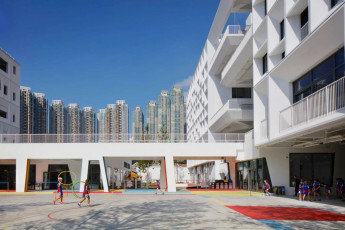
Offe­ring five languages to a student body repre­sen­ting 40 natio­na­li­ties, the French Inter­na­tional School is an active cultural cross­road. Outside of school hours the campus also acts as a quiet and green oasis in a city with a scar­city of space. Ground floor faci­li­ties, inclu­ding the gymna­sium, exhi­bi­tion areas, canteen and play­ground, can be opened to the public – allo­wing the school to operate on evenings and weekends as a beacon for French culture.

Video

Refuge

With over seven million resi­dents, the towe­ring concrete and constant acti­vity of urban Hong Kong pres­ents a chall­enge to crea­ting effec­tive lear­ning spaces. For some 1,100 students, the French Inter­na­tional School’s Tseung Twan O creates a green refuge within the big city.

Although situated in a more densely urban setting than other campuses of the French Inter­na­tional School, our new Tsueng Kwan O loca­tion stands out in its inclu­sion of healthful green spaces. The outcome is a flou­ris­hing, vibrant lear­ning space that makes room for students to colla­bo­rate and grow within the city.

Advert

PHOTOGRAPHS

About us

More Sports Media

Johannes Bühl­be­cker, founder

Johannes Bühl­be­cker is an archi­tect and has worked, among others, for Inter­na­tional Asso­cia­tion for Sports and Leisure Faci­li­ties (IAKS) for 15 years – as edito­rial director of the renowned trade maga­zine “sb”, in the orga­ni­sa­tion and reali­sa­tion of inter­na­tional archi­tec­tural compe­ti­tions with IOC and IPC, in trade fairs and conven­tions, as head of the “NRW Bera­tungs­stelle Sport­stätten“ (“NRW Advice Centre for Sports Faci­li­ties”) and as a lecturer at the German Sport Univer­sity Cologne.

  • Dipl.-Ing. (engi­nee­ring degree) Archi­tect, TU Berlin
  • Long­time edito­rial head with “sb”, an inter­na­tional journal for the archi­tec­ture of sports
  • Trai­ning in web design, online marke­ting, etc.
  • Inter­na­tional archi­tec­tural compe­ti­tions with IOC and IPC
  • Trade fair and congress orga­ni­sa­tion
  • Head of the “NRW Bera­tungs­stelle Sport­stätten“ (“NRW Advice Centre for Sports Venues”)
  • Lecturer at the German Sport Univer­sity Cologne
  • Plan­ning of the Prus­sian Stadium in Münster (for groß­mann engi­neers, Göttingen)
  • Replan­ning a foot­ball stadium in Berlin-Köpe­nick
  • Nume­rous publi­ca­tions, i.a. “From Round Leather to Soap Bubbles – The Deve­lo­p­ment of Foot­ball and its Archi­tec­ture”
  • Board member and youth coach at SV BW Weitmar 09

Contact

Phone

+(49) 234 5466 0374

Mail

contact@moresports.network

Address

More Sports Media
Am Weit­kamp 17
D‑44795 Bochum

Visit our Insta­gram account

WeGrow

The World Is Our Class­room

WeGrow school in New York City

by BIG

About

BIG and WeWork’s colla­bo­ra­tion and belief in crea­ti­vity mani­fests through the first WeGrow school in New York City. The inter­ac­tive lear­ning land­scape supports a conscious approach to educa­tion, nurtu­ring the growth, spirit and mind of the 21st century child. The 10,000 ft² (929m²) lear­ning universe for children aged three to nine is located in WeWork’s HQ in Manhattan’s Chelsea neigh­bor­hood.

Archi­tects

Bjarke Ingels Group (BIG)

Part­ners-in-Charge: Bjarke Ingels, Daniel Sundlin, Beat Schenk­Pro­ject Desi­gner: Otilia Pupe­zeanu
Project Archi­tect: Jeremy Babel
Team: Bart Rama­kers, Douglass Alli­good, Erik Berg Kreider, Evan Saar­inen, Filip Milo­va­novic, Florencia Kratsman, Fran­cesca Porte­sine, Il Hwan Kim, Jakob Lange, Ji Young Yoon, Kris­toffer Negen­dahl, Josiah Poland, Mengzhu Jiang, Ryan Yang, Stephen Kwok, Terrence Chew, Tore Banke, Tracy Sodder
BIG Ideas: Tore Banke, Kris­toffer Negen­dahl

Client & User

Class­room + lear­ning land­scape

The design starts from the premise of a school universe at the level of the child. A field of super-elliptic objects forms a lear­ning land­scape that’s dense and rational – yet free and fluid. Modular class­rooms, tree houses and a vertical farm promote an inclu­sive and colla­bo­ra­tive lear­ning envi­ron­ment. Acou­stic clouds, natural mate­rials and neutral colors create a calm setting for the child’s focused study.

A field of spaces with a variety of func­tions allow children to move freely throug­hout the day and to learn from the envi­ron­ment around them and each other. The lear­ning land­scape encou­rages colla­bo­ra­tion by empha­si­zing trans­pa­rent and communal spaces, which comprise more than half of the school: four class­rooms, flexible work­shops, commu­nity space, multi-purpose studio, art studio, music room and other play­scapes support the energy of crea­tion and toge­ther­ness.

Address

WeGrow
110 W 19th St
New York
NY 10011
USA

Aerial view

Shelves

Most of the parti­tions inside the school are shelves raised to the level of the child, allo­wing natural light to reach deep inside the buil­ding. Three diffe­rent shel­ving levels for each age group curve occa­sio­nally to create various acti­vity pockets and give a feeling of comfort, safety and commu­nity, while allo­wing teachers to have full perspec­tive of the space at all times.

Above, acou­stic clouds made of felt reflect the diffe­rent patterns in nature – finger­print, coral, land­scape and moon – and illu­mi­nate with Ketra bulbs that shift in color and inten­sity based on the time of day.

Feed­back

10 + 13 =

Lear­ning stations

Each lear­ning station within WeGrow includes furni­ture with details and mate­rials carefully desi­gned by BIG to opti­mize the educa­tional envi­ron­ment: modular class­rooms promote move­ment and colla­bo­ra­tion, puzzle tables and chairs manu­fac­tured by Bendark Studios come in kid and parent sizes to offer equal perspec­tives, and the vertical garden with tiles made in Switz­er­land by Laufen house diffe­rent plants depen­ding on shade expo­sure.

The mush­room shelves and magic meadow create a calm setting for a more focused study while reading hives form an immersive library for an organic lear­ning envi­ron­ment.

Opening

2018

Photo­graphs

Text

BIG

Lobby

Teachers and parents share the lobby with the children, where a playful felt nook forms from the smooth cut out in the walls to serve as a flexible work, meet and waiting area. Children can join in the brain puzzle, an all-felt lounge that can be taken apart for playing and lear­ning. From the lobby to the class­rooms, WeGrow is lit by Gople Lamp and Alphabet of Light – flexible lighting systems desi­gned by BIG Ideas and manu­fac­tured by Artemide to create ambi­ence effects that form comfor­table, natural lighting throug­hout the school day. 

Playful and trans­pa­rent, yet home­like and struc­tured, WeGrow nurtures the child’s educa­tion through intro­s­pec­tion, explo­ra­tion and disco­very.

New York Post states: “The $42,000-a-year curri­culum ($36,000 for preschool for ages 3 to 4 and $22,000 for 2‑year-olds) is a slick mish-mash of Montessori, New Age philo­sophy and Silicon Valley capi­ta­lism set amongst Archi­tec­ture Digest-worthy inte­riors.“

Video

About us

More Sports Media

Johannes Bühl­be­cker, founder

Johannes Bühl­be­cker is an archi­tect and has worked, among others, for Inter­na­tional Asso­cia­tion for Sports and Leisure Faci­li­ties (IAKS) for 15 years – as edito­rial director of the renowned trade maga­zine “sb”, in the orga­ni­sa­tion and reali­sa­tion of inter­na­tional archi­tec­tural compe­ti­tions with IOC and IPC, in trade fairs and conven­tions, as head of the “NRW Bera­tungs­stelle Sport­stätten“ (“NRW Advice Centre for Sports Faci­li­ties”) and as a lecturer at the German Sport Univer­sity Cologne.

  • Dipl.-Ing. (engi­nee­ring degree) Archi­tect, TU Berlin
  • Long­time edito­rial head with “sb”, an inter­na­tional journal for the archi­tec­ture of sports
  • Trai­ning in web design, online marke­ting, etc.
  • Inter­na­tional archi­tec­tural compe­ti­tions with IOC and IPC
  • Trade fair and congress orga­ni­sa­tion
  • Head of the “NRW Bera­tungs­stelle Sport­stätten“ (“NRW Advice Centre for Sports Venues”)
  • Lecturer at the German Sport Univer­sity Cologne
  • Plan­ning of the Prus­sian Stadium in Münster (for groß­mann engi­neers, Göttingen)
  • Replan­ning a foot­ball stadium in Berlin-Köpe­nick
  • Nume­rous publi­ca­tions, i.a. “From Round Leather to Soap Bubbles – The Deve­lo­p­ment of Foot­ball and its Archi­tec­ture”
  • Board member and youth coach at SV BW Weitmar 09

Contact

Phone

+(49) 234 5466 0374

Mail

contact@moresports.network

Address

More Sports Media
Am Weit­kamp 17
D‑44795 Bochum

Visit our Insta­gram account

GDPR Cookie Consent with Real Cookie Banner