Limmasol Tower

Home is where the pool is

​​Limmasol Tower

Hamonic+Masson & Asso­ciés

Cyprus

Cyprus is an excep­tional terri­tory. Sea, sun and beauty adorn its land­scape and provide the oppor­tu­nity for unique housing. The propo­si­tion for the Limmasol Tower by Hamonic+Masson & Asso­ciés seeks to capture this natural sple­ndour for future inha­bi­tants.

Their wild apart­ment tower concept has round swim­ming pools sprou­ting almost orga­ni­cally from the facade on all sides. Lima­ssol Tower grants every unit in the buil­ding its own private pool, over­loo­king the spar­k­ling Medi­ter­ra­nean horizon.

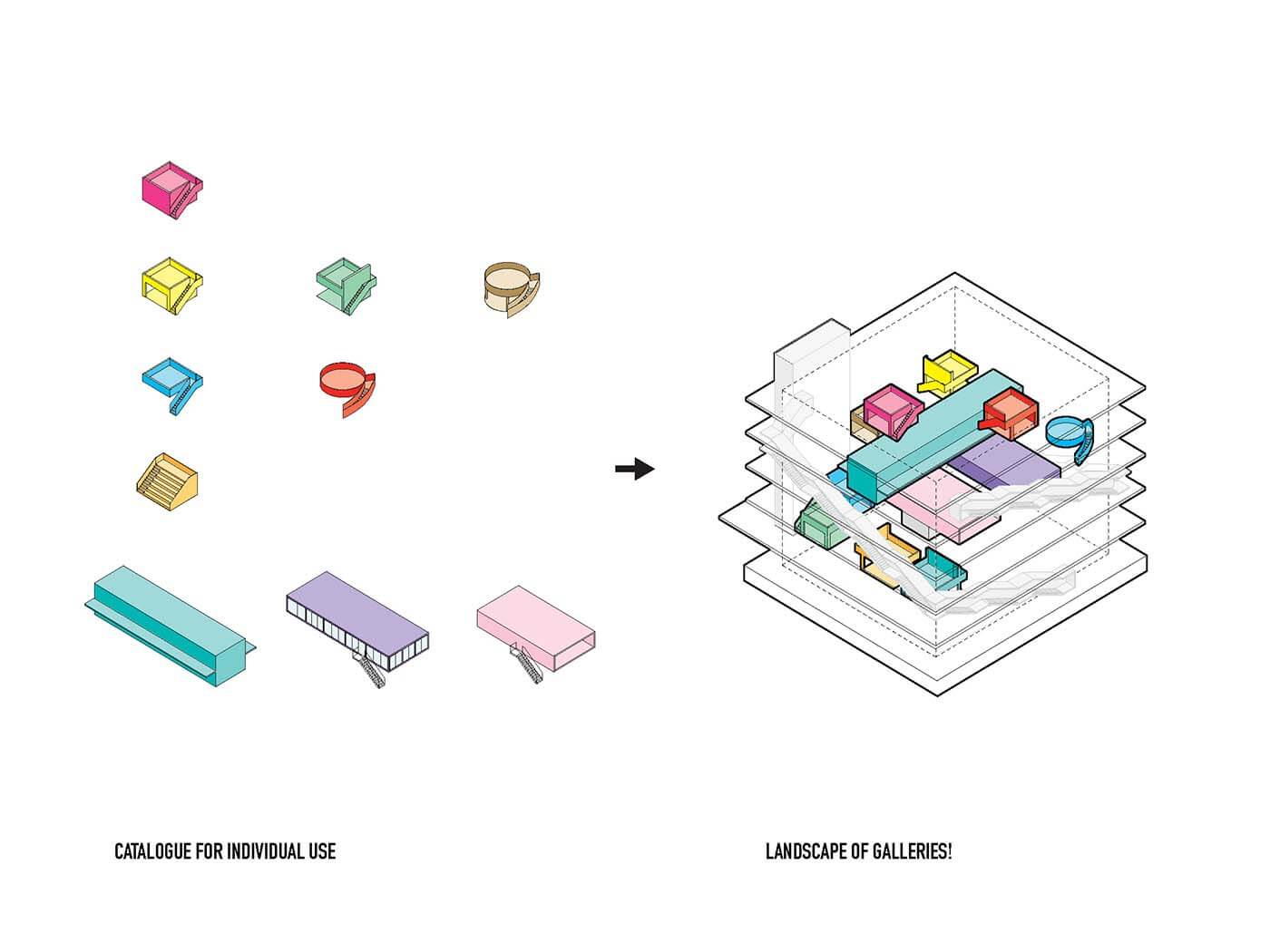
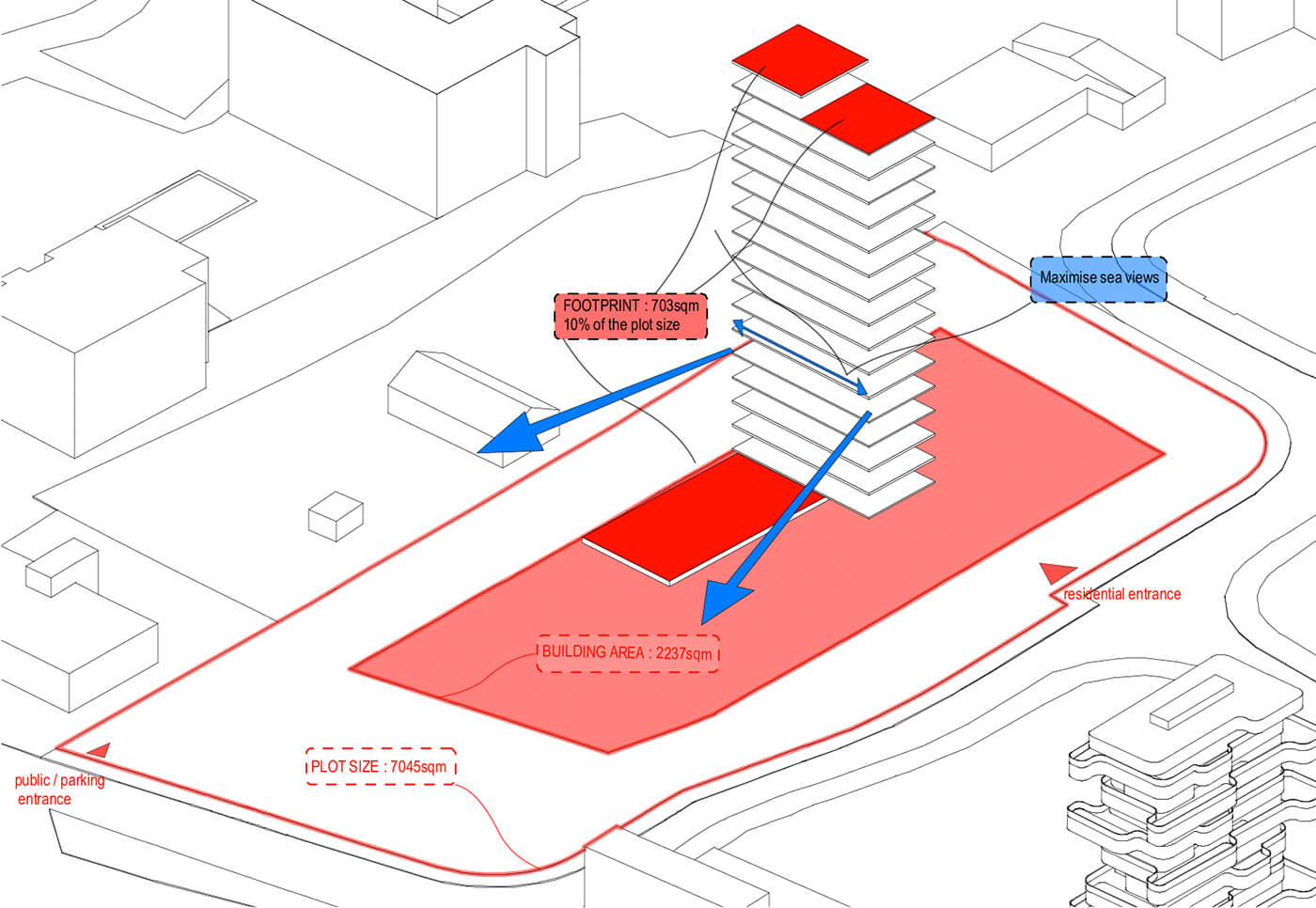
Cove­ring a total of 6,000 square meters (roughly 64,600 square feet), the resi­den­tial tower houses 19 luxury apart­ments, an under­ground fitness zone, art gallery and spa.

Corolla system

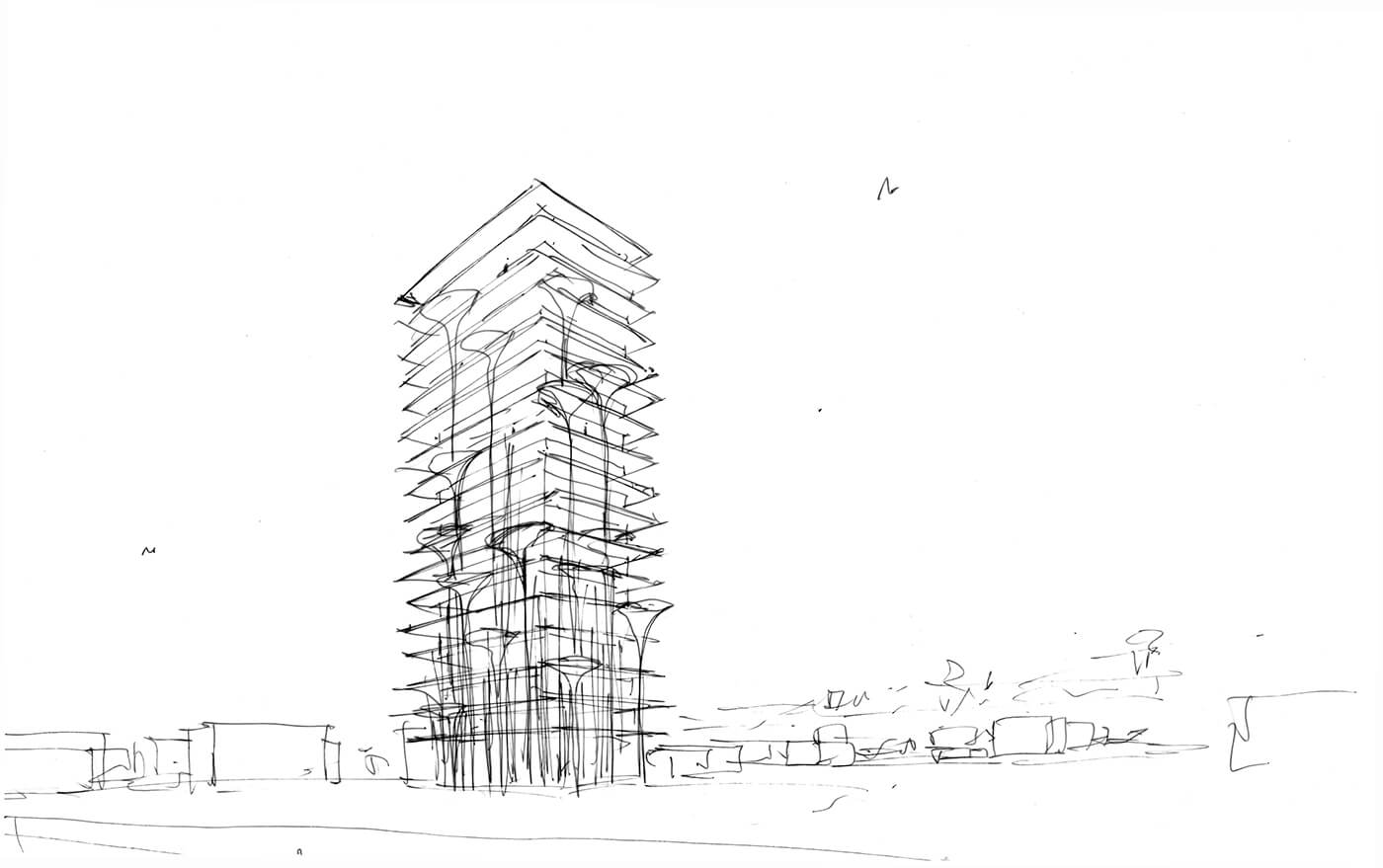
The project rises from nature, echoed by the corolla-shaped balco­nies found in each apart­ment. Home to private swim­ming pools and planted green areas, they are like an inde­pen­dent island, but simul­ta­neously have a direct link to the apart­ment. This creates a luxu­rious living expe­ri­ence, where exte­rior meets inte­rior.

A sliding glass door is the only element sepa­ra­ting living areas from the balco­nies, meaning the feeling of being outside is possible simply by opening the window.

The corolla system is also found on the ground floor green land­scape; round plat­forms and suns­hades engender a distinc­tive archi­tec­tural concept.

Nice contri­bu­tion

Unique expe­ri­ence

On the ground floor a regal entrance opens the doors to a unique living expe­ri­ence. Hamonic+Masson & Asso­ciés seek to enhance quality of living by offe­ring a range of amen­i­ties: an under­ground fitness zone illu­mi­nated by natural sunlight, an art gallery on the ground floor and a premium spa on the first floor, all with inde­pen­dent entrances. Well­being and luxury combine to create an exclu­sive living expe­ri­ence.

The design for the Limmasol Tower offers many special features and a lot of amen­i­ties. It is not very likely that this design will ever be realized, but it is a beau­tiful and imagi­na­tive contri­bu­tion to the never-ending theme of “pools in lofty heights”.

We did this.

Compa­nies involved & Links

Images

Raphaël Petit
Jean-Charles Augier


Archi­tects

Hamonic+Masson & Asso­ciés
93 rue Mont­martre
F – 75002 Paris


Text

Johannes Bühl­be­cker
More Sports Media

Plans

Sket­ches

Axono­me­tries

Visit our blog

Our News­letter

Turó de la Peira

Smells like green spirit

Turó de la Peira sports centre

Anna Noguera + Javier Fernandez

About

In 2015, the Barce­lona City Council held an archi­tec­tural compe­ti­tion for the design of an urban block and a sports faci­lity consis­ting of an indoor swim­ming pool and a sports court: Turó de la Peira.

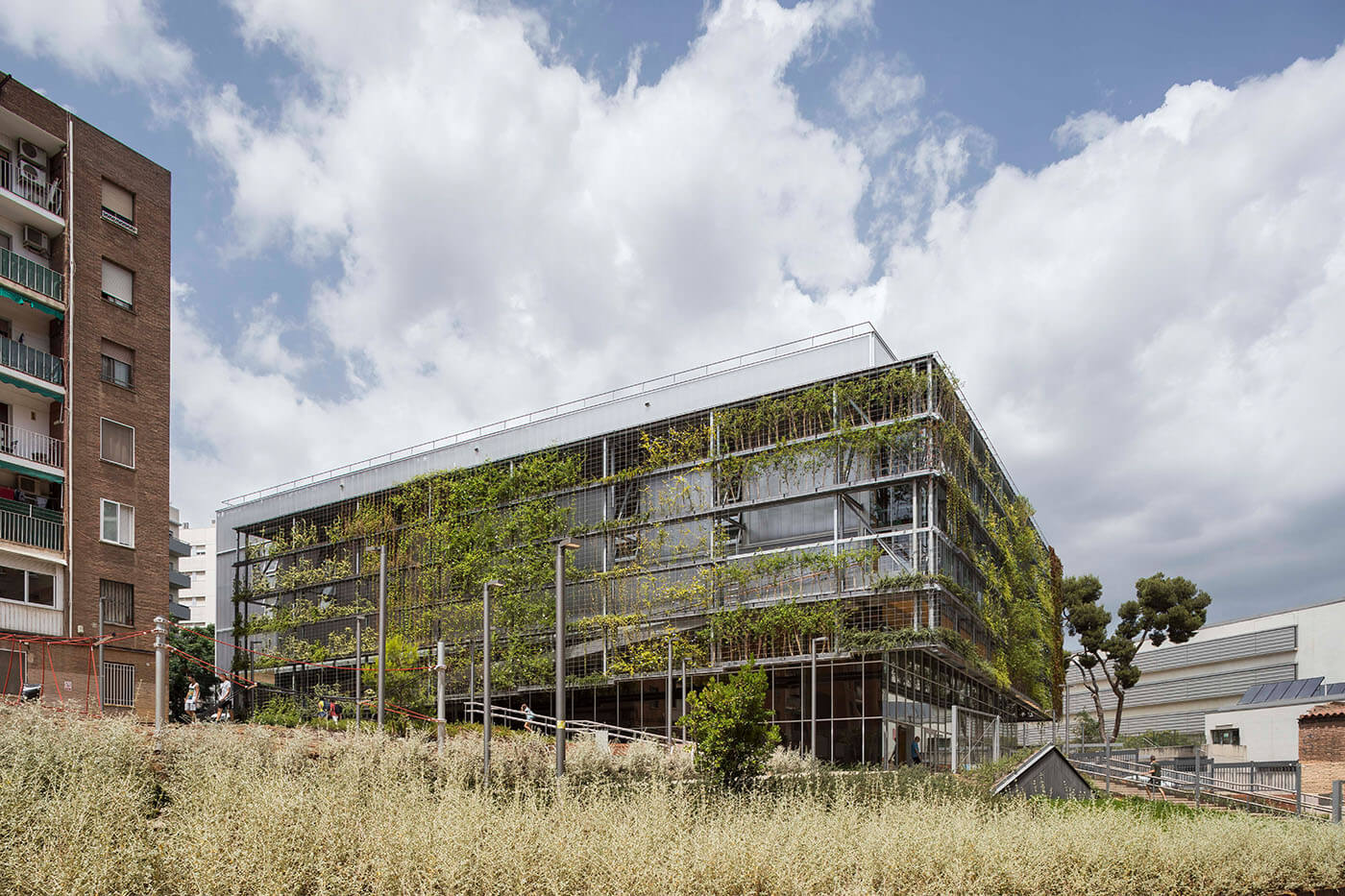
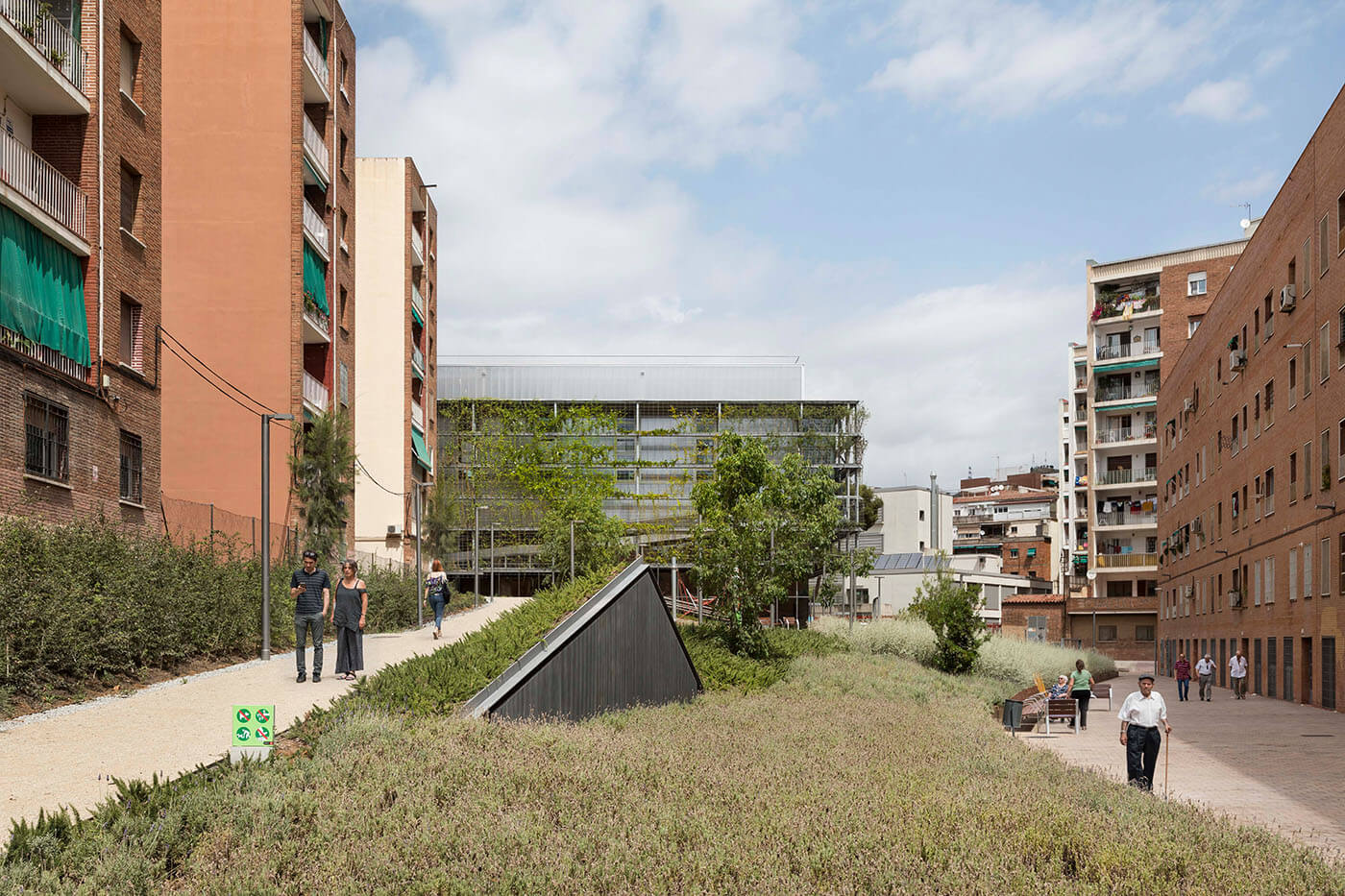
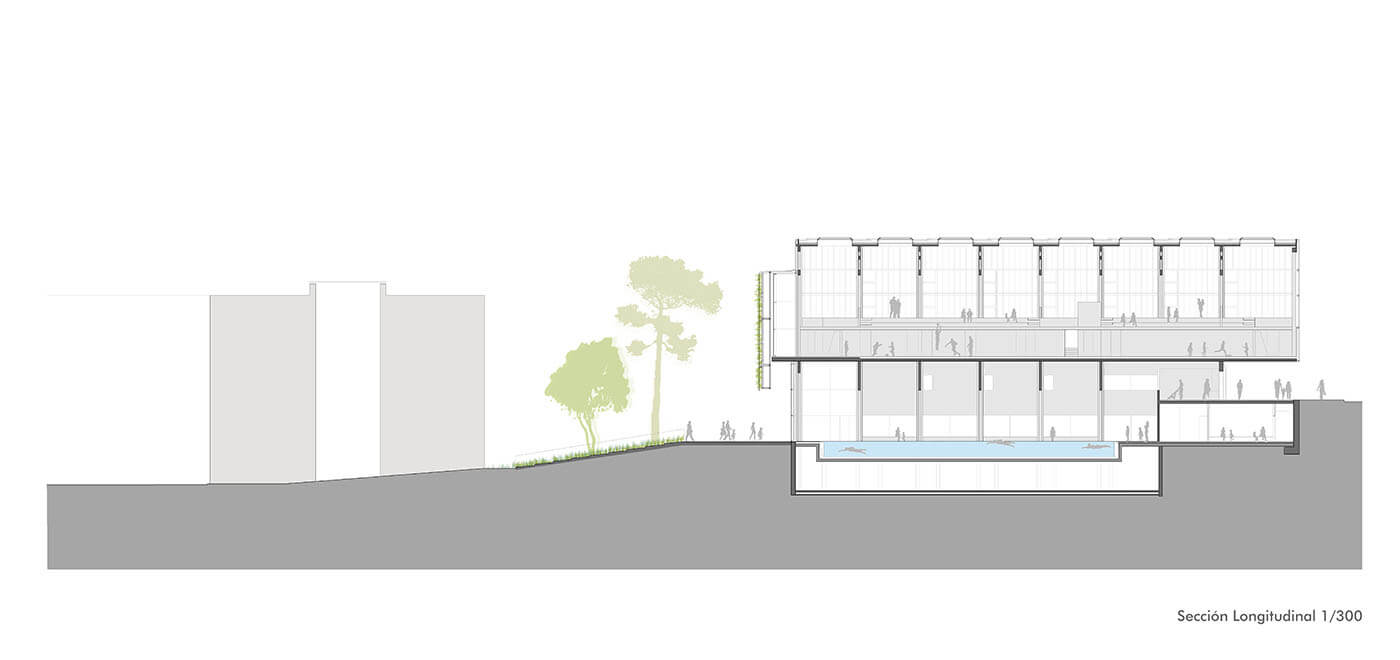
The winning proposal by Anna Noguera and Javier Fernandez frees space from the urban envi­ron­ment prior to the inter­ven­tion and creates a large garden provi­ding envi­ron­mental quality. The buil­ding is half-buried and mini­mizes its impact towards the garden through a green gallery that surrounds it.

Urban rege­nara­tion

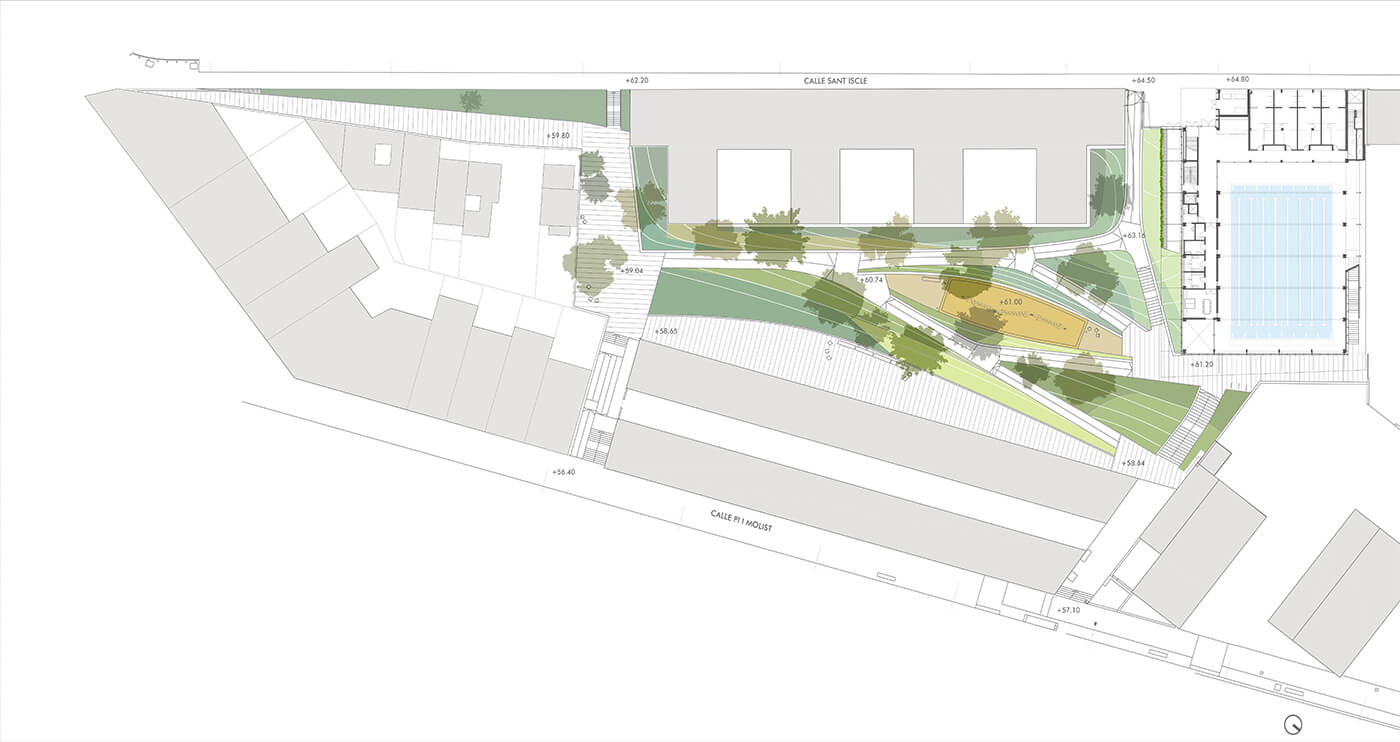
Prior to the inter­ven­tion, the urban envi­ron­ment was an unstruc­tured space consis­ting of a sum of resi­dual spaces; a space occu­pied by a sports court tucked between neigh­boring buil­dings, and a pool of obso­lete faci­li­ties. An urban land­scape of hard pave­ment, concrete walls and total absence of vege­ta­tion.

One of the new Turó de la Peira sports centre’s aims is to reclaim the free space inside the block from the old Calderón de la Barca swim­ming pool to the Turó de la Peira Muni­cipal Sports Track as a green area for local resi­dents. That is why the two old faci­li­ties, the swim­ming pool and the track, have been brought toge­ther under the same roof.

Volu­metric inte­gra­tion

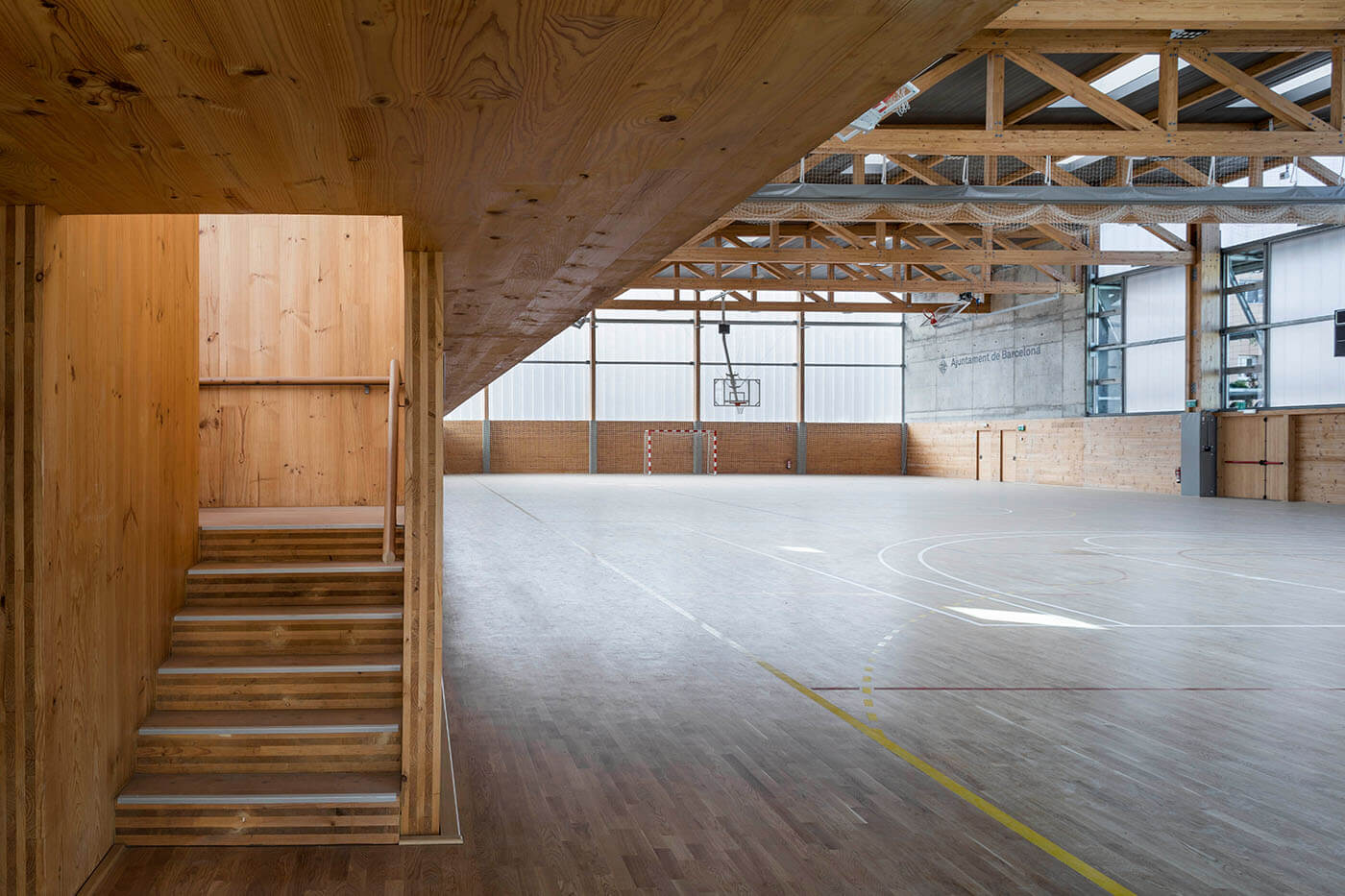
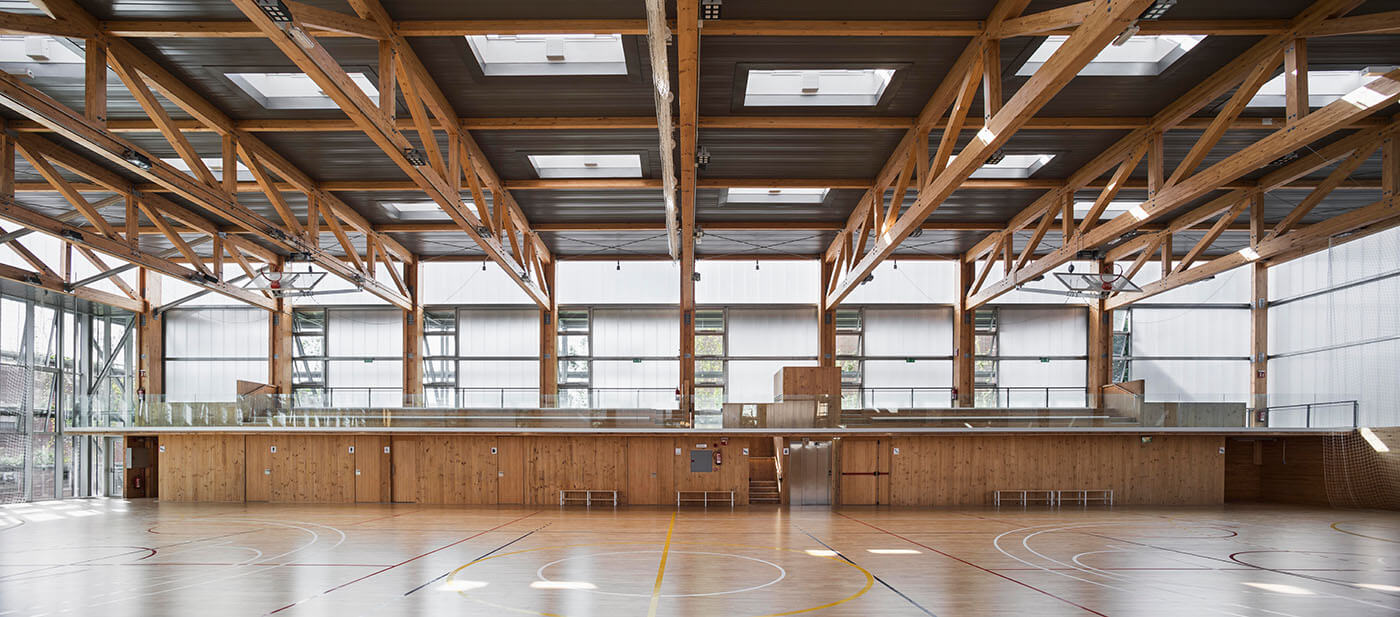
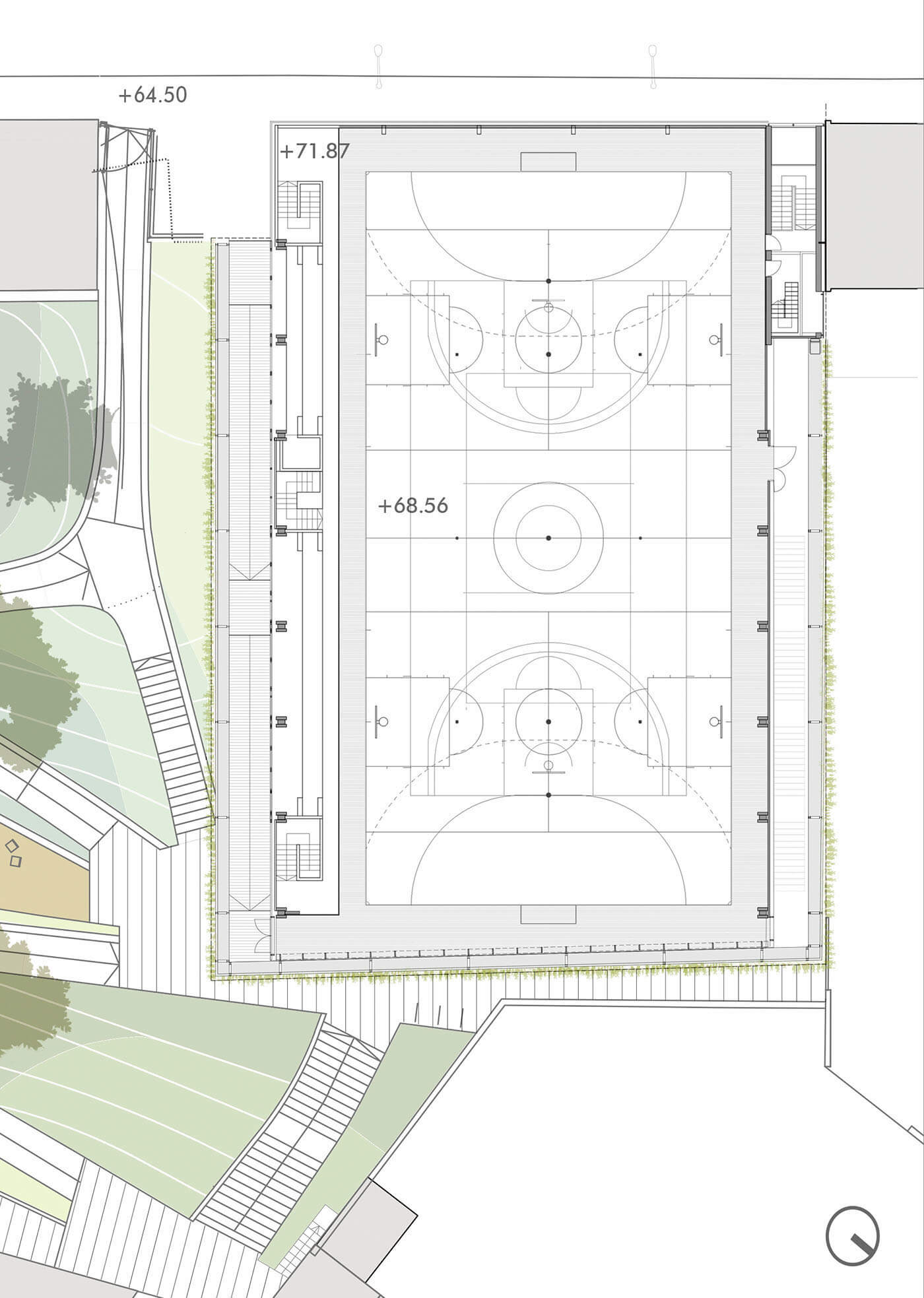
Turó de la Peira is composed by the overlap of two large spaces: the swim­ming pool on the ground floor and sports hall on the upper floor.

The buil­ding is placed half-buried, adap­ting the topo­graphy and bridging the diffe­rence in level between the two streets. The facade to Sant Iscle Street has an urban character, with a corner porch that extends the side­walk and invites us to enter.

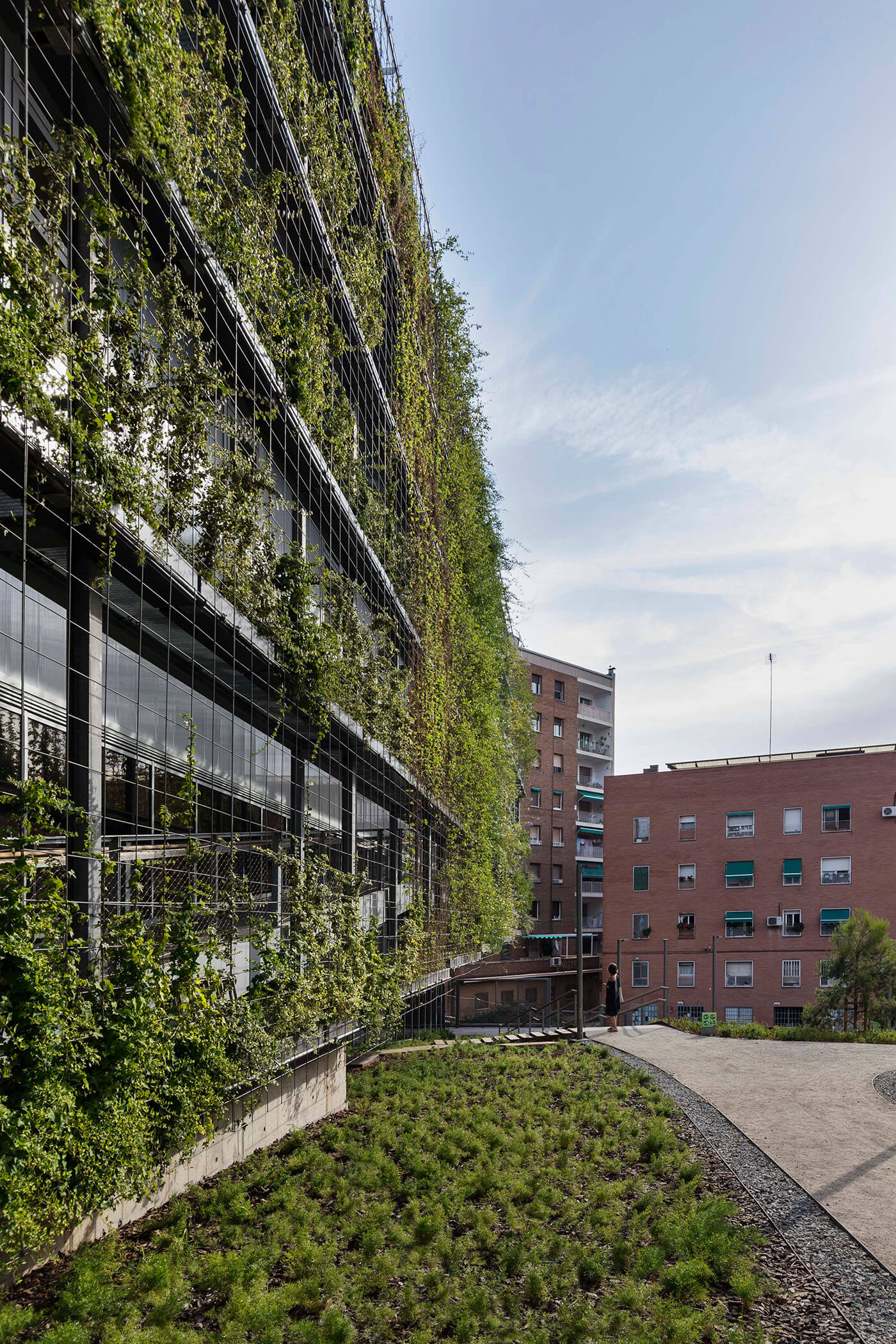
The buil­ding mini­mizes its impact to the garden with a green, surroun­ding gallery. The volume is one more element of the garden, not mimi­cking but dialo­guing with it.

Energy effi­ci­ency

Turó de la Peira was desi­gned under sustaina­bi­lity criteria. And that is because the buil­ding was desi­gned for maximum perfor­mance: solar orien­ta­tion, green facade and thermal insu­la­tion etc. What is more, it gene­rates rene­wable energy through photo­vol­taic panels.

The design of the buil­ding has been carried out with passive archi­tec­ture criteria. Skylights and windows, moni­tored by sensors, ensure proper cross-venti­la­tion.  

The compact and embedded volume mini­mizes the façade surface avoi­ding thermal losses.  The thermal insu­la­tion of the whole enclo­sure has been selec­tively treated accor­ding to solar orien­ta­tion.

Effi­cient systems

The building‘s aero­thermal system allows the reco­very of heat to produce hot water. The lighting has power control systems depen­ding on the natural lighting.

The photo­vol­taic panels occupy the entire roof deck and gene­rate 90% of the energy needed to run Turó de la Peira.

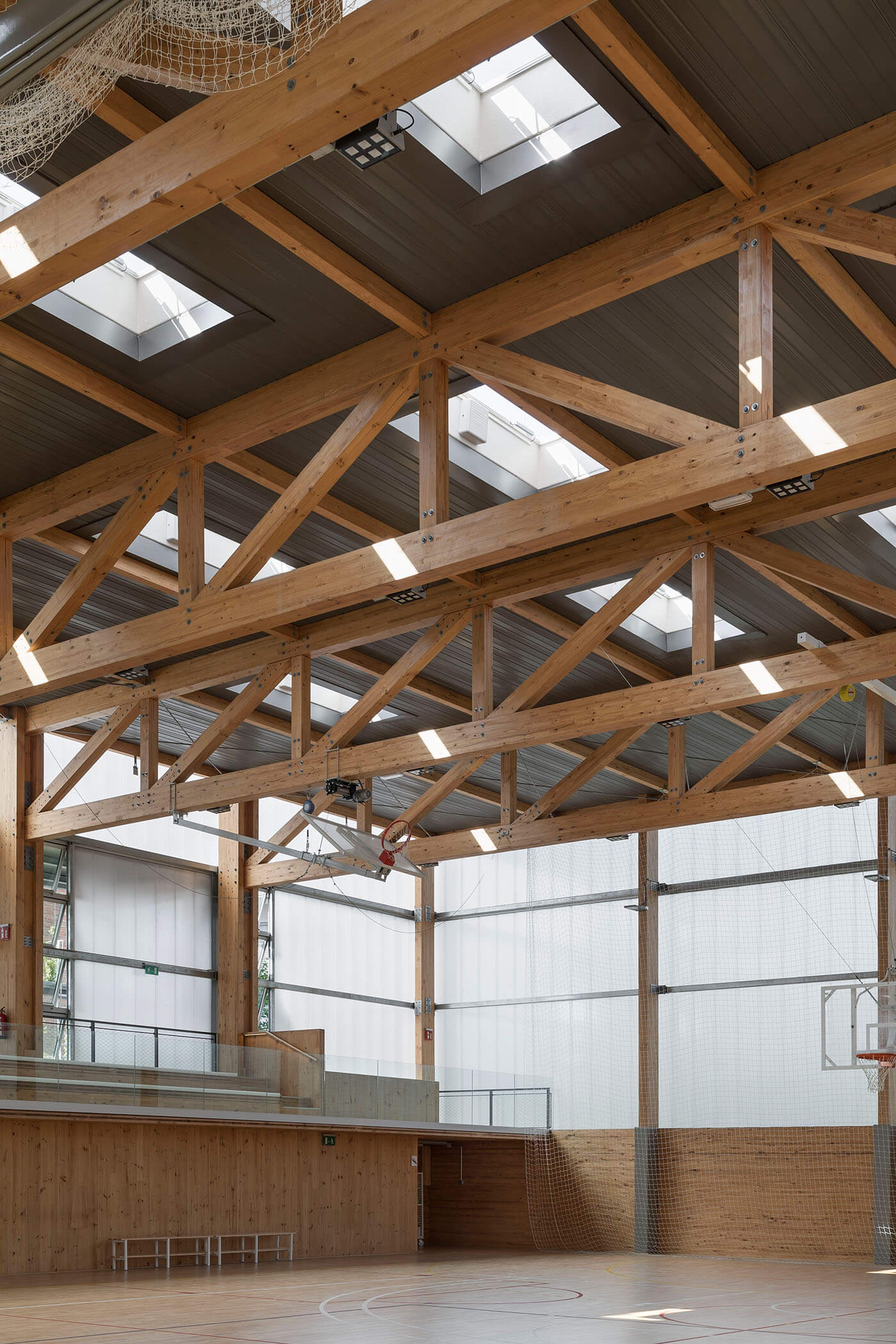
The excel­lent charac­te­ristics of the wood in rela­tion to its life­cycle, was one of the reasons for choo­sing the prefa­bri­cated system in lami­nated wood. It was also assessed due to its good mecha­nical perfor­mance, its light­ness and its short cons­truc­tion time.

Green façade

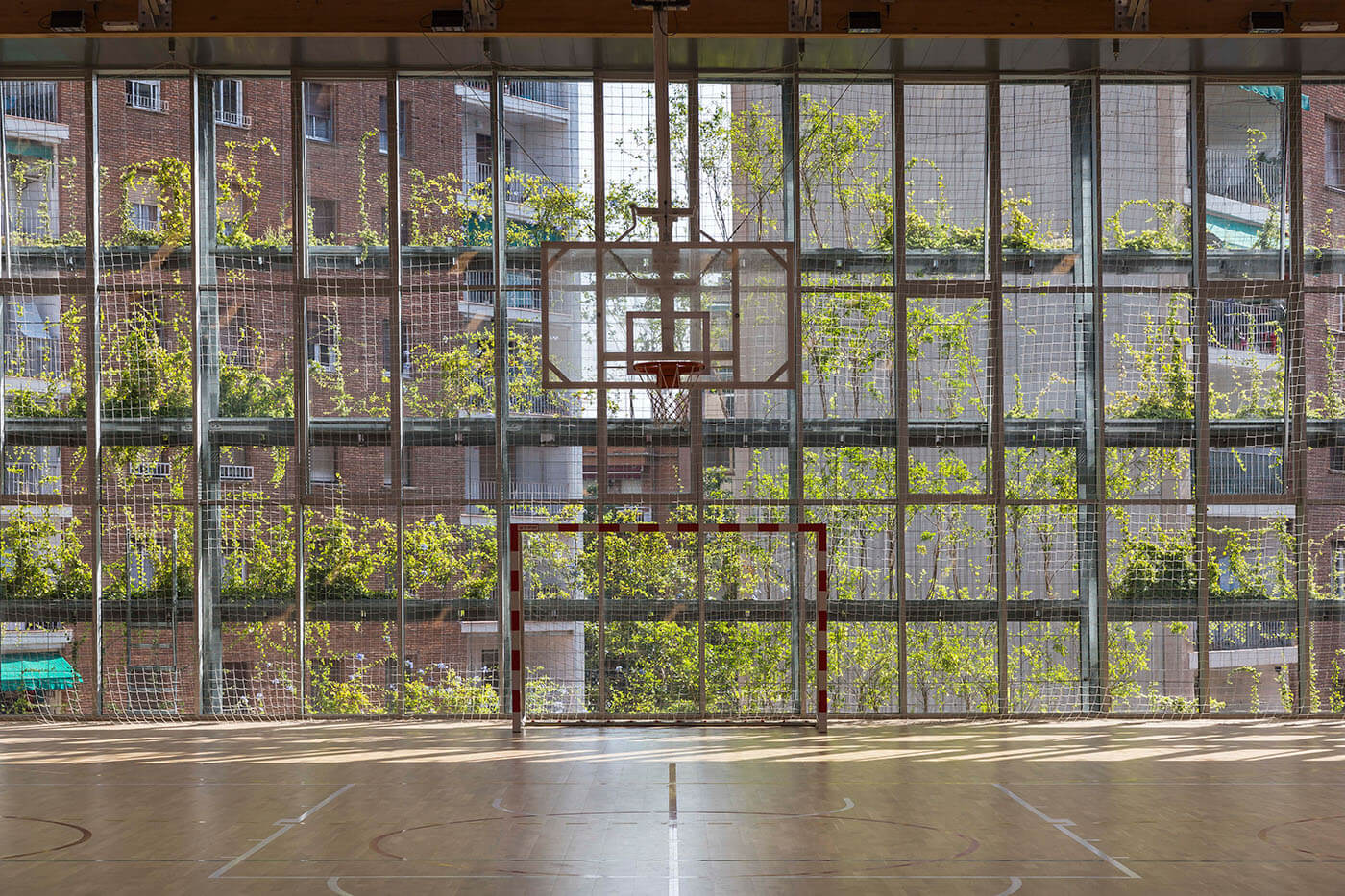
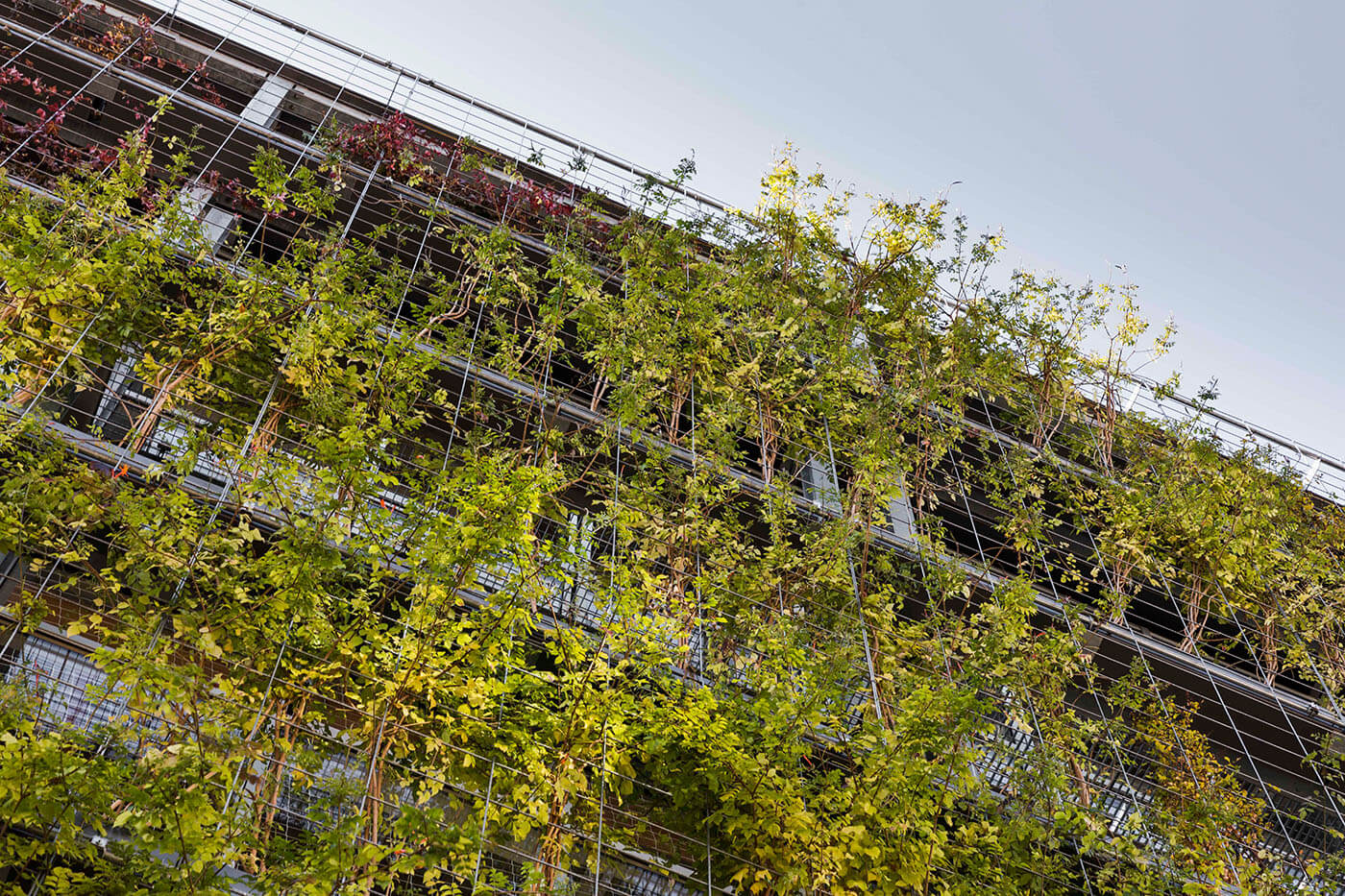
A green gallery surrounds Turó de la Peira protec­ting it from the sun and crea­ting a biocli­matic space. The access ramp to the sports court runs between the facade and the green mesh where the vines grow.

From the court, the entire green facade is totally perceived through the curtain wall, enjoying its flowe­ring changes accor­ding to the time of the year.

Water recy­cling

A large tank located in the base­ment coll­ects rain water from the roof for reuse for the entire irri­ga­tion of the green façade by means of a hydro­ponic system.

In the garden’s site deve­lo­p­ment, drai­ning strips at the bottom of the slopes collect rain­water to return it to the water table.

We did this.

Project data and compa­nies involved

Client

Institut Barce­lona Esports
Ajun­ta­ment de Barce­lona

Photos

Enrich Duch

Archi­tects

Arqui­tec­tura Anna Noguera
Javier Fernandez
Aragó 224, 3er 1a
ES – 08011 Barce­lona

Text

Anna Noguera
Javier Fernandez

Address

Turó de la Peira
Carrer de Sant Iscle, 50, 54
ES – 08031 Barce­lona

Opening

2018

Video

More images

Visit our Blog

At “More Sports. More Archi­tec­ture.” you will find func­tional, spec­ta­cular and simply beau­tiful buil­dings and faci­li­ties for sports and leisure.

Sea Horse

Eye-Catching

Sea Horse in Chong­qing

100 Archi­tects

30 Million

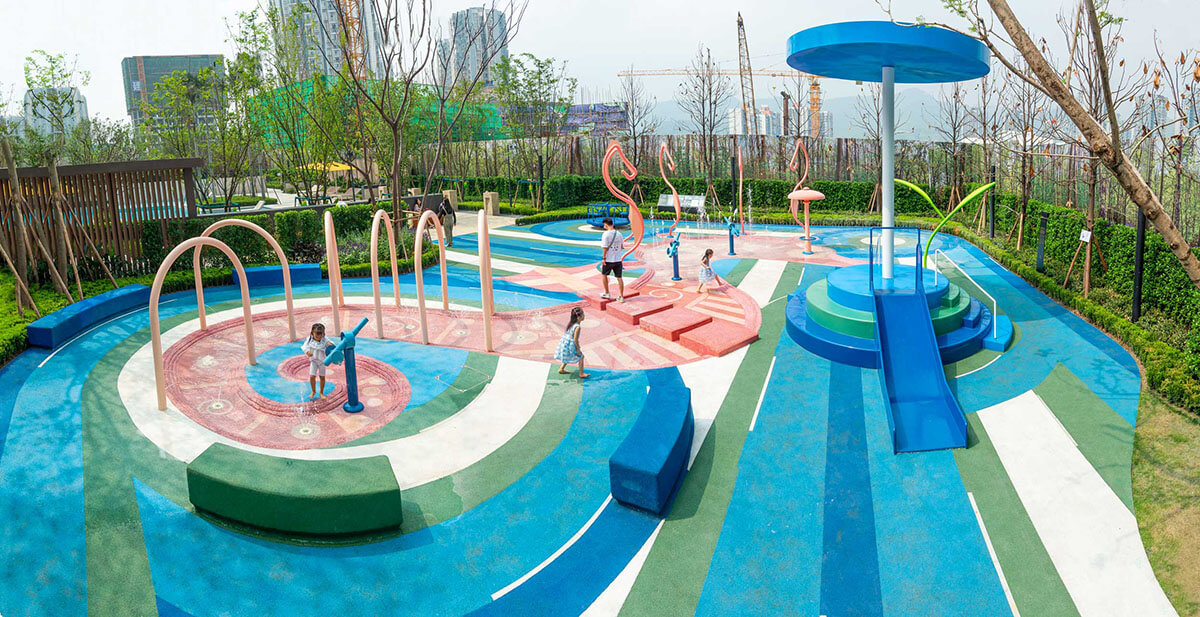
Sea Horse is a water park desi­gned for the public space of a new resi­den­tial compound built in Chong­qing, a mega­city in southwest China (popu­la­tion: 30 Million).

The communal public areas of the compound count with a swim­ming pool area for resi­dents, which is comple­mented with this water play­scape for kids, with the aim of foste­ring enter­tain­ment & social inter­ac­tions among resi­dent kids.

Sea Horse

Follo­wing with the themed series of Horse play­grounds from our client, they commis­sioned us this new play­scape with the parti­cular request that this one had to include water features in it. When rela­ting the Horse theme park and the water features, it was obvious for us that the twist of this project had to be a Sea Horse approach, the Horse of the water realm.

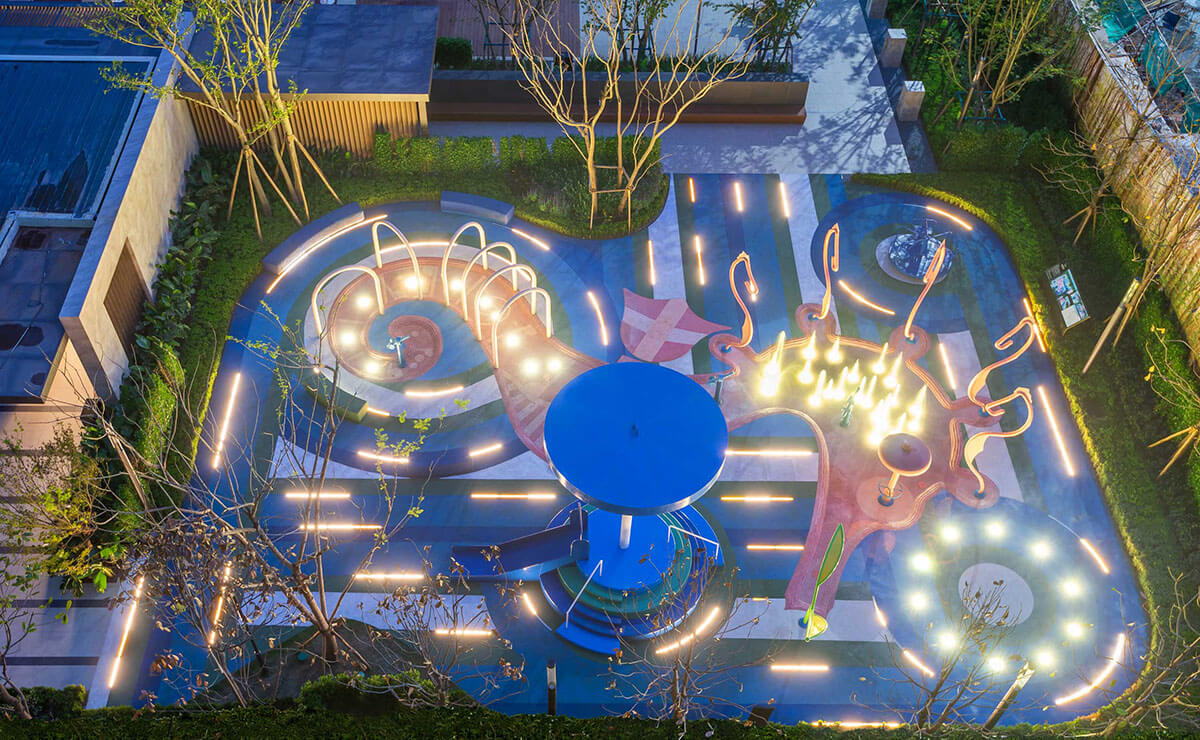
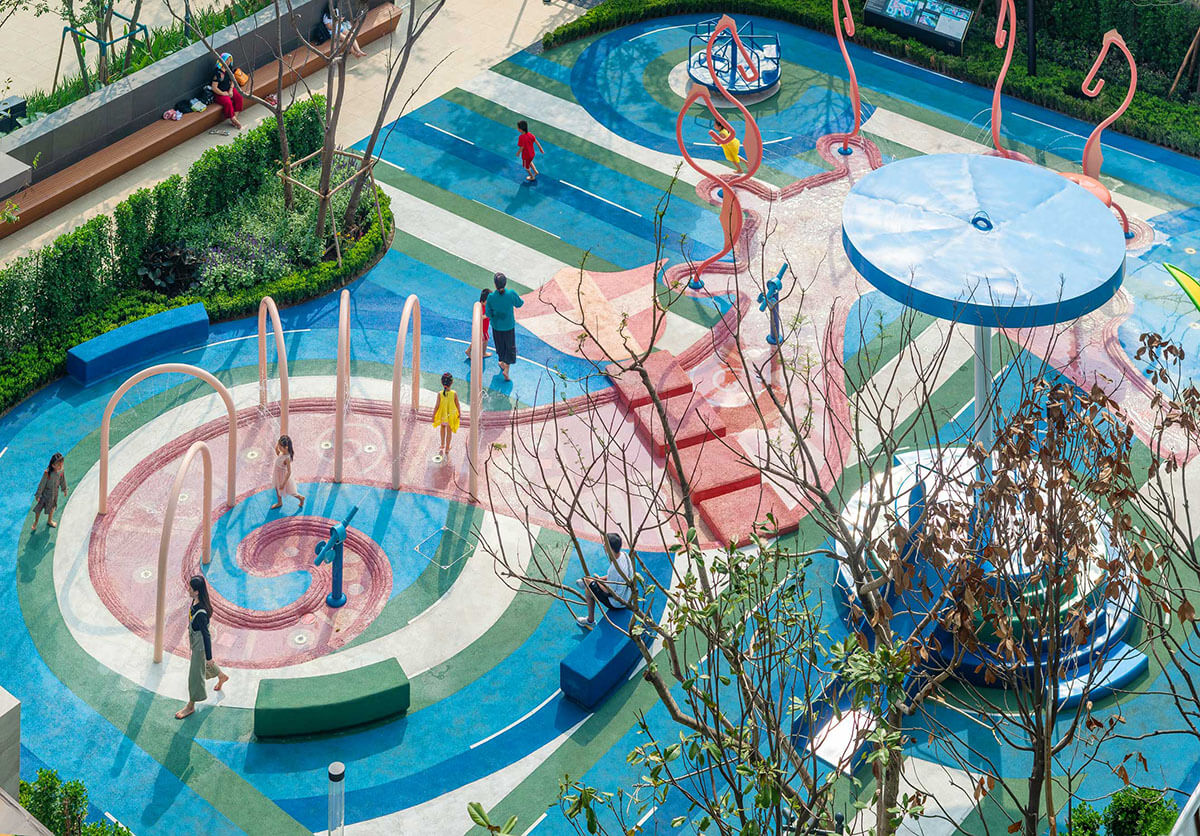
Ther­e­fore, the water park features a main sunken wet area in the shape of a Sea Horse, which can be unders­tood not only from a pede­strian point of view within the play­scape, but also from all the surroun­ding resi­den­tial towers.

Features

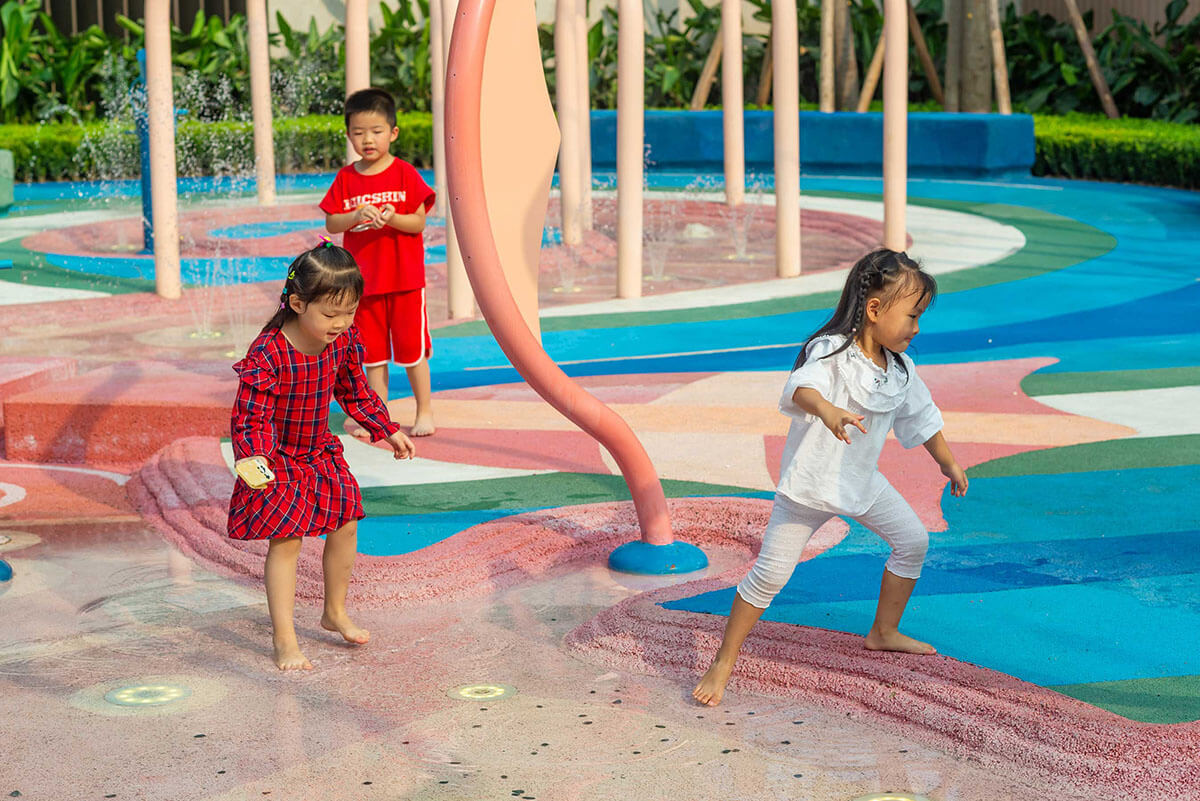
As main wet area, the Sea Horse sunken plat­form hosts the big majo­rity of water features, custo­mized in the same color palette, and sprink­ling water towards the inte­rior of that sunken wet plat­form.

The surroun­ding areas of the Sea Horse are treated in a contras­ting striped color palette, defi­ning a dry play area which contains dry playful features in order to make the play­scape usable & playable also during winter months. Those dry playful features are desi­gned in a circular shape, mimi­cking water ripples of acti­vity.

Bird’s eye view

The resul­ting image is a colorful and eye-catching play­scape, which includes playing features for kids as well as shaded seating features for adults, visible from all the resi­den­tial towers surroun­ding the central public space.

We did this.

Project data and compa­nies involved

Photos

Amey Kandal­gaonkar

Text

100 Archi­tects

Archi­tects

100 Archi­tects
Shanghai China
Street Archi­tec­ture & Urban inter­ven­tions 

Staff

Marcial Jesús, Javier González, Lara Broglio, Mónica Páez, Keith Gong

Address

Ping­jia­qiao Road 36
Chong­qing China

Opening

2019

Video

More images

Visit our Blog

At “More Sports. More Archi­tec­ture.” you will find func­tional, spec­ta­cular and simply beau­tiful buil­dings and faci­li­ties for sports and leisure.

Prei­ke­stolen

Do not look down

Infi­nity Pool at Prei­ke­stolen

Hayri Atak

Tom Cruise at 604 m alti­tude

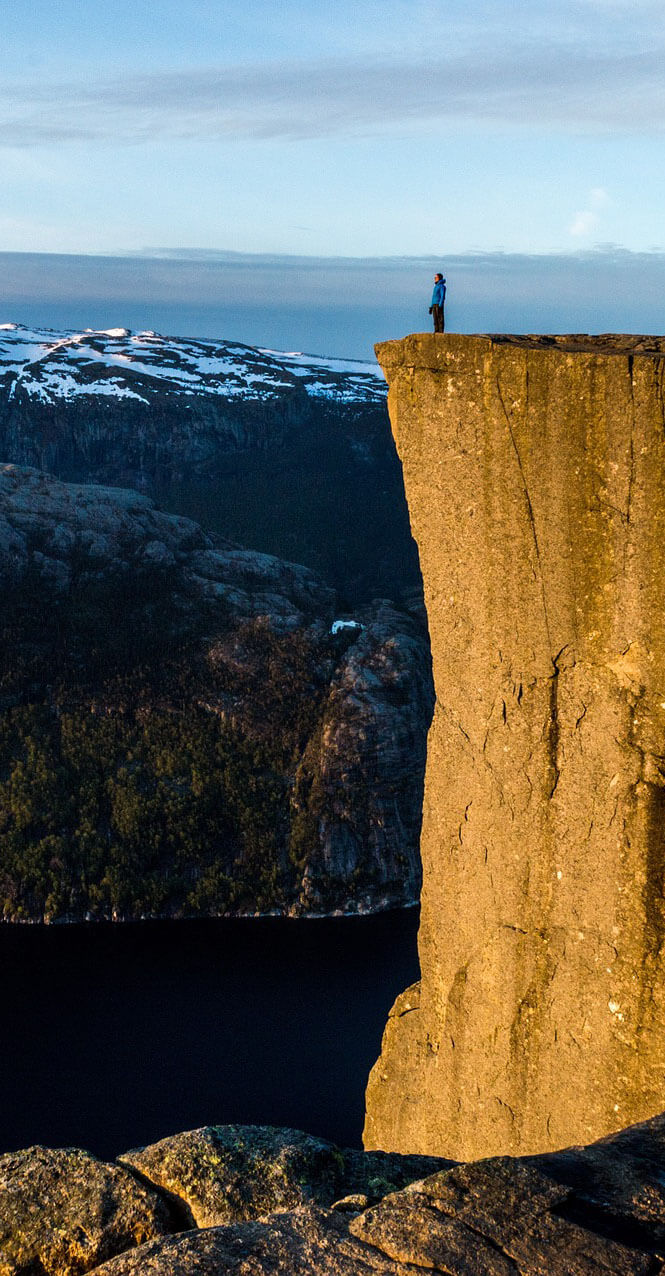
Prei­ke­stolen (“The Pulpit Rock”) is a tourist attrac­tion in Norway, a steep cliff which rises 604 metres above the Lysefjorden. Atop the cliff, there is an almost flat top of appro­xi­m­ately 25 by 25 metres. Prei­ke­stolen is located near the Western part of the fjord, and on its North side. The final fight scene in “Mission: Impos­sible – Fallout“ features Tom Cruise clim­bing the face of the cliff at Prei­ke­stolen.

Nine suites, one pool

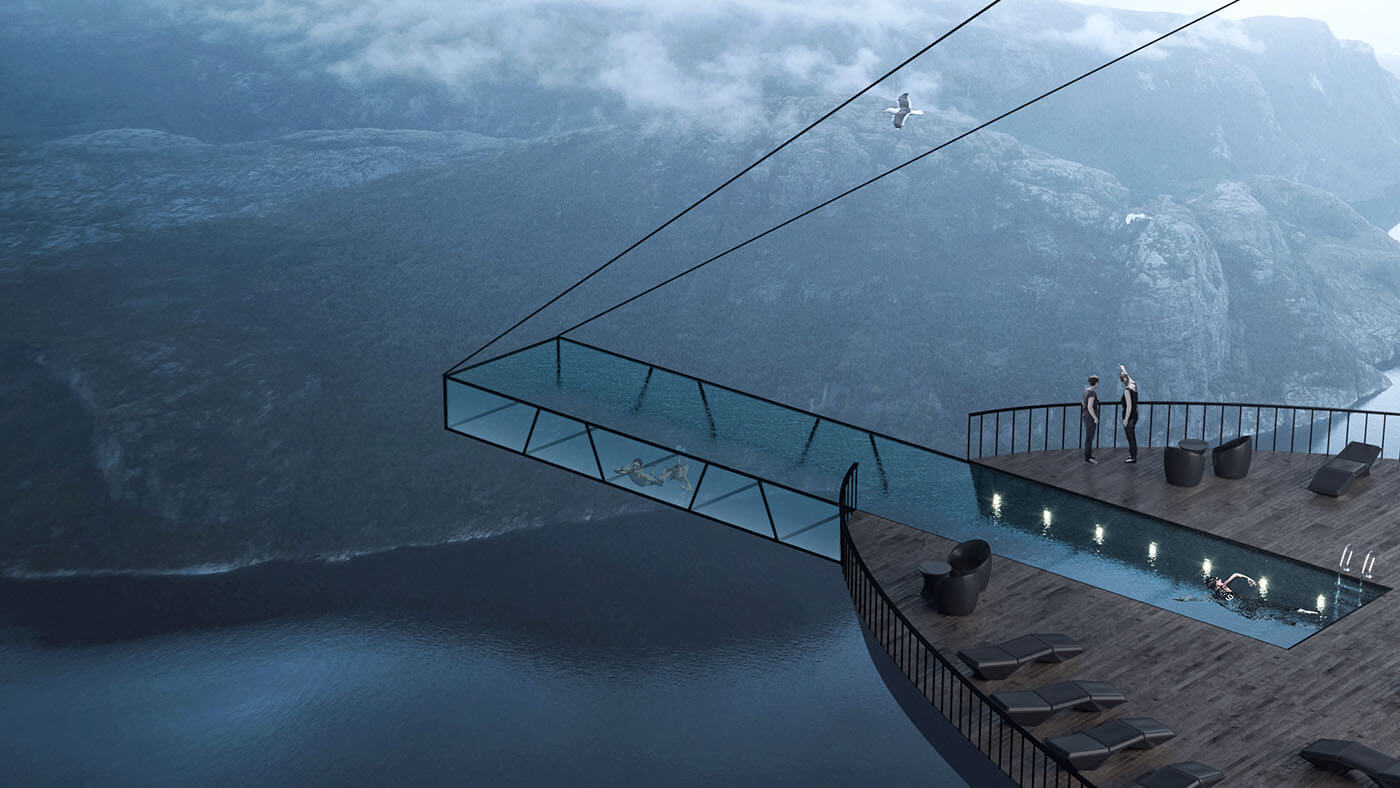
Inspired by this scenic over­look, Hayri Atak Archi­tec­tural Design Studio has desi­gned a spec­ta­cular concept for an infi­nity pool and a boutique hotel. The proposal features the accom­mo­da­tions nestled onto a side of Prei­ke­stolen over the Lysefjorden fjords.

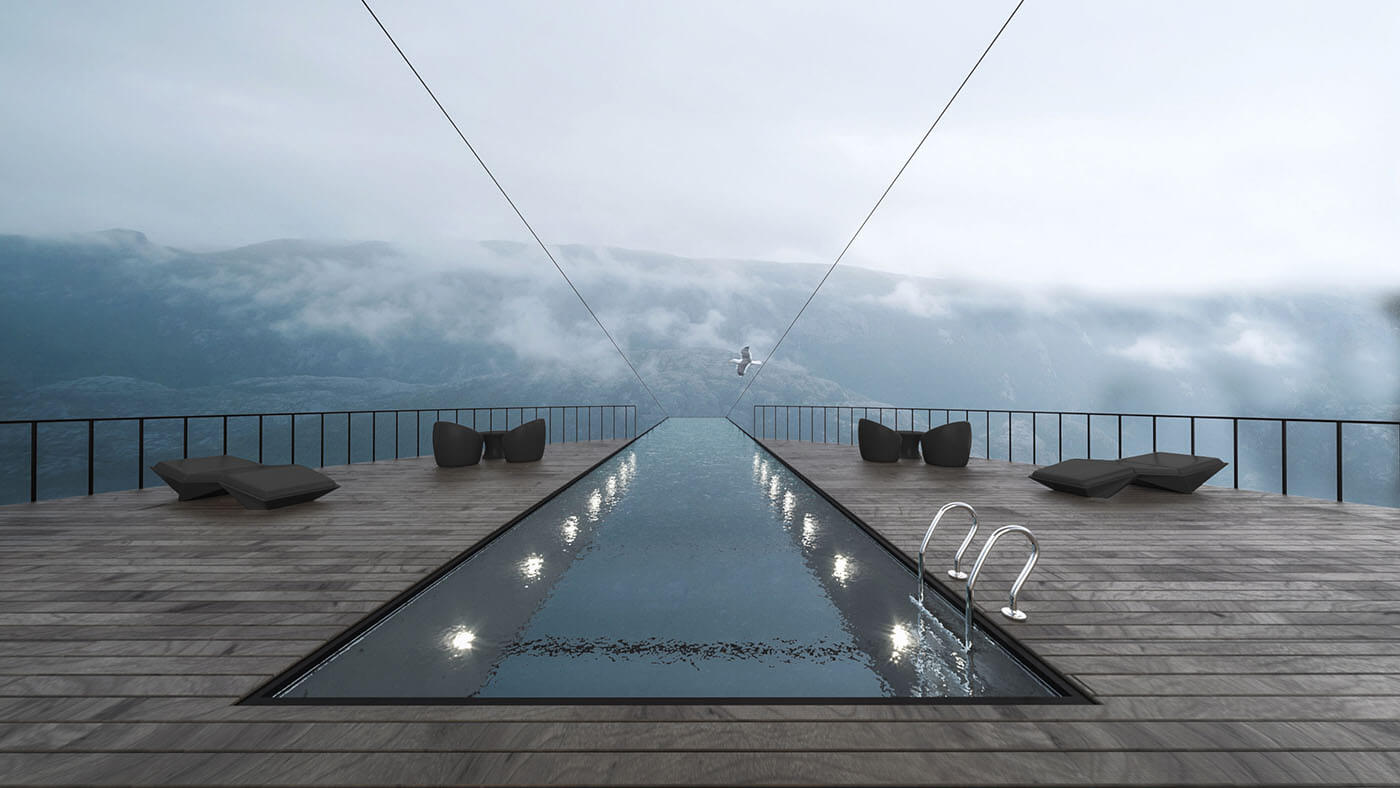
The canti­le­vered glass-bottom pool allows coura­geous swim­mers to enjoy the water while looking down into the fjord. The nine-suite hotel would be entered from the top of the cliff, with a common lounge area and guest rooms nestled into the face of the rock. The upper entryway would double as a scenic over­look, while real adven­ture seekers would want to venture to the pool deck.

Emotions

The entire concept was inspired by a photo­graph sent to studio founder Hayri Atak. Thrilled by the photo a friend took during her vaca­tion to Norway, Atak sought to capture the adre­na­line pumping scene into his archi­tec­ture. “Even though I wasn’t there, I expe­ri­enced the adre­na­line of being on the edge,” Atak said. “Then I dreamed of living on and beyond the edge. Simply, I just wanted to carry this expe­ri­ence beyond the edge and the idea of having this expe­ri­ence inspired me.”

Prei­ke­stolen attracts more than 300,000 visi­tors every year. You usually have to wait a long time to take a picture of the soli­tary crea­ture on the moun­tain plateau. For this reason alone it is hard to imagine that a hotel will ever be built here. It is, however, a lesson about the importance of emotions for archi­tec­ture. And it is a wonderful inspi­ra­tion and moti­va­tion for coura­geous ideas and designs.

We did this.

Archi­tect and address

Archi­tect

Hayri Atak
Ataşehir – İstanbul
Türkei

Address

Prei­ke­stolen
4129 Songe­sand

Norwegen

Videos

Visit our Blog

At “More Sports. More Archi­tec­ture.” you will find func­tional, spec­ta­cular and simply beau­tiful buil­dings and faci­li­ties for sports and leisure.

vital:werk

A lesson in harmony

The vital:werk in Waldshut-Tiengen

DUFFNER ARCHITEKTEN BDA

About

In autumn 2018, the comple­tely reno­vated and signi­fi­cantly expanded indoor pool with sauna opened in Waldshut-Tiengen, a district town in Baden-Würt­tem­berg with just under 25,000 inha­bi­tants. It is now called vital:werk.

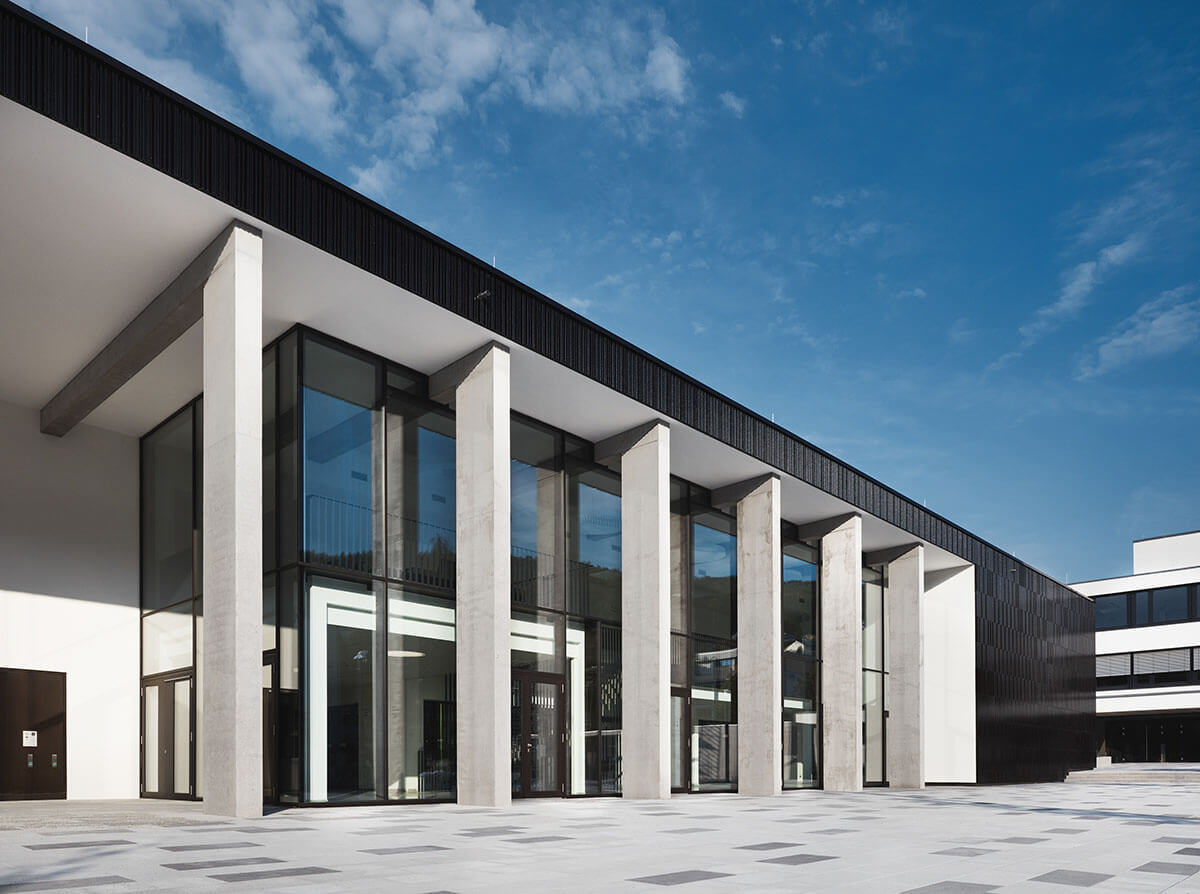
The buil­ding complex from the 1970s, which also includes the town hall, no longer met today’s requi­re­ments for acces­si­bi­lity, fire protec­tion and buil­ding services. In addi­tion, the faci­li­ties offered should be extended to be in keeping with the times.

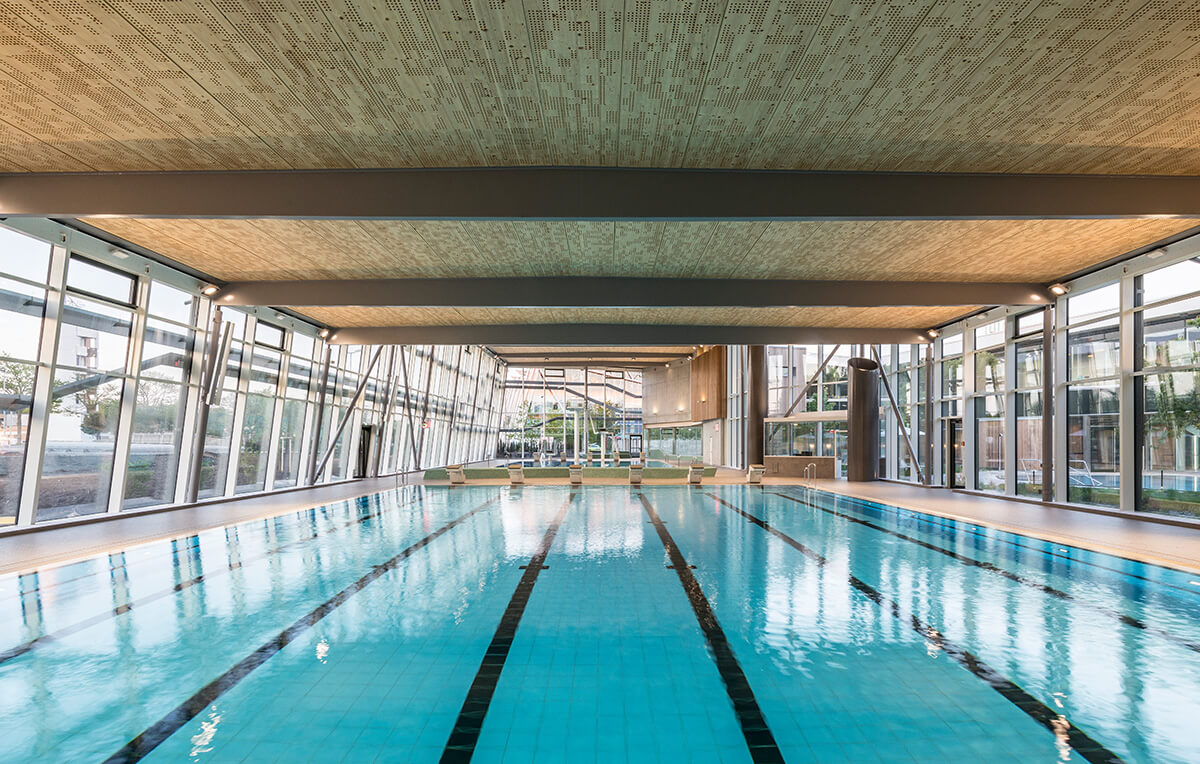
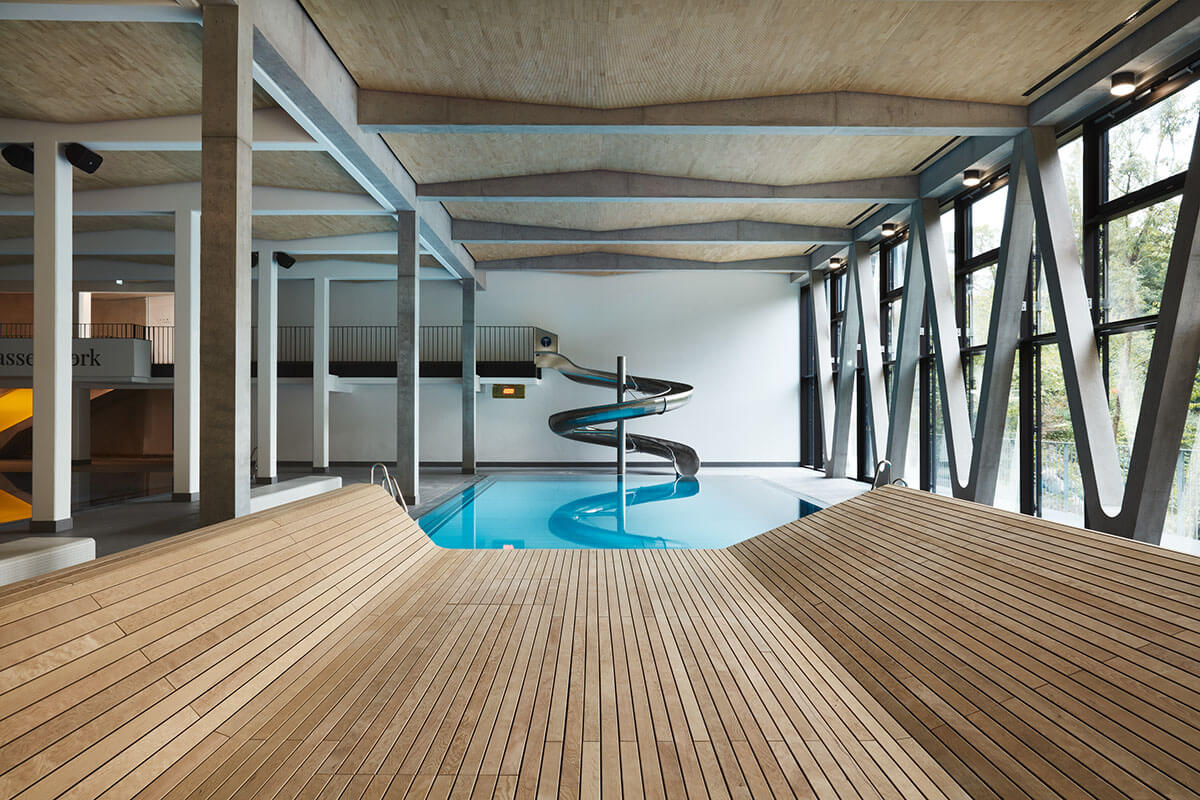
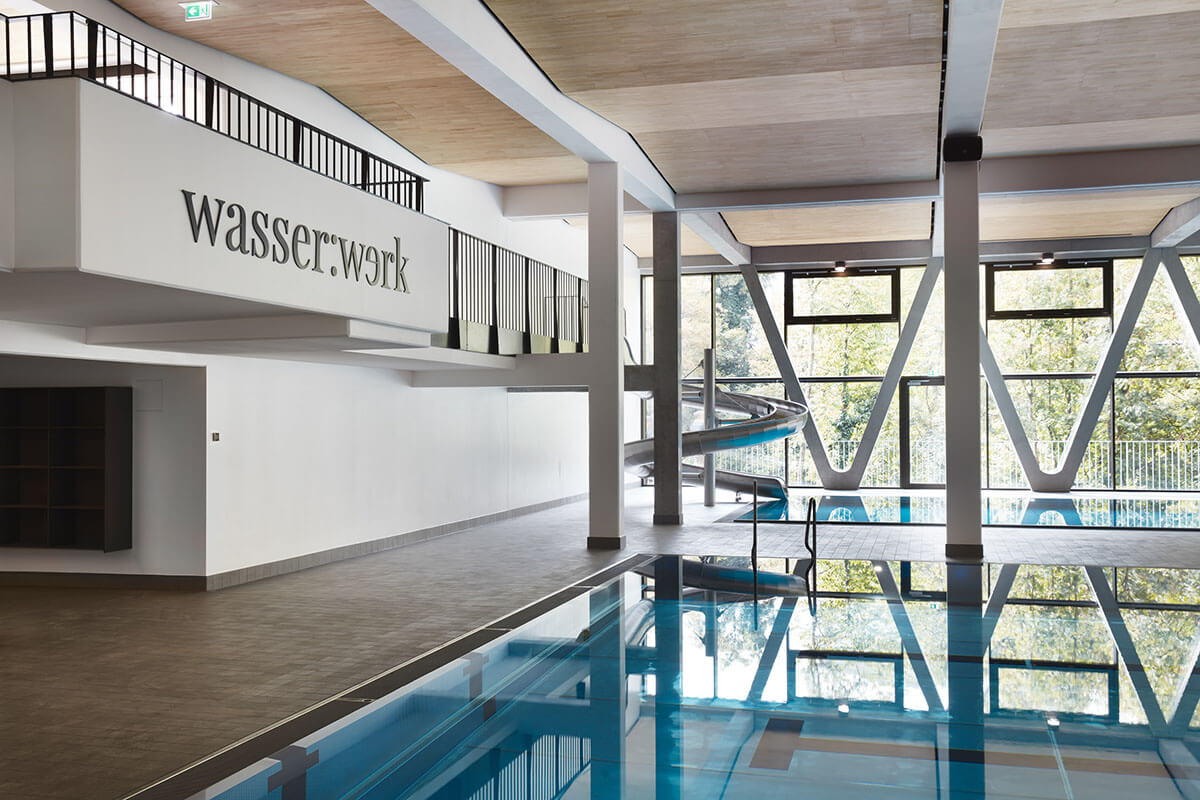
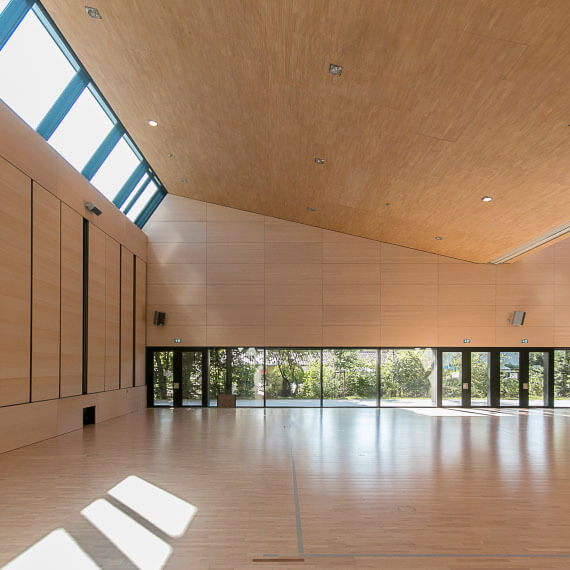
Room acou­sti­cally effec­tive real wood surfaces by Ligno­trend support the lively and harmo­nious impres­sion of the pool.

All in one

The vital:werk was to be func­tion­ally combined with rooms for theatre, concerts and sports, equipped for the future, and be attrac­tively and econo­mic­ally desi­gned.

Until the buil­ding appli­ca­tion, a consor­tium of four archi­tects worked toge­ther on the plan­ning concept for the entire complex, after which the indi­vi­dual areas were sepa­rated.

A new pres­ti­gious foyer buil­ding was erected in front of the exis­ting buil­ding. In addi­tion, a new sauna complex was created, which is situated under the ground with two atriums.

The vital:werk

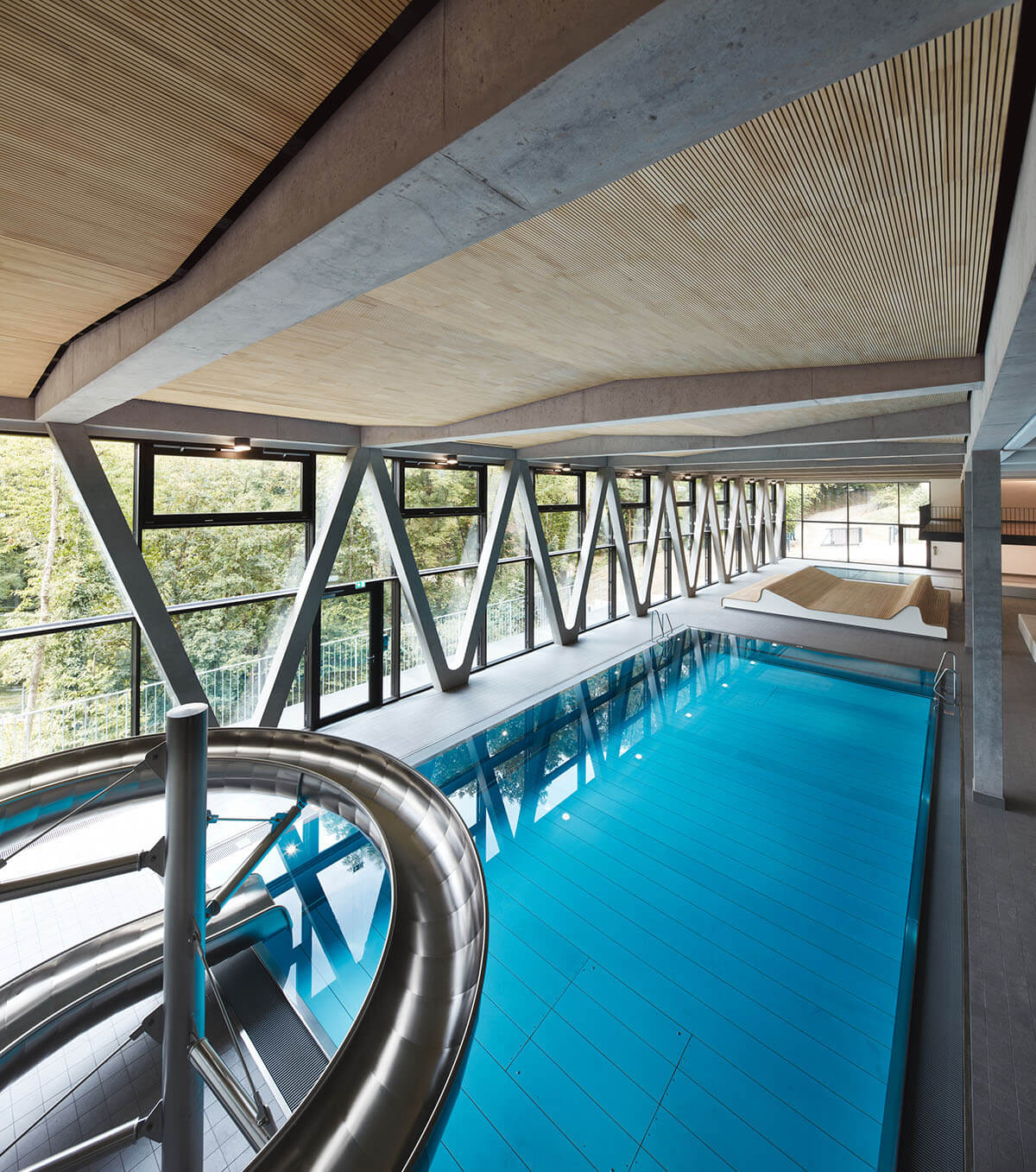
The moder­ni­sa­tion and expan­sion of the indoor swim­ming pool was planned by the archi­tect Michael Duffner, who is based in Waldshut-Tiengen. The vital:werk has been extended by around 500 m². A compe­ti­tion pool was already in place, the flexible lear­ning pool with cubic capa­city floor and slide as well as an addi­tional toddler bathing area with play attrac­tions are new.

Equipped with now three pools, a play area and a comfor­table heated lounging area, the vital:werk is now ideal for fami­lies, as well as swim­ming clubs and school sports.

Zest and atmo­sphere

Wood played a crucial role in the inte­rior design of the baths. The plan­ners wanted to create a quiet and at the same time lively and harmo­nious atmo­sphere, and they have succeeded very well.

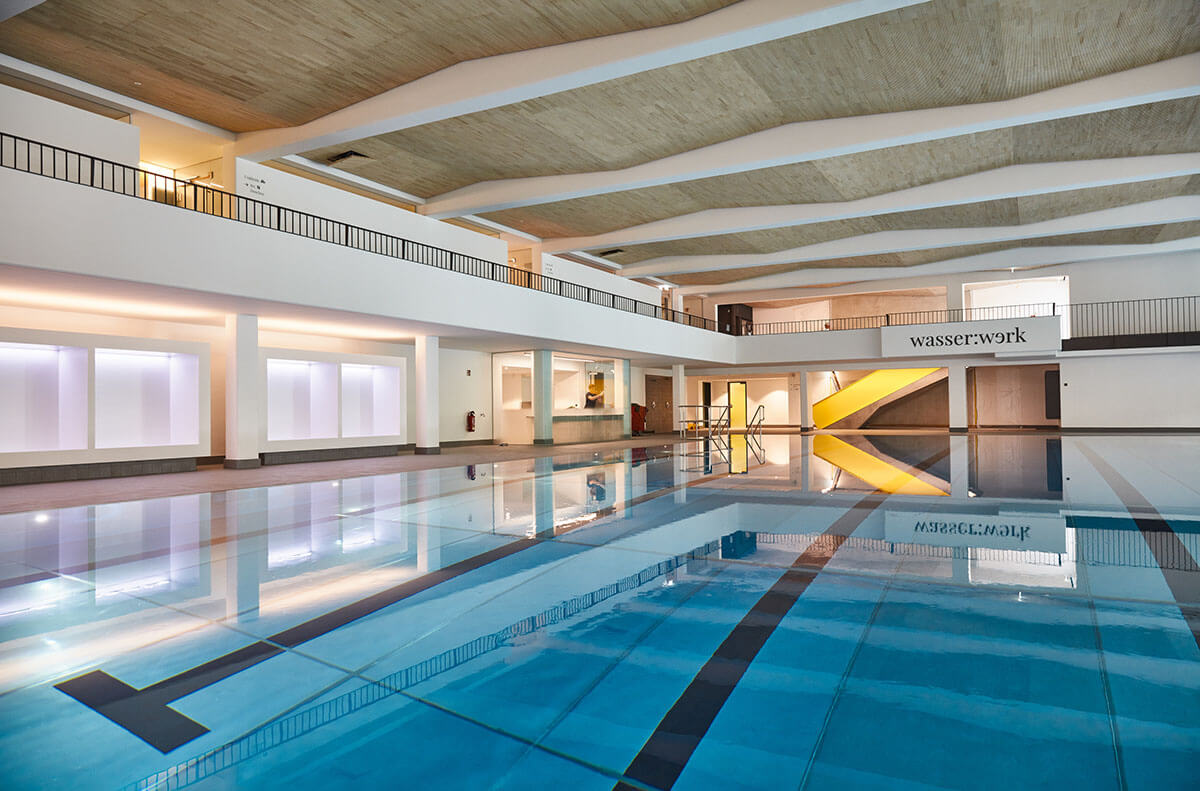
The finely profiled real wood surfaces made of light, knot­less, processed silver fir wood make a decisive contri­bu­tion to this posi­tive impres­sion. They are arranged undu­la­ting between the concrete beams of the ceiling on a wooden struc­ture. They are called Ligno Acou­stic light and were manu­fac­tured by cross lami­nated timber specia­list Ligno­trend.

In order to enhance the charisma of the wood surface, the archi­tects wanted to inte­grate the neces­sary ceiling fixtures as discreetly as possible. The openings for the venti­la­tion system, for example, are desi­gned as narrow joints between panels and joists. The lighting was comple­tely decou­pled from the wooden elements.

Of course, all built-in elements meet the buil­ding physics requi­re­ments. There is no reason why wood should not be used for indoor swim­ming pools. The mate­rial will always remain dry. To meet the requi­re­ments for a public assembly room, a special version of the acou­stic panels fulfils the criterion of a “flame-retar­dancy of the surface”.

Anything else?

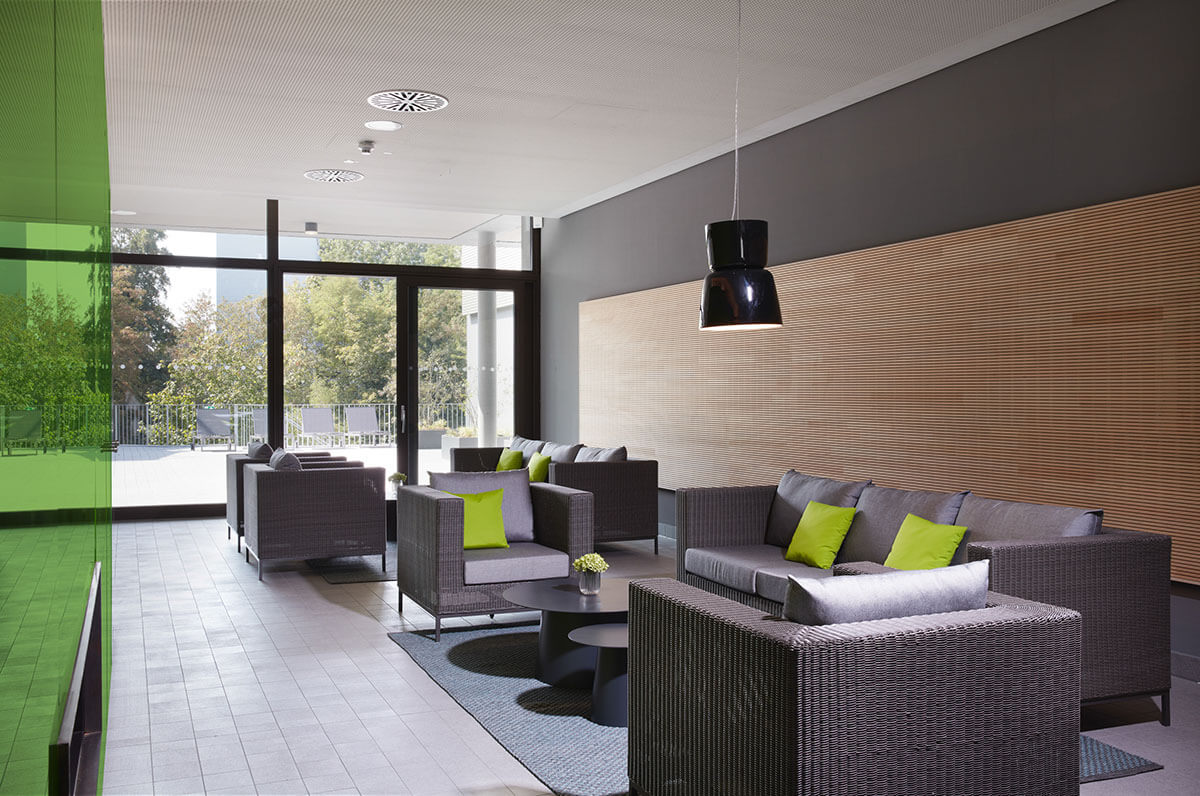
Even in a sepa­rate room for events with plenty of glass, which serves school classes and swim­ming clubs as a teaching room, Ligno Acou­stic light panels are installed on the wall and improve the acou­stic atmo­spheres. This also applies to the pool atten­dant’s room. 

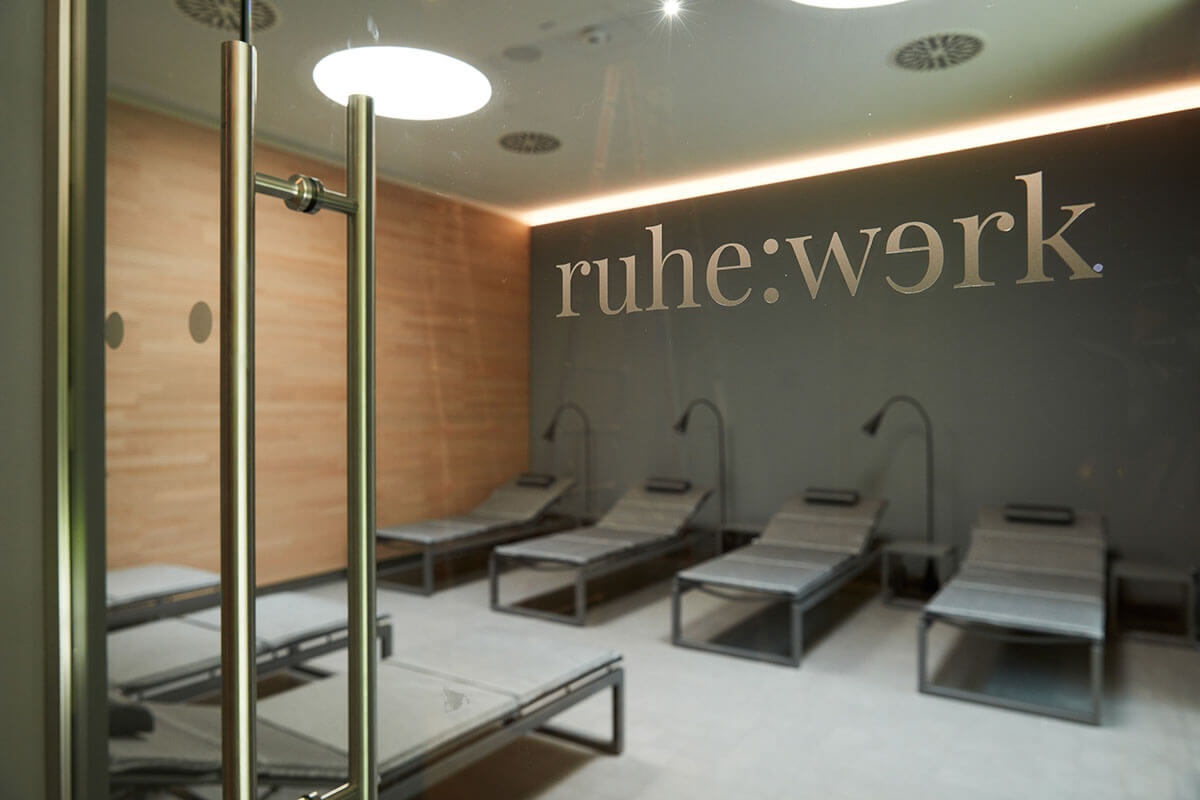
In the sauna, the archi­tects adapted the surfaces to the furnis­hings. Ther­e­fore, they decided to use fine-grained hemlock fir instead of silver fir.

Conclu­sion

After almost three years of cons­truc­tion, the ensemble consis­ting of  town hall and vital:werk was reopened in autumn 2018. The buil­ding, which has been expanded to a total of 3,600 m² – almost doubling in size – now accom­mo­dates around 1,200 visi­tors.

Thanks to its successful design and the clever and sustainable choice of mate­rials used, it quickly became the most promi­nent cultural centre of Waldshut-Tiengen.

We did this.

Project data and compa­nies involved

Archi­tects

Michael Duffner
Dipl.-Ing. Freier Archi­tekt BDA
Kalva­ri­en­berg­strasse 1 a
D – 79761 Waldshut-Tiengen

Overall design

S 4 Archi­tekten Waldshut-Tiengen
Michael Duffner, Gerold Müller, Henning Musahl, Ernesto Preiser

Text

Iris Darstein-Ebner
Ruess Public T GmbH

Photos

Ligno­trend / Foto: Foto&Design, Waldshut-Tiengen

Operator & adress

vital:werk
Fried­rich­straße 9
D‑79761 Waldshut-Tiengen

Ceiling panels

Ligno­trend
Land­strasse 25
D–79809 Weil­heim-Bann­holz

Wood in indoor swim­ming pools

The ideal choice

Mois­ture beha­viour

The intrinsic mois­ture of wood remains uncri­ti­cally low even in the typical indoor climate. The mate­rial is also insen­si­tive to chlo­rine-conta­mi­nated air. In indoor swim­ming pools, wooden elements outside of the spray water area can be used without hesi­ta­tion, because the common venti­la­tion systems with humi­dity control define both indoor climate and wood mois­ture. At an assumed tempe­ra­ture of 30°C and a rela­tive humi­dity of 55% to a maximum of 75%, it sets itself at about 14%. This is a value that is defi­ni­tely too dry for harmful orga­nisms like mould.

Room acou­stics

The room acou­stics effect of the elements is achieved mainly by natural wood fibre absor­bers, which are inte­grated behind the joints of the cover layer in the elements. This allows absorp­tion values αW up to 0.90 to be achieved and diffe­rent room acou­stics targets to be imple­mented, as required in the rele­vant direc­tives, for example in DIN 18041 in Germany. For highest buil­ding biology quality, the panels are tested accor­ding to the parti­cu­larly strict certi­fi­ca­tion system “nature­plus”.

Fire protec­tion

The flame-retar­dant Ligno real wood acou­stic panels treated with a new impreg­na­tion, show their natural wood tone authen­ti­cally and thus stand in a char­ming contrast to the other­wise rather hard and cool-looking mate­rials that were used in Waldshut. In case of fire, sani­tary fire-retar­dants in the wood delay the spread of the fire.

Ligno­trend

Ligno­trend is known for inno­va­tion, high quality and free confi­gu­ra­tion of the products in terms of indi­vi­dual requi­re­ments. Safe buil­ding with free plan­ning is possible without rest­ric­tions with the products of the company. With product deve­lo­p­ment, ther­e­fore, the focus is clearly on the archi­tec­tural class and the best buil­ding struc­tural physics proper­ties (room acou­stics, sound insu­la­tion and large spans).

Health safety and ecolo­gical harm­less­ness as well as long-term func­tion­a­lity and value reten­tion are the central compon­ents of the product philo­sophy – certi­fied accor­ding to the strict rules of nature­plus e.V.

The company Ligno­trend based in Weil­heim-Bann­holz (Germany) has been produ­cing cross-lami­nated timber elements for modern timber cons­truc­tion since 1992. They are used throug­hout Europe in resi­den­tial cons­truc­tion and in muni­cipal / commer­cial buil­ding cons­truc­tion. Ligno­trend curr­ently employs 130 people and has a produc­tion capa­city of 200,000 m² per year. 

The company’s product range includes solu­tions for cons­truc­tion, inte­rior design and facades – from load-bearing wall, ceiling and roof elements to acou­stic panels, insu­la­tion stands and facade panels.

Visit our Blog

At “More Sports. More Archi­tec­ture.” you will find func­tional, spec­ta­cular and simply beau­tiful buil­dings and faci­li­ties for sports and leisure.

Infi­nity London

Pool with a view

Infi­nity London

Compass Pool

Ambi­tious

Death defying swim­ming pools are set to become an archi­tec­tural trend in central London, allo­wing visi­tors to float over 200 metres above the capital’s skyline. Pool desi­gners at Compass Pools have deve­loped Infi­nity London, the only buil­ding in the world to incor­po­rate a 360-degree infi­nity pool.

The pool is made from cast acrylic rather than glass, as this mate­rial trans­mits light at a similar wave­length to water so that the pool will look perfectly clear.

The floor of the pool is also trans­pa­rent, allo­wing visi­tors to see the swim­mers and sky above.

Getting into the water

Swim­mers will access the pool through a rota­ting spiral stair­case based on the door of a subma­rine, rising from the pool floor when someone wants to get in or out. A little bit James Bond to boot!”

Normally a simple ladder would suffice, but the desi­gners didn’t want stairs on the outside of the buil­ding or in the pool as it would spoil the view – and obviously they don’t want 600,000 litres of water drai­ning through the buil­ding either.

Buil­ding services

Other advanced tech­nical features include a built-in anemo­meter to monitor the wind speed. This is linked to a computer-controlled buil­ding manage­ment system to ensure the pool stays at the right tempe­ra­ture and water doesn’t get blown down to the streets below.

Boas­ting an inno­va­tive twist on rene­wable energy, the pool’s heating system will use waste energy from the air condi­tion system for the buil­ding. The hot gas that is produced as a by-product of crea­ting cold air in the buil­ding will run through a heat exch­anger to heat the water for the pool.

The pool is also fitted with a full spec­trum of lights which will give the buil­ding the appearance of a spar­k­ling jewel-topped torch at night.

Approach

Compass Pool’s swim­ming pool desi­gner and tech­nical director Alex Kemsley commented: “Archi­tects often come to us to design roof top infi­nity pools, but rarely do we get a say in the buil­ding design because the pool is usually an aftert­hought.

“But on this project, we actually started with the pool design and essen­ti­ally said, ‘how do we put a buil­ding under­neath this?’ “When we desi­gned the pool, we wanted an unin­ter­rupted view, both above and below the water.

It will have a five-star inter­na­tional hotel on the top floors of the buil­ding with the pool used by the guests.

Hotel Olympus Palace

See and be seen

Hotel Olympus Palace in Salou

Matic & Garau & Agrob Buchtal

Very, very welco­ming

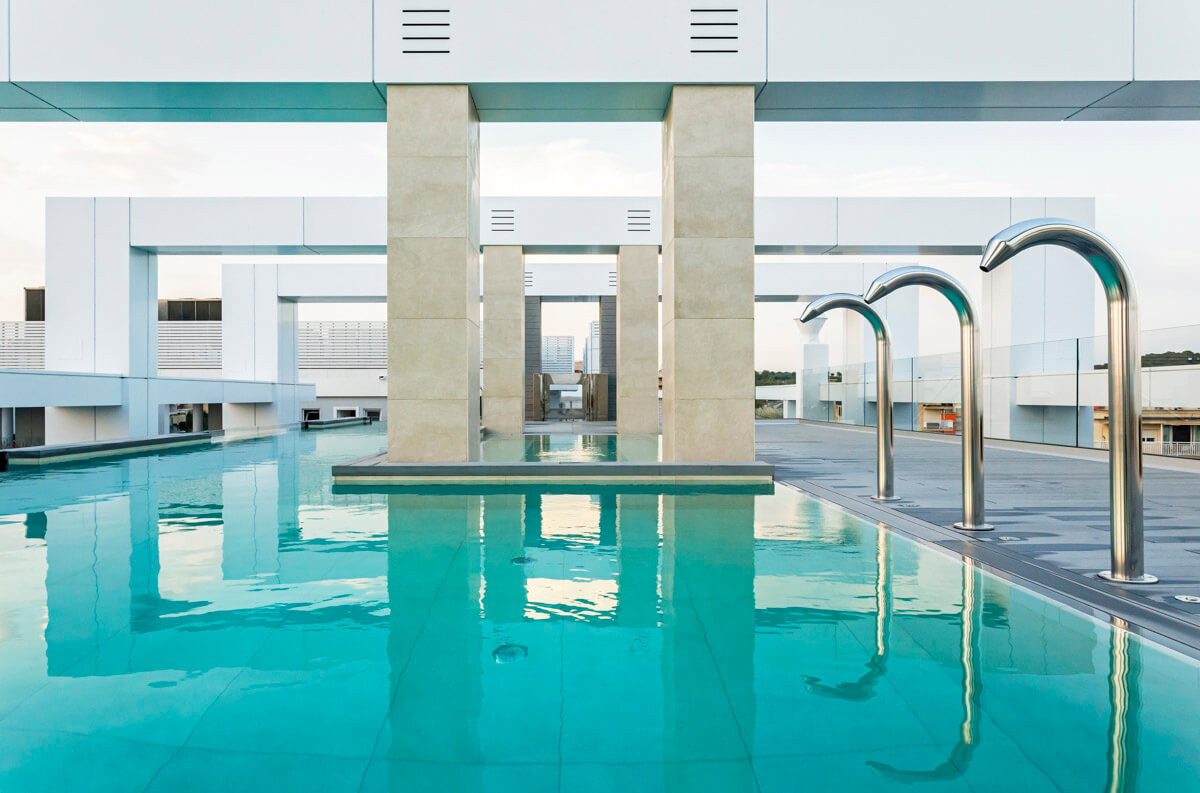
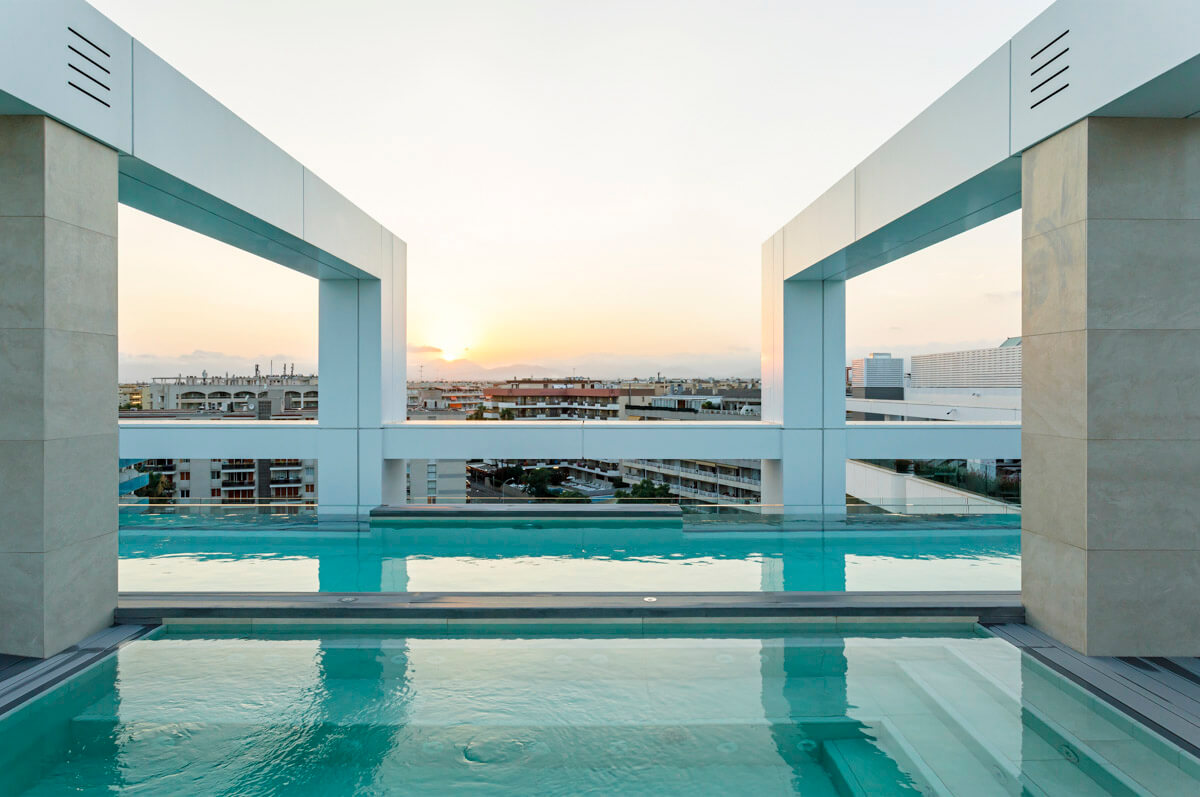
The water shim­me­ring myste­riously blue through the glass panels of the rooftop pool is already visible from afar and makes the roof of the Hotel Olympus Palace an unmist­akable land­mark, espe­ci­ally in the evening. Hotel guests and passers-by who have become curious and visit this roof terrace find a new open areas with a large pool land­scape desi­gned by the Barce­lona archi­tec­ture office Matic & Garau.

With sand-beige porce­lain stone­ware tiles of the Valley series of Agrob Buchtal, the restrained, elegant area invites to swim and sunbathe, but also to enjoy deli­cious drinks and events at the bar.

Salou is located in the heart of the Costa Daurada in the province of Tarra­gona and is charac­te­rized by its gently sloping and fine sandy beaches. The rich histo­rical heri­tage with medieval monas­te­ries, inte­res­ting villages and beau­tiful land­scapes as well as the excel­lent Medi­ter­ra­nean cuisine make Salou an ideal holiday desti­na­tion.

The Hotel Olympus Palace is located in the heart of the city’s tourist centre, just 300 metres from the beach.

Archi­tect

Matic & Garau
C/Rosselló 233 5th floor
SP – 08008 Barce­lona

Client

Hotels Olympus Palace
Carrer de Navarra, 6
43840 Salou
SP – Tarra­gona

Ceramic tiles

AGROB BUCHTAL GmbH
Buchtal 1
D‑92519 Schwar­zen­feld 

General reno­va­tion of 1600 m² roof terrace

The wexten­sive reno­va­tion of the hotel, which was built in the mid-1970s and has around 250 rooms, was completed in 2018 and focused in parti­cular on the 1600 m² roof area above the 6th floor.

High above the centre of the city not far from Tarra­gona, there was previously only a small water basin, two whirl­pools and a few areas for deck chairs. In their place, the hotel opera­tors wanted to realize a spacious roof terrace with pools, fitness area, bar and plenty of space for sunbathing.

“The aim was to create a spec­ta­cular roof land­scape that would change the image of the hotel and which is unique in Salou,” explains the  archi­tect Dubravka Matic. “The hotel guests should not only enjoy the refres­hing water, the cool wind and the view of the Medi­ter­ra­nean Sea, but also the relaxed lounge atmo­sphere with evening events and concerts around the bar.

Address

Hotels Olympus Palace
Carrer de Navarra, 6
43840 Salou
SP – Tarra­gona

Aerial view

Unusual vies from outside and inside

For the archi­tects, the restruc­tu­ring of the roof area was parti­cu­larly chal­len­ging above because the loca­tion and size of the water basins had to be precisely matched to the load-bearing capa­city of the exis­ting struc­ture, the exis­ting pipes and the posi­tion of nume­rous vertical exhaust air shafts.

Right from the begin­ning, the design concept provided for a raised pool area in the centre of the southern part of the roof area with a water surface appro­xi­m­ately 1.5 m above the U‑shaped sun-deck around it.

This solu­tion enabled long glass panels in the pool side walls, which offer swim­ming and diving bathers a view over the city and the sea, but also open up unusual under­water views in the oppo­site direc­tion.

Feed­back

6 + 8 =

Remi­nis­cent of natural elements of the Costa Daurada

A glance through these glass panels into the inte­rior of the pool reveals another special feature: large-size sand-beige porce­lain stone­ware tiles from the Valley series of Agrob Buchtal, which lend the 85 m² pool an unob­tru­sive noblesse thanks to their earthy relief struc­ture and natural look.

After tests carried out speci­fi­cally for this purpose, the archi­tects chose exactly these tiles because they perfectly harmo­nize with the nearby sandy beaches and rocks of the Costa Daurada, but also because they make the water sparkle parti­cu­larly inten­sely blue in the sun. “The light colour and the large formats should also create a modern appearance and avoid over­hea­ting,” says Matic. The 60 x 120 cm format used for the pool floors and walls not only offers an excep­tional visual impres­sion but also the advan­tage of a low propor­tion of joints, so that the clea­ning effort for the tiles is compa­ra­tively low despite the appro­priate slip resis­tance.

The same applies to the 15 m² whirl­pool, which is also located in the raised pool area directly next to the 20 m long large pool.

The pairs of columns placed in the centre of the pool area were also cladded with large-size porce­lain stone­ware tiles of the series Valley. These pairs carry a kind of white pergola with a similar cross-section, which extends over the entire width of the buil­ding. The columns discreetly hide the venti­la­tion shafts of the hotel bath­rooms, while the pergola serves above all for crea­ting a striking roof struc­ture and accom­mo­da­ting the LED lighting.

Opening

2018

Photos

Text

Werner Ziegel­meier
Agrob Buchtal

Video

Valley tile series ensures design consis­tency

The cover of the pool edge, the pool surrounds, the outer side walls of the pool and the floors of the sun-decks are made of a wood-plastic compo­site mate­rial.

The archi­tects chose this wood-like mate­rial to create a diffe­ren­tiated tran­si­tion zone between the water basin and the nort­hern part of the roof area with lounge, bar and further deck chair areas.

The latter areas, as well as the clad­ding of the pools, are also provieded throug­hout with Agrob Buch­t­al’s Valley series, in the form of 2 cm thick, sand-beige patio tiles in the format of 60 x 60 cm with appro­priate slip-resis­tance. The laying was carried out on elevated posts: on the one hand, so that the rain­water – as before the conver­sion – can be coll­ected and drained in the space between the roof cons­truc­tion and the roof. On the other hand, in order to be able to open the floor easily for inspec­tion works.

One more video

Elegant roof land­scape as a new attrac­tion

The result of the cons­truc­tion works carried out exclu­si­vely during the winter closing time of the hotel is a homo­ge­neous, elegant roof land­scape conveying plea­sant expanse and sove­reign gene­ro­sity.

The opera­tors have thus achieved their goal: the Olympus Palace is the only hotel in Salou with such a diverse micro­cosm on the roof that is on ever­yo­ne’s lips today. The number of parti­ci­pants in music events has also increased noti­ce­ably. Both hotel guests and external visi­tors enjoy staying there – not only to sip cock­tails at the bar, but also to take insta­gram-suitable under­water photos at the pool.

Your project

Are you in need of support when publi­shing your projects?

projects@moresports.network

Or give us a call:

0049 234 5466 0374

That’s what our part­ners say

About us

More Sports Media

Johannes Bühl­be­cker, founder

Johannes Bühl­be­cker is an archi­tect and has worked, among others, for Inter­na­tional Asso­cia­tion for Sports and Leisure Faci­li­ties (IAKS) for 15 years – as edito­rial director of the renowned trade maga­zine “sb”, in the orga­ni­sa­tion and reali­sa­tion of inter­na­tional archi­tec­tural compe­ti­tions with IOC and IPC, in trade fairs and conven­tions, as head of the “NRW Bera­tungs­stelle Sport­stätten“ (“NRW Advice Centre for Sports Faci­li­ties”) and as a lecturer at the German Sport Univer­sity Cologne.

  • Dipl.-Ing. (engi­nee­ring degree) Archi­tect, TU Berlin
  • Long­time edito­rial head with “sb”, an inter­na­tional journal for the archi­tec­ture of sports
  • Trai­ning in web design, online marke­ting, etc.
  • Inter­na­tional archi­tec­tural compe­ti­tions with IOC and IPC
  • Trade fair and congress orga­ni­sa­tion
  • Head of the “NRW Bera­tungs­stelle Sport­stätten“ (“NRW Advice Centre for Sports Venues”)
  • Lecturer at the German Sport Univer­sity Cologne
  • Plan­ning of the Prus­sian Stadium in Münster (for groß­mann engi­neers, Göttingen)
  • Replan­ning a foot­ball stadium in Berlin-Köpe­nick
  • Nume­rous publi­ca­tions, i.a. “From Round Leather to Soap Bubbles – The Deve­lo­p­ment of Foot­ball and its Archi­tec­ture”
  • Board member and youth coach at SV BW Weitmar 09

Contact

Phone

+(49) 234 5466 0374

Mail

contact@moresports.network

Address

More Sports Media
Am Weit­kamp 17
D‑44795 Bochum

Visit us on insta­gram

Kastrup Sea Bath

Always getting better

Kastrup Sea Bath

White arki­tekter AB

The gem

Kastrup Sea Bath is one of many archi­tec­tural gems of Køben­havn’s Ørestad region. It is part of the Kastrup Strand­park water­front park on the east coast of Amager. Conceived as a fully-acces­sible outdoor swim­ming faci­lity, Kastrup Sea Bath trans­formed an over­looked brown­field site into one of Denmark’s most enchan­ting, reco­g­nisable and popular leisure desti­na­tions.

The snail

Affec­tion­a­tely known as ‘The Snail’, Kastrup Sea Bath consists of the pool enclo­sure, as well as a new beach and service buil­ding, complete with toilets and acces­sible chan­ging room. The form was in response to the north-facing beach; a wooden pier stret­ches from shore and curves around to form a south-facing circular enclo­sure.

The pier

The pier gradu­ally rises above the sea level and ends in a five metre diving plat­form. The circular shape creates a concen­trated inte­rior that provides shelter from the wind and the perfect retreat for swim­ming and sunbathing. A conti­nuous bench runs along the pier, provi­ding addi­tional spaces for leisure and reflec­tion.

Inclu­sion in 2005

Inclu­sion was an important part of the concept. Desi­gned as an untra­di­tional frame­work for outdoor sporting acti­vi­ties, Kastrup Sea Bath caters to peaceful evening swims, exer­cise or play, irre­spec­tive of age, or physical mobi­lity needs. Ramps, and other special features allow less mobile visi­tors full access. All 870 square metres of wooden deck are at the visi­tors’ disposal. Kastrup is free of admis­sion and open to the public at all times.

Desi­gned for life

Kastrup’s dynamic sculp­tural form is a visible land­mark from beach, sea and air. As a visitor moves around the bath, its silhou­ette constantly changes. The form itself is sugges­tive of an amphi­theatre; from here, you can see and be seen; a rule worth being reminded of in busy communal pools.

Mate­rial

Cons­tructed from Azobé, this African hard­wood was selected due to its remar­kable longe­vity and aesthetic quali­ties. Azobé shares the same life­span as steel and is resistant to rot and wood­worm, ensu­ring that Kastrup will be enjoyed by several gene­ra­tions to come.

At night

At night and during the long dark off-season, dramatic lighting empha­sises the sculp­tural design, heigh­tening the visi­tors’ aesthetic expe­ri­ence, as well as secu­ring their safety. A series of large uplights illu­mi­nate the enclo­sure and is reflected from the inte­rior walls, gently washing the whole basin space with warm white light. This warmth contrasts with the elec­tric blue lighting behind the open stair­case and diving plat­form. Dual lines of LED spot­lights stud the pier walkway, faci­li­ta­ting easier navi­ga­tion in the dark.

Awards

Kastrup Sea Bath has been awarded a “Hono­urable mention” at the Archi­tec­tural Review Award for Emer­ging Archi­tec­ture 2006. It was nomi­nated for The Mies van der Rohe Award 2007 and won a  Bronze medal and a special prize at the IOC/IAKS Award and IPC/IAKS Distinc­tion in 2009.

Looking at current pictures of the bath in the social media, one has to say that the Kastrup Sea Bath would have deserved even more prizes.

PROJECT DATA

Archi­tect

White arki­tekter AB
Östgö­tag­atan 100
Box 4700
116 92 Stock­holm
Sweden

Client

Tårnby commu­nity

Photos

Author

White arki­tekter AB

Physical address

Kastrup Sea Bath
Amager Strandvej 301
2770 Kastrup
Denmark

Opening

2005

Aerial view

Thank you, Google!

VIDEOS

About

“More Sports. More Archi­tec­ture.” offers archi­tec­ture, buil­dings, products, ideas and trends for sports and leisure.
We’re behind this: More Sports Media, a PR agency specia­li­zing in archi­tec­ture, sports and leisure. We offer you support in your public rela­tions work and in all your publi­ca­tions: Copy­wri­ting, Desig­ning, Publi­shing.
We know the industry. Give us a try.

News­letter

La Espe­ranza

Full of life

La Espe­ranza School swim­ming pool in Puerto Rico

Fuster + Archi­tects

La Espe­ranza School

La Espe­ranza School swim­ming pool is desi­gned as a thera­peutic faci­lity to be used mainly by children with physical disa­bi­li­ties between the ages of 5 and 16 years. La Espe­ranza (Luis Pales Matos) School’s student popu­la­tion of 238 students has grown by 19% over five school years. The student:teacher ratio of 5:1is the lowest in Puerto Rico.

The faci­li­ties are open to the public but will be used prima­rily by students of La Espe­ranza School; thus the yello­wish-green “verde espe­ranza” color of the exte­rior and the word “espe­ranza” (“hope”) written on the bottom of the main pool. This is the first struc­ture of its kind in Puerto Rico.

Situa­tion

The project is located in an unused parking lot adja­cent to La Espe­ranza School. This loca­tion provides a connec­tion between the pool and the school by means of a pede­strian passage that connects both sites. This loca­tion also helped to save the budget and provides space for a future expan­sion.

The prot­ago­nists of the space are the light and the sky. One of the most important inten­tions of the project was to create a unique space where natural light constantly trans­forms the atmo­sphere inside; crea­ting a direct connec­tion between the user and nature and faci­li­ta­ting the healing process.

Design

The design focuses on empowe­ring the user, high­lighting and promo­ting the spatial expe­ri­ence rather than the clinical requi­re­ments neces­sary for a thera­peutic space, while still meeting all the requi­re­ments of universal design. This diffe­ren­tiates La Espe­ranza School swim­ming pool from other projects of its kind which tend to focus on highly visible clinical requi­re­ments such as ramps and handrails, putting in second place the user expe­ri­ence.

Every pool is treated as a cour­tyard; a proto­ty­pical Puerto Rican design element rooted in the colo­nial and verna­cular archi­tec­tures of the island. From within the pools the ceiling aper­tures with their tall cylind­rical para­pets frame the sky gene­ra­ting a direct rela­ti­onship between users and the celes­tial sphere. This is important because children receive thera­pies while floa­ting on their backs, looking upwards.

A welco­ming atmo­sphere

The mate­rial used for cons­truc­tion is a struc­tural concrete insu­lated panel composed of a ther­mally insu­la­ting foam core coated with struc­tural mortar. This keeps the space at a comfor­table tempe­ra­ture while the intro­verted design blocks exte­rior distrac­tions while still allo­wing for ample natural light.

The cylind­rical shapes and curves of La Espe­ranza School swim­ming pool accen­tuate the intro­verted and tran­quil character of the space crea­ting a relaxed and welco­ming atmo­sphere for the thera­pies to occur. A small stream of water flowing into the main pool, while working as part of the filtra­tion system, also gene­rates a subtle splas­hing sound crea­ting an atmo­sphere of tran­qui­lity, rela­xa­tion and peace. In contrast to the bright exte­rior the inte­rior finishes are predo­mi­nantly white and neutral, keeping with the calming thera­peutic nature of the space.

PROJECT DATA

Archi­tect

FUSTER + Archi­tects
P.O. Box 9023387
San Juan
Puerto Rico

Team: Nata­niel Fúster, Heather Crich­field, Sadie Winslow, Sant­iago Garra­muño, José Pagán, Luis R. Alba­la­dejo

Client

Muni­ci­pa­lity of San Juan
Bürger­meis­terin Carmen Yulín Cruz
Puerto Rico

Buil­ding contractor

BIM Contrac­tors

Physical address

La Espe­ranza
Calle 19 Ne Pto Nuevo
San Juan
PR 00921

Aerial view

Thank you, Google!

Opening

2015

Author

Fuster + Archi­tects

Photos

FUSTER + Archi­tects

PHOTOGRAPHS

VIDEO

About

“More Sports. More Archi­tec­ture.” offers archi­tec­ture, buil­dings, products, ideas and trends for sports and leisure.
We’re behind this: More Sports Media, a PR agency specia­li­zing in archi­tec­ture, sports and leisure. We offer you support in your public rela­tions work and in all your publi­ca­tions: Copy­wri­ting, Desig­ning, Publi­shing.
We know the industry. Give us a try.

News­letter

Stutensee swim­ming pool

And ever­y­bo­dy’s happy

Stutensee swim­ming pool

4a Archi­tekten

All in one

The Stutensee swim­ming pool is a communal swim­ming pool. That means that it accom­mo­dates diffe­rent groups of visi­tors with diffe­rent needs and requi­re­ments: schools, clubs, fami­lies and amateur swim­mers of all ages.

In addi­tion, only a limited budget and small plot of land are available. Under these circum­s­tances, reali­zing a compel­ling design and an econo­mical solu­tion, with a wide range of services, is not so simple. 4a Archi­tekten have sustain­ably managed to achieve this.

Situa­tion

The Stutensee swim­ming pool is located between the school and sports centre and the new fair­ground in the outskirts of Stutensee, Germany, a town with a popu­la­tion of 24,000 inha­bi­tants, near the city of Karls­ruhe.

Due to the high ground­water level, the new buil­ding was cons­tructed two meters above ground level. This elevated loca­tion gives the buil­ding a greater presence and a prono­unced entrance area with a gene­rous open stair­case, which also serves as a suitable meeting point. Inside, the height of the buil­ding results in more privacy and a plea­sant quality of stay.

Orga­niza­tion

Archi­tec­tu­rally, the Stutensee swim­ming pool is divided into two connected buil­dings, which are clearly visible from the outside. One houses the bathing hall, the other the entrance and chan­ging area.

The two buil­dings are appro­xi­m­ately the same size and interlock in terms of form and mate­ria­lity. Both offer plenty of daylight through large openings, but also closed elements where neces­sary. The bathing hall offers a noti­ce­ably greater room height – which is also good for the atmo­sphere as well as for orien­ta­tion purposes.

Thanks to the unob­tru­sive furnis­hing and the factual and elegant choice of colors and surfaces, the Stutensee swim­ming pool looks light, airy and spacious from any angle.

Features

The swim­ming hall includes a swim­ming pool, a beginner’s pool with slides, rubel cove, neck streams and massage jets with a water depth of max. 1.20 meters, as well as a child­ren’s area with a total water surface of 368 m².

A covered terrace to the east extends the estab­lish­ment into the outdoor area. The entrance and chan­ging area adjoi­ning the swim­ming hall to the south with shower rooms and ancil­lary rooms sepa­rates itself from the swim­ming hall with a lower room height.
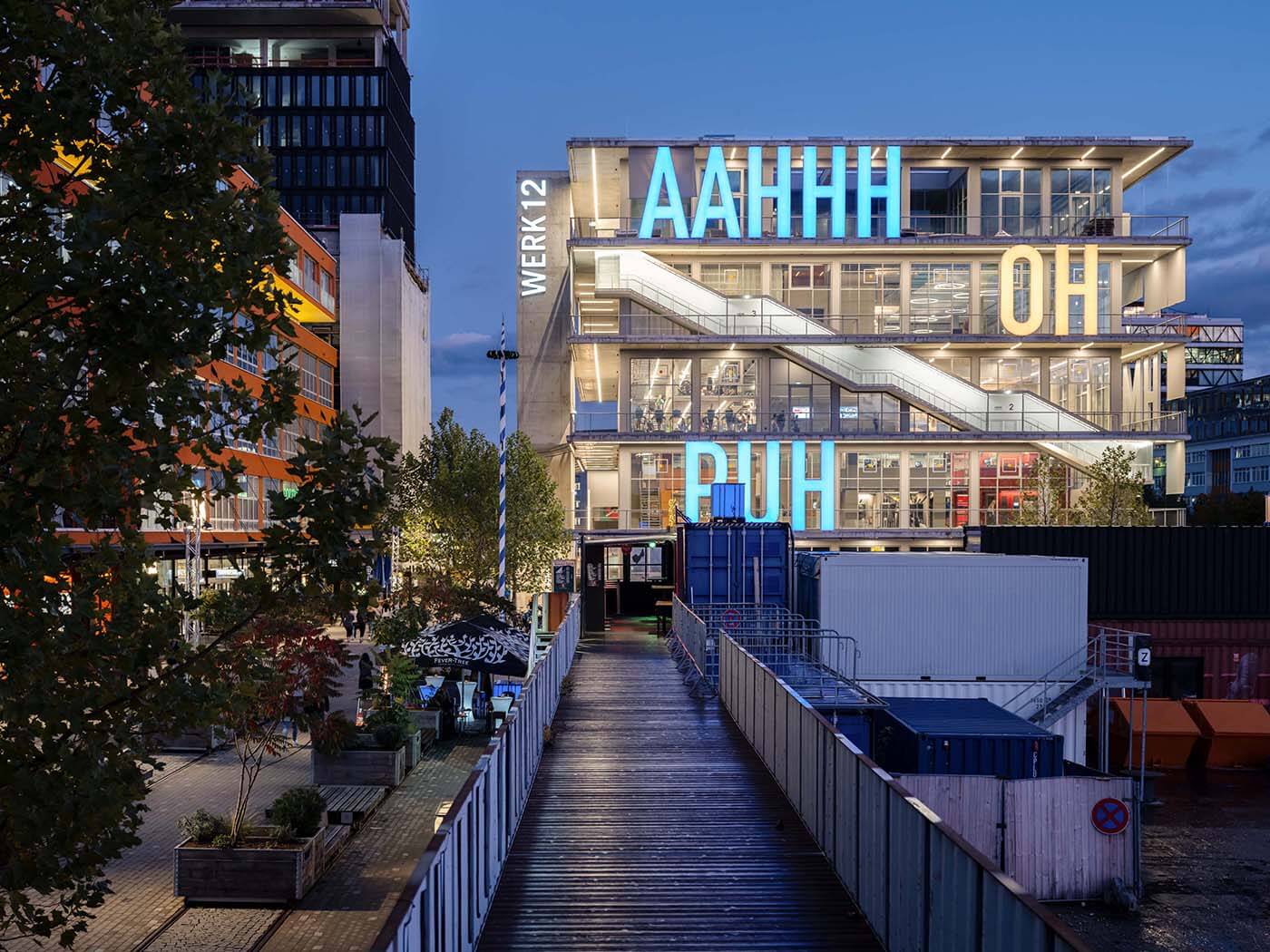
The two buil­dings interlock along the entire swim­ming hall in terms of form and mate­rial. The circum­fe­ren­tial strip of the steel-sheet façade also accen­tuates this interlo­cking towards the outside.

Cons­truc­tion

The clear orga­niza­tion of the swim­ming hall and chan­ging area enables a compact and econo­mical design with a favorable ratio between surface area and buil­ding volume. This not only reduces cons­truc­tion costs, but also opera­ting costs.

To the west, north and east, room-high glass facades parti­ally offer views into the surroun­dings (and let in a lot of daylight). The over­hangs of the floor slab and the roof area in the west faci­li­tates the gene­rous entrance zone with an open stair­case. they provide the tran­si­tion to the open-air area with a sunbathing lawn in the east.

In order to reduce the propor­tion of glass facades, the upper facade surface in the north was closed. The pros­pect remained unch­anged. Lower ceiling heights in the entrance and in the chan­ging area reduce the cons­truc­tion volume. In addi­tion, the diffe­rent heights of the buil­dings created an offset at the inter­sec­tion of the roof areas, which struc­tures the Stutensee swim­ming pool both formally and from the inside. At the same time, a skylight strip supplies the inte­rior with addi­tional daylight.

Mate­rial

The mate­rials used for the Stutensee swim­ming pool were used accor­ding to their suita­bi­lity: The base­ment and ground floor were cons­tructed in exposed concrete, the load-bearing struc­ture of the wide-span swim­ming hall and the chan­ging area was cons­tructed using wood. The suspended, acou­sti­cally effec­tive lamella ceilings and wall paneling, as well as the perfo­rated sea pine ceiling in the chan­ging area, were also made of wood. The high degree of prefa­bri­ca­tion of the wooden elements ensured econo­mical cons­truc­tion and shorter cons­truc­tion times.

The wooden ribbed ceiling was prefa­bri­cated – inclu­ding the roof drai­nage, lighting, ELA system and suspended lamella ceiling made of local silver fir. The panels between the wooden ribs of the ceiling and on the wall are a decisive influence on the inte­rior effect of the Stutensee swim­ming pool. The lamella struc­ture is not only a design element, it also opti­mizes room acou­stics.

In the chan­ging room and entrance area, the lower wooden ribbed ceiling is covered with a perfo­rated, white glazed acou­stic ceiling made of sea pine slabs.

Conclu­sion

Muni­cipal swim­ming pool cons­truc­tions have a lot to do with budget and opera­ting costs, and with the diverse user groups and their needs; and of course, with sustaina­bi­lity, which, in this context, trans­lates into economic effi­ci­ency and longe­vity.

The Stutensee swim­ming pool offers diffe­rent user groups diffe­rent features. All-in-one, clearly struc­tured and elegantly imple­mented; with wooden ceilings, glass facades, exposed concrete, porce­lain stone­ware and mosaic tiles. It’s actually quite a small swim­ming pool which looks extre­mely gene­rous in terms of its features. And ever­y­bo­dy’s happy.

PROJECT DATA

Archi­tect

4a Archi­tekten GmbH
Hall­straße 25
D‑70376 Stutt­gart

Client

Stadt Stutensee
Rathaus­straße 3
D‑76297 Stutensee

Project team

Design:
Anke Pfudel-Till­manns (Projekt­lei­tung), Kateryna Shelegon
Tende­ring & Contrac­ting:
Markus Christ, Simone Mann, Silvia Nanz und Jan Voll­stedt
Cons­truc­tion manage­ment: Philipp Schmid
Cons­truc­tion manage­ment since 01/2018:
2Plus Bauma­nage­ment

Physical address

Stuten­seebad
Erich-Kästner-Straße 3
D – 76297 Stutensee

Aerial view

Thank you, Google!

Opening

September 2018

Author

Johannes Bühl­be­cker
More Sports Media

Photos

David Matthiessen

PHOTOGRAPHS

PLANS

VIDEO

About

“More Sports. More Archi­tec­ture.” offers archi­tec­ture, buil­dings, products, ideas and trends for sports and leisure.
We’re behind this: More Sports Media, a PR agency specia­li­zing in archi­tec­ture, sports and leisure. We offer you support in your public rela­tions work and in all your publi­ca­tions: Copy­wri­ting, Desig­ning, Publi­shing.
We know the industry. Give us a try.

News­letter

Water­front Cultural Center

Pyra­mids in the Port of Copen­hagen

Water­front Cultural Center
Kengo Kuma & Asso­ciates mit Corne­lius Vöge, Søren Jensen und Niels Sigs­gaardn

Situa­tion

Kengo Kuma & Asso­ciates, in colla­bo­ra­tion with Corne­lius Vöge, Søren Jensen engi­neers and Niels Sigs­gaard, won the compe­ti­tion to design a Water­front Cultural Center for Copen­hagen. Their project combines faci­li­ties for leisure and sports asso­cia­tions and harbour baths in a new and original way.

The new Water­front Cultural Center with harbor baths at Paper Island is to high­light the signi­fi­cance of water in the history, culture and vibrant urban life in Copen­hagen. The harbor is the gate contri­bu­ting greatly to the city’s deve­lo­p­ment. The water­front has become the fore­ground and the back­ground for major cultural faci­li­ties and the quality open public area that defines the urban life in the city.

The design focus is to create an expe­ri­ence, and not just a stan­da­lone object, in the form of the land­scape, art and archi­tec­ture that are unified and defined by the water. The design proposal strives to offer the diverse expe­ri­ences of water in various states and condi­tions such as reflec­tion of light and shadow, steam and flow that appeal to human senses.

Urban approach

The project takes place in the larger deve­lo­p­ment plan of the island. Its archi­tec­tural form in a series of pyramid shape is in response to the master­plan guide­line to work with roof profile of Chris­ti­ans­holm but at the same time it expresses its unique iden­tity. What is distinc­tive from the rest of the master­plan buil­ding is that the archi­tec­ture does not have a single front, but it is multi direc­tional to be easily reco­gnized and acces­sible from various direc­tions.

Water­front Cultural Center is to offer spon­ta­neous, open and tangible place that carries the memory of vibrant and dynamic nature of the present Paper Island. Taking advan­tage of the promi­nent corner site of the project defined in the master­plan, the ground floor plane of the indoor to outdoor and to the sea is desi­gned in a single gesture. Land­sca­ping the ground plane in terra­cing and casca­ding manner creates expan­sive, conti­nuous percep­tion of water surface from indoor all the way to the harbor. The design attempts to soften and dissolve the edge and blur the sense of boun­dary of the land.

Archi­tec­tural form

The stra­tegy of gene­ra­ting the archi­tec­tural space struc­ture and the form is to mani­pu­late the compo­si­tion of posi­tive and nega­tive volumes. A series of cone shape volumes in various propor­tion is gene­rated by being pushed and pulled verti­cally and hori­zon­tally to create parti­cular expe­ri­ences for each program. The cone shape roofs extruded above corre­spond to the divi­sion of pools at the ground floor. Each pool has distinc­tive space in the almost exag­ge­rated scale with concen­trated light and shadow through large skylights above.

The level above the ground floor is defined as the “nega­tives” of these extruded roof volumes. It is an open air pool and hot bath that one would expe­ri­ence swim­ming and dipped in the “valley” among the archi­tec­tural hills. The inverted cone in the central posi­tion works as struc­tural core. It is the deepest void, “valley” among these roofs where outdoor stair­well is placed.

Brick Façade

Brick is chosen to relate to the context of the area and to high­light the quality and aesthetic of the tradi­tional Danish craft. Its haptic texture and warm natural earthy color tones of masonry would achieve the tangible skin defi­ning inte­rior and exte­rior. The archi­tetcs want to ecplore the poten­tial of brick in its small scale texture being expressed in the large scale of the archi­tec­ture. Its small units allows us to play with various openings and tecto­nics, scree­ning natural lights and shadow that reflects on the water surface.

Water­front Cultural Center‘s brick façade in various level opacity and trans­pa­rency is to glow with warm light at night and in cold season when dark hours last long. The perfo­rated and screened brick skin would let soft light out in distinct manner. The dust of lights and their reflec­tion on the water would glow at night and signals the presence of the new master­plan deve­lo­p­ment and expresses itself as new unique icon.

PROJECT DATA

Archi­tect

Kengo Kuma & Asso­ciates
Yuki Ikeguchi, Marc Moukarzel, Aigerim Syzdy­kova, Hannah Appel­gren

Project team

Asso­ciate Archi­tect:
Corne­lius Vöge
Engi­nee­ring Design:
Søren Jensen engi­neers
Consul­ting archi­tect::
Niels Sigs­gaard

Illus­tra­tions

Luxigon
Kengo Kuma & Asso­ciates

Physical address

Tran­gravsvej 14
1436 Køben­havn
Denmark

Author

Kengo Kuma & Asso­ciates

Aerial view

Thank you, Google!

ILLUSTRATIONS

About

“More Sports. More Archi­tec­ture.” offers archi­tec­ture, buil­dings, products, ideas and trends for sports and leisure.
We’re behind this: More Sports Media, a PR agency specia­li­zing in archi­tec­ture, sports and leisure. We offer you support in your public rela­tions work and in all your publi­ca­tions: Copy­wri­ting, Desig­ning, Publi­shing.
We know the industry. Give us a try.

News­letter

Aarhus Harbor Bath

The maximum amount of life

Aarhus Harbor Bath

New ways to enjoy the water

Aarhus Harbor Bath is an exten­sion of BIG’s current deve­lo­p­ment plan for Aarhus’ new water­front neigh­bor­hood named O4. Similar to BIG’s first harbor bath in Copen­hagen from 2002 which has come to define the Danish capital as one of the most livable cities in the world, Aarhus Harbor Bath and adja­cent Beach Bath provide new ways for the public to enjoy the water in all seasons.

New ways to enjoy the water

Aarhus Harbor Bath is an exten­sion of BIG’s current deve­lo­p­ment plan for Aarhus’ new water­front neigh­bor­hood named O4. Similar to BIG’s first harbor bath in Copen­hagen from 2002 which has come to define the Danish capital as one of the most livable cities in the world, Aarhus Harbor Bath and adja­cent Beach Bath provide new ways for the public to enjoy the water in all seasons.

Maximum life

Toge­ther with urban life expert Jan Gehl, our stra­tegy was to create a frame­work for maximum amount of life with the minimum amount of built subs­tance. Aarhus Harbor Bath zig-zags gently into the island, extends all the way out into the harbor pool and back again. The swim­mers can enjoy the circular diving pool, a children’s pool, the 50m long lap pool or one of the two saunas that are tucked under­neath the public board­walk which doubles as a viewing plat­form who those who prefer to stay dry.

Maximum life

Toge­ther with urban life expert Jan Gehl, our stra­tegy was to create a frame­work for maximum amount of life with the minimum amount of built subs­tance. Aarhus Harbor Bath zig-zags gently into the island, extends all the way out into the harbor pool and back again. The swim­mers can enjoy the circular diving pool, a children’s pool, the 50m long lap pool or one of the two saunas that are tucked under­neath the public board­walk which doubles as a viewing plat­form who those who prefer to stay dry.

Bath and blocks

In front of Aarhus Harbor Bath, a series of free­stan­ding restau­rants, a children’s theater, beach huts for various acti­vi­ties and other life-crea­ting public oriented programs were desi­gned before the private buil­dings blocks which will rise in the coming years. As a result, the private resi­den­tial buil­dings at O4 become subor­di­nate to the needs of the public realm.

Bath and blocks

In front of Aarhus Harbor Bath, a series of free­stan­ding restau­rants, a children’s theater, beach huts for various acti­vi­ties and other life-crea­ting public oriented programs were desi­gned before the private buil­dings blocks which will rise in the coming years. As a result, the private resi­den­tial buil­dings at O4 become subor­di­nate to the needs of the public realm.

Swim shorts and walkway

Aarhus Harbor Bath gives the resi­dents and visi­tors of the island a more enga­ging and adven­turous water­front expe­ri­ence who can use the harbor bath not only in swim shorts but as a walkway that extends the public realm into the water, breathing new life into an area histo­ri­cally reserved for indus­trial purposes.

Swim shorts and walkway

Aarhus Harbor Bath gives the resi­dents and visi­tors of the island a more enga­ging and adven­turous water­front expe­ri­ence who can use the harbor bath not only in swim shorts but as a walkway that extends the public realm into the water, breathing new life into an area histo­ri­cally reserved for indus­trial purposes.

Project data

Team

Part­ners-in-Charge: Bjarke Ingels, Finn Nørkjær, Andreas Klok Pedersen Project Leader: Jesper Bo Jensen, Søren Marti­nussen Project Team: Annette Birthe Jensen, Franklin Nata­lino Simao, Giedrius Mama­vicius, Jacob Lykke­fold Aaen, Jakob Ohm Laursen, Johan Berg­ström, Kris­toffer Negen­dahl, Lucian Tofan, Nicolas Millot, Richard Howis, Ryohei Koike, Soo Woo

Opening

2018

Author

BIG

Aerial view

Thank you, Google!

Images

Please follow us!


[et_social_follow icon_style=“slide” icon_shape=“circle” icons_location=“top” col_number=“6” counts=“true” counts_num=“250” outer_color=“dark” network_names=“true”]

GDPR Cookie Consent with Real Cookie Banner