Ariake Gymnastics Centre

The Ariake Gymnastics Centre

Nuts­hell

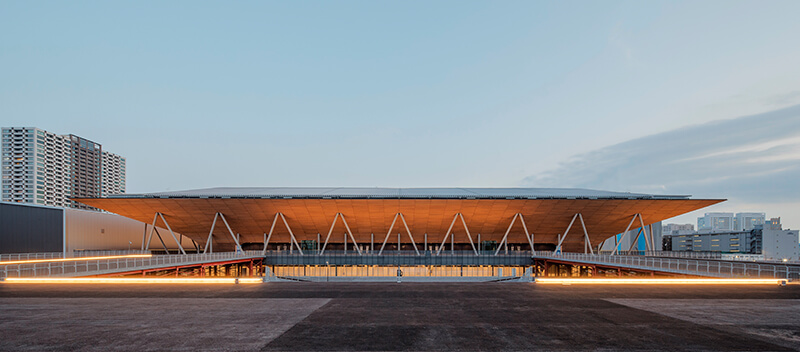
The Ariake Gymnastics Centre offers a very large space in timber frame cons­truc­tion with an excep­tio­nally harmo­nious atmo­sphere.

The Ariake Gymnastics Centre is desi­gned to func­tion in two phases; initi­ally as a Olympic sports faci­lity, it will be converted into a perma­nent exhi­bi­tion hall.

The Ariake Gymnastics Centre is desi­gned to func­tion in two phases; initi­ally as a tempo­rary inter­na­tional sports compe­ti­tion faci­lity, then, after taking out the tempo­rary spec­tator stands, it will be converted into a perma­nent exhi­bi­tion hall.

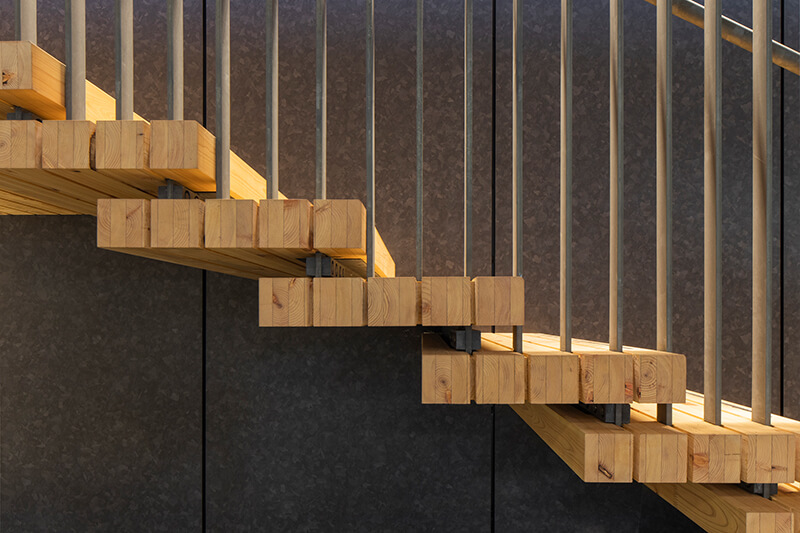
A unique feature of this faci­lity is its exten­sive and gene­rous use of timber throug­hout the buil­ding. This is a posi­tive realiza­tion of “wooded faci­li­ties” and “sustaina­bi­lity” announced in the Tokyo 2020 candi­dacy file. The mate­rial was also selected to express the memory of this district which was once a timber storage pond.

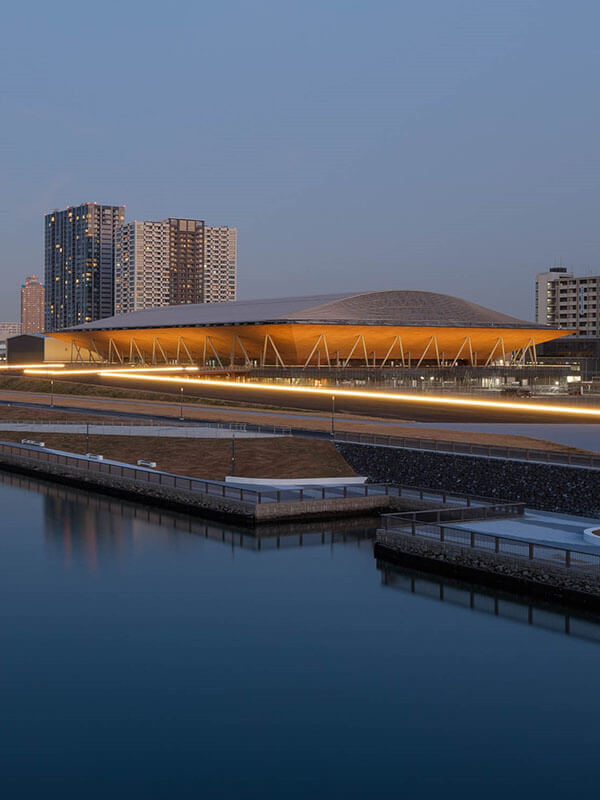
Based on the archi­tec­tural concept of “a wooden vessel floa­ting in the bay area,” timber is used wherever possible, speci­fi­cally in the roof frame struc­ture, facade, spec­tator seats, exte­rior walls, etc. while carefully conside­ring the charac­te­ristics of wood in each appli­ca­tion.

Func­tion, struc­ture, and space are tightly combined to achieve beauty and rich­ness in simpli­city, which is the essence of Japa­nese tradi­tional wood archi­tec­ture.

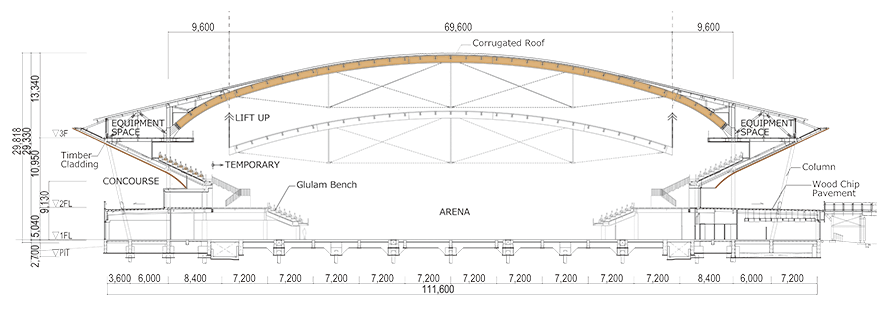
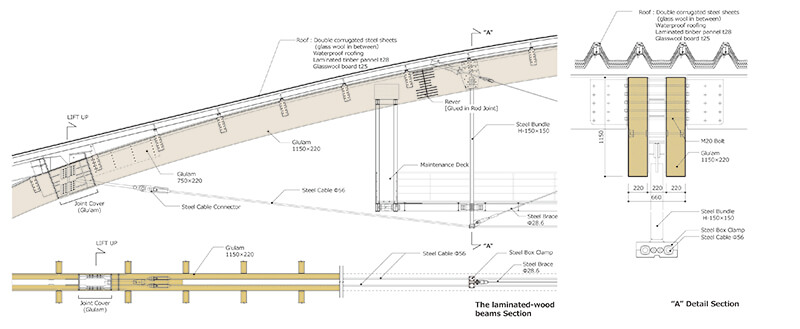
The arena ceiling is a wood frame struc­ture desi­gned to reduce the weight of the overall struc­ture. The concourse space, where spec­ta­tors approach the arena, is inten­tio­nally placed outdoors. The wood facade takes into account acou­stic and thermal insu­la­tion proper­ties.

Func­tion, struc­ture, and space are tightly combined to achieve beauty and rich­ness in simpli­city, which is the essence of Japa­nese tradi­tional wood archi­tec­ture that we hope spec­ta­tors and athletes from all over the world will expe­ri­ence.  

The site is located in the midst of a vast, wide-open land­scape along a canal. Yet the design also needed to take into account the resi­den­tial envi­ron­ment of the medium-rise and high-rise condo­mi­nium buil­dings in the vici­nity. The hori­zon­tally long and flowing lines were achieved by keeping the buil­ding height as low as possible, redu­cing the overall volume and control­ling the height of the eaves.

Ligh­tening the weight of the struc­ture by using wood for the roof is effec­tive for buil­dings cons­tructed on sites with poor soil condi­tions.

By posi­tio­ning the circu­la­tion concourse on the outside of the buil­ding and crea­ting an open and broad approach space, the design attempts to avoid the impene­trable exte­rior typi­cally found on large-scale sports faci­li­ties created by the mono­li­thic walls.

Ligh­tening the weight of the struc­ture by using wood for the roof is effec­tive for buil­dings cons­tructed on sites with poor soil condi­tions. In this project, we adopted a simple struc­ture that uses single members of large glued lami­nated timber with high heat capa­city, rather than trusses consis­ting of a number of small members, to achieve both fire resis­tance perfor­mance and struc­tural stabi­lity.

Japan’s first complex struc­tural system using Timber Beam Strings Struc­ture and Canti­lever Trusses created a large wood-frame space that dyna­mi­cally covers the arena.

Project data

Client

The Tokyo Orga­ni­sing Committee of the Olympic and Para­lympic Games

Address

Ariake Gymnastics Centre
1 Chome-10–1 Ariake,
Koto City
Tokyo 135‑0063
Japan

Opening

2020

Photo­graph

Ken’ichi Suzuki
SS


Plans

Video

You may have more of this.

How can we be of service to you?

Contact


Address
More Sports Media
Am Weit­kamp 17
D‑44795 Bochum

Phone
+49 234 5466 0374
+49 172 4736 332
Email
contact@moresports.network

KO Kinder­garten

Archi­tec­ture as a toy

KO Kinder­garten in Matsu­yama

HIBINOSEKKEI

Move it!

The KO Kinder­garten wants to give children as many oppor­tu­ni­ties for move­ment and deve­lo­p­ment as possible. Through archi­tec­ture.

Move­ment is beco­ming less and less a matter of course. Children are brought to the kinder­garten by car. Thus they miss the first chance of the day to let off steam and gain expe­ri­ence. At home, they sit in front of the tele­vi­sion or on their mobile phone or tablet. Not always, but more and more often. Playing outside in the fresh air has become less, the aware­ness for nature and one’s own body decreases.

This is the course of the world. There still is archi­tec­ture. It can create incen­tives and an envi­ron­ment in which (not only) the children want to be active – as with the recon­s­truc­tion of the KO kinder­garten in the Japa­nese city of Matsu­yama (Ehime Prefec­ture).

Niches

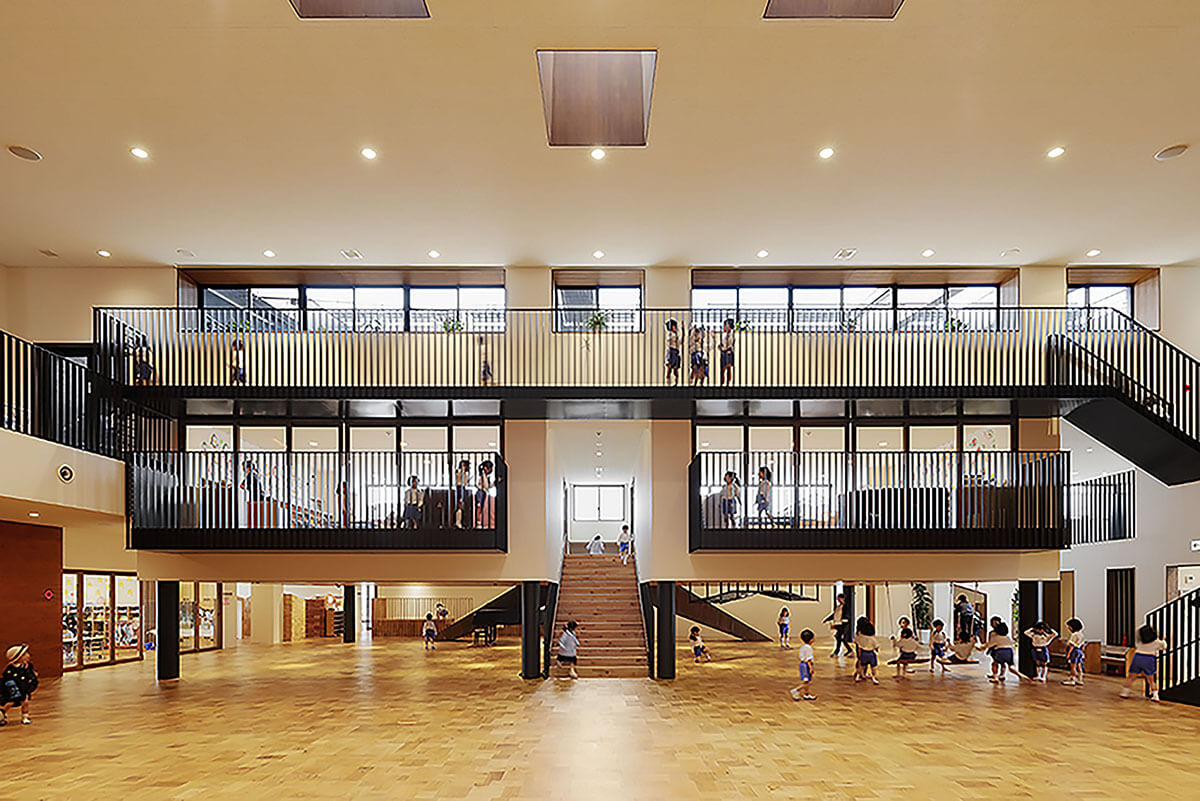
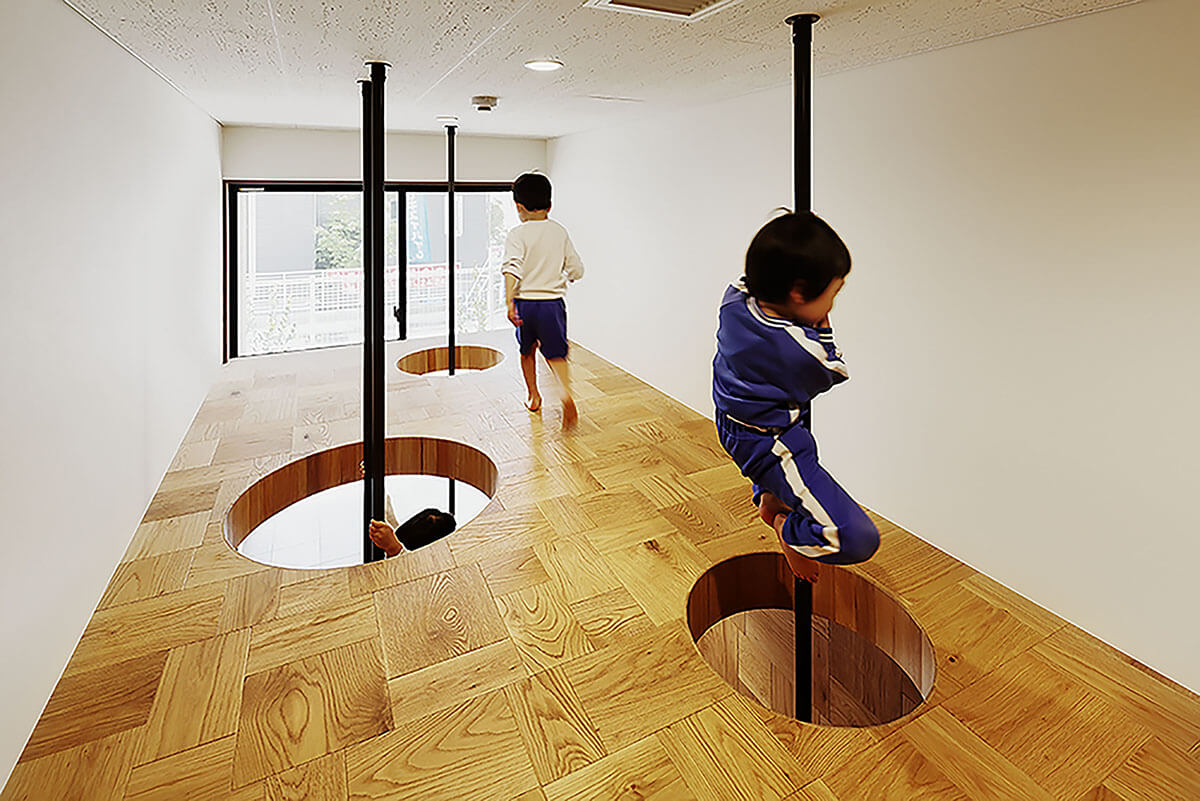
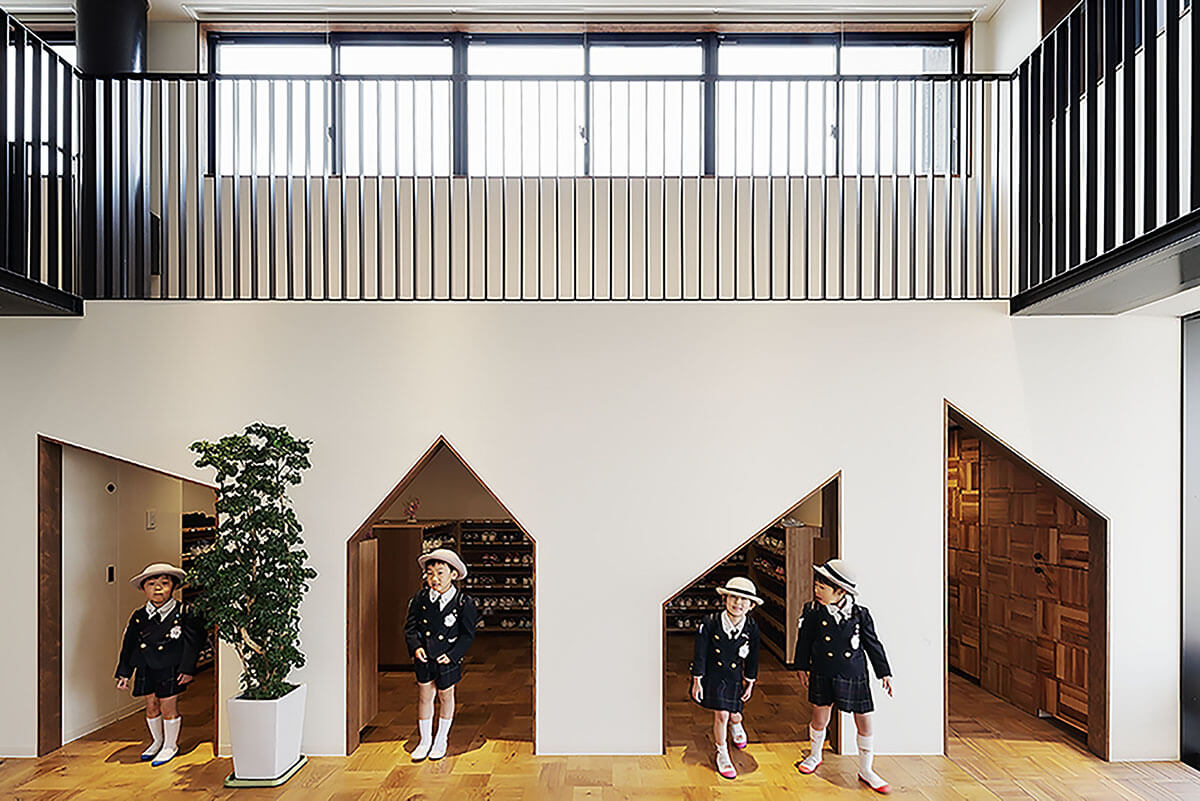
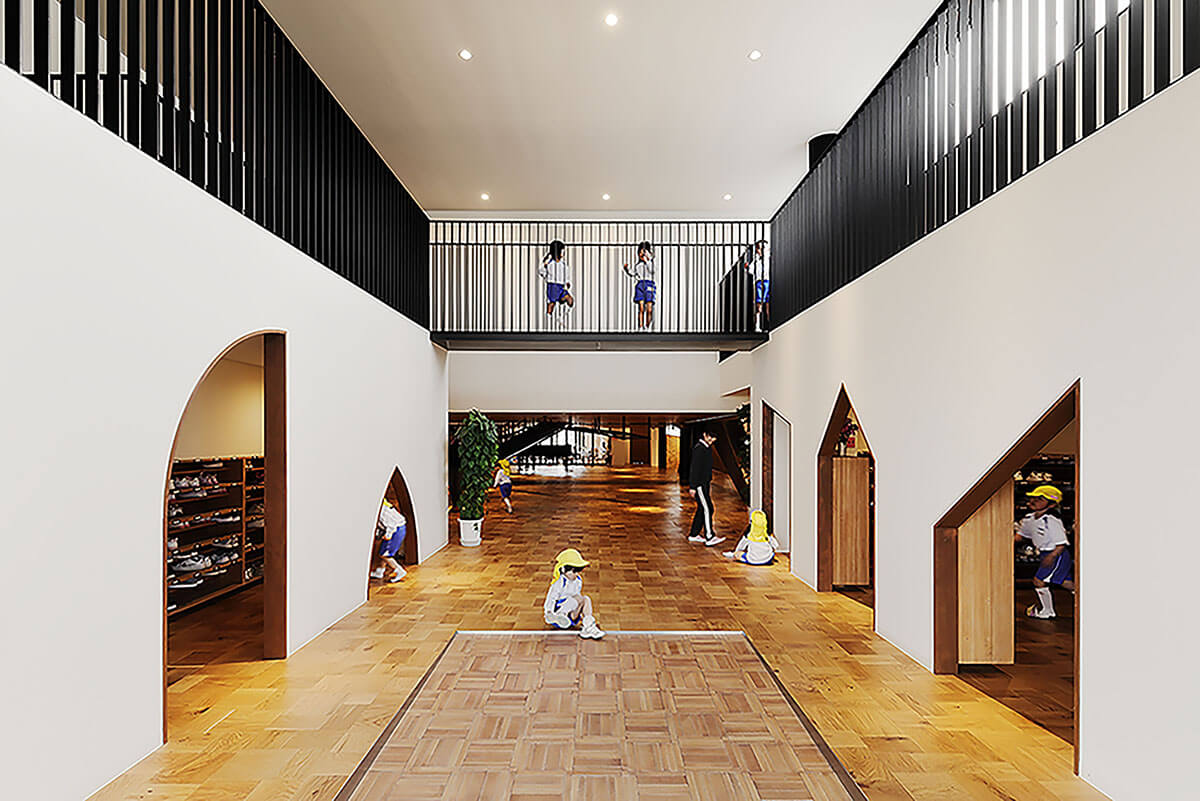
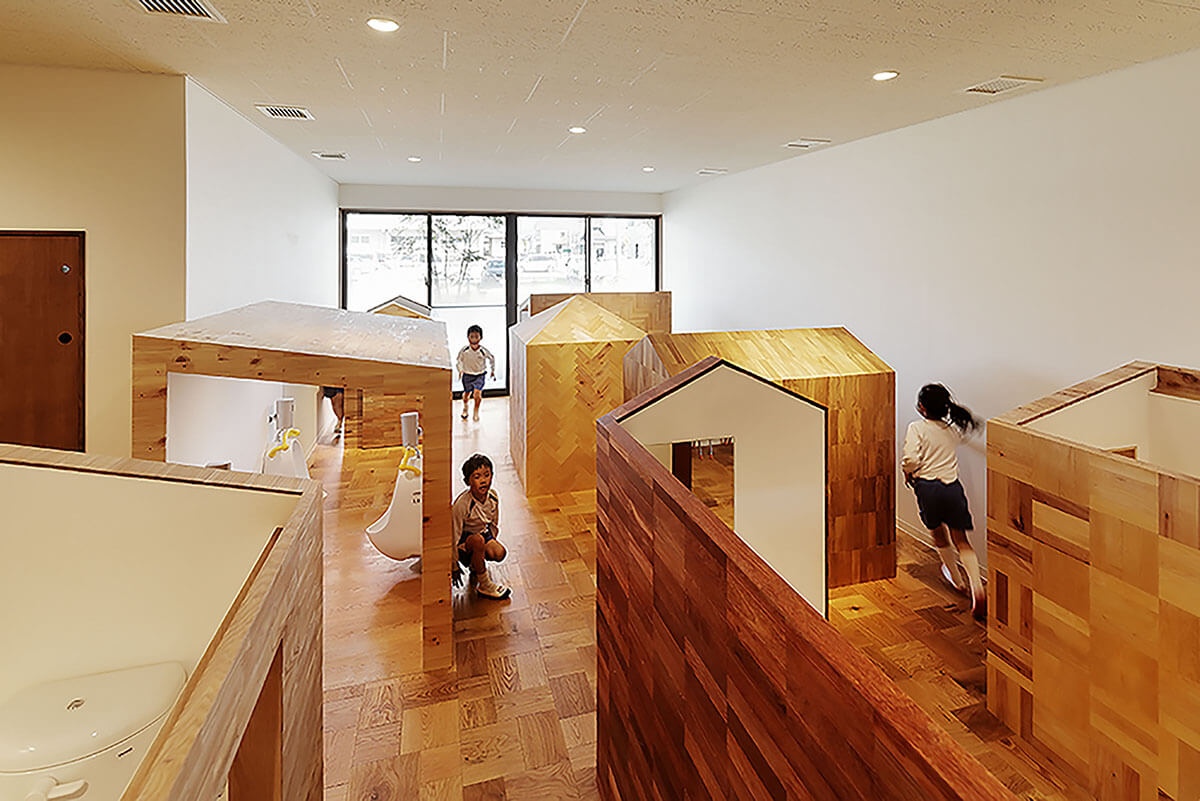
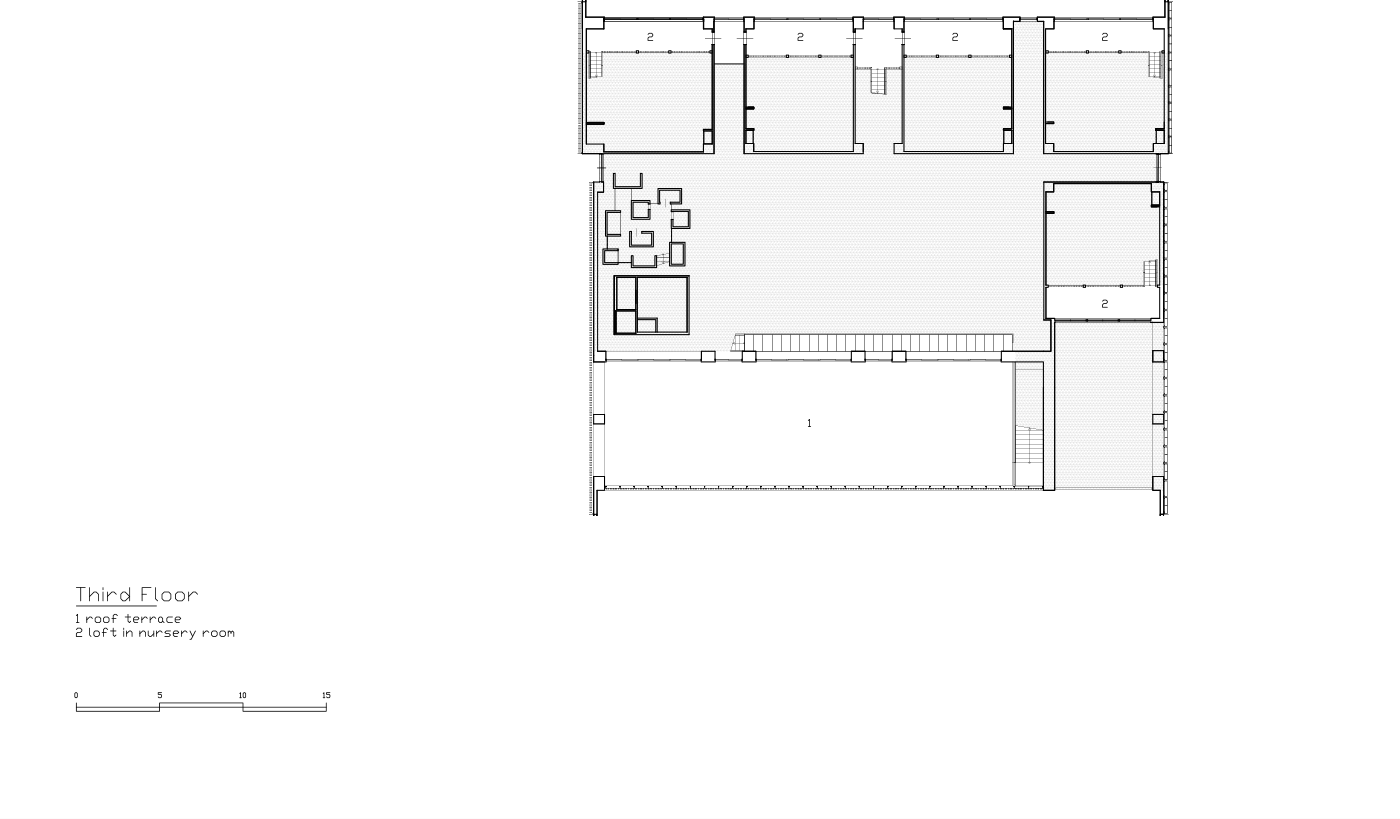
In the KO Kinder­garten there is a distinct centre, and that is a large, multi-storey play area. All rooms for groups, employees, etc. were orga­nized at the edge of the rectan­gular buil­ding.

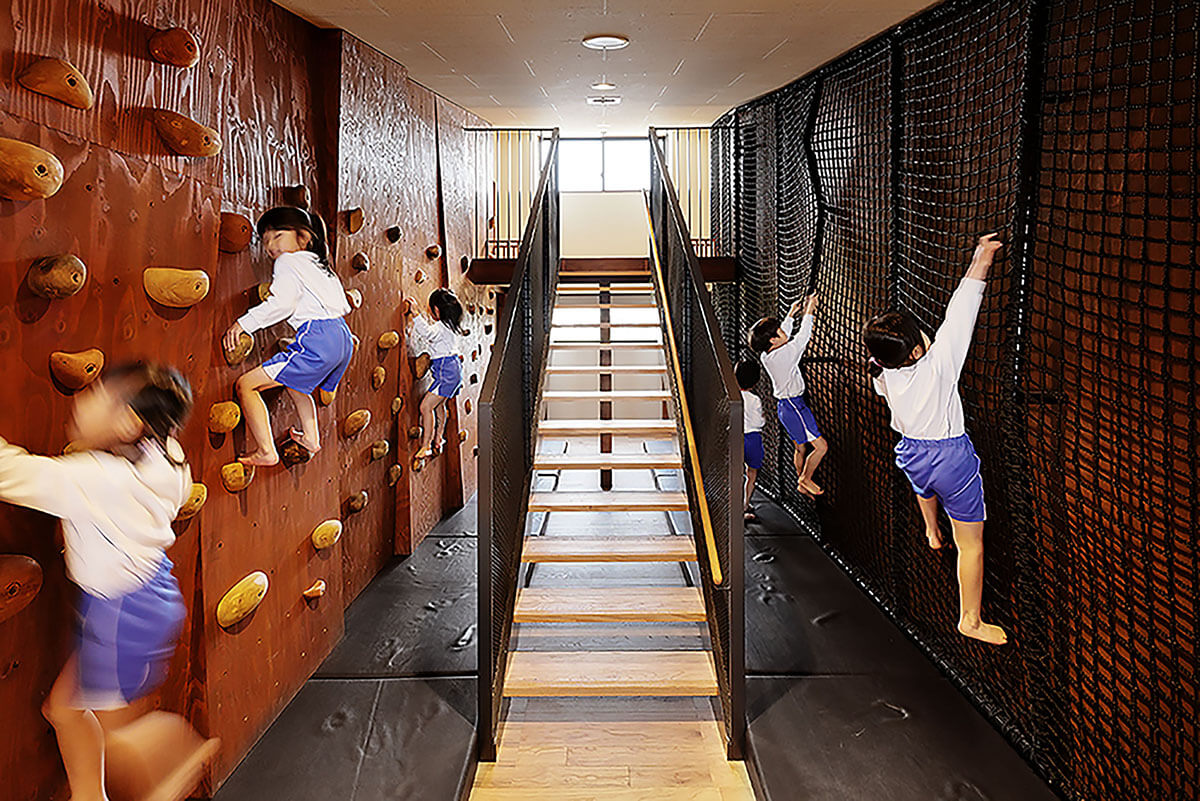
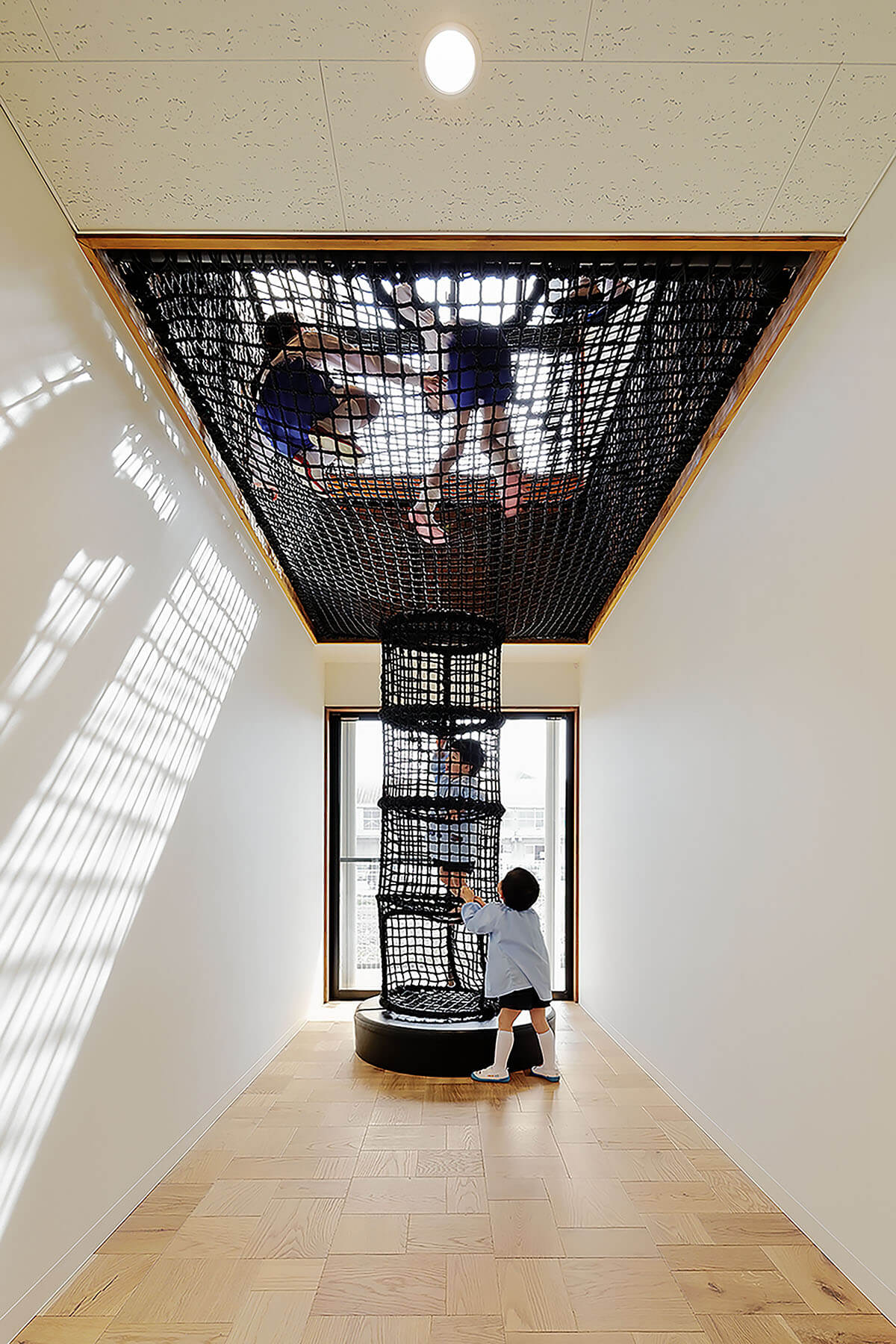
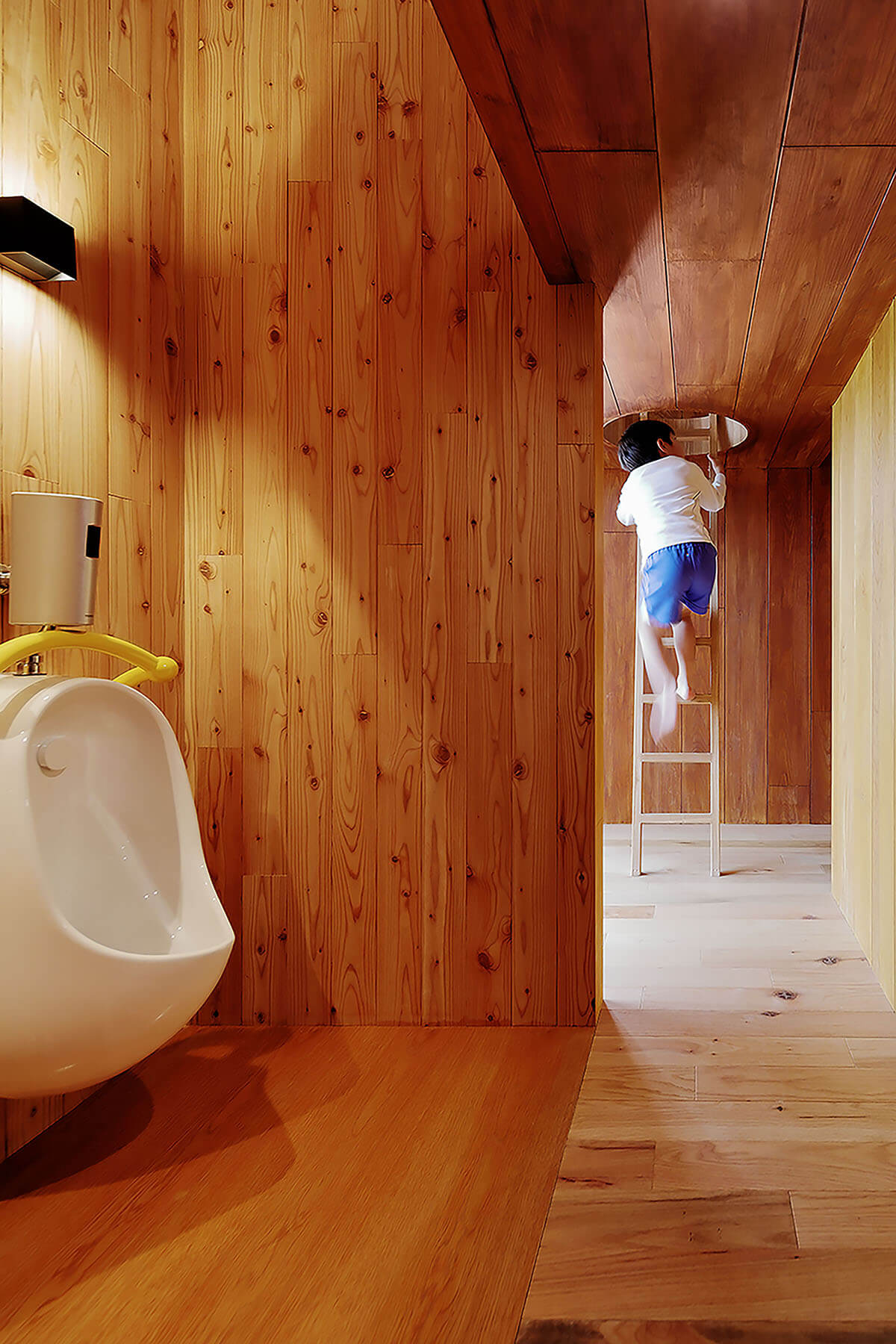
The great special feature of the KO Kinder­garten, however, are the 14 diffe­rent niches and remai­ning areas between the rooms and levels, from which the archi­tects of Hibi­no­sekkei have created game spaces and free areas for the 450 children.

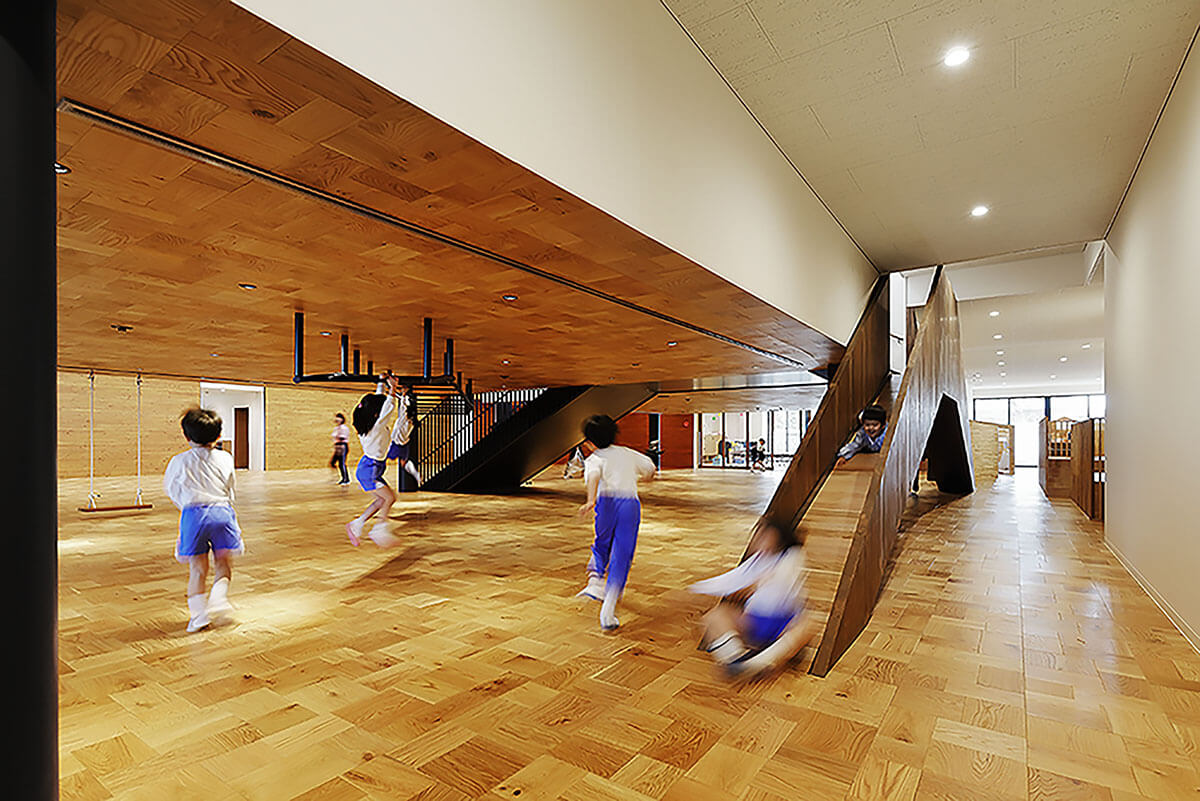
Ever­y­thing is somehow shifted hori­zon­tally and verti­cally, around every corner there are new “streets”, land­scapes and chal­lenges – unique play areas. The buil­ding is the toy. The many instal­la­tions from KDS (Kids Design Labo) make a decisive contri­bu­tion to this.

Pedago­gics

The theory behind it comes from Kazu­hiko Naka­mura, a professor of pedago­gics at the Univer­sity of Yama­nashi. Kazu­hiko Naka­mura says that in our child­hood we should learn 36 diffe­rent body move­ments such as “running”, “jumping”, “clim­bing” or “holding”. All these 36 move­ments can be prac­ticed in the 14 play­rooms of the KO Kinder­garten.

First expe­ri­ences and studies show that the three- to five-year-old children move 20 percent more in this new kinder­garten than in the old buil­ding. In addi­tion, skills such as “thro­wing”, “driving through” and “craw­ling” can only be “trained” in the new atmo­sphere.

Archi­tec­ture that inspires courage

There have also been some changes in the outdoor area. The new play­ground offers two small hills with natural grass. The children love to romp around and climb up there. In addi­tion, beetles and flowers can be seen and contact with nature is a matter of course.

The KO Kinder­garten creates a lot of new play areas. The children accept all chal­lenges enthu­si­a­sti­cally. Not only do they improve their physical abili­ties, they also constantly develop new games and new inte­rests. Archi­tec­ture that inspires courage and encou­rages children to play and move as a matter of course.

We did this.

Project data and compa­nies involved

Super­s­truc­tures

Opening

2019

Archi­tects

HIBINOSEKKEI, Inc
2343 Iiyama, Atsugi
JP – Kana­gawa

Youji no Shiro

Photos

Ryuji Inoue

Text

Johannes Bühl­be­cker
More Sports Media

Visit our Blog

At “More Sports. More Archi­tec­ture.” you will find func­tional, spec­ta­cular and simply beau­tiful buil­dings and faci­li­ties for sports and leisure.

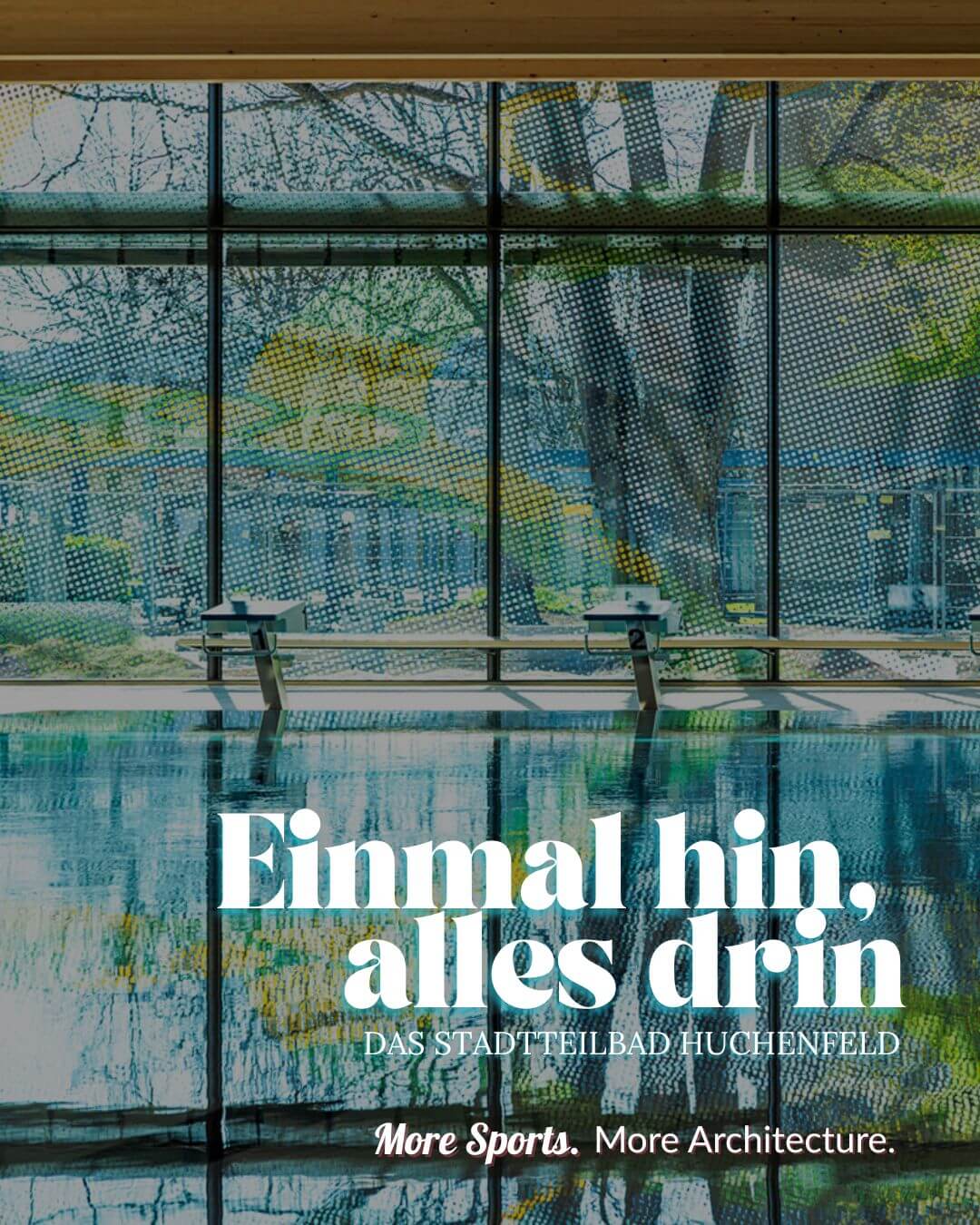
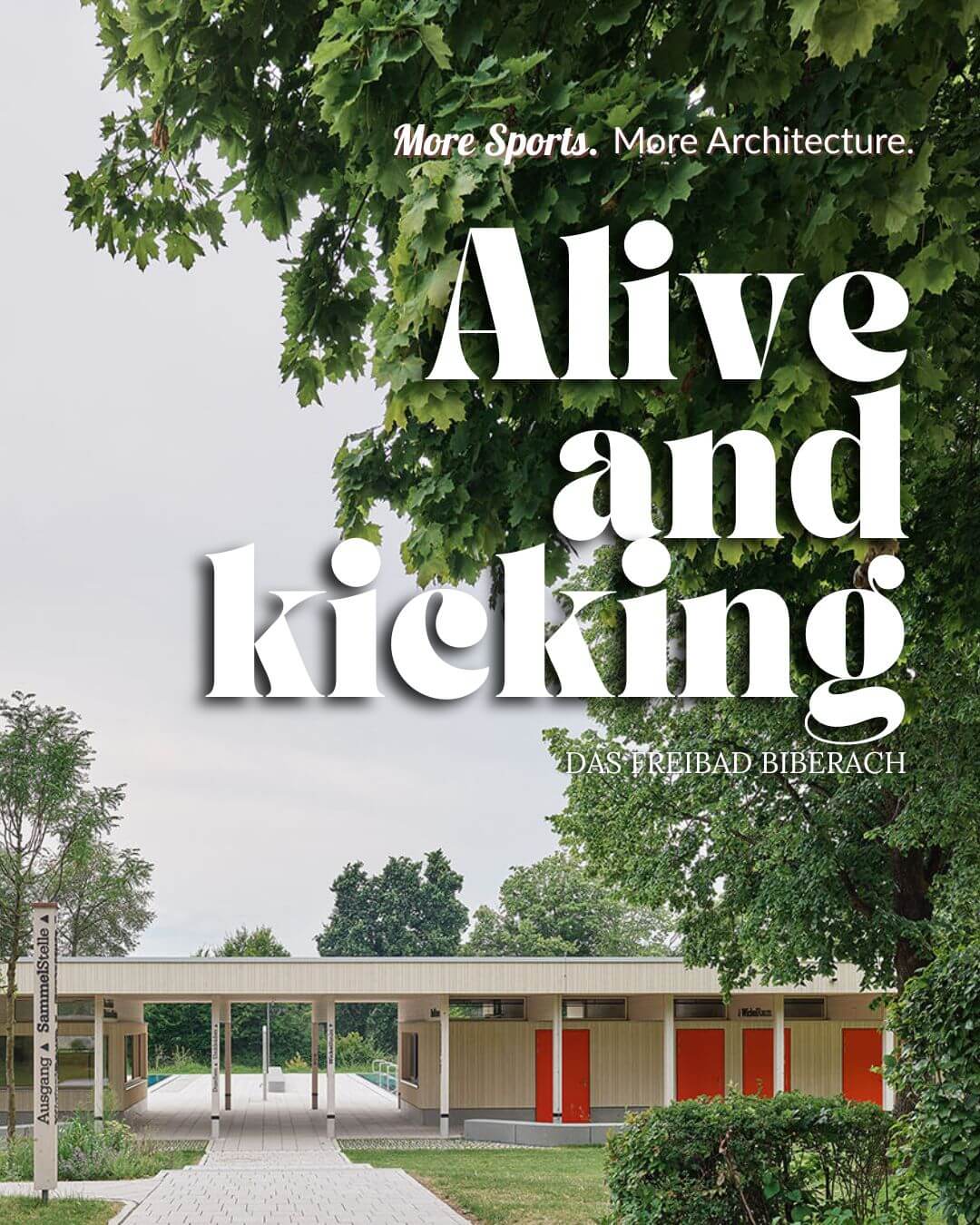
Biberach outdoor pool

Biberach outdoor pool

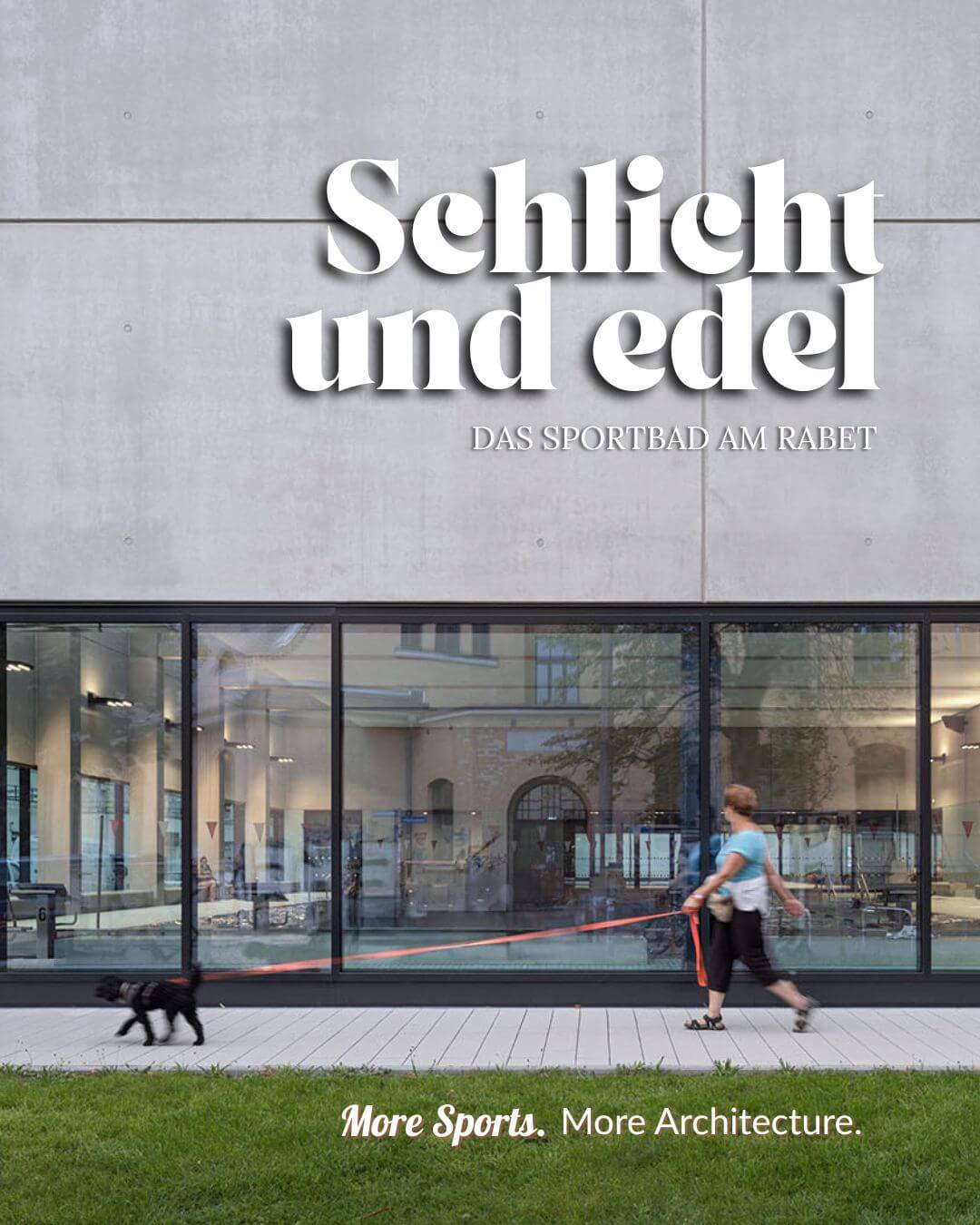
A contem­po­rary reinter­pre­ta­tion of a tradi­tional leisure insti­tu­tion.

Forest of Numbers

Forest of Numbers

Exhi­bi­tion at the National Art Center, Tokyo

The event

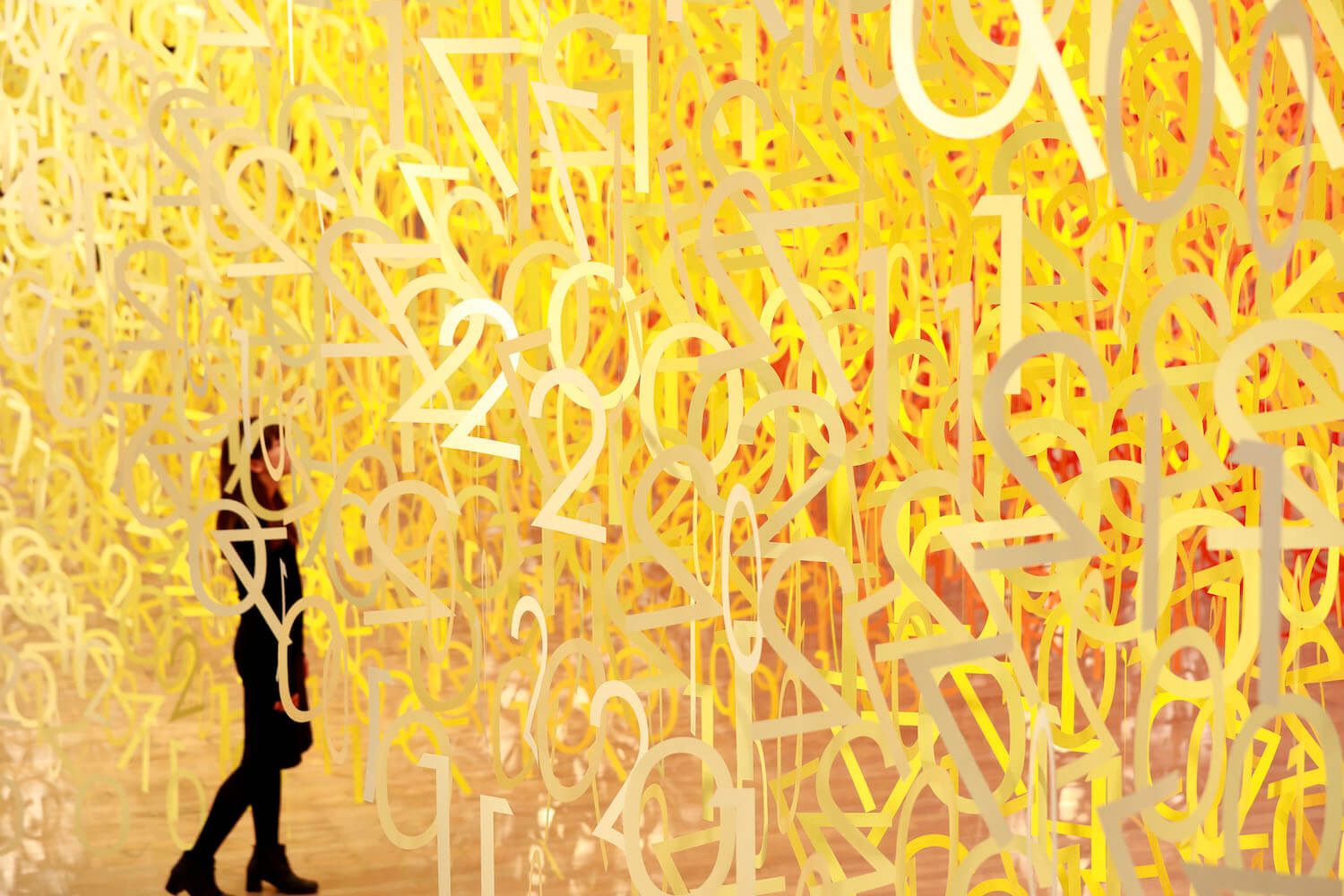
The National Art Center, Tokyo has cele­brated its 10th Anni­ver­sary in January. As a comme­mo­ra­tion, it presented the museum acti­vi­ties of the past ten years in the Special Exhi­bi­tion Gallery room, which was super­im­posed with a large instal­la­tion “Forest of Numbers” – the symbo­liza­tion of the next 10 years to come. Used without any parti­tion walls for the first time, the 2000 square meter White Cube exhi­bi­tion room became a canvas of the instal­la­tion, filled with “100 colors”, inspi­ra­tion and emotion, which became the largest instal­la­tion of Emma­nu­elle Moureaux’s work.

The archi­tect

Emma­nu­elle Moureaux is a French archi­tect living in Tokyo since 1996, where she estab­lished “emma­nu­elle moureaux archi­tec­ture + design” in 2003. Inspired by the layers and colors of Tokyo that built a complex depth and density on the street, and the Japa­nese tradi­tional spatial elements like sliding screens, she has created the concept of shikiri, which lite­rally means “divi­ding (crea­ting) space with colors”. She uses colors as three-dimen­sional elements, like layers, in order to create spaces, not as a finis­hing touch applied on surfaces. Hand­ling colors as a medium to compose space, her wish is to give emotion through colors with her crea­tions, which range from art, design to archi­tec­ture.

Archi­tect

emma­nu­elle moureaux archi­tec­ture + design
Tounkyo bldg 3F
1–14-14 Uchikanda
Chiyoda-ku
JP-101‑0047 Tokyo

Client

The National Art Center, Tokyo

The instal­la­tion

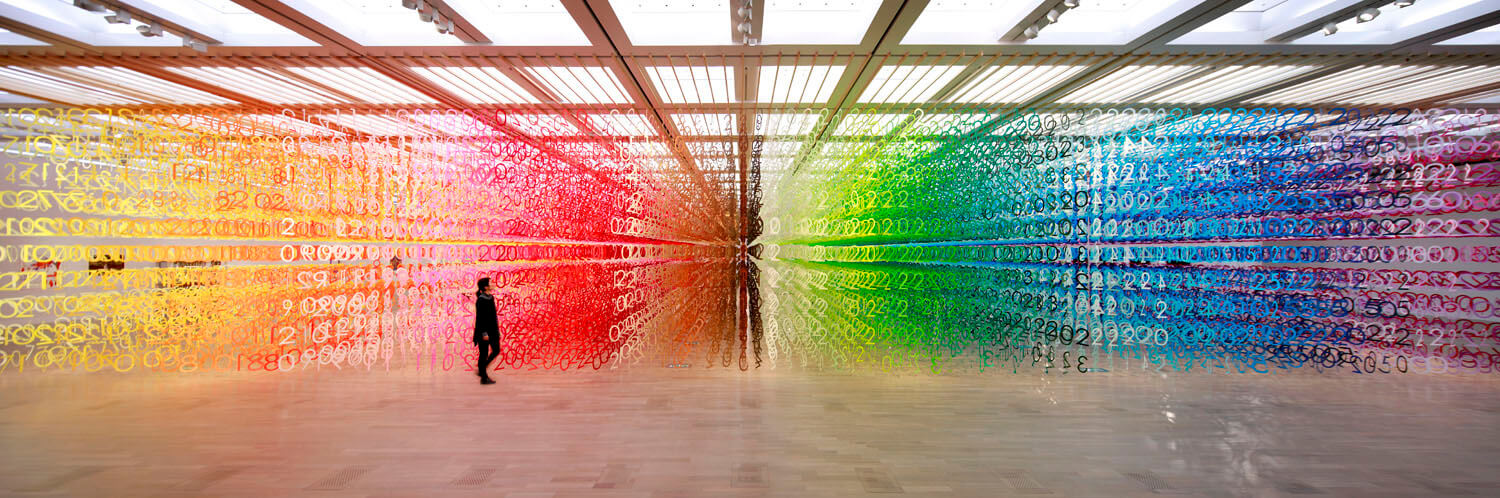
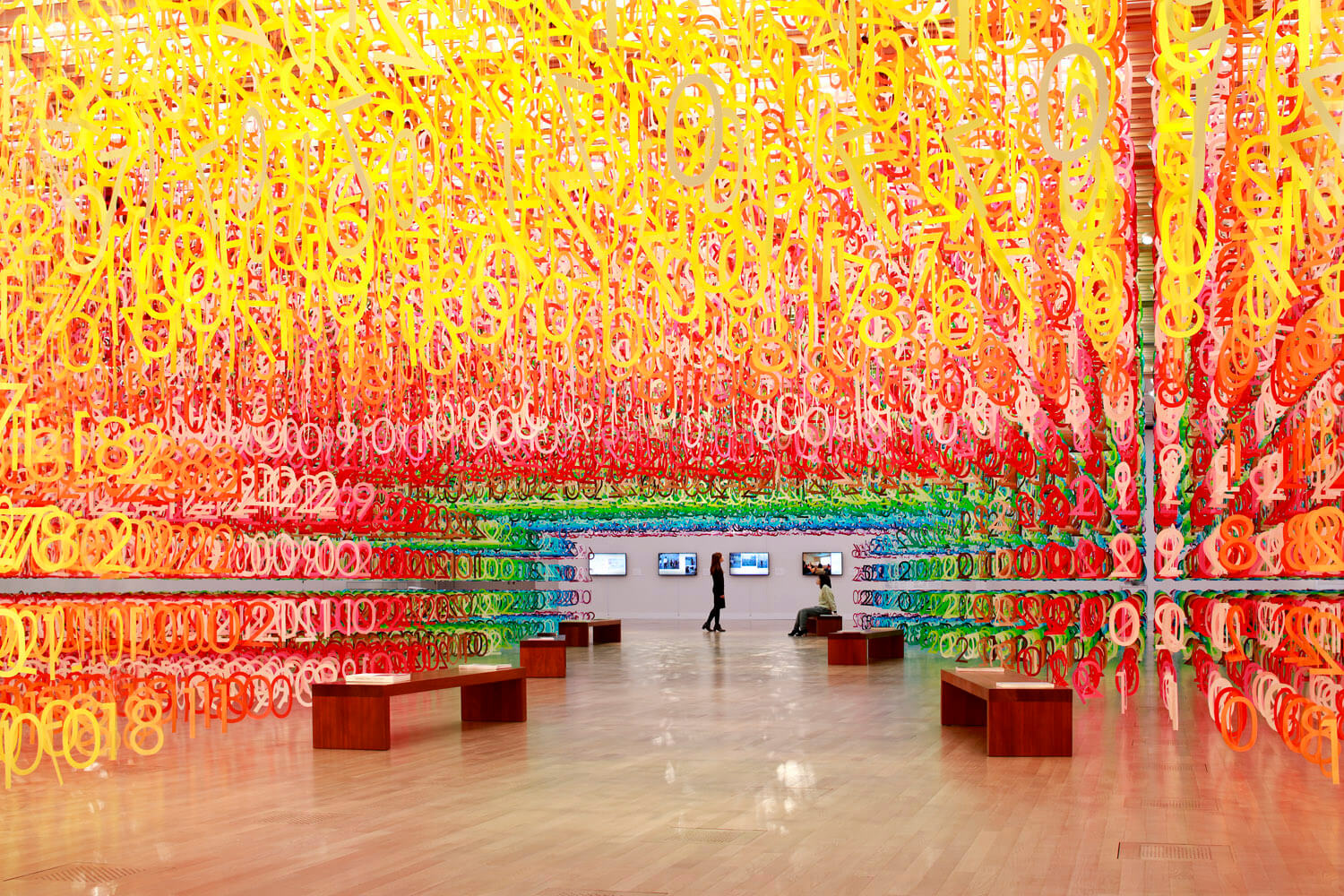
The instal­la­tion “Forest of Numbers” visua­lized the decade of the future from 2017 to 2026, created a sense of still­ness across the large exhi­bi­tion space. More than 60,000 pieces of suspended numeral figures from 0 to 9 were regu­larly aligned in three dimen­sional grids. A section was removed, created a path that cut through the instal­la­tion, invited visi­tors to wonder inside the colorful forest filled with numbers. The instal­la­tion was composed of 10 layers which is the repre­sen­ta­tion of 10 years time. Each layer employed 4 digits to express the rele­vant year such as 2, 0, 1, and 7 for 2017, which were randomly posi­tioned on the grids. As part of Emmanuelle’s “100 colors” instal­la­tion series, the layers of time were colored in 100 shades of colors, created a colorful time travel through the forest.

Inside the colorful forest, two girls and one cat were lost inside, added playful­ness to the instal­la­tion. In concert with the instal­la­tion, the compi­la­tion of exhi­bi­tion posters from the last ten years filled the wall on the right, and the oppo­site wall across the room simply expressed the next ten years with white numbers. Because photo­graphy was excep­tio­nally allowed, the instal­la­tion has spread through various social networks, incre­asing number of visi­tors. This instal­la­tion was created with the coope­ra­tion of 300 volun­teers, excited the atten­tion of over 20,000 visi­tors in10 days.

Author

emma­nu­elle moureaux archi­tec­ture + design

Photo­graph

Daisuke Shima
PHOTOGRAPHS

GDPR Cookie Consent with Real Cookie Banner