
Baignade en Seine de Grenelle in Paris
Swimming in the Seine
Mater Studio
After being banned for over a century, swimming in the Seine has been possible again since the summer of 2025. What began as a visionary project for the 2024 Olympic Games has developed into a lasting enrichment for Parisians. The Grenelle swimming area is a fine example of this.
From Mater Studio.

Abstinence
Swimming in the Seine had been banned since 1923. Pollution from industrial wastewater and inadequate sewage systems had turned the water of France’s most famous river into a health hazard. Swimming in the Seine seemed to be lost forever.
The 2024 Olympic Games in Paris have changed a lot, here they became the catalyst for a historic turnaround. The Seine was extensively renovated with investments of 1.28 billion euros. New sewage treatment plants, state-of-the-art wastewater systems and innovative purification technologies were intended to bring the river back to life. However, despite these enormous efforts, water quality remained a critical issue during the Games (and remains so to this day): Heavy rainfall repeatedly led to elevated bacteria levels that jeopardized individual competitions.
A significant post-Olympic legacy is therefore the inauguration of the bathing area in Grenelle (15th arrondissement) on July 5, 2025 as a symbol of the return of the Seine as a living and usable part of everyday life in Paris.
The design was created by Mater Studio.

Technology
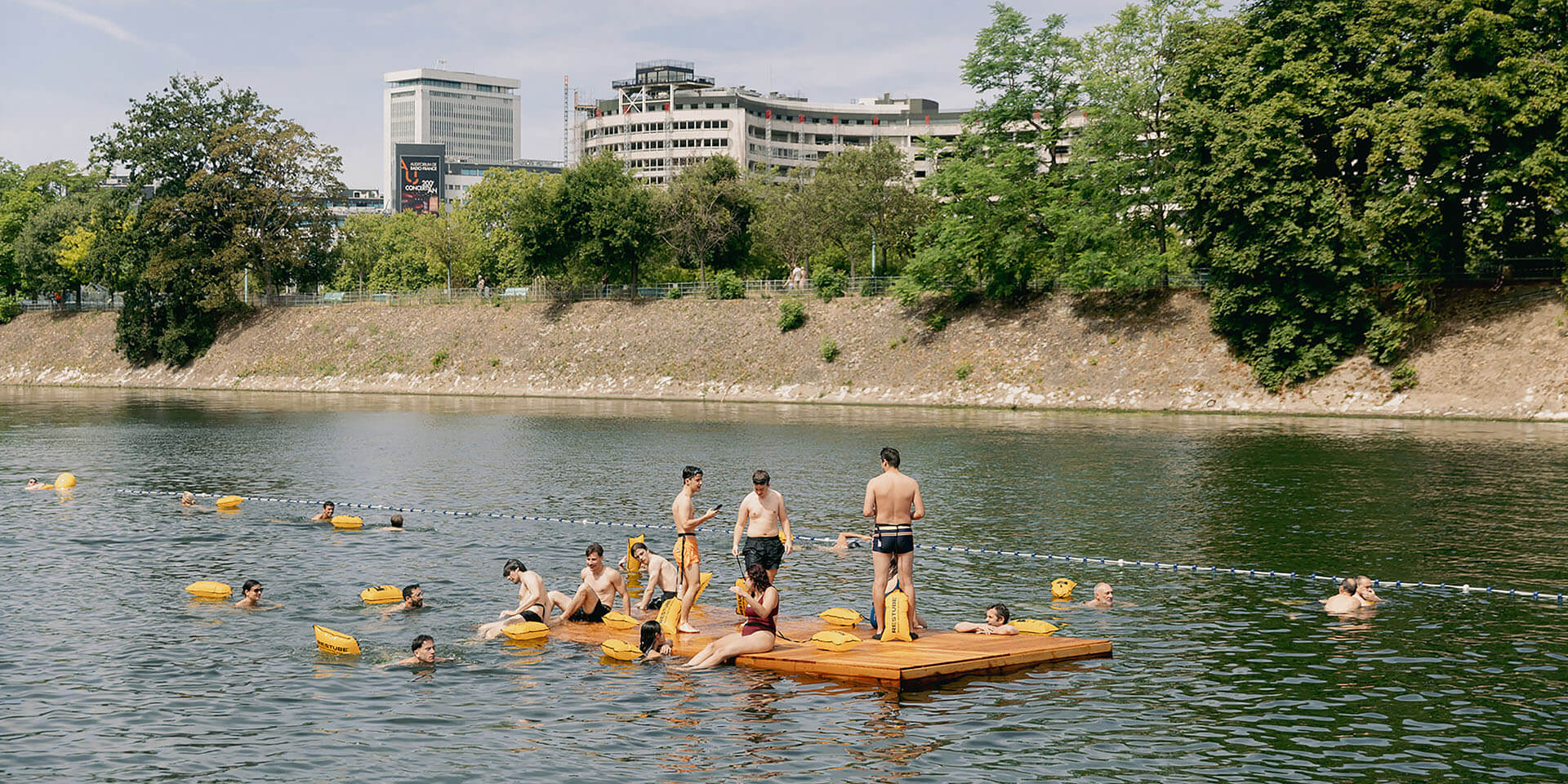
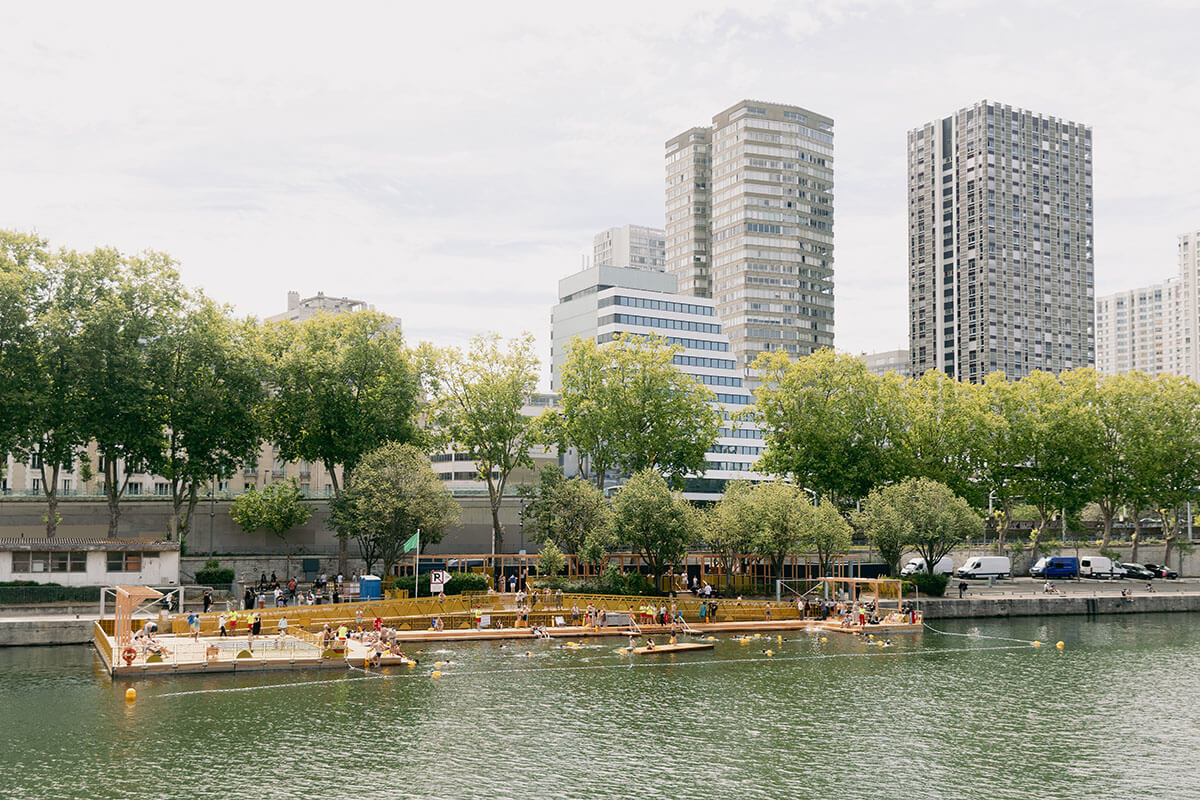
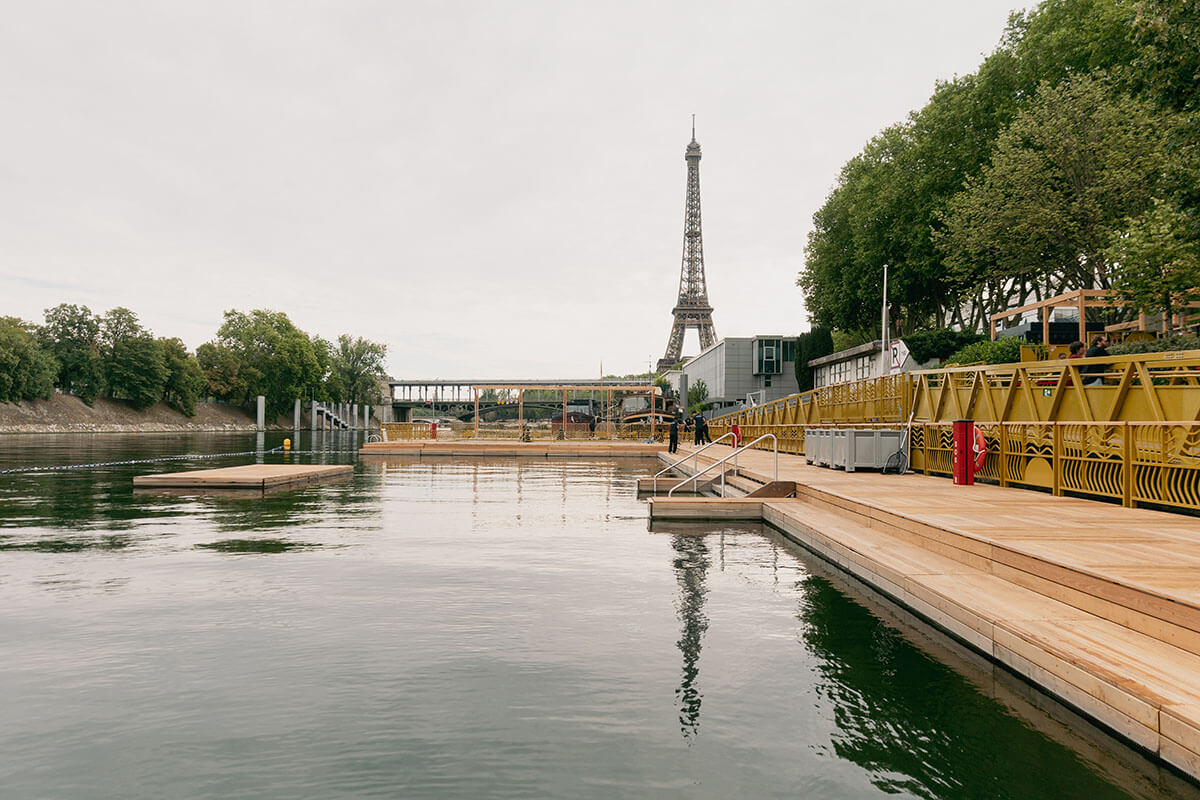
The challenges posed by the “Baignade en Seine de Grenelle” project were quite considerable, as it involved the construction of a completely demountable floating bathing facility for 300 people, which had to adapt to the constantly changing water levels of the Seine. The result is a 950 m², 60 meter long swimming area with a 415 m² floating platform and 480 m² of land facilities.
The main cornerstones of the design are:
- Mobile construction: The entire system glides on vertical rails that are anchored to the quay with invisible concrete blocks.
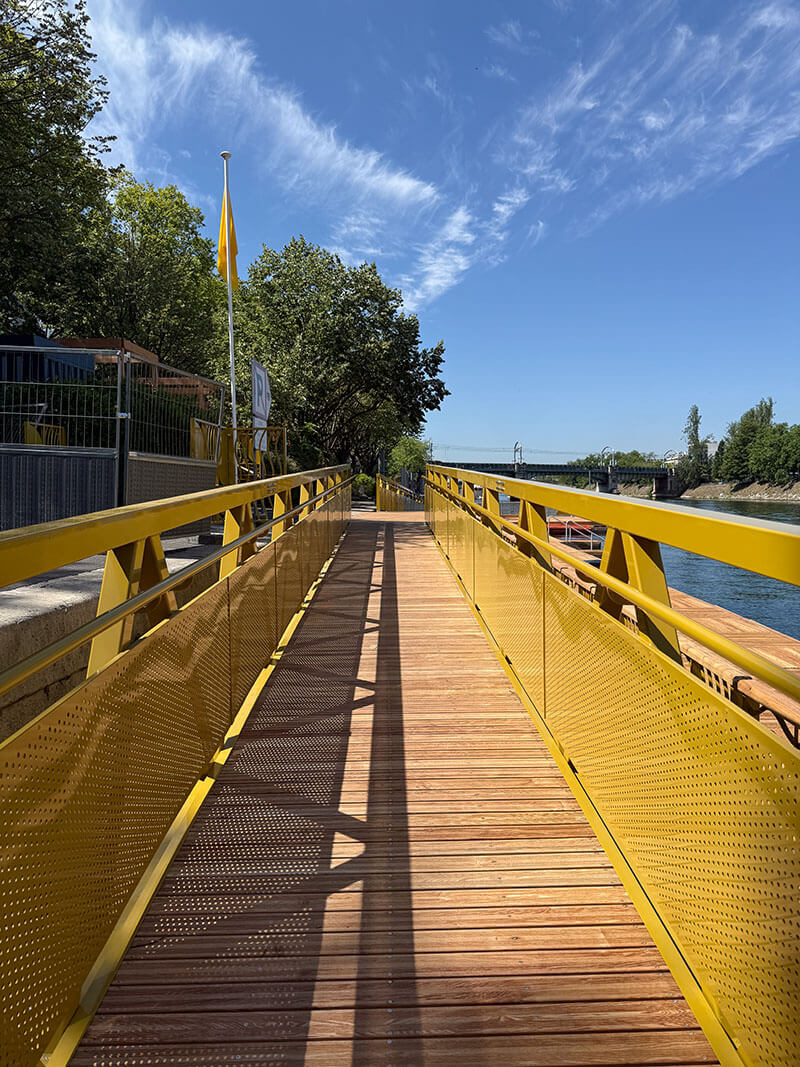
- Adaptive access: Two 25-meter-long swivel footbridges continuously adjust to the water level and ensure barrier-free access.
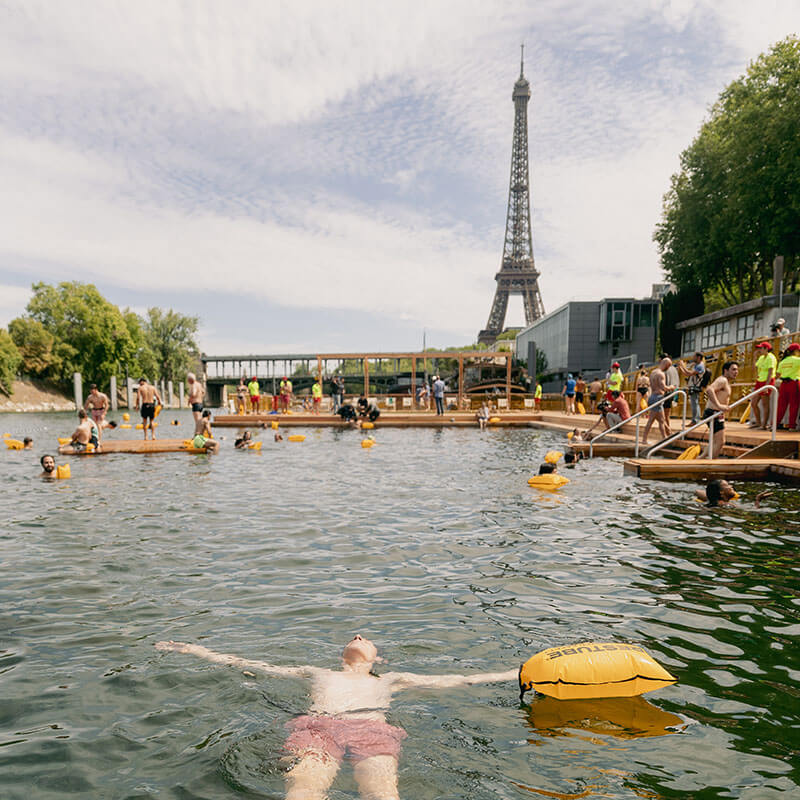
- Stability: The structure can be used by 300 people without risk of deformation.
- Emergency preparedness: If there is a risk of flooding, the entire system can be dismantled within 48 hours.

Design
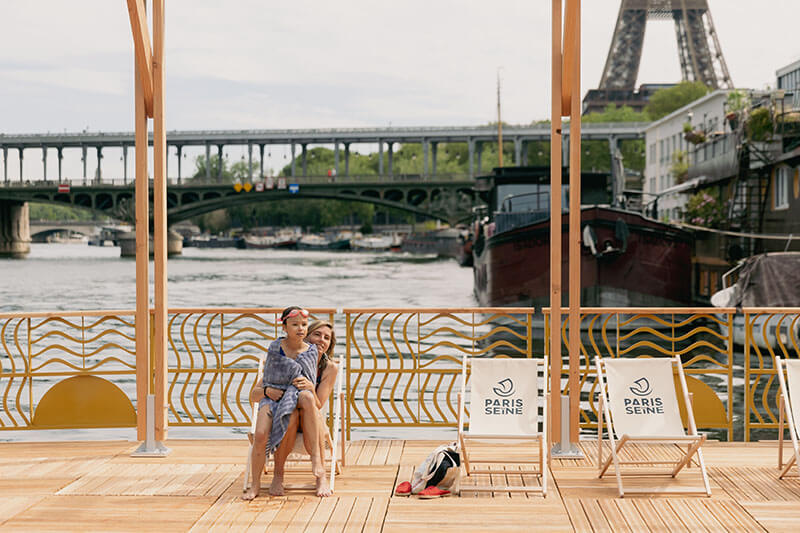
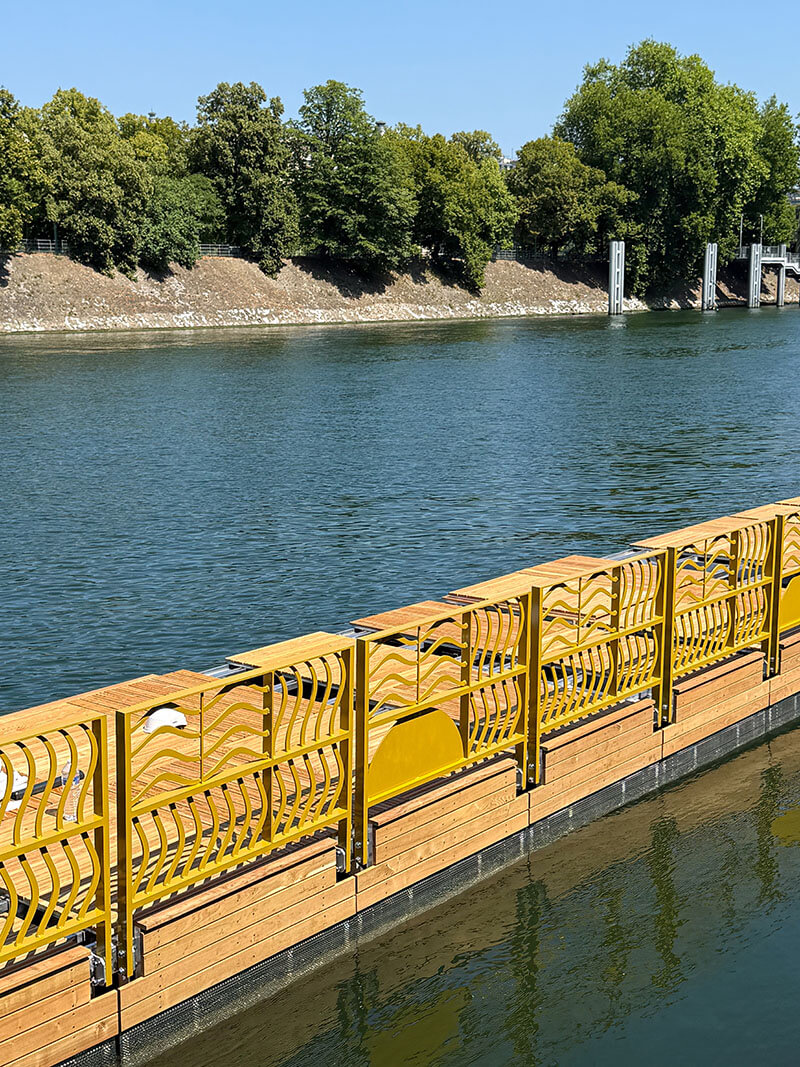
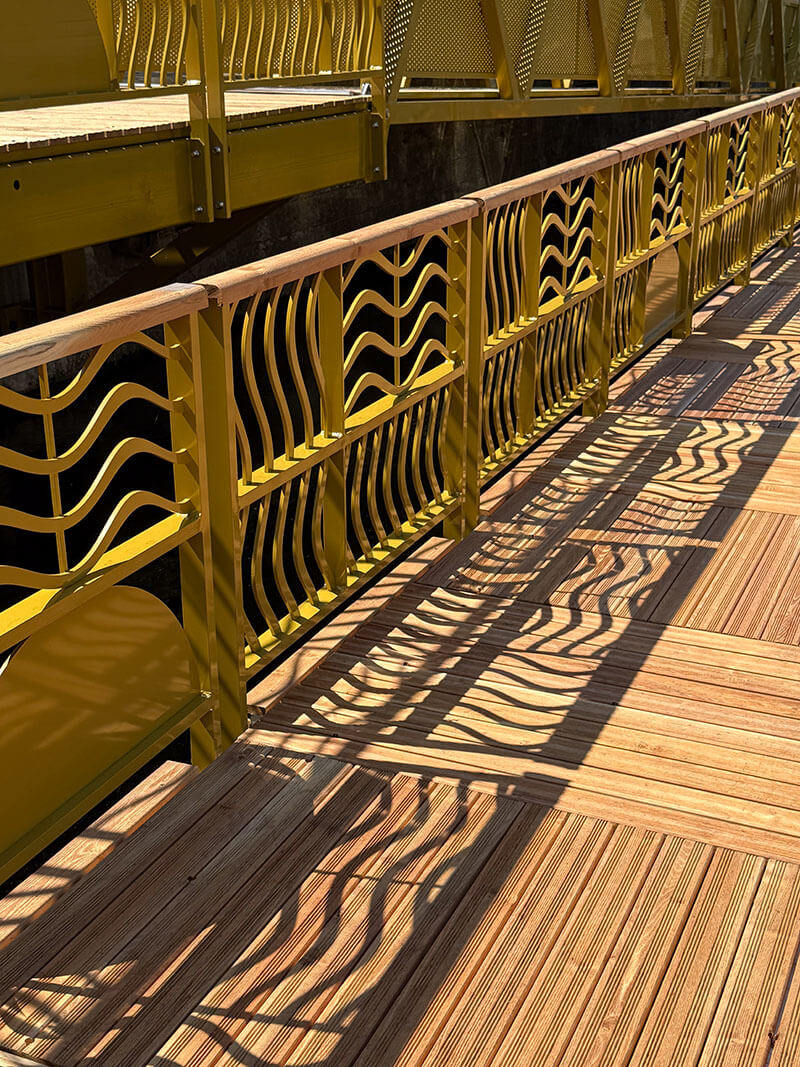
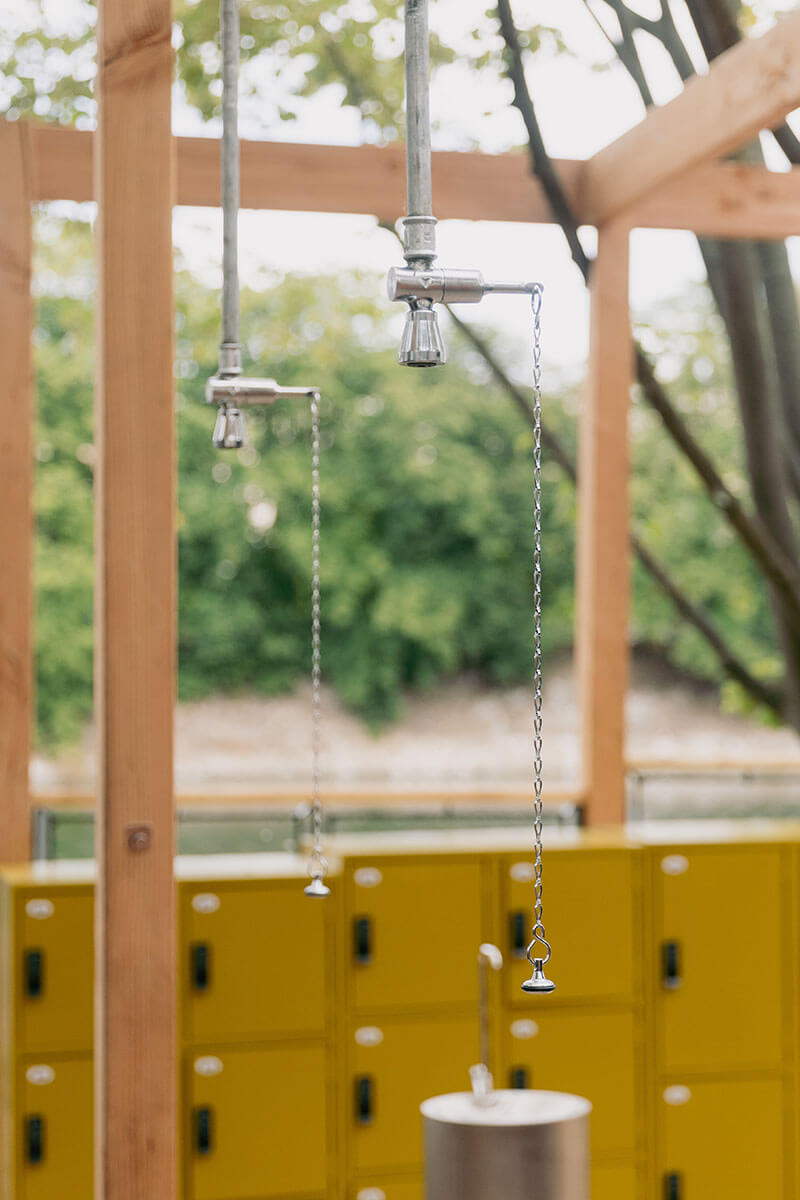
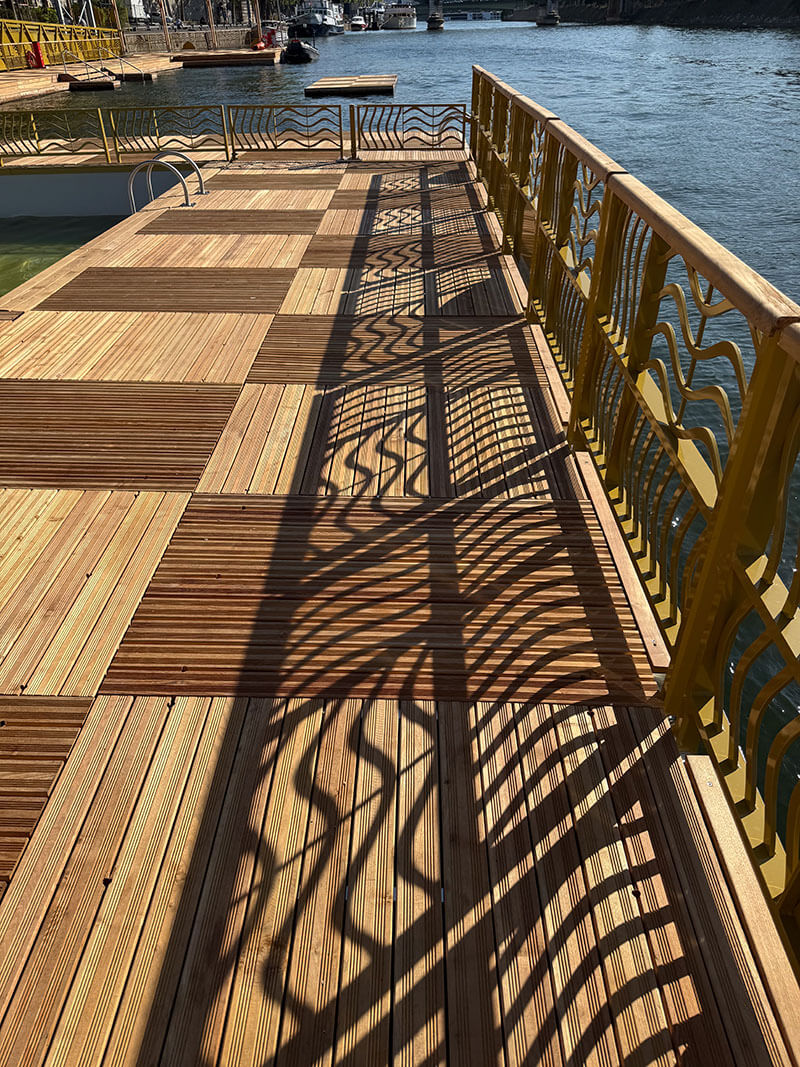
Despite the technical complexity, the design intent is clearly recognizable. The yellow railings and metalwork were inspired by the Art Deco forms of the 1920s – the era in which Paris celebrated its first public swimming pools as architectural masterpieces. The yellow and blue color scheme deliberately evokes leisure, vacations and summer.
The integration into the surroundings is also successful: although located at the foot of the Eiffel Tower, the Grenelle bathing area, discreetly nestled under plane trees and lime trees, does not compete with the historical backdrop, but creates a new perspective from the river.
The use of materials and construction methods is also successful:
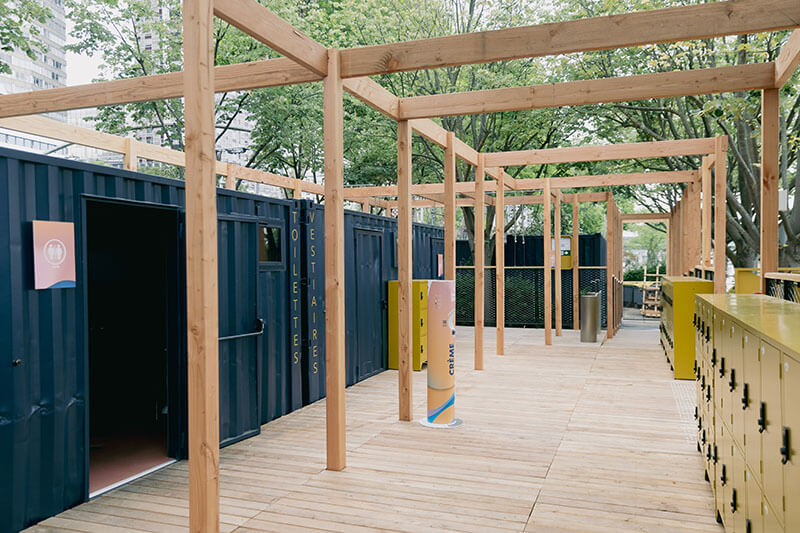
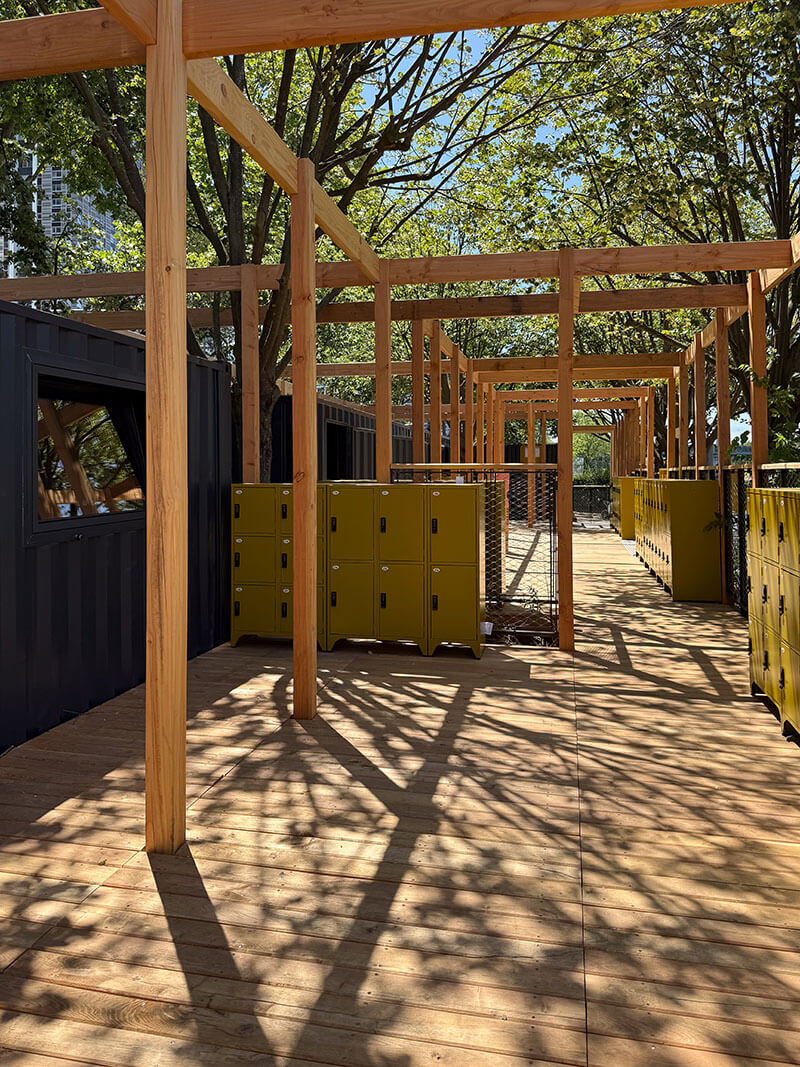
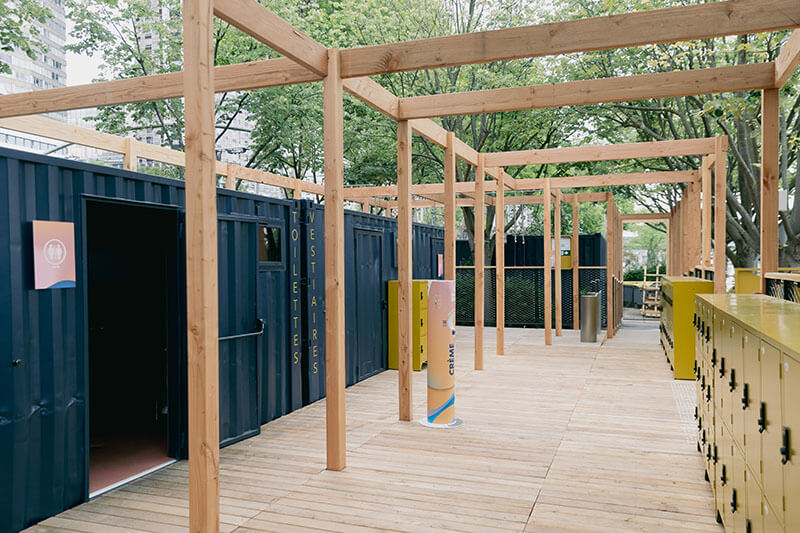
- Reuse: The shipping containers used have already circumnavigated the world several times.
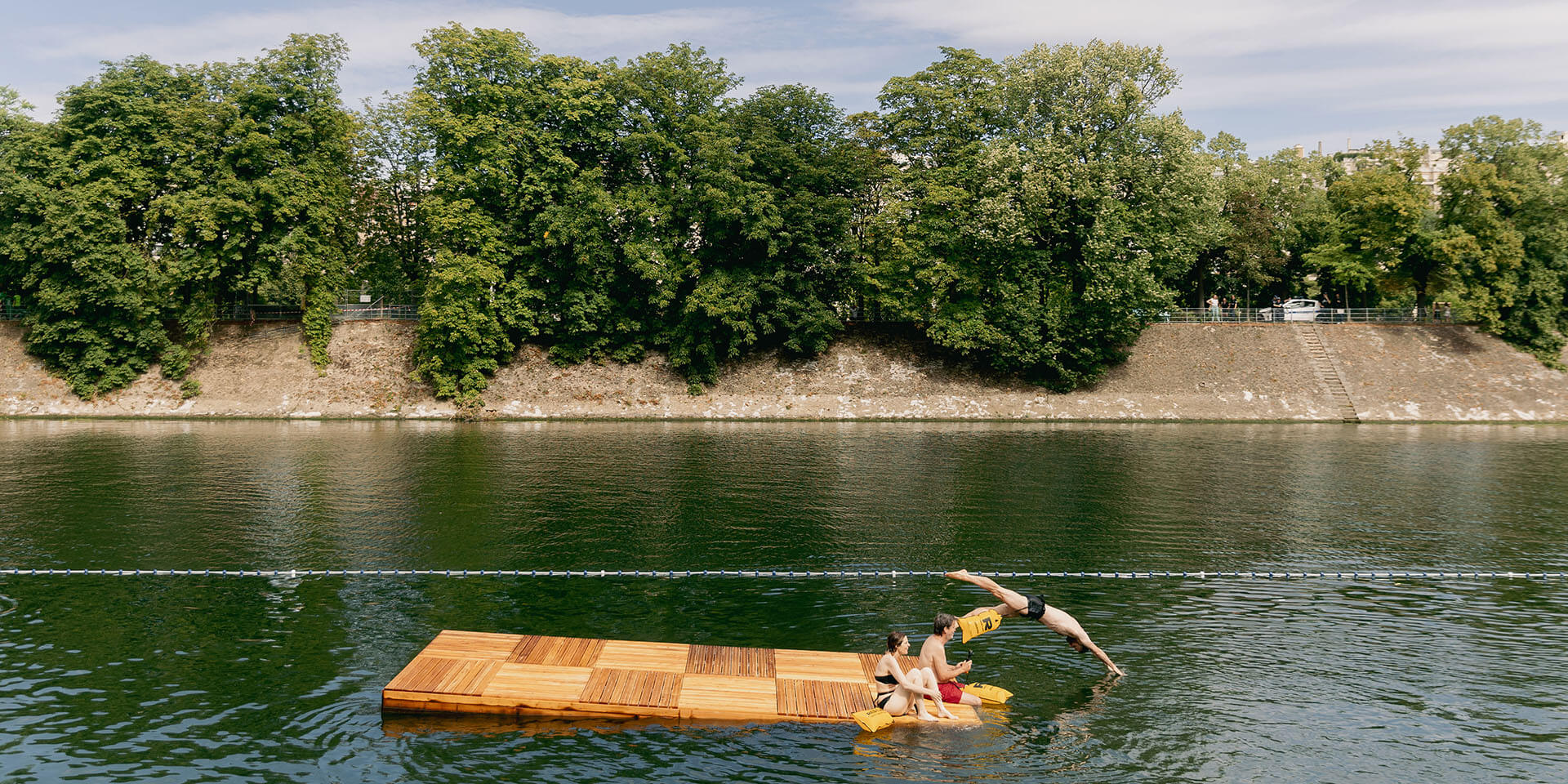
- Natural materials: Robinia wood, the only European hardwood that is naturally resistant to moisture without chemical treatment.
- Modular design: Like a giant Meccano system, the numbered precision construction enables quick assembly and disassembly.




Rain
The Grenelle bathing area is one of three free bathing areas that have been available to Parisians again since the summer of 2025.
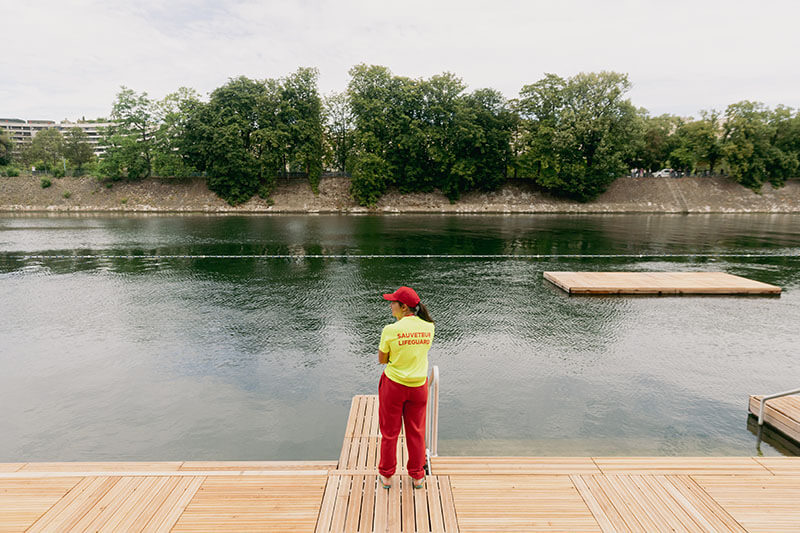
Lifeguards monitor the bathing areas and carry out regular safety checks. The problem remains the water quality of the Seine, and this is “variable” because it is very dependent on the weather. Heavy rainfall causes sewage and surface runoff to enter the river, which increases bacterial levels. Therefore, daily checks are carried out and swimming can be suspended when it rains, which does happen.
Overall, despite these problems, the Grenelle bathing area is a very good example of how cities can reclaim their natural resources and shape them for the future, also with regard to climate change.



Project data
Designer
Mater Studio
Charles Freudiger, Léa Matray
Building owner
Ville de Paris
Direction de la Jeunesse et des Sports
Address
Baignade en Seine de Grenelle
Port de Grenelle
75015
F – Paris
Opening
2025
Text
Johannes Bühlbecker
More Sports Media
Drawings
Videos
Our categories
Our newsletter
Your stage
Publish your project or product here!