
Salle Maurice Darbellay in Coudoux
Wood makes you happy
Atelier Régis Roudil
The Salle Maurice Darbellay follows the principle of material reduction, uses local resources and shows how public buildings in rural contexts can be implemented in a way that is both ambitious in terms of design and functional, economical and ecologically responsible.
Pavilion or clubhouse?
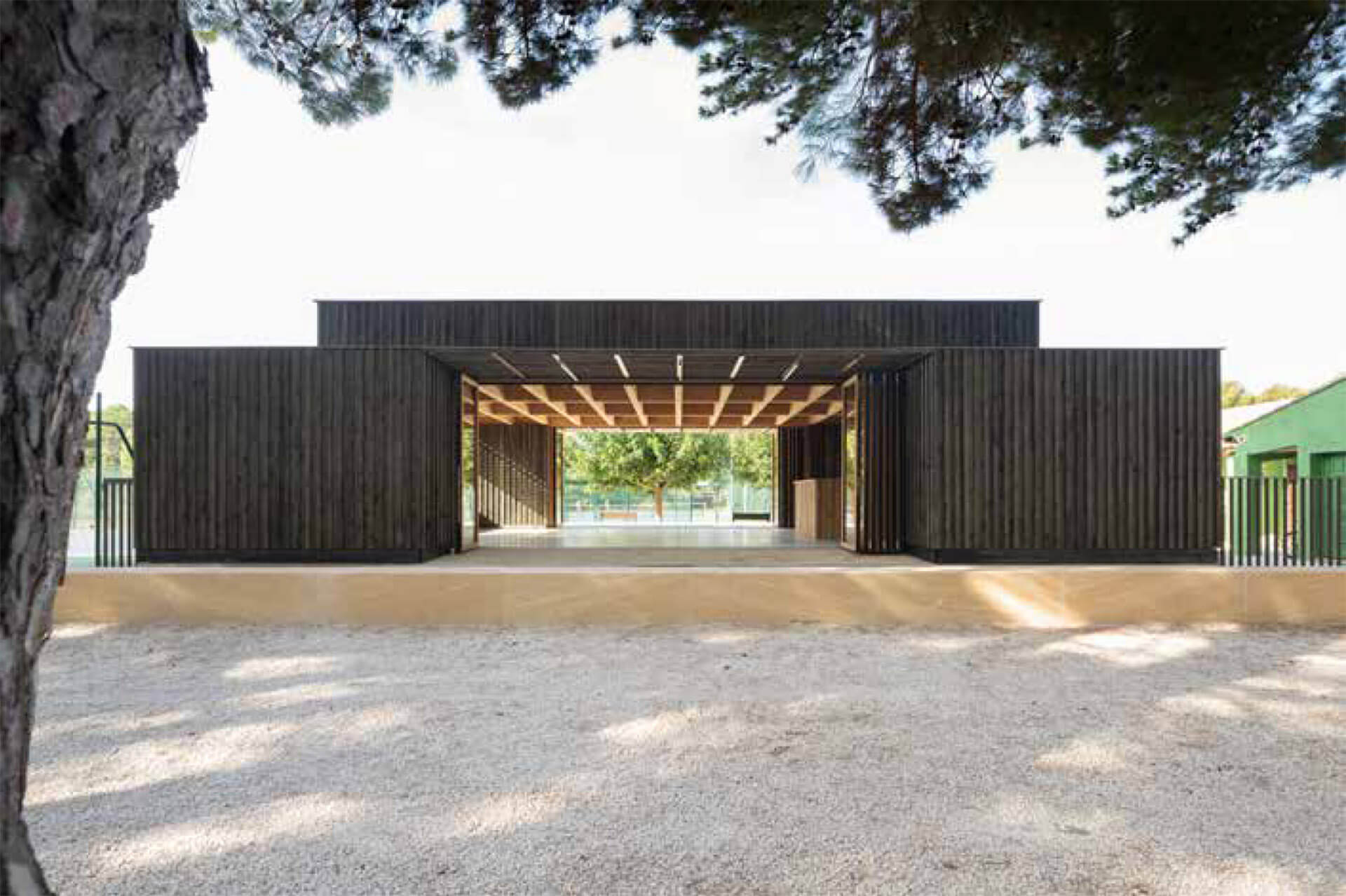
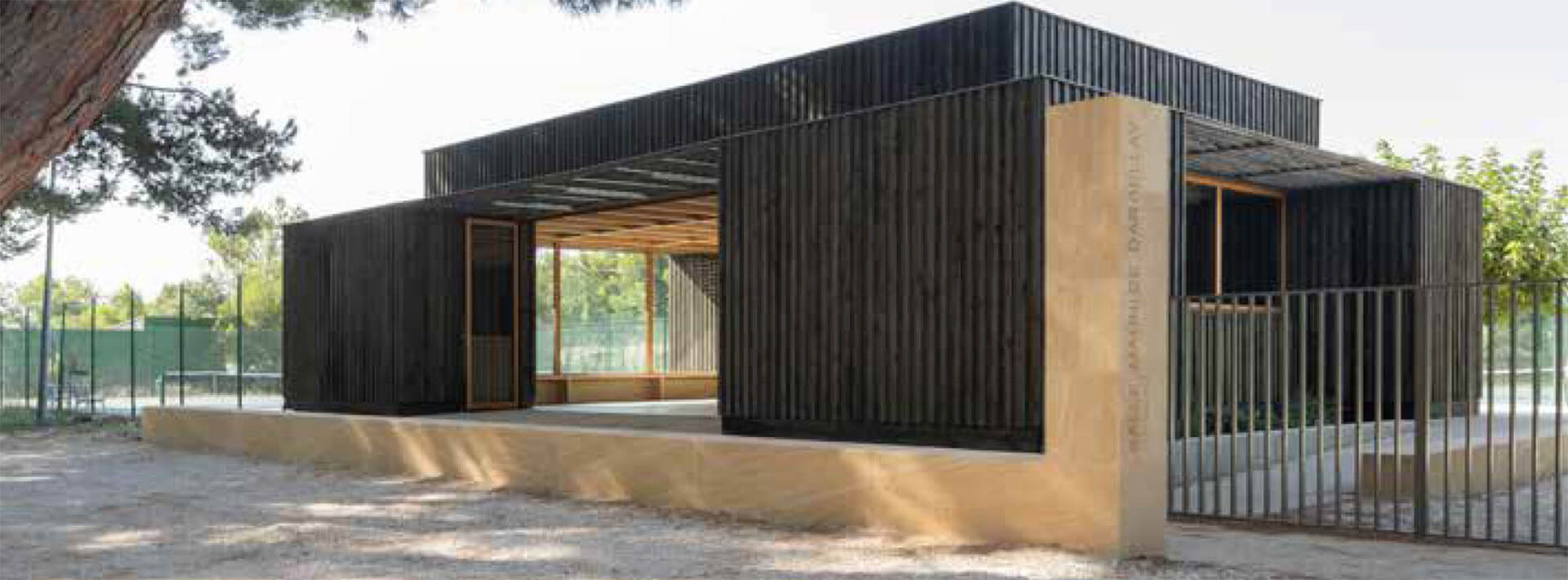
With the expansion of the tennis club and the construction of the “Salle Maurice Darbellay”, the southern French municipality of Coudoux has realized a remarkable project that convincingly combines architecture, sustainability and regionality. Designed by Atelier Régis Roudil, the result is an understated, elegant timber construction that blends in sensitively with its surroundings and can be used for a variety of purposes.
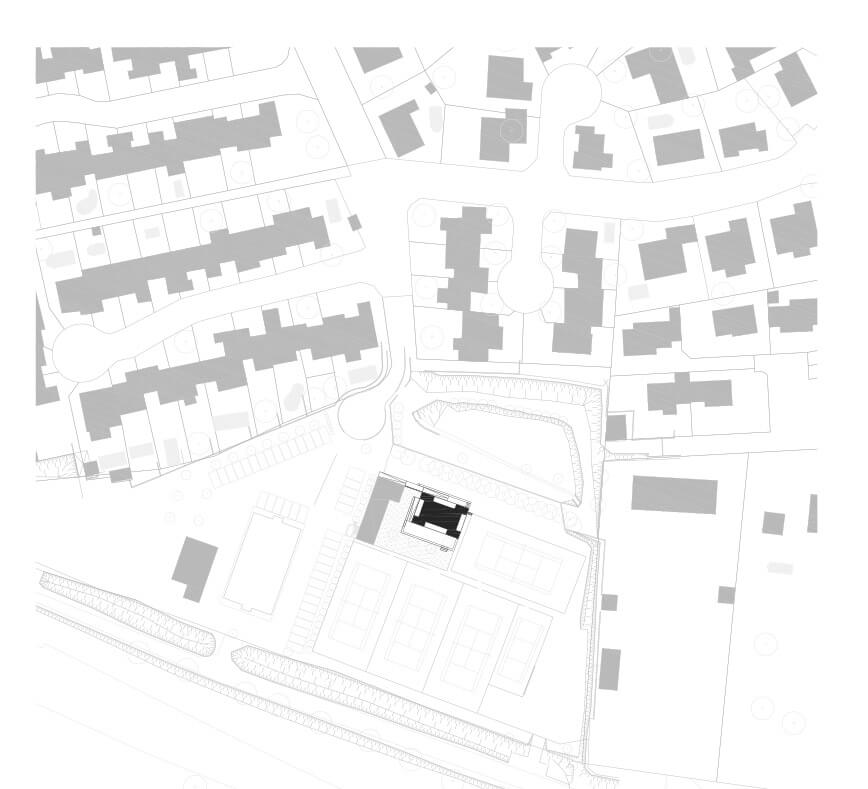
The Salle Maurice Darbellay is located on the south-western edge of Coudoux, a French municipality with 3,700 inhabitants in the Bouches-du-Rhône department in the Provence-Alpes-Côte d’Azur region. The building is the new center of a small sports park with five tennis courts, a hard court and a BMX track. It is located at the end of a residential area and is bordered to the north and south by old umbrella pines. Thanks to its exposed location and open design, the building has the effect of a covered outdoor space that offers protection from the sun and rain and at the same time strengthens the connection to the surrounding nature.
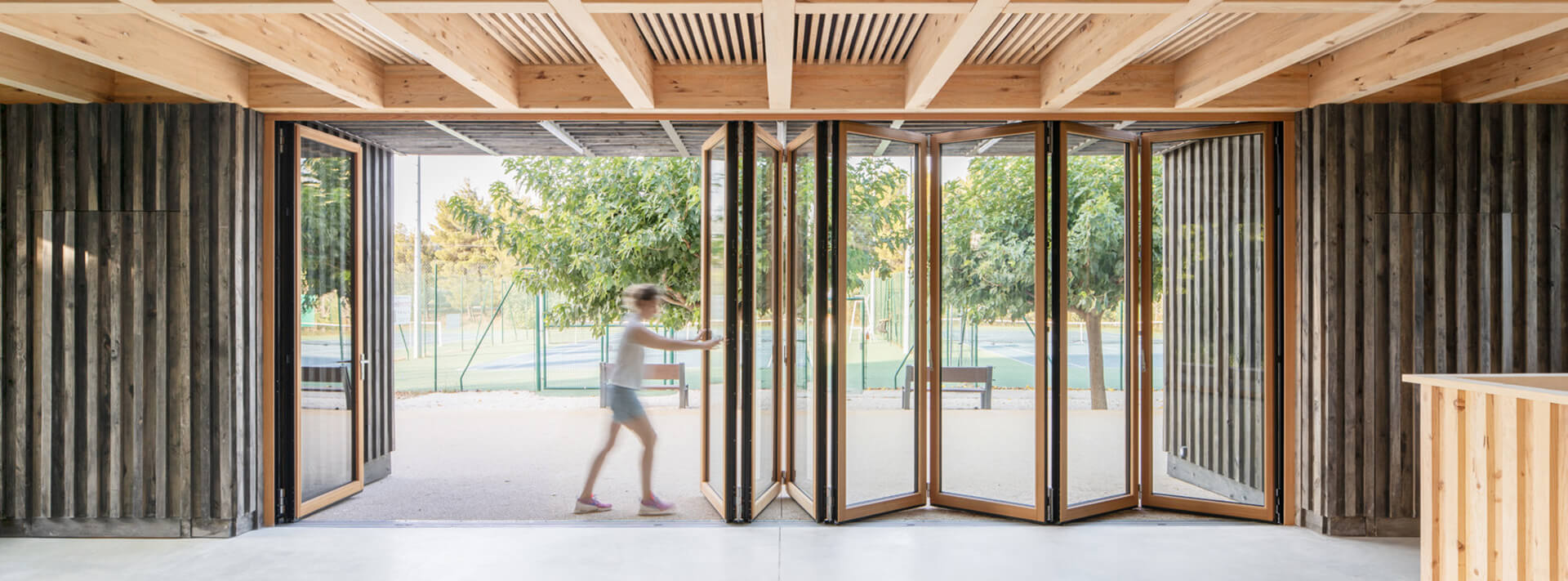
Indoors or outdoors
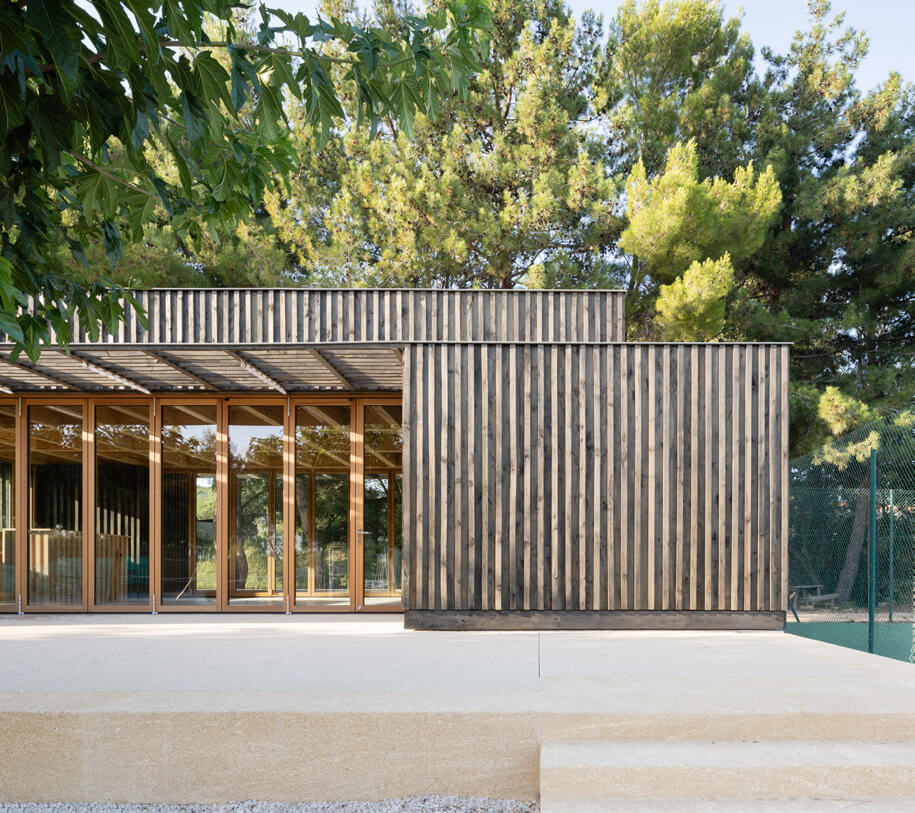
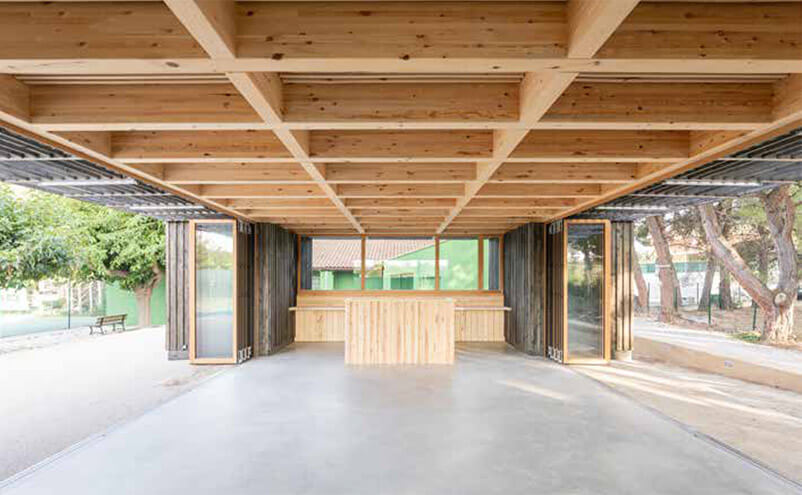
The Salle Maurice Darbellay was built next to the existing clubhouse and is based on a simple but well thought-out principle: four wooden structures – known as “plots” – form the structural cornerstones of a rectangular floor plan. These support a recessed roof construction made of glulam.
A freely accessible terrace forms the recessed southern end towards the tennis courts.
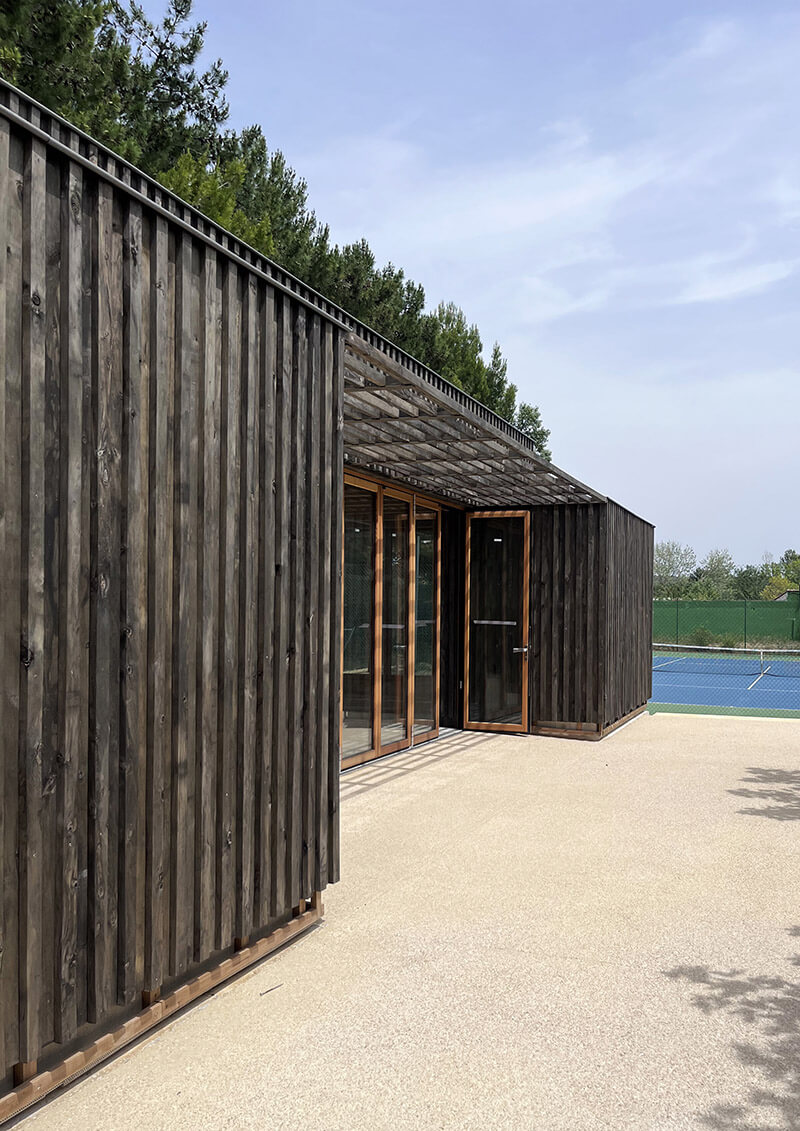
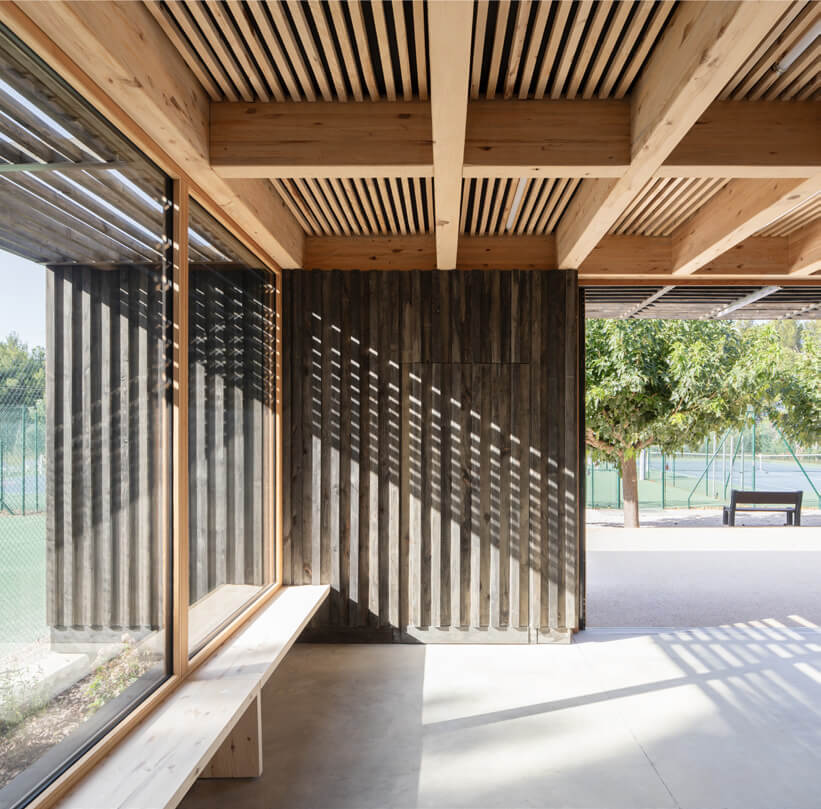
The hall itself is free of supports, creating a generous, flexible space. Large, folding sliding doors on the north and south sides allow complete opening to the outside. Interior and exterior space have a lot in common here.
Wood and production
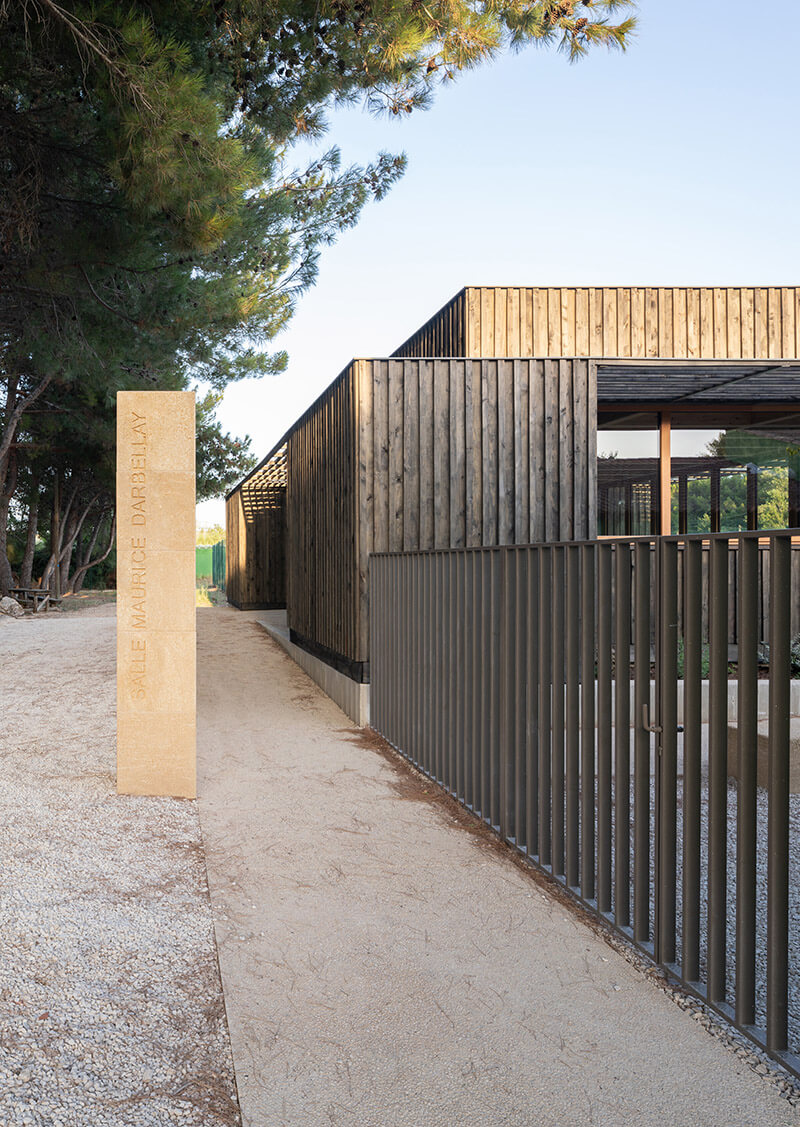
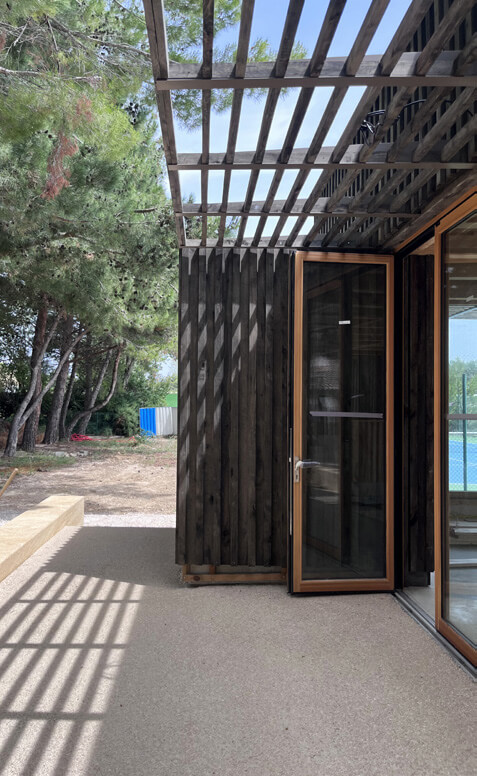
The choice of materials is particularly important: Pin d’Alep (Aleppo pine) was used throughout for the construction, façade and interior design – a local wood that had long disappeared from the construction industry. This project revives a regional value chain: the wood comes from surrounding forests and was processed in the region.
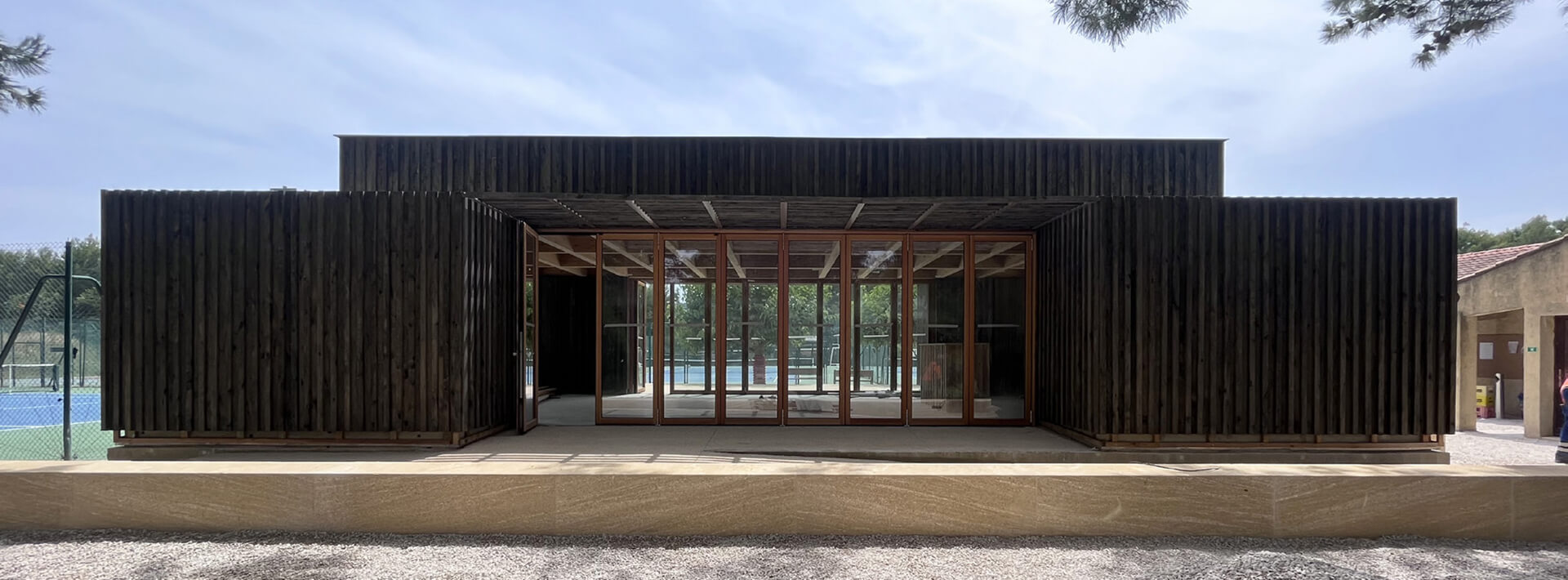
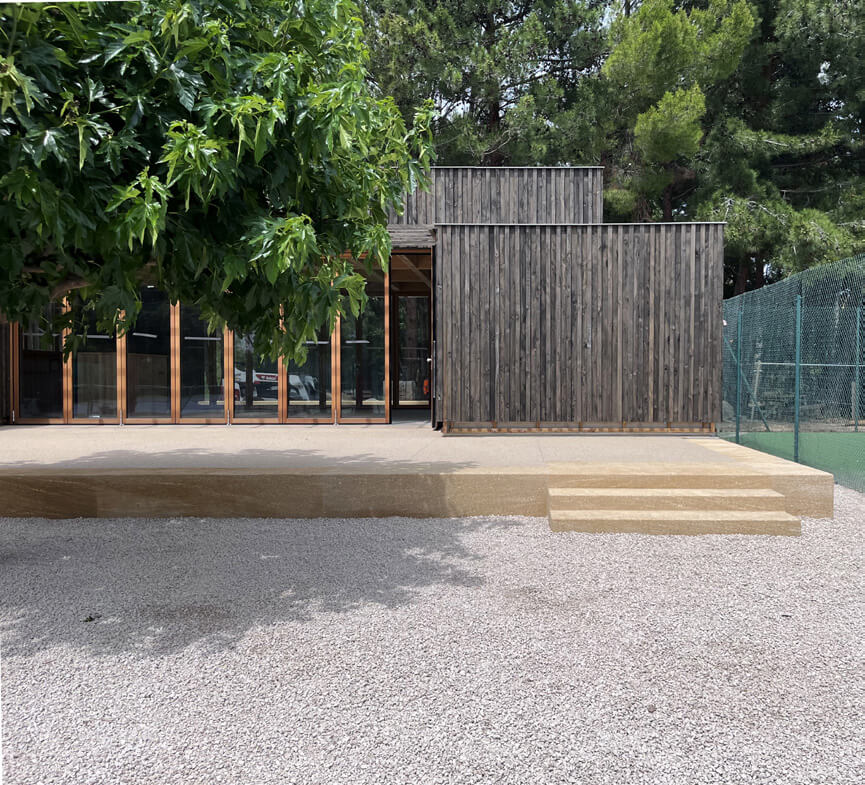
The walls consist of wooden frames with wood fiber insulation, the roof construction of prefabricated wooden cassette elements. The façade was clad with pre-greyed wood in cover strip formwork. The interior furniture such as the counter and shelves are also made of Aleppo pine.
The structure rests on a concrete base that is 40 cm above the ground – enough to serve as seating at the edge of the pitch. The adjoining terraces and ramps are also made of exposed concrete and are bordered by natural stone walls made of Vers-Pont-du-Gard.


Architecture and location
The project is a fine example of architecture that is in dialog with its location. It follows the principle of material reduction, uses local resources and shows how public buildings in rural contexts can be implemented in a way that is ambitious in terms of design and at the same time functional, economical and ecologically responsible.
With the “Salle Maurice Darbellay”, Coudoux has gained a new place for sport, meetings and community – and at the same time a strong architectural statement for contemporary, sustainable construction in wood.
Project data
Designer
Atelier Régis Roudil Architectes
Amélie Artur
Building owner
Mairie de Coudoux
Opening
2023
Address
TCM Coudoux
75 All. du Stade
F – 13111 Coudoux
Photos
Florence Vesval
Text
Johannes Bühlbecker
More Sports Media
Our categories
Our newsletter
Your stage
Publish your project or product here!