
The CASA (Center for Applied Skateboard Arts) in Munich
Keep on moving
Behnisch Architects
Skateboarding, BMX, parkour and wheelchair skating are no longer niche activities, but part of a growing urban exercise culture. To meet this need for open spaces that are independent of the weather, the City of Munich initiated a project that is not only functionally impressive, but is also an architectural statement for participation and sustainability.
From Behnisch Architekten.
Why?
The need for spaces for informal exercise sports is growing, as is the realization of the need for the participation of all future user groups right from the start. Together with independent initiatives, the City of Munich drew up a detailed requirements program as a planning basis for a weather-independent center for individual action sports – and at the same time the specification for an open, inclusive meeting place: the “Centre for Applied Skateboard Arts” (CASA), working title “Actionsportzentrum München”.
Back in 2018, the city of Munich announced an invited competition for the project, which Behnisch Architekten won. Soon afterwards, however, the coronavirus pandemic and municipal budget bottlenecks caused delays. It was not until 2023 that the first construction phase began, with the opening taking place in 2024.

Where?
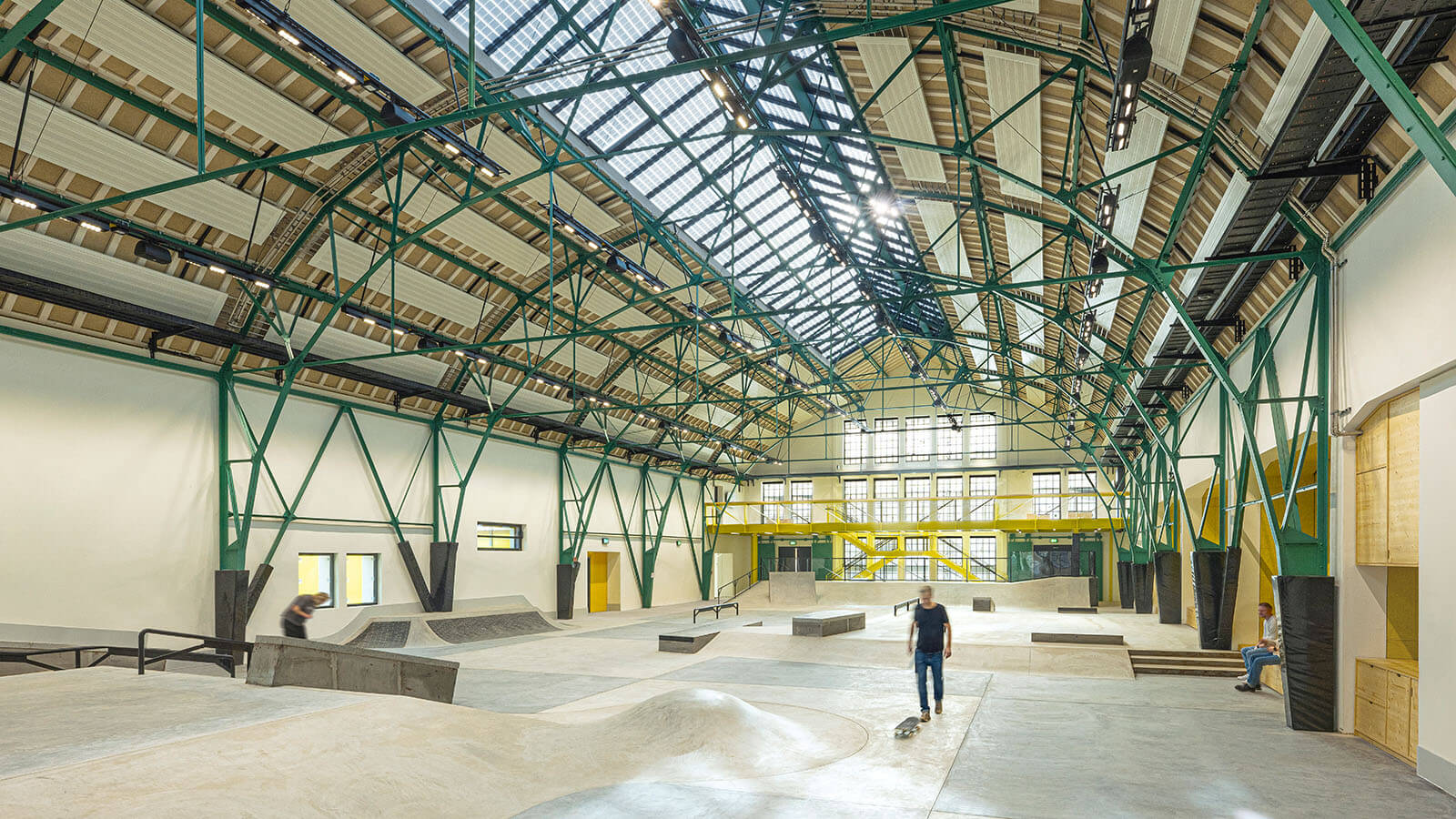
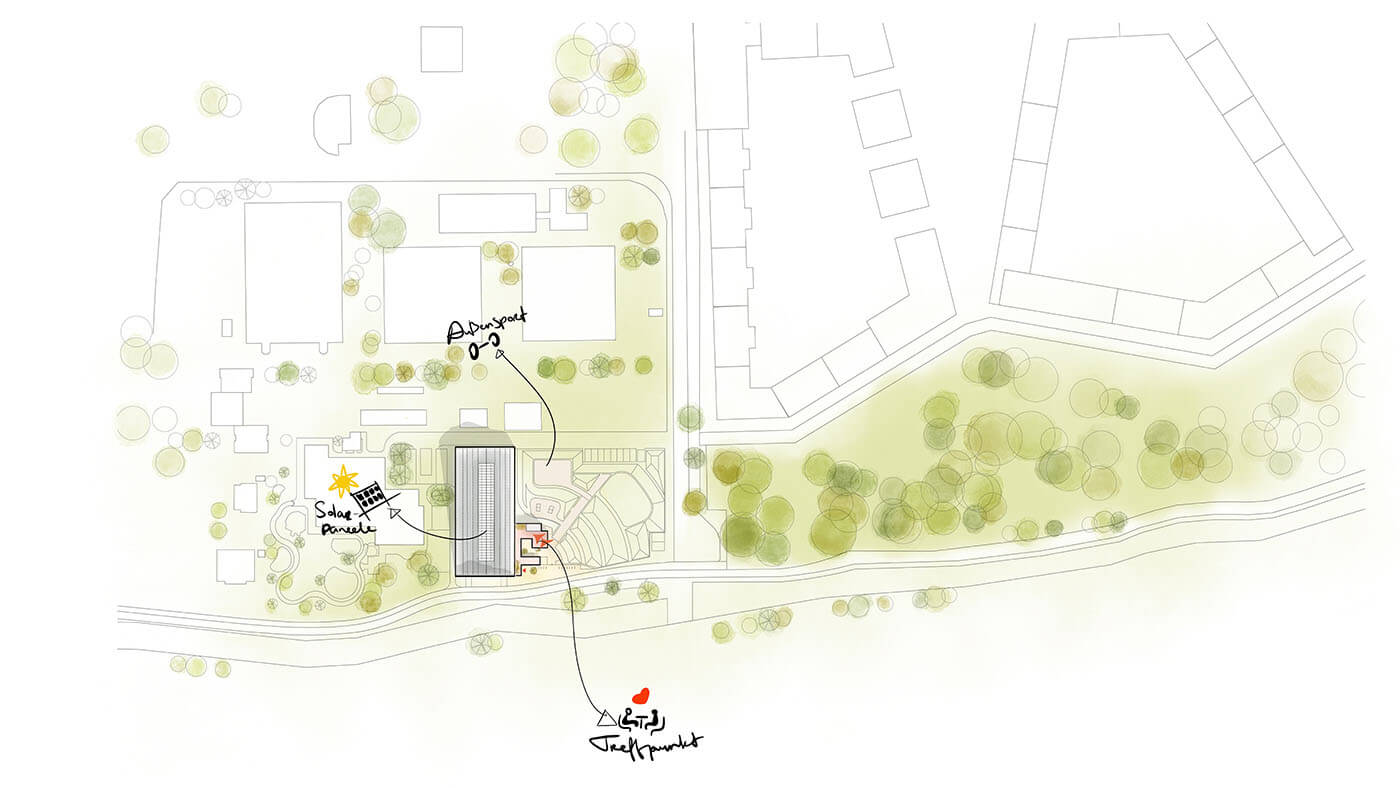
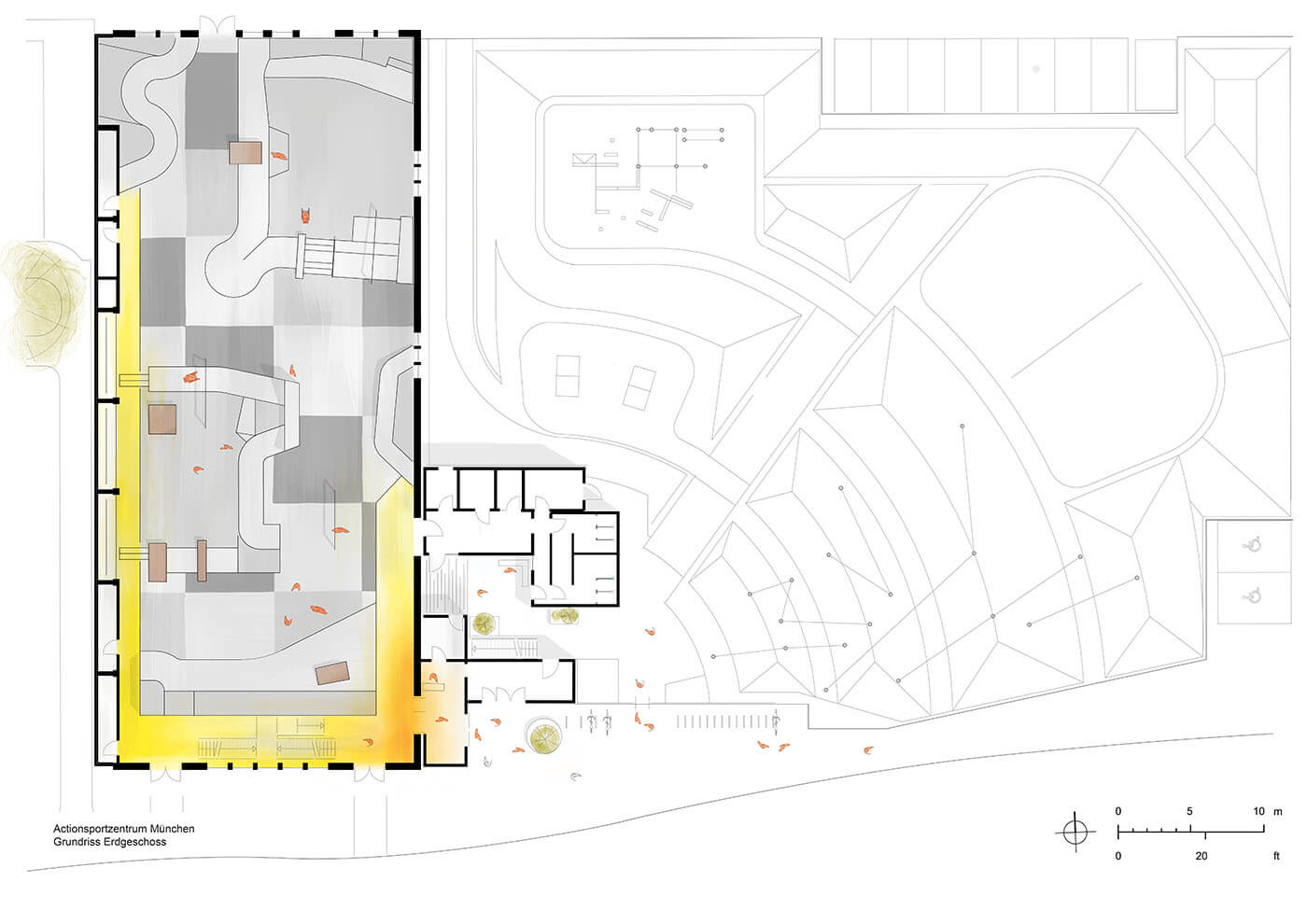
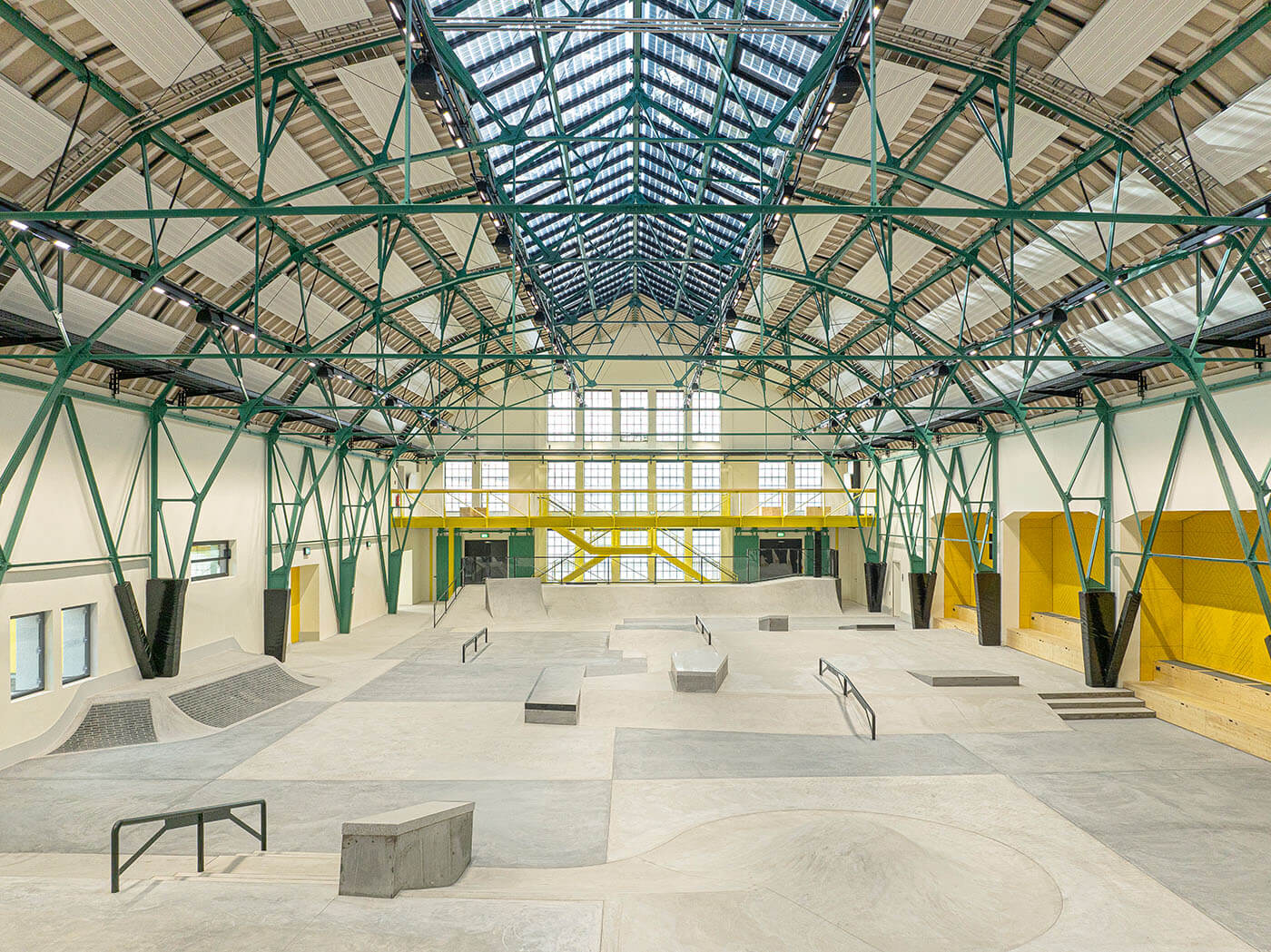
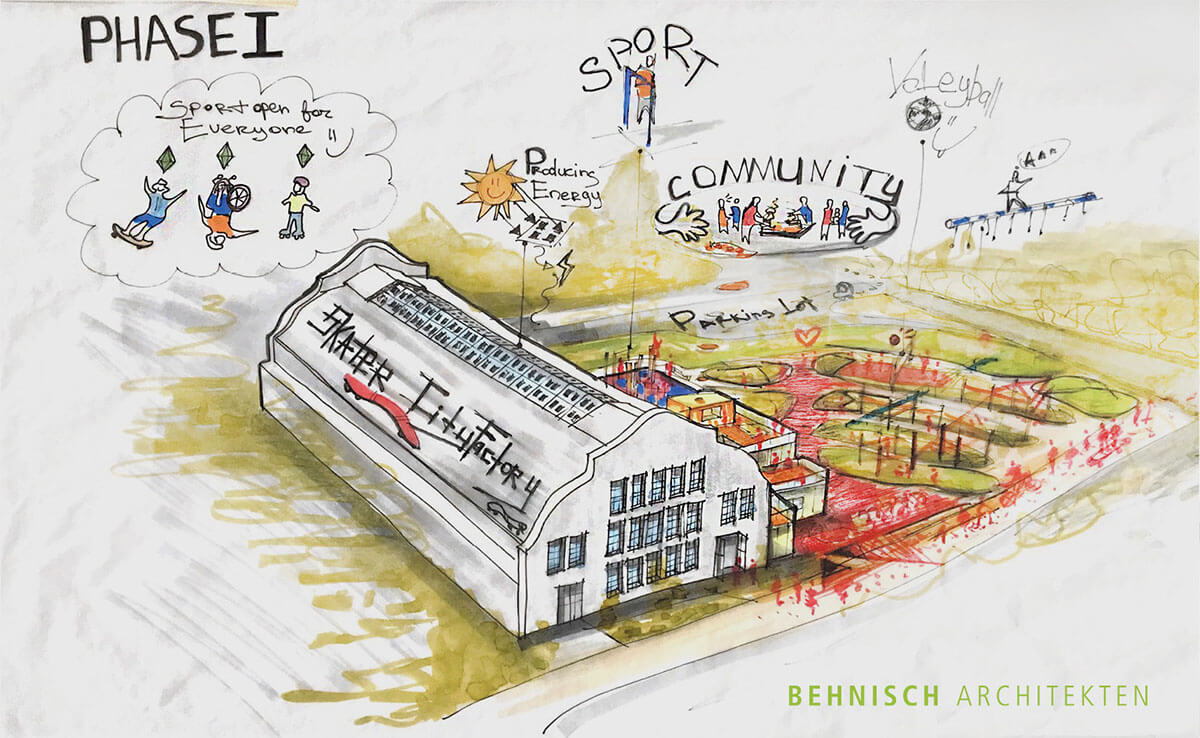
With the former harrow factory from 1910 as the location for CASA, the choice fell on a characterful industrial monument in the heart of Pasing. The long unused hall not only offered sufficient space, but also an impressive steel construction that gives the new uses an unmistakable face. The first construction phase revitalized the existing structure (the hall has been a listed building since 2008) and made it possible to operate the new sports areas.
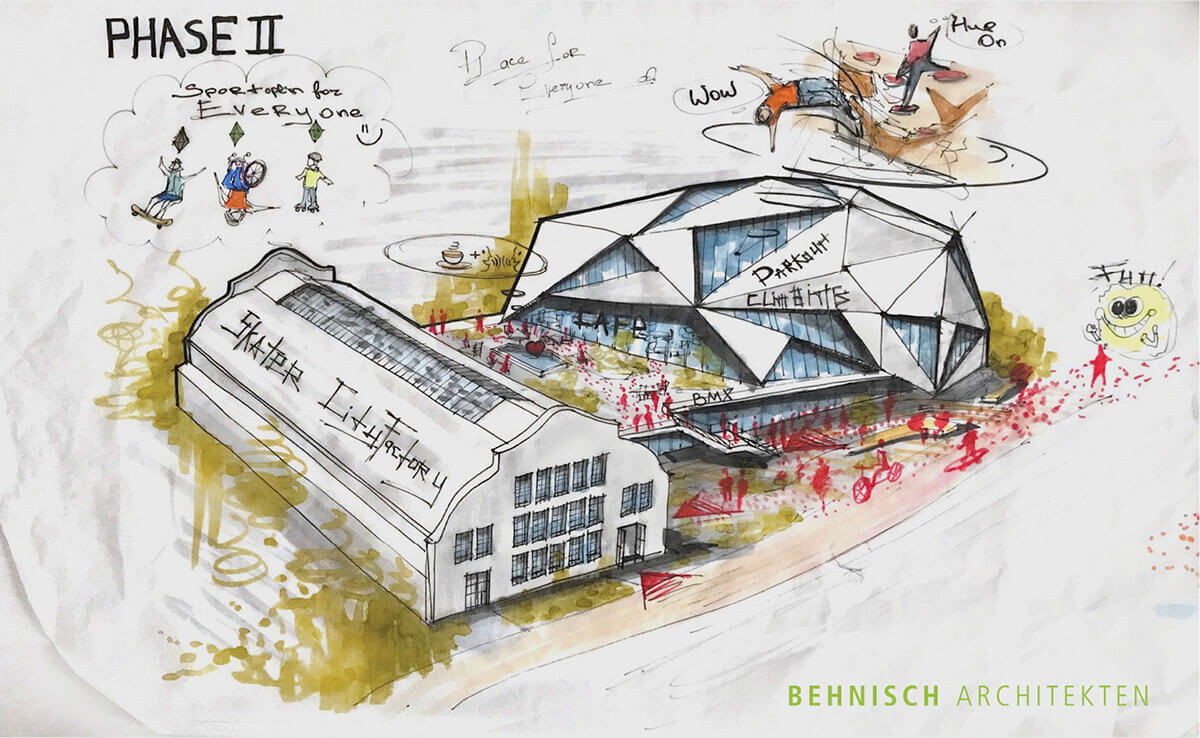
A second section in hybrid timber construction is planned for the future, which will add parkour facilities, a skate bowl, a dirt bike jump line and a café with a terrace. The planning allows this expansion to be realized seamlessly and without interrupting ongoing operations.
How?
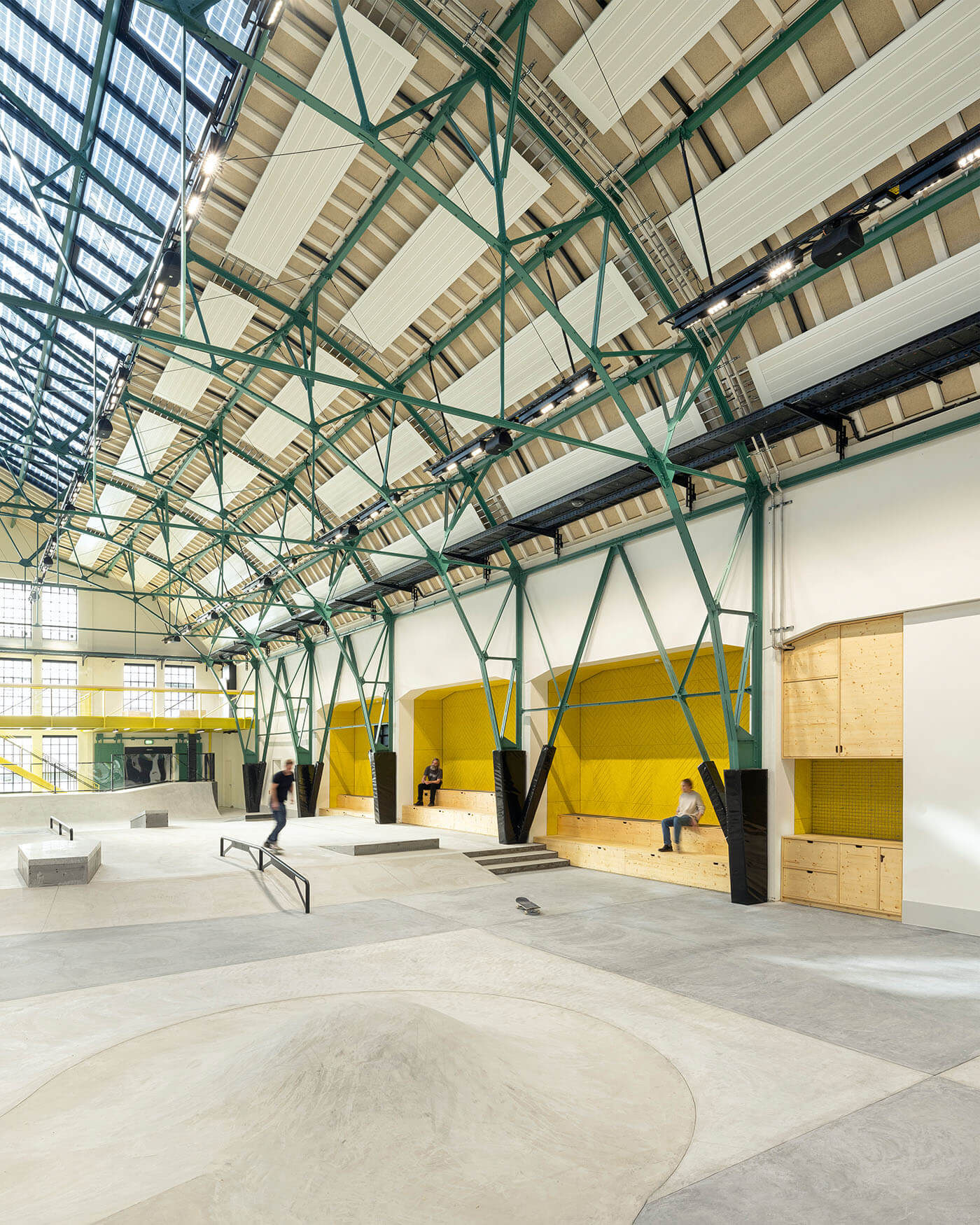
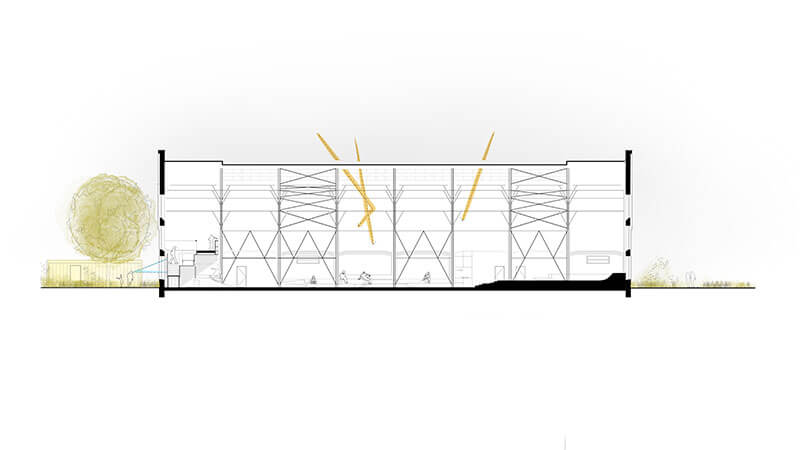
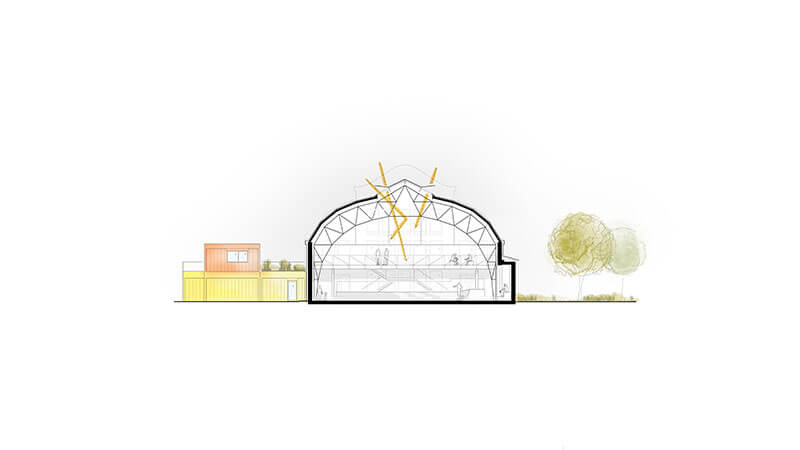
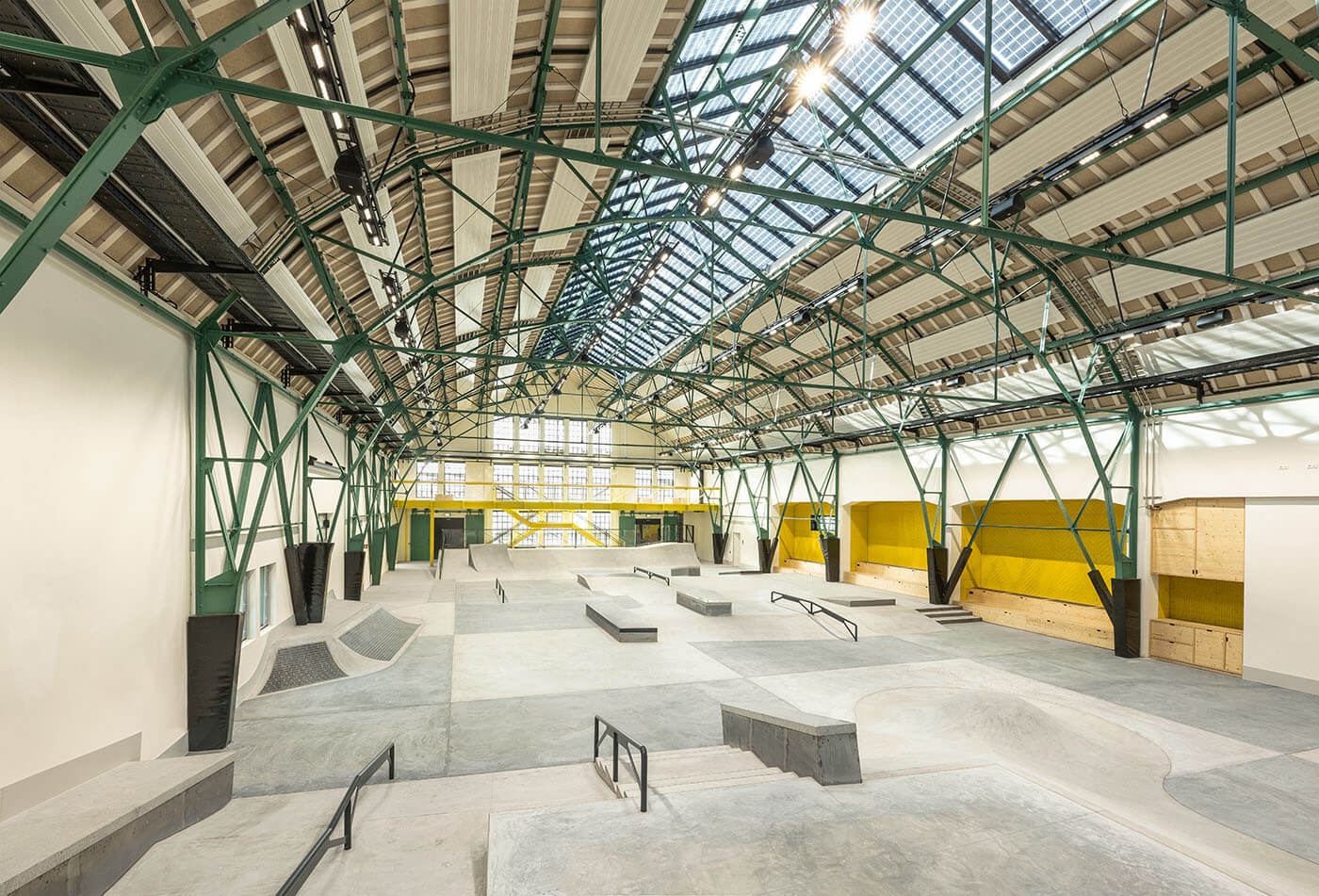
The architectural expression is characterized by the respectful treatment of the existing building. The striking gable facades and large-format window openings of the Eggenfabrik were retained and, together with the filigree primary steel construction, form the visual backbone of the Center for Applied Skateboard Arts. Only the roof was removed for structural reasons and replaced by a prefabricated wooden coffered ceiling, which lends the space both warmth and lightness.
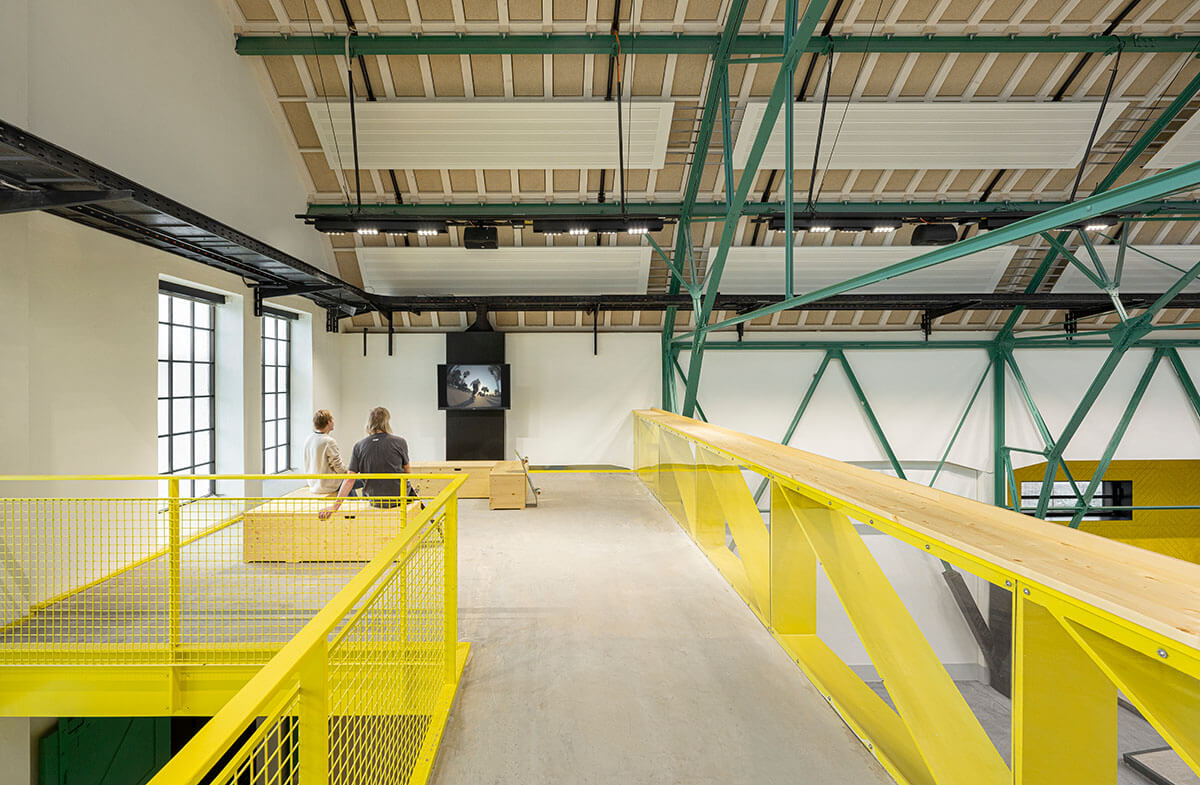
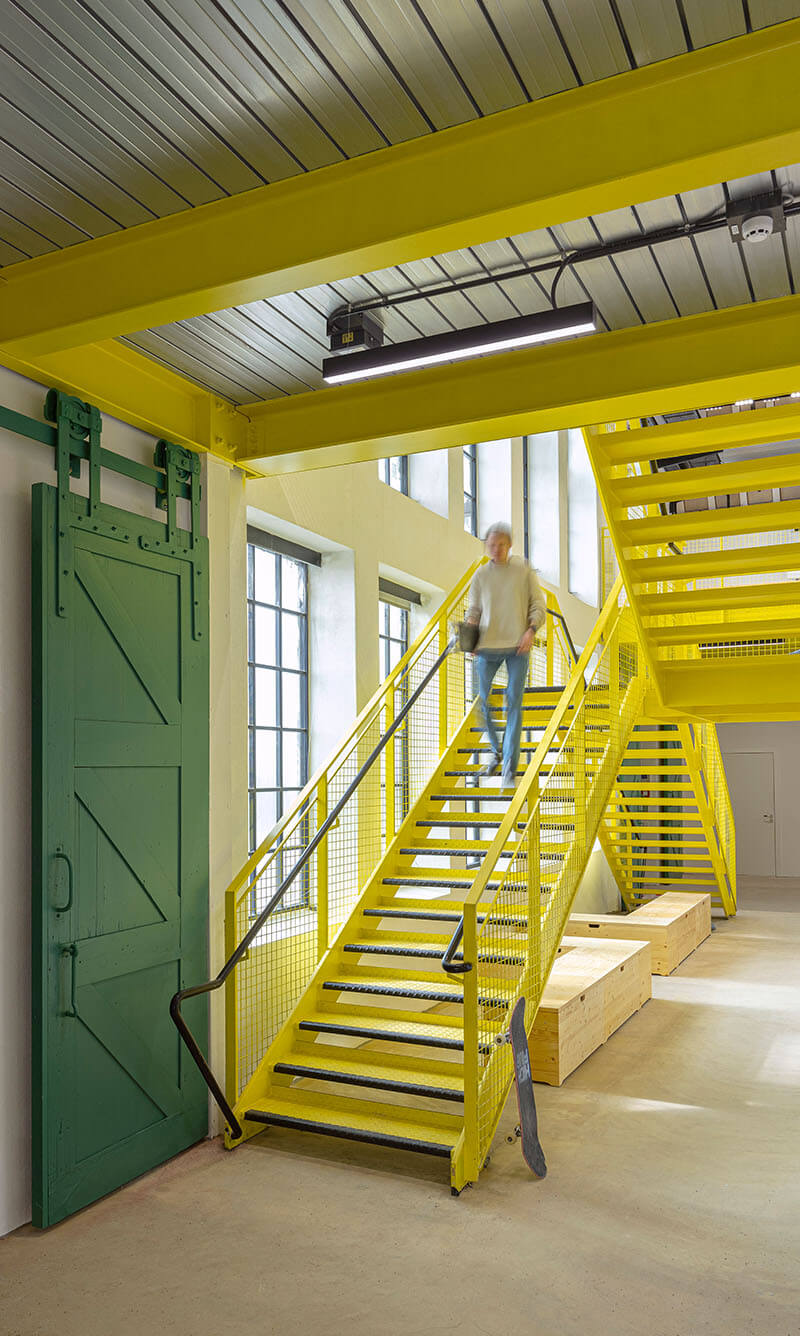
A newly inserted gallery level blends in sensitively with the historic shell, offers lounge and event areas and opens up impressive views of the skate area below.

Who?
Accessibility at CASA was a matter of course right from the start. Consequently, the sports areas are designed in such a way that wheelchair skating, for example, is possible without any problems. Wide entrances, clearly structured paths and easy-to-understand orientation make the entire Centre for Applied Skateboard Arts easy to use for people with different levels of mobility.
The operator concept of High Five e.V. translates the idea of openness into the everyday life of the center. CASA is not just a training facility for action sports, but a social meeting place where athletes of all ages and abilities can exchange ideas. The collaborative planning process has helped shape this character from the outset and lends the project an authenticity that goes beyond mere function.
Warm?
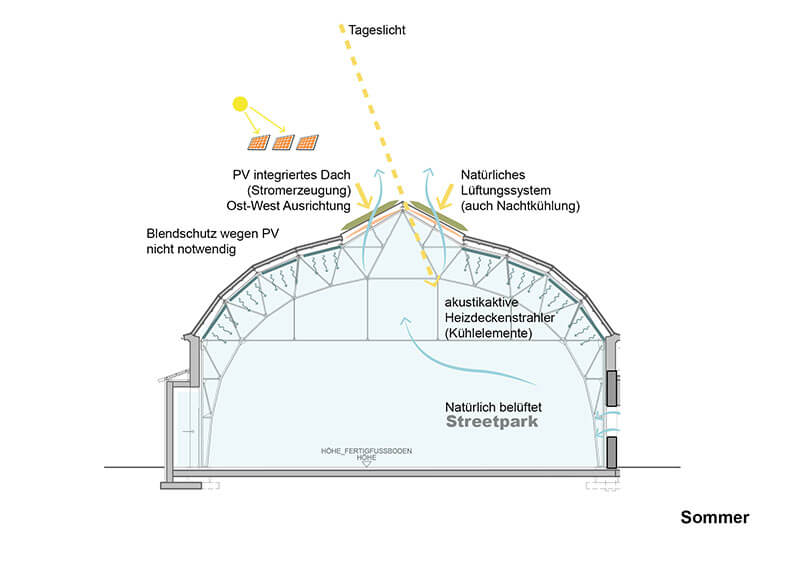
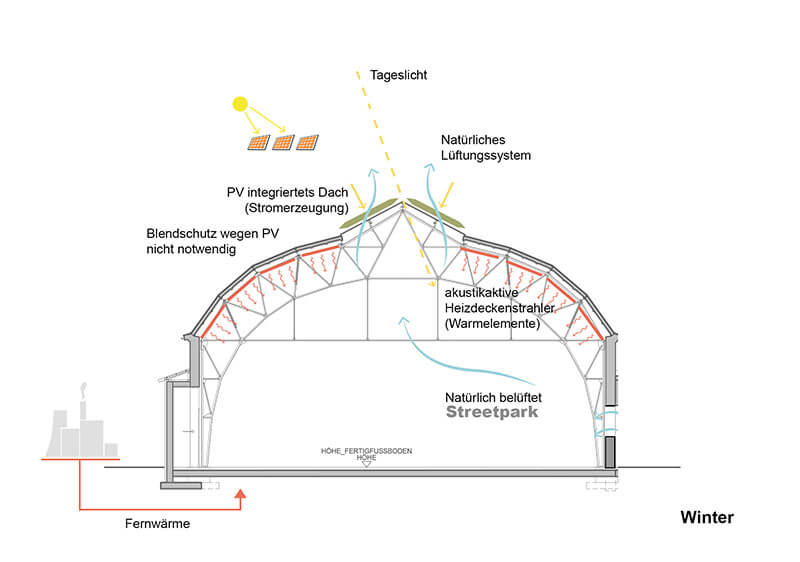
In terms of technology and climate, the project does not impress with opulent systems, but with simple, sustainable solutions.
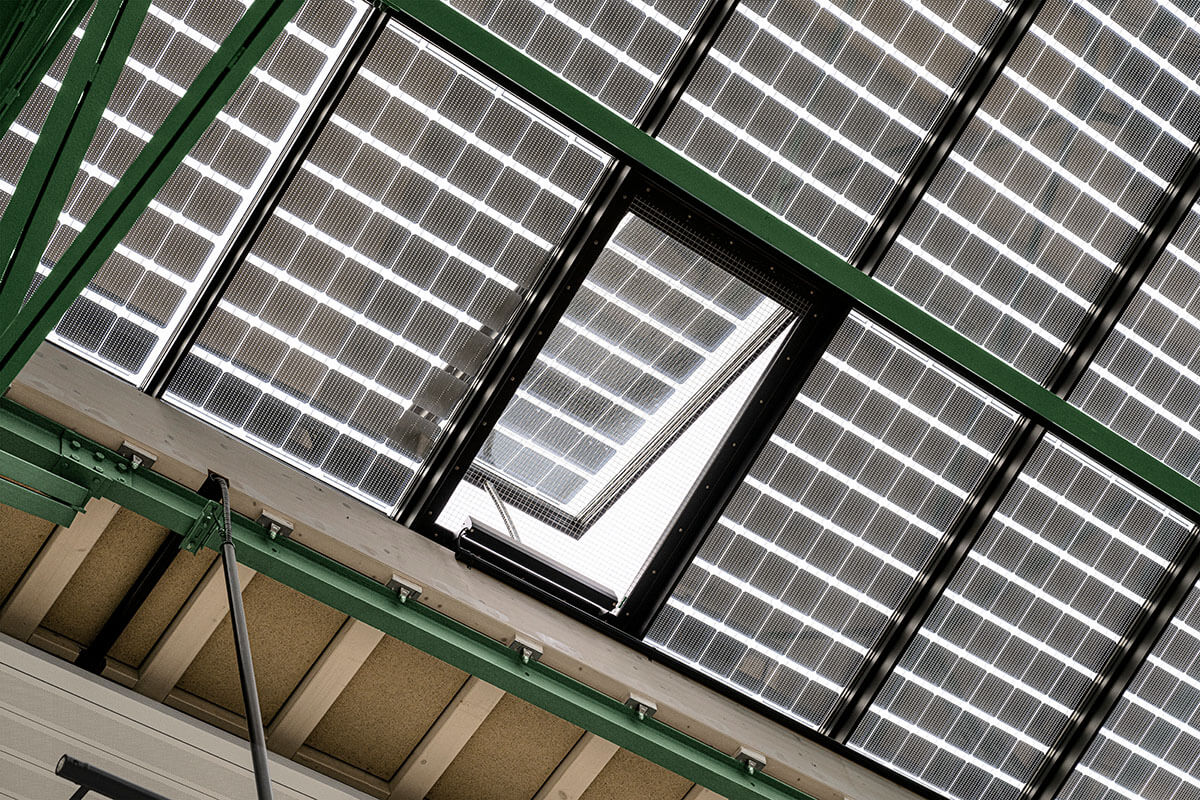
The skylight contains photovoltaic modules that not only generate electricity, but also minimize overheating in summer. Instead of a mechanical ventilation system, a natural ventilation system was installed: Fresh air flows in through newly created openings at the bottom of the façades and escapes as exhaust air via openable strip lights in the roof. This keeps the indoor climate pleasant and keeps the technical effort to a minimum – an exceptionally simple solution for sports halls.
The shell itself was also upgraded: external insulation, insulation on the inside in more sensitive areas, modern glazing – all with consideration for the listed building.


Wow!
CASA (Centre for Applied Skateboard Arts) is much more than just a sports facility. It stands for exchange and inclusion and is an example of how sustainability, monument protection and action sports are not only compatible, but also mutually reinforcing.

Project data
Designer
Behnisch Architects
Maria Hirnsperger (partner, project manager), Andrada Bauer, Johannes Ewerbeck, Gökhan Catikkas, Laura Baldelli, Sara Cansin Güngör
Building owner
City of Munich
Department of Education and Sport
Bayerstraße 28
D – 80335 Munich
Operator
CASA
Center for Applied Skateboard Arts
Steel construction
MTS GmbH
Liebigstraße 8
85301 Schweitenkirchen
Structural Engineers
Behringer Beratende Ingenieure GmbH
Structural engineering and structural design
Bavariaring 24
D – 80336 Munich
Opening
2024
Address
CASA
Angela-von-den-Driesch-Weg 9
D – 81245 Munich
Photos
David Matthiessen Photography
Behnisch Architekten / Maria Ader (title)
Text
Johannes Bühlbecker
More Sports Media
Video
Our categories
Our newsletter
Your stage
Publish your project or product here!