The Arch
The Arc at Green School
Unique
The geometry of this arch not only saves a lot of building material, it also results in a beautiful sports hall.
The Arc aims to set new standards for sustainable building and education.
The Arc is the newest building on campus at the world-renowned Green School in Bali, Indonesia. The school has a 12 year history of breaking boundaries and expanding horizons.
The Arc is the newest benchmark in that history, raising the bar for sustainable education around the world. The first building of its kind ever made.
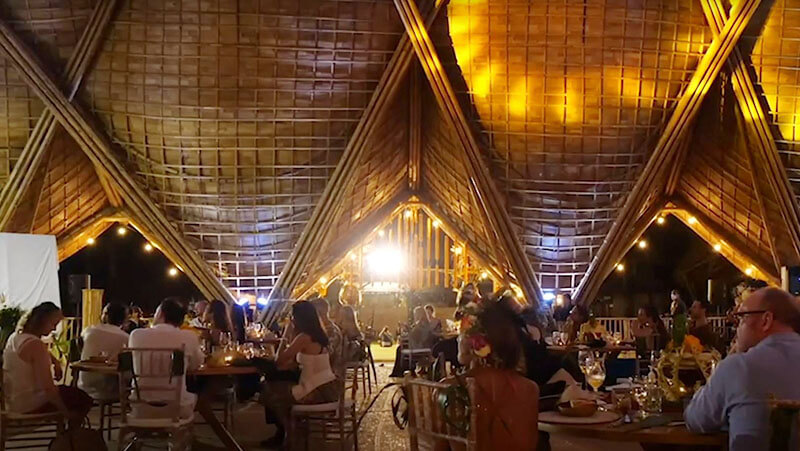
Along the way, The Arc is a fantastic and distinctly multifunctional sports hall.

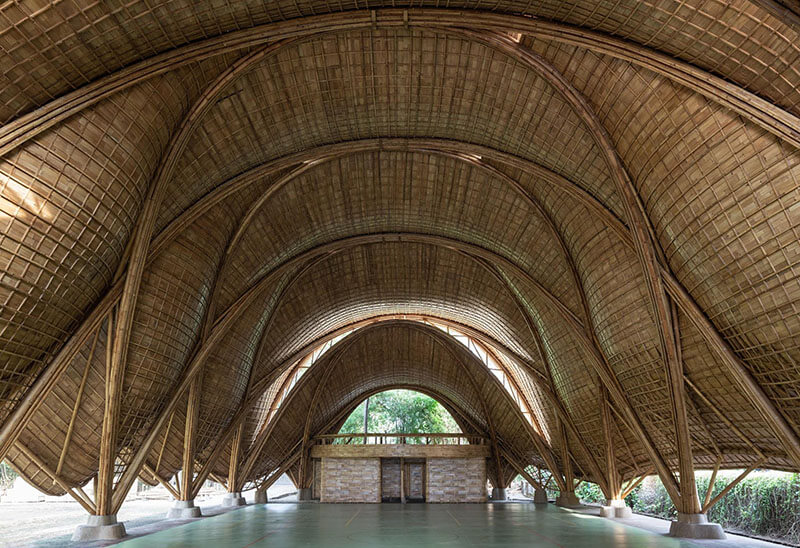
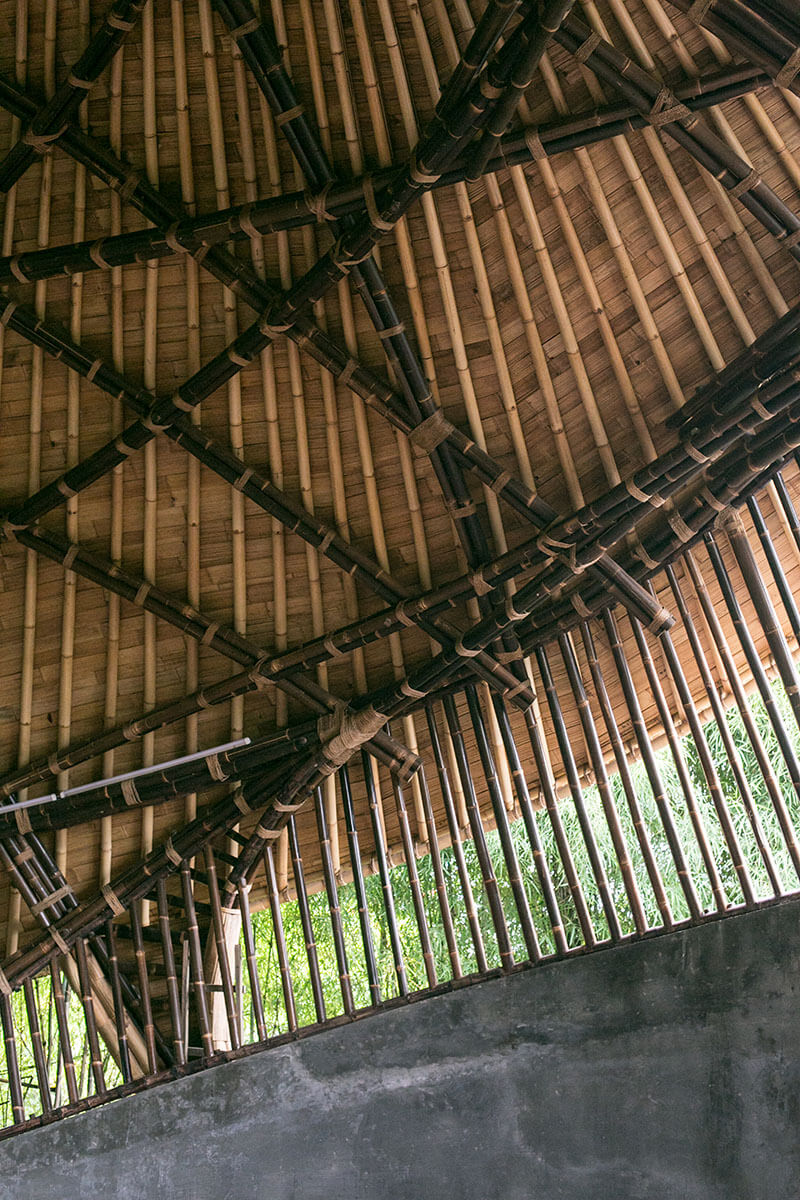
The Arc at Green School is built from a series of intersecting 14 meter tall bamboo arches spanning 19 meters, interconnected by anticlastic gridshells which derive their strength from curving in two opposite directions.

The design model was a mammal’s chest.
The Arc is a feat of engineering; it required months of research and development and fine tuning of tailor-made details. The result is a refined design with unparalleled beauty.
The Arc employs one of nature’s greatest strategies for creating large spaces with minimal structure. Within a human ribcage, a series of ribs working in compression are held in place by a tensioned flexible layer of muscle and skin.

This creates a thin but strong encasement for the lungs. In the case of The Arc, arches working in compression are held in place by tensioned anticlastic gridshells.

The Arc’s counterintuitive orchestration of geometry brings the structure into a state of equilibrium.
These fields of gridshells appear to drape across the spaces between impossibly thin arches soaring overhead, giving a whimsy, intimacy and beauty to the space. Although, the gridshells appear to hang from the arches, they actually hold them up.
“The gridshells use shape stiffness to form the roof enclosure and provide buckling resistance to the parabolic arches. The two systems together create an unique and highly efficient structure, able to flex under load allowing the structure to redistribute weight, easing localised forces on the arches.” says Neil Thomas from Atelier One.


The Arc’s counterintuitive orchestration of geometry brings the structure into a state of equilibrium, which means a dramatically decreased necessity for structural material. This also means an unprecedented inner volume with an impossibly thin structure and without any distracting trusses.

We did this.
Project data
Architects
IBUKU
Client
Grren School Bali
Address
Green School Bali
Jalan Raya Sibang Kaja
Banjar Saren
Abiansemal, Badung
IDN ‑Bali 80352
Opening
2020
Photos
IBUKU
Author
IBUKU
Videos
You may have more of this.
How can we be of service to you?
Contact
Address
More Sports Media
Am Weitkamp 17
D‑44795 Bochum
Phone
+49 234 5466 0374
+49 172 4736 332