Pavillon d’Eau

Special guest at the World Heri­tage Site

Pavillon d’Eau at Lake Geneva

Situa­tion

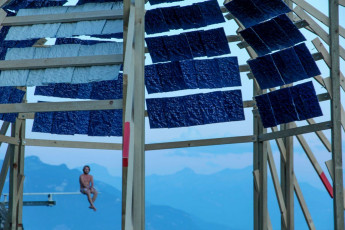
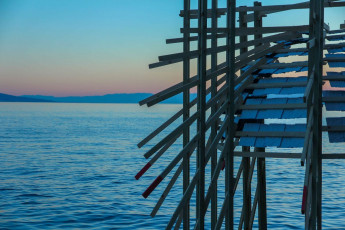
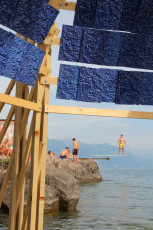
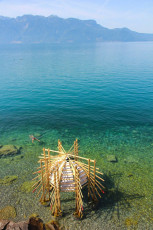
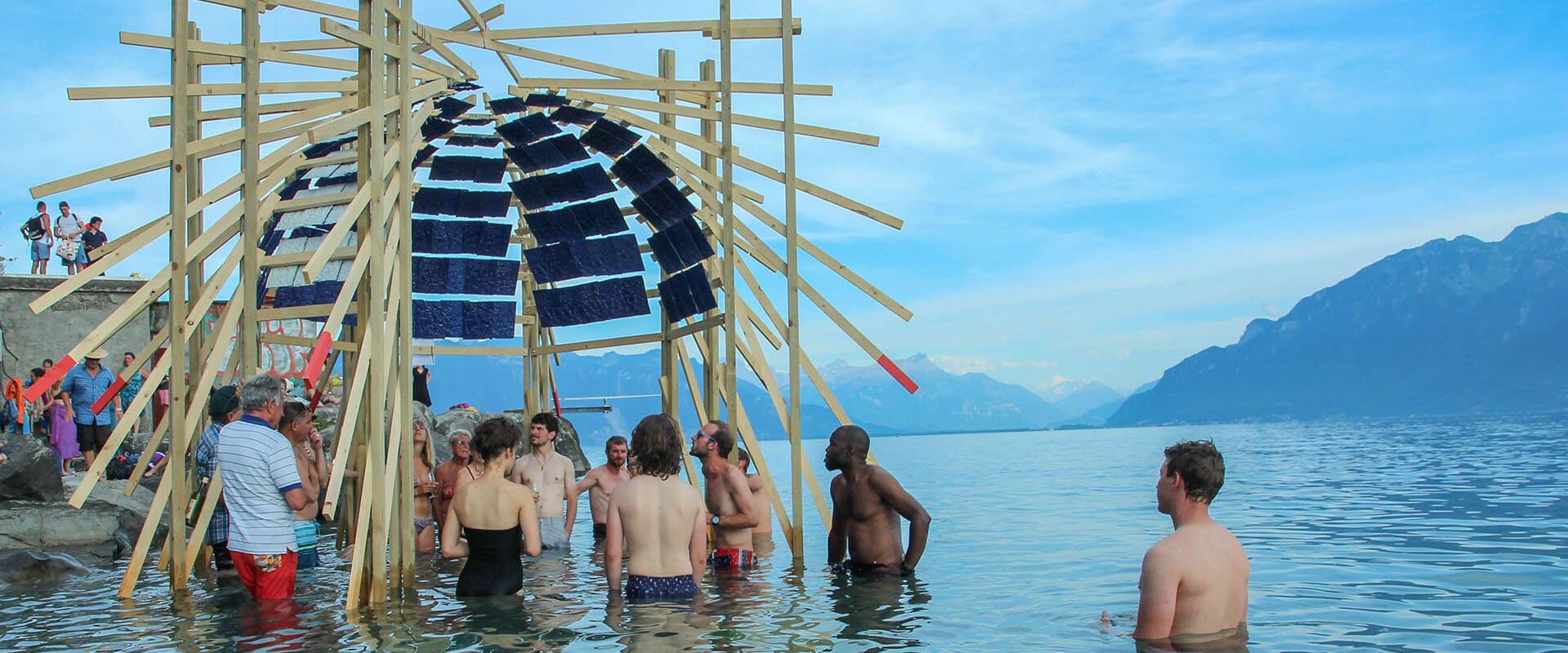
The Pavillon d’Eau is a tempo­rary pavi­lion made of wood and porce­lain build on the Lake Geneva in 2017. It has been realized within the scope of a final Master Project at École poly­tech­nique fédé­rale de Lausanne (EPFL). It is an achie­ve­ment born out of the colla­bo­ra­tion of two main Swiss univer­si­ties, EPFL and Haute école d’art et de design – Genève (HEAD) with the muni­ci­pa­lity of Saint Saphorin (393 inha­bi­tants).

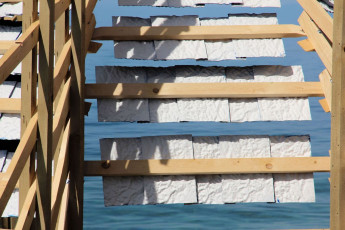
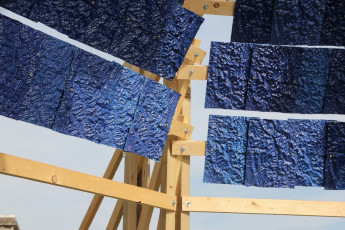
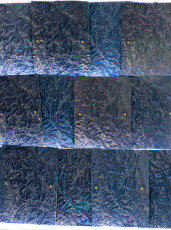
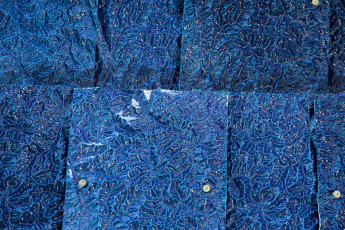
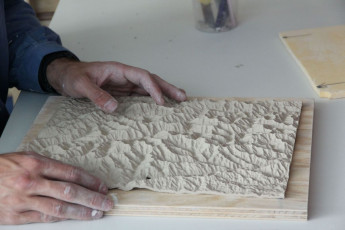
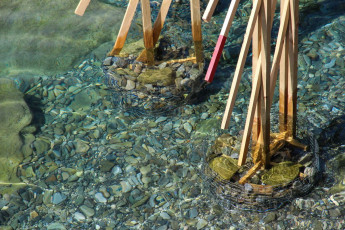
Desi­gned by EPFL student Alex­ander Wolhoff, the pavi­lion is the outcome of six months of rese­arch, of proto­ty­ping and the dialogue between diffe­rent local and acade­mical actors. Born at EPFL and more parti­cu­larly in the labo­ra­to­ries ALICE and LHT3, the project was also led by a part­ner­ship with the CERCCO labo­ra­tory (HEAD), where the porce­lain tiles where hand made one by one. The thic­k­ness of the tiles varies between 1.3 mm and 2mm; the 150 pieces measure 213mm on 293mm.

Design

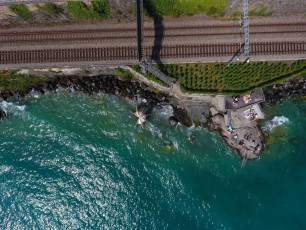
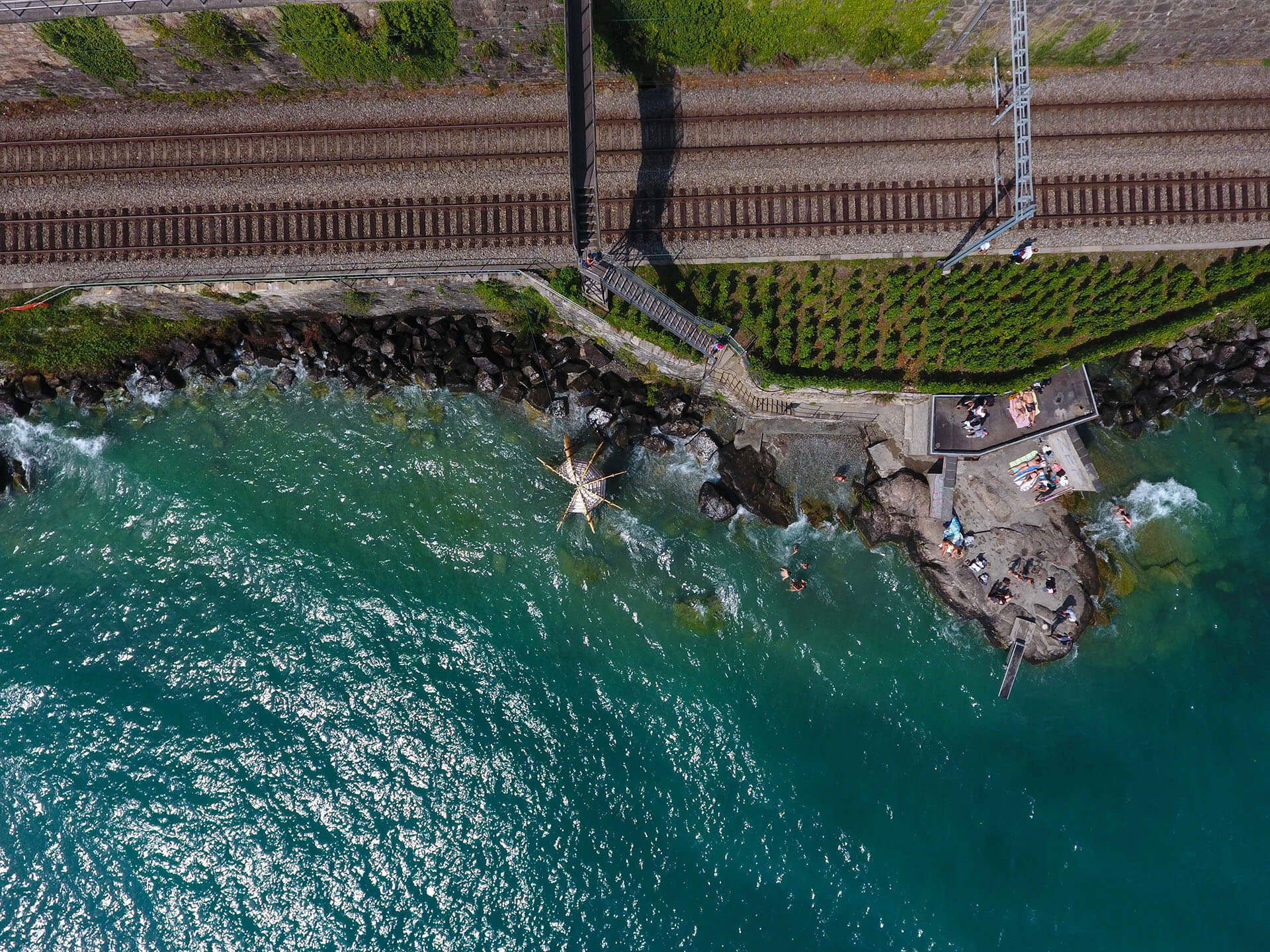
The UNESCO World Heri­tage Site muni­ci­pa­lity of Saint-Saphorin en Lavaux hosted the ephemeral pavi­lion; the cupola brin­ging toge­ther wood and porce­lain for one month at the lake of Geneve. The scope was to propose a pavi­lion that brings out Lavaux’s heri­tage and valo­rises its crystal­line relief composed by waves and alpine crests. The whole project has been thought to leave no imprints on the site at all. The anchors are non aggres­sive to the lake’s bed. If the exte­rior of the pavi­lion has a struc­tural language, the inside, which is only visible foots in the water, is orna­mental. The porce­lain tiles – enameled Bleu de Sèvre– and their parti­cular form play with both sunbeams’ and lake’s refrac­tion as an attempt to capture the site’s glare.

Archi­tect

Alex­ander Wolhoff
École poly­tech­nique fédé­rale de Lausanne

Team

EPFL: D. Dietz, Raffel Baur
LHT3; R. Gargiani, Me R. Fiechter
HEAD: M. Gerber, I.Schnederle, J‑P. Greff.

Photo­graph

Alex­ander Wolhoff

Author

Alex­ander Wolhoff

Address

Lake of Geneva (Léman)
Plage des Bains Reymon
CH – Saint-Saphorin

Aerial view

Thank you, Google!

Opening

2017

Images
Hofsós Swim­ming Pool

146 inha­bi­tants and the Atlantic Ocean

Hofsós Swim­ming Pool in Iceland

Hofsós

Hofsós is a small fishing village in the nort­hern part of Iceland. It consists of small scale tradi­tional Icelandic houses from the early twen­ties. The small scale of the surroun­ding village has been an inspi­ra­tion in the design process of Hofsós Swim­ming Pool.

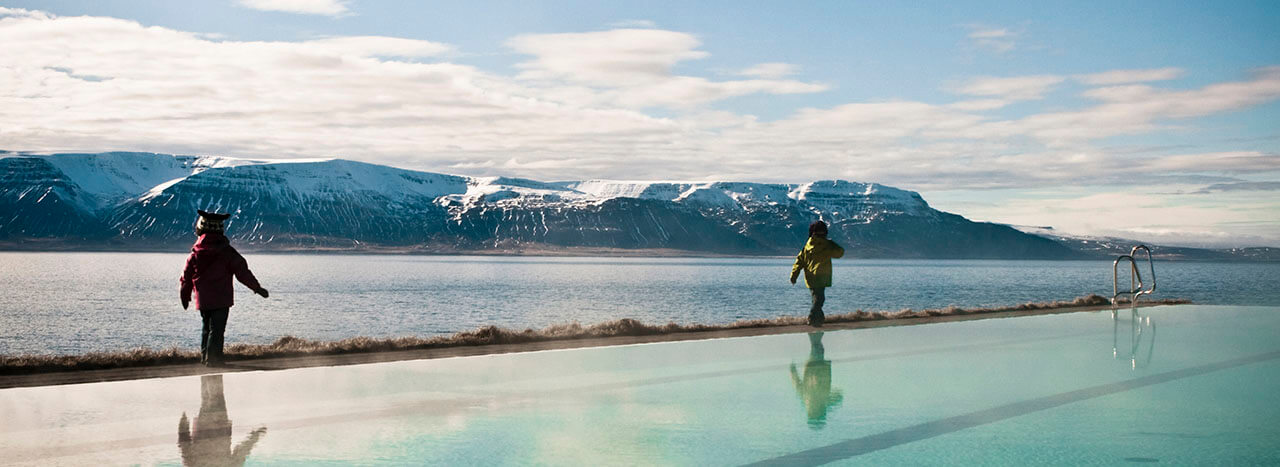
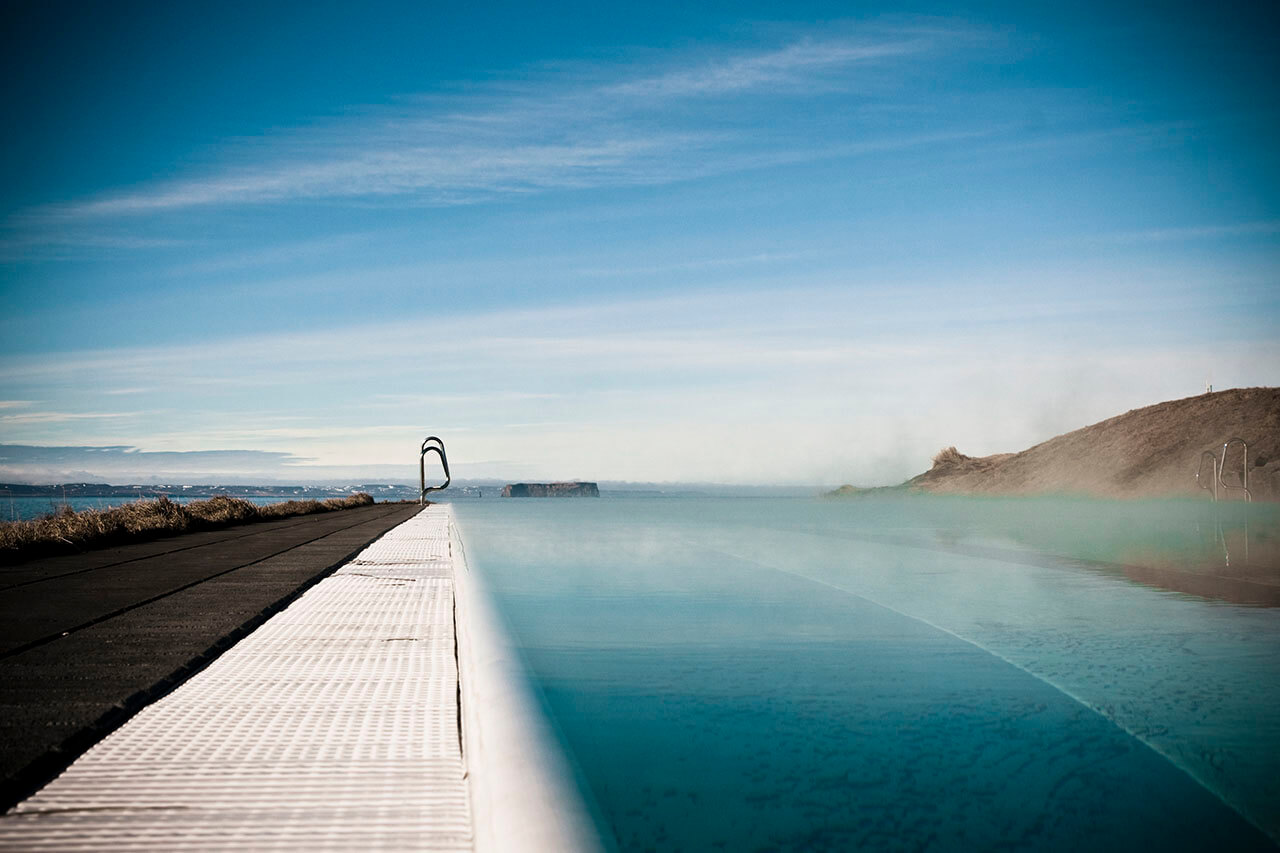
The site of Hofsós Swim­ming Poois by the coast on the main street leading to the village. From the site there is a magni­fi­cent view towards the Atlantic Ocean where the island Drangey lies in the horizon. In the winter­time the distant lights from the village of Sauðark­rokur can be seen on the oppo­site shore.

Grettir

Die Verbin­dung zur Insel Drangey ist von großer histo­ri­scher und kultu­reller Bedeu­tung. Einer der wich­tigsten Charak­tere der islän­di­schen Sagen, Grettir, schwamm die sechs Kilo­meter zu dieser Insel und entkam einer Schlacht an Land. Einmal im Jahr wird dieses Ereignis noch heute „nach­ge­schwommen“. Das Schwimmbad befindet sich in einer Achse, die direkt auf die Insel ausge­richtet ist, so dass die Schwimmer im Schwimmbad das Gefühl haben, auf seiner Route nach Drangey schwimmen.

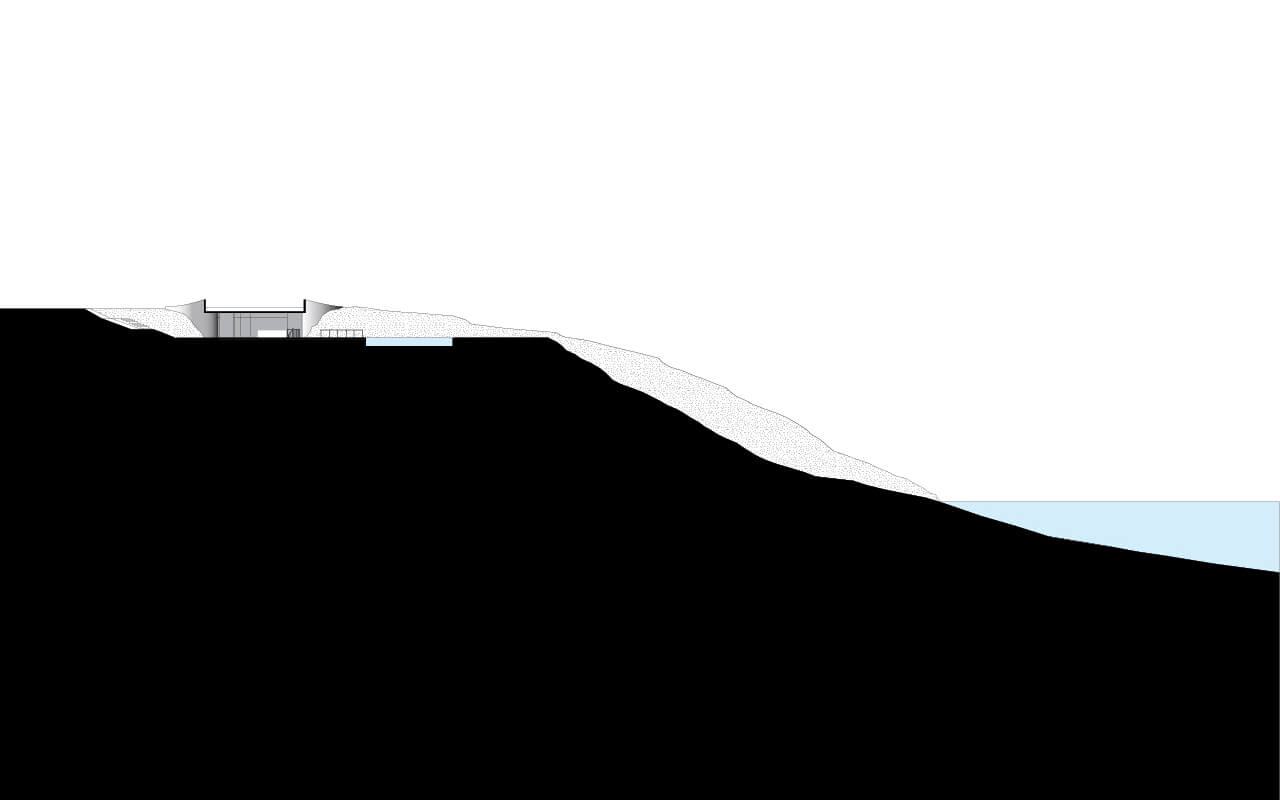
Das Schwimmbad Hofsós fügt sich harmo­nisch in die Land­schaft ein und öffnet sich dem Blick auf den Ozean und die Insel Drangey. Das Gebäude schützt sowohl vor dem starken Nord­wind als auch vor Störungen durch die Straße und das Dorf.

Archi­tect

BASALT Archi­tects
Lauga­vegur 51
101 Reykjavik
Iceland

Team

Jóhann Harðarsson, Marcos Zotes, Rósa Dögg Þorsteins­dóttir, Sigríður Sigþórs­dóttir, Stefanía Sigfús­dóttir

Client

Steinunn Jóns­dóttir, Lilja Páma­dóttir

Photo­graph

Guðmundur Bene­diktsson, Rafn Sigurb­jörnsson

Author

basalt

Address

Suður­braut
565 Hofsós
Iceland

Aerial view

Thank you, Google!

Opening

2010

Drawings

Follow us!

[widgets_on_pages id=“1”]

Daylight

The buil­ding complex contains chan­ging faci­li­ties, swim­ming pool and two Jacuzzis. The main cons­truc­tion Hofsós Swim­ming Pool is in situ cast concrete, clad with indus­trial glazing elements. The indus­trial glazing is trans­lu­cent, allo­wing daylight to flood through but without being trans­pa­rent. This gives a special expe­ri­ence and comfort in the chan­ging rooms. Icelandic hand-made stones are used as floo­ring. The exte­rior lighting is mini­mized to expe­ri­ence the stars and Nort­hern lights which are frequent in this area during winter­time.

Hofsós Swim­ming Pool is a dona­tion from Steinunn Jóns­dóttir and Lilja Pálma­dóttir to the muni­ci­pa­lity of Hofsós.

Close to infi­nity

Hofsós Swim­ming Pool is quite simply magni­fi­cent. It may not be Olympic size, but because it has been built into the hillside above the sea, the views over to Drangey are breath­ta­king. Come rain or shine, the vista from the pool is a combi­na­tion of marve­lous diffe­rent shades of blue; the clear blue color of the swim­ming pool itself, the green blue sea, the dark blue of the islands and moun­tains in the distance, and finally the blue­ness of the sky on a clear day.

The Hofsós swim­ming pool is not strictly an infi­nity pool, but the impres­sion you get as you swim in the geothermal waters is that you’re right next to the sea’s edge.

Social Pool

The begin­ning of a social revo­lu­tion?

Social Pool in the Southern Cali­fornia desert

Desert and reality

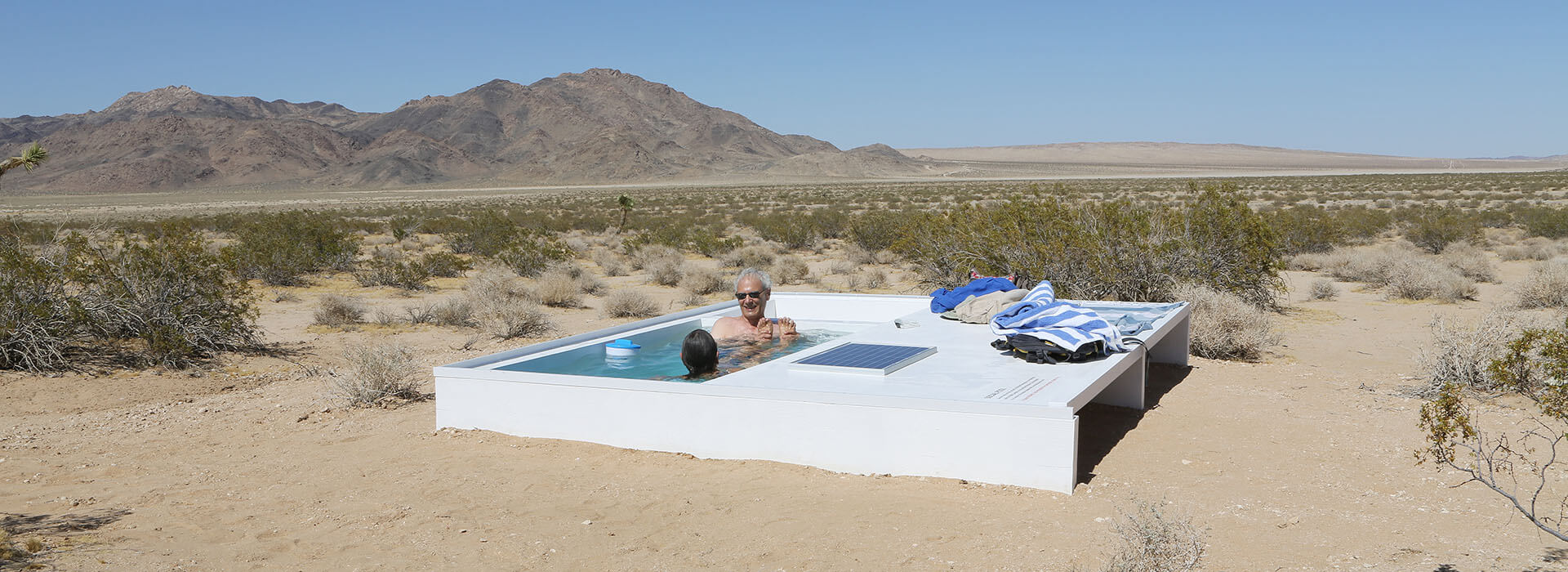
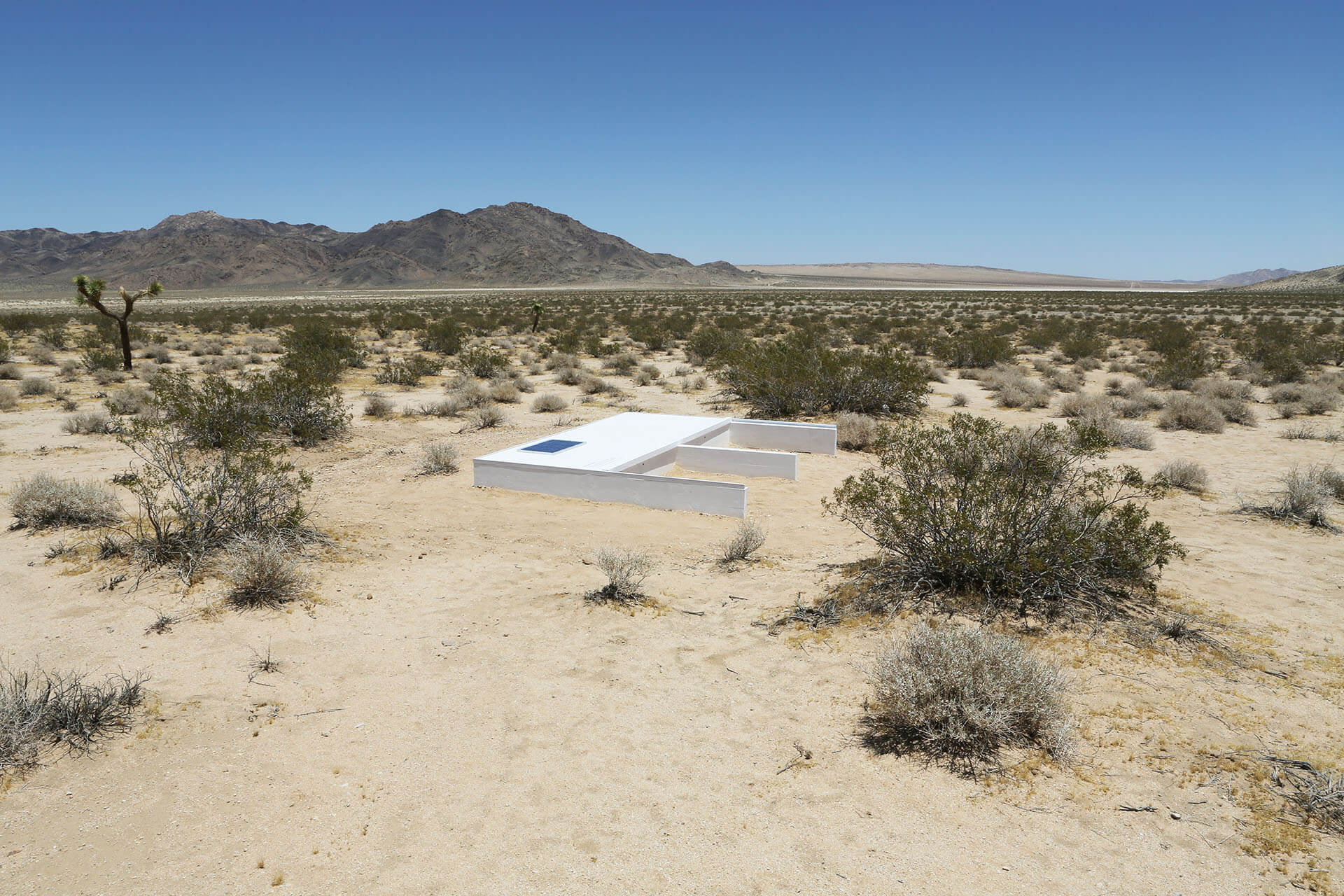
Alfredo Barsuglia’s Social Pool is an eleven-by-five-feet wide pool in the Southern Cali­fornia desert, free for anybody to use. White, unadorned and geome­tric, it is formally remi­nis­cent of a Mini­ma­list sculp­ture. Located in a remote and scar­cely popu­lated geography – visi­tors are advised that several hours of driving from Los Angeles, plus a willing­ness “to walk a long distance to reach the pool from the nearest road,” are required to reach the desti­na­tion – its loca­tion nods toward the pheno­menon of large-scale Land Art instal­la­tions in deserts around the American West, like Walter de Maria’s The Light­ning Field in New Mexico, Robert Smit­h­son’s famed Spiral Jetty, or Nancy Holt’s Sun Tunnels in Utah. Conceived in the 1970s by artists in and around New York, already then the epicenter of the contem­po­rary art scene, these works bore a critical response to and refusal of both the incre­asing commo­di­fi­ca­tion and insti­tu­tio­na­liza­tion of art and the rampant destruc­tion of the ecolo­gical envi­ron­ment. While Barsu­glia’s endeavor does share a palpable and explicit idea­lism as such – he suggests that the drive and walk to the pool should provide “time to reflect on social values, dreams and reality” – Social Pool is not a nost­algic affair.

On the contrary, the work embo­dies the massive socio-economic changes that have taken place in the last forty years. It thus under­stands itself as the product of an economy in which privacy and imma­te­ria­lity has been fully commo­di­fied. For many a consumer, art is expected to operate accor­ding to the prin­ci­ples of the service economy rather than follo­wing huma­nist ideals of intellec­tual or moral stimulus and educa­tion.

Artist

Alfredo Barsu­glia
Liech­ten­stein­straße 68–70/25
AUT-1090 Wien

Client

MAK Center for Art and Archi­tec­ture

More similar to a yoga lesson

The title of Barsu­glia’s work alone attests to his acute aware­ness that Social Pool might operate in ways more similar to a yoga lesson or vaca­tion away from it all than as an enligh­tened dialog with an enig­matic object: esca­pism rather than critique, digres­sion rather than trans­gres­sion. In line with the demands of the larger consumer society, Social Pool was conceived of as an expe­ri­ence encom­pas­sing a poten­ti­ally trans­for­ma­tive journey, a promise of rela­xa­tion, the peace of remo­teness, all while staying tuned in.

Social Pool is a sculp­ture that’s a bath, an artwork both lite­rally immersive and forcibly rela­xing. Astu­tely intert­wi­ning semantic cons­tructs like contem­po­rary art, the pool (the symbol of care­free wealth, even more so in the desert), rela­xa­tion and nature, Social Pool is a complex replica of the contra­dic­tions and ideo­logy of contem­po­rary society, where remo­teness from others and quietude are luxu­ries for the ever-commu­ni­ca­ting city-dweller.

Author

Stephanie Weber
Curator, Lenbach­haus München

Photo­graph

Alfredo Barsu­glia

Elements of the sublime and the ridi­cu­lous

Barsu­glia directly trans­lates this desire for seclu­sion and indi­vi­dual enjoy­ment into the layout and concept of the project: GPS coor­di­nates, other­wise kept secret, toge­ther with a key that opens the pool cover are provided to the willing visitor by the MAK Center for Art and Archi­tec­ture in West Holly­wood. In a feat of design and engi­nee­ring, the pool cover also keeps the water from evapo­ra­ting and serves, when opened, as an addi­tional resting area. Bisected into two areas, one rectan­gular, one cubic, one filled with water, one dry (where visi­tors can change their clothes), the pool offers just enough space for one or two people to stand or sit on either of its sides (appro­pria­tely, a bench is built into each half). The walls of each pool segment are so high that the seated person cannot easily see whoever sits in the adja­cent space, despite the fact that they are just next door. In a deli­be­rate over-deter­mi­na­tion of the work’s suggested idio­syn­cra­sies, Barsu­glia stipu­lated that only one person or small party at a time can use the pool, and for no longer than 24 hours.

In its purpo­sefully slick absur­dity and inherent stance against nature – it even has an auto­matic, solar panel-operated filter and chlo­rine system – Social Pool combines elements of the sublime and the ridi­cu­lous. Its absur­dity becomes even more tangible with the rela­tive incon­ve­ni­ence of reaching it, similar to the pains one goes through to “get-away” – when no internet rese­arch is too time-consuming, no journey by plane, train, car, bus, or boat (or any combi­na­tion of the above) is too arduous, to reach the loca­tion where one can relax and hopefully redis­cover, at least for a week or two, one’s true self.

However, Barsu­glia does not propose escape from society as a solu­tion. He is genuine when phra­sing the time spent driving to see Social Pool as an oppor­tu­nity to reflect on our consump­tion and enter­tain­ment-driven life­style, and just as genuine when provi­ding GPS coor­di­nates to do so. The escape Barsu­glia pres­ents is tempo­rary, it is futile and self-involved, it is plea­sure-driven and it is not egali­ta­rian – it is the embo­di­ment of life in late capi­ta­lism and the treat yourself atti­tude of consumer society. Whether we follow Barsu­glia’s advice and think about why we do what we do is as much up to us as the choice to ques­tion (and act upon) our libi­dinal invest­ment in a pres­ti­gious job or precious apart­ment. His is a well-meaning advice, not an order. Maybe the trip to Social Pool will be just a trip to the spa, or a notable encounter with an artwork, possibly even a life-alte­ring expe­ri­ence or, who knows, it could mark the modest begin­ning of a social revo­lu­tion.

Aerial view

Key

Löyly

Unique acti­va­tion

Löyly Sauna in Helsinki

Sauna culture

Sauna bathing is an essen­tial part of Finnish culture and national iden­tity. There are only 5,4 million Finns but 3,3 million saunas. Public saunas used to be common in bigger cities but now that most new apart­ments have a sauna of their own, public saunas have decreased drama­ti­cally in number. There are only a few remai­ning. As a sense of commu­nity is beco­ming a more and more important part of new urban culture, many new public saunas are being planned. With Löyly (meaning: the steam you get when thro­wing water on hot stones in a sauna) Helsinki will offer foreign visi­tors a public sauna expe­ri­ence all year round – a must when visi­ting Finland.

Process

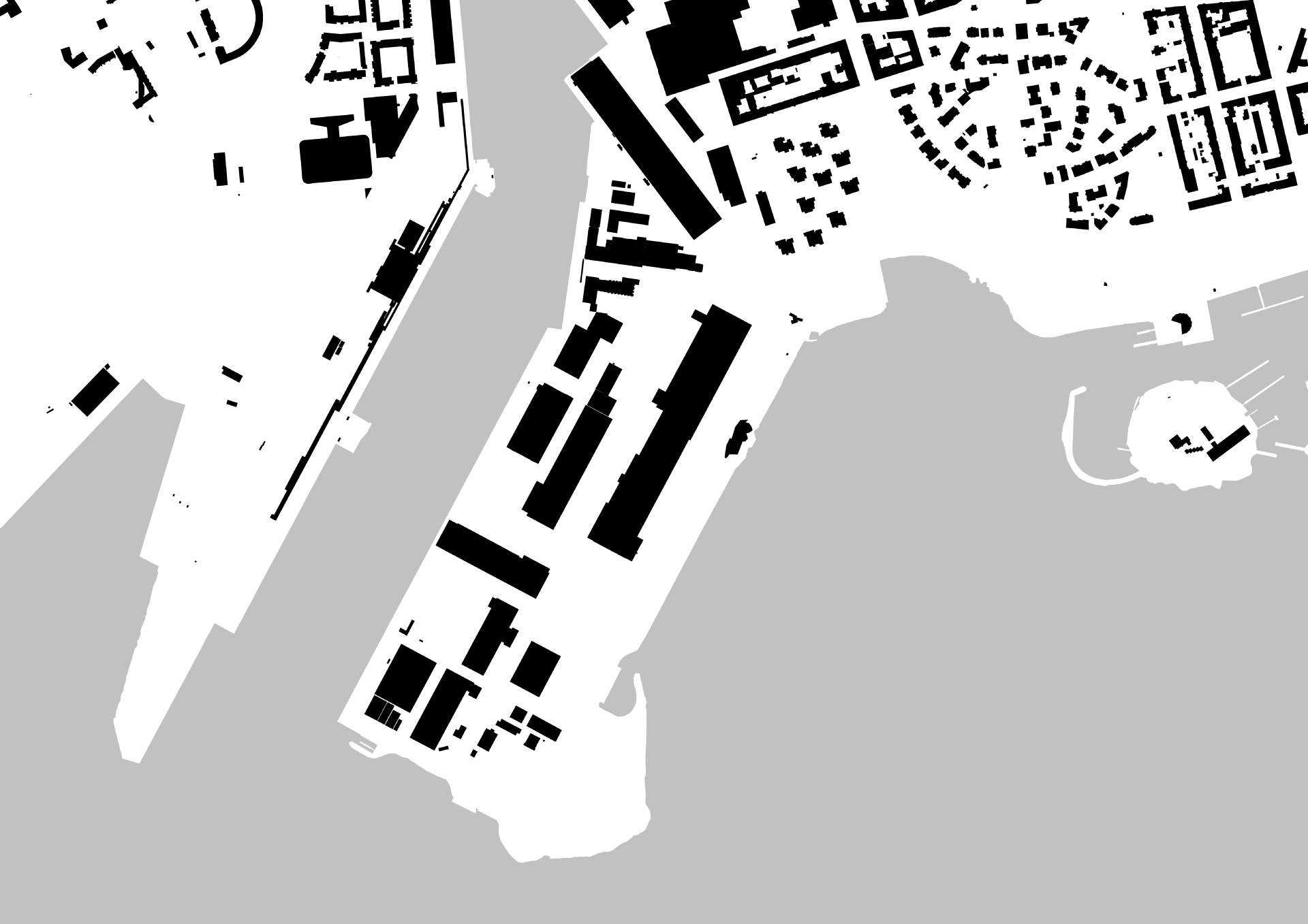
The project started from the city of Helsinki initia­tive. Herne­saari is a former indus­trial area on the Helsinki seashore that is being deve­loped into a resi­den­tial area. New uses are being deve­loped for the area, while waiting for future changes to come. There is a cruise ship harbor in Herne­saari. The city wanted to acti­vate the area with new func­tions and to serve visi­tors with new attrac­tions. avanto archi­tects started the project in 2011 desig­ning a tempo­rary sauna village at the further­most end of the penin­sula. The concept could not prove finan­cial sustaina­bi­lity, so the first client did quit the project. avanto archi­tects deve­loped a floa­ting sauna for the second client, but the concept was not realizable as the site faces the open sea and a floa­ting struc­ture couldn’t with­stand high waves and pres­sure from ice packs. The coast­line will change with future deve­lo­p­ment, but the city chose an area where the shore­line will remain the same. The archi­tects deve­loped a new free form concept with trian­gular faces. The client changed once more and, as actor Jasper Pääk­könen and Member of Parlia­ment Antero Vartia finally got funding, the cons­truc­tion works could begin.

Archi­tect

Avanto Archi­tects Ltd
Ville Hara and Anu Puus­tinen, Archi­tects SAFA
Kale­van­katu 31 a 3
FI-00100 Helsinki

Team

Qtio Oy (project manage­ment)
Antti Wester­lund, Hiroko Mori,Laura Nenonen, Xiaowen Xu

Steel Struc­tural Desi­gner

SS-Teracon Oy
Hatan­pään valtatie 34 D
FI-33100 Tampere

CURRENT CITY STRUCTURE
FUTURE CITY STRUCTURE

Context

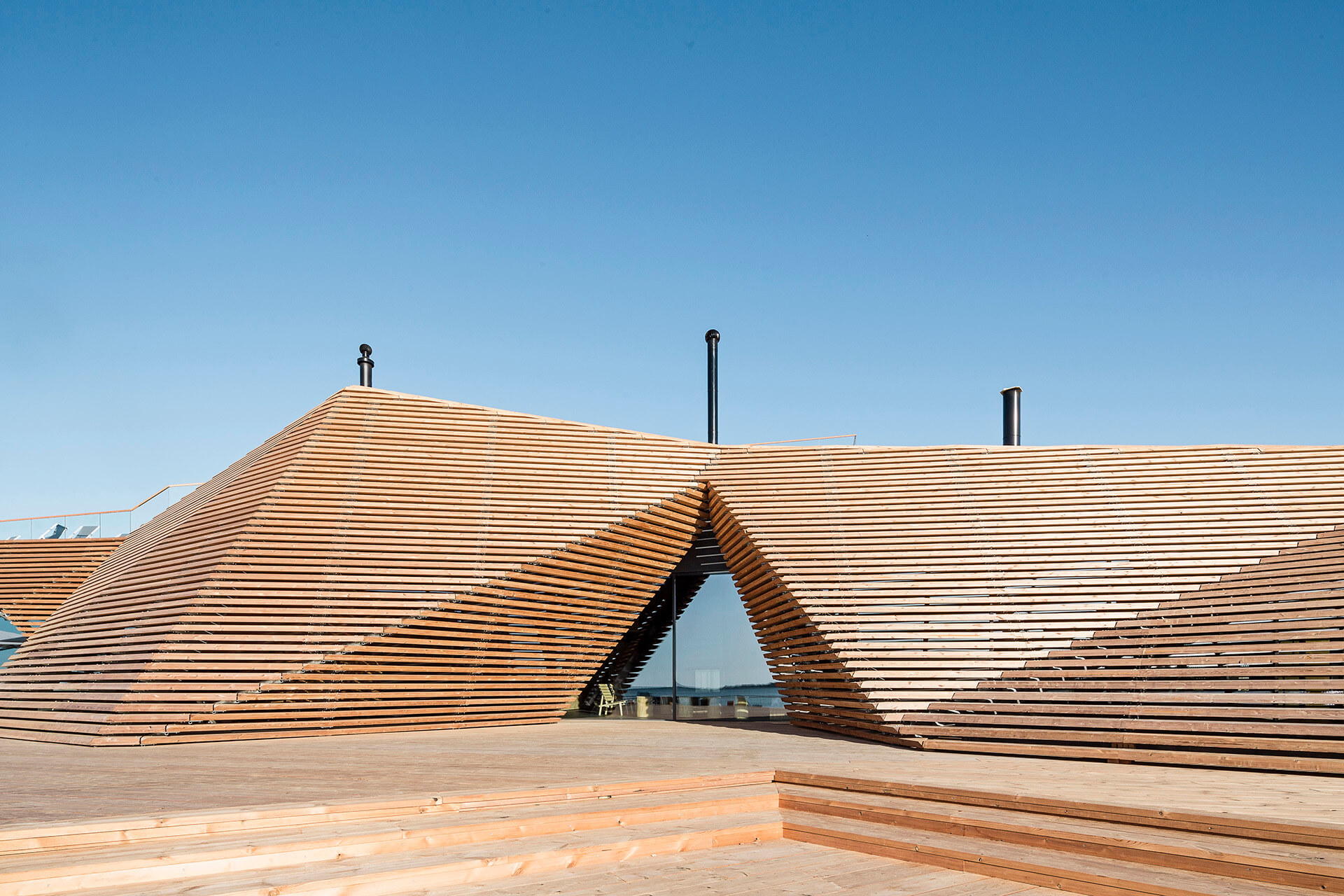
The site is unique. Being less than two kilo­me­ters away from the city centre, it is very central but at the same time the land­scape is like in the outer archi­pe­lago. The plot is situated in a future coastal park that will be part of a broader “Helsinki Park” connec­ting the capital city to the sea. The buil­ding was desi­gned to be slim and elon­gated so as not to cut the narrow park strip. The volume is kept as low as possible so that it doesn’t block views from the future resi­den­tial blocks. Instead of buil­ding a conven­tional buil­ding, the sauna is deve­loped into an easy-going, faceted cons­truc­tion that is more part of the park than a conven­tional buil­ding. When the wooden buil­ding turns gray, it will become more like a rock on the shore­line.

Client

Antero Vartia and Jasper Pääk­könen
Kidvek­keli Oy

Operator

Royal Restau­rants

GROUND PLAN

Archi­tec­ture

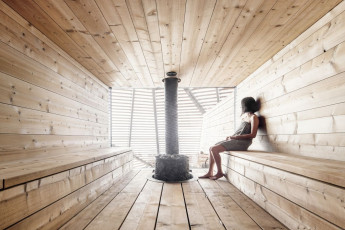
The archi­tec­tural idea is simple: A rectan­gular black box contai­ning the warm spaces is covered with a free formed wooden “cloak”. Instead of being mere deco­ra­tion, the sculp­tural struc­ture made of heat treated pine has several func­tions. It provides people with visual privacy. However, the lamellas don’t limit the sea view from inside it, rather they func­tion like vene­tian blinds and blocking the views from outside. There are shel­tered outside areas between the warm mass and cloak to cool down in between sauna bathing. The cloak forms inti­mate terraces between its slopes that serve as a place to sit. The struc­ture protects the buil­ding from the harsh coastal climate. It shades the inte­rior spaces with big glass surface and helps to reduce the use of energy to cool the buil­ding. Moreover, the stepped cloak forms stairs to climb on to the roof and terraces on top of the buil­ding. The cons­truc­tion forms a big outdoor audi­to­rium for the future marine sports centre’s acti­vi­ties on sea. There are around 4,000 planks that were precisely cut to indi­vi­dual forms by a computer-controlled machine. The big wooden terrace is partly on top of the sea. You can hear the sound of the waves under your feet.

Address

Herne­saa­ren­ranta 4
Helsinki
Finland

SAUNA

Spatia­lity

The buil­ding consists of two parts: public saunas and restau­rant. The saunas and public spaces open up to the sea, with inte­res­ting views to city center and the open sea. The atmo­sphere is calm and the spaces dimly lit. Diffe­rent areas are conceived as spaces within a space. Inte­res­ting views open between closed spaces as you move from one area to the next.

Dres­sing rooms and showers are sepa­rate for men and women. A leather curtain cove­ring the door indi­cates entry into the unisex area, at which point visi­tors need to wear a bathing suit. Tradi­tio­nally men and women bath sepa­ra­tely and naked. avanto archi­tects deve­loped a sauna culture where bathing toge­ther with your friends not depen­ding on gender is possible.

Inte­rior

The inte­rior archi­tec­ture of the restau­rant and the sauna lounge is by Joanna Laajisto Crea­tive Studio. The objec­tive of the design was to create an atmo­spheric restau­rant which compli­ments to the building’s strong archi­tec­ture. The approach could be called soft mini­ma­lism. The chall­enge was to create inti­mate seating areas in the large hall like space with two walls of windows. People often feel most comfor­table sitting their backs against the wall. The solu­tion was to build a raised plat­form for the bar area which divides the space into two diffe­rent areas. A wooden half wall anchors the long custom desi­gned sofas which have a great view of the sea.

The main mate­rials used in the inte­riors are black concrete, light Scan­di­na­vian birch wood, blackened steel and wool. All mate­rials are durable and long lasting. The wood used is pressed, glued and slightly heat-treated birch, a sustainable Finnish inno­va­tion made of left over mate­rials of the plywood industry that normally is burned to produce energy. This is how waste is turned into a beau­tiful recy­cled mate­rial. It´s manu­fac­tu­ring process produces a beau­tiful cool light color tone and heavy dura­bi­lity.

Cons­truc­tion costs

€6,000,000

Opening

2016

BUILDING

Saunas

There are three diffe­rent saunas- All are all heated with wood: a conti­nuously heated sauna, another one heated in the morning and staying warm all day and a tradi­tional smoke sauna – a true rarity in an urban sauna. This is how you can expe­ri­ence all sorts of Finnish Löyly during a single visit. Between the saunas there is a spa area with cold water basin and a fire place room to relax. You can swim in the sea. In winter visi­tors will find an “avanto”, the hole in the ice for winter swim­ming, a popular hobby in Finland – and  the name of the archi­tects’ office name as well.

Sustaina­bi­lity

The buil­ding is heated with district heating and elec­tri­city is produced with water and wind power. The buil­ding is first FSC-certi­fied buil­ding in Finland and second in Scan­di­navia. Forest Steward­ship Council’s certi­fi­cate proves that wood mate­rial comes from respon­sibly managed forests. The restau­rant serves organic food and sustain­ably caught fish.

Author of text

Ville Hara and Anu Puus­tinen, Avanto Archi­tects

RESTAURANT

THE ARCHITECTS
Avanto Architects
Avanto Archi­tects
Avanto Archi­tects Ltd was estab­lished in 2004 by Ville Hara and Anu Puus­tinen as they won an open compe­ti­tion for a ceme­tery chapel. The office works on projects of varying scale from product design to urban plan­ning for public commu­ni­ties, private compa­nies and private custo­mers. Avanto Archi­tects offers archi­tec­tural plan­ning and services of main desi­gner from sket­ching to the buil­ding phase. The latest versions of computer aided design programs are used in buil­ding design from study phases to the final cons­truc­tion docu­ments and visua­li­sa­tions. The office is a member of The Asso­cia­tion of Finnish Archi­tects’ Offices (ATL). Avanto means a hole in the ice for bathing in winter – a popular hobby in Finland. It symbo­lises our design philo­sophy. We want to create envi­ron­ment that evokes emotions by empa­thi­zing in the world of the people using the space. We enjoy nature and want to give the same possi­bi­lity for future gene­ra­tions as well.
VIDEOS
 
GDPR Cookie Consent with Real Cookie Banner