
Open-air halls
Get moving!
McArena
When children have no space to play, clubs wither on waiting lists and school sports are canceled due to the weather, the problem is not a lack of will, but a lack of infrastructure. Open-air halls create forward-looking, weather-protected exercise spaces where they are most urgently needed.
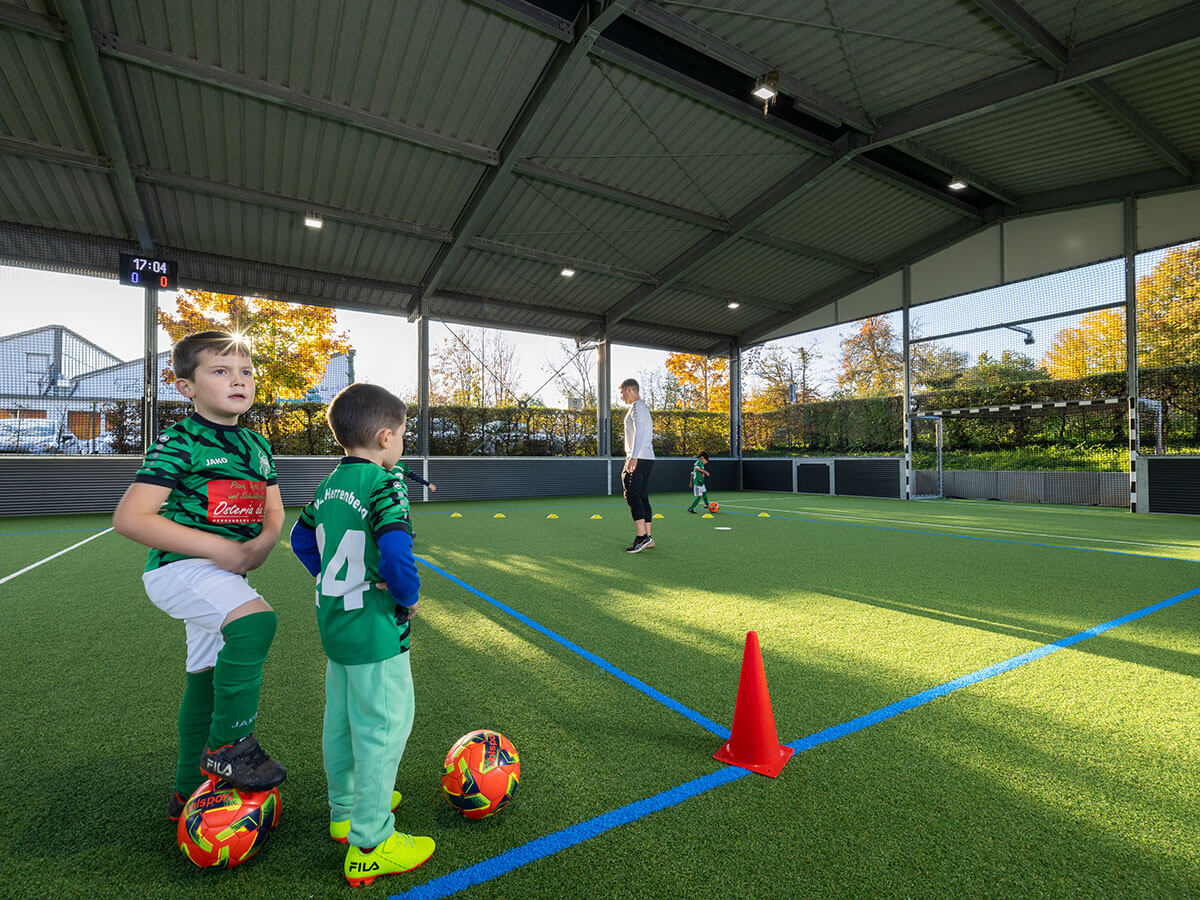
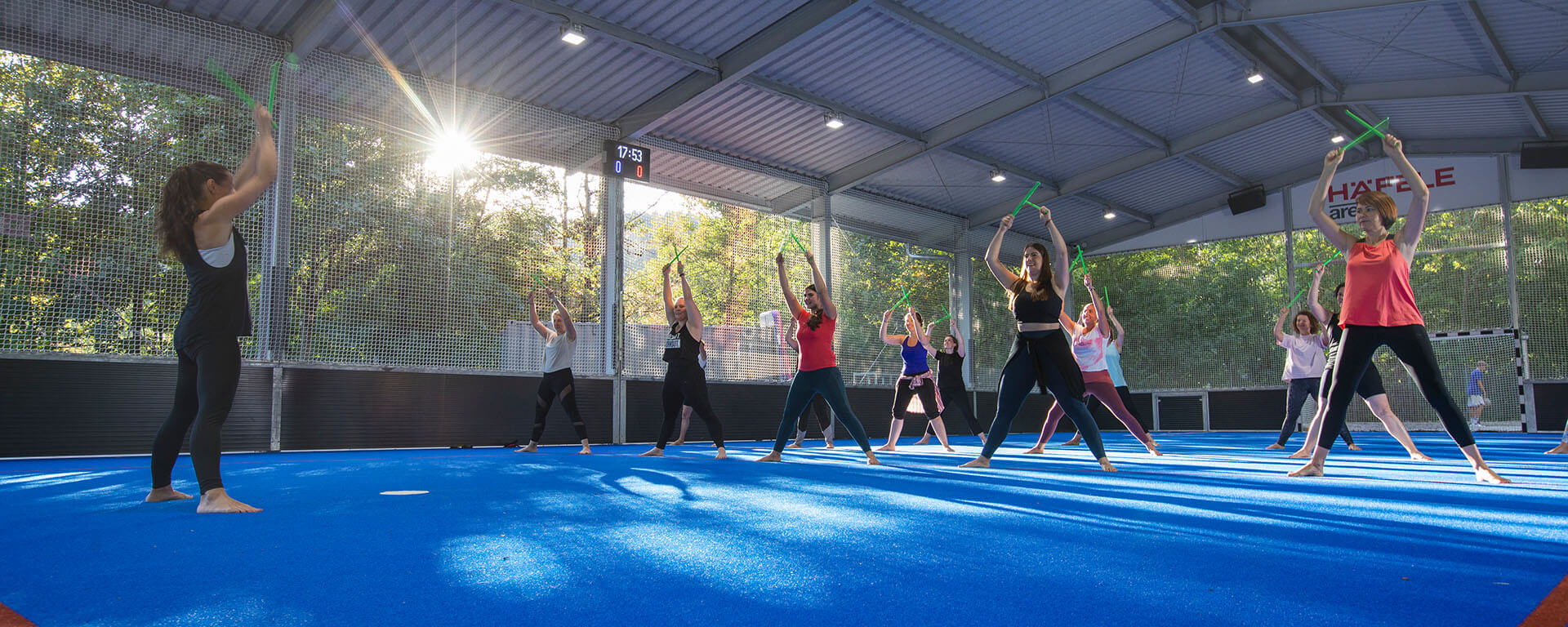
Problem
The construction of a traditional sports hall is often a lengthy, cost-intensive project. An open-air hall, on the other hand, is quick to build, cost-efficient, modular and, above all, can be used immediately. It is the answer to the urgent need for sports facilities – whether for local authorities, clubs or educational institutions.
Hall construction is complex, cost-intensive and time-consuming, isn’t it? It is precisely this concern that unites many decision-makers when they think about building a new sports facility. Conventional sports hall construction quickly devours several million euros, takes years to plan and realize and is hardly affordable for many municipalities in view of tight budgets.
What if there was a solution that was significantly cheaper, quicker to implement and still versatile? The McArena open-air hall is such a solution, and more than just a stopgap. It is an innovative, flexible hall concept that adapts to local needs and creates real added value.
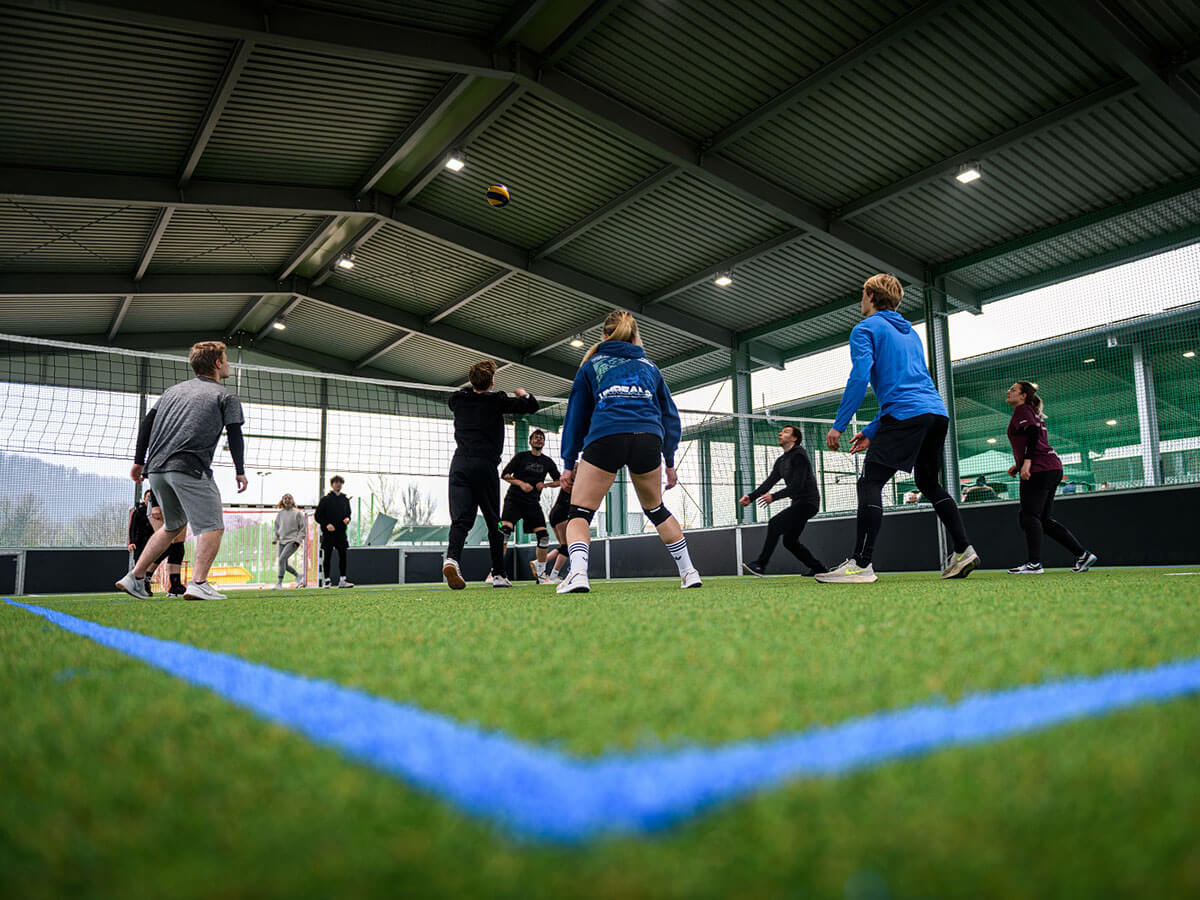

Solution
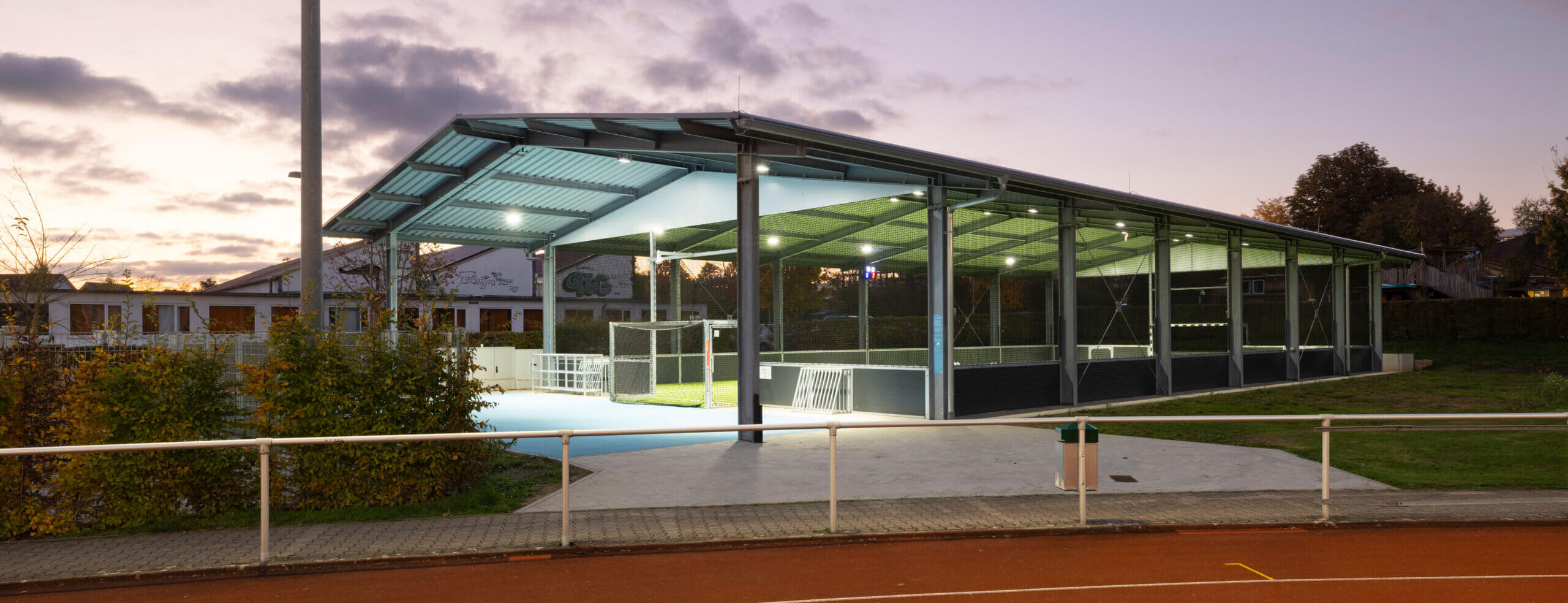
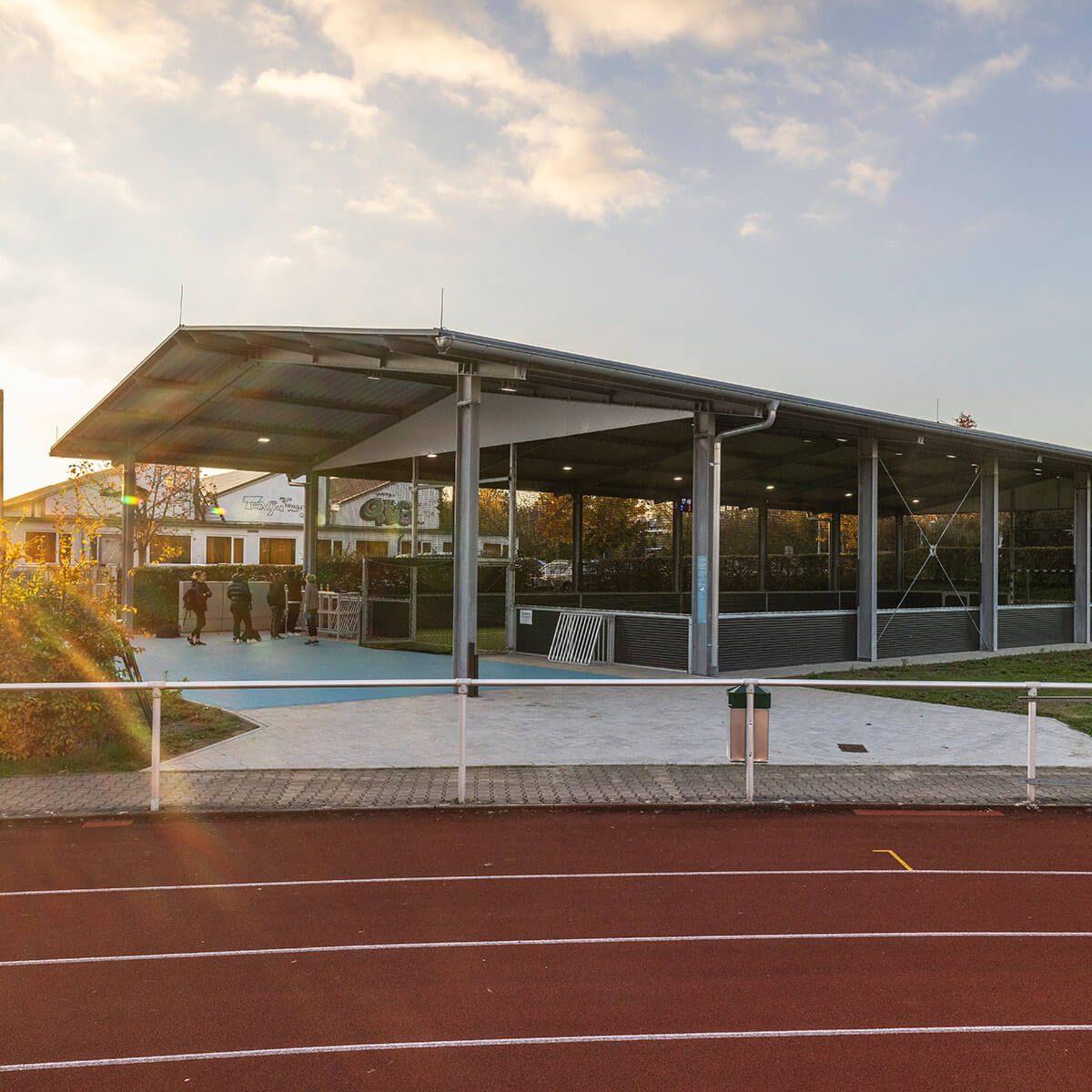
Open-air halls are modern, multifunctional sports halls that can be built at a fraction of the cost of a conventional hall. A modular open-air hall can be planned flexibly, erected quickly and used in a variety of ways. It is therefore the ideal solution for local authorities, schools and clubs with a limited budget.
Clubs can expand their training capacities with a compact single-field hall (e.g. 30×15 m), local authorities can benefit from new opportunities in school sports with a two-field hall (30×25 m), and larger cities or sponsors can use a three-field hall (45×25 m) for parallel operations, events and inclusive offers.
Especially in times of tight budgets, an open-air hall is a visible sign that exercise, encounters and participation are possible even under challenging conditions.
And the best thing is that construction is completed within a few months, and operation is low-maintenance and digitally controllable. Many McArena projects have already benefited from government funding in the areas of sport, infrastructure, integration and youth welfare.
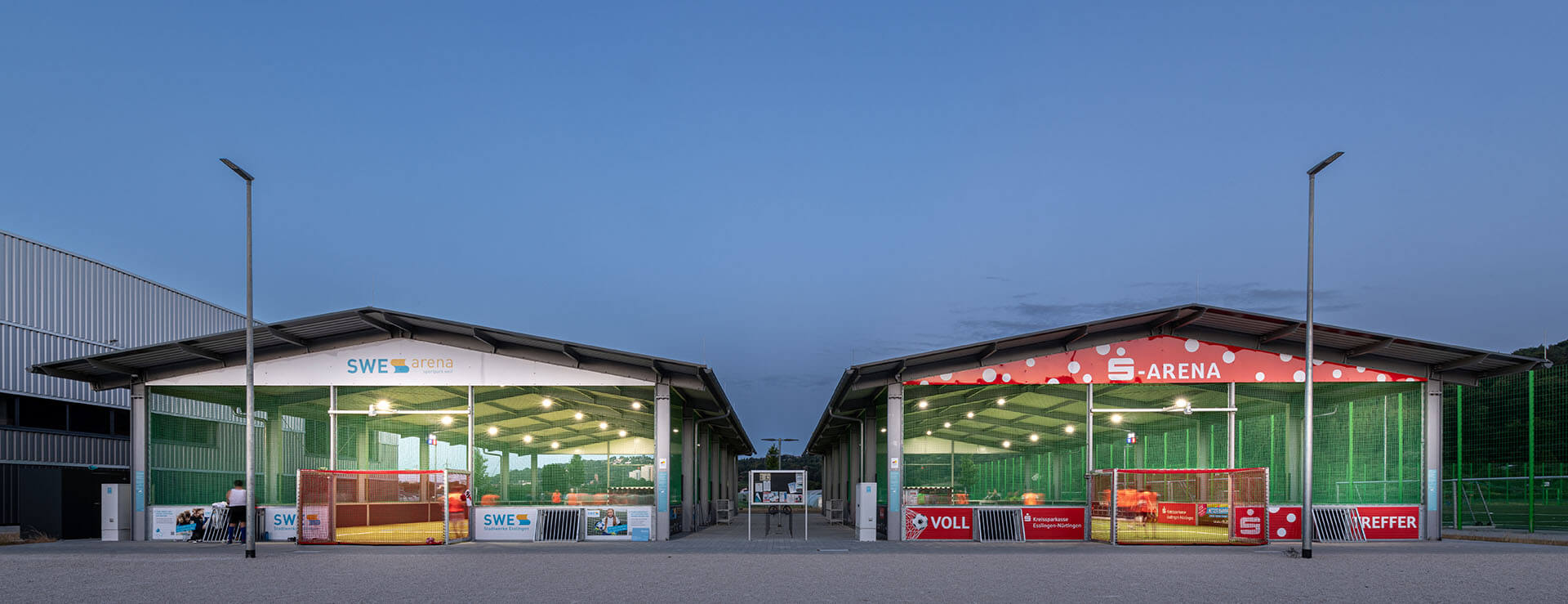
Movement
So the question is not whether local authorities, clubs etc. can afford a sports hall. The question is whether they can afford not to have one. An open-air hall brings movement into community life – quickly, easily and sustainably.
A McArena costs only a fraction of a traditional sports hall. Depending on the size, investments start at less than 400,000 euros. This opens up completely new possibilities for smaller towns, rural regions, city districts or social institutions that want to create a high-quality, weatherproof and low-maintenance sports facility on a limited budget.
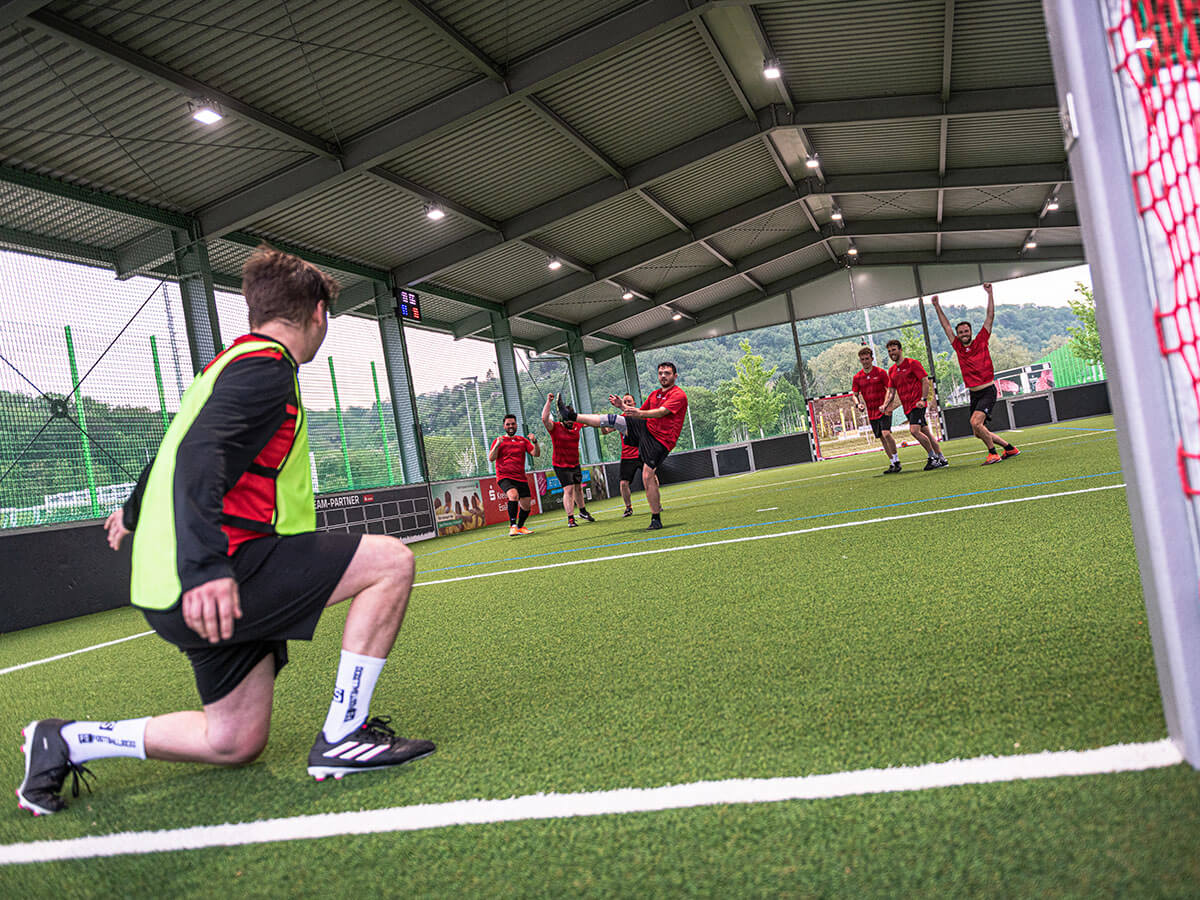
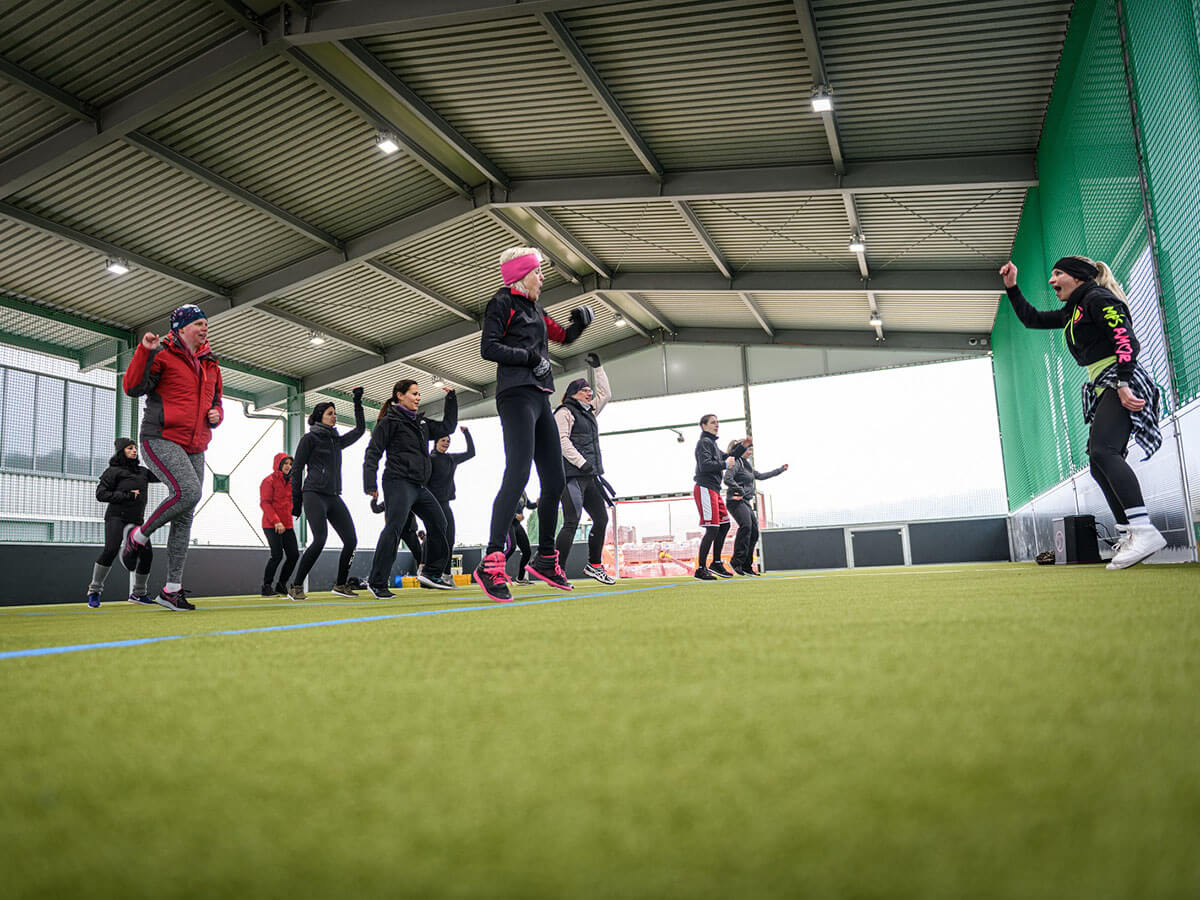
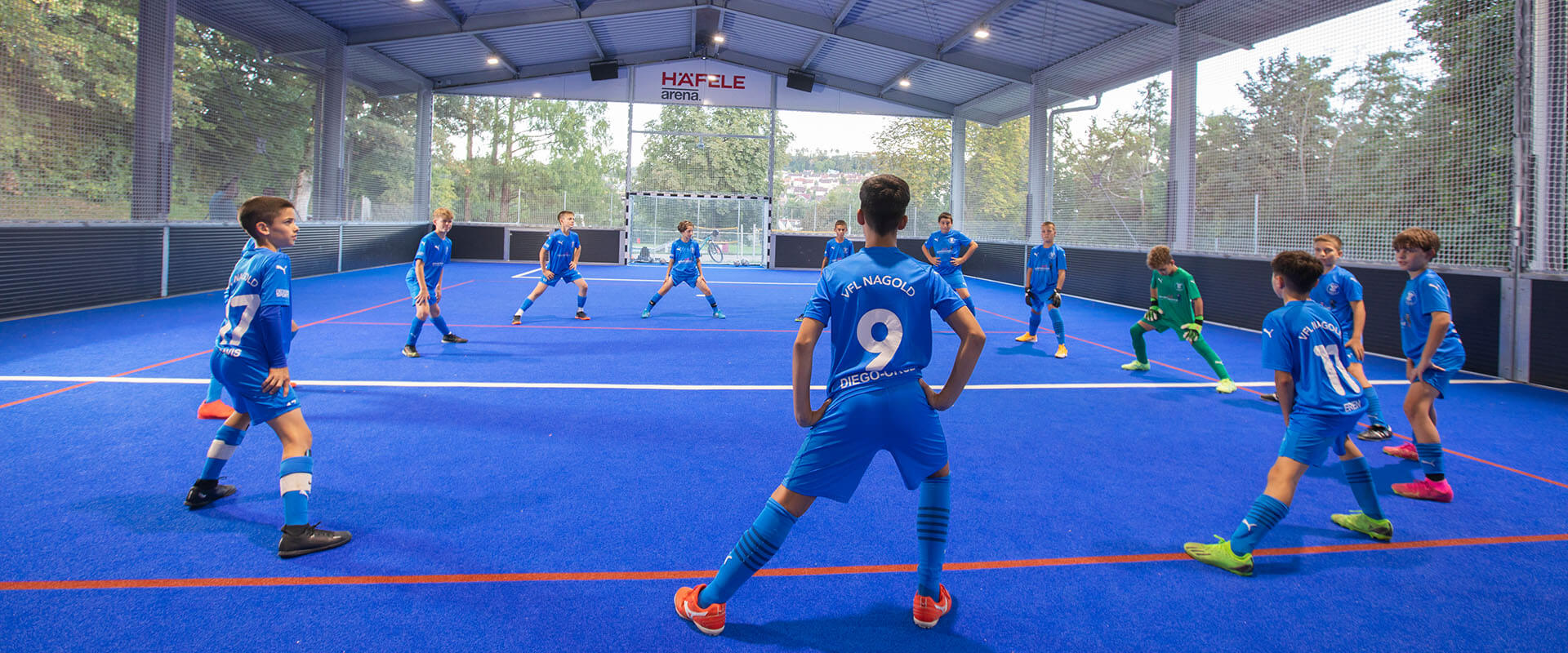
Each of these halls is a fully-fledged, covered sports hall with a sports floor, perimeter board system, LED floodlights, digital access system and optional music and equipment box. The highlight lies in the flexibility: different sizes and types allow adaptation to almost any area and use – be it in the school playground, as an addition to the club grounds or as an exercise-promoting meeting point in the neighborhood.
More about building.
Sustainability
Anyone planning a sports hall today is also thinking about future generations of users, future energy consumption and the ecological footprint of each individual component.
Local authorities, clubs and sponsors are under immense pressure today: rising energy costs, increasing climate protection requirements, tight budgets and the desire not to build new infrastructure at the expense of the environment. Traditional gyms with their massive construction, complex technology and high energy requirements seem like relics from another era.
In contrast, open-air halls made of galvanized steel with a recycled content of over 87% are sustainable. This construction method not only reduces CO₂ in production, but also in transportation and foundations. It allows for shorter construction times, less impact on the environment and maximum flexibility.
You can find out more about sustainability here.
From stock
The heart of every McArena is its intelligent operation: digital control, light only when in use, automatic access systems and an AI-supported camera system for efficiency monitoring. There are also optional photovoltaic modules, rainwater harvesting cisterns and green roofs. These are all modules that make the halls CO₂-neutral step by step.
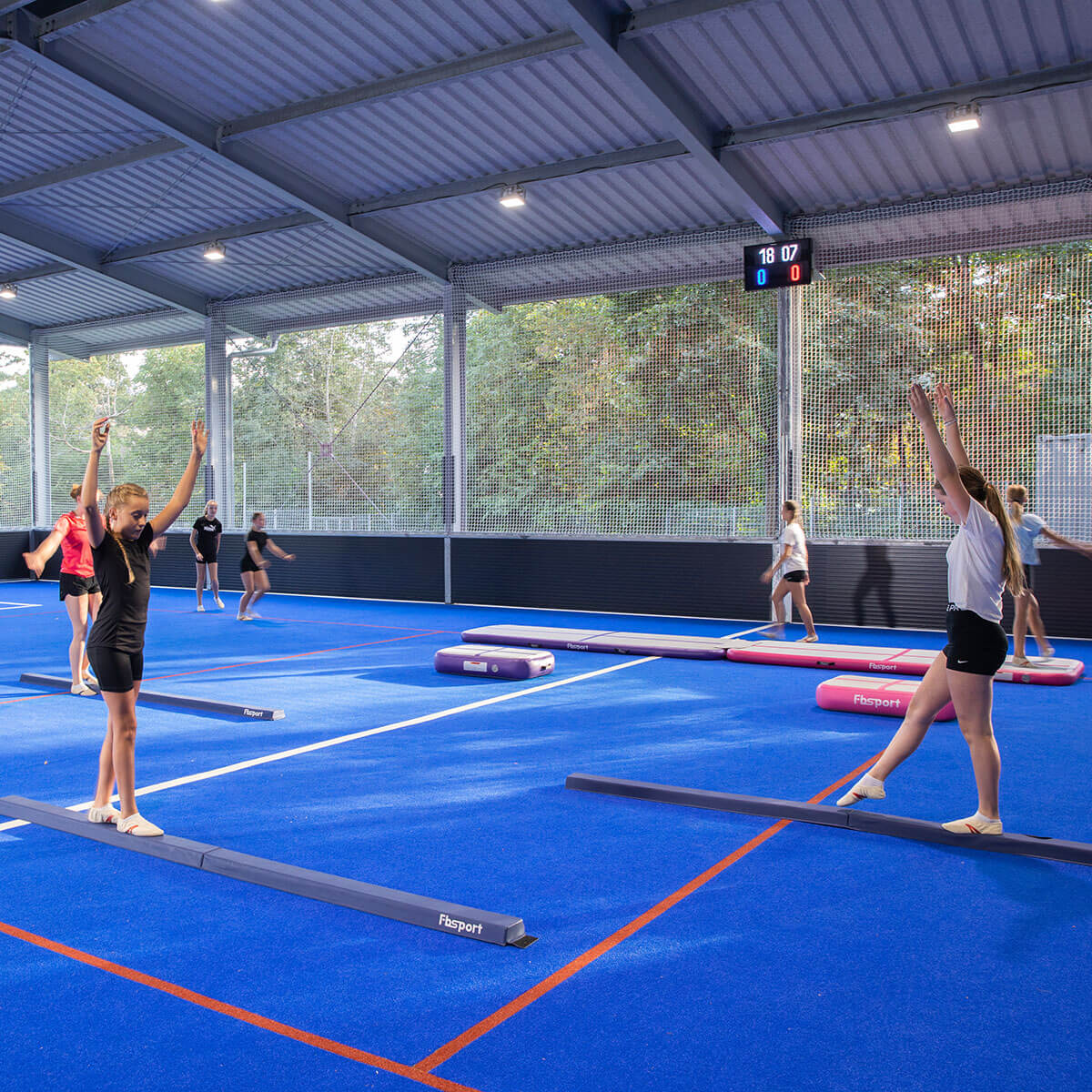
But sustainability means more than just technology. It is an attitude. A hall that is used jointly – by schools, clubs, leisure groups and events – saves duplicate investments, reduces distances, promotes social integration and revitalizes entire neighbourhoods.
And it lasts. Because steel is not only recyclable, but also extremely durable. The halls are designed to last for decades, with minimal maintenance requirements and clearly calculable operating costs. The result is a space for movement that really lasts.
References on the topic can be found here.
Authors
Photos
McArena GmbH
Karl-Ferdinand-Braun-Straße 3
D – 71522 Backnang
Text
Matthias Prinz
(Advertorial)
Videos
Our categories
Our newsletter
Your stage
Publish your project or product here!