Tammela Stadium

Room with a view

Tammela Stadium in Tampere

Situa­tion

Tammela Stadium is situated in the midst of resi­den­tial buil­dings and is home to the foot­ball club Ilves in the Finnish town of Tampere. It was built in 1931, offers 5,000 seats on two diffe­rent stands and is to be replaced by a new buil­ding.

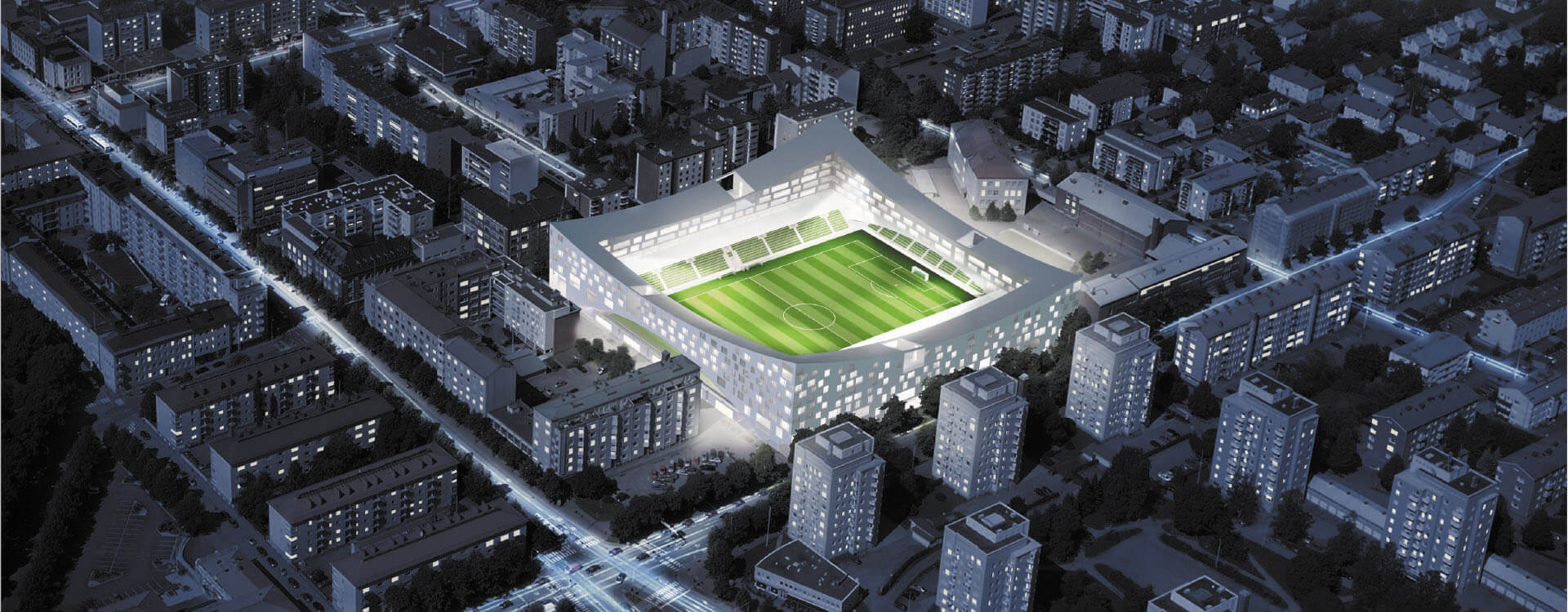
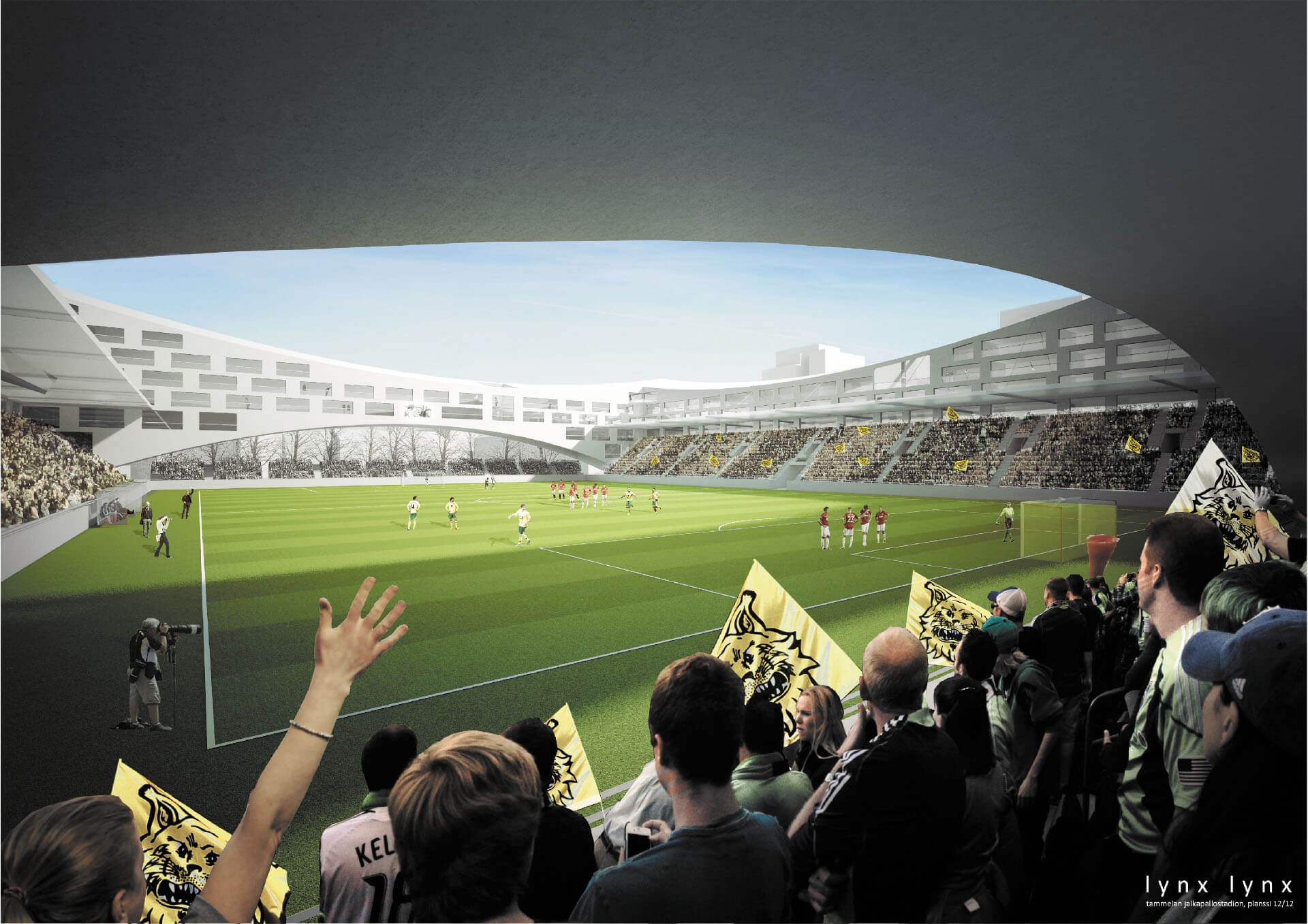
New Tammela Stadium aims to unify the city struc­ture in Tammela by rein­tro­du­cing tradi­tional closed block struc­ture to an area that has become frag­mented and inco­herent. There is a green “cour­tyard” surrounded by a conti­nuous low buil­ding mass housing small shops like in historic city blocks that have mostly been torn down. In the East, the block boar­ders Kaleva Boule­vard in the same line with an old school buil­ding North of the stadium. On the Western side the block is retracted to form a small entrance square for the buil­ding and to leave enough space for the exis­ting housing. This is how the exis­ting row of trees can be preserved. This is important as there are only few green spaces in the area and every tree counts.

Buil­dings from all four sides

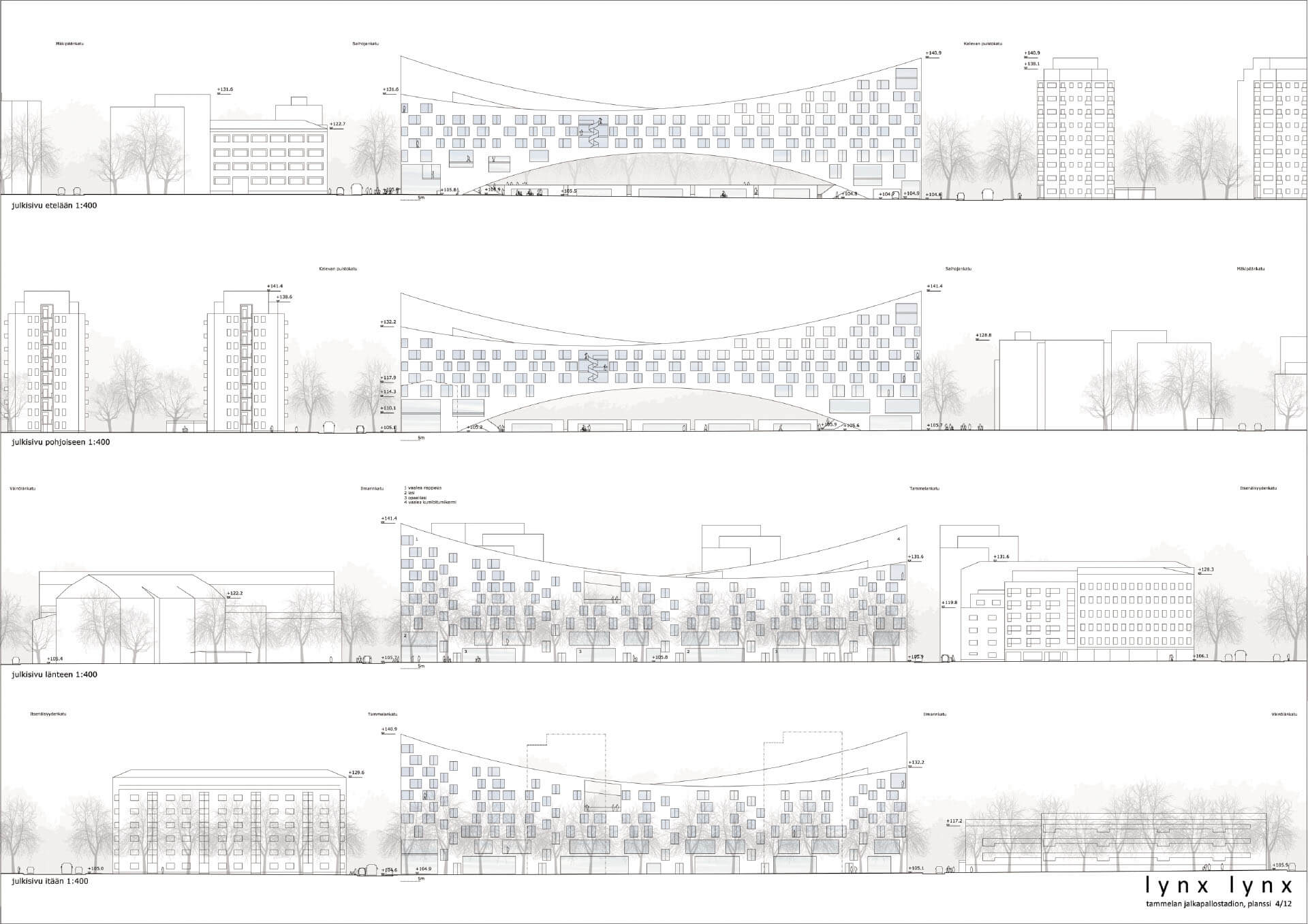
Surroun­ding the pitch with buil­dings from all four sides makes the block effi­cient and finan­ci­ally sustainable without making the stadium too massive in valuable historic setting. The City of Tampere aims to finance the public stadium project by selling the buil­ding right for the housing on top of the stadium. As the audi­ence surrounds players from all four sides the bowl like space is spati­ally very intense. The heights of the crown like block’s tips have been carefully adapted to surroun­ding buil­dings. By pushing down the middle parts of the sides, the neigh­bors’ long views have been preserved and the school cour­tyard still gets direct sunlight. The home team of Tampere is called Ilves meaning lynx. You can see refe­rences to lynx’s ear tufts or the flight path of a foot­ball in the form of the block.

Archi­tect

avanto archi­tects ltd
kale­van­katu 31 a
3 fi – 00100 helsinki
finland

Client

City of Tampere

Address

Kalevan puis­totie 21
33500 Tampere
Finland

Aerial view

Thank you, Google!

Enter from all four corners

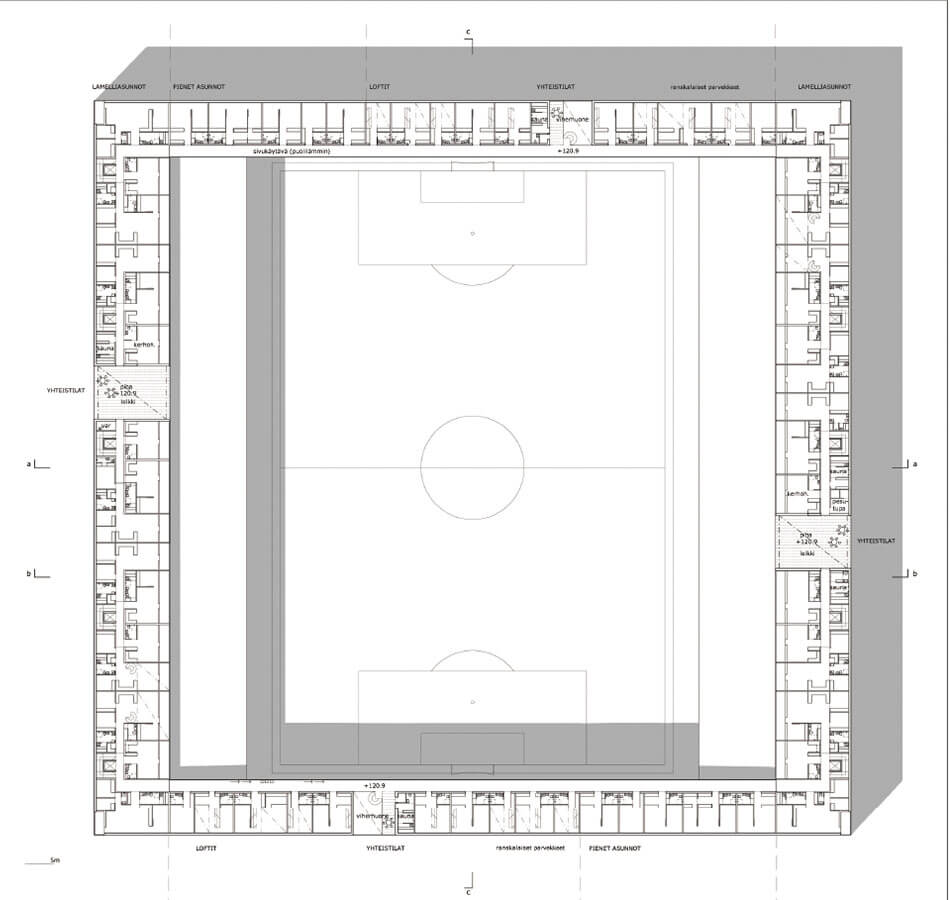
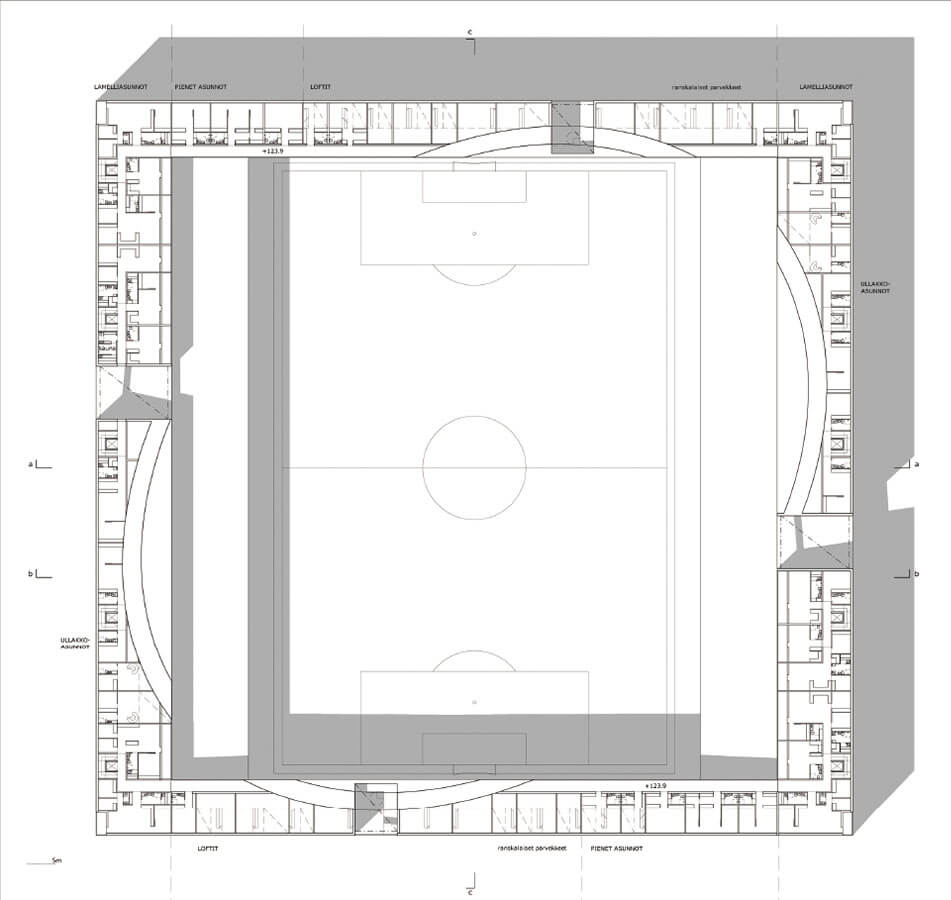
You may enter the stadium from all four corners. It is easy to find the entrances that are situated under the vaulted ceiling of buil­ding masses at the ends of the field. As required by UEFA, it is possible to arrange a sepa­rate entrance and stand for a visitor team. The most public func­tions, the restau­rant and the gym, have been placed in the block corners so that they are easy to reach. The idea is to open the buil­ding for the local resi­dents as well. All spaces are flexible and can be used by diffe­rent users during diffe­rent times of the day so that the use ratio of spaces can be raised. The hybrid block housing various func­tions is active 24/7.

The field is oriented North-South and the main stand with TV cameras is on the West side, accor­ding to UEFA instruc­tions. As the bridge like buil­dings on rein­forced concrete arcs on the short ends need no columns, even the end stands have unob­s­tructed views to the field. The stands can tempo­r­a­rily be extended to fill the highest UEFA cate­gory 4.

Living in a stadium

As the buil­ding volume is rela­tively thick, many diffe­rent types of housing can be built. The proposed student flats coun­ter­ba­lance the demo­gra­phic struc­ture of the area with mostly elderly people. Special emphases was put to the social sustaina­bi­lity of the project. The sense of commu­nity is created by intro­du­cing various common spaces like green conser­va­to­ries and saunas with exten­sive roof terraces. The gene­rous side-corridor provides extra space for storing a bicycle, urban gardening or even watching a match inside the stadium with your neigh­bors. The upper­most floor with curved roof houses loft apart­ments with varying ceiling height.

Ground plans

Eleva­tions + Sections

Löyly

Unique acti­va­tion

Löyly Sauna in Helsinki

Sauna culture

Sauna bathing is an essen­tial part of Finnish culture and national iden­tity. There are only 5,4 million Finns but 3,3 million saunas. Public saunas used to be common in bigger cities but now that most new apart­ments have a sauna of their own, public saunas have decreased drama­ti­cally in number. There are only a few remai­ning. As a sense of commu­nity is beco­ming a more and more important part of new urban culture, many new public saunas are being planned. With Löyly (meaning: the steam you get when thro­wing water on hot stones in a sauna) Helsinki will offer foreign visi­tors a public sauna expe­ri­ence all year round – a must when visi­ting Finland.

Process

The project started from the city of Helsinki initia­tive. Herne­saari is a former indus­trial area on the Helsinki seashore that is being deve­loped into a resi­den­tial area. New uses are being deve­loped for the area, while waiting for future changes to come. There is a cruise ship harbor in Herne­saari. The city wanted to acti­vate the area with new func­tions and to serve visi­tors with new attrac­tions. avanto archi­tects started the project in 2011 desig­ning a tempo­rary sauna village at the further­most end of the penin­sula. The concept could not prove finan­cial sustaina­bi­lity, so the first client did quit the project. avanto archi­tects deve­loped a floa­ting sauna for the second client, but the concept was not realizable as the site faces the open sea and a floa­ting struc­ture couldn’t with­stand high waves and pres­sure from ice packs. The coast­line will change with future deve­lo­p­ment, but the city chose an area where the shore­line will remain the same. The archi­tects deve­loped a new free form concept with trian­gular faces. The client changed once more and, as actor Jasper Pääk­könen and Member of Parlia­ment Antero Vartia finally got funding, the cons­truc­tion works could begin.

Archi­tect

Avanto Archi­tects Ltd
Ville Hara and Anu Puus­tinen, Archi­tects SAFA
Kale­van­katu 31 a 3
FI-00100 Helsinki

Team

Qtio Oy (project manage­ment)
Antti Wester­lund, Hiroko Mori,Laura Nenonen, Xiaowen Xu

Steel Struc­tural Desi­gner

SS-Teracon Oy
Hatan­pään valtatie 34 D
FI-33100 Tampere

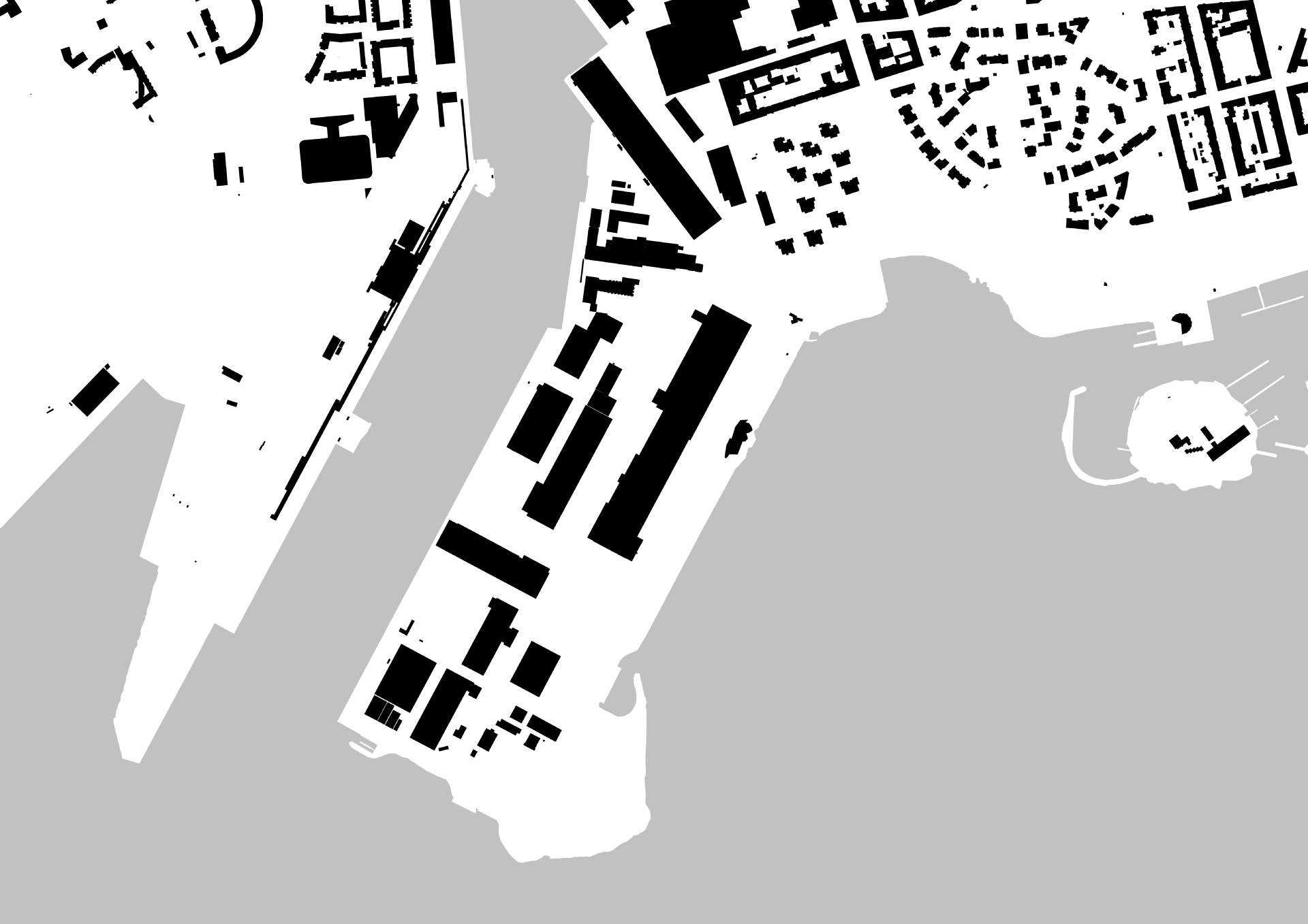
CURRENT CITY STRUCTURE
FUTURE CITY STRUCTURE

Context

The site is unique. Being less than two kilo­me­ters away from the city centre, it is very central but at the same time the land­scape is like in the outer archi­pe­lago. The plot is situated in a future coastal park that will be part of a broader “Helsinki Park” connec­ting the capital city to the sea. The buil­ding was desi­gned to be slim and elon­gated so as not to cut the narrow park strip. The volume is kept as low as possible so that it doesn’t block views from the future resi­den­tial blocks. Instead of buil­ding a conven­tional buil­ding, the sauna is deve­loped into an easy-going, faceted cons­truc­tion that is more part of the park than a conven­tional buil­ding. When the wooden buil­ding turns gray, it will become more like a rock on the shore­line.

Client

Antero Vartia and Jasper Pääk­könen
Kidvek­keli Oy

Operator

Royal Restau­rants

GROUND PLAN

Archi­tec­ture

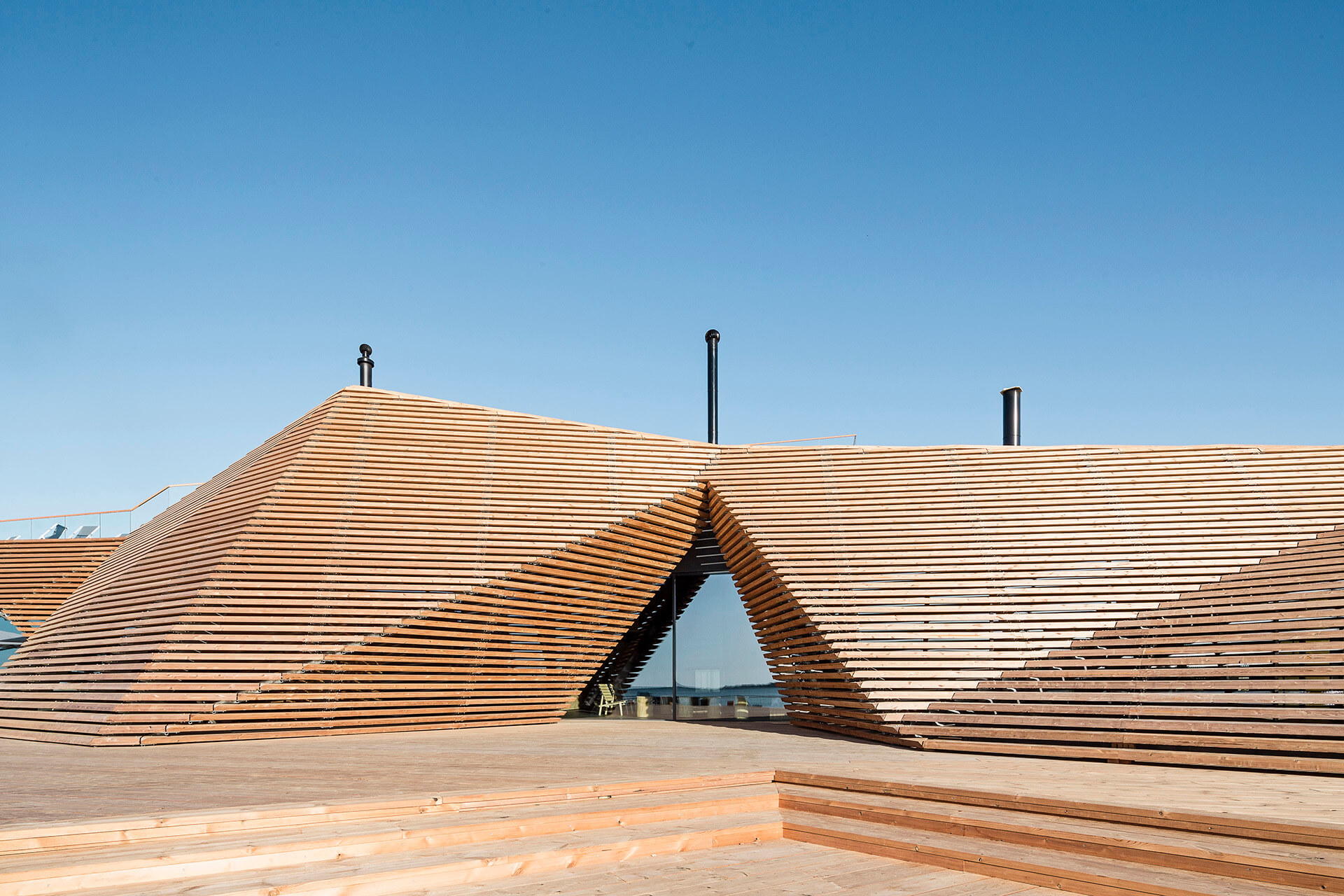
The archi­tec­tural idea is simple: A rectan­gular black box contai­ning the warm spaces is covered with a free formed wooden “cloak”. Instead of being mere deco­ra­tion, the sculp­tural struc­ture made of heat treated pine has several func­tions. It provides people with visual privacy. However, the lamellas don’t limit the sea view from inside it, rather they func­tion like vene­tian blinds and blocking the views from outside. There are shel­tered outside areas between the warm mass and cloak to cool down in between sauna bathing. The cloak forms inti­mate terraces between its slopes that serve as a place to sit. The struc­ture protects the buil­ding from the harsh coastal climate. It shades the inte­rior spaces with big glass surface and helps to reduce the use of energy to cool the buil­ding. Moreover, the stepped cloak forms stairs to climb on to the roof and terraces on top of the buil­ding. The cons­truc­tion forms a big outdoor audi­to­rium for the future marine sports centre’s acti­vi­ties on sea. There are around 4,000 planks that were precisely cut to indi­vi­dual forms by a computer-controlled machine. The big wooden terrace is partly on top of the sea. You can hear the sound of the waves under your feet.

Address

Herne­saa­ren­ranta 4
Helsinki
Finland

SAUNA

Spatia­lity

The buil­ding consists of two parts: public saunas and restau­rant. The saunas and public spaces open up to the sea, with inte­res­ting views to city center and the open sea. The atmo­sphere is calm and the spaces dimly lit. Diffe­rent areas are conceived as spaces within a space. Inte­res­ting views open between closed spaces as you move from one area to the next.

Dres­sing rooms and showers are sepa­rate for men and women. A leather curtain cove­ring the door indi­cates entry into the unisex area, at which point visi­tors need to wear a bathing suit. Tradi­tio­nally men and women bath sepa­ra­tely and naked. avanto archi­tects deve­loped a sauna culture where bathing toge­ther with your friends not depen­ding on gender is possible.

Inte­rior

The inte­rior archi­tec­ture of the restau­rant and the sauna lounge is by Joanna Laajisto Crea­tive Studio. The objec­tive of the design was to create an atmo­spheric restau­rant which compli­ments to the building’s strong archi­tec­ture. The approach could be called soft mini­ma­lism. The chall­enge was to create inti­mate seating areas in the large hall like space with two walls of windows. People often feel most comfor­table sitting their backs against the wall. The solu­tion was to build a raised plat­form for the bar area which divides the space into two diffe­rent areas. A wooden half wall anchors the long custom desi­gned sofas which have a great view of the sea.

The main mate­rials used in the inte­riors are black concrete, light Scan­di­na­vian birch wood, blackened steel and wool. All mate­rials are durable and long lasting. The wood used is pressed, glued and slightly heat-treated birch, a sustainable Finnish inno­va­tion made of left over mate­rials of the plywood industry that normally is burned to produce energy. This is how waste is turned into a beau­tiful recy­cled mate­rial. It´s manu­fac­tu­ring process produces a beau­tiful cool light color tone and heavy dura­bi­lity.

Cons­truc­tion costs

€6,000,000

Opening

2016

BUILDING

Saunas

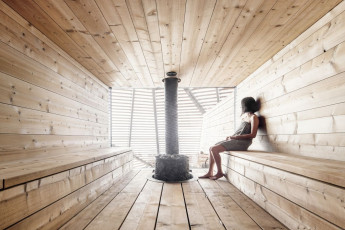
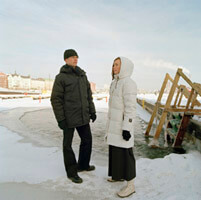
There are three diffe­rent saunas- All are all heated with wood: a conti­nuously heated sauna, another one heated in the morning and staying warm all day and a tradi­tional smoke sauna – a true rarity in an urban sauna. This is how you can expe­ri­ence all sorts of Finnish Löyly during a single visit. Between the saunas there is a spa area with cold water basin and a fire place room to relax. You can swim in the sea. In winter visi­tors will find an “avanto”, the hole in the ice for winter swim­ming, a popular hobby in Finland – and  the name of the archi­tects’ office name as well.

Sustaina­bi­lity

The buil­ding is heated with district heating and elec­tri­city is produced with water and wind power. The buil­ding is first FSC-certi­fied buil­ding in Finland and second in Scan­di­navia. Forest Steward­ship Council’s certi­fi­cate proves that wood mate­rial comes from respon­sibly managed forests. The restau­rant serves organic food and sustain­ably caught fish.

Author of text

Ville Hara and Anu Puus­tinen, Avanto Archi­tects

RESTAURANT

THE ARCHITECTS
Avanto Architects
Avanto Archi­tects
Avanto Archi­tects Ltd was estab­lished in 2004 by Ville Hara and Anu Puus­tinen as they won an open compe­ti­tion for a ceme­tery chapel. The office works on projects of varying scale from product design to urban plan­ning for public commu­ni­ties, private compa­nies and private custo­mers. Avanto Archi­tects offers archi­tec­tural plan­ning and services of main desi­gner from sket­ching to the buil­ding phase. The latest versions of computer aided design programs are used in buil­ding design from study phases to the final cons­truc­tion docu­ments and visua­li­sa­tions. The office is a member of The Asso­cia­tion of Finnish Archi­tects’ Offices (ATL). Avanto means a hole in the ice for bathing in winter – a popular hobby in Finland. It symbo­lises our design philo­sophy. We want to create envi­ron­ment that evokes emotions by empa­thi­zing in the world of the people using the space. We enjoy nature and want to give the same possi­bi­lity for future gene­ra­tions as well.
VIDEOS
 
GDPR Cookie Consent with Real Cookie Banner