
Powerhouse Stadium in Birmingham
Chimney stadium
62,000 fans, a retractable roof and urban life around the stadium: the Powerhouse Stadium will be Birmingham’s new center for sport and culture. And tells the industrial history of the city into the future. As a new landmark.
Design
Heatherwick Studio & Manica
Urban development with chimneys
With the planned Powerhouse Stadium, Birmingham is about to embark on one of the most ambitious stadium and urban development projects in the UK. The multifunctional large-scale project in the east of the city will seat 62,000 spectators and will be the new home of second division club Birmingham City Football Club. It will replace the traditional St. Andrew’s Stadium, located 1.5 km to the west, and will form the heart of the new Birmingham Sports Quarter from 2030.
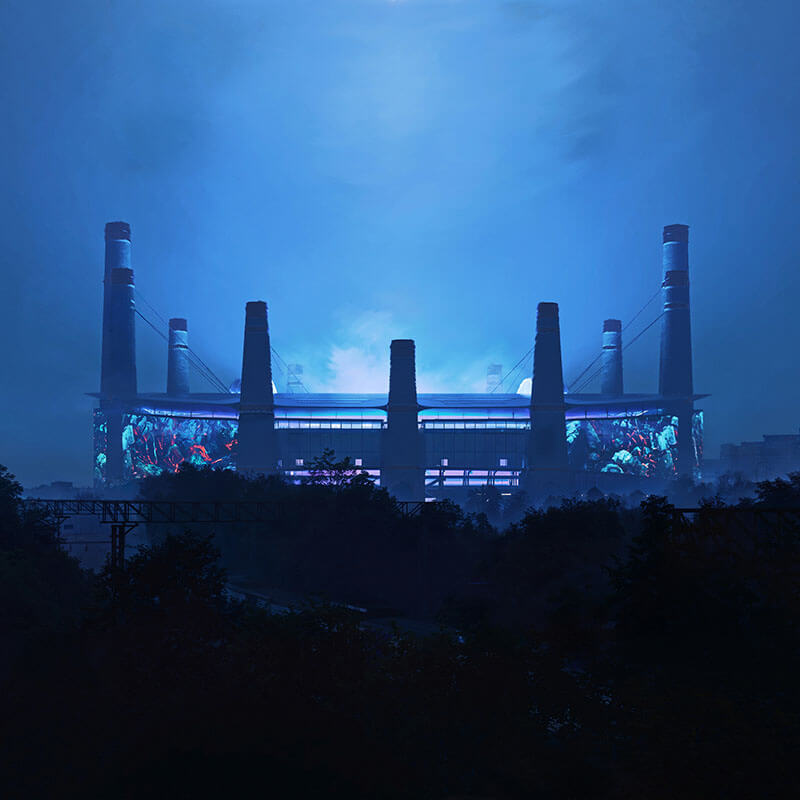
The project pays homage to Birmingham’s industrial past and translates this into a striking architectural language. The defining element are twelve high, chimney-like towers, which are reminiscent of the former brick production at the site (Birmingham Wheels Park). Where possible, historic bricks are to be reused.
The towers, known as “chimneys”, take on several functions: They support the roof, house stairs and elevators and are part of a passive ventilation concept.
The Powerhouse Stadium is being designed by Heatherwick Studio in collaboration with MANICA.


Lockable and movable
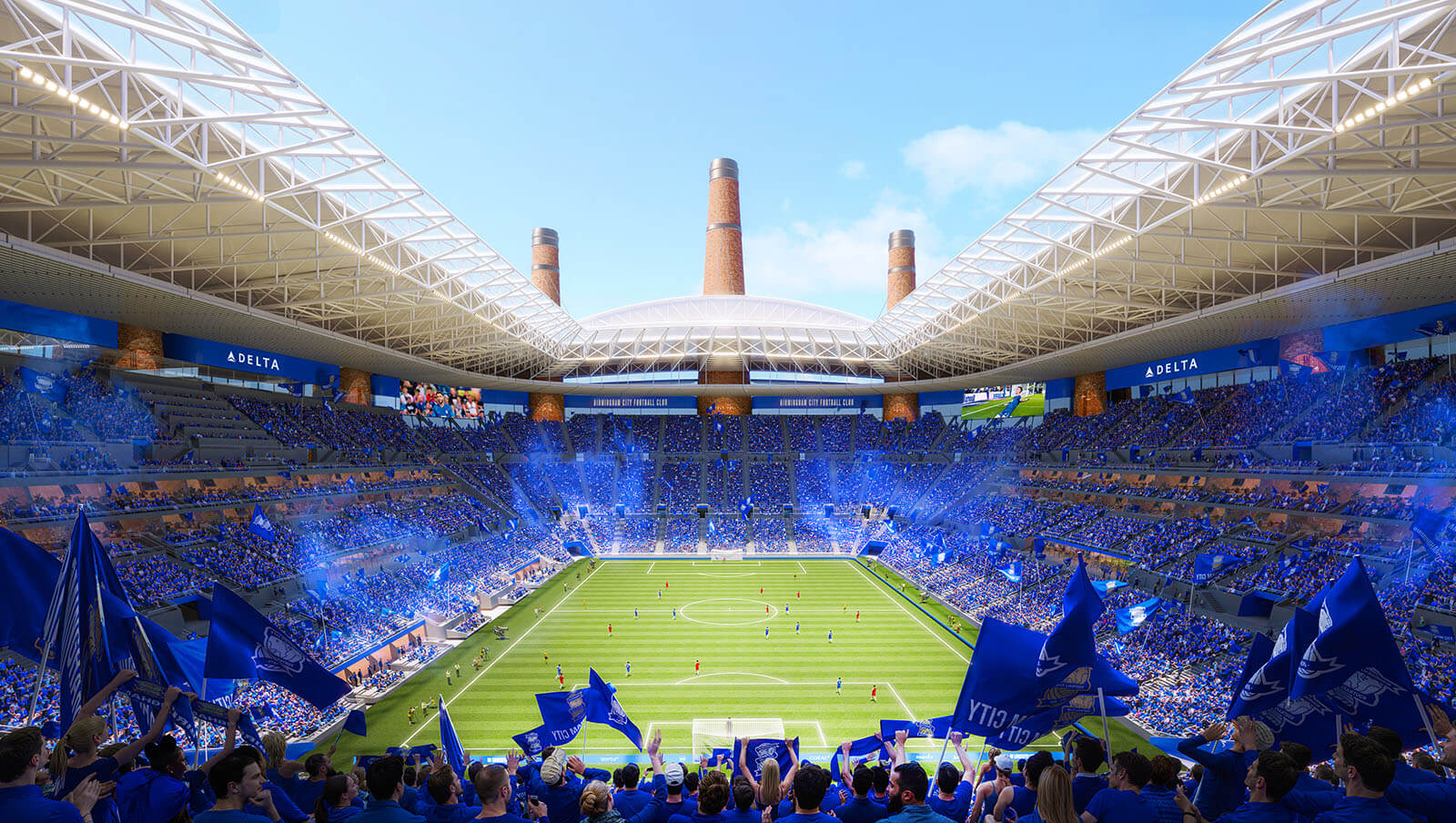
Inside, the Powerhouse Stadium focuses on an intense spectator experience. The steep, compact spectator bowl brings the fans as close as possible to the pitch and creates an enclosed atmosphere. High-performance acoustic solutions are designed to enhance the atmosphere while limiting noise pollution for the surrounding area.
A closable roof and a movable pitch enable flexible forms of use and a wide variety of events, from soccer and other sports to international concerts and major events. This clearly positions the stadium as a multifunctional arena that can be used all year round.
A special highlight: one of the towers will house an elevator to the highest bar in Birmingham – including a panoramic view of the city and a multimedia presentation of local history.
The stadium as a public space
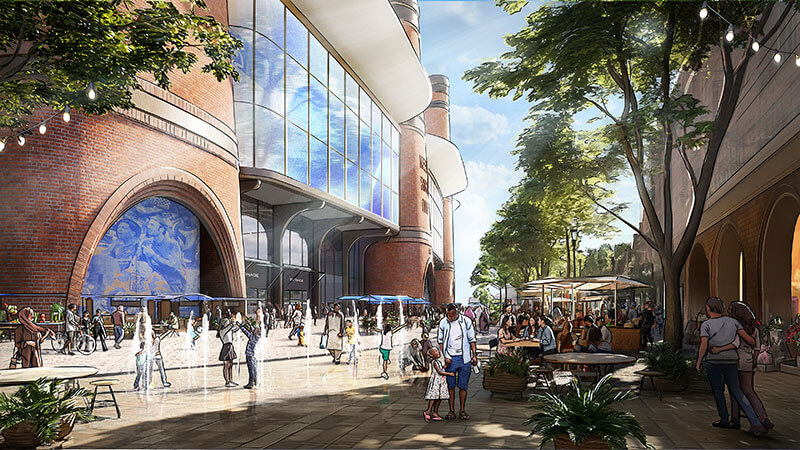
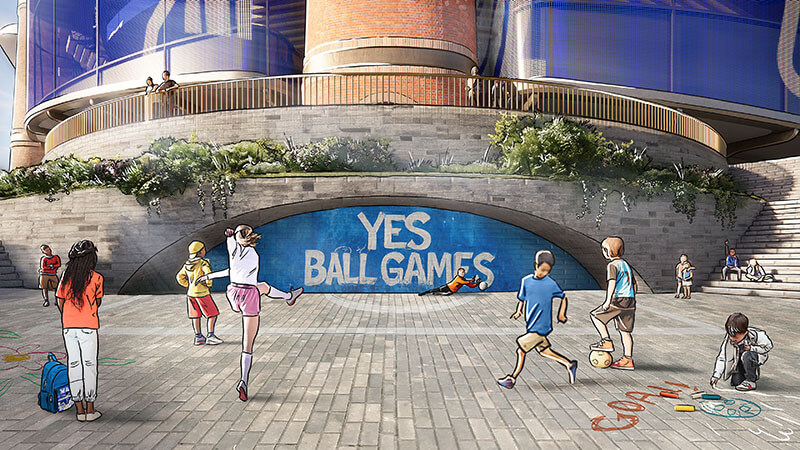
The central concern of all those involved is to fill the stadium with life not only on match days. A publicly accessible urban space is being created around the Powerhouse Stadium that can be used throughout the week. The plans include food markets, restaurants, cafés, recreation areas and play areas for children. The stadium will thus become a social meeting place and an integral part of the neighborhood.
As the anchor project of the Birmingham Sports Quarter, the new stadium will have an impact far beyond soccer. In addition to the stadium, training centers for competitive and youth sports as well as mixed-use neighborhood developments are planned.
Completion of the Powerhouse Stadium is ambitiously scheduled for the start of the 2030/2031 season. A comprehensive participation program with fans and local residents is due to start this year.
With its strong connection to the local identity, innovative engineering and a clear opening to the city, the Powerhouse Stadium sees itself as Birmingham’s new landmark.
And on a grand scale.

Project data
Designer
Heatherwick Studio
Designer
Manica
Building owner
Birmingham City Football Club
Address
Powerhouse Stadium
1 Adderley Rd S
Birmingham B8 1AD
United Kingdom
Opening
2025
Render
Heatherwick Studio
Mir
Devisual
Text
Johannes Bühlbecker
More Sports Media
Videos
More exemplary buildings for sports and leisure
Subscribe to our newsletter.
Every three weeks, we provide information about new and exemplary projects and products. With heart, enthusiasm, and expertise.