
Stade Jean-Dauger in Bayonne
New intimacy
Patrick Arotcharen Agence d’Architecture
The modernized Stade Jean-Dauger in Bayonne combines rugby tradition with contemporary architecture. The careful transformation brings the pitch, stands and city closer together and transforms the historic stadium into an urban building in the city’s green belt.


From training ground to rugby stadium
The Stade Jean-Dauger is a central part of the history, identity and urban culture of Bayonne, a city in the French part of the Basque Country (53,000 inhabitants). And a modernized rugby stadium.
Its origins date back to 1897, when student Pierre Fabre brought rugby to the region between the Nive and Adour rivers. The first games played by young Bayonne players at Camp Saint-Léon gave rise to the Stade Bayonnais club in 1905, which later became Aviron Bayonnais and is now one of the most traditional rugby clubs in France.
The original stadium was built in 1937 on the southern edge of the old town – embedded in Bayonne’s historic green belt, which was originally used for military purposes and later served as a park and sports landscape. In its early phase, the stadium combined rugby, athletics and cycling; the cycling track was even the finish line of several stages of the Tour de France. Over time, however, the area developed into a pure rugby venue, whose emotional significance for the region grew steadily. Following its renovation, the Stade Jean-Dauger, home to Top 14 club Aviron Bayonnais, now has a capacity of around 16,900 spectators.
The design was created by Patrick Arotcharen Agence d’Architecture.

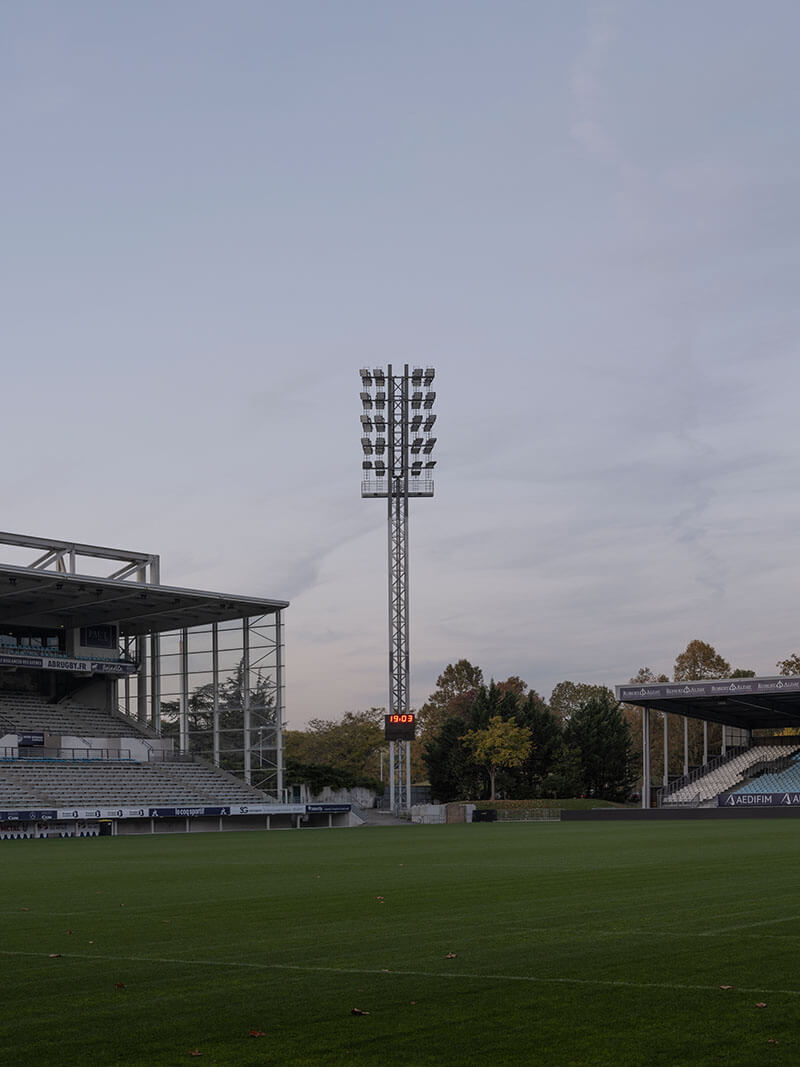
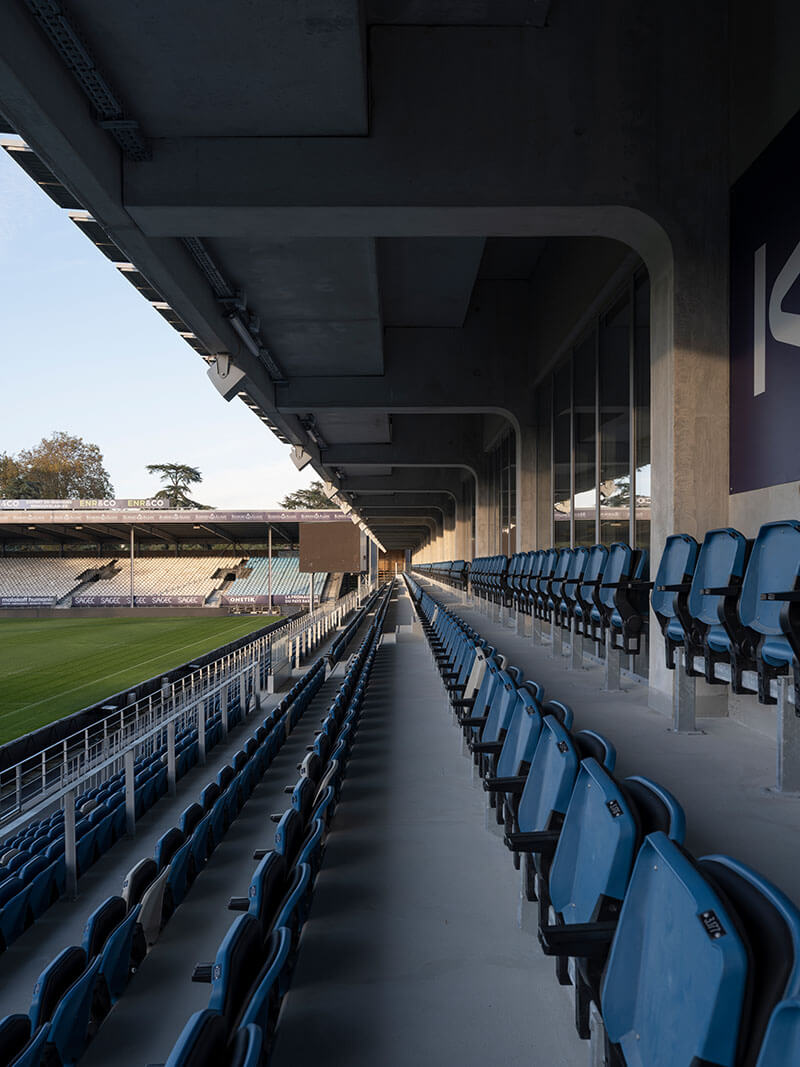

14 meters west
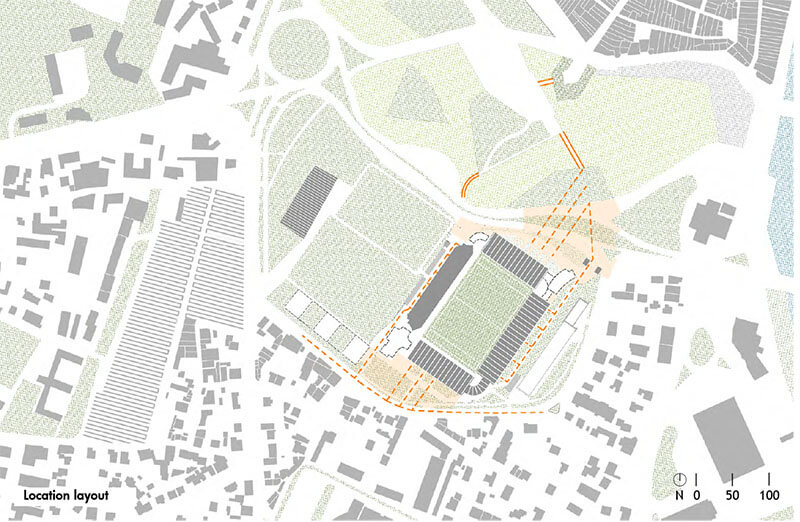
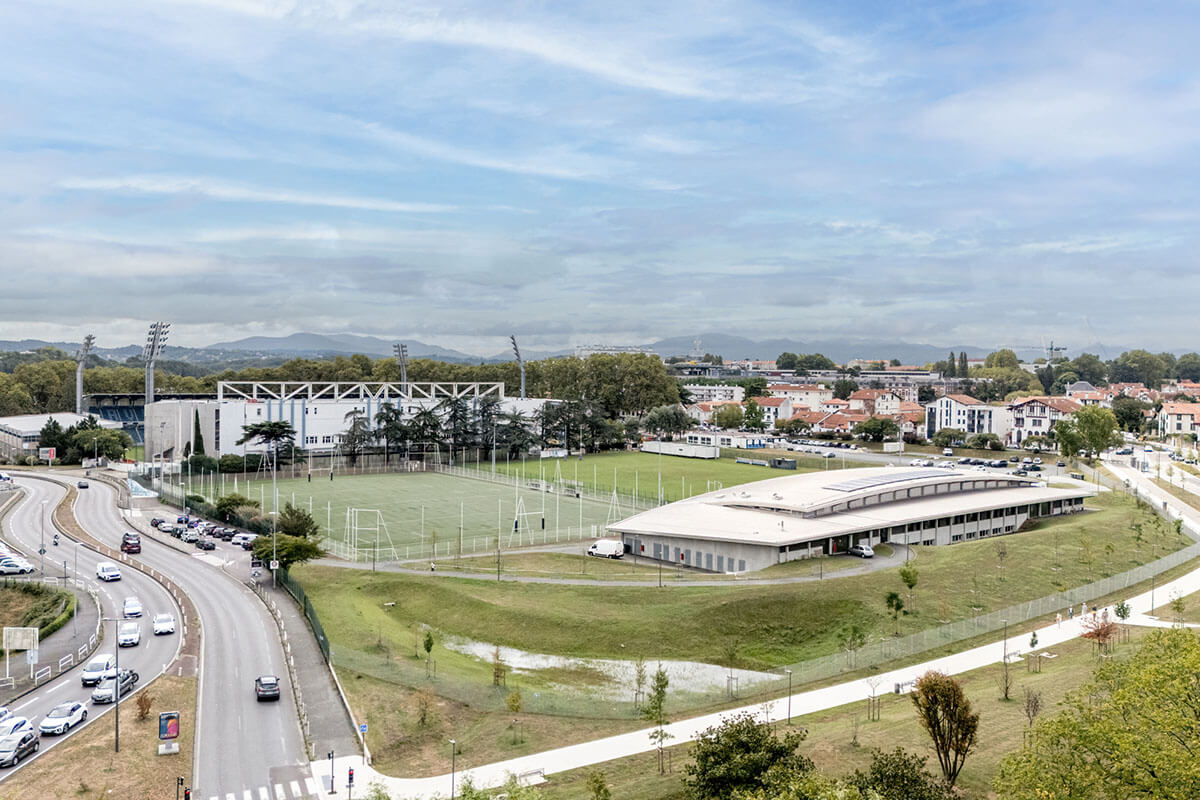
The recent conversion and redesign of the sports complex is part of an overarching urban development strategy that strengthens Bayonne’s historic green belt and at the same time opens it up to contemporary mobility, quality of stay and multiple uses. The aim was to see the stadium not as an isolated sports facility, but as an integral part of the urban open space.
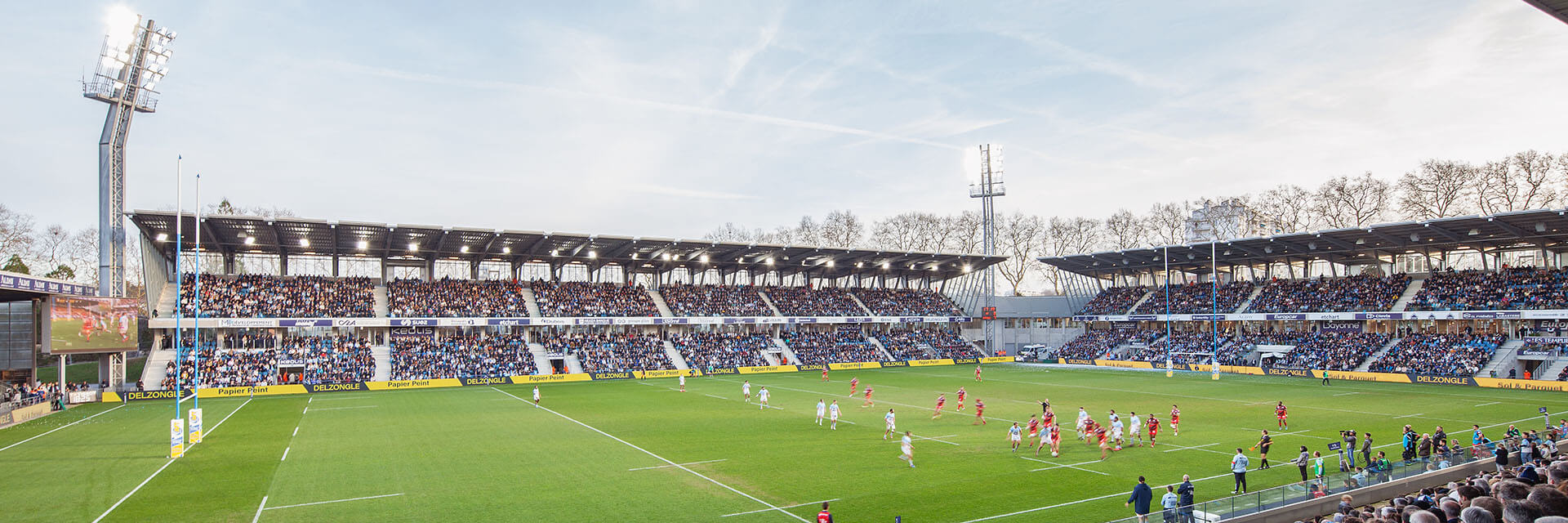
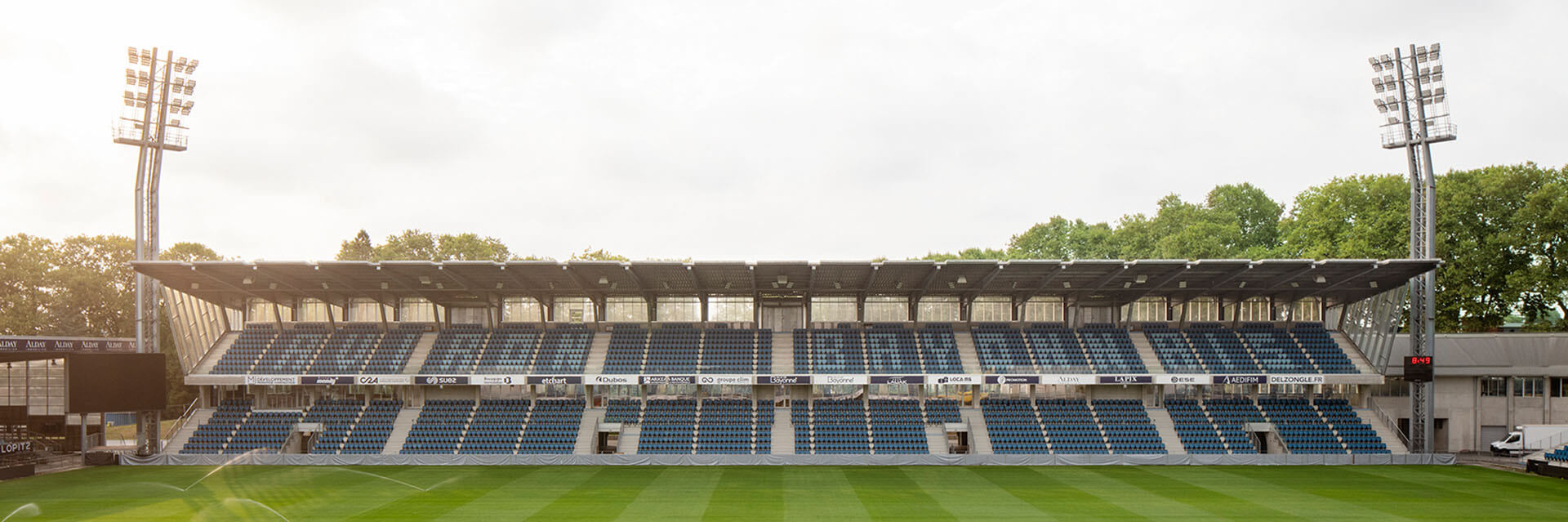
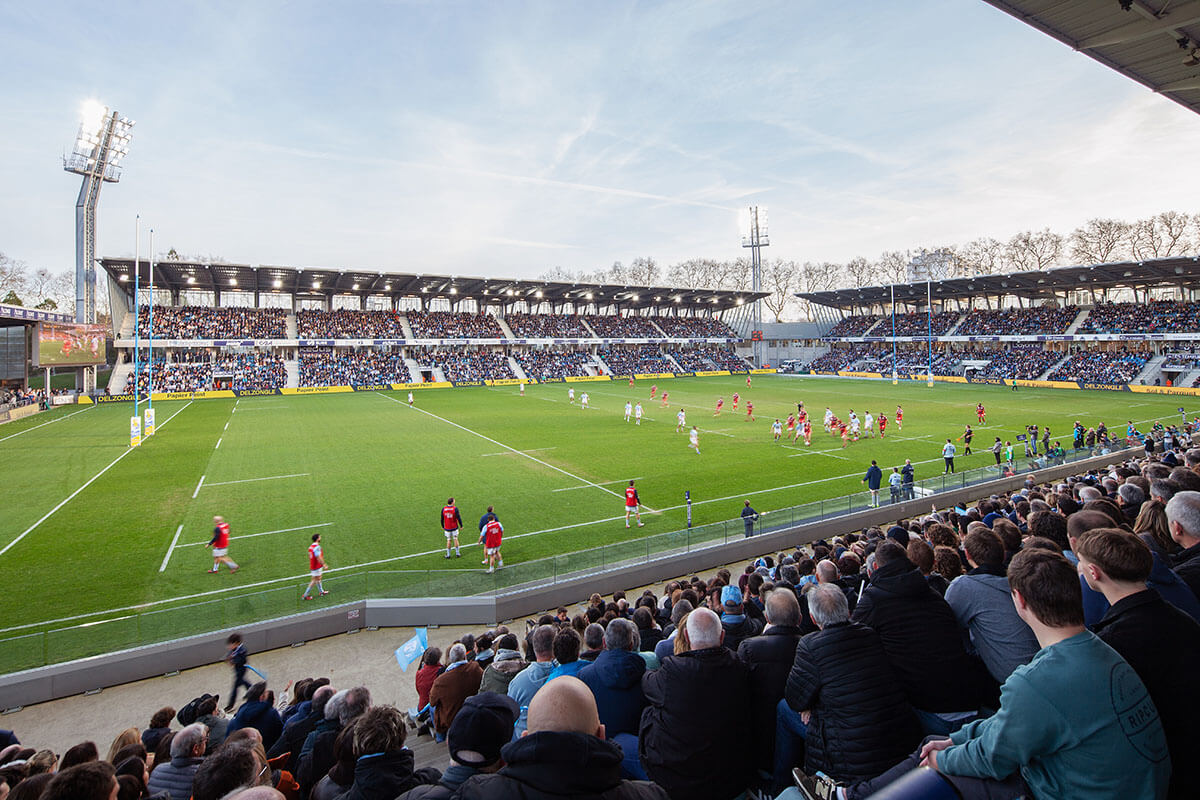
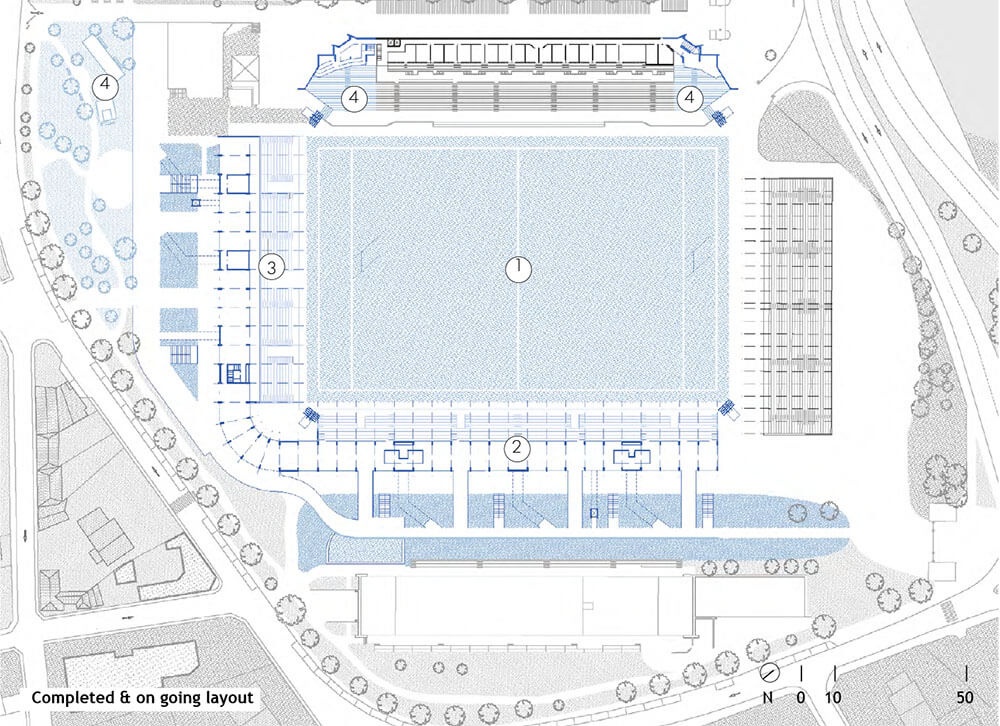
The fundamental change consisted of moving the pitch 14 meters to the west. This allowed the stands to move much closer to the pitch – a deliberate move away from the previous geometry of an athletics or cycling stadium towards a compact cauldron for rugby. This new proximity between the audience and the pitch intensifies the atmosphere, acoustics and identification.
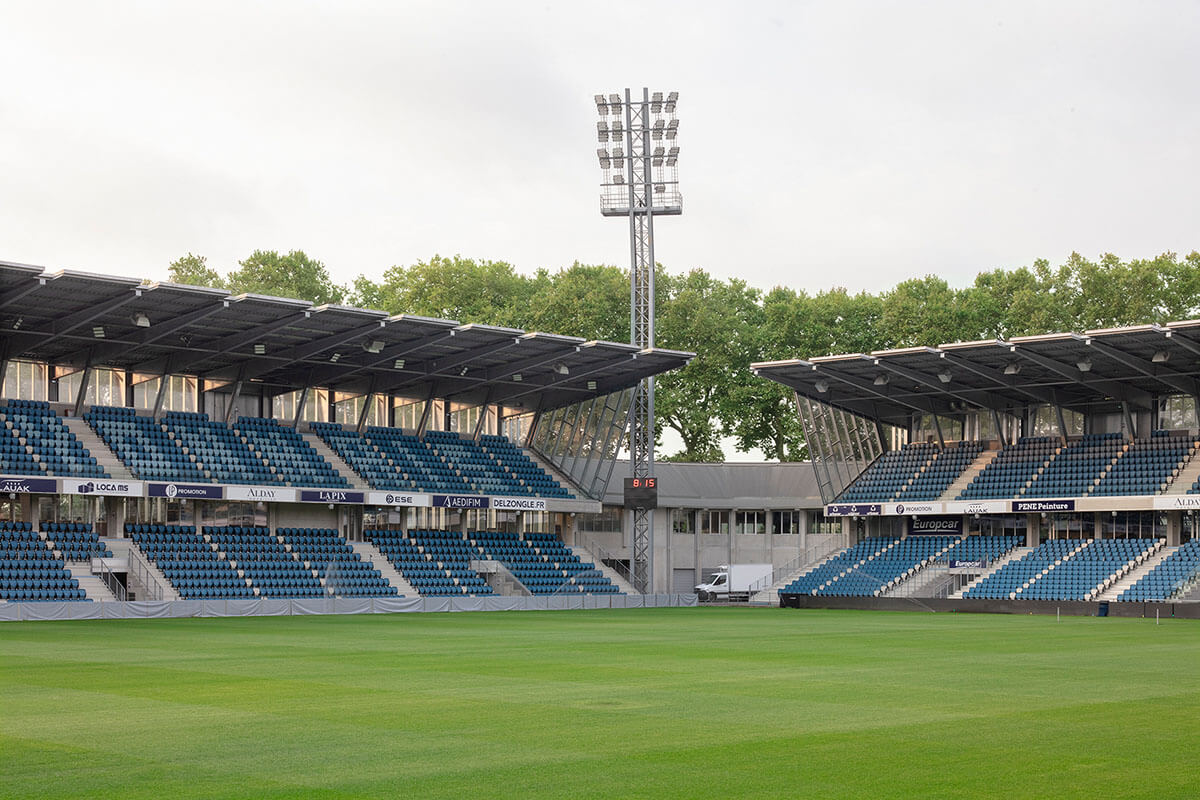

Architecture and landscape

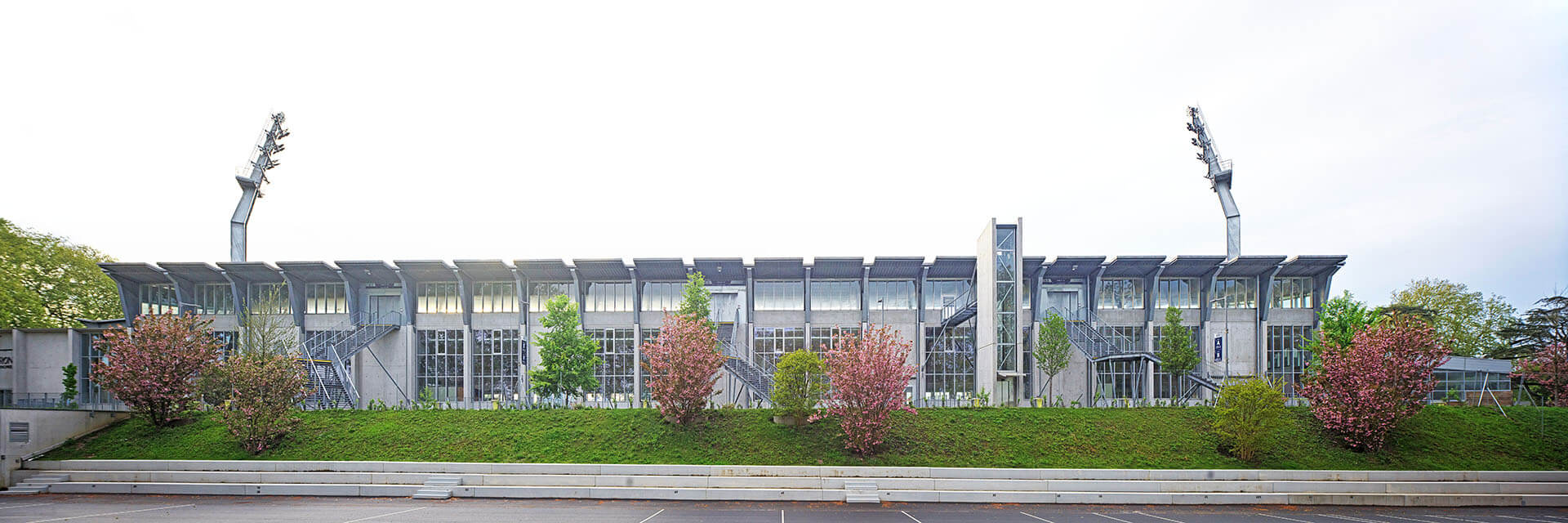
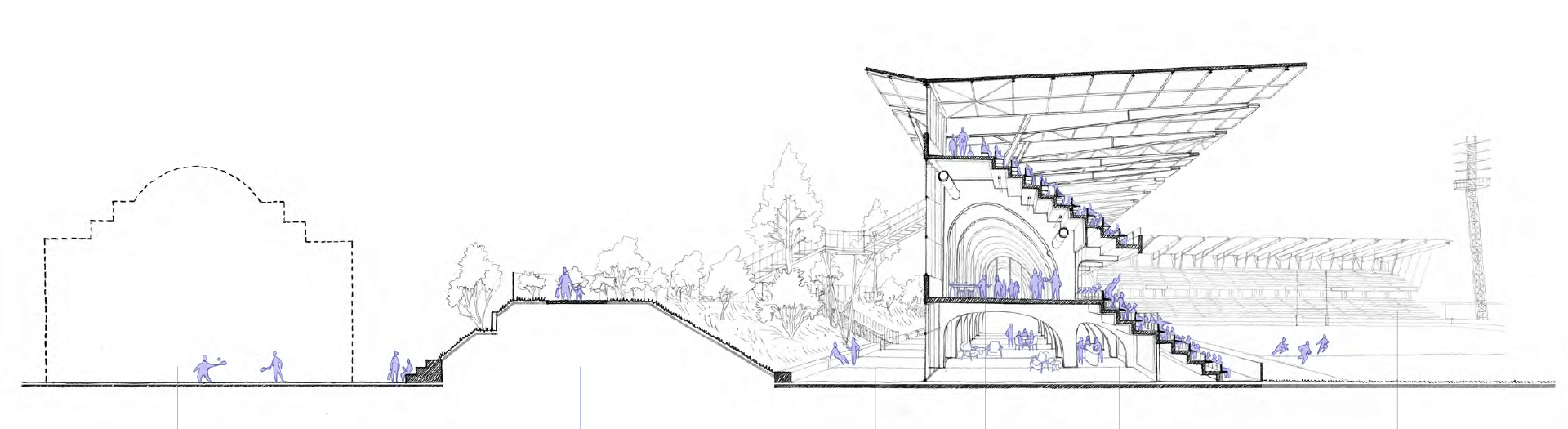
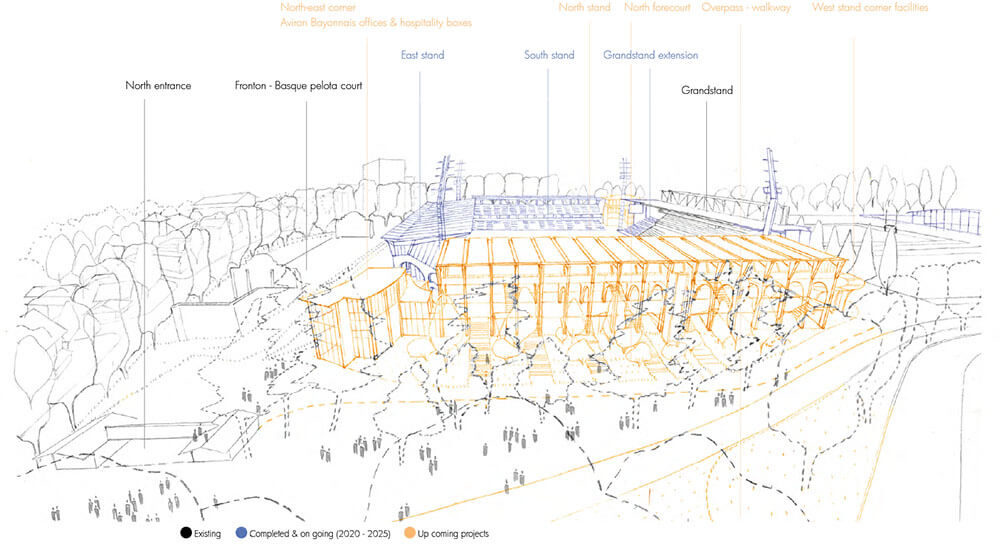
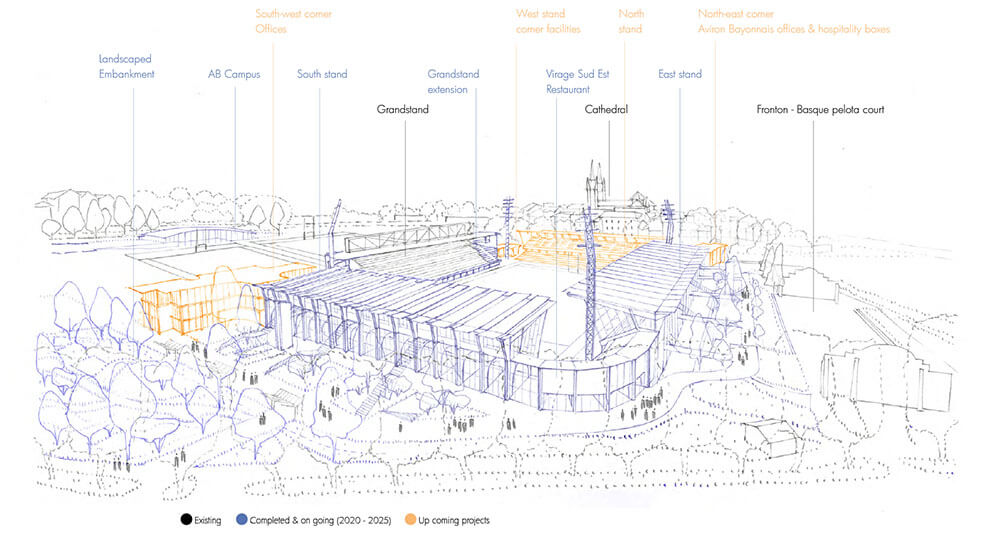
A key feature of the project is the close integration of architecture and landscape. The new grandstands are organized in two tiers, with generous surrounding areas and a widely projecting roof. From the east and from the street, the structure appears to disappear in part into the greened terrain – its massiveness is deliberately reduced by embankments, vegetation and staggered heights.
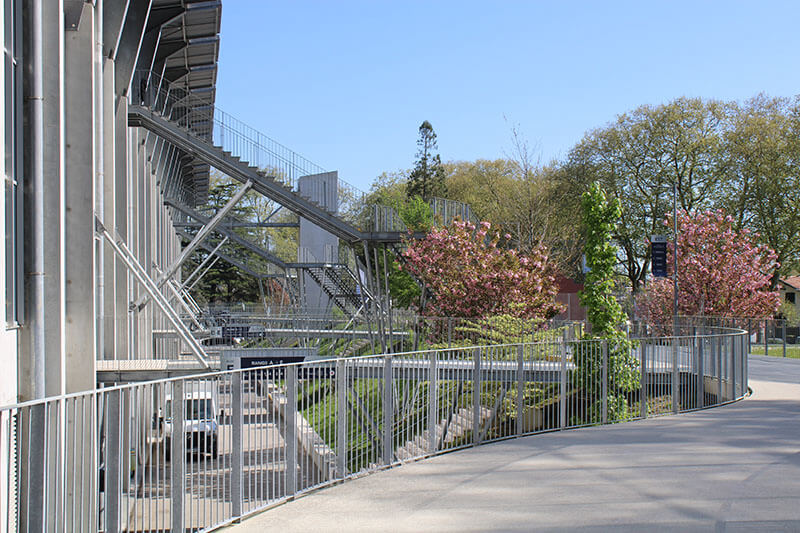
The access is unusual for stadium buildings of this size: stairs, walkways and circulation routes are located outside the stands and virtually lead visitors through the park. Filigree steel structures, views through the treetops and glimpses into the interior of the stands create a multi-layered spatial experience between the city, park and stadium.
The squares, embankments and promenades in front of the stadium are not only functional access areas, but also urban places to spend time. They connect the stadium and the city and also make the area usable outside of match days – as a public space, meeting point and event location.

Diversity and atmosphere
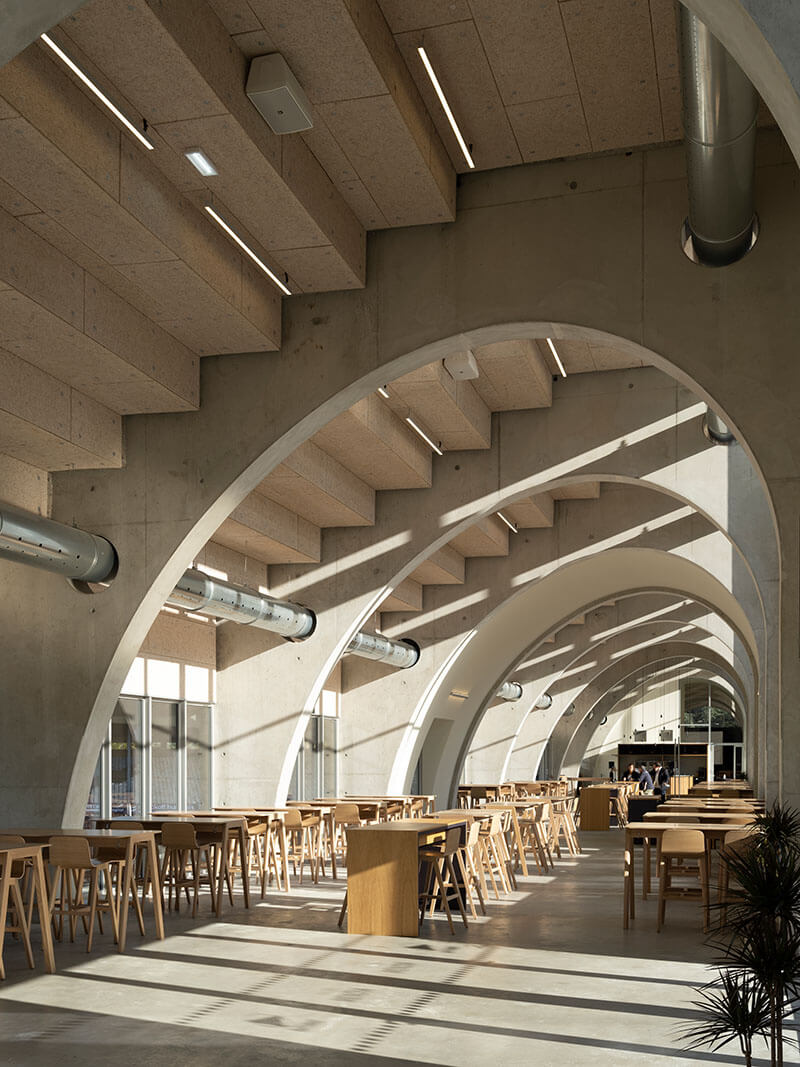
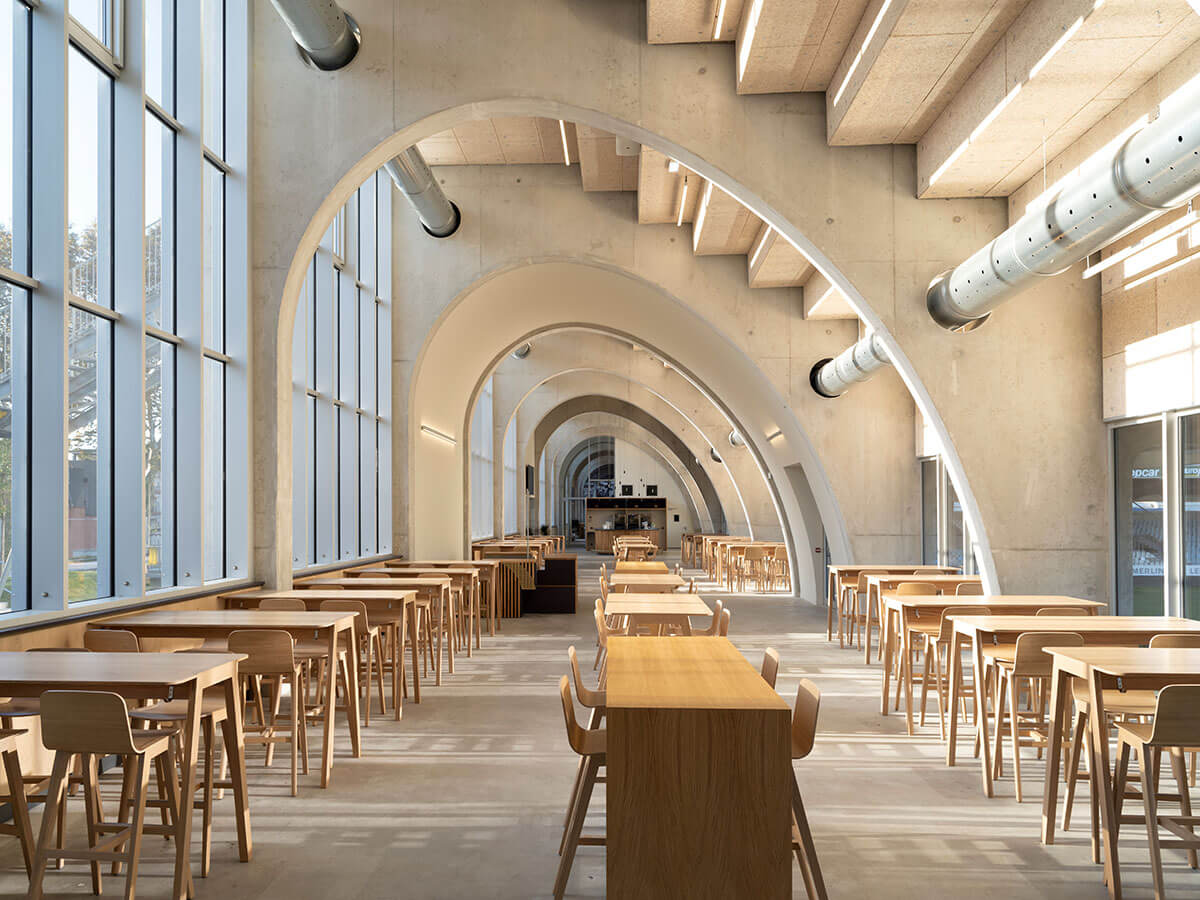
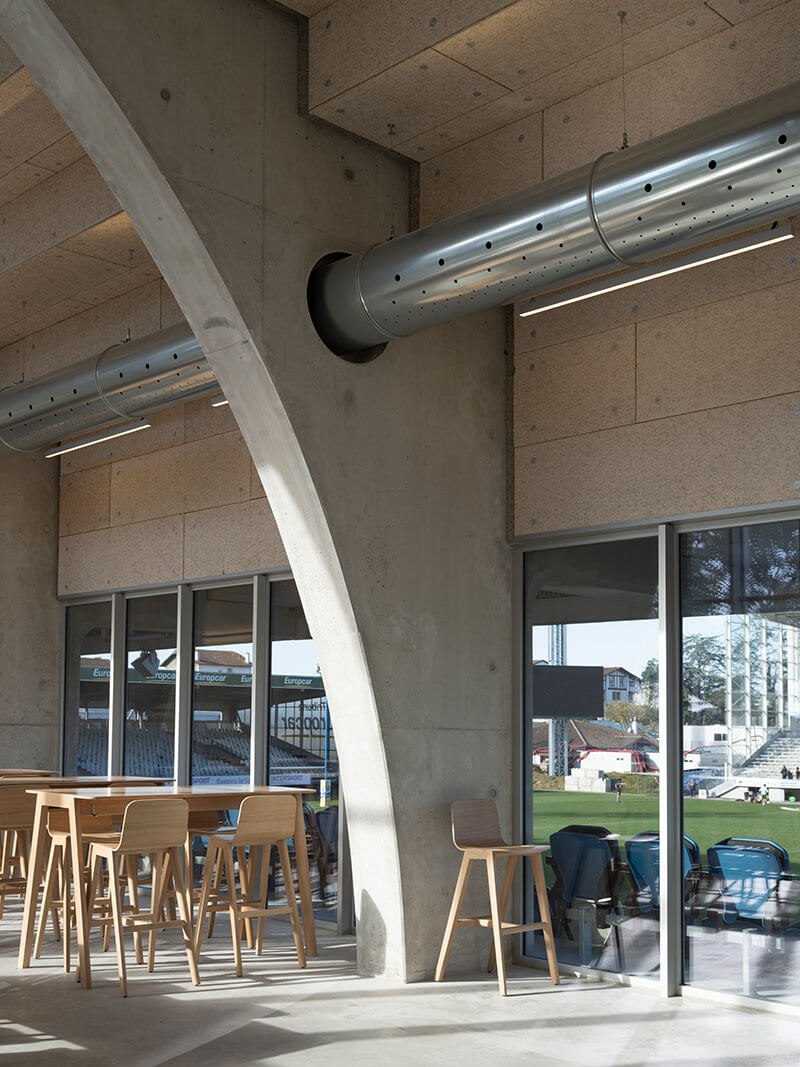
Another key project objective was to open up the stadium for a variety of uses beyond match operations. The new stands incorporate catering facilities, lounges, conference and event rooms as well as various sports facilities. The east stand in particular houses spacious interior spaces with a very unusual and warm atmosphere.
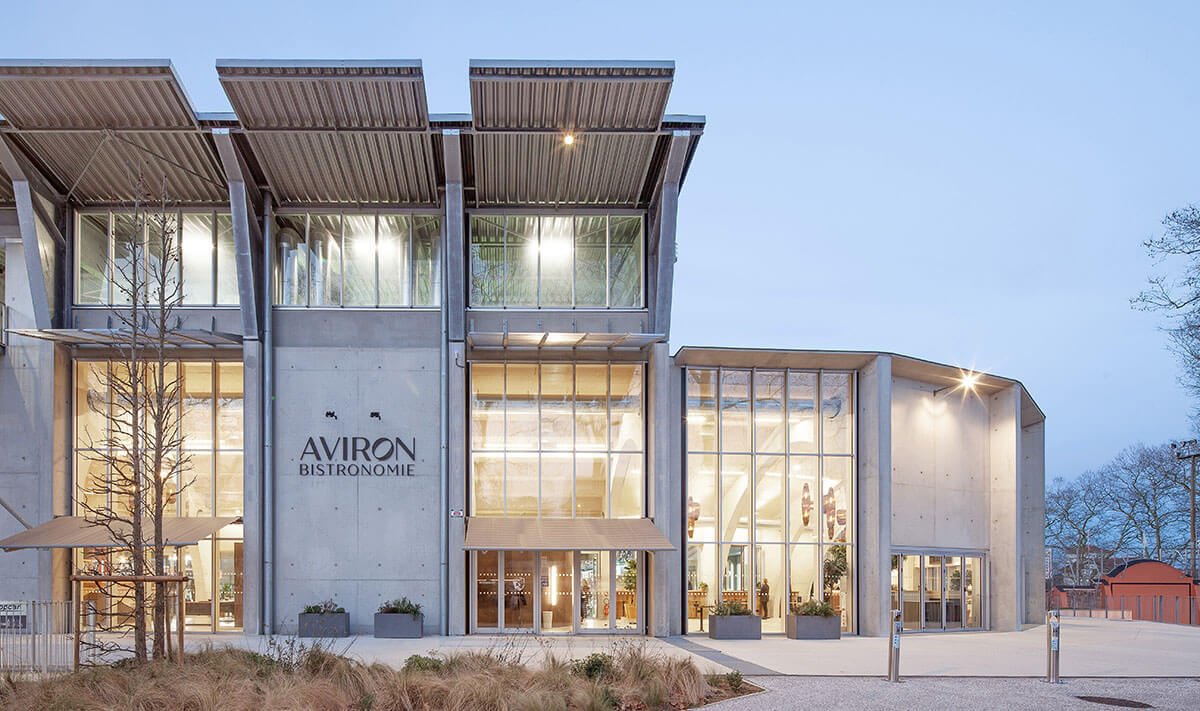
The rooms are deliberately glazed and can be seen from both the park and the playing field. Massive concrete arches structure the interior areas and give them a strong architectural identity. This visibility of the “inside” – construction, use, movement – also makes the stadium legible and lively in everyday life.
The South Stand plays a special role. Its lower tiers are partially dug into the ground, while the hospitality areas are directly adjacent to the street level. The result is an urban scenario consisting of a forecourt, lounge, arcades and a view of the pitch – which can also be seen from the outside.
The rounded corner in the south-east connects the two grandstands and houses a restaurant, whose vaulted room continues the architectural line of the arcades and at the same time allows for transparency at the ends.

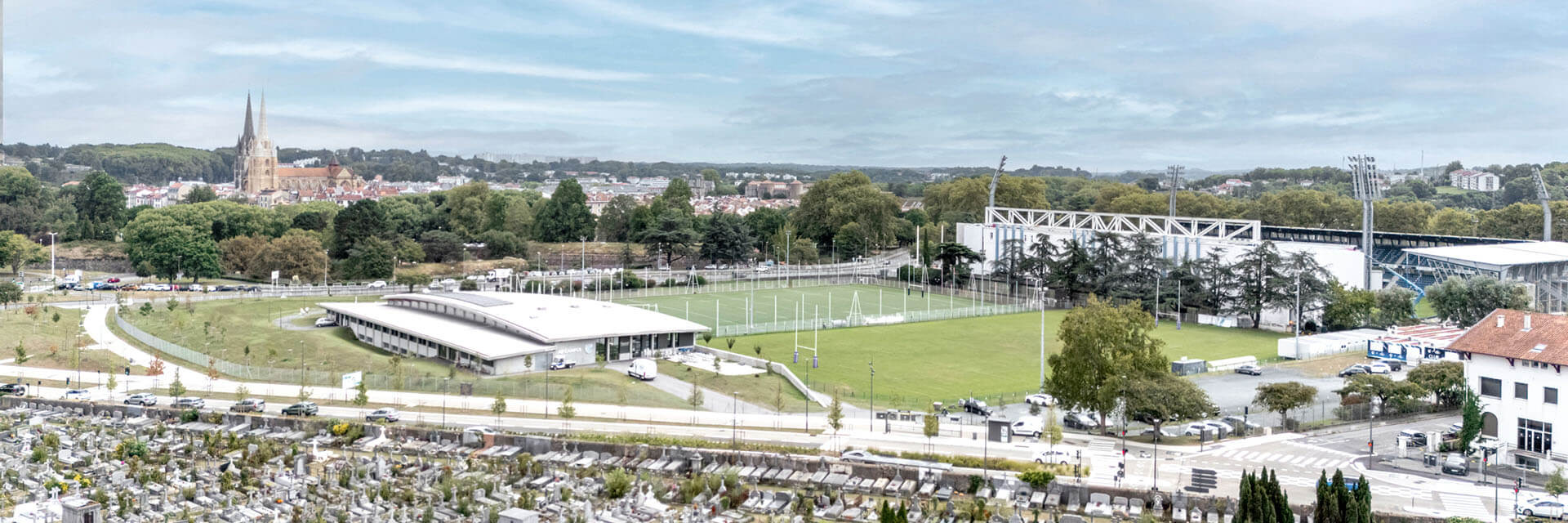
AB Campus
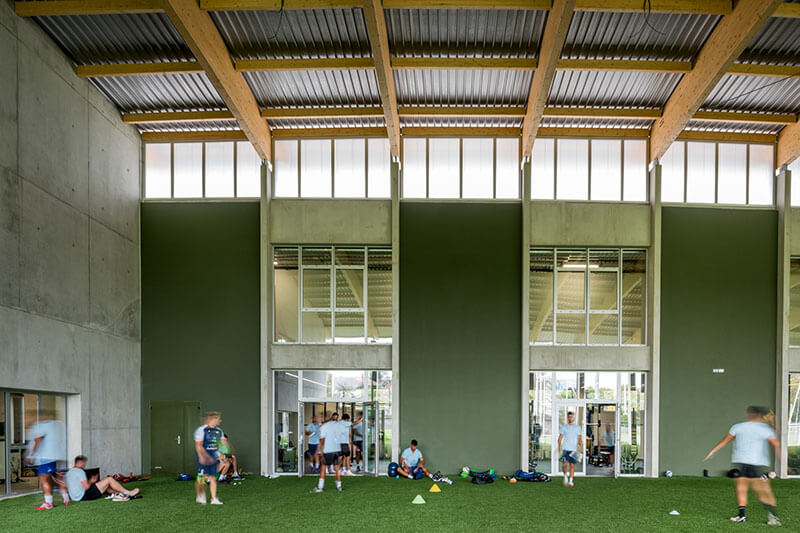
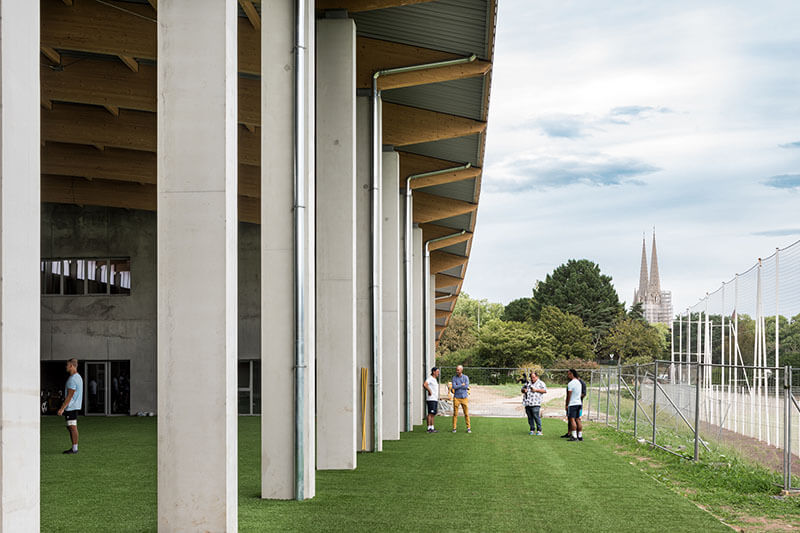
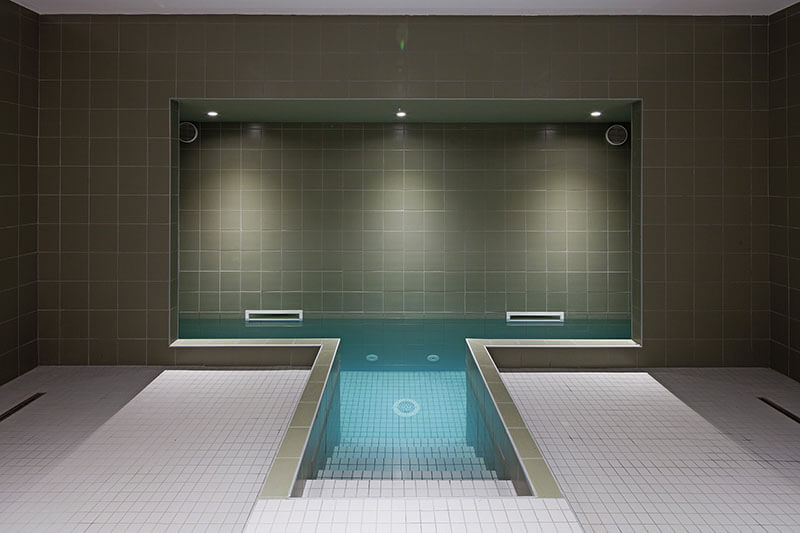
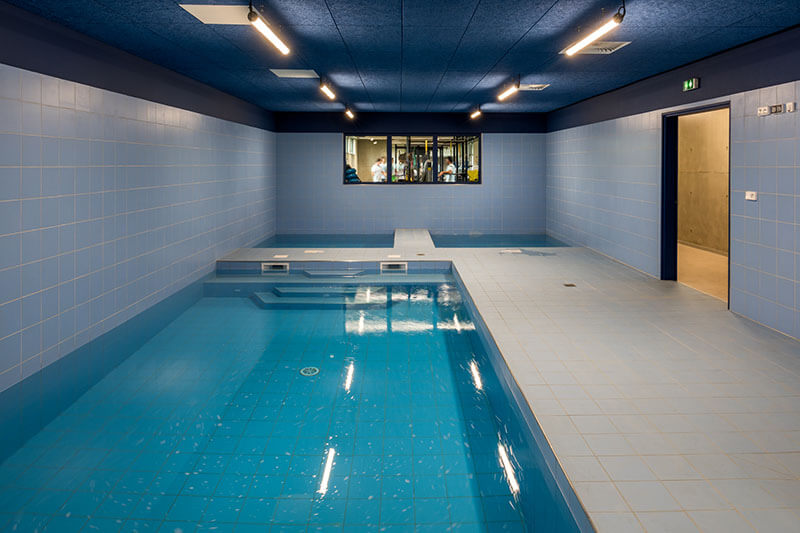
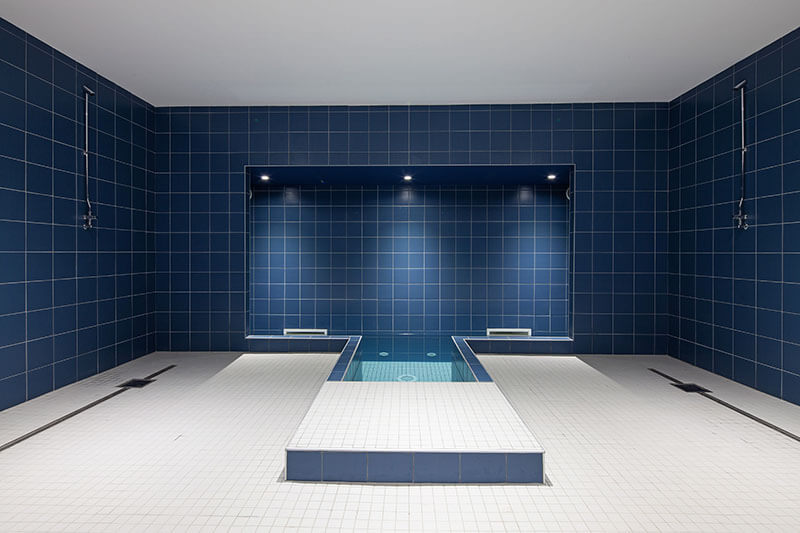
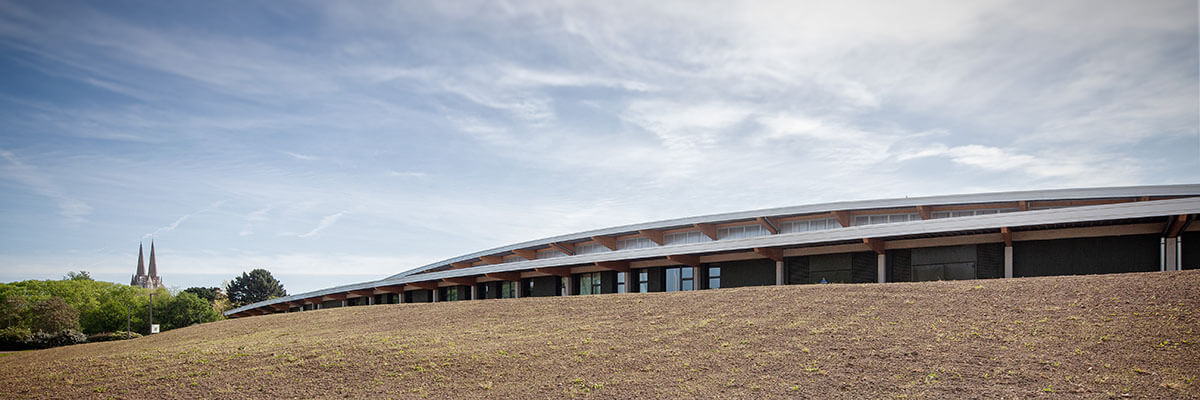
The stadium ensemble is complemented by the AB Campus on the west side of the site. This training and performance center combines amateur and professional sport under one roof and offers training halls, fitness and regeneration areas, medical facilities, offices and a canteen.
Architecturally, the building deliberately takes a back seat: its curved shape follows the topography and the newly created landscape hills along the bus lane. Instead of a dominant solitary structure, a building has been created that blends into the green belt and visually detaches the historic grandstand. The materials and language are reduced – exposed concrete, wood, dark green masonry and a large aluminum roof – to allow the landscape and the existing structure to take effect.

Park, Olympia and community
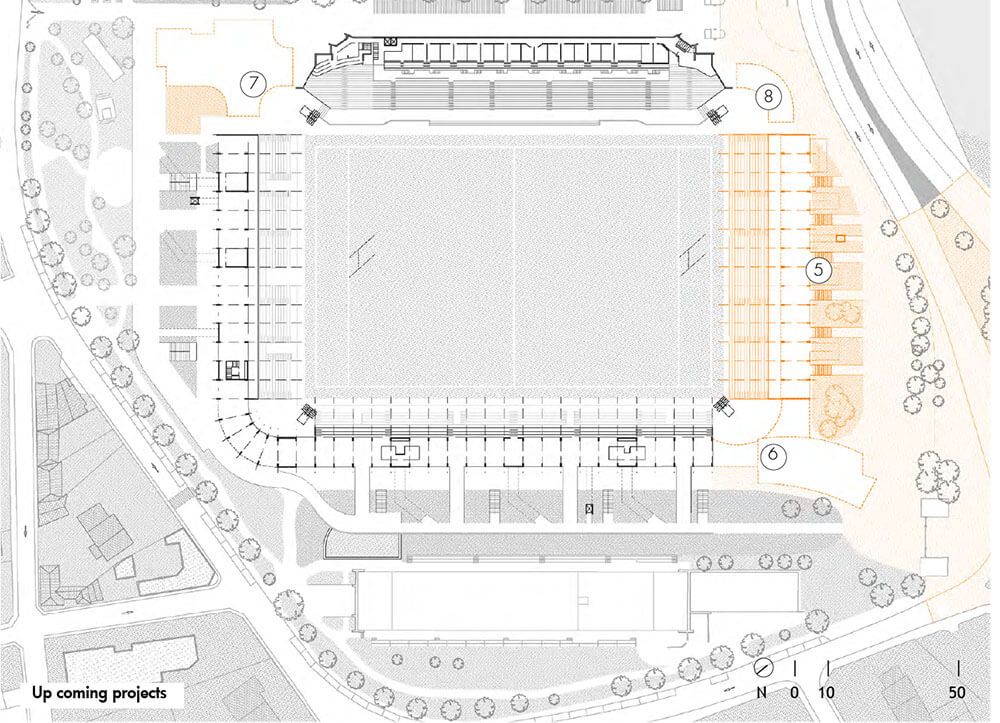
As the redesign of the Stade Jean-Dauger would take several years, the overall project was deliberately divided into construction phases. This made it possible to gradually increase the capacity from the original 13,500 to the current 16,500 seats without jeopardizing the sustainability of the overall concept. This strategy makes it possible to react flexibly to financial, sporting and urban developments.
Today, the Stade Jean-Dauger is a modern rugby stadium of international standards, which served as a training venue for the 2024 Olympic Games in Paris. At the same time, it remains a place that creates identity for Bayonne – a stadium in the park, an urban building in the countryside and a lively meeting place for sport, the city and the community.

Project data
Designer
Patrick Arotcharen
Agence d’architecture
4 Rue Monréjau
F- 64 100 Bayonne
Building owner
SASP Aviron Bayonnais Rugby Pro
Opening
Opening
Address
Stade Jean-Dauger
8 Av. Fernand Forgues
F‑64100 Bayonne
Opening
2025
Photos
Text
Johannes Bühlbecker
More Sports Media
Drawings
Videos
Mehr beispielhafte Bauten für Sport und Freizeit
Abonnieren Sie unseren Newsletter.
Wir informieren alle drei Wochen über neue und beispielhafte Projekte und Produkte. Mit Herz und Schwung und Sachverstand.