The Principle of Pragmatism
The SSC Hörde Swimming Pool
Planner
Deye Consulting
Borchersweg 110
D – 26209 Hatten
Client & operator
Swimming pool
Implementation
Special Features
- Pragmatic building retrofitting as a cost-effective alternative to complete renovation or new construction
- Preservation of the existing reinforced concrete structure
- Preserving the gutter instead of undertaking a costly renovation of the pool structure
- Custom integration of the new pool system into the existing structure
- Partial reuse of the existing ceramic lining
Costs
835,000 euros net (total), of which
- Swimming pool: €530,000
- Pipeline Construction & Water Treatment: €230,000
- Planning & Construction Management: 50,000€
- Construction site facilities: €25,000
Address
Hörde Indoor Swimming Pool
Eichsfeld 5
D‑44265 Dortmund
Opening
2026
Photos
SSC Hörde 54/58 e.V.
Deye Consulting
More Sports Media
Text
Johannes Bühlbecker
More Sports Media
The renovation of the SSC Hörde swimming pool in Dortmund represents a challenge that many swimming pools will face in the coming years: The facility is operational and heavily used, but key structural components and technical systems are showing their age. Instead of an expensive, sweeping overhaul, the club, as the operator, therefore opted for a renovation that preserves the building’s structure and for solutions that adapt to the existing structure—rather than the other way around.
The goal: to preserve as much as possible, renovate selectively, and achieve as much as possible within a manageable budget.
The Gutter Makes All the Difference
An additional 30 centimeters of water would have triggered a chain reaction and made the renovation significantly more expensive
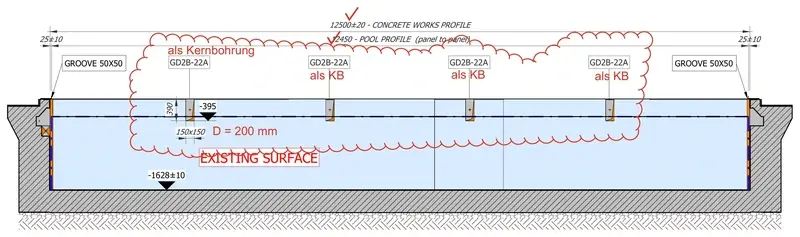
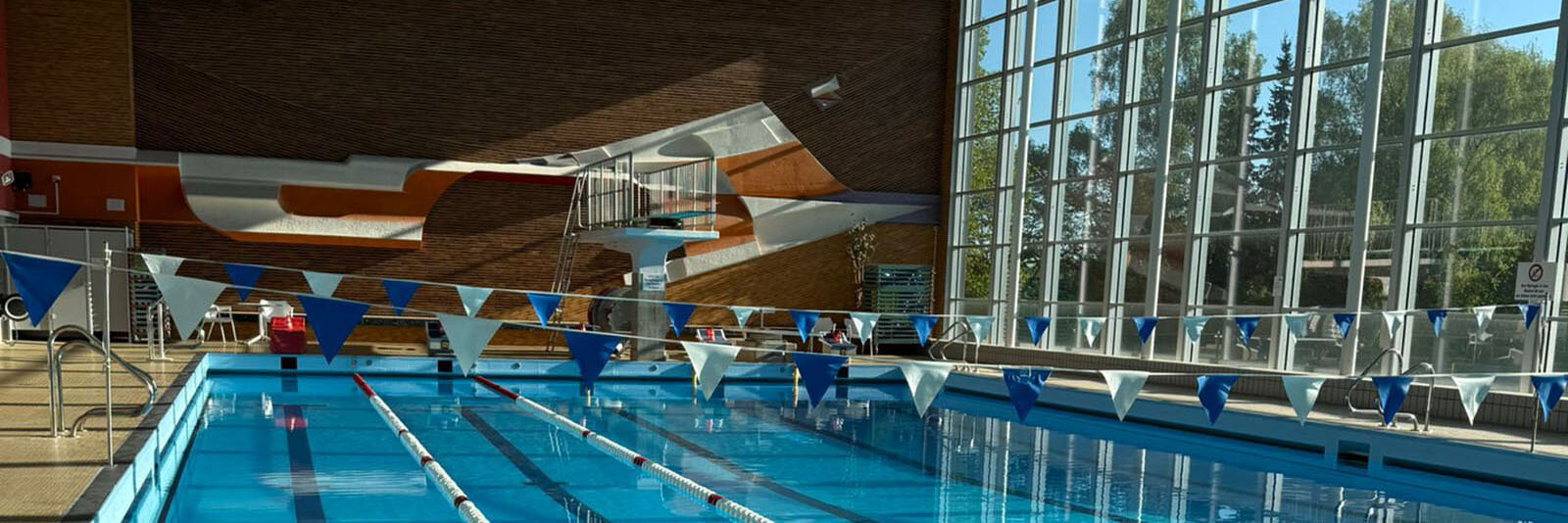
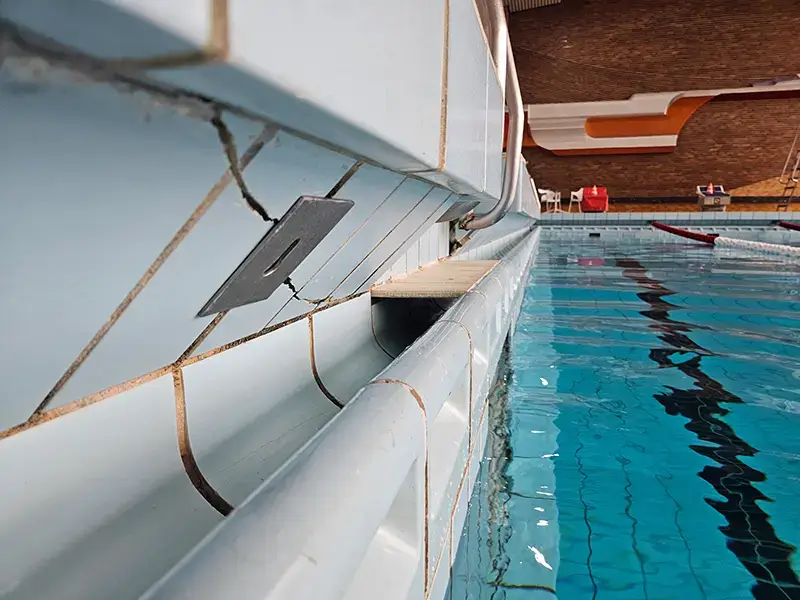
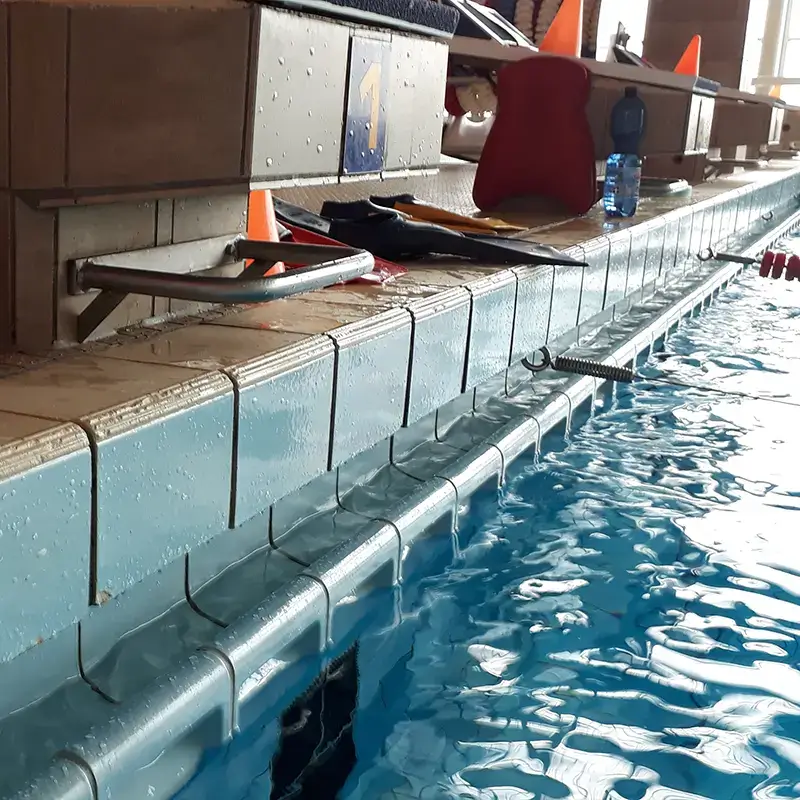
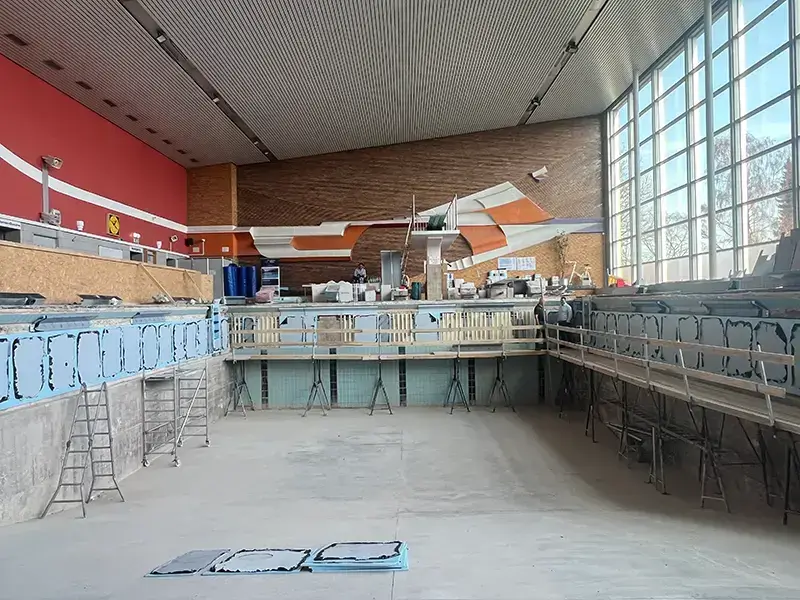
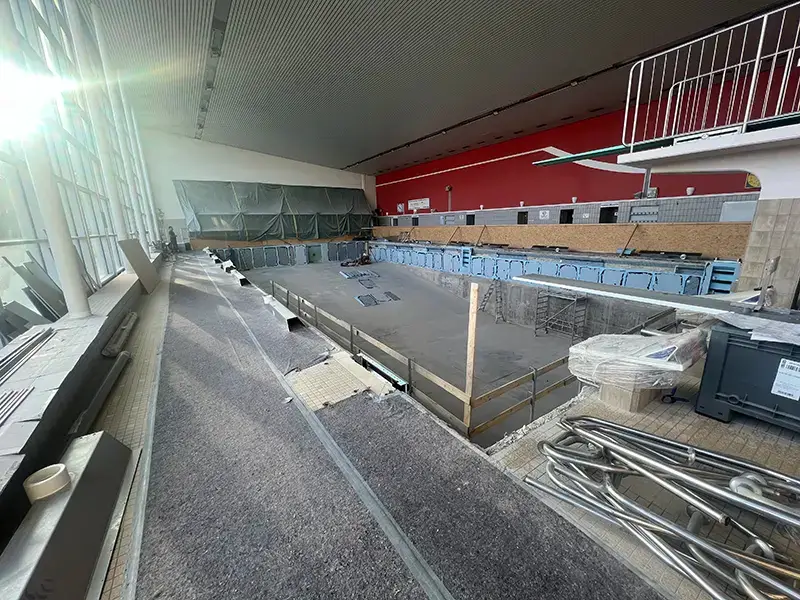
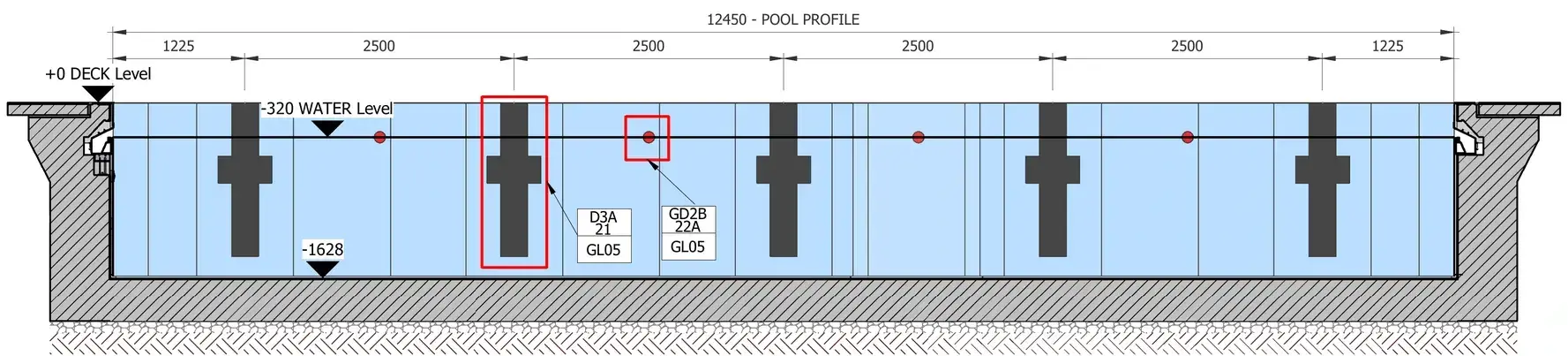
The main challenge was the existing Wiesbaden-style gutter. If the overflow edge had been raised to the level of the pool deck using a Finnish-style gutter (which is common today), the water level would also have risen by about 30 centimeters. This wouldn’t have been a big deal for swimmers, but it would have been a problem for the existing diving platform: The one-meter board would have been reduced to just 70 centimeters, and the three-meter board to only 2.70 meters.
That would have opened up another construction project, because the diving platform would have had to be demolished and redesigned. And since the ceiling height of the swimming pool is tailored to the existing facility, a new diving platform wouldn’t have easily fit into the existing space either. What seemed like a simple renovation of the overflow channel would thus have triggered a whole string of additional construction work. Costs were in danger of spiraling out of control.
Together with SSC Hörde, Deye Consulting therefore decided to turn the tables. Rather than adapting the existing pool to a new standard design, the renovation would be tailored to the existing structure.
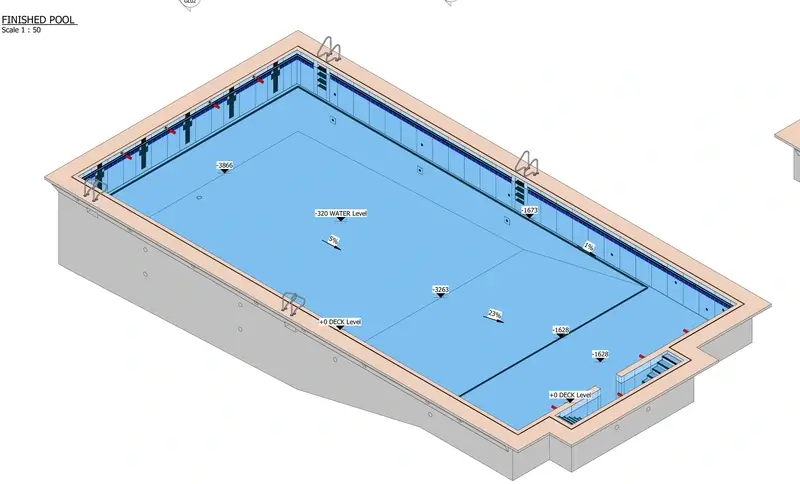
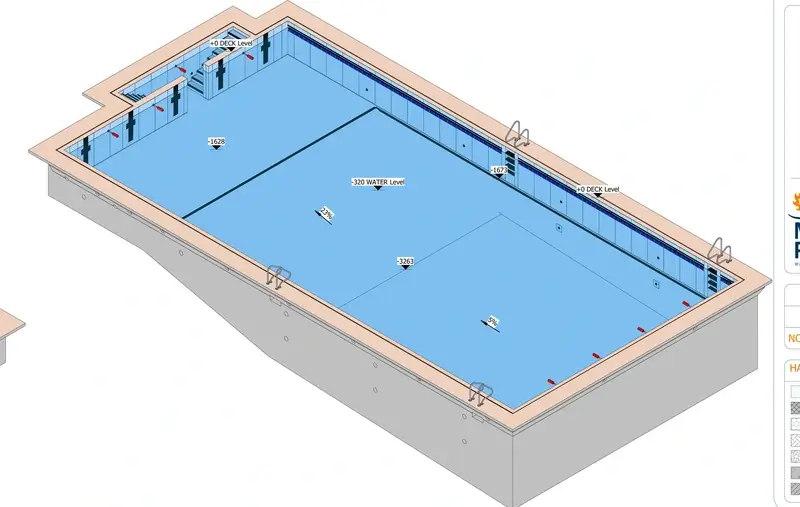
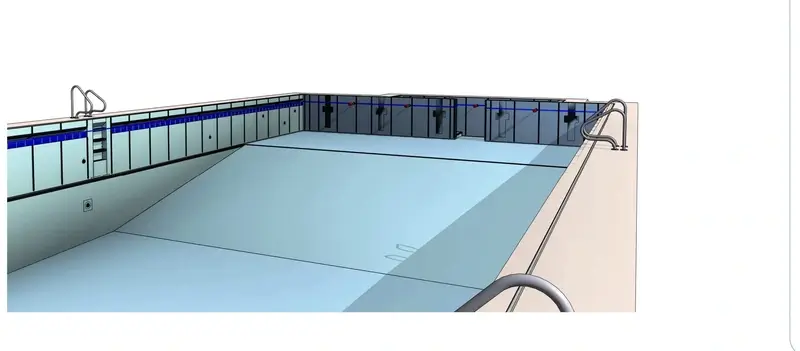
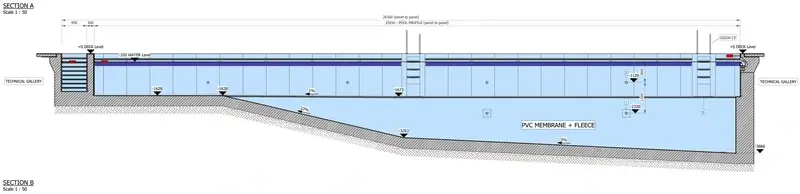
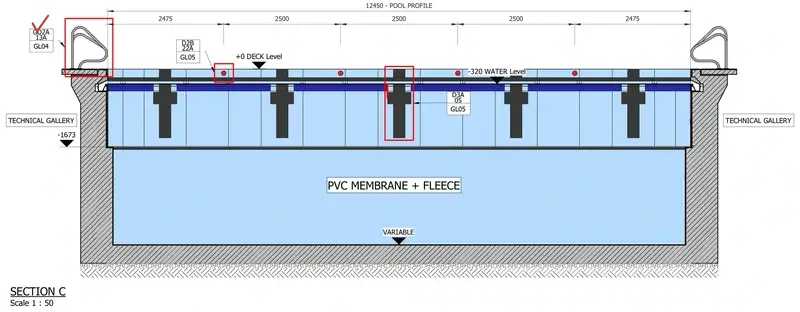
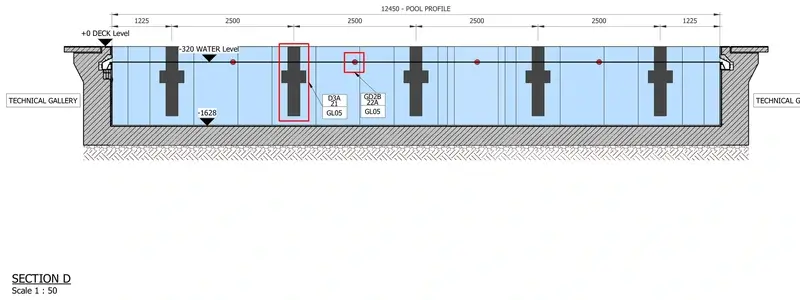
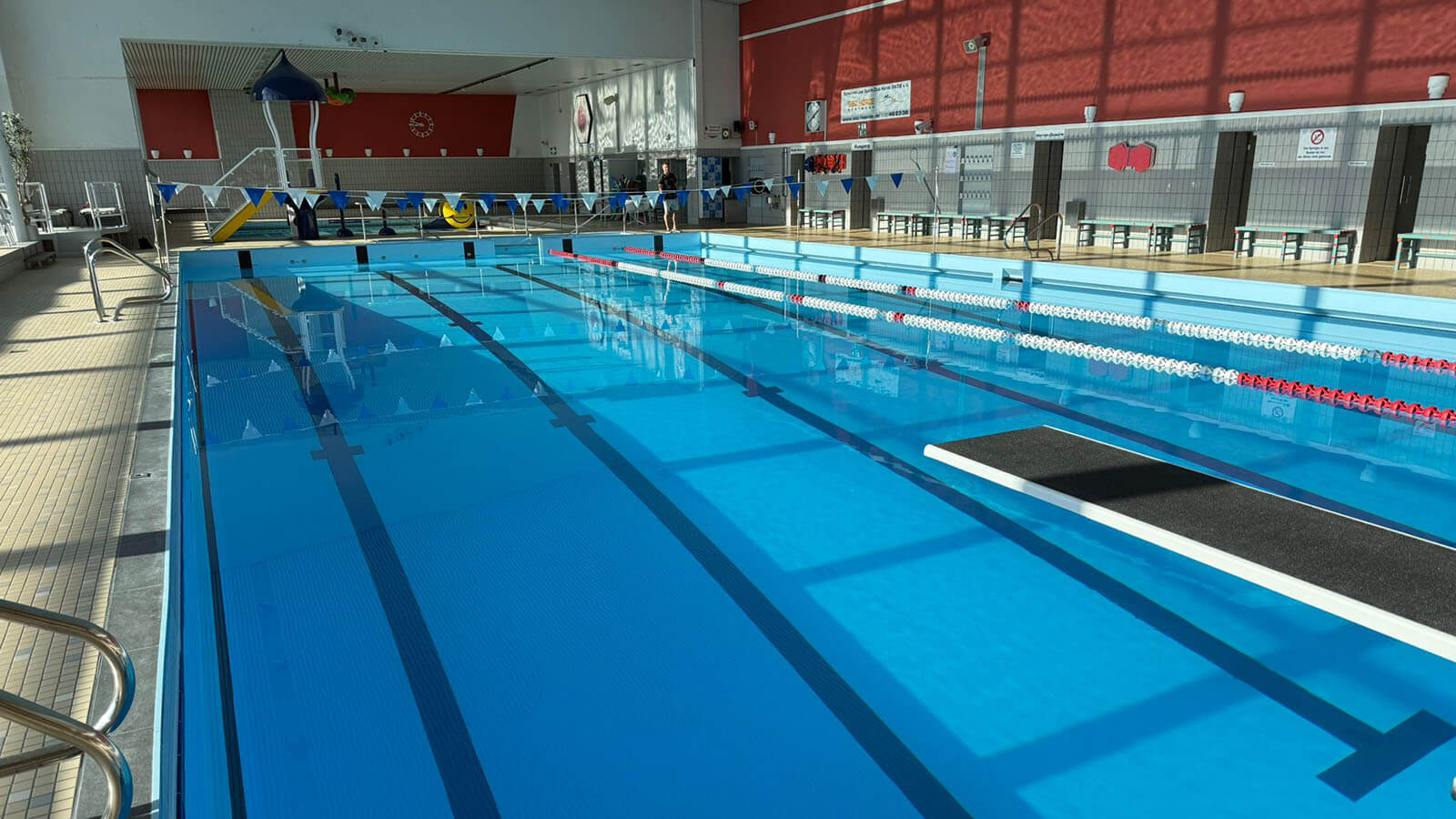
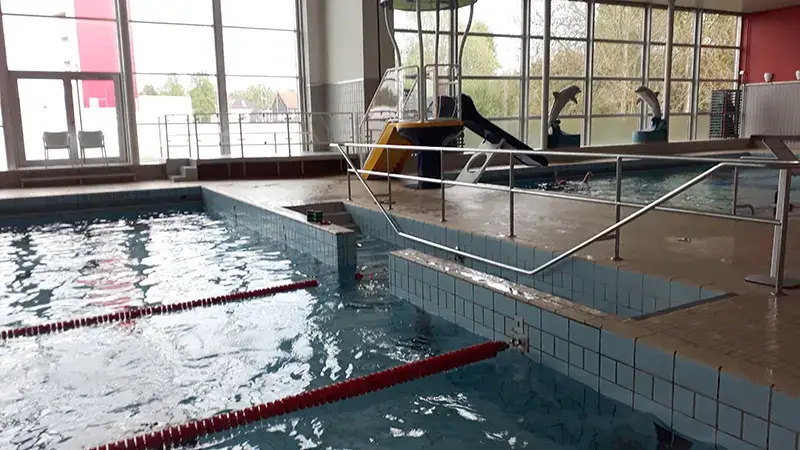
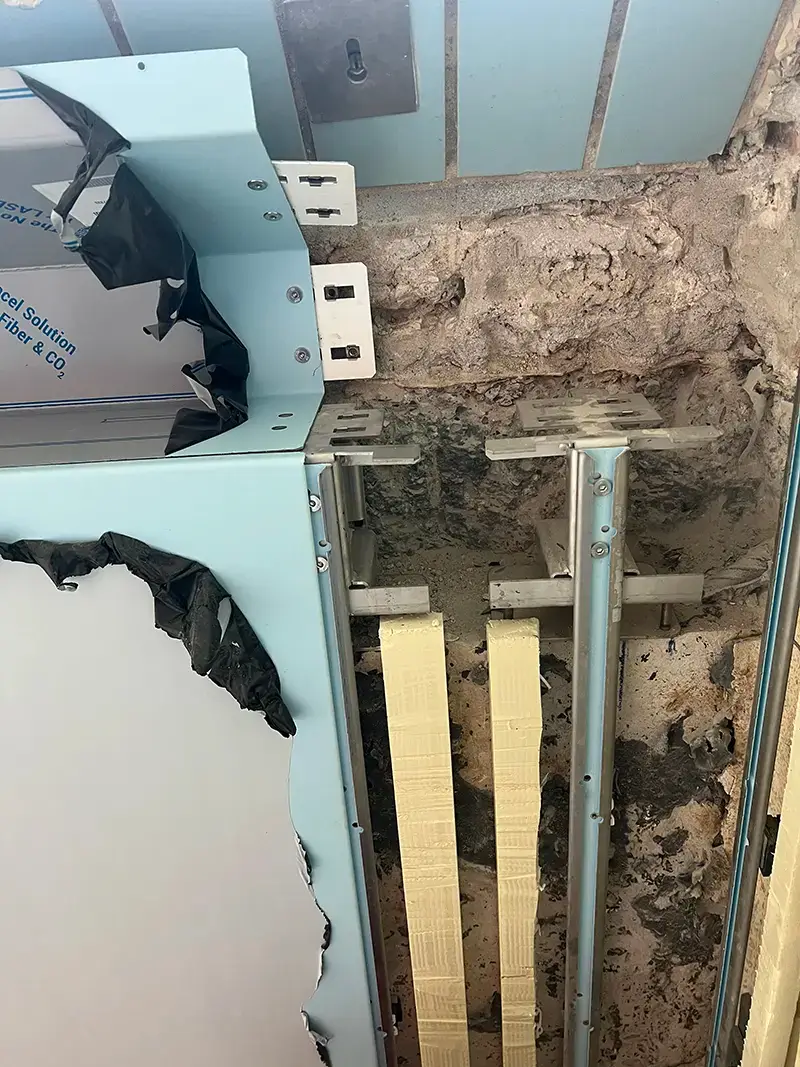
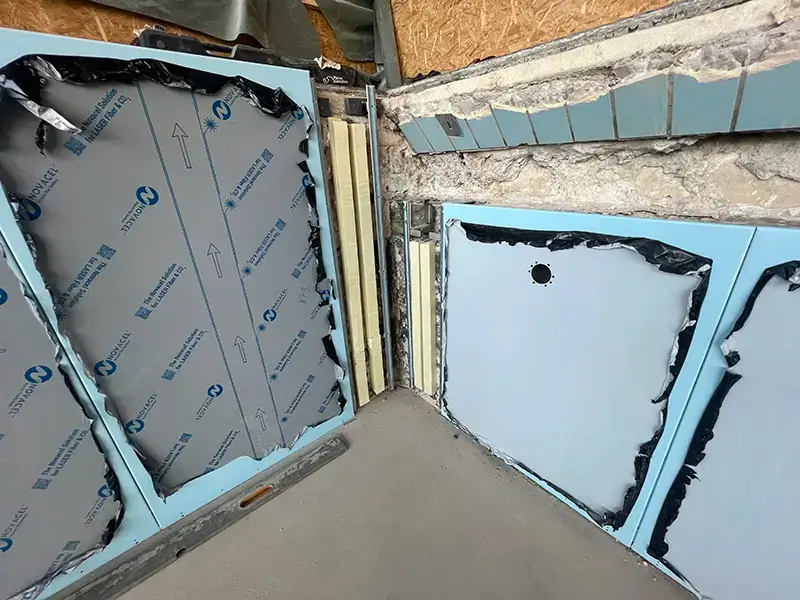
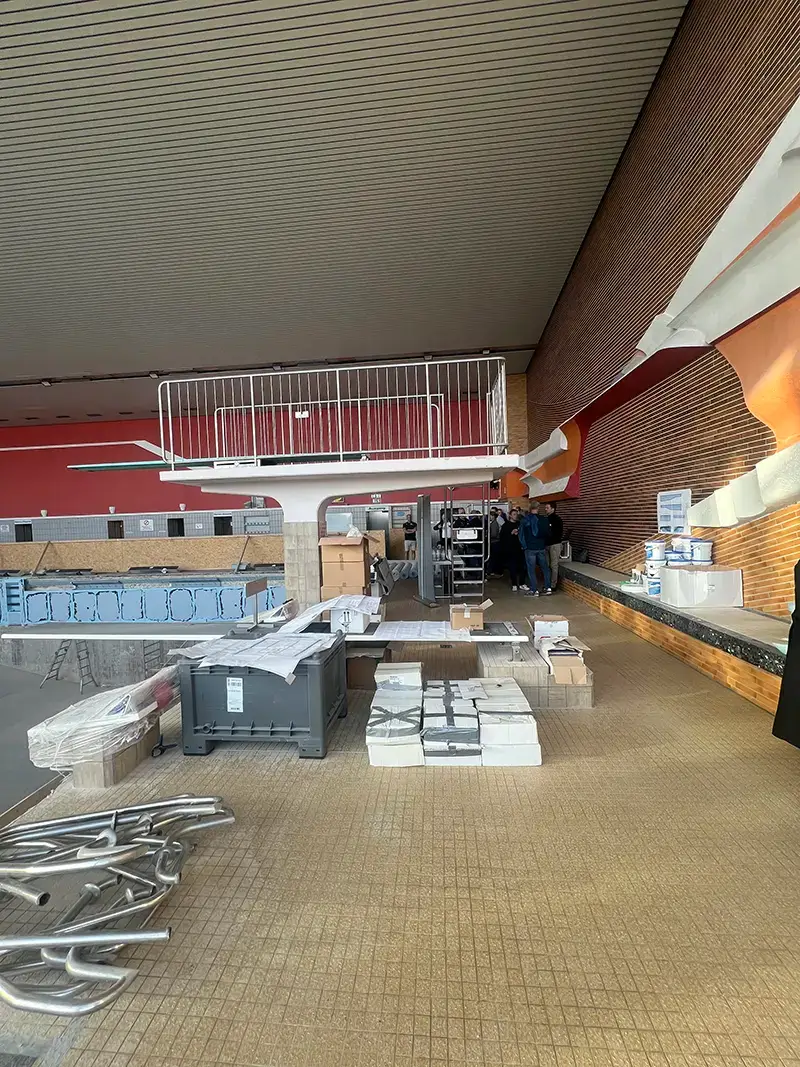
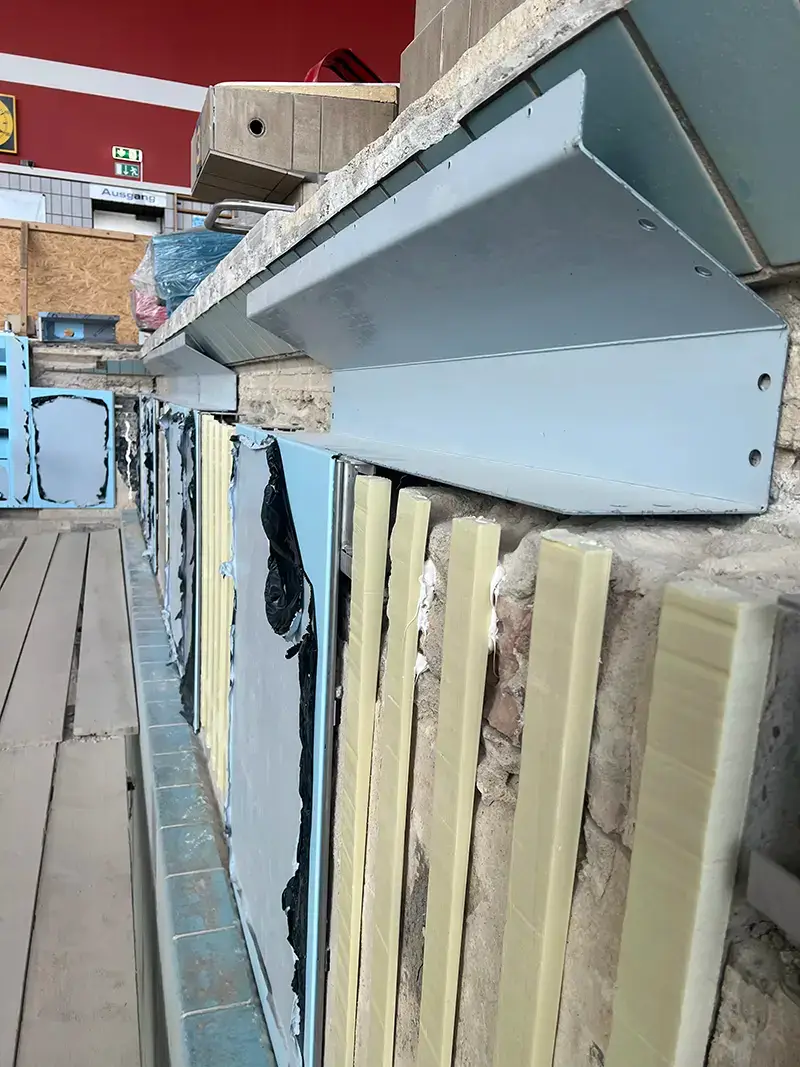
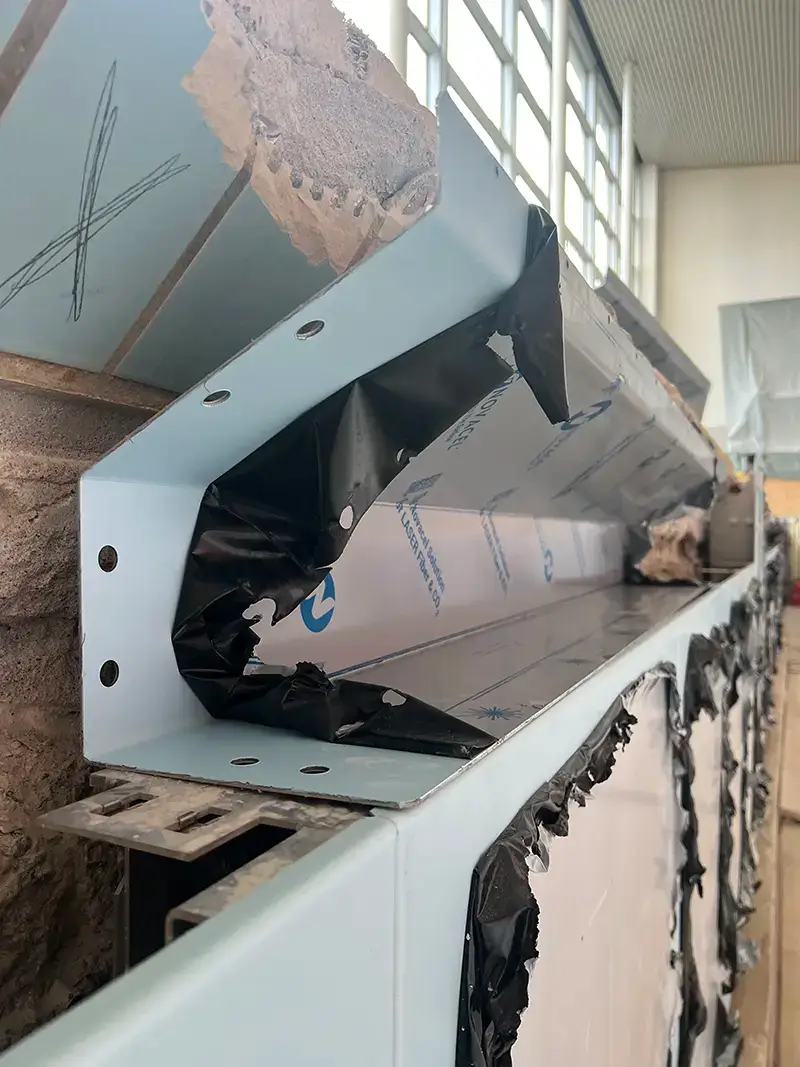
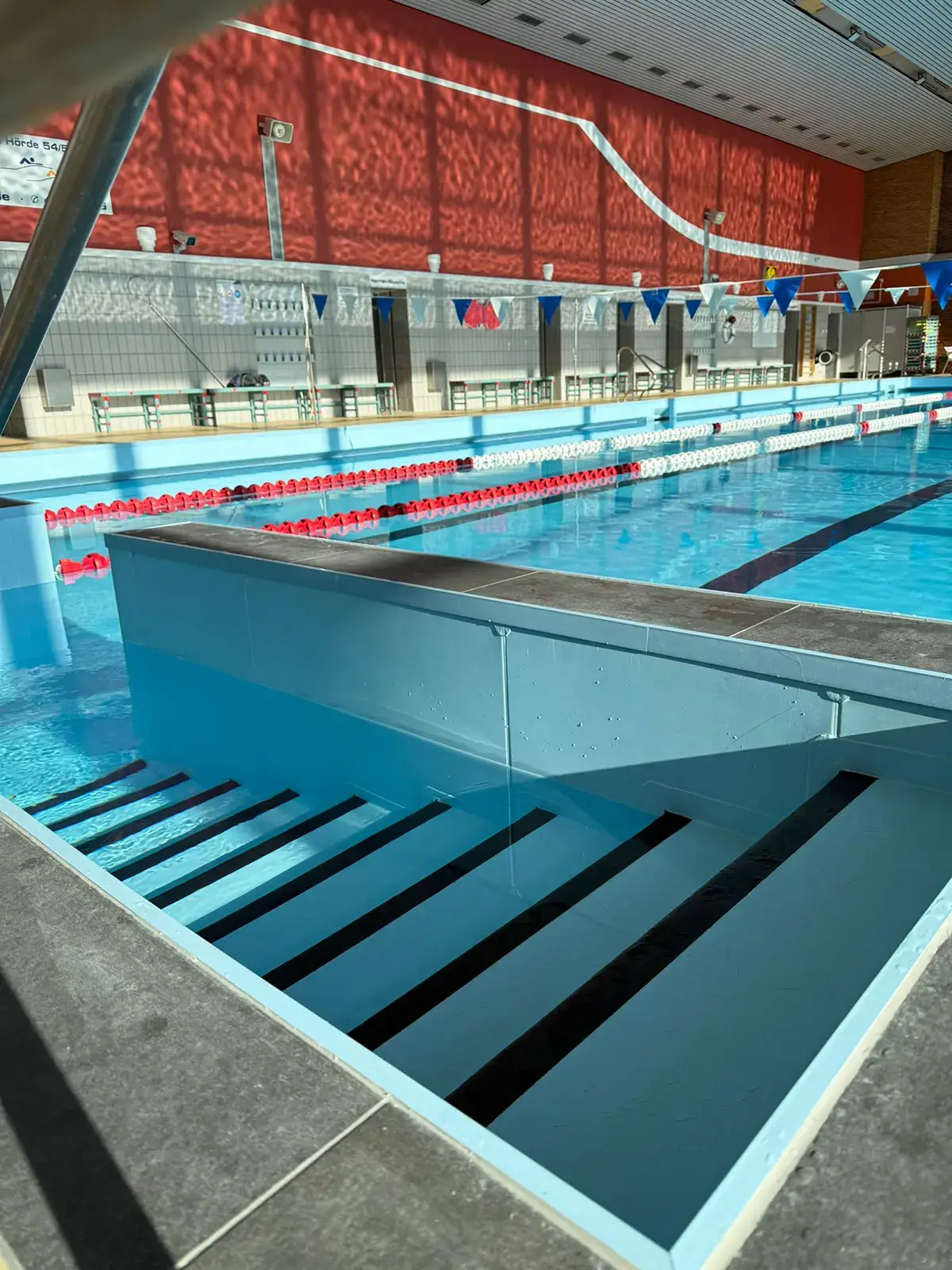
(The pictures show the inventory.)


Nothing off the shelf
If the existing system is to remain in place, the new solution must be compatible with it
The existing reinforced concrete structure was still usable. Tearing it out and replacing it with a completely new pool would have meant a significant intervention in the building’s structure and triggered precisely the follow-up measures that we wanted to avoid. So Deye Consulting and Myrtha Pools developed a customized adaptation of the new pool system to the existing concrete and tile structure. It quickly became clear: nothing off-the-shelf would work here.
The RenovAction system from Myrtha Pools was used for the new pool lining. Stainless steel, ceramic, and PVC were combined in such a way that the new structure could be installed within the existing reinforced concrete pool. So the old pool did not disappear; rather, it became the foundation for the new one. This was precisely the challenge for the planners: the existing structure and the new system had to be precisely aligned at their junctions.
Not even all of the existing tiles had to be completely removed. Only those that were loose or no longer structurally sound were taken out. The remaining surfaces were smoothed out and prepared for the new system. That may sound almost trivial, but it has tangible consequences: Every square meter of ceramic tile that can remain in the pool does not need to be chipped away, disposed of, and then rebuilt. Careful handling of the existing structure thus saves material, time, and money—not just at the SSC Hörde swimming pool.


Affordable Renovation
Why should the rules for a swimming pool be fundamentally different from those for a home?
It is no secret that many German swimming pools are in need of renovation and that municipalities or clubs can often only manage such projects with public funding. The SSC Hörde operates a pool that dates back to the 1970s. Not everything about it is state-of-the-art. But a lot of it works. And that is precisely what became the project’s strength.
Every homeowner knows this principle: No one in their right mind waits until the windows, roof, and heating system all fall apart at the same time. You invest little by little, where it’s necessary and as much as your budget allows. Not because it’s particularly spectacular, but because you can’t rebuild your house every few decades. Why should the same not apply to a swimming pool?
At the SSC Hörde swimming pool, existing structures were integrated with new technology in this way. The total net investment for the renovation amounts to approximately 835,000 euros. Of this, approximately 530,000 euros went toward the 25-meter swimming pool, approximately 230,000 euros toward piping and water treatment, approximately 50,000 euros for planning and construction management, and approximately 25,000 euros for site setup and scaffolding. The city of Dortmund is supporting the project with grants totaling up to one million euros.




Old, New, Next
The existing structure remains the same, but today the pool is capable of more than ever before, both technically and in terms of sports performance.
The reinforced concrete structure remains. The diving platform remains. Parts of the existing ceramic work remain. New additions include a new pool system, updated technology, and solutions for the areas where the old and new had to be integrated.
The 1970s swimming pool was not replaced with a new structure, but was instead technically upgraded and functionally enhanced within its existing structure.
Hörde is thus demonstrating a renovation strategy that should be of interest to many older swimming pools: first take a close look, then decide. Keep using what works. Replace what needs to be replaced. And tailor solutions to specific needs where standard solutions would make the renovation unnecessarily expensive.
Learning from Dortmund
-
Existing assets aren’t necessarily a burden. Anything that still works from a technical standpoint can serve as the foundation for a cost-effective renovation.
-
The most expensive solution is not necessarily the best one. In Hörde, preserving the existing structure actually prevented a whole series of further interventions.
-
Renovation means planning interfaces. Quality lies above all in seamlessly integrating existing structures with new technology.
-
Pragmatism is a planning principle. By looking closely, making use of existing resources, and allowing for customized solutions, it is possible to limit construction time and costs without sacrificing technical innovation.
Plans