
Roofs Shape the Landscape
The Floating Pavilion in Songyang
Planner
Studio RE+N
Hangzhou, Zhejiang, China
Yuting Zhang, Pu Zhang
Building owner
Xinxing Town Government, Songyang County
Structural Engineers
Lihui Feng
Implementation
Hangzhou Baiguyuan Construction Co., Ltd.
, Zhejiang Huafang Construction Co., Ltd.
Special Features
- Open-Air Viewing Pavilion
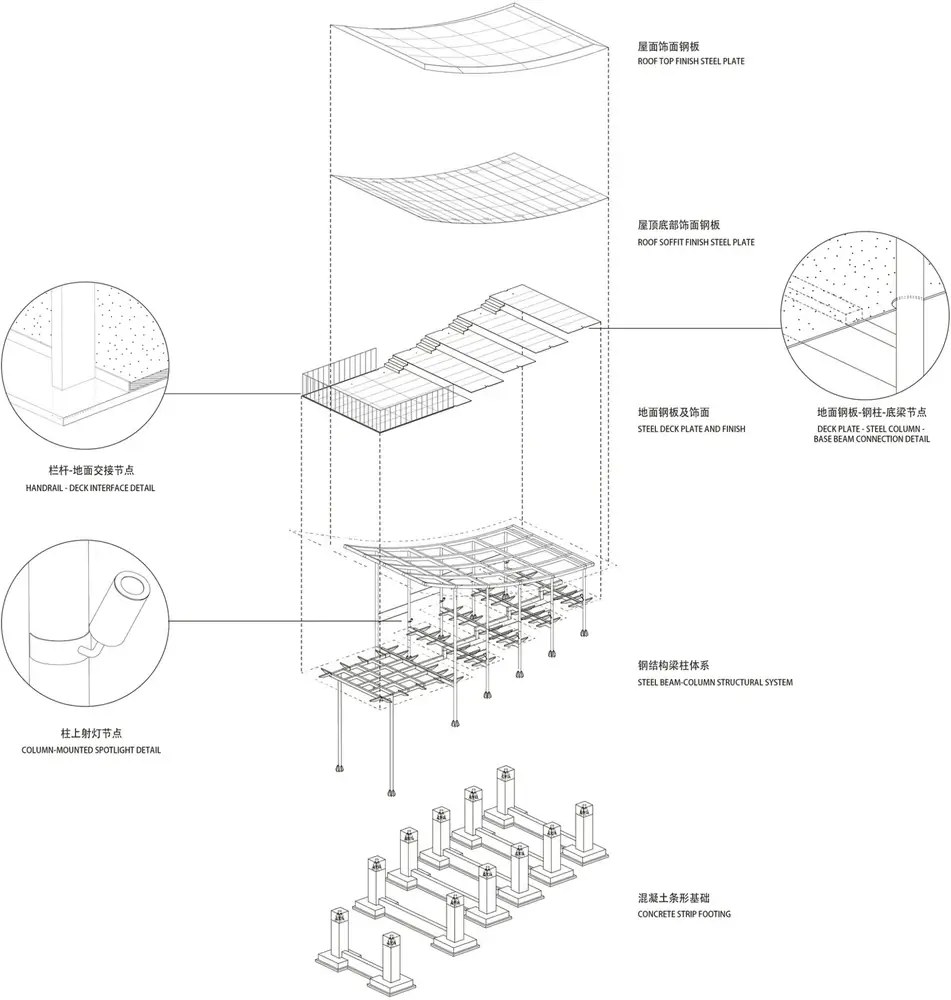
- Suspended, prefabricated steel structure
- Thin steel sandwich roof
- Tiered viewing platforms
- Installation without heavy construction equipment
- Minimal impact on the landscape
Address
Organic Tea Valley
Xinxing Town
Songyang County
CN-Lishui, Zhejiang
Opening
2025
Photos
Plans
Studio RE+N
, Kejia Mei
Text
Johannes Bühlbecker
More Sports Media
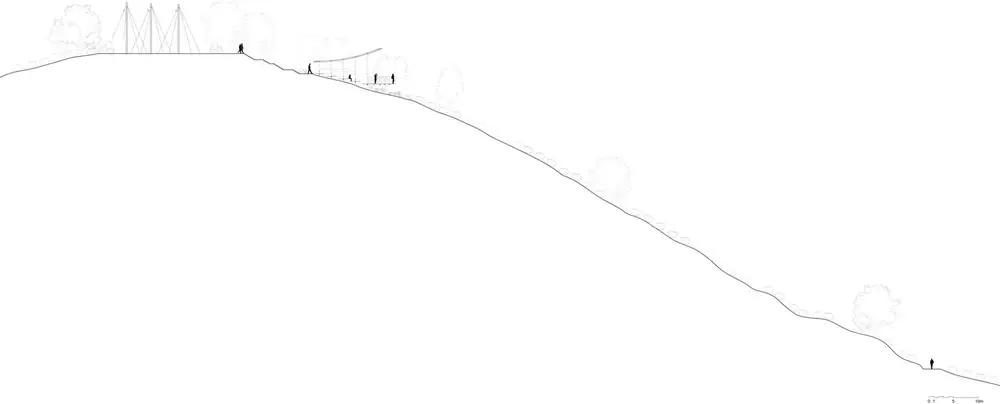
Not every roof is primarily meant to protect against rain. Sometimes, its main purpose is simply to create a space.
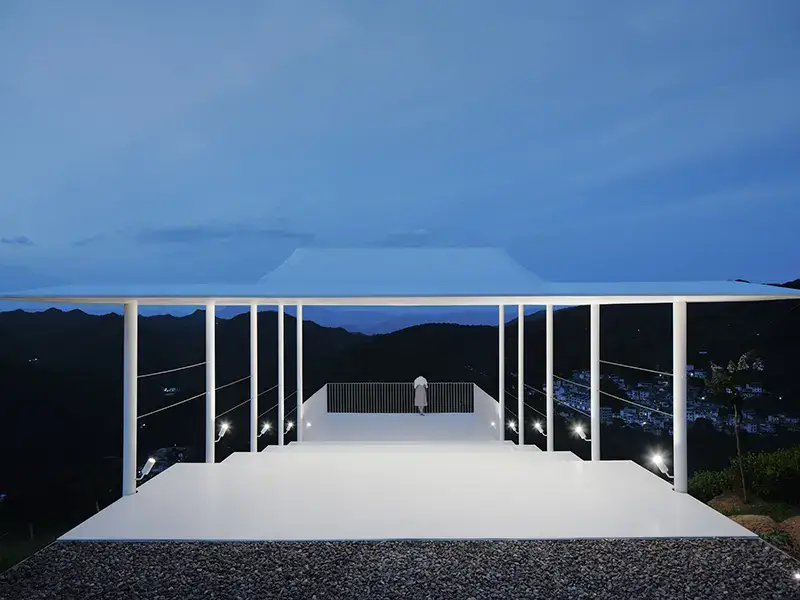
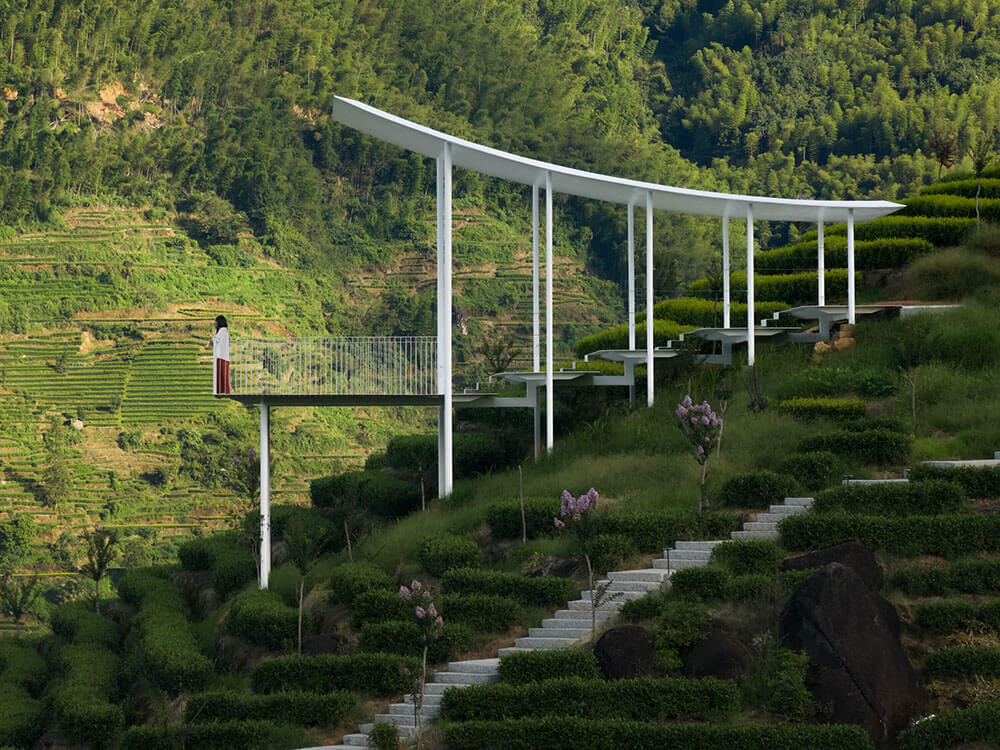
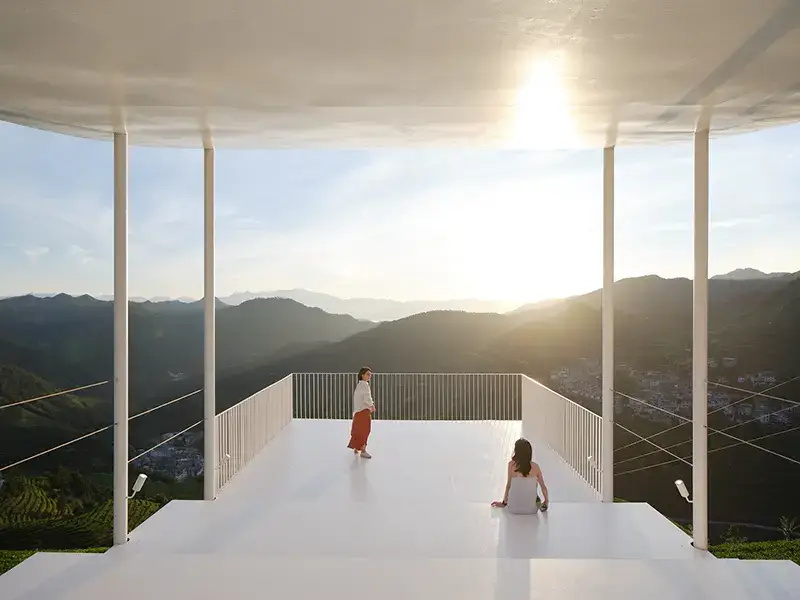
The Floating Pavilion in Songyang, China, demonstrates how a single, floating roof is enough to give a landscape a new dimension: serving as a lookout point, a gathering place, and a rest area all at once.
A Roof as a Landscape
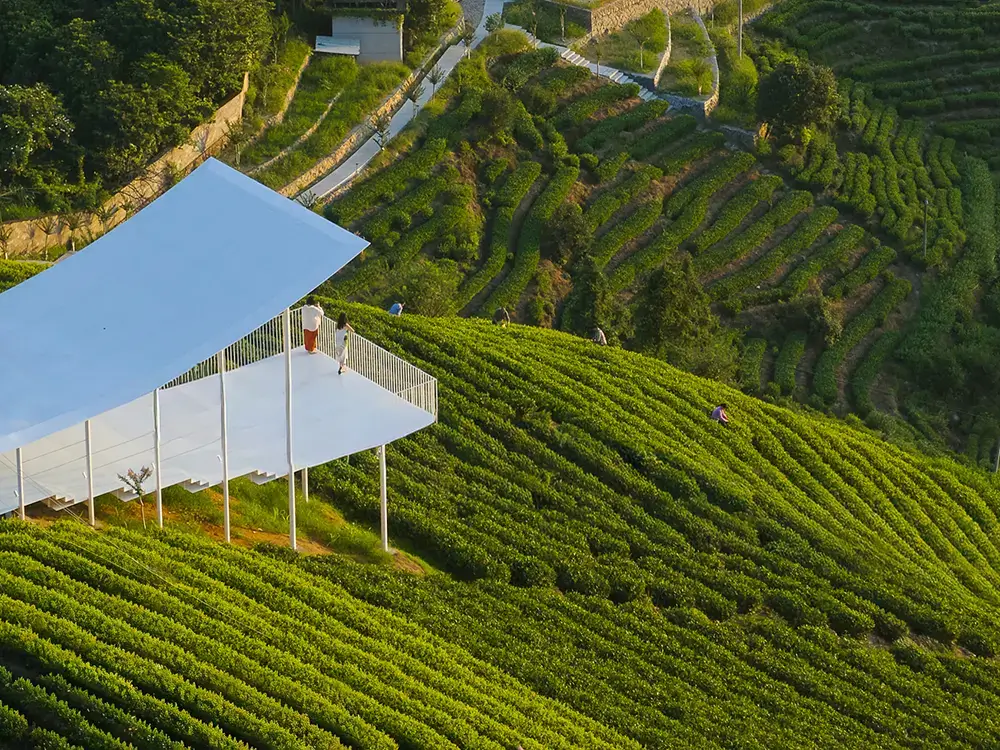
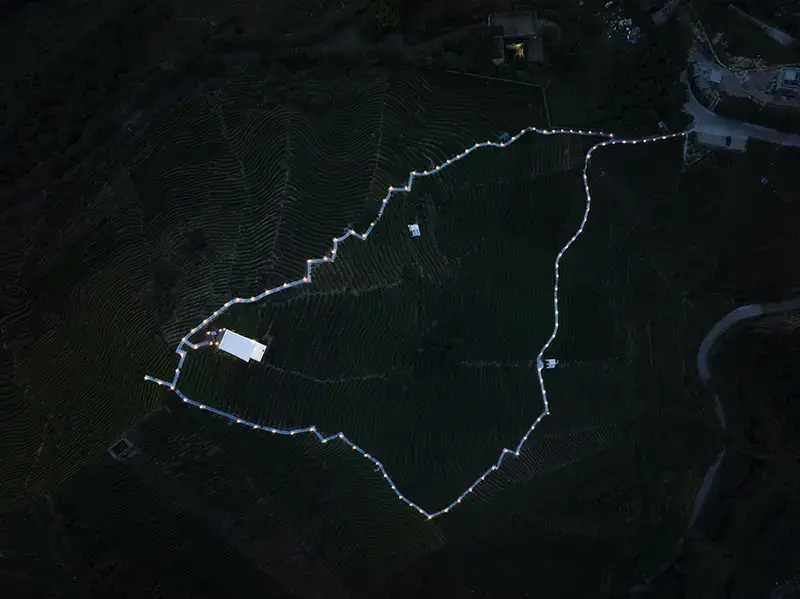
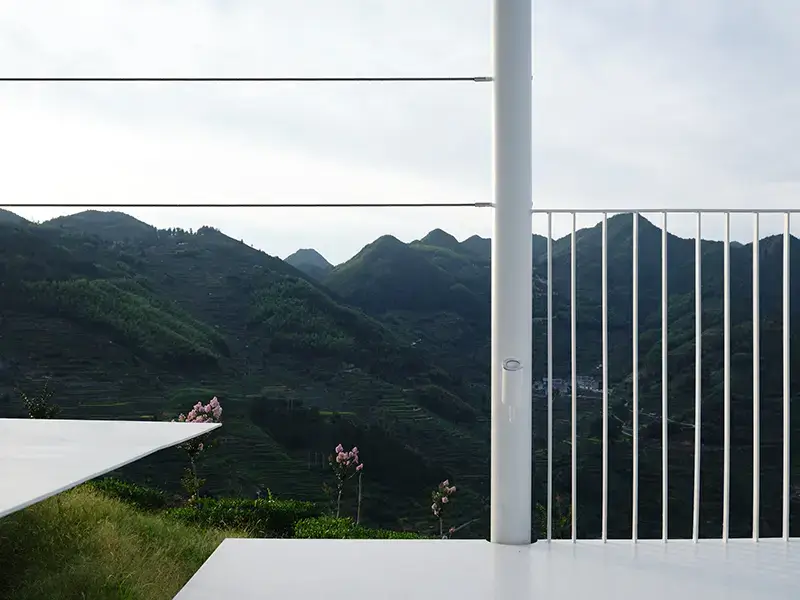
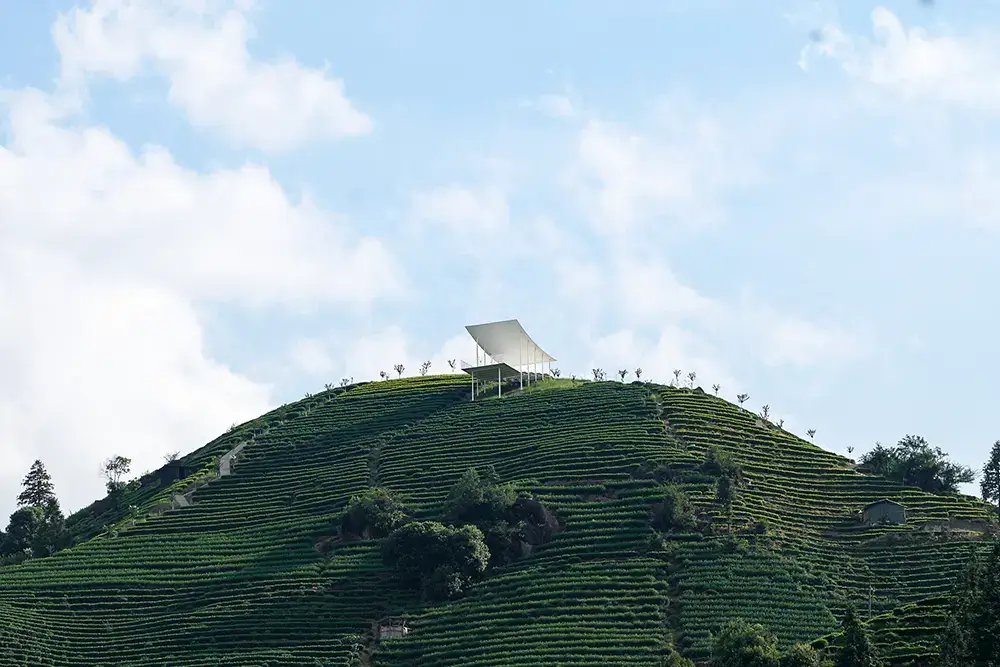
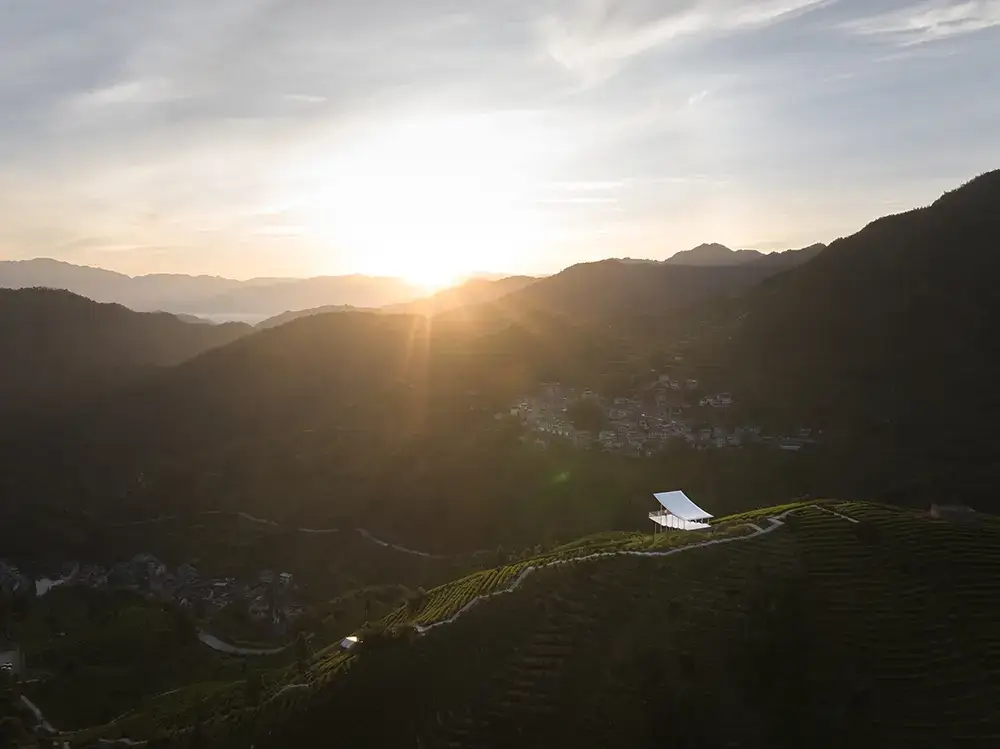
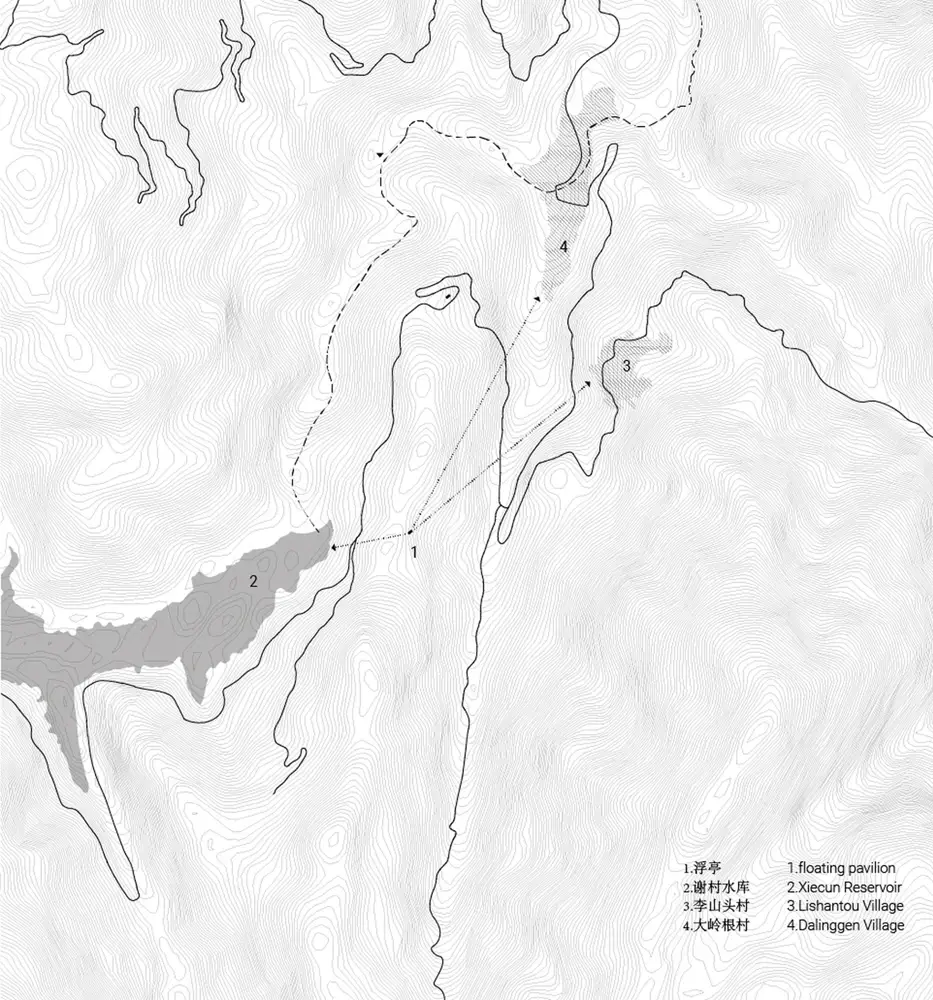
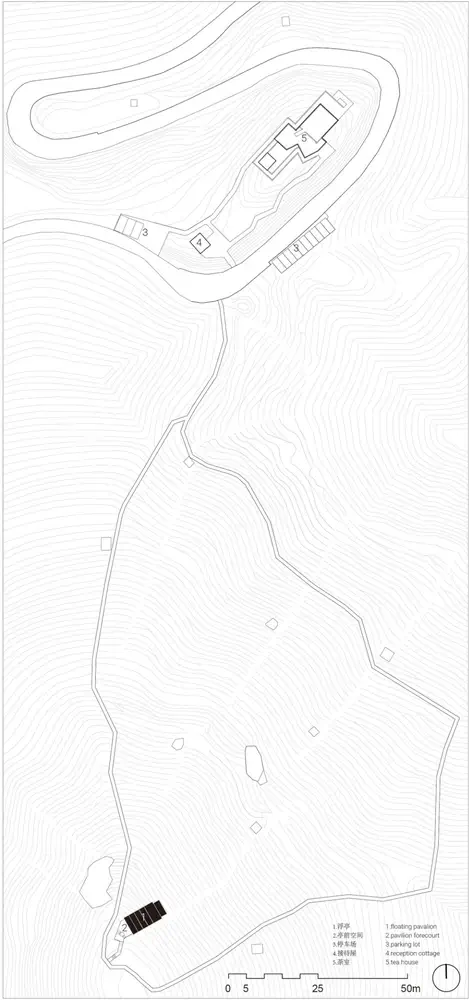
Visitors to the Floating Pavilion do not reach it via a road or a forecourt. The path winds through steep tea plantations up to a mountain ridge about 500 meters above sea level. Only once you’re between the terraces does a narrow white structure gradually come into view, seemingly floating weightlessly above the fields.
What makes it special is not so much the building itself as its relationship to the landscape. Instead of creating a dominant vantage point, Studio RE+N has limited itself to a single, precisely shaped roof that defines the site without altering it. It is precisely this restraint that makes the pavilion an exciting example of covered open spaces.
A Roof Creates Space
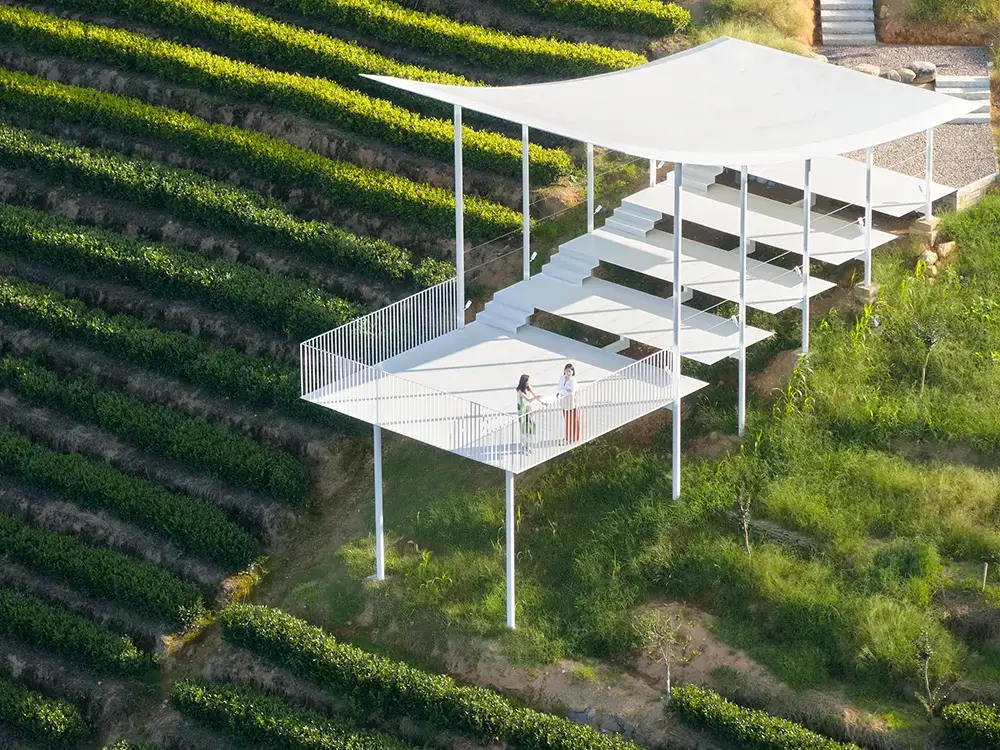
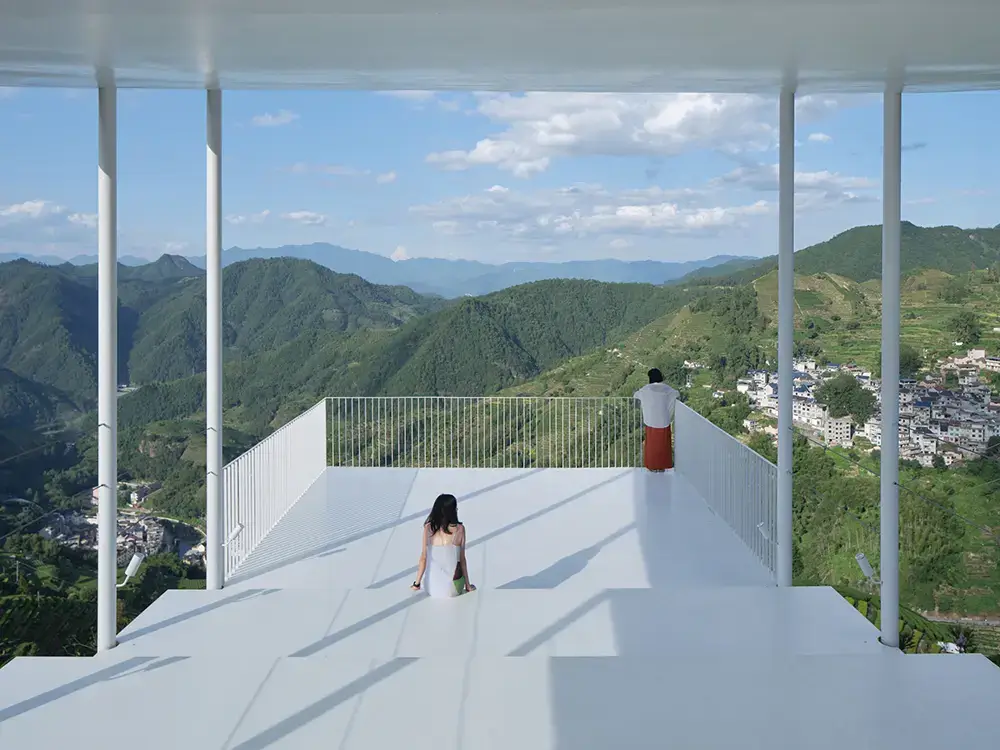
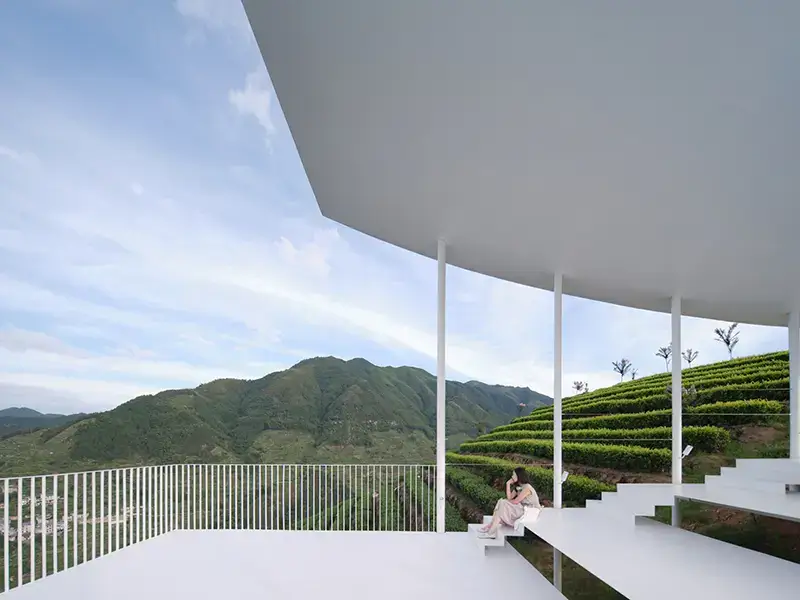
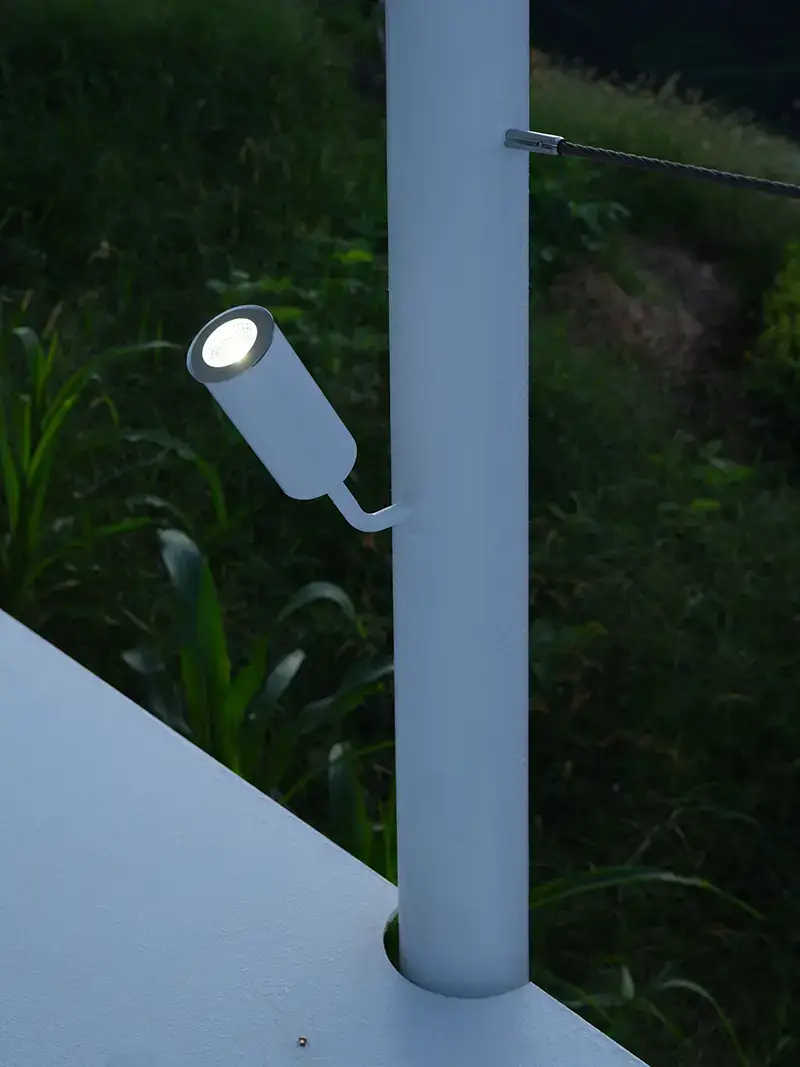
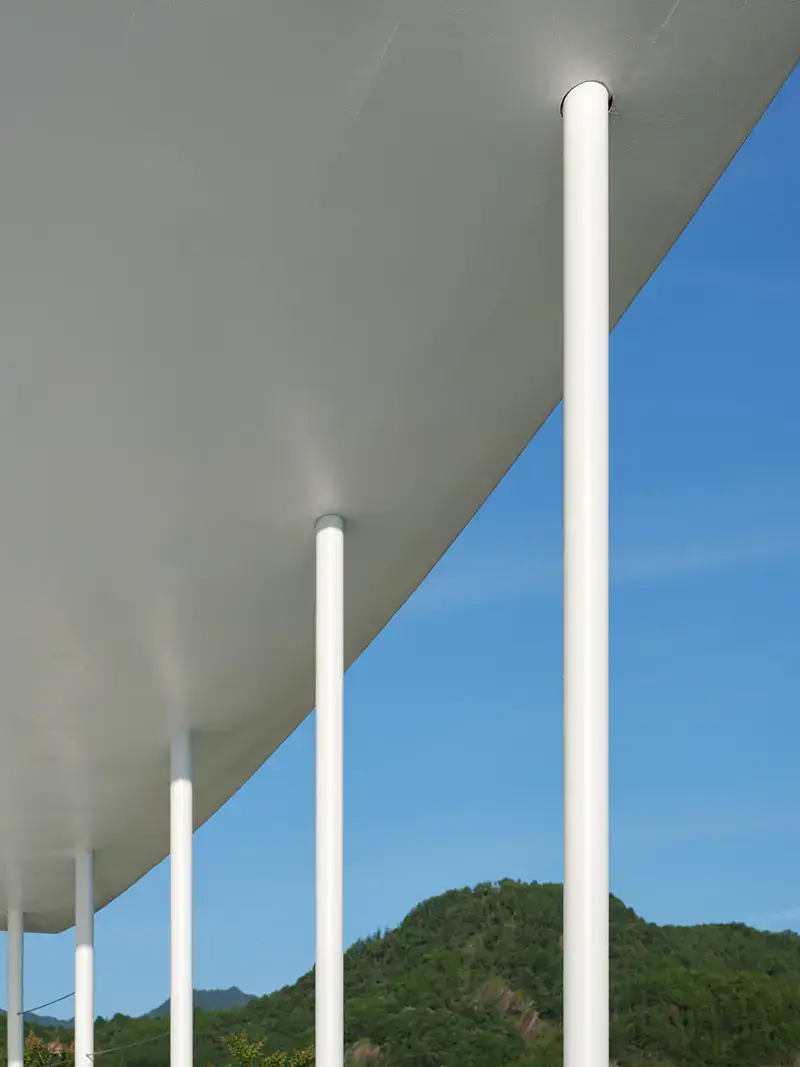
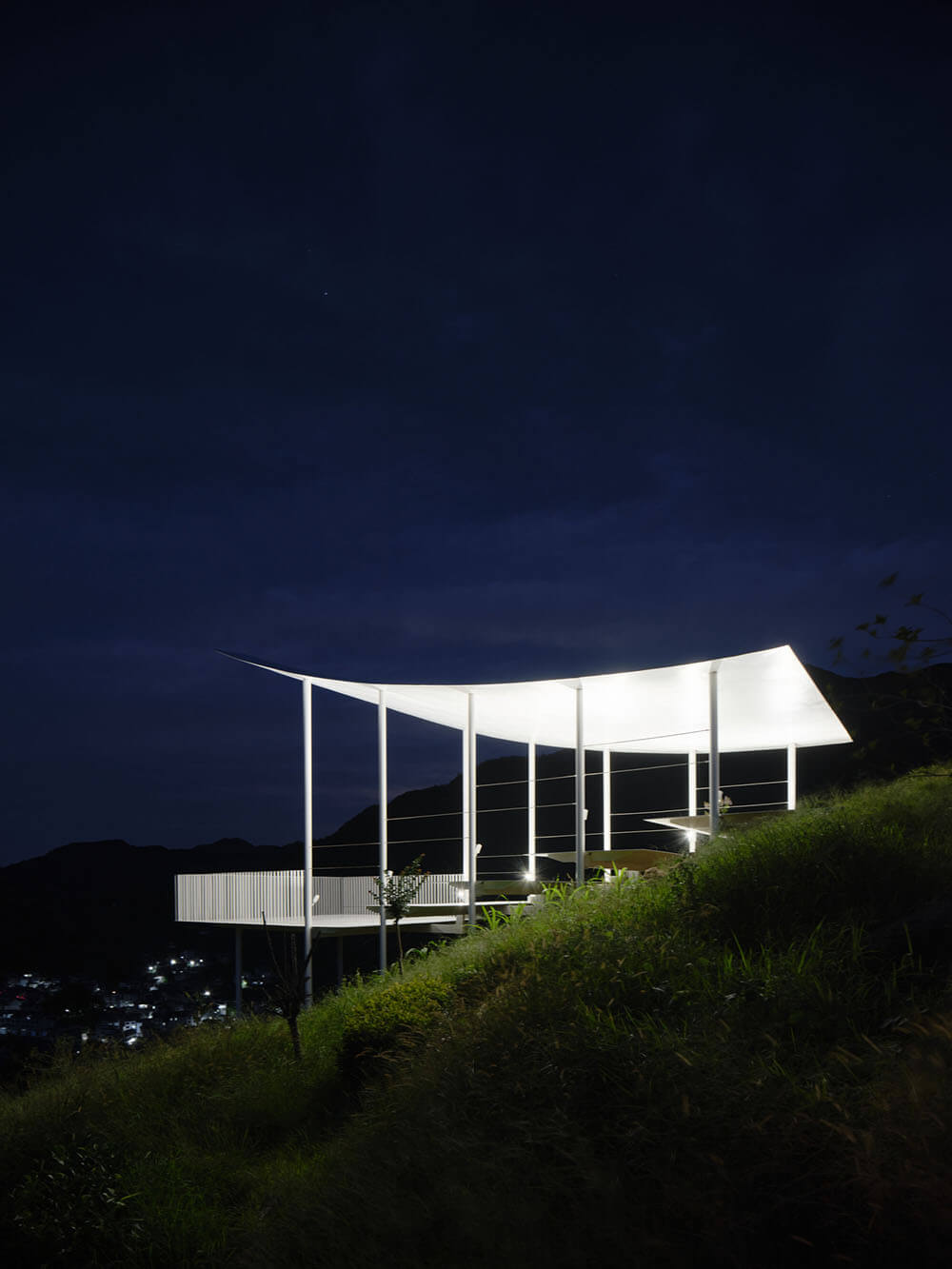
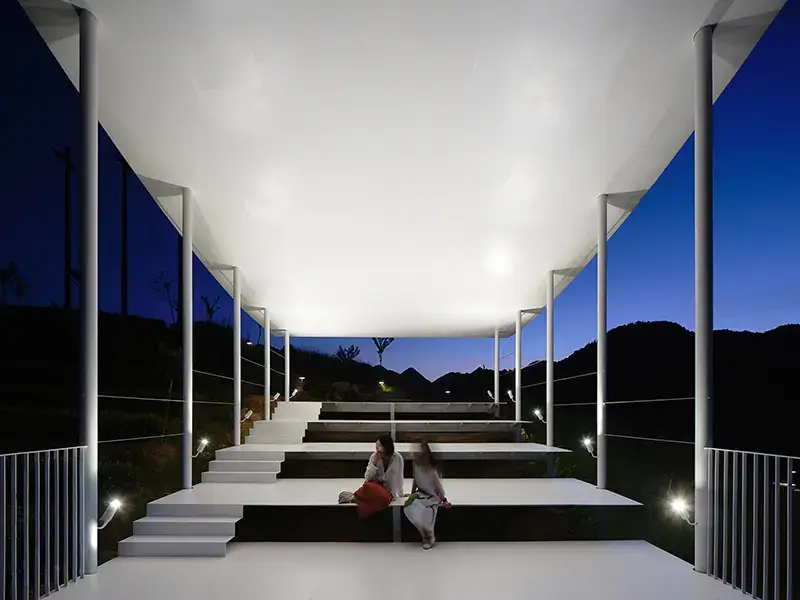
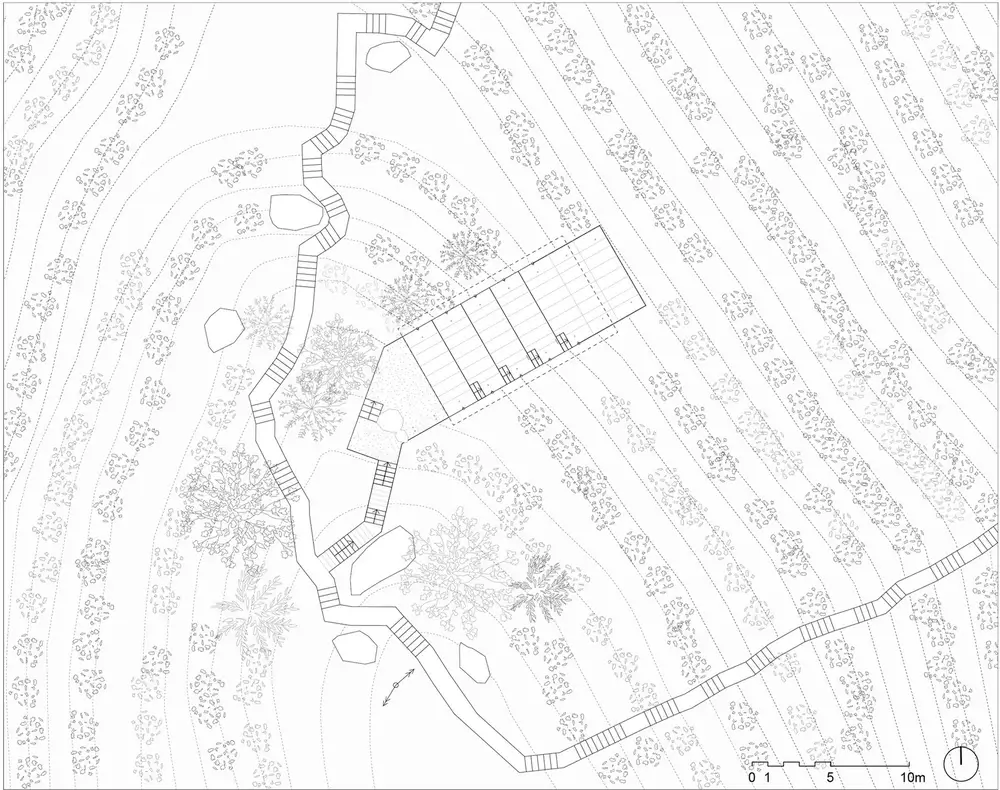
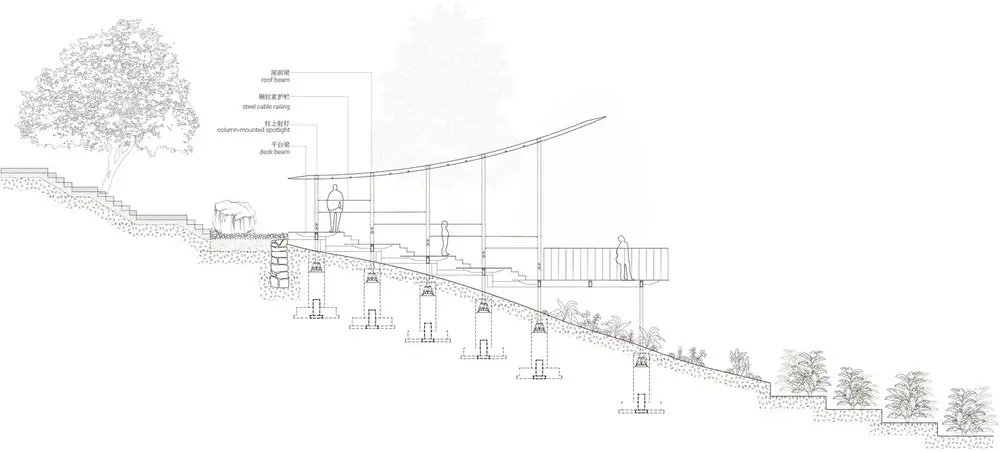
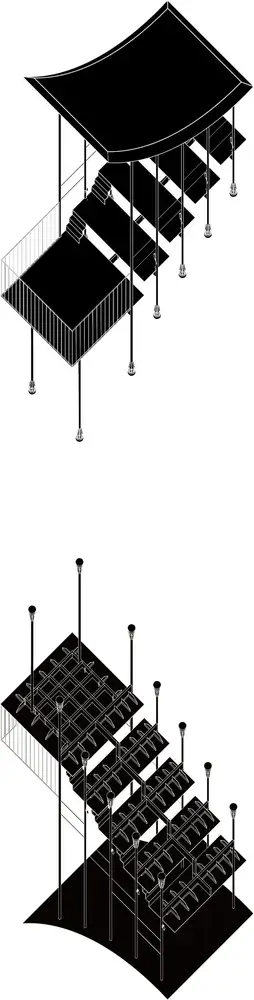
The structure consists of an extremely slender steel sandwich construction supported by just a few columns. As a result, the roof looks almost like a sheet of paper floating above the tea plantations.
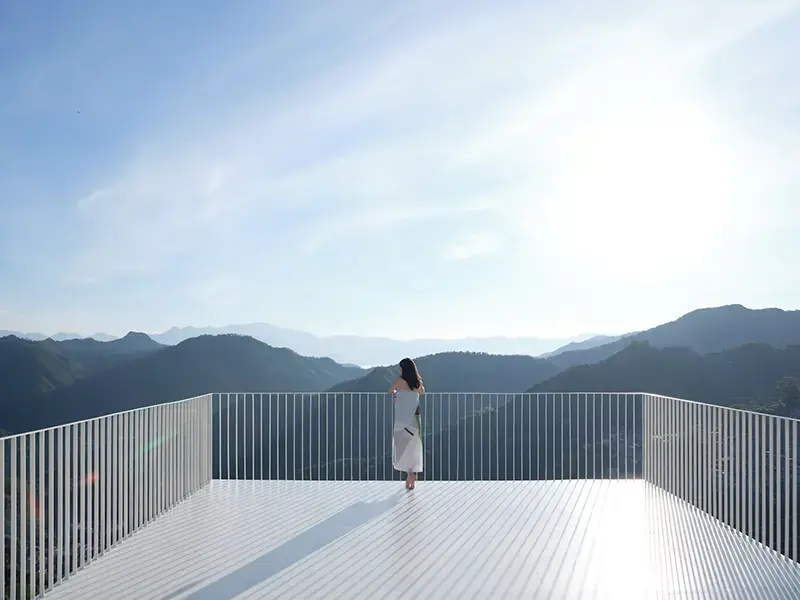
Below, there are seating areas of varying sizes. Steps follow the topography of the terraces and gently lead visitors downward. With each level, the view across the valley expands until, at the lowest point, the entire panorama opens up.
Here, the architecture is defined not by walls or rooms, but solely by the roof, the grounds, and the view.
Lightweight construction
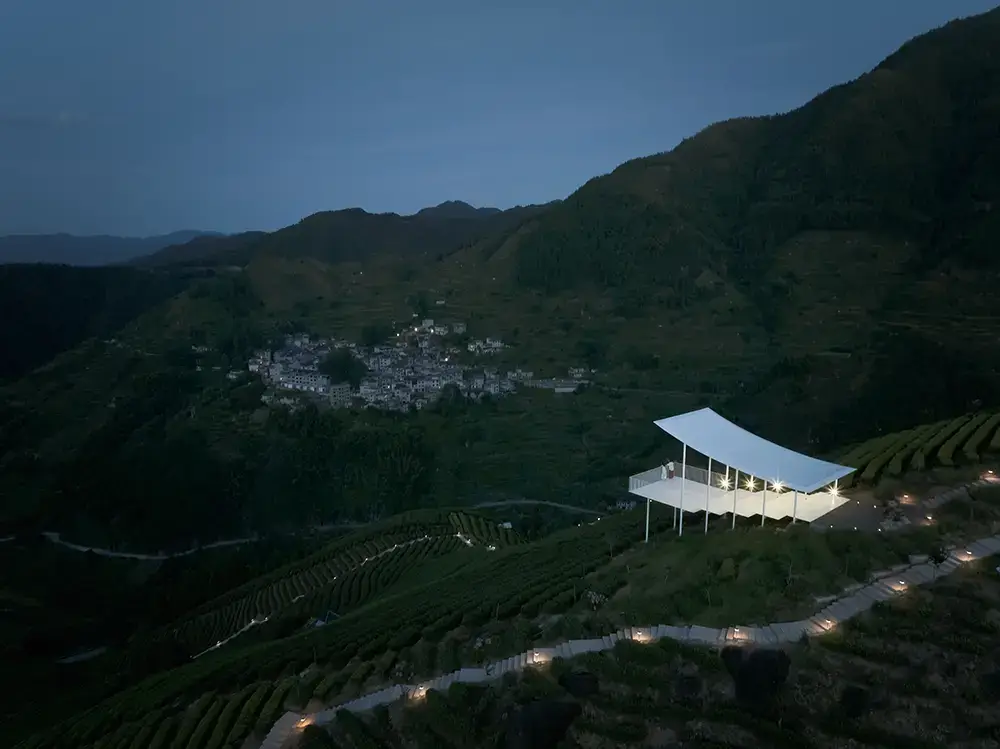
The construction process also followed the principle of minimal impact. Because heavy equipment could not reach the steep slope, all steel components were prefabricated and transported up the mountain using small carts and cable systems. Only a small amount of work had to be done on site.
As a result, the impact on the existing cultural landscape was minimal. At the same time, a sustainable infrastructure was created that is used today by both visitors and tea farmers.
A place for everyday life, too
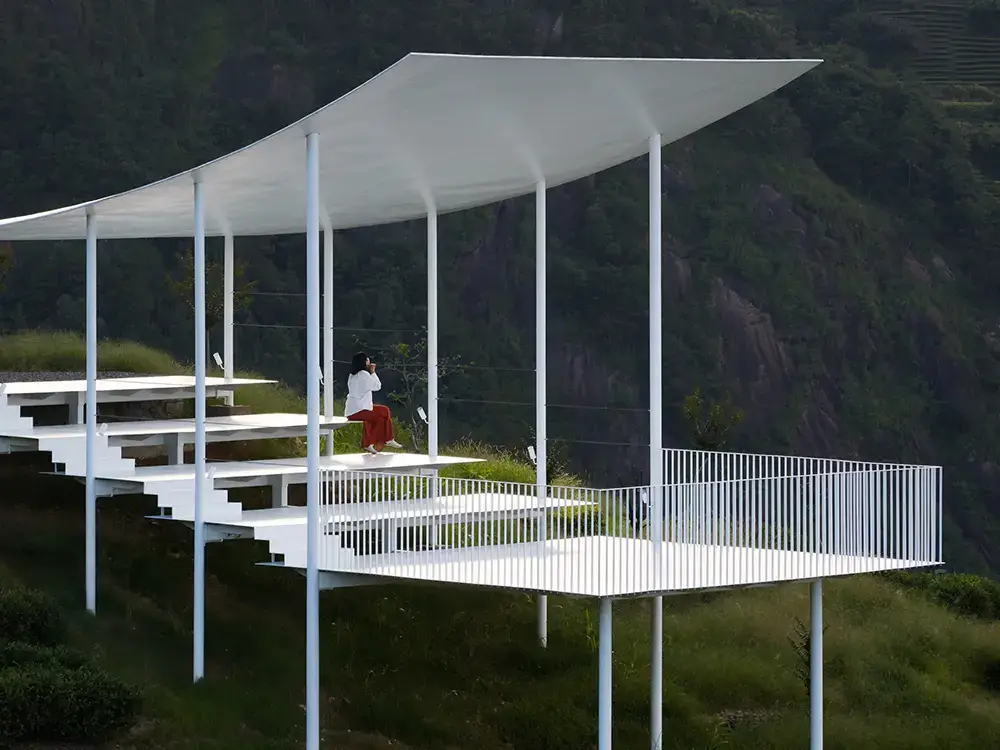
Since its completion, the pavilion has quickly evolved from an architectural landmark into an integral part of the community. Hikers use it as a rest stop, visitors come here to watch the sunrise and sunset, and during harvest season, the new path also provides better access to the tea plantations.
It is precisely this multifunctional use that makes the design interesting. The roof not only creates a viewing platform but also, incidentally, enhances the use of the landscape.
What you’ll learn here:
Sometimes you don’t even need a building. A good roof is all it takes. The Floating Pavilion impressively demonstrates just how little architecture is needed to transform a place into an entirely new experience. Perhaps the project’s greatest achievement is that it doesn’t demand attention. It creates a place to linger, improves access to the tea plantations as a side effect, and gives the impression that it has always been there.
With a single, almost weightless-looking roof, a space is created that does not overwhelm the landscape but rather sets the stage for it. Rarely does architecture demonstrate so convincingly that minimalism is not a sacrifice, but rather a special form of quality.
Videos
Plans
More exemplary buildings for sport and leisure
Subscribe to our newsletter.
Every three weeks, we inform you about new and exemplary projects and products. With heart, drive and expertise.