
The multi-purpose hall in Ingerkingen
Life goes on
Swabian thriftiness fits in perfectly with the idea of circular construction: the material from disused buildings does not end up in landfill or is “thermally recycled”, but is transferred to a new phase of use.
Continue building
The concept of building on has been practiced since the beginning of human history. Today it is absolutely contemporary, as it fulfills the desire for continuity and demonstrates a pragmatic approach to energy and materials. In the past, the difficult accessibility of materials was the main reason for continuing to build; today, in view of the multiple crises in the world, it is simply necessary.
The Upper Swabian town of Ingerkingen near Biberach an der Riß left it open in the competition as to whether the existing multi-purpose hall should be integrated into the new concept or make way for a new replacement building. In the immediate vicinity of the elementary school, the musicians’ home and the fire department, the hall was and still is the center of social village life.
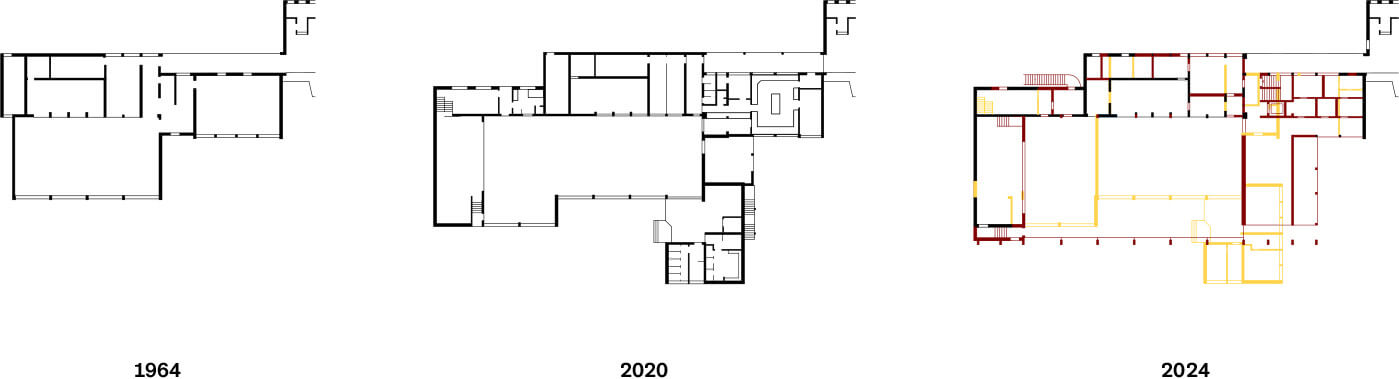
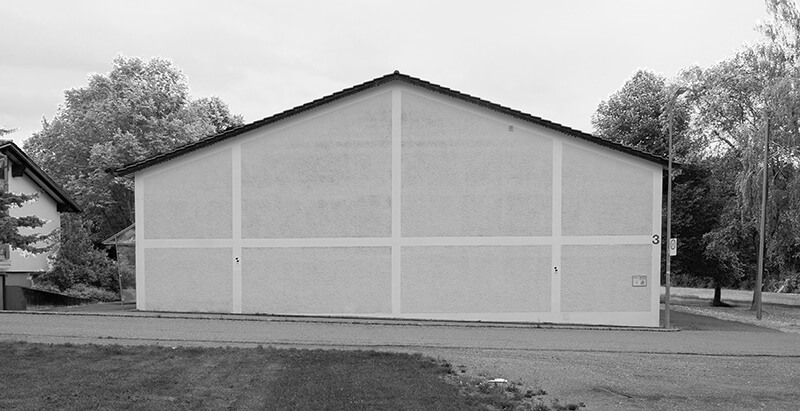
In addition to school sports, the multi-purpose hall in Ingerkingen serves as a meeting point, event and training venue for local clubs. It was built in 1964 according to plans by Pfalzer and Schenk as a sports and gymnasium for the adjacent elementary school to the east. With each conversion, however, the building gradually lost its once remarkable typological and aesthetic quality.
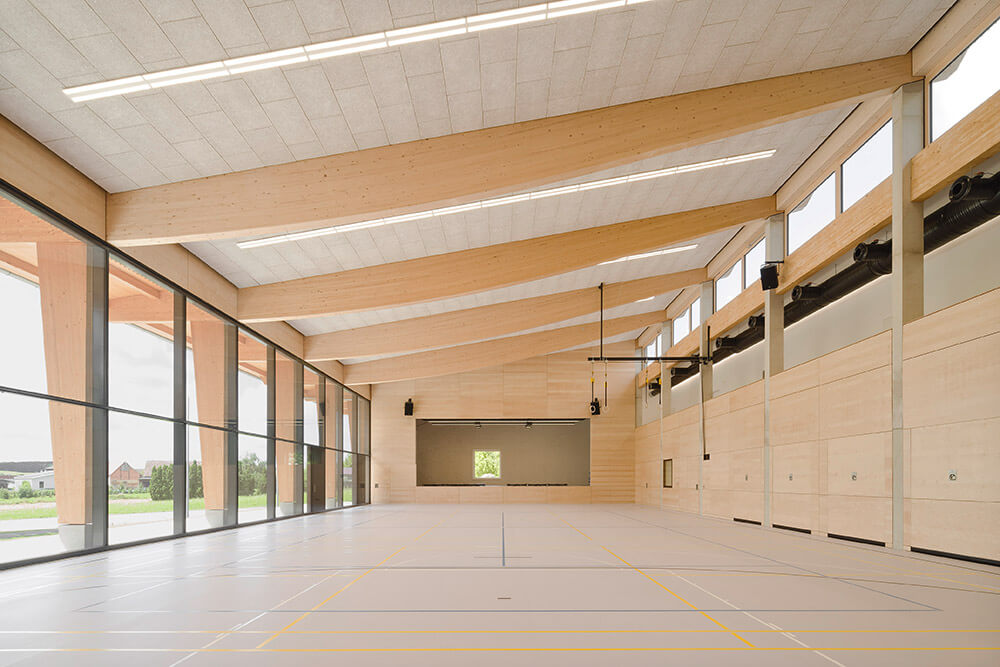
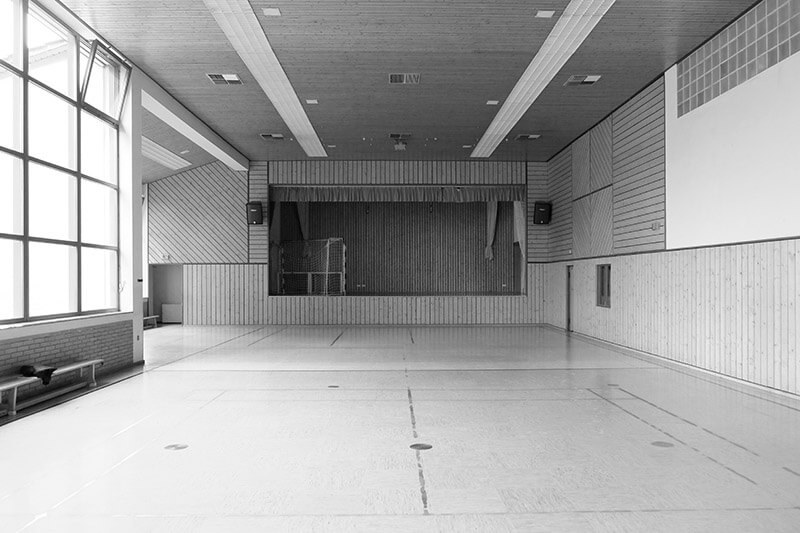
Received
In the tendered competition, the design with the maximum preservation of the existing building prevailed and saved the multi-purpose hall from the threat of demolition and replacement construction. The result is a building whose history is clearly legible.
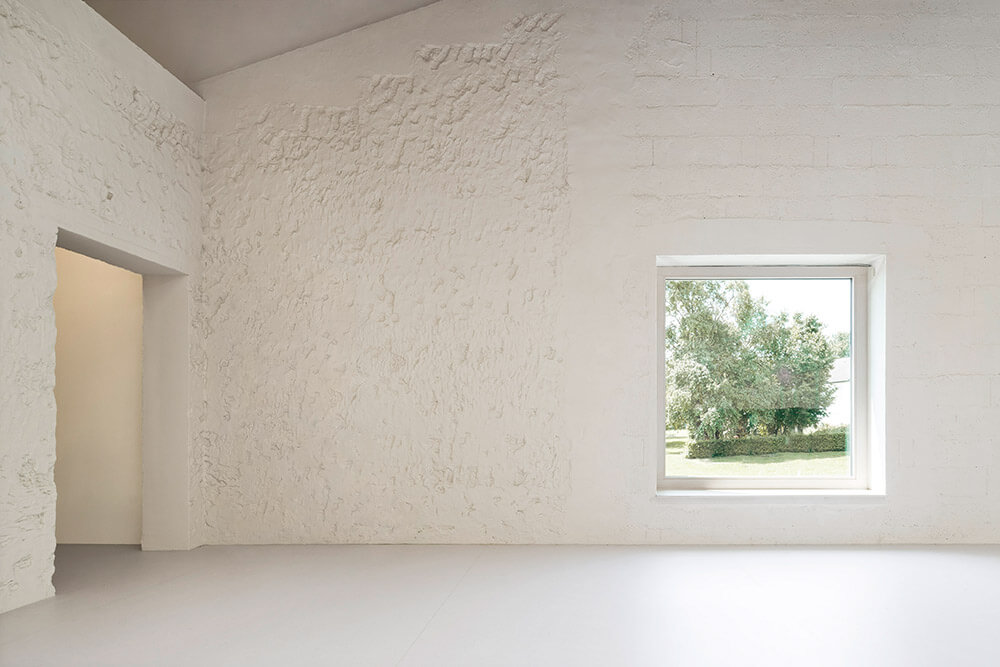
Even though the existing building has no outstanding artistic value and is not considered “beautiful” by the villagers, it was an excellent dialog partner for the planners. As part of the building could be easily and functionally integrated into the new concept, they took its preservation for granted.
In order to reduce demolition to a minimum, the foundations and floor slab, ceilings and the solid walls in the northern section as well as the street-side stage wing were integrated into the planning. This allowed a total of 60 percent of the building mass to be retained. As the hall length of the previous building corresponded exactly to the DIN requirements of a single-span hall, only the south façade had to be dismantled and moved. The result was a standard-compliant single-span hall with comparatively few interventions.
Perceive
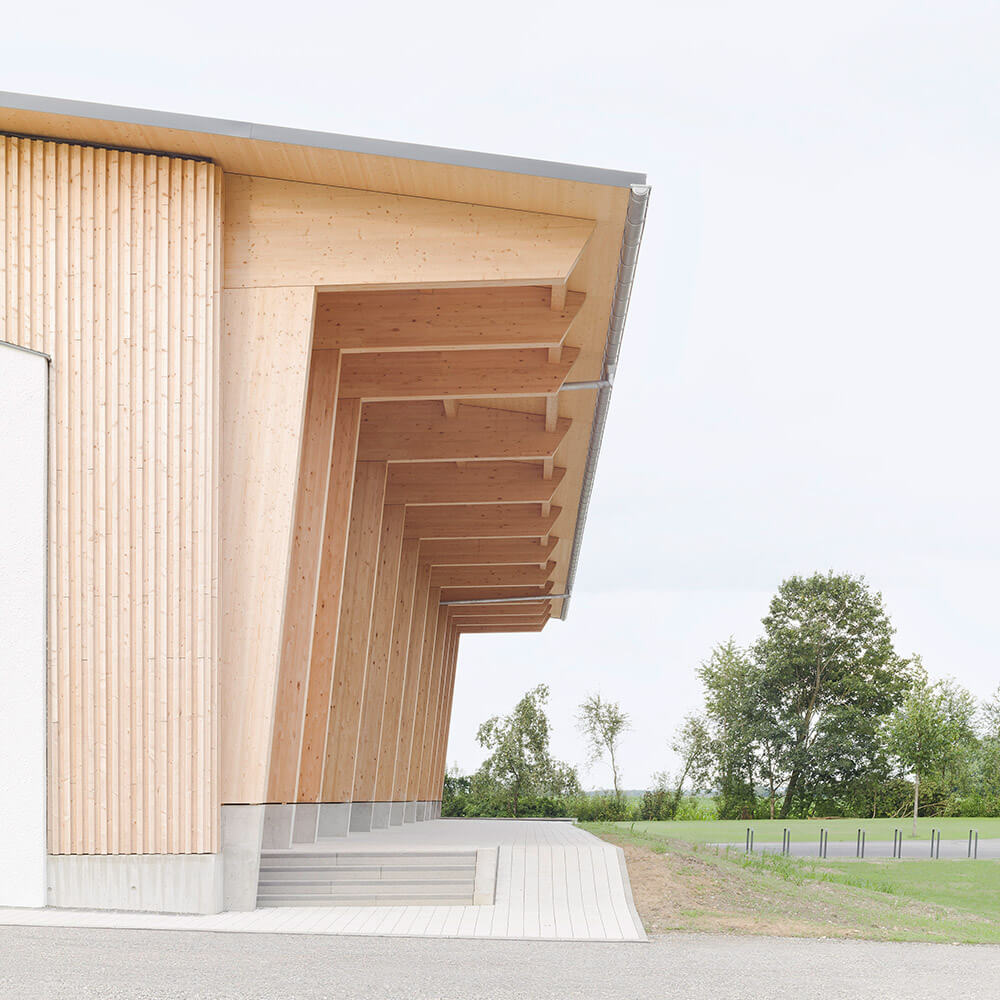
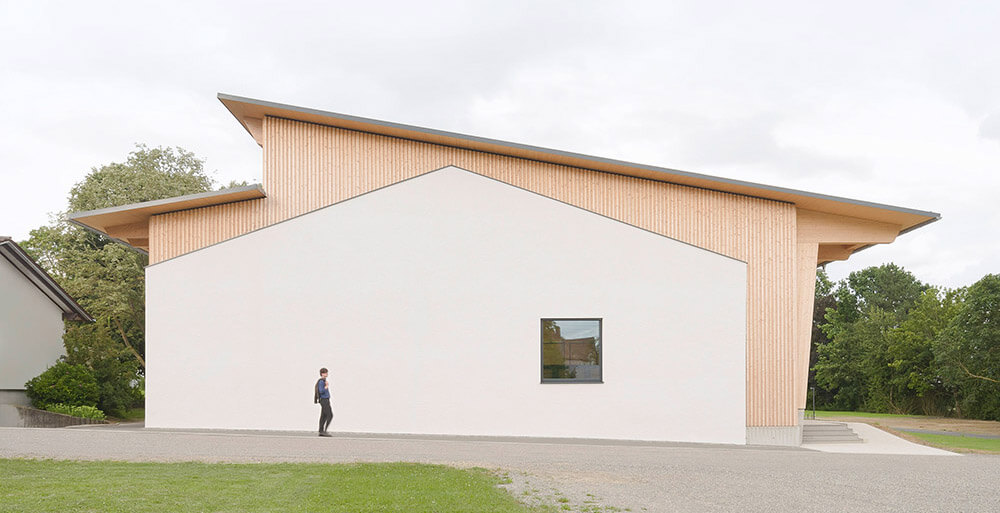
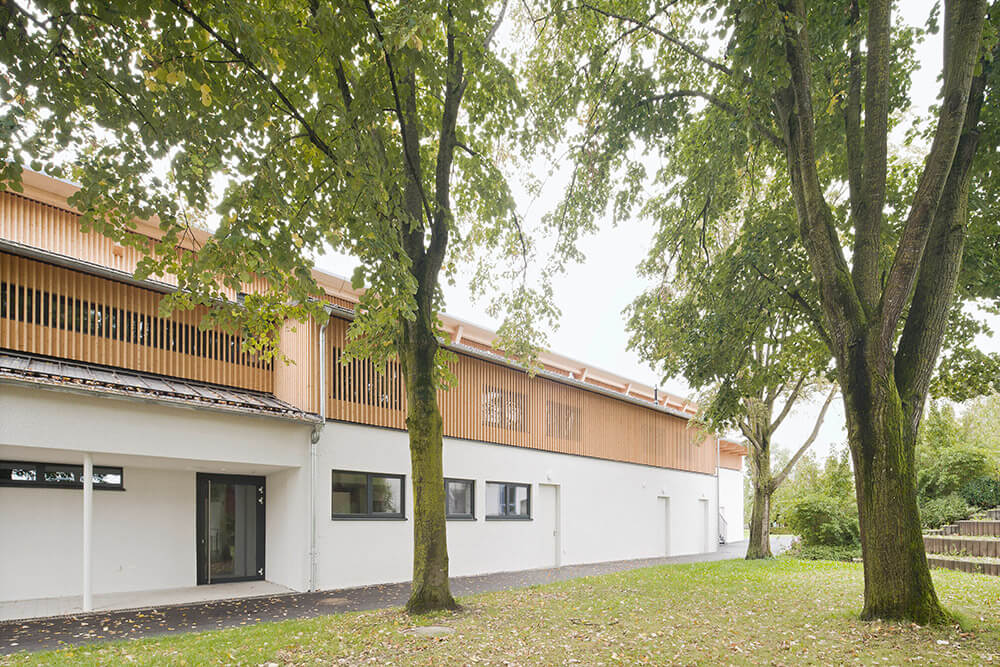
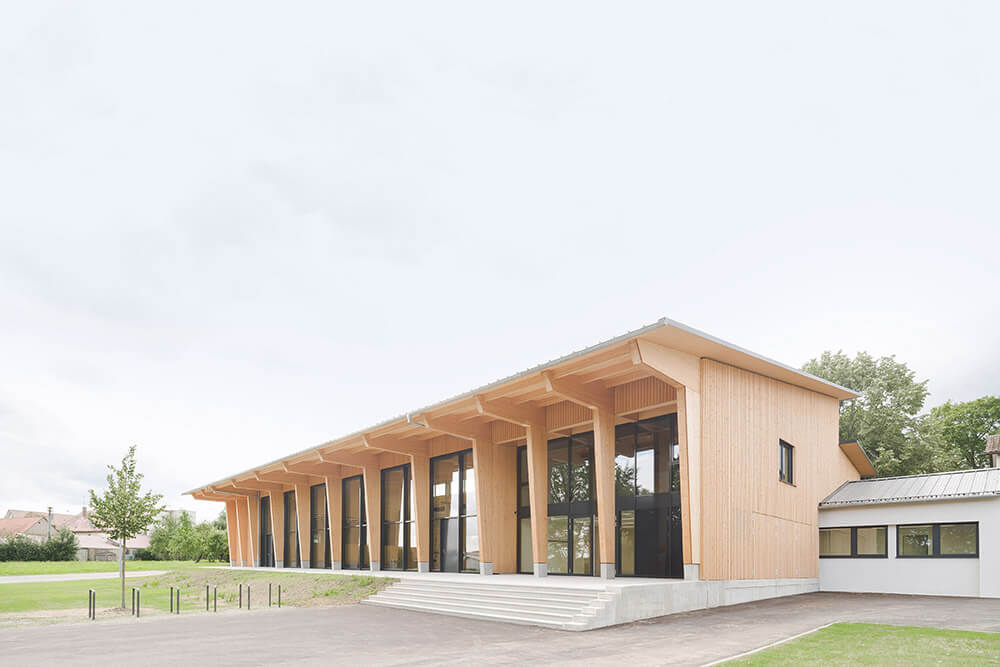
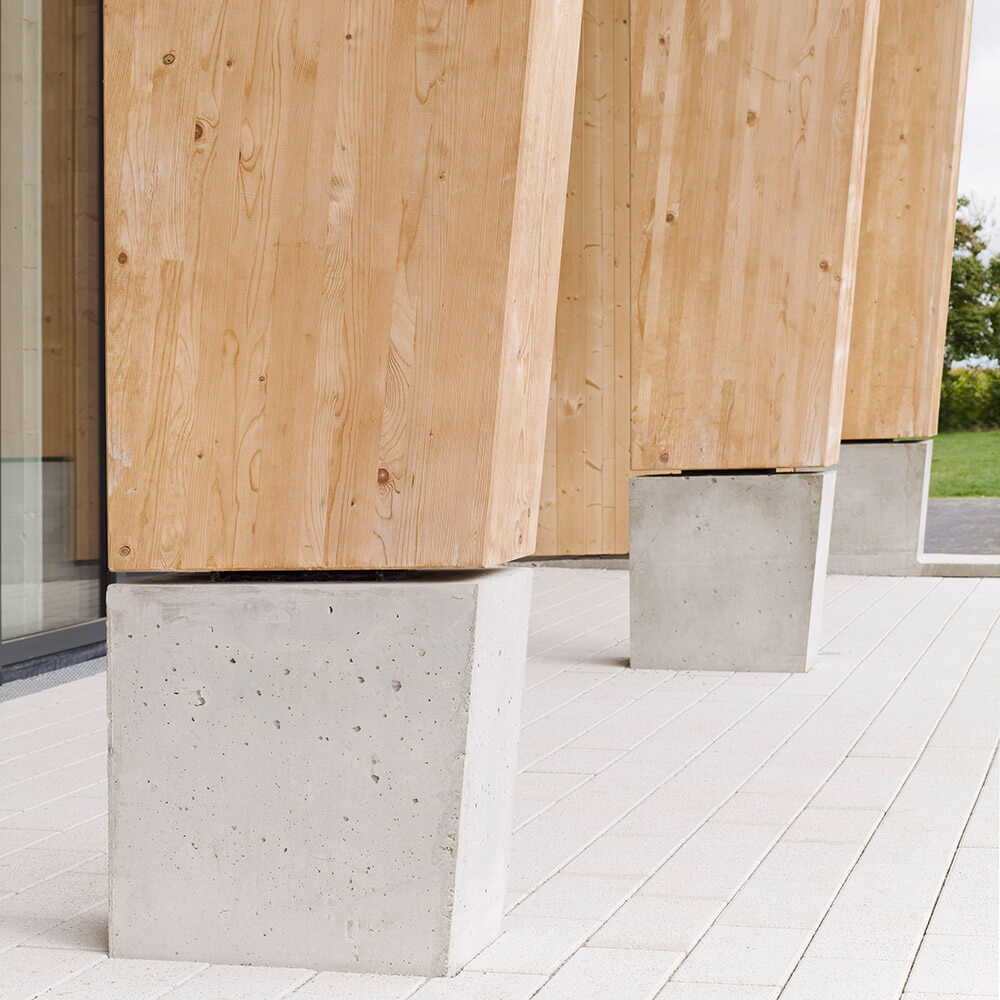
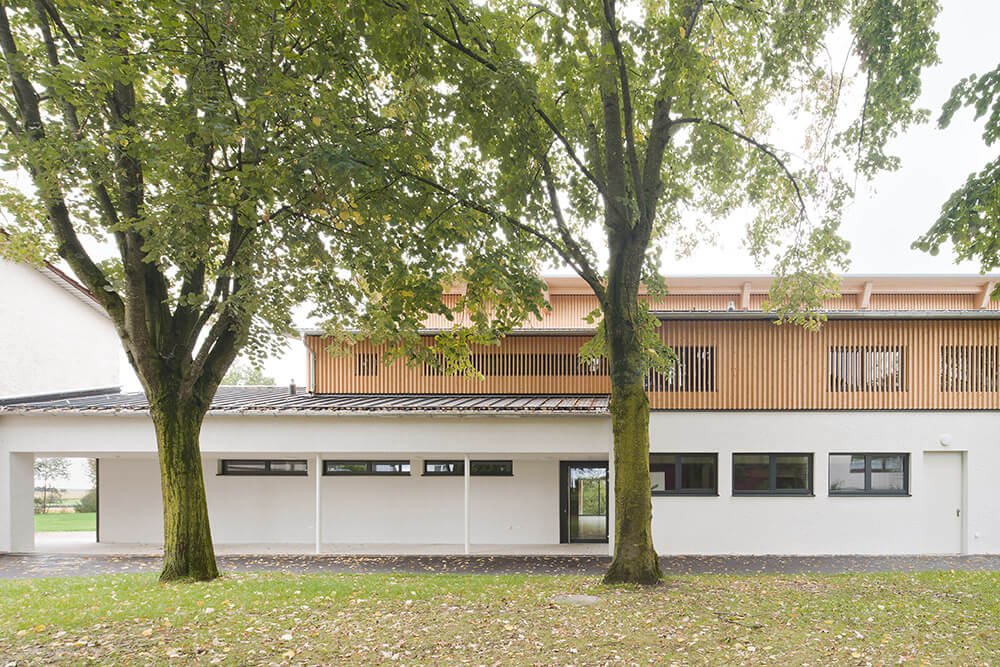
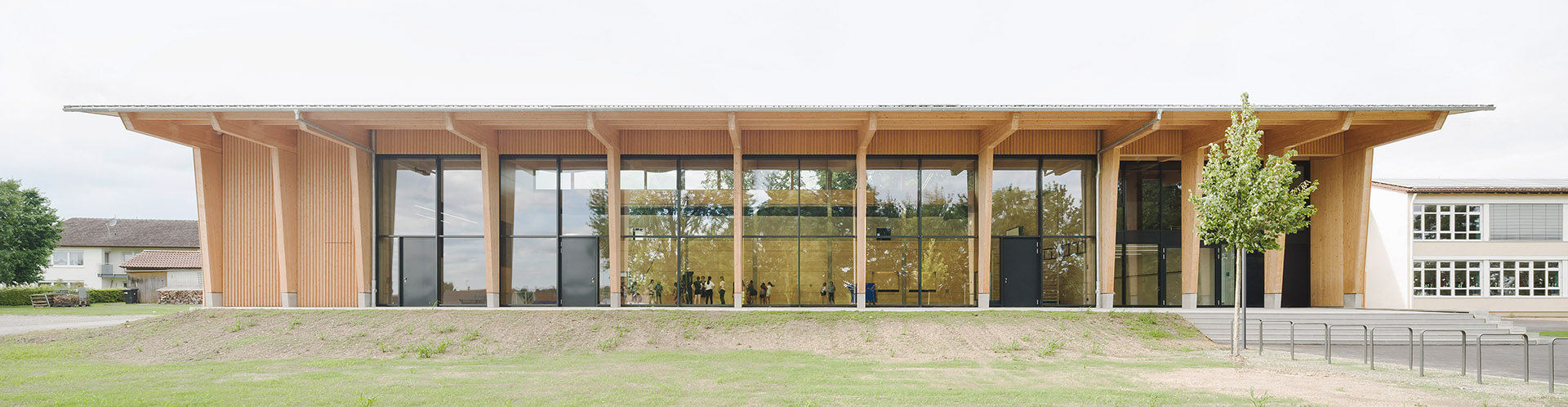
The existing and new buildings are distinguishable by their construction and materials. The solid existing building was insulated and plastered to match the original plaster. The addition and extension in lightweight timber frame construction is made visible with a rear-ventilated timber façade. The building history of the hall is told, particularly on the west and north façades.
The existing gable wall was extended to the south and built over with two opposing monopitch roofs of the extension and the hall roof. To the north, the continuous line between old and new is only separated by the new door to the sports entrance and a light steel staircase. The offset of around 12 centimetres, which results from the slimmer wall construction in timber frame construction compared to the externally insulated masonry, further sharpens the plasticity of the building.
The perception of the wooden façade changes with the viewer’s point of view. The closer the viewer is to the north façade, the more visible the windows behind the wooden slats become. Over time, the untreated wooden façade will turn gray. This natural process will enrich the house because it emphasizes the wood – in contrast to mineral, metallic building materials – as an organic building material.
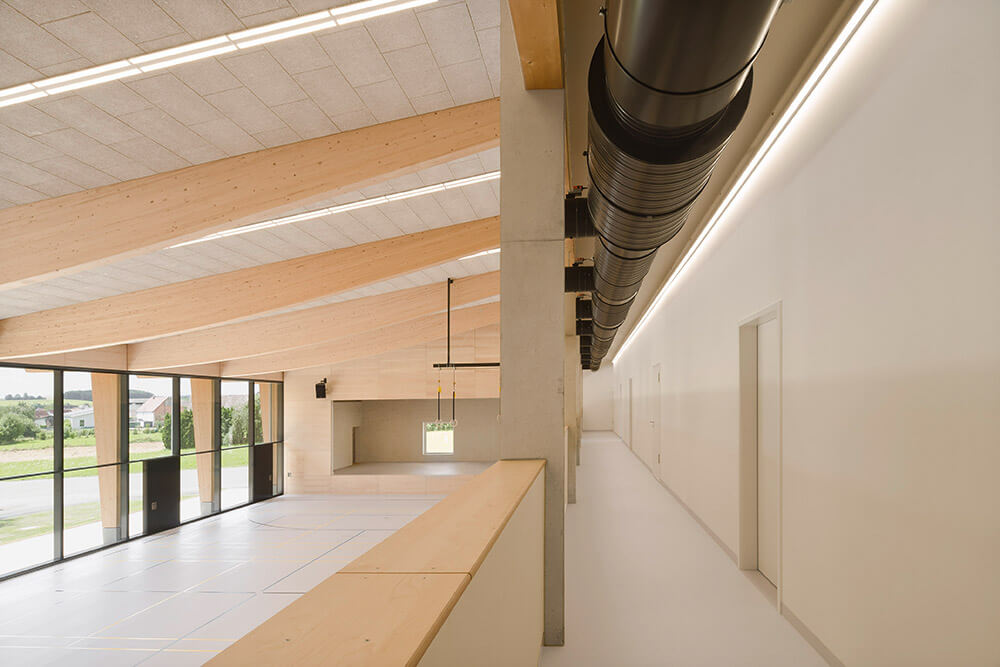
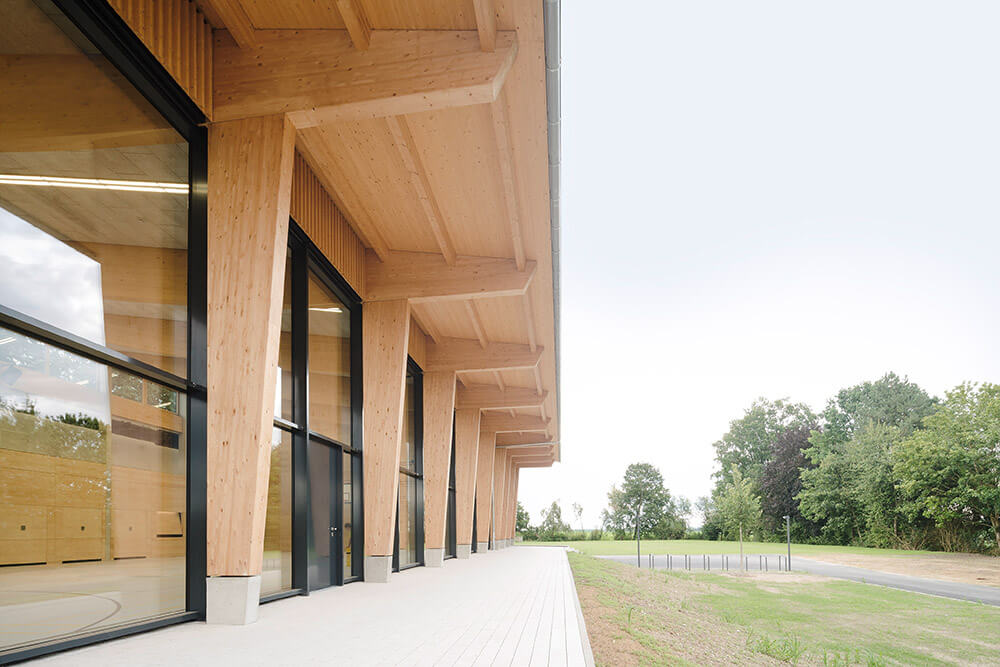
Reduce
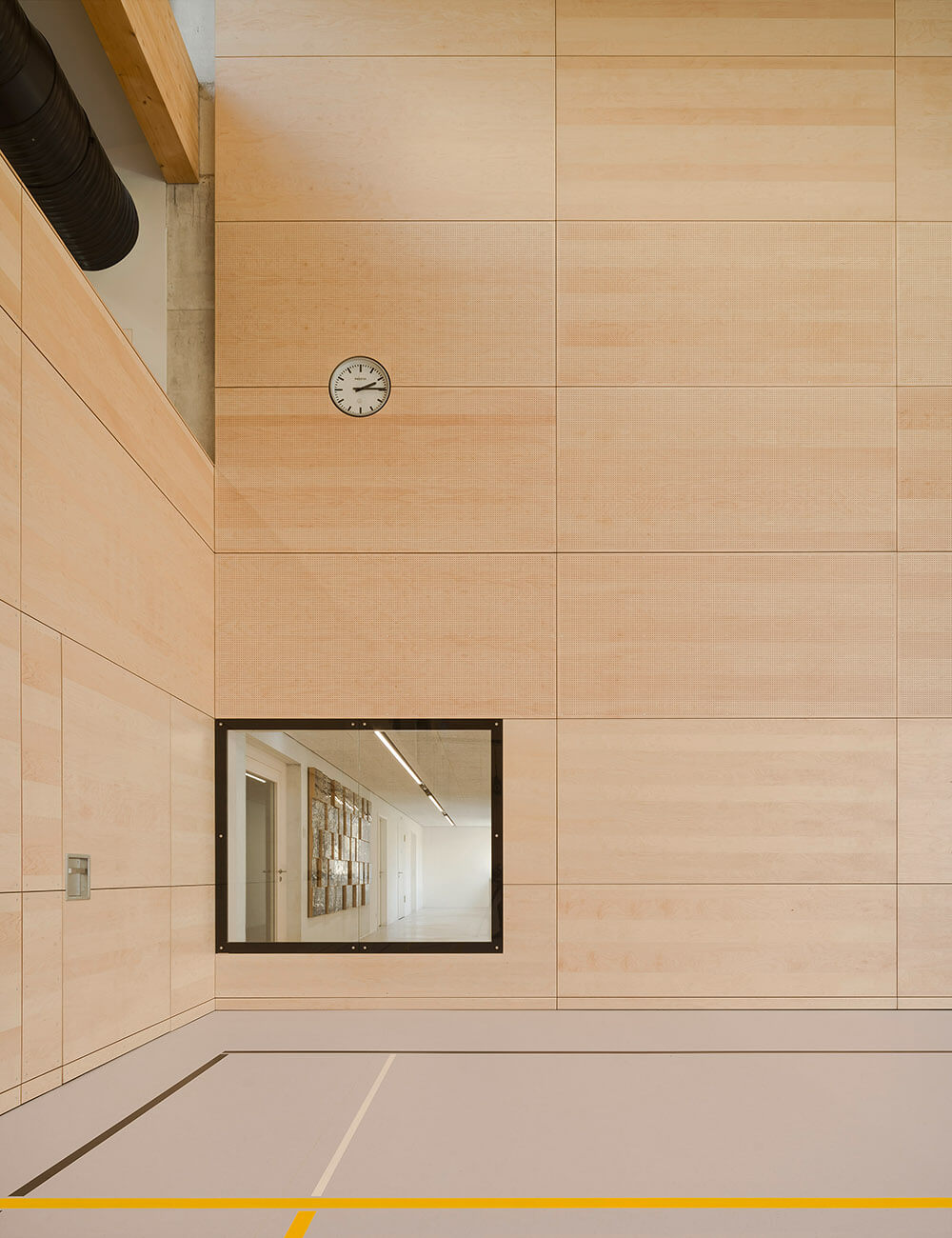
The energy concept is based on reducing the number of technical installations and making them easy to inspect. Taking natural ventilation into account, the ventilation system was reduced to a minimum and largely designed as a visible installation.
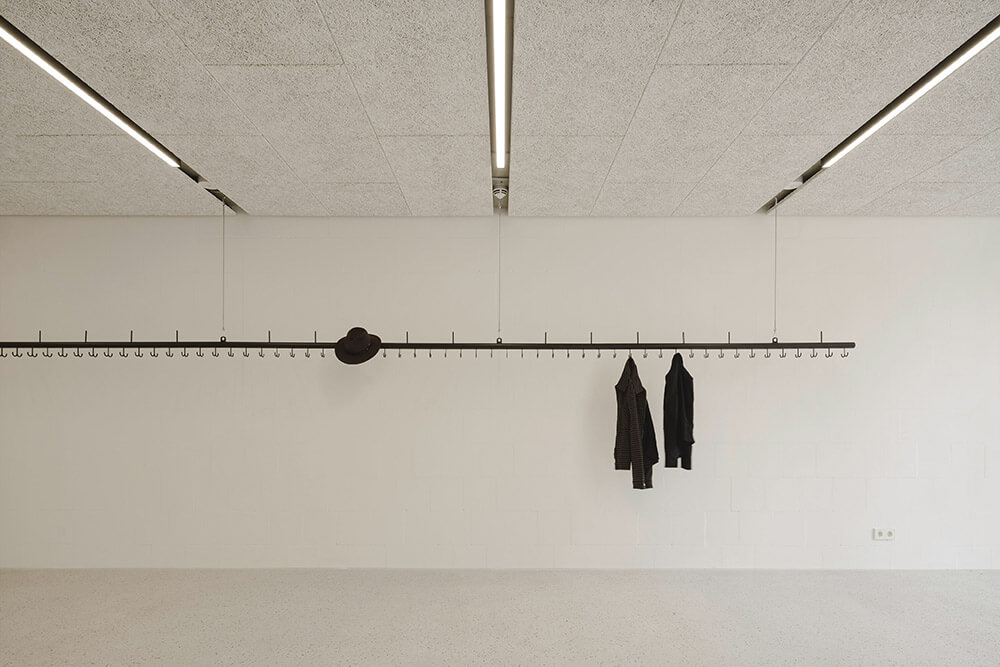
The metal structures for the gates, sports equipment and stage, as well as all technical installations, are painted a uniform black and thus blend into the background. The layering of the technical installations enables easy maintenance on the one hand and becomes a design element on the other – as is the case with the ceiling cladding in the foyer and stairwell, which can be inspected and in which all electrical installations have been placed visibly in the open joints. A checkroom rail developed for the project can be dismantled into individual parts and stowed away depending on usage requirements.
Swabia
To save costs, the old hall was gutted by local clubs on a voluntary basis and the removed sanitary facilities and kitchen equipment were resold. The strip boarding of the former wooden cladding of the hall was also given a second life as the façade of a nearby forest hut.
The Swabian thriftiness fits perfectly with the idea of circular construction: the material from disused buildings does not end up in landfill or is “thermally recycled”, but is transferred to a new phase of use. Consequently, the planners chose the materials and joints for the refurbishment in such a way that a large proportion of the building materials can be separated by type and returned to the circular economy in the event of dismantling.
Conclusion
The multi-purpose hall in Ingerkingen demonstrates the advantages of careful renovation compared to a new building. In addition to the grey energy tied up in the building and the memorable value of the building, the dialog between old and new offers added aesthetic value.
Compared to a possible replacement building, the renovation of the multi-purpose hall in Ingerkingen also proved to be more economical – and can serve as a model for many halls in need of renovation in Germany.
Project data
Designer
Atelier Kaiser Shen, Stuttgart
Building owner
Municipality of Schemmerhofen
Opening
2024
Address
Multipurpose hall Ingerkingen
Schlägweidestraße 2
D – 88433 Schemmerhofen
Photos
Brigida González
AKS (stock)
Text
Atelier Kaiser Shen
Drawings
Our categories
Our newsletter
Your stage
Publish your project or product here!