
L’italiano
Arena Kombëtare Tirana
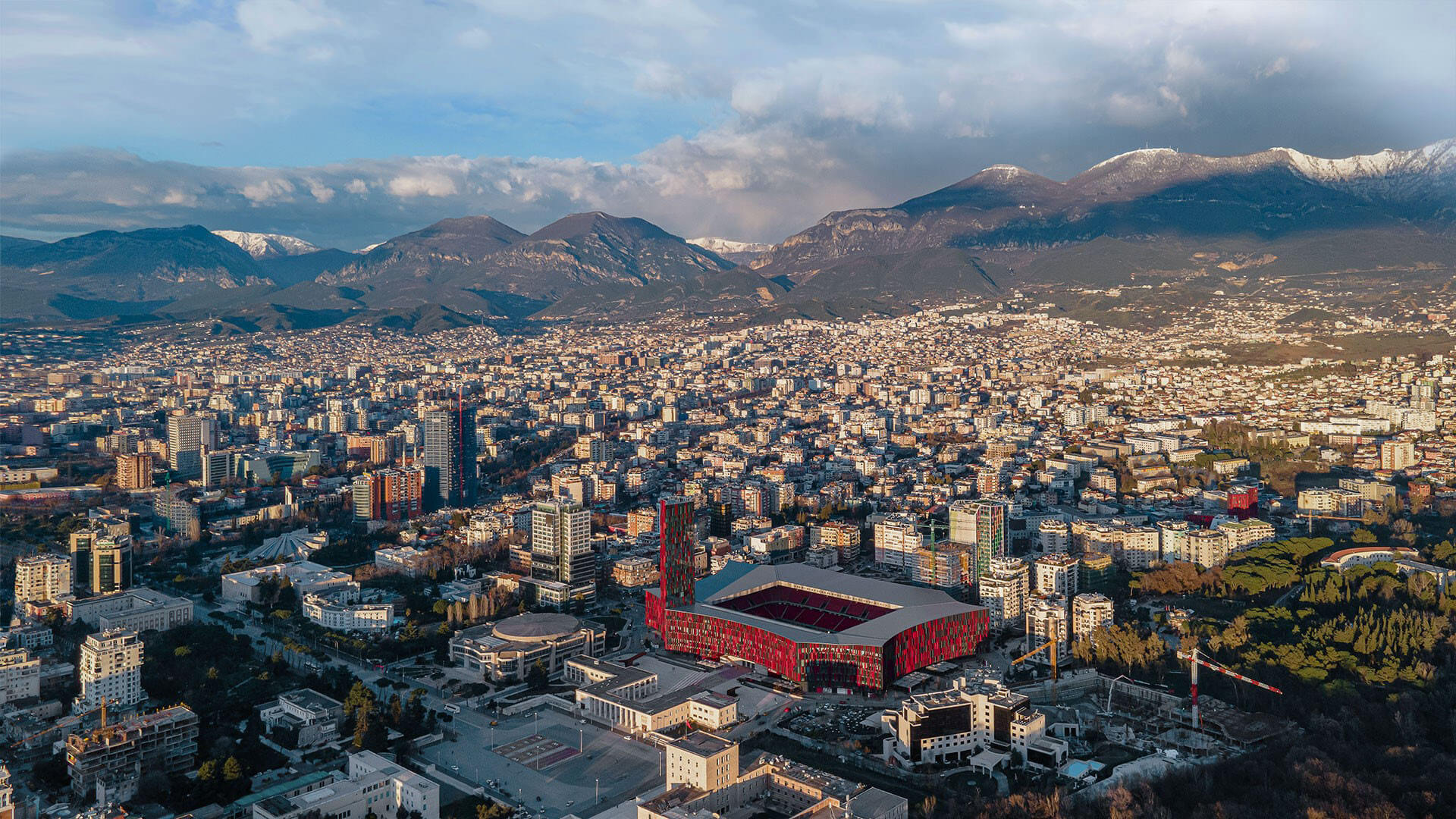
From fascist legacy to urban future project: In Tirana the Arena Kombëtare is a stadium that can do far more than just soccer. Between the historic façade, 100-meter tower and lively urban spaces, architecture has become the driving force behind an entire metropolis.
Design:
Archea Associati
Centre of urban development
When Benito Mussolini occupied Albania in 1939, Tirana was little more than a small town. However, the appearance of the city changed fundamentally in a very short space of time, largely shaped by the Florentine architect Gherardo Bosio. With projects such as the monumental boulevard, today’s Dëshmorët e Kombit, he laid the foundations for the modern city center. The original national stadium, later named after the Albanian resistance fighter Qemal Stafa, was also built in this context.
Today, a completely new building stands on the same site: the Arena Kombëtare. It is not just a stadium, but a multifunctional urban building block – a symbol of Albania’s architectural and urban transformation.
The design was created by Archea Associati.

Transformation with respect for history
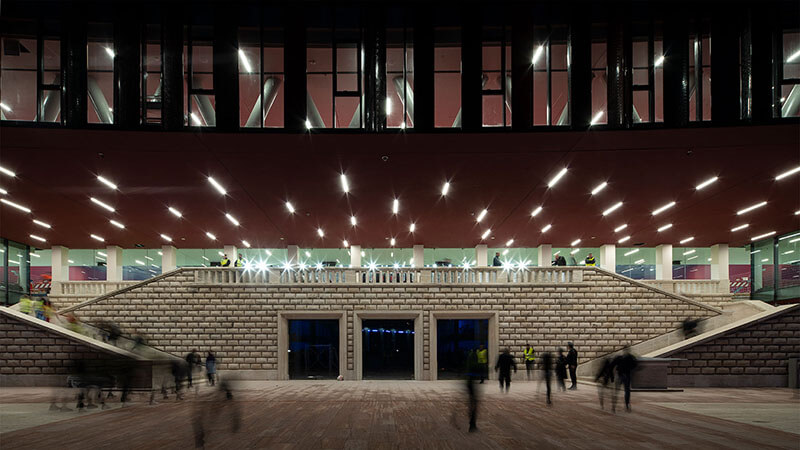
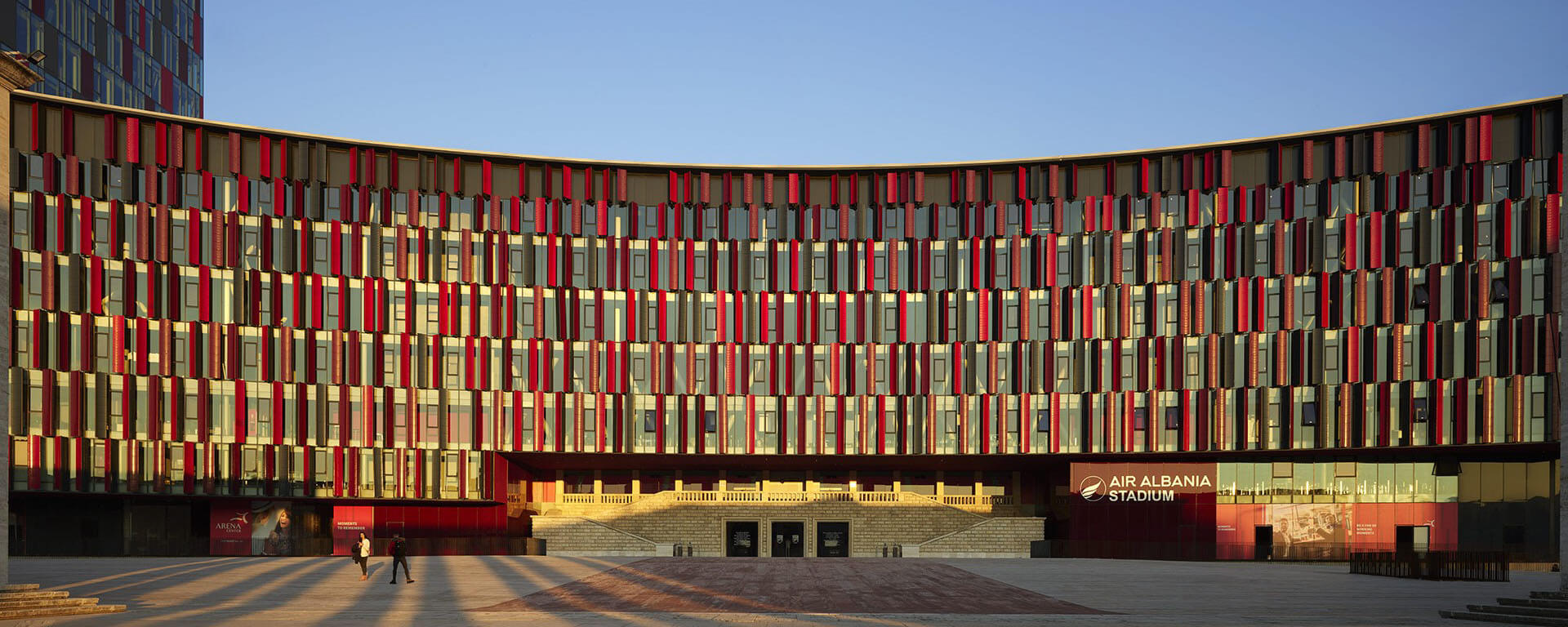
80 years after the construction of the previous stadium, the planners were faced with the work of an architect from their own city of Florence. The stadium from the post-war period was completely demolished, with the exception of the monumental entrance. The historic façade was preserved and was documented, restored and integrated into the new building stone by stone in an elaborate process. This method, known as anastilosis, combines past and present in a precise and respectful manner.
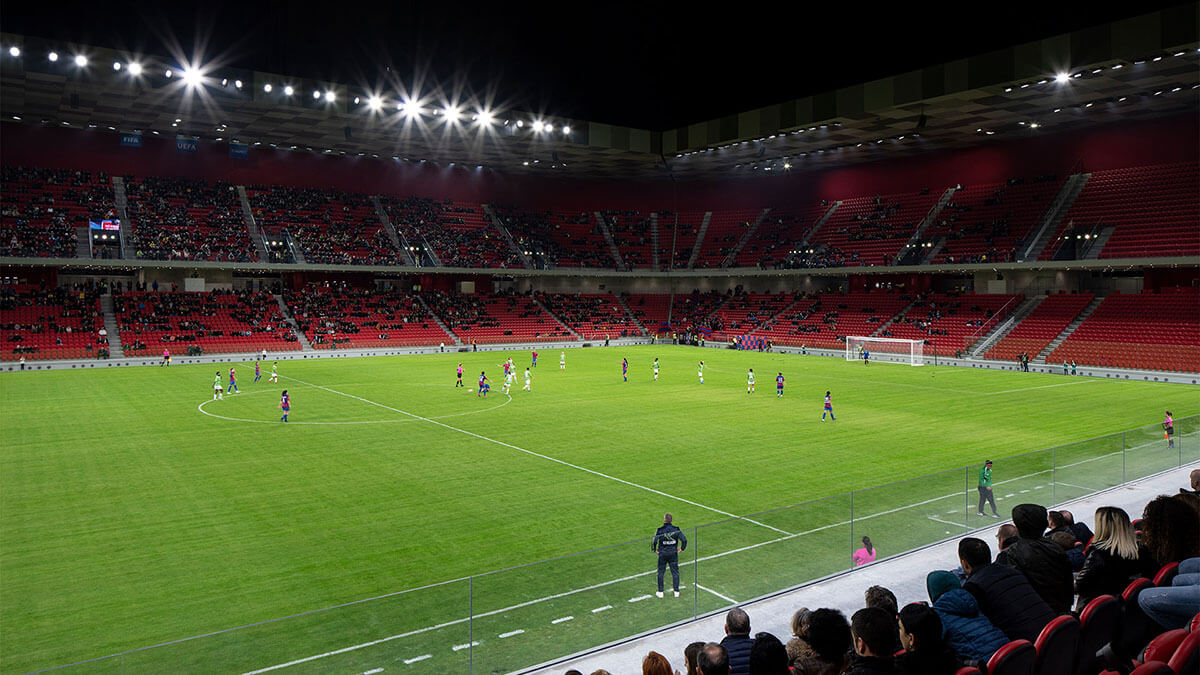
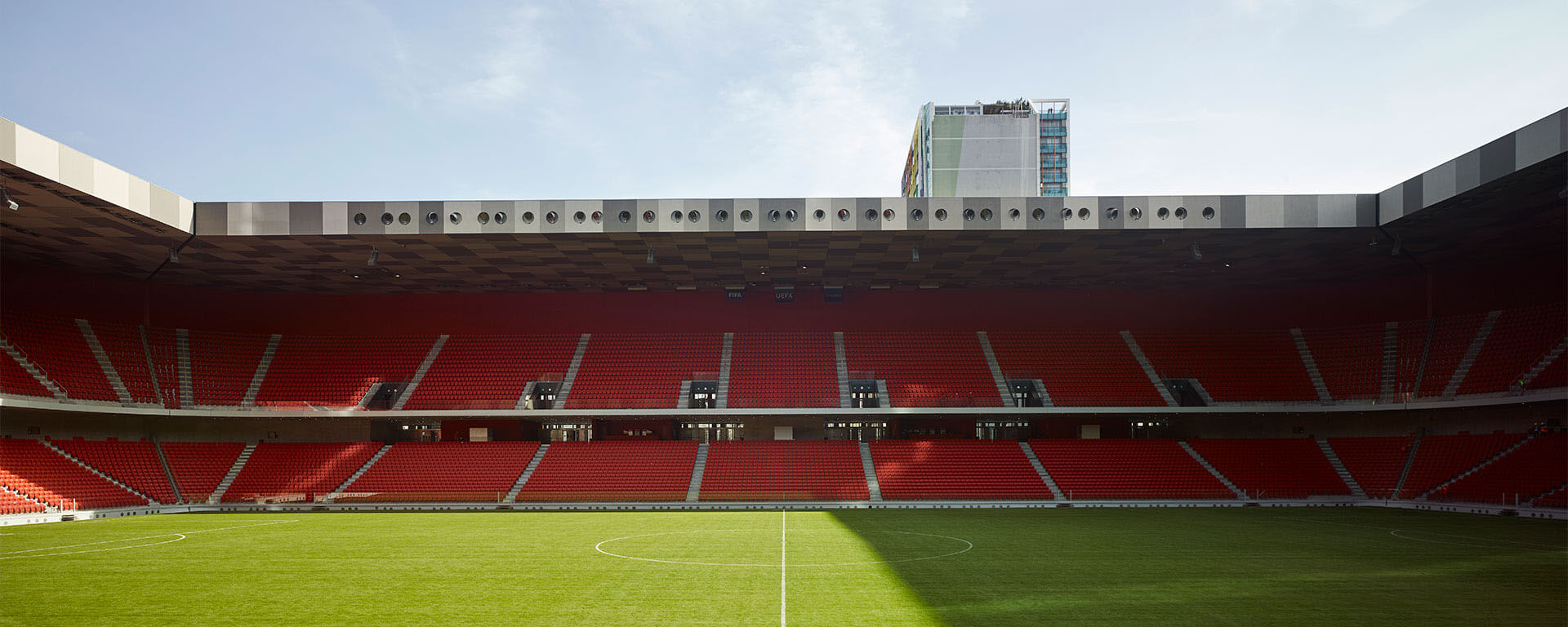
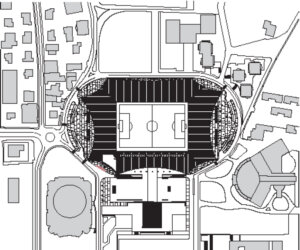
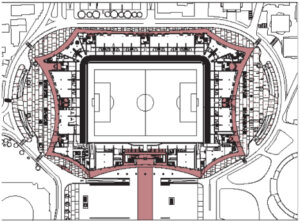
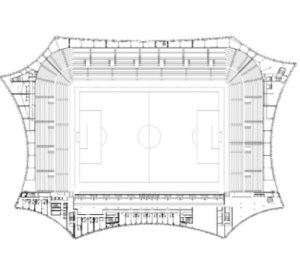
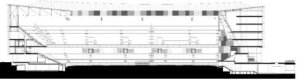
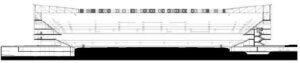
The stadium follows a theater-like typology with three stands, inspired by classic amphitheaters and stadiums such as “La Bombonera” in Buenos Aires. The spectators move as close as possible to the pitch, creating an intense atmosphere.


The tower
With around 22,000 seats, the new stadium meets international UEFA standards. The real innovation lies in the concept: instead of a pure sports building, a lively hybrid of arena, public space and commercial infrastructure has been created.
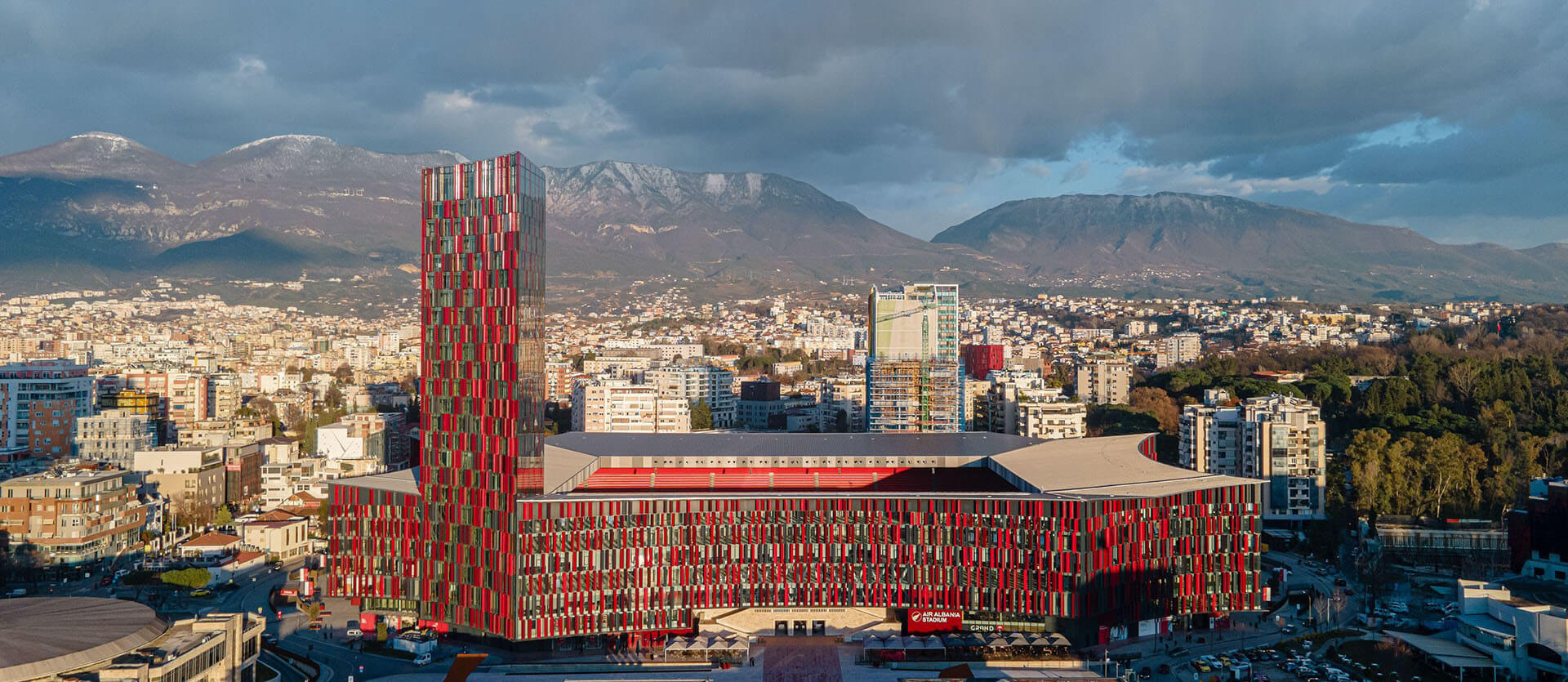
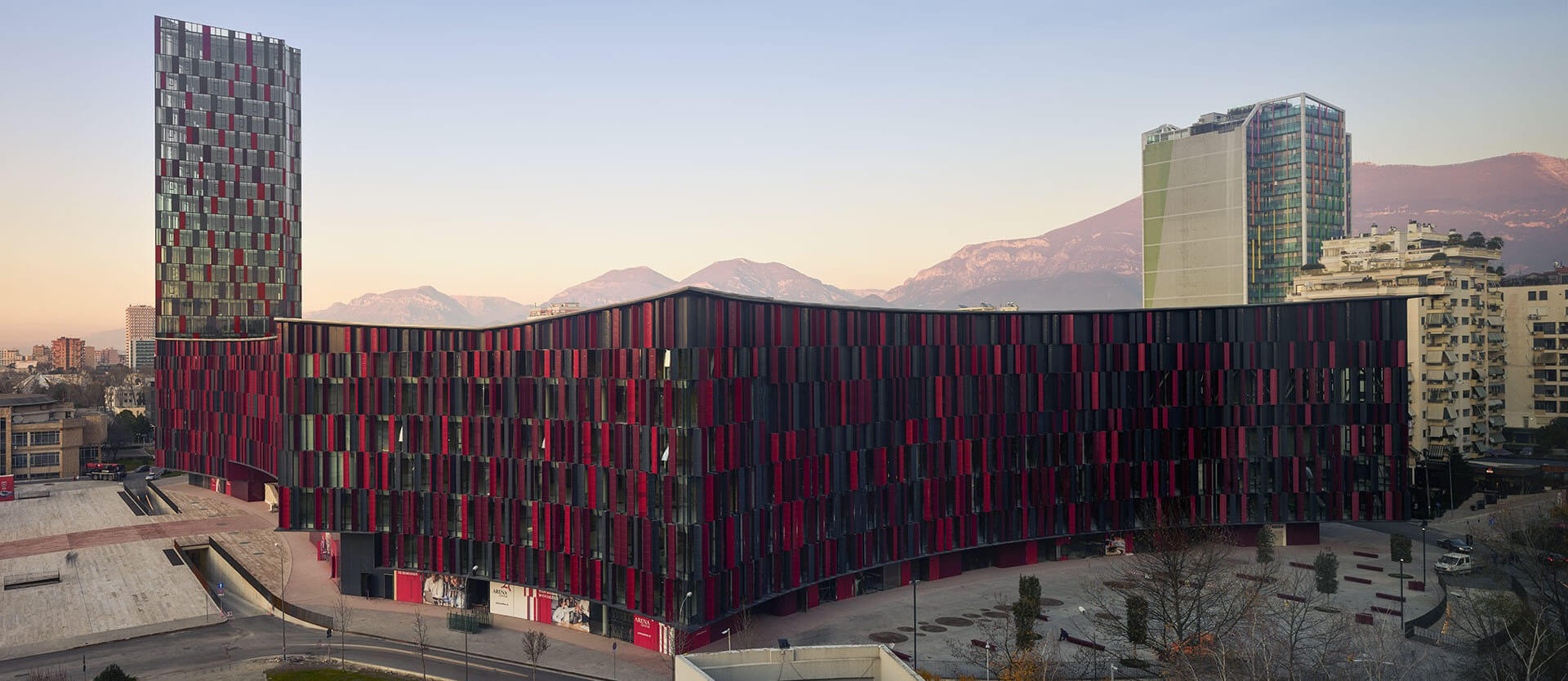
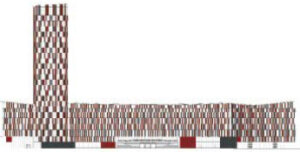
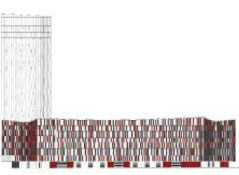
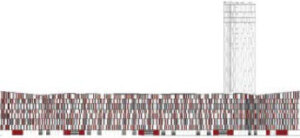
The tower, which is over 100 meters high and houses a hotel, is not only the landmark of the stadium, but of the entire city. The ensemble is complemented by retail, restaurants, offices and public spaces – a mix of uses that activates the building all year round.

The public
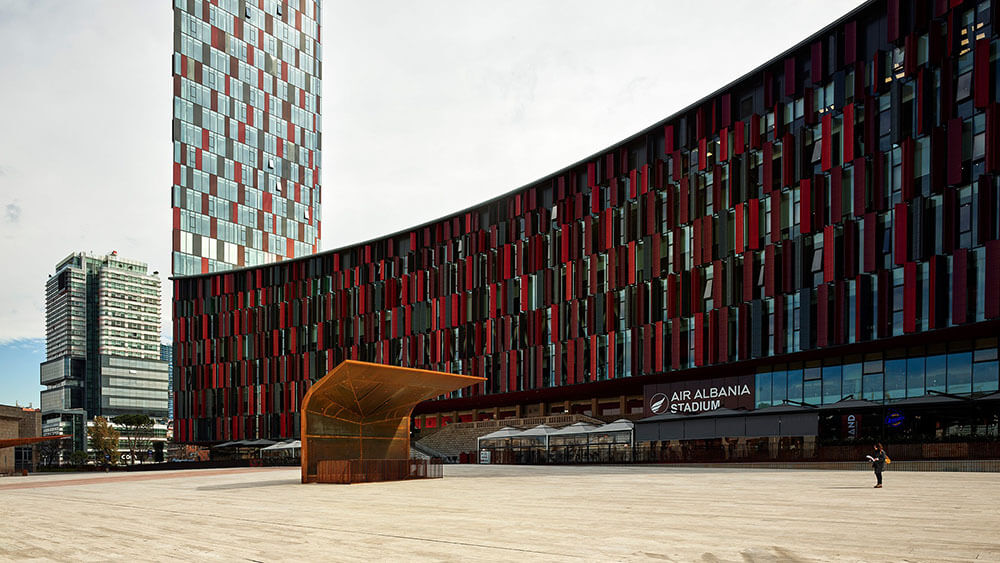
A key urban development gain lies in the reclamation of public spaces through spacious squares and recreational areas.
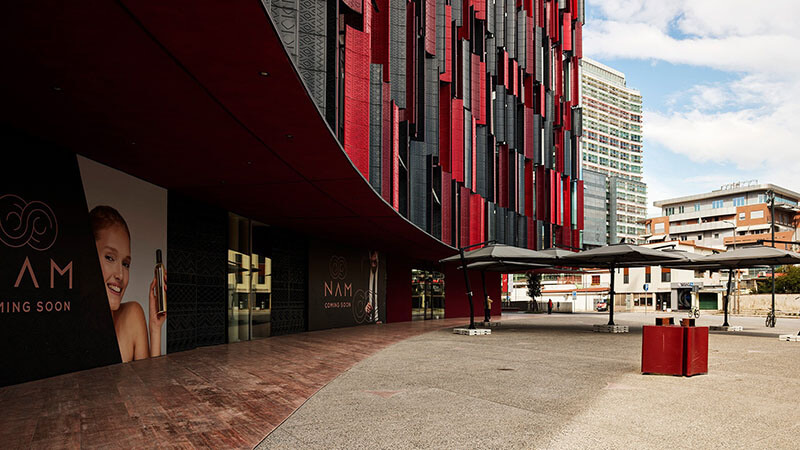
The shape of the building with its concave curved façades deliberately opens up to the city and creates new urban spaces with cafés, bars and meeting places. The Arena Kombëtare is thus part of everyday life, and not just on match days.
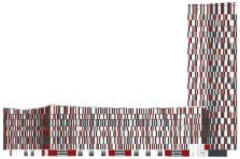
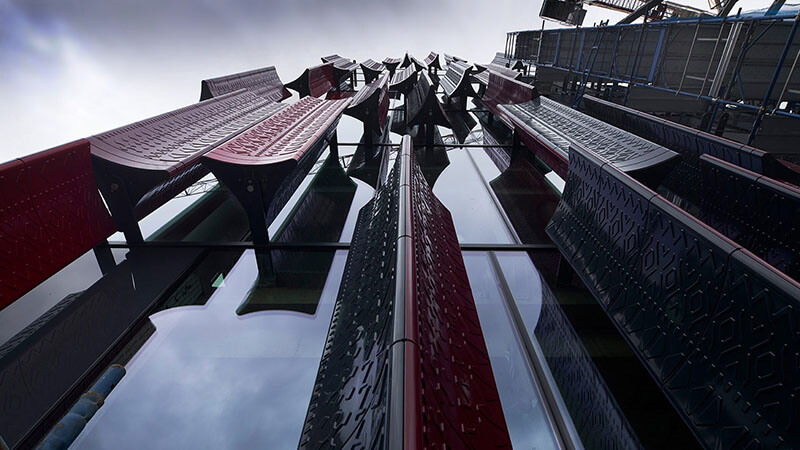
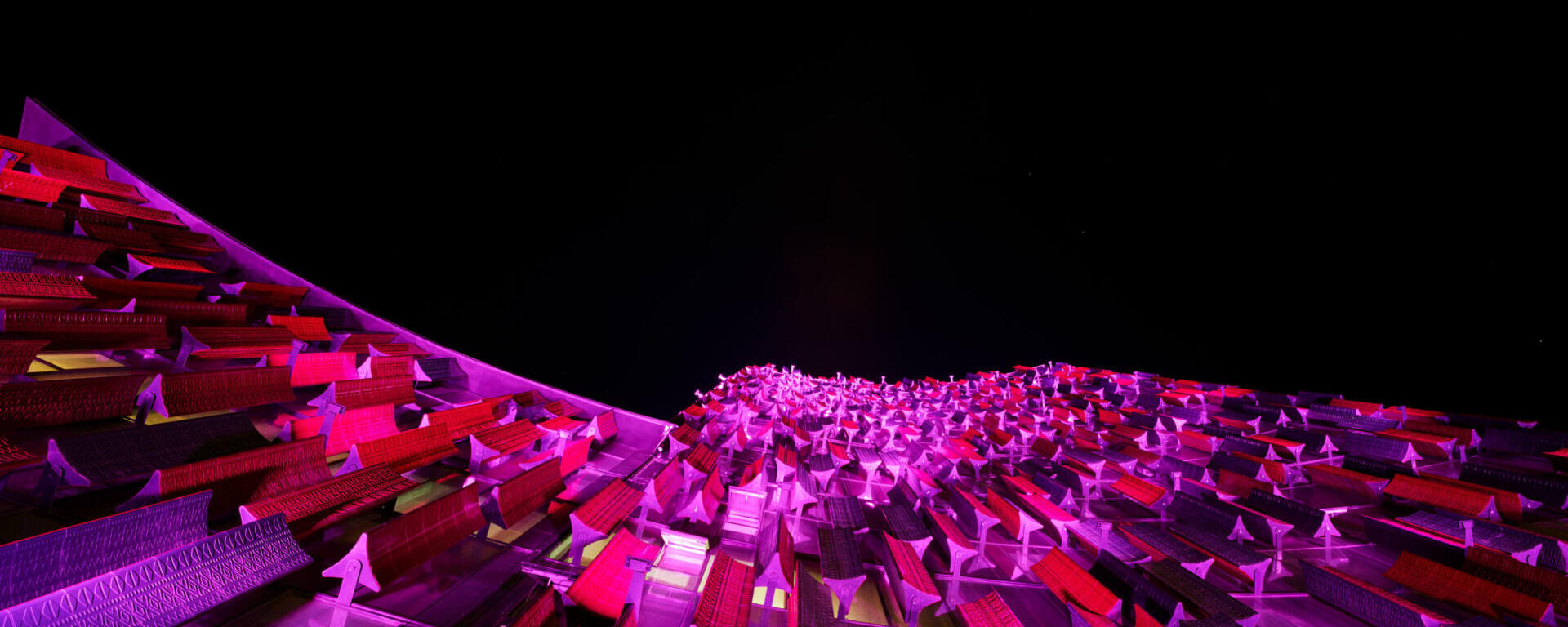
The building envelope with a façade area of around 30,000 m² is characterized by red and black elements – a reference to the Albanian national colors. Over 3,200 vertical slats structure the façade. Their design was inspired by traditional textiles.

Investing in the future
With a total volume of around 80 million euros, the project was completed in just three years. It was largely financed privately, with support from the Albanian Football Association. In addition to sporting use, the commercial functions in particular are crucial for long-term operation.
The Arena Kombëtare provides impetus for the upgrading of a previously neglected district and sustainably increases its attractiveness. It is a fine example of how architecture, urban development and identity can intertwine – and how a place of the past can become a driving force for the future.

Project data
(Links are underlined)
Designer
Archea Associati
Marco Casamonti, Laura Andreini, Silvia Fabi, Giovanni Polazzi
Client
FSHF
Rr. Liman Kaba, Nd 5
Hyrja 1
Njësia Administrative 5
Kodi Postar 1019
Tirana
Albania
Opening
2019
Address
Arena Kombëtare Tirana
Sheshi Italia 1
Tiranë
Albania
Text
Johannes Bühlbecker
More Sports Media
Plans
Videos
More exemplary buildings for sport and leisure
Subscribe to our newsletter.
Every three weeks, we inform you about new and exemplary projects and products. With heart, drive and expertise.