
Play Without Borders
The KuKuk Box Aqaba
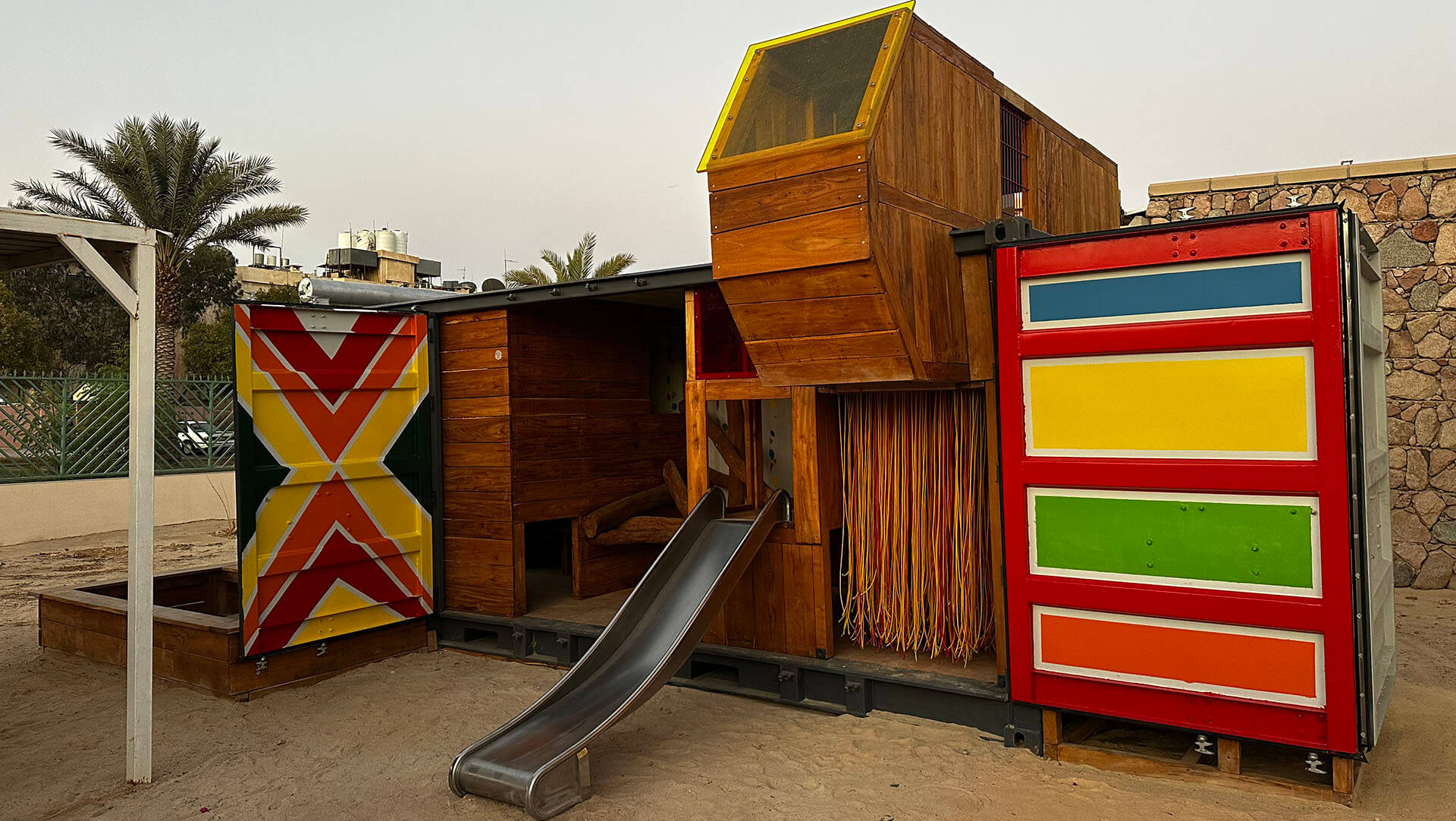
Play Container & Skatepark in a Box
Client & operator
Play Container
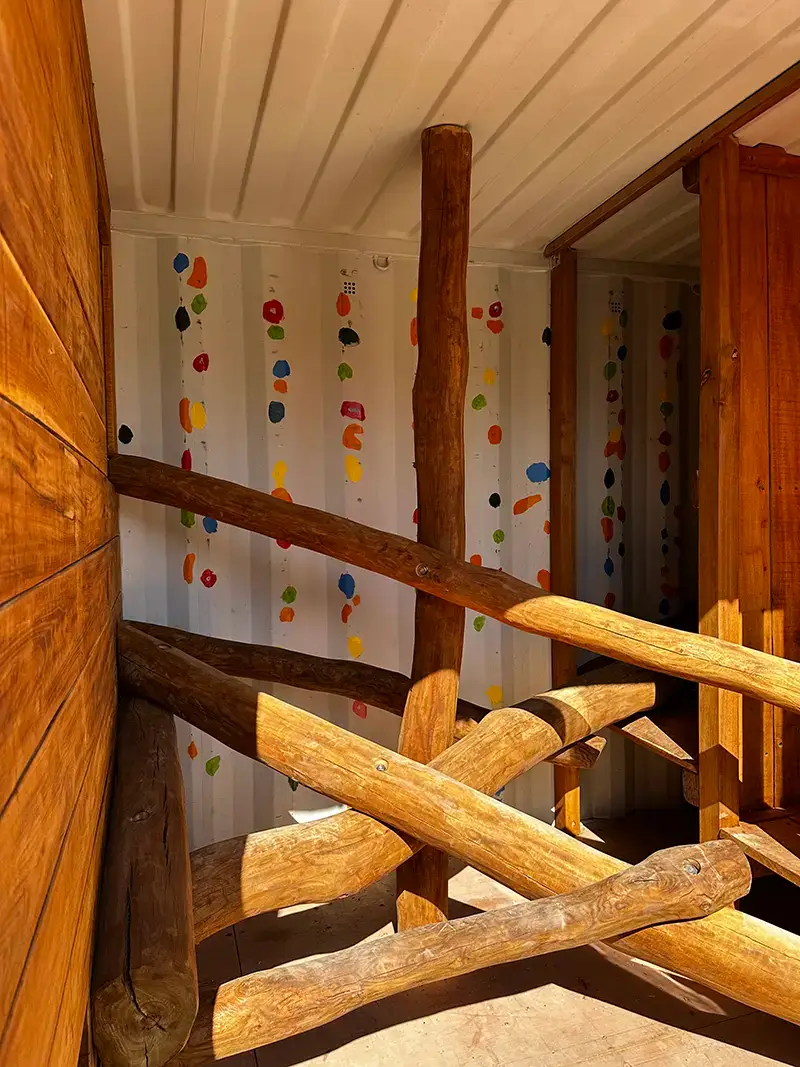
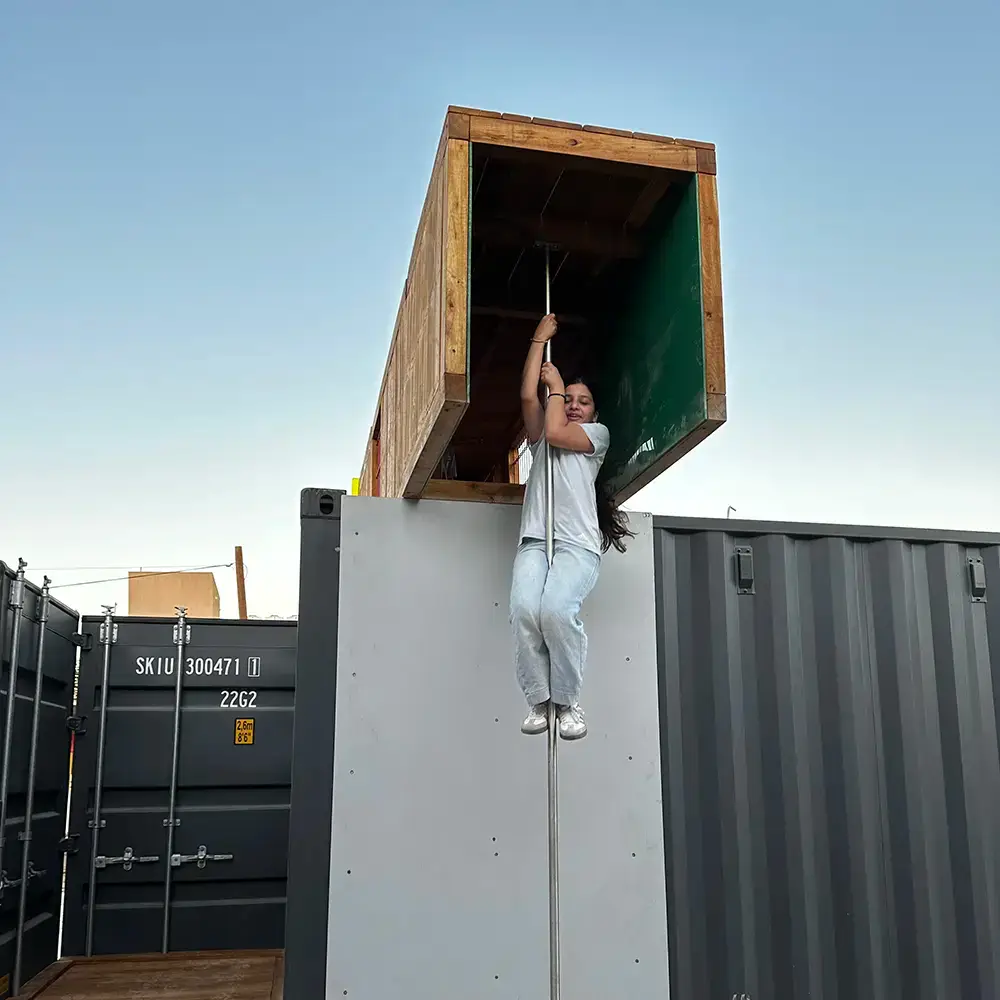
- Climbing structures with access to the roof level
- Slide
- Crawling tunnels and passages
- Platforms and retreat areas
- Balancing and movement elements
- Play activities for kindergarten and younger school children
Skatepark in a Box
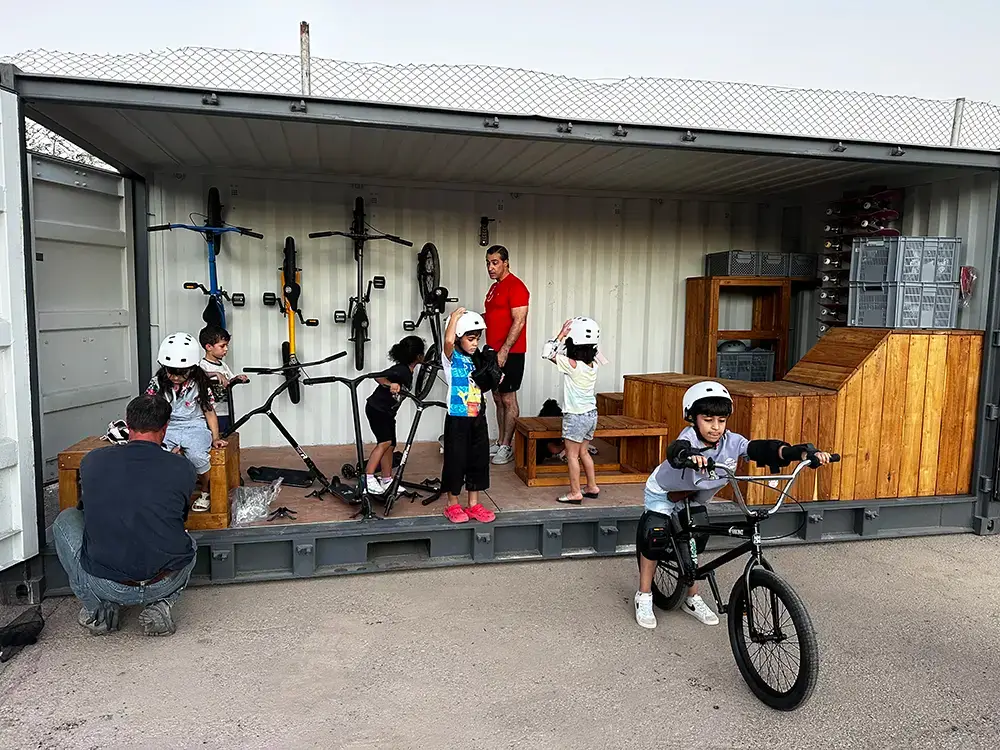
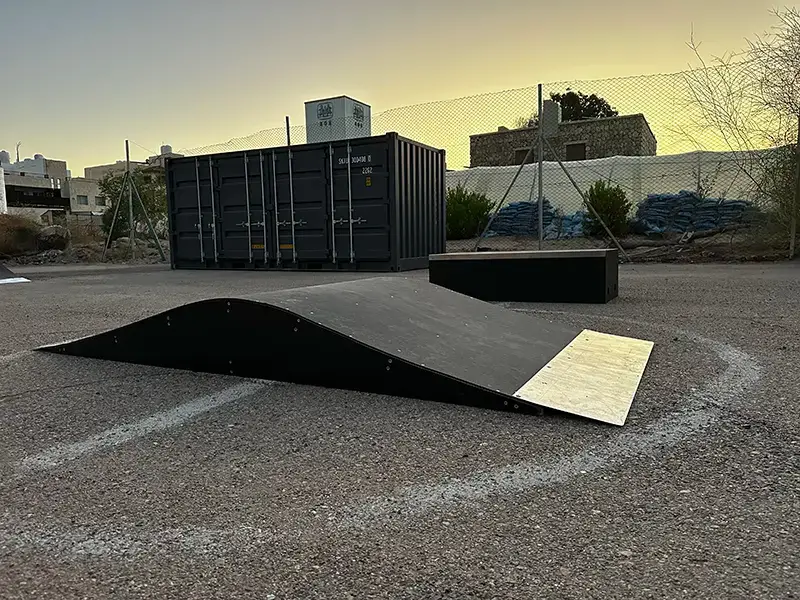
- Mobile ramps and skate elements
- Variable course layout
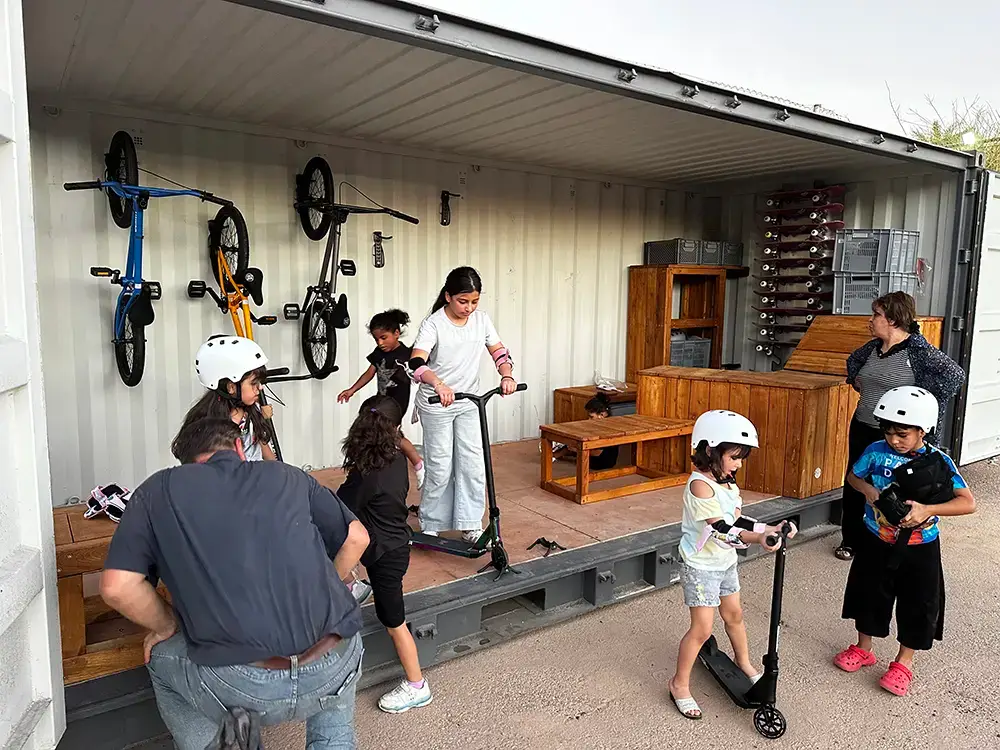
- Skateboards
- Stunt scooters
- BMX bikes
- Helmets
- Wrist, elbow, and knee pads
- Brackets and storage areas for equipment and gear
Address
SOS Children’s Village Aqaba
G2W5+RW8, Street 15
JO – 77110 Aqaba
Jordan
Opening
2026
Photos
Text
Johannes Bühlbecker
More Sports Media
Two containers, a nocturnal crane operation, and many new possibilities: The KuKuk Box Aqaba complements the SOS Children’s Village with play opportunities for younger children and a mobile skate park for the older ones. At the same time, it is intended to open the village more to the neighborhood.
Exemplary, and not just in crisis zones.
Four Countries, One Gulf
An environment never entirely free of tension
Aqaba is located at the northern end of the gulf of the same name and at a geographically remarkable point. Jordan, Israel, Egypt, and Saudi Arabia meet here in a very small space. The Jordanian port city is a holiday resort, a trading hub, and a special economic zone. At the same time, the political tensions and conflicts of the region are never very far away—during the assembly of the box, they were even felt in the form of rocket impacts.
Especially in such an environment, the importance of play can hardly be overestimated. Playing creates moments of lightheartedness and gives children and young people a piece of everyday life back. It also helps them process experiences, discover their own abilities, negotiate rules, and build trust in others. Article 31 of the UN Convention on the Rights of the Child therefore explicitly describes play, recreation, and leisure as a child’s right. The KuKuk Box Aqaba translates this right quite tangibly into ramps, slides, and climbing elements.
The project was funded by “SOS Children’s Villages International.”
An Award-Winning Children’s Village
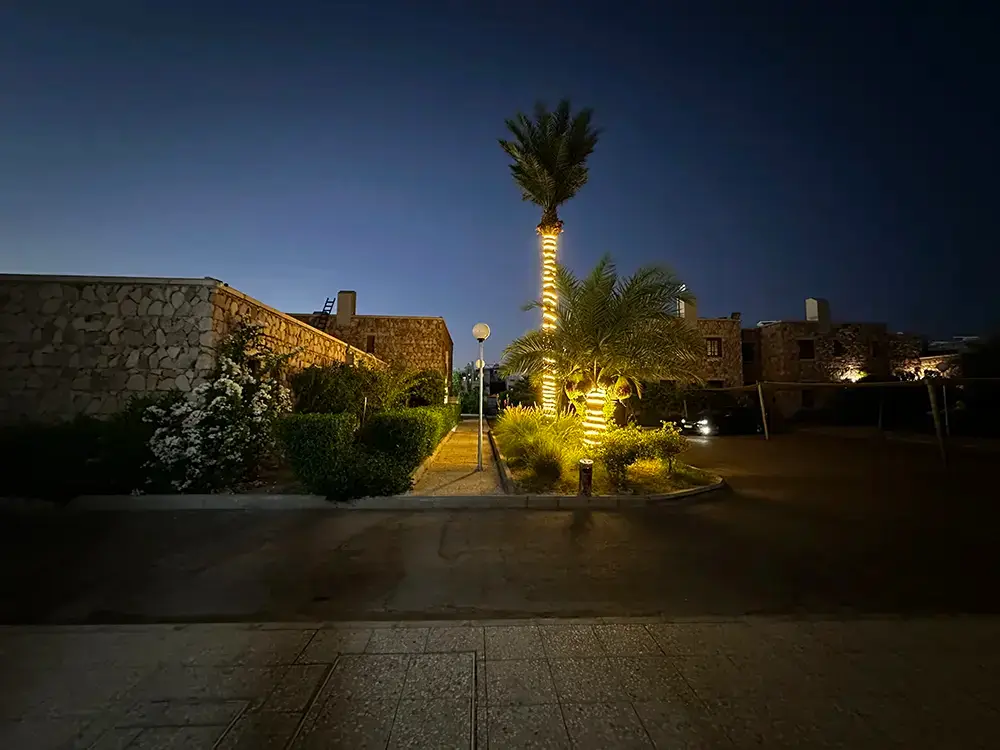
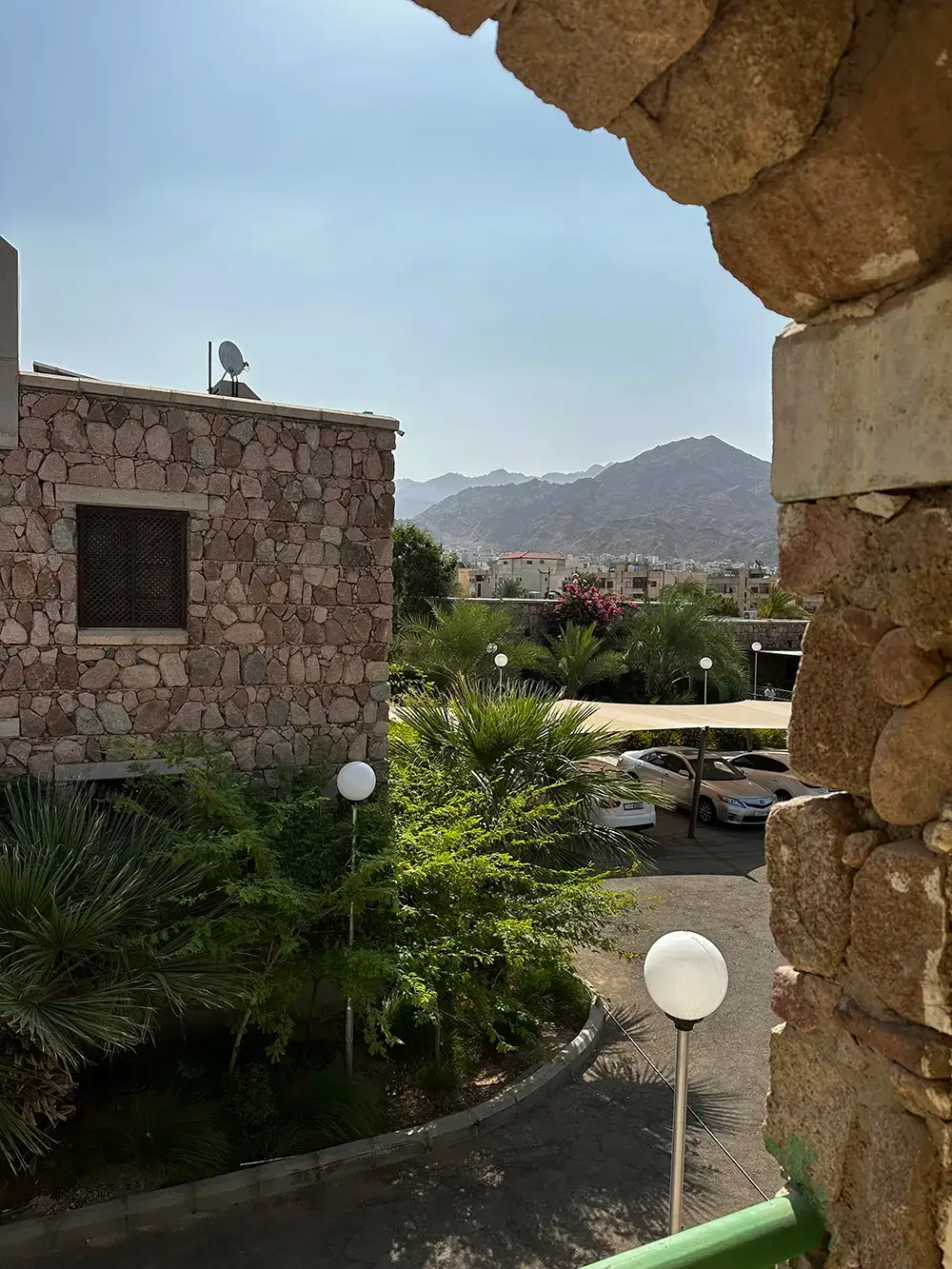
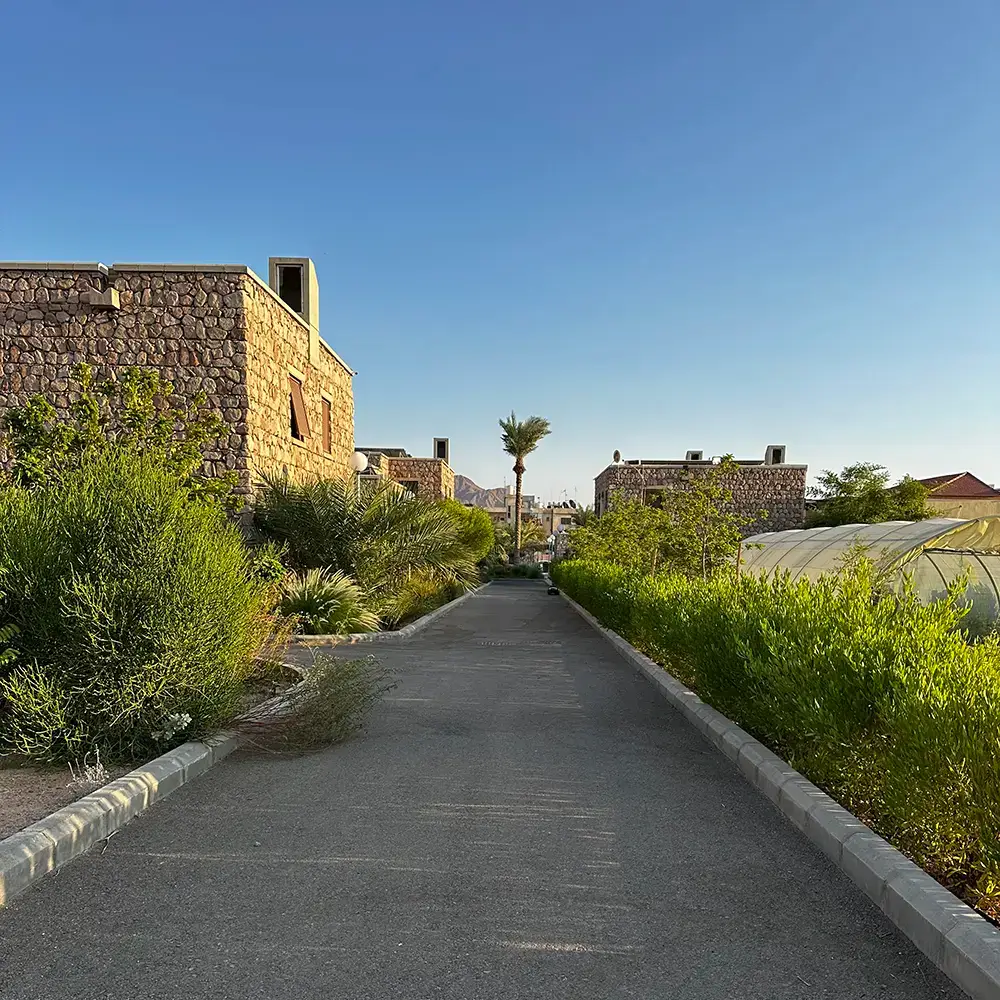
The SOS Children’s Village Aqaba was opened in 1991. The Palestinian-Jordanian architect Jafar Tukan and his firm Jafar Tukan & Partners designed an ensemble of two-story houses, shaded courtyards, gardens, paths, and arched passages. The architecture adopts regional building forms and materials without turning them into a historicizing backdrop.
Communal facilities such as a kindergarten, sports hall, shop, and pharmacy are located at the edge of the complex and are also oriented towards the neighborhood. From the beginning, the children’s village was intended to offer protection without sealing itself off from the city. For this combination of social concept, local building tradition, and contemporary architecture, the project received the Aga Khan Award for Architecture in 2001.
Today, according to those involved in the project, the facility offers space for about 100 children in family groups and so-called Safe Houses. The two new containers continue the idea of openness.
The Two Boxes
Different user groups, different offerings
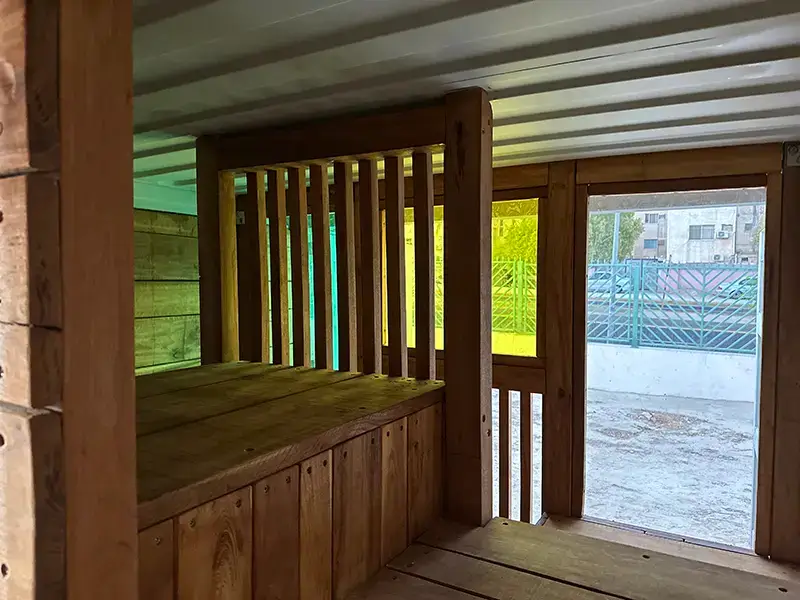
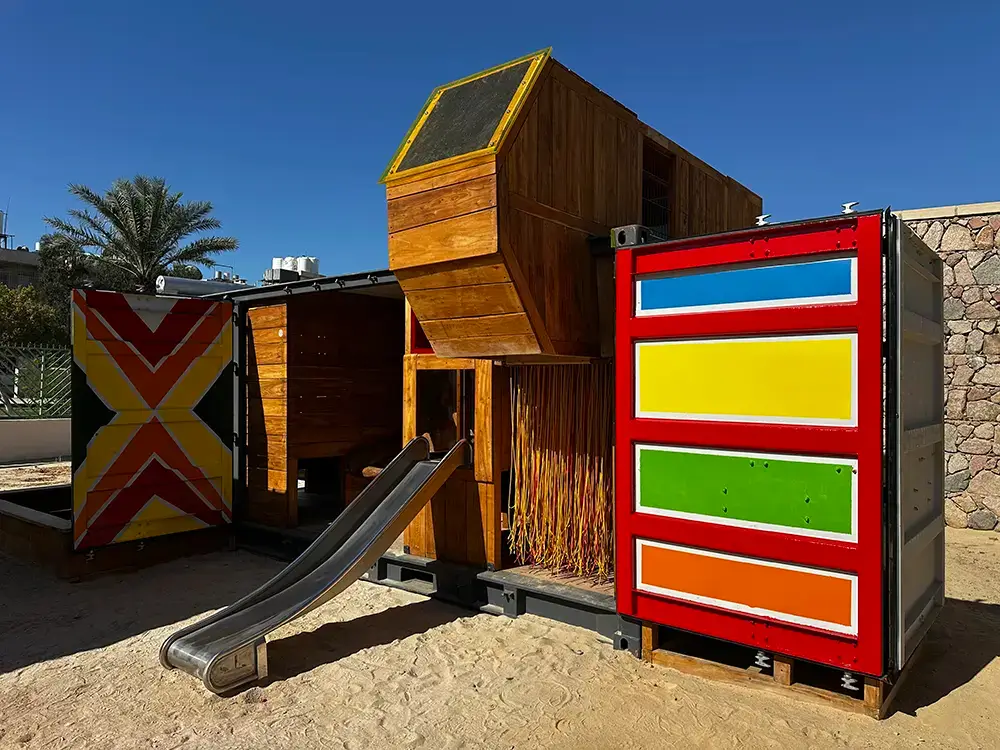
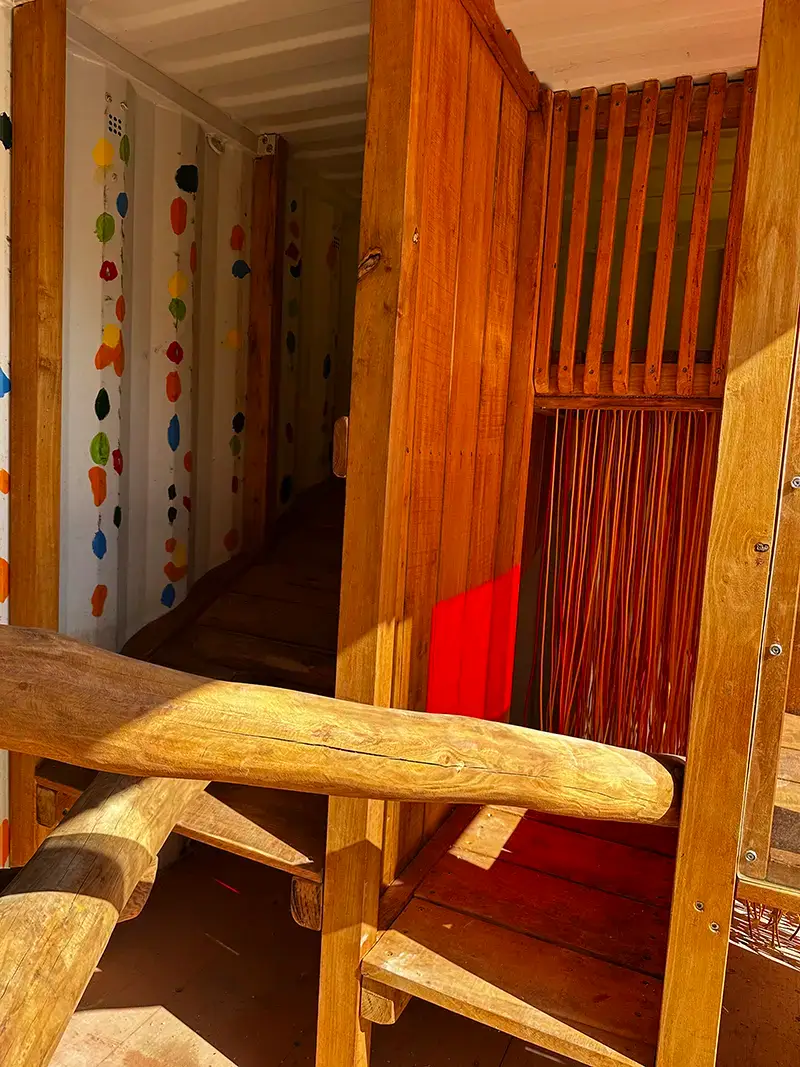
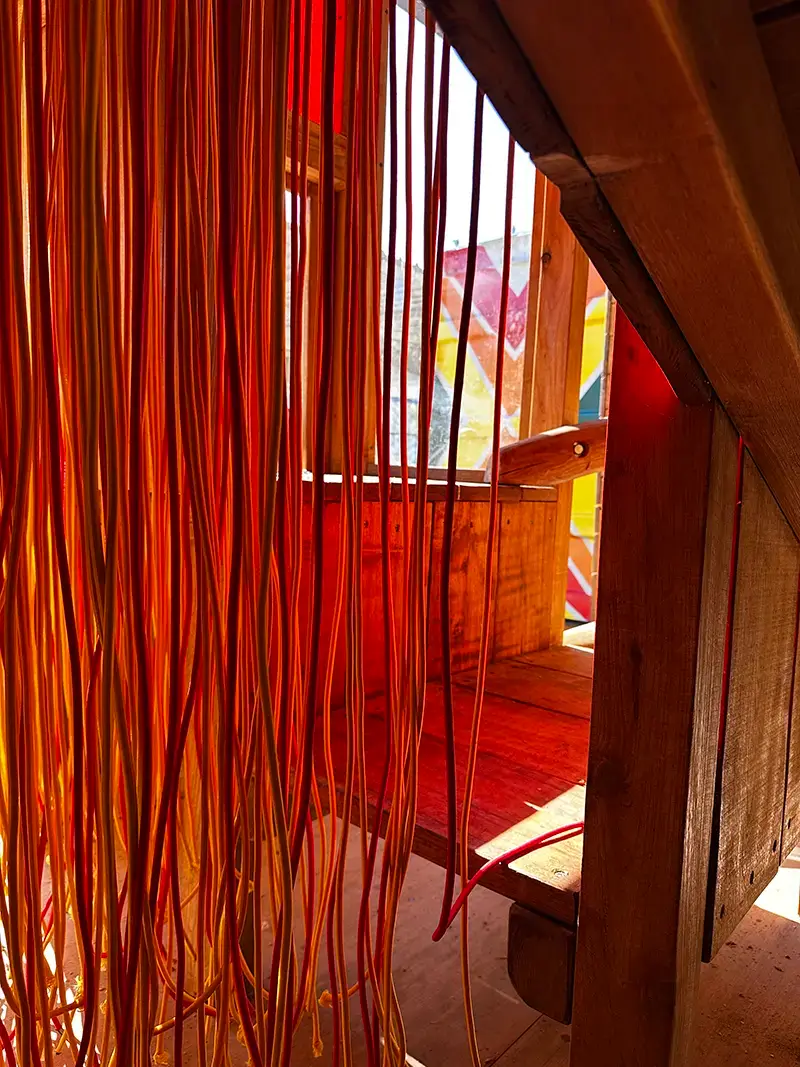
The first container is a classic KuKuk Box for younger children. Climbing structures lead up to the roof, supplemented by a slide, crawling passages, platforms, and opportunities for balancing, hiding, and free play. In the small footprint of the former shipping container, a surprisingly multi-layered play space is created.
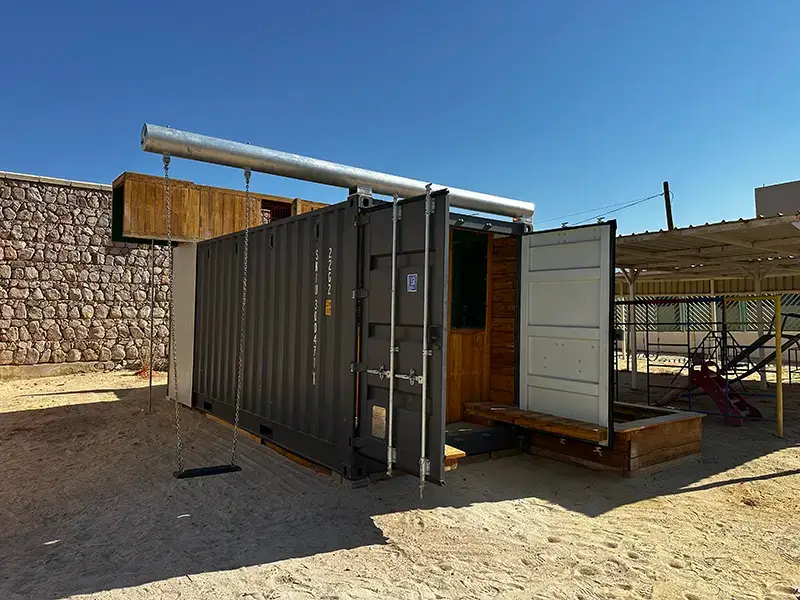
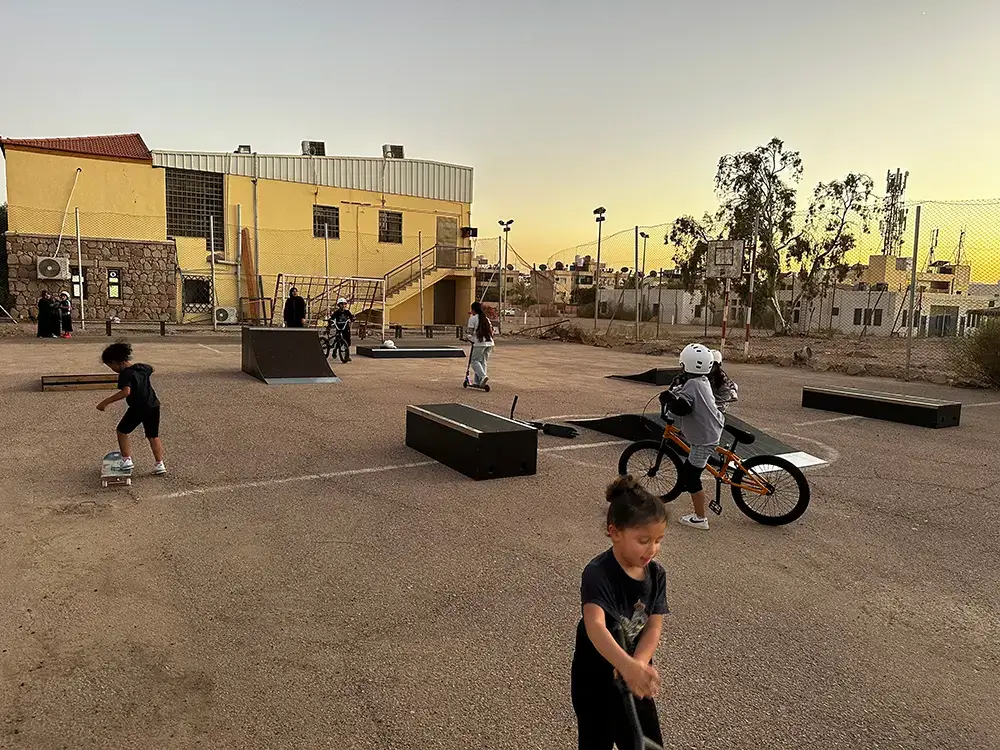
The second container contains a complete skate park. Mobile ramps are taken out and assembled into changing courses. Inside, skateboards, stunt scooters, and BMX bikes are stored alongside helmets, and wrist, elbow, and knee pads. After use, everything disappears safely back into the box. Order is helpful here too.
The play container is primarily used by kindergarten children, while the skate park is aimed at older children and teenagers. Its elements can be recombined again and again and adapted to different skill levels. Thus, it is not two identical containers standing side by side, but two coordinated offerings for different age groups.
Mild Nights in Aqaba
The Assembly of the KuKuk Box
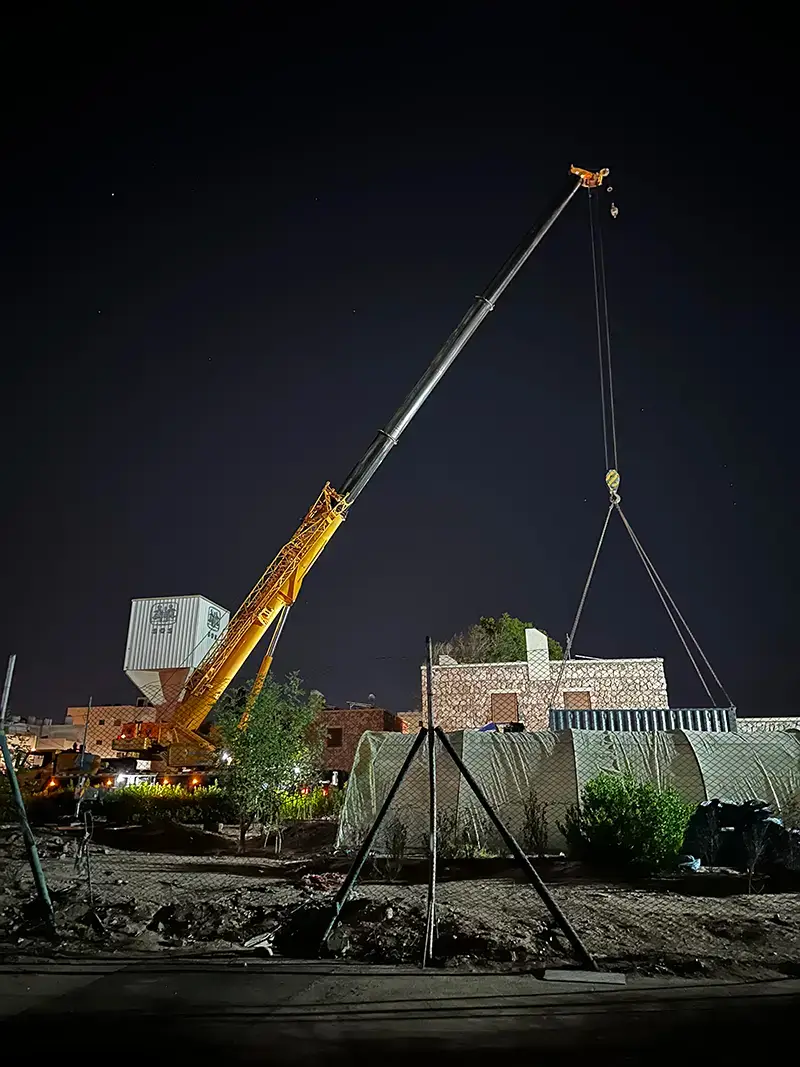
The containers were largely prefabricated and transported to Jordan by ship. In Aqaba, they only had to be lifted to their intended locations and fully assembled. This sounds straightforward at first, were it not for the local climate.
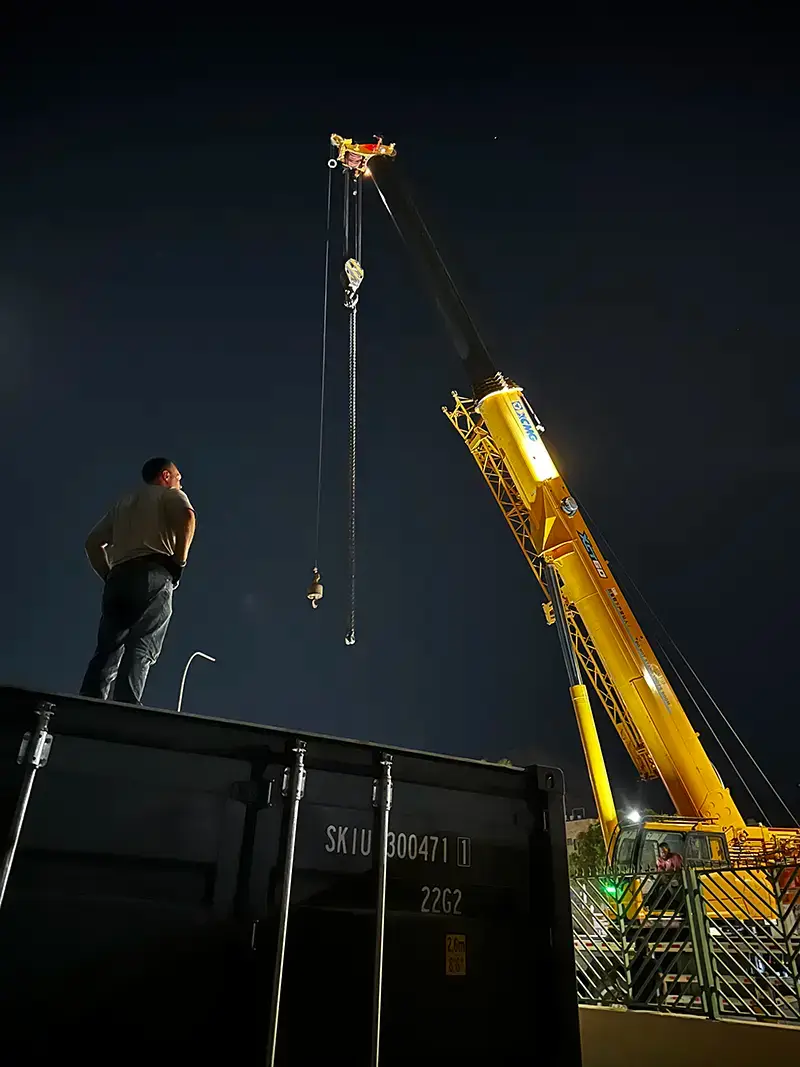
With daytime temperatures of up to 45°C, the crane operation was promptly moved to the night. The mobile crane arrived around 12:30 AM and placed the two containers until about 3:00 AM. At around 30°C, it was almost pleasant, at least by the standards of this project.
The team completed the assembly the following day. By the evening, the children were able to take over the new facilities with a painting workshop and a small opening ceremony.
Inviting
The Skatepark as a Meeting Point
The skate park is not intended solely for the children of the SOS Children’s Village. Children and young people from the neighborhood are also allowed to use the course and equipment. The KuKuk Box Aqaba thus becomes another interface between the protected living in the village and the surrounding city.
Skateboarding, BMX, and scooter riding are particularly suitable for such encounters. The activities function largely without a common language. Ramps are set up together, equipment is passed on, movements are observed, and tricks are learned from one another. Contact arises from sport without the need for a prior encounter program to be explained.
In this way, the containers link directly to the architecture of the children’s village. They also demarcate a safe place but remain open enough to enable community beyond their own residents.
Coming Full Circle
The KuKuk Box Fits Anywhere
The KuKuk Box began with the wish to build a playground for crisis zones—at that time for the Gaza Strip. A solution was sought that could be largely prefabricated, transported by ship, and set up with manageable effort even under difficult conditions. From this idea, a system emerged that combines transport containers, a load-bearing basic structure, a play object, and secure storage space.
A lot has happened since then. The KuKuk Box has long been at home in more than just crisis zones. It stands at schools and kindergartens, in public squares, in parks, and at social institutions. Nevertheless, the project in Aqaba brings things full circle. The box returns to a region for whose special requirements it was originally developed, and there it combines play, movement, and encounter.
However, only the box is standardized. What children and young people make of it remains delightfully unpredictable. The importance of such open spaces, on the other hand, is quite clearly established, in Aqaba just as everywhere else in the world.
What We Learn Here
-
Standardized freight containers enable play and movement opportunities in very different locations. They can be largely prefabricated, transported internationally, and set up with manageable effort.
-
The solid shell protects play equipment, mobile ramps, and protective gear. This makes the concept suitable for crisis regions as well as for schools, kindergartens, parks, and public squares.
-
The box provides the framework without dictating the play. Climbing elements and adaptable courses leave room for different age groups, abilities, and forms of creative use.
-
Play containers can open protected facilities to the neighborhood and create contacts through shared play and movement for which no common language is initially needed.
-
The technical and logistical advantages are important. However, the decisive factor remains that a comparatively compact system can open up a dedicated free space for children and young people almost anywhere in the world.