
The swimming pool of the future
Games. Sport. Recreation.
These trends cover a wide range of aspects that impact on architecture – from economics and digital features to new usage patterns.
IAKS has compiled a report on a number of trends in the swimming centres and outdoor baths of the future.
Photos (3):
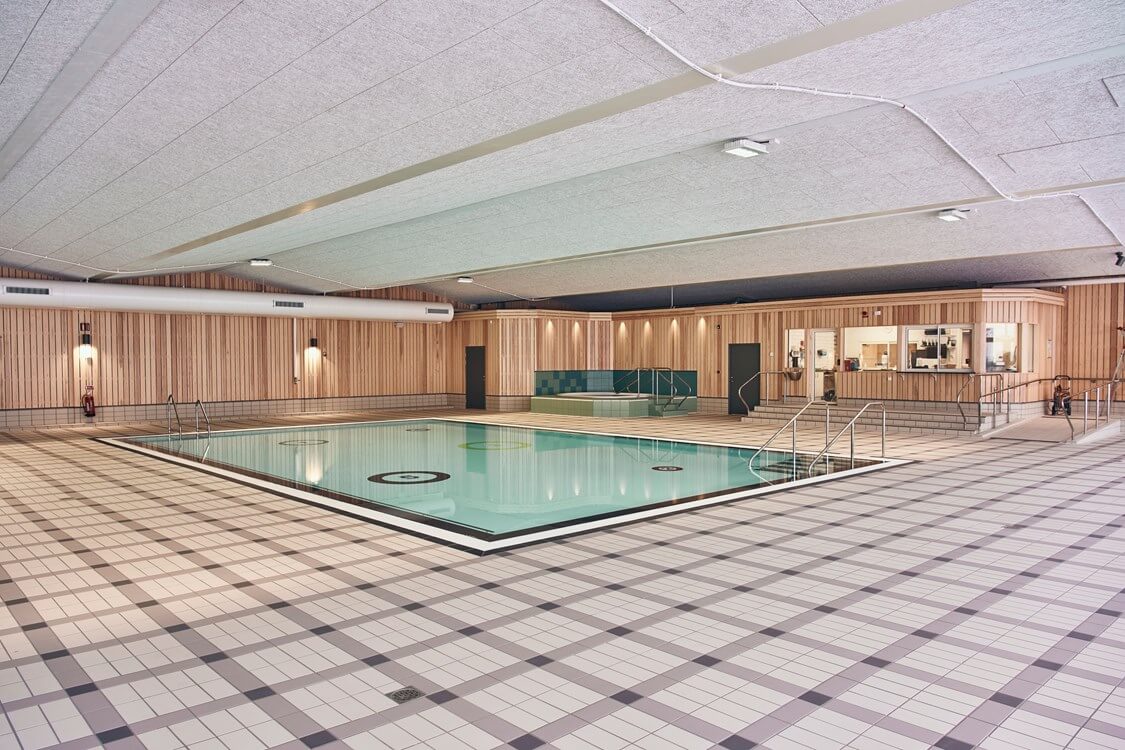
Lunnevibadet in Grästorp, © We Group
Swimming and water exercise are popular activities among all ages and at all skill levels. We also use swimming centres to relax – or to be active with our families. The varying usage scenarios place demands on form and function when developers, architects and builders have to jointly arrive at the perfect design.
In a report, the German International Association for Sports and Leisure Facilities (IAKS) NGO listed trends in future swimming centres. The 16 trends can be useful to keep in mind – right from the drawing board stage.

These trends cover a wide range of aspects that impact on architecture – from economics and digital features to new usage patterns.

Swimming is popular
Blurred boundaries between work and leisure are making individual, flexible activities such as swimming, running and cycling increasingly popular. This entails a need for better access to swimming pools and extended opening hours.
Accessibility is not only about focusing on users with physical disabilities. Changes in demographics and ethnic diversity also place special demands on swimming centres.
Photos (3):
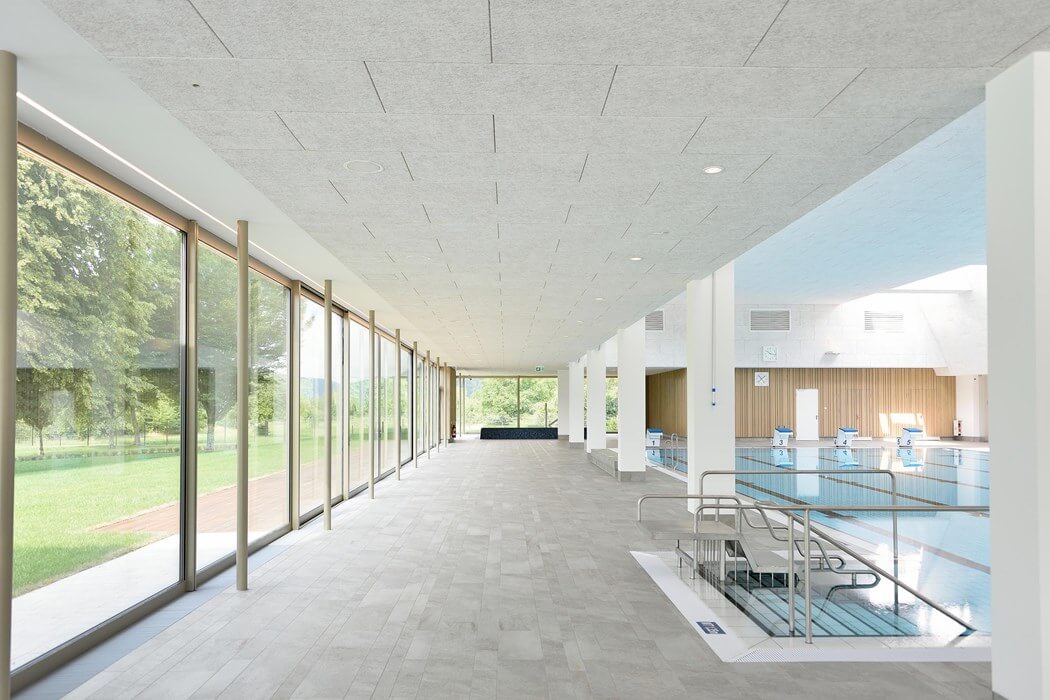
Kinzigtalbad Ortenau, © Olaf Wiechers
A lifelong healthy lifestyle
Exercise in water helps fulfil the desire to lead a healthy life at any stage of life. An increasing number of seniors are demanding good exercise pools. Since fewer parents are teaching their children to swim, there is also a need for teaching pools – ideally with an adjustable/movable floor.
Wellness is gaining ground
The combination of sport and relaxation has become more popular. It is therefore a good idea to complement the classic competition and exercise pools with wellness facilities such as spas, saunas, Turkish baths, treatment facilities and lounge zones.

Fun for children and families
Families with children are an important target group for swimming centres. It is therefore important to have facilities that support play and give children a good introduction to the water.

Designing for inclusivity
Accessibility is not only about focusing on users with physical disabilities. Changes in demographics and ethnic diversity also place special demands on swimming centres. Everything from stairs and changing rooms to signs and lighting can have an impact. It is important to involve all key stakeholders early in the design phase.
Sustainability and carbon footprint also play a major role in the construction of swimming centres.
Photos (3):
Wasserwelt Rulantica, © Olaf Wiechers
Pools as places for socialising
Leisure activities are also a hub for socialising. It is important to encourage young people to meet at the swimming centres. And again, it is important to involve users in the design process.
Sustainable and healthy facilities
Sustainability and carbon footprint also play a major role in the construction of swimming centres. Measures that save water, recover heat, harness solar energy and minimise waste must be in focus. Ideas about a healthy lifestyle also place demands on technical conditions in relation to things like water and air quality.


Safe and secure pools
The risk of ‘anti-social behaviour’ may necessitate video surveillance above and below the water, and increased use of security personnel at swimming centres.

Competing demands on public finances
Government investments have to be prioritised. To secure funding for a swimming centre, the parties behind it have to be able to highlight the social value of the project. Partnerships with non-profit organisations or private companies may be a model for financing.
A swimming centre can be combined with a sports hall, a gym or even a library.
Photos (3):
Hallenbad Gensingen, © Olaf Wiechers
Improving economics
Swimming centres should ideally be operated without incurring losses. A swimming centre can be combined with a sports hall, a gym or even – as seen in England – a library. Achieve economies of scale by managing indoor and outdoor facilities in the same region in a single unit.
Private sector focuses on profitable cases
It can be difficult for municipalities to balance their budgets. Private players often invest in the most profitable business cases, such as gyms and large wellness centres. This can leave municipalities with the less attractive ones. When this happens, it is important to focus on the social rather than the economic benefits.

Digital transformation
Digital features also have an impact on the architecture of new swimming centres. The ability to track your performance in the water, water slides with virtual reality and cash-free payments are examples. In terms of the actual construction process, building information modelling (BIM) will become increasingly significant.

User expectations are growing
People are travelling more and experiencing more online. This can increase expectations of user experiences – including when visiting the swimming centre. It is therefore important that new swimming centres meet current international standards.
Good design is essential to ensuring a good user experience – so that visitors keep coming back.
Photos (3):
Therme Lindau, © Olaf Wiechers
Scarcity of space
Given the shortage of space in many cities, swimming centres need to serve multiple purposes. For example, an outdoor baths in summer could double as a skating rink in winter.
Fight for talent
When the economy is healthy, it can be difficult to find enough skilled staff for swimming centres and other sports facilities. Internal training can be one way to attract and retain employees. Technological solutions may in some cases be able to replace employees.


Good design
As evidenced by the trends outlined above, designing and building a new swimming centre is a complex task. But it is important to do this well. Good design is essential to ensuring a good user experience – so that visitors keep coming back.

Project data
IAKS Future Trends
IAKS
Acoustic ceiling
Troldtekt GmbH
Friesenweg 4 · Haus 12
D – 22763 Hamburg
Author
Dipl.-Ing. Architekt Olaf Wiechers
Büro für Architektur + Mediendienstleistungen
Klaus-Groth-Str. 1
D – 21629 Neu Wulmstorf
(Advertorial)
Photograph
Olaf Wiechers
We Group
You may have more of this.
How can we be of service to you?
Contact
Address
More Sports Media
Am Weitkamp 17
D‑44795 Bochum
Phone
+49 234 5466 0374
+49 172 4736 332